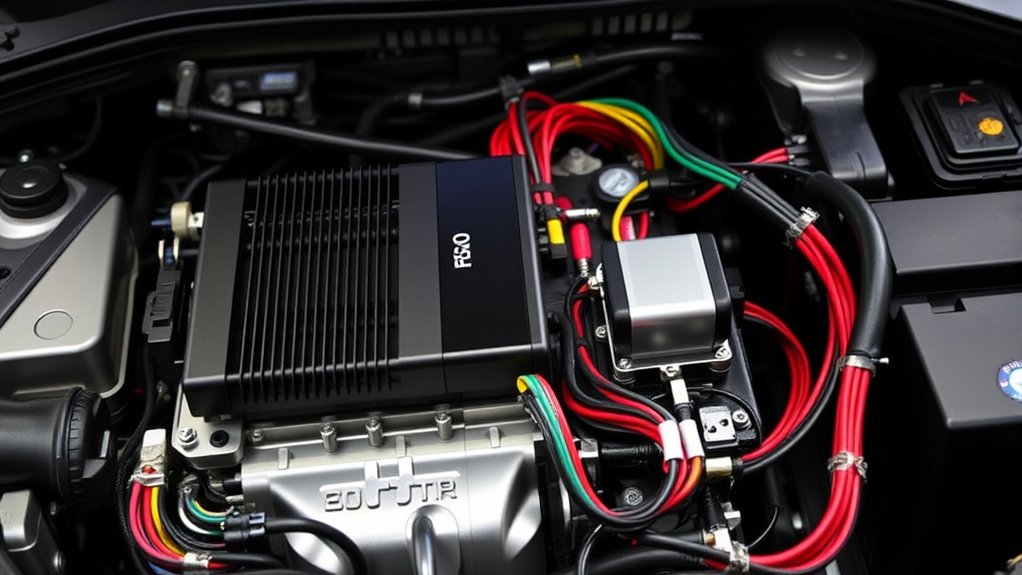
The Toyota Camry Hybrid relies on coordinated high-voltage power electronics to move the car, recover energy during braking, and support its conventional 12-volt electrical system. Two of the most important parts are the traction inverter and the auxiliary DC-DC converter. They may share one power-control assembly, but they perform different electrical jobs and should not be treated as the same device.
This guide explains what each component does, how power flows during acceleration and regenerative braking, what changes by model year, which symptoms may point to a fault, and which checks are safe for an owner.
Quick Answer
The Camry Hybrid inverter changes high-voltage battery DC into controlled three-phase AC for the motor-generators and manages reverse power flow during regenerative braking. The auxiliary DC-DC converter separately reduces high-voltage DC to the lower voltage needed by the 12-volt battery, computers, lights, relays, and accessories.
Key Takeaways
- The traction inverter controls power between the hybrid battery and the electric motor-generators.
- Regenerative braking returns some recovered electrical energy to the traction battery.
- The auxiliary DC-DC converter powers the 12-volt system and charges the auxiliary battery while the hybrid system is operating.
- A warning light or diagnostic code does not, by itself, prove that the inverter or converter has failed.
- Battery voltage, semiconductor design, cooling layout, component location, and service procedures vary by Camry generation and model year.
- Opening, probing, disconnecting, or insulation-testing a high-voltage component is not a safe owner-level repair.
Understanding the HV Inverter in a Toyota Camry Hybrid
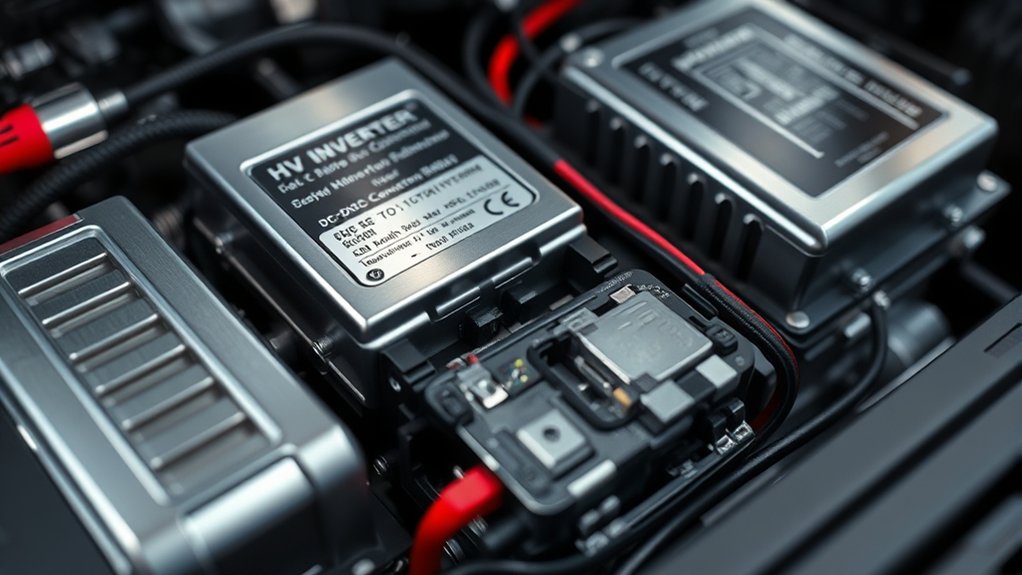
The high-voltage inverter is part of the Camry Hybrid’s power electronics. Its main job is to manage electrical power between the traction battery and the electric motor-generators in the hybrid transaxle.
The traction battery stores direct current, or DC. The motor-generators operate with controlled alternating current, or AC. During electric propulsion, the inverter rapidly switches the battery’s DC power to create the controlled three-phase AC waveform needed to regulate motor speed and torque.
During regenerative braking, a motor-generator produces electrical energy as the vehicle slows. The inverter manages power in the opposite direction so suitable energy can return to the traction battery as DC. This is why the inverter is better described as a bidirectional power-control device than as a simple one-way DC-to-AC box.
This operation matches the U.S. Department of Energy’s description of hybrid power electronics, which states that the power electronics controller manages battery energy and controls traction-motor speed and torque.
Note: Exact battery voltage, maximum internal voltage, transistor design, cooling arrangement, and component location vary by Camry model year. Use the owner’s manual, emergency response guide, warranty guide, or Toyota repair information for the exact vehicle.
What “Inverter With Converter” Means
Toyota warranty and parts language may refer to an inverter with converter. That name can describe an assembly containing several power-electronic functions. It does not mean the traction inverter and auxiliary DC-DC converter perform the same conversion.
- Traction inverter: Controls DC-to-AC and AC-to-DC power flow for the motor-generators.
- Boost converter, where fitted: Adjusts the high-voltage DC bus used by the motor drive.
- Auxiliary DC-DC converter: Reduces high-voltage DC for the 12-volt system.
Why Model Year and VIN Matter
Camry Hybrid generations do not all use the same battery chemistry, battery voltage, power-control layout, cooling arrangement, wiring, or diagnostic procedure. Even vehicles with similar symptoms can require different tests and parts.
Before ordering a component or following a repair procedure, identify the exact model year, drivetrain configuration, and VIN. Toyota’s Technical Information System provides model-specific repair information, and its emergency responder and dismantler guides are available without a paid repair-information subscription.
How the HV Inverter Converts Power
The inverter does more than switch power on and off. The hybrid control system continuously adjusts switching timing and pattern to produce the requested motor torque while keeping current, voltage, and temperature within controlled limits.
Power Flow During Acceleration
When the electric motor assists with acceleration, energy moves from the traction battery to the power-control electronics. The inverter converts the available DC power into controlled three-phase AC for the traction motor.
The gasoline engine may remain off, operate by itself, or work with the electric motor. The exact power split changes with vehicle speed, battery charge, temperature, acceleration demand, traction conditions, and other operating inputs.
Power Flow During Cruising
During steady driving, the hybrid control system selects an efficient combination of engine and electric-motor operation. A motor-generator can also produce electricity when operating conditions allow it.
The driver normally does not need to manage these power paths. The vehicle’s computers coordinate them automatically.
Power Flow During Regenerative Braking
When you release the accelerator or press the brake pedal, the hybrid system can use a motor-generator to help slow the vehicle. The motor-generator then acts as a generator, converting some of the vehicle’s motion into electrical energy.
The inverter manages the generated current and returns suitable DC power to the traction battery. The U.S. Department of Energy explains regenerative braking as capturing energy that would otherwise be lost during braking and storing it in the battery.
Regenerative braking cannot recover all braking energy. Available regeneration may decrease when the battery is cold, hot, nearly full, or restricted by a fault. Low speed, hard braking, wheel slip, or stability-control operation can also increase the use of conventional friction brakes.
The inverter is a controlled, bidirectional power gateway: it sends battery energy to the motor during propulsion and manages energy returning from the motor during regenerative braking.
The Essential Function of the DC-DC Converter
The auxiliary DC-DC converter performs a different job from the traction inverter. It converts high-voltage DC from the hybrid system into lower-voltage DC for the Camry’s 12-volt electrical system.
This lower-voltage supply powers control modules, lighting, infotainment equipment, safety systems, relays, sensors, and other accessories. It also charges the auxiliary 12-volt battery while the hybrid system is operating. The Department of Energy’s hybrid-component guide describes the same high-voltage-to-low-voltage function.
The output should be described as supporting the vehicle’s 12-volt system, not as producing one fixed voltage under every condition. Charging voltage can change as the vehicle manages battery condition, electrical demand, temperature, and system operation.
The auxiliary battery still matters. Before the high-voltage system is connected, it supplies power to computers and relays needed to start the hybrid system. A weak 12-volt battery can therefore cause warning messages, a no-READY condition, unusual electronic behavior, communication faults, or starting problems even when the traction battery is healthy.
| Component | Primary Job | Main Power Form |
|---|---|---|
| Traction battery | Stores propulsion energy and receives recovered braking energy | High-voltage DC |
| Traction inverter | Controls power between the battery and motor-generators | DC and controlled three-phase AC |
| Boost converter, where fitted | Adjusts the DC-link voltage used by the motor drive | High-voltage DC to adjusted high-voltage DC |
| Auxiliary DC-DC converter | Powers the 12-volt system and charges the auxiliary battery | High-voltage DC to lower-voltage DC |
| 12-volt auxiliary battery | Powers low-voltage systems before and during hybrid-system startup | Low-voltage DC |
What Happens During AC-to-DC and DC-to-DC Conversion
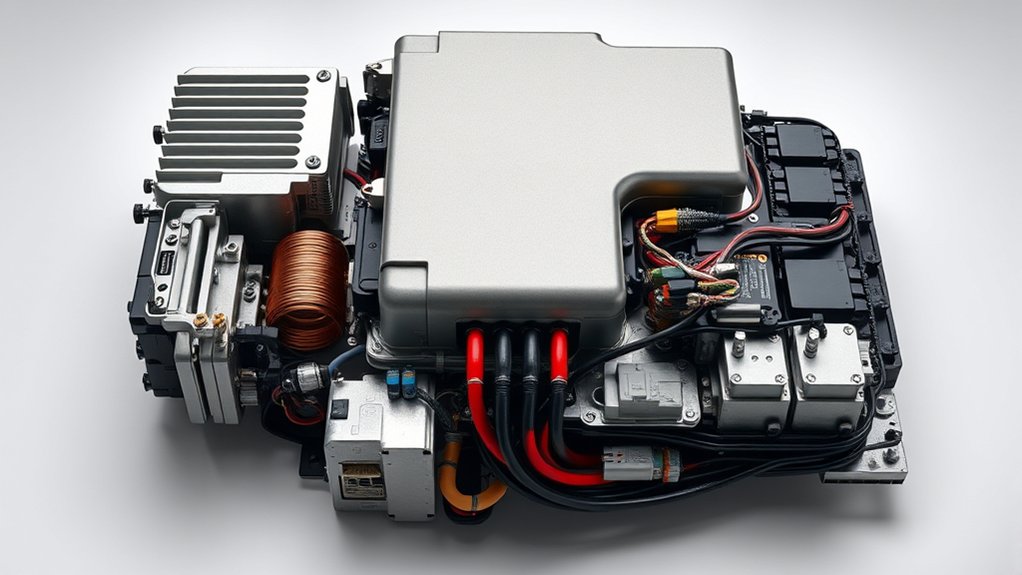
The idea of “turning AC into usable DC” applies most directly to regenerative power from a motor-generator. However, the process in a modern hybrid is more complex than a basic household-style diode rectifier.
The inverter uses controlled power-semiconductor switches, supporting diodes, sensors, capacitors, and control software to manage current in both directions. During propulsion, it produces controlled three-phase AC. During regeneration, it manages the motor-generator’s electrical output and sends controlled DC power toward the traction battery.
The auxiliary DC-DC converter starts with DC, not AC. It uses high-frequency switching, magnetic components, filtering, regulation, and feedback control to produce the lower-voltage DC needed by the 12-volt system.
Diode Functionality Explained
Diodes allow current to flow more readily in one direction than the other. In automotive power electronics, they can provide current paths when transistor switches turn off, help manage inductive energy, and support controlled conversion.
They should not be described as the only devices responsible for converting motor AC into battery DC or high-voltage DC into the 12-volt supply. The complete process depends on actively controlled semiconductor switches and the vehicle’s electronic control strategy.
Power-transistor technology has changed across Toyota hybrid generations and may differ by assembly. Earlier designs often used silicon-based devices such as insulated-gate bipolar transistors, while newer Toyota electrified-vehicle designs may use other semiconductor technologies. Confirm the exact device through model-specific technical information rather than assuming that every Camry uses the same transistor type.
Smoothing and Filtering Techniques
Switching power electronics create rapid changes in current and voltage. Capacitors, inductors, magnetic components, sensors, and control circuits help smooth those changes, reduce electrical noise, and maintain stable operation.
| Part or Method | Role in the Power Electronics |
|---|---|
| DC-link capacitors | Help stabilize the high-voltage DC bus and support short changes in power demand |
| Inductors and magnetic components | Store energy briefly and help control current during voltage conversion |
| Semiconductor switches | Switch current at controlled times to create the required voltage and waveform |
| Diodes | Provide supporting one-way current paths within the switching circuit |
| Voltage and current sensors | Give the control system feedback for regulation and fault detection |
Importance for System Stability
Stable voltage and controlled current are important because the motor-generators, traction battery, 12-volt battery, and electronic modules each have operating limits.
The hybrid control system monitors electrical conditions and can reduce power, disable regeneration, illuminate warning indicators, store diagnostic trouble codes, or shut down part of the system when it detects an unsafe condition.
These protections reduce the chance of damage, but they cannot guarantee that every fault will remain harmless. Warning messages should be diagnosed instead of repeatedly cleared or ignored.
Essential Components of the Inverter and Converter Assembly
The exact construction varies by generation, but a Camry Hybrid power-control assembly may contain several of the following elements:
- Power semiconductor modules: Rapidly switch current to control the motor-generators and electrical power flow.
- DC-link capacitors: Help stabilize the high-voltage bus during changing loads.
- Voltage-boost circuitry: Adjusts the high-voltage DC bus on systems designed with a boost-converter stage.
- Auxiliary DC-DC converter: Supplies lower-voltage DC to the vehicle’s 12-volt system.
- Current, voltage, and temperature sensors: Provide feedback for power control and fault protection.
- Cooling passages or heat exchangers: Remove heat from semiconductor modules and related electronics.
- Control electronics: Coordinate switching commands and communicate with the hybrid control system.
The inverter does not independently decide how much engine or motor power to use. Vehicle control modules calculate the operating mode using accelerator input, speed, battery condition, temperature, braking demand, traction conditions, and other sensor data.
Fault Conditions, Protection Mechanisms, and High-Voltage Safety
Warning: Do not open the inverter, remove high-voltage covers, disconnect orange cables, probe high-voltage terminals, remove the service plug, or attempt insulation testing without Toyota-approved procedures, protective equipment, and high-voltage training. Capacitors may retain hazardous energy after the vehicle is switched off.
Hybrid vehicles use insulation, high-voltage relays, monitoring circuits, warning systems, and collision-related isolation features to reduce electrical risk. The Department of Energy’s electric-vehicle safety guidance explains that high-voltage lines are insulated and that light-duty electrified vehicles include safety features intended to isolate or deactivate high voltage after certain collisions or electrical faults.
Overcurrent and Overvoltage Protection
Current sensors allow the control system to compare actual current with the expected operating range. Excessive current may result from an internal electrical fault, damaged wiring, motor problem, failed semiconductor, short circuit, or severe operating condition.
Depending on the fault, the system may limit motor output, stop regenerative charging, open high-voltage relays, store diagnostic trouble codes, or prevent the vehicle from entering READY mode.
Overvoltage protection performs a related function. It helps prevent the high-voltage bus and battery from being exposed to electrical conditions outside their intended limits.
Temperature Monitoring
Power semiconductor modules generate heat whenever they switch and conduct current. Temperature sensors help the control system determine whether the inverter and converter are operating within an acceptable range.
| System Element | Protective Role |
|---|---|
| Temperature sensors | Report heat levels in or near the power electronics |
| Hybrid control modules | Reduce output or trigger protective action when readings exceed limits |
| Cooling system | Transfers heat away from the power electronics |
| Warning and fail-safe operation | Alerts the driver and may limit or disable hybrid operation |
A high-temperature reading does not automatically prove that the inverter itself has failed. Low coolant, trapped air after improper service, pump failure, restricted flow, radiator blockage, wiring faults, inaccurate sensor data, or an internal power-electronics problem may produce similar symptoms.
Cooling Failure Detection
Camry Hybrid generations may use a dedicated cooling circuit or another model-specific arrangement for their power electronics. The system monitors temperature and may also evaluate pump operation or related electrical conditions.
A cooling problem can cause warning messages, reduced power, disabled electric operation, or protective shutdown. Continued driving after a serious warning may increase heat and component damage.
Check only the items permitted by the owner’s manual. Never remove a hot coolant cap. Do not substitute coolant, bypass a pump, or open the high-voltage assembly to look for an internal cooling problem.
How the System Improves Efficiency and Drivability
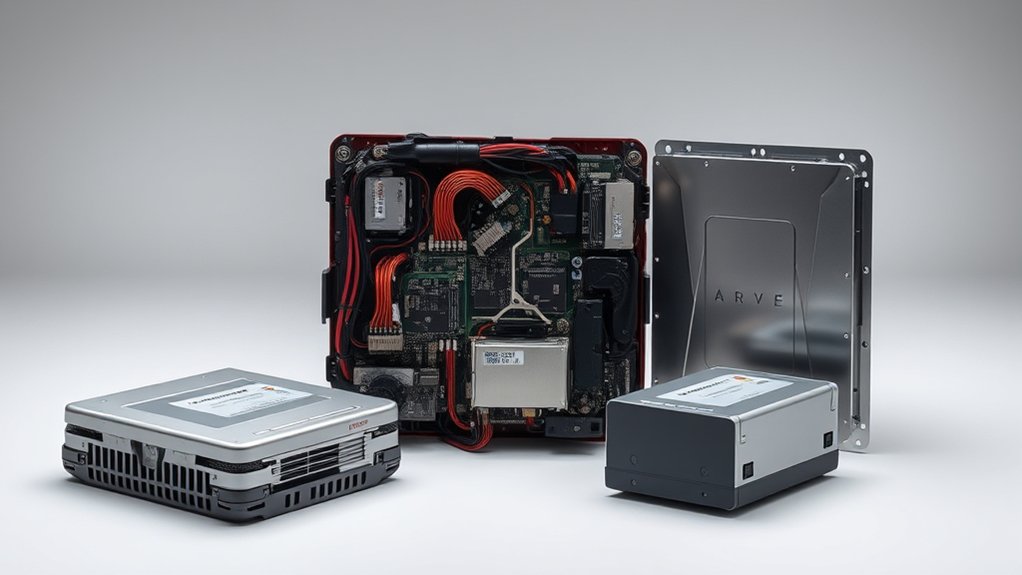
The Camry Hybrid’s efficiency comes from coordinated operation rather than from one component alone. The engine, motor-generators, traction battery, inverter, converters, brakes, and control modules work as one power-management system.
The electric motor can assist the engine when additional torque is useful. It can also move the vehicle under suitable low-load conditions, depending on model, battery state, temperature, and operating demand.
Regenerative braking recovers part of the vehicle’s kinetic energy instead of converting all of it into heat at the brake pads and rotors. This can reduce fuel use and brake wear, although conventional friction brakes remain essential.
The DC-DC converter also supports the 12-volt electrical system without a conventional belt-driven alternator. That design gives the hybrid control system more flexibility over when the gasoline engine runs.
These functions can improve fuel economy, low-speed response, and operating smoothness. They do not remove the need for regular engine maintenance, brake inspections, coolant checks, tire care, 12-volt battery testing, and model-specific hybrid-system service.
Troubleshooting Inverter and DC-DC Converter Issues
Inverter and converter problems can create symptoms similar to those caused by a weak 12-volt battery, cooling-system fault, wiring problem, failed sensor, damaged connector, motor-generator fault, blown fuse, poor ground, or control-module issue. Warning lights alone rarely identify the failed part.
Common Warning Signs
- A hybrid-system warning message or master warning indicator
- A charging-system or battery warning light
- The vehicle will not enter READY mode
- Reduced acceleration or protective power limitation
- A repeatedly discharged 12-volt battery
- Intermittent electronic resets or low-voltage electrical problems
- Abnormal inverter-cooling temperature or coolant circulation
- Diagnostic trouble codes related to voltage, current, isolation, temperature, cooling, or communication
A red battery or charging warning does not prove that the DC-DC converter has failed. The vehicle must be tested to determine whether the cause is the auxiliary battery, converter, wiring, fuse, connection, sensor, control circuit, or another component.
Symptom-to-Next-Step Triage
| Symptom | Possible Causes | Best Next Step |
|---|---|---|
| No READY mode | Weak 12-volt battery, poor connection, interlock or relay issue, stored hybrid fault | Test the 12-volt supply and read all relevant control modules before condemning the inverter |
| 12-volt battery keeps discharging | Aging battery, parasitic draw, converter output problem, wiring or fuse fault | Load-test the battery, confirm converter output in READY mode, and check for excessive key-off draw |
| Reduced power with heat warning | Low coolant, poor circulation, blocked heat exchanger, pump or sensor fault, internal overheating | Stop if the warning is serious and have the model-specific cooling circuit tested |
| Warning after jump-start or battery replacement | Low-voltage event, reversed connection damage, loose terminal, stored communication code | Inspect 12-volt connections and fuses, then scan all hybrid-related modules |
| Isolation or high-voltage code | Damaged cable, moisture intrusion, battery, transaxle, compressor, or inverter fault | Stop owner-level testing and use a qualified hybrid technician with approved insulation-testing procedures |
Checks an Owner Can Perform Safely
- Record the exact warning message and the conditions under which it appeared.
- Check whether the vehicle enters READY mode.
- Inspect safely accessible 12-volt battery terminals for visible looseness or corrosion.
- Check only the coolant reservoirs identified in the owner’s manual, and only when the vehicle is cool.
- Look for obvious collision damage, rodent damage, fluid leaks, or blocked cooling openings without touching high-voltage parts.
- Review recent 12-volt battery replacement, jump-start, coolant service, collision repair, flood exposure, or accessory installation.
- Check the VIN for open recalls or service campaigns through Toyota and, for U.S. vehicles, NHTSA’s recall lookup.
Pro Tip: Photograph the dashboard message before switching the vehicle off. Some warnings disappear after a restart even though diagnostic trouble codes and freeze-frame data remain stored.
What Diagnostic Codes Can and Cannot Tell You
A diagnostic trouble code identifies the system or condition that detected a problem; it does not always name the failed part. A code associated with inverter temperature, converter output, isolation, or communication may be caused by wiring, power supply, coolant flow, sensor data, another control module, or the component itself.
Basic code readers may not access every Toyota hybrid control module or information code. A complete diagnosis may require Toyota-compatible equipment, freeze-frame data, active tests, service-manual flowcharts, and measurements made under specified conditions.
Diagnosis for a Qualified Hybrid Technician
A trained technician may use Toyota-compatible diagnostic equipment to read current, history, pending, and information codes. Diagnosis may also involve checking freeze-frame data, 12-volt supply voltage, DC-DC converter output, coolant operation, insulation resistance, wiring integrity, communication networks, and model-specific test results.
Testing transistor switching signals, opening the inverter, discharging capacitors, removing the service plug, measuring high-voltage insulation, or disconnecting orange cables requires approved procedures and protective equipment.
Replacing an inverter without completing the diagnostic process can be expensive and may leave the actual wiring, cooling, battery, motor, compressor, or control problem unresolved.
Preventive Care That Reduces Avoidable Problems
- Follow the model-specific coolant inspection and replacement schedule.
- Use only the specified coolant and correct bleeding procedure after service.
- Keep cooling openings and heat exchangers free of debris where owner access is permitted.
- Test an aging 12-volt battery before it begins causing low-voltage faults.
- Avoid incorrect jump-start polarity and unapproved high-current accessory wiring.
- Address rodent damage, water intrusion, collision damage, and warning messages promptly.
When to Stop Driving
Stop in a safe location and request professional assistance when the vehicle reports a serious hybrid-system fault, loses propulsion, emits smoke or a burning odor, shows signs of overheating, has collision damage near high-voltage components, or cannot maintain normal electrical operation.
After a significant collision, flood exposure, or suspected high-voltage damage, do not touch orange cables or damaged electrical parts. Tell the towing operator that the vehicle is a hybrid.
Warranty and Model-Specific Information
As of July 2026, Toyota’s U.S. warranty information lists the inverter with converter among hybrid-related components covered for 8 years or 100,000 miles. For Toyota hybrids beginning with model year 2020, the hybrid battery is listed at 10 years or 150,000 miles, whichever comes first.
Coverage can vary by model year, original in-service date, location, emissions regulations, prior repair history, and warranty conditions. Confirm coverage using the warranty guide for the exact Camry and ask a Toyota dealer to check the VIN before authorizing a major inverter or converter replacement.
Related Guides
Frequently Asked Questions
What is the purpose of a DC-DC converter in a hybrid vehicle?
The auxiliary DC-DC converter reduces high-voltage DC from the hybrid system to the lower-voltage DC needed by the 12-volt electrical system. It powers accessories and charges the auxiliary battery while the hybrid system is operating.
What is the function of the inverter in a Camry Hybrid?
The traction inverter converts high-voltage battery DC into controlled three-phase AC for the motor-generators. During regenerative braking, it manages power flowing in the opposite direction so recovered energy can return to the traction battery.
Are the inverter and DC-DC converter the same part?
No. They may be packaged in the same power-control assembly, but the traction inverter controls battery-to-motor power while the auxiliary DC-DC converter supports the 12-volt system.
Are the inverter and DC-DC converter inside the hybrid battery?
No. The traction battery pack, power-control assembly, motor-generators, control modules, and engine are separate parts of the complete hybrid system. Exact component location and packaging vary by model year.
Can a bad 12-volt battery look like an inverter problem?
Yes. A weak auxiliary battery can cause warning messages, electronic resets, communication faults, or a failure to enter READY mode. The 12-volt battery and low-voltage supply should be tested before an expensive inverter assembly is condemned.
Does a red battery warning mean the DC-DC converter has failed?
Not necessarily. The warning indicates a charging or electrical-system problem. Possible causes include the 12-volt battery, converter, wiring, fuse, connection, sensor, parasitic draw, or control fault. Diagnostic testing is required.
Can one diagnostic code prove the inverter is bad?
Usually not. A code identifies a detected condition or affected system. Wiring, cooling, low-voltage power, sensors, communication faults, or another high-voltage component can trigger inverter-related codes, so the model-specific diagnostic procedure still matters.
Can I repair a Camry Hybrid inverter myself?
Opening or electrically testing the inverter is not an appropriate general DIY task. The assembly contains high-voltage circuits and capacitors that may retain hazardous energy. Diagnosis and internal repair require model-specific procedures, insulated equipment, and high-voltage training.
Conclusion
The Toyota Camry Hybrid inverter and auxiliary DC-DC converter perform separate but closely coordinated jobs. The traction inverter controls power between the high-voltage battery and motor-generators, while the DC-DC converter supports the 12-volt battery and low-voltage electronics.
Understanding that difference makes warning messages and repair recommendations easier to evaluate. A charging warning does not automatically identify a failed converter, and a hybrid-system warning or diagnostic code does not always mean the inverter needs replacement.
Keep model-year differences in mind, follow the maintenance and safety information supplied for the exact Camry, verify warranty or recall status by VIN, and leave internal high-voltage diagnosis to a qualified hybrid technician.
Sources
- U.S. Department of Energy Alternative Fuels Data Center: How Hybrid Electric Cars Work — hybrid components, DC-DC converter function, traction motor, power electronics, and cooling.
- U.S. Department of Energy Alternative Fuels Data Center: Hybrid Electric Vehicles — regenerative braking and hybrid power operation.
- U.S. Department of Energy Alternative Fuels Data Center: Maintenance and Safety of Electric Vehicles — high-voltage safety, maintenance, isolation, and emergency guidance.
- Toyota Owners: Camry Manuals and Warranties — U.S. hybrid-related component coverage and model-specific owner information.
- Toyota Technical Information System — manufacturer repair procedures, diagnostics, emergency response guides, and technical information for specific models.
- National Highway Traffic Safety Administration: Recall Lookup — U.S. VIN-based safety recall information.
