
If your Toyota Camry makes a grinding noise when braking, treat it as a brake-system warning until the cause is confirmed. Severely worn brake pads are a leading concern, but rotor damage, a dragging caliper, trapped debris, surface rust, contamination, or a bent dust shield can produce similar sounds. Prompt diagnosis protects braking performance and may prevent damage to additional components.
Quick Answer
A Toyota Camry may grind during braking when a pad has worn through its friction material and metal contacts the rotor. Other causes include scored rotors, a dragging caliper, trapped debris, contamination, or temporary surface rust. Persistent grinding or any change in pedal feel or stopping power requires prompt inspection.
Key Takeaways
- Persistent metallic grinding is not a normal brake sound and may indicate metal-to-metal contact.
- A soft, sinking, unusually hard, or low pedal; reduced stopping power; pulling; smoke; a fluid leak; or a red brake warning makes the problem urgent.
- Pedal pulsation can come from rotor thickness variation, runout, uneven deposits, heat damage, hub problems, or loose or worn components.
- Brief scraping after rain may come from light surface rust, but it should fade quickly after a few gentle stops.
- Normal ABS operation or Camry Hybrid regenerative braking may create motor sounds or pedal feedback, but neither should produce persistent harsh metal scraping.
- Use the manual for your exact Camry model year and check the VIN for open recalls or service campaigns.
At a Glance
| Time Required | About 10–20 minutes for a safe symptom and exterior visual check. A complete brake inspection and measurement process takes longer. |
| Difficulty | Basic for observing symptoms. Intermediate to advanced for lifting, wheel removal, measurement, hydraulic diagnosis, electronic parking-brake work, or repair. |
| Tools Needed | No tools for the initial symptom check. A proper inspection may require a lift or correctly placed jack stands, pad gauges, a micrometer, a dial indicator, a capable scan tool, torque tools, and model-specific service information. |
| Cost | Varies by model year, failed component, rotor condition, brake package, local labor rates, and whether continued driving damaged the rotor, caliper, or related hardware. |
Warning: Stop driving as soon as you can do so safely if grinding is persistent or comes with a soft, sinking, unusually hard, or low pedal; a red brake warning; reduced stopping power; pulling; smoke; a fluid leak; or one wheel becoming extremely hot. Move out of traffic, avoid touching hot brake parts, and arrange professional service or towing.
Normal Brake Sound or a Serious Problem?
Not every sound during deceleration means that the brake pads are grinding. The timing, tone, pedal feedback, road conditions, and duration of the sound help separate normal system operation from a mechanical fault.
| Sound or Sensation | What It May Mean | What to Do |
|---|---|---|
| Brief scrape during the first stops after rain or washing | Light surface rust on an iron rotor | Make a few gentle stops in a safe area. Arrange an inspection if it does not fade quickly. |
| Pedal pulsation and rapid mechanical sound during hard braking on a slippery or loose surface | Possible normal ABS activation | Maintain firm pedal pressure and steer as needed. Inspect the system if ABS-like activation occurs during ordinary gentle stops. |
| Smooth electric whine or short motor sound in a Camry Hybrid | Regenerative braking or normal brake-system operation may be audible | Compare the sound with the exact owner’s manual. Persistent metallic scraping, vibration, or changed braking is not explained by normal regeneration. |
| Harsh metallic grinding whenever the pedal is pressed | Worn pads, damaged rotor, debris, or a caliper fault | Avoid normal driving and arrange a brake inspection promptly. |
| Continuous scraping while rolling without using the brake | Dust-shield contact, trapped debris, a dragging brake, wheel bearing, or another rotating component | Have the affected wheel area inspected before assuming that the pads are responsible. |
Toyota owner information explains that ABS operation can create motor sounds, vibration, and slight pedal pulsation. Hybrid models may also make sounds during regenerative braking or brake-system operation. These sounds are generally smoother and condition-specific. They should not be used to dismiss loud, persistent, or worsening metal-on-metal grinding.
Top Causes of Grinding Noises and How to Fix Them

A grinding sound can come from several parts around the wheel. Note exactly when it occurs: only with the brake pedal pressed, during the first few stops after rain, continuously while the car rolls, during a turn, or after recent brake work. That timing helps narrow the cause.
Worn Brake Pads and Metal Contact
One of the most serious common concerns is a pad that has worn through most or all of its friction material. The pad’s metal backing plate or another metal component can then scrape the rotor. The sound may be harsh, low-pitched, and noticeably worse when you press the pedal.
Toyota lists grinding or scraping during brake use as a possible sign of severely worn pads and warns that metal backing material can damage both the pad and rotor. Review Toyota’s official brake-pad warning guidance.
Continuing to drive can score the rotor, create substantial heat, and increase the amount of repair work. Replacing pads alone may not be enough if the rotor has deep grooves, cracks, heavy corrosion, excessive runout, heat damage, or insufficient remaining thickness.
Rotor Scoring, Thickness Variation, and Runout
Rotors can develop deep scoring, uneven thickness, lateral runout, thermal spots, or uneven friction-material deposits. Drivers often group these conditions under the phrase “warped rotors,” even though the underlying causes differ.
Thickness variation means the rotor is not equally thick all the way around. Lateral runout means the installed rotor moves slightly from side to side as it turns. Either condition can contribute to pedal pulsation or vibration.
Rotor-related problems may cause steering-wheel vibration, rhythmic scraping, pedal pulsation, or noise that changes with wheel speed. A technician should measure rotor thickness, thickness variation, hub condition, and runout instead of diagnosing the rotor by appearance alone.
Sticking Caliper or Slide Pins
A caliper piston or slide pin may stick because of corrosion, damaged protective boots, incorrect or dried lubricant at approved hardware points, binding hardware, or a hydraulic problem. The affected pad may remain pressed against the rotor after you release the pedal.
Possible signs include pulling, one wheel producing much more brake dust, an acrid hot-brake odor, reduced fuel economy, uneven pad wear, smoke, or one wheel becoming much hotter than the others. Do not touch the wheel, rotor, or caliper to test its temperature.
A restricted flexible brake hose can sometimes hold pressure at one caliper even after pedal pressure is released. Cleaning and lubricating slide points will not correct a hose restriction, seized piston, leaking seal, or heavily corroded caliper.
Debris, Dust-Shield Contact, or Contamination
A stone can become trapped between the rotor and dust shield, or the shield can bend and scrape the rotor. This often creates a lighter metallic scraping that continues even when you are not pressing the brake pedal.
Oil, grease, axle grease, or brake fluid on a pad or rotor can also cause noise, grabbing, and inconsistent friction. The leak or contamination source must be corrected. Pads that have absorbed fluid or lubricant normally require replacement rather than a quick surface wipe.
Surface Rust and Moisture
Light surface rust can develop on iron rotors after rain, washing, overnight humidity, or extended parking. You may hear brief scraping during the first few gentle stops as the pads clean the rotor surface.
The sound should fade quickly. Noise that continues, repeatedly returns under dry conditions, or comes with vibration, pulling, weak braking, or heavy visible corrosion needs an inspection.
Non-Brake Noises Near the Wheel
If the grinding continues while you coast without touching the brake pedal, the source may not be the pad-to-rotor interface. A wheel bearing, damaged splash shield, loose component, tire contact, drivetrain part, or severely dragging brake can create a similar sound.
A noise that changes during turns or rises and falls with road speed is an important clue, but it is not enough by itself to confirm a wheel-bearing failure.
Diagnosing Brake Noise: Key Symptoms to Watch For
Brake noise should be judged together with pedal feel, vibration, odor, warning lights, vehicle pull, and the conditions under which the sound begins. The table below provides a starting point, not a substitute for physical inspection.
| Symptom | Possible Cause | Recommended Action |
|---|---|---|
| Harsh grinding only while braking | Severely worn pad, scored rotor, lodged debris, or caliper fault | Avoid continued normal driving and arrange an inspection. |
| Brief scraping after rain | Light rotor surface rust | Make a few gentle stops in a safe area. Inspect if the sound remains. |
| Pulsating pedal or steering vibration | Rotor thickness variation, runout, uneven deposits, hub runout, or loose or worn components | Have the rotor and hub measured and the wheel, steering, and suspension components checked. |
| Pulling or one wheel overheating | Dragging caliper, hose restriction, contaminated lining, or uneven braking | Stop driving and arrange professional diagnosis. |
| Soft, low, or sinking pedal | Fluid leak, air, boiling fluid, master-cylinder fault, or another hydraulic problem | Treat as urgent and do not continue driving. |
| Unusually hard pedal or greatly increased pedal effort | Reduced brake assist, booster or actuator problem, vacuum or electrical fault, or another system malfunction | Stop safely and arrange urgent diagnosis or towing. |
| Scraping while rolling without braking | Dust shield, trapped debris, dragging brake, wheel bearing, or another rotating component | Inspect before assuming the pads are responsible. |
Common Brake Noise Indicators
A high-pitched squeal can come from an audible pad-wear indicator, pad vibration, glazing, hardware, or contamination. Grinding usually suggests more severe contact, but sound alone cannot confirm which part has failed.
Watch for changes in stopping distance, pedal travel, pedal firmness, steering-wheel vibration, vehicle pull, warning lights, odor, and smoke. Excessive brake dust may support other evidence, but dust by itself does not prove that a pad is worn out.
Symptoms of Worn Pads
- Persistent squealing or grinding during brake application
- Visibly thin friction material when inspected safely
- Deep rotor scoring caused by metal contact
- A brake-wear warning, where equipped
- Uneven inner and outer pad wear, which may indicate a caliper, slide, hose, or hardware problem
A soft or sinking pedal is not a reliable pad-wear symptom. It points toward a hydraulic or fluid-related problem and requires immediate diagnosis.
Signs of Rotor Issues
- Brake-pedal pulsation that repeats with wheel rotation
- Steering-wheel vibration during braking
- Deep grooves, heat checking, cracks, or heavy corrosion
- Rhythmic scraping or grinding
- Noise or vibration that remains after pad replacement
A rotor’s serviceability depends on measurements and the manufacturer’s specifications. Resurfacing is not appropriate when machining would leave the rotor below its minimum thickness or when cracking, severe heat damage, corrosion, or another defect requires replacement.
How Worn Brake Pads Cause Grinding
Brake pads contain friction material bonded to a metal backing plate. Normal braking gradually wears away that material. If replacement is delayed long enough, the backing plate, wear indicator, or another metal component can contact the rotor.
- Metal contact can cut grooves into the rotor and generate substantial heat.
- An audible wear tab may squeal before the pad reaches metal-to-metal contact, but wear-indicator designs differ.
- One pad wearing much faster than its partner can point to a sticking piston, seized slide, damaged hardware, restricted hose, or another fault.
- Replacing pads without correcting the reason for uneven wear can allow the problem to return.
Have both sides of the axle inspected. Brake pads are normally serviced in axle sets so braking remains balanced from side to side.
Effects of Rotor Variation and Damage on Brake Performance
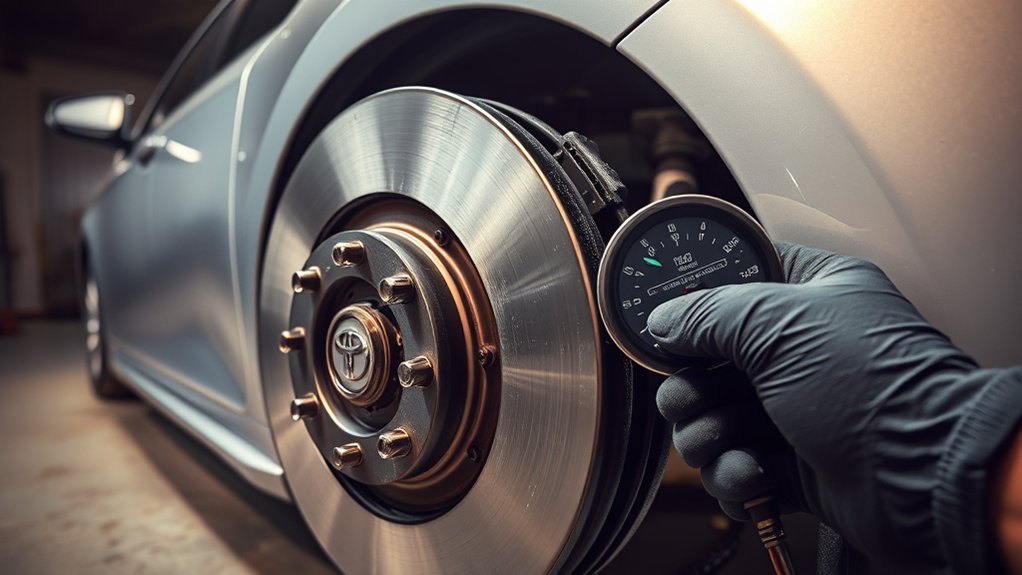
Drivers often use “warped rotor” to describe any brake pulsation. The actual cause may be lateral runout, disc-thickness variation, uneven pad deposits, thermal spots, mounting-surface contamination, physical distortion, or a hub or installation problem.
Brake judder is a vibration condition that can involve the rotor, pads, hub, suspension, steering, and installation. Technical research also treats judder as a multi-factor condition rather than one universal failure mode. One example is Stability Analysis and μ-Synthesis Control of Brake Systems.
Symptoms of Rotor Variation or Damage
- A brake pedal that pulses during moderate or firm braking
- Steering-wheel vibration that becomes stronger at certain speeds
- Rhythmic rubbing, scraping, or grinding
- Hot spots, scoring, cracking, or corrosion visible during inspection
- Repeated pad wear or noise after a previous brake repair
Similar vibration can come from loose or unevenly tightened wheel fasteners, hub runout, suspension wear, tire problems, wheel damage, or improper installation. Diagnosis should include the complete rotating assembly.
Impact on Stopping Distance
Rotor damage does not add one fixed number of feet to every stop. The effect depends on vehicle speed, tire grip, brake temperature, pad condition, hydraulic performance, road surface, vehicle load, and the severity of the fault.
Any condition that reduces stable pad-to-rotor contact can make braking less consistent. If the pedal pulsates strongly, braking performance changes, or grinding accompanies the vibration, avoid driving until the system has been inspected.
Identifying Sticking Calipers: Key Symptoms and Solutions
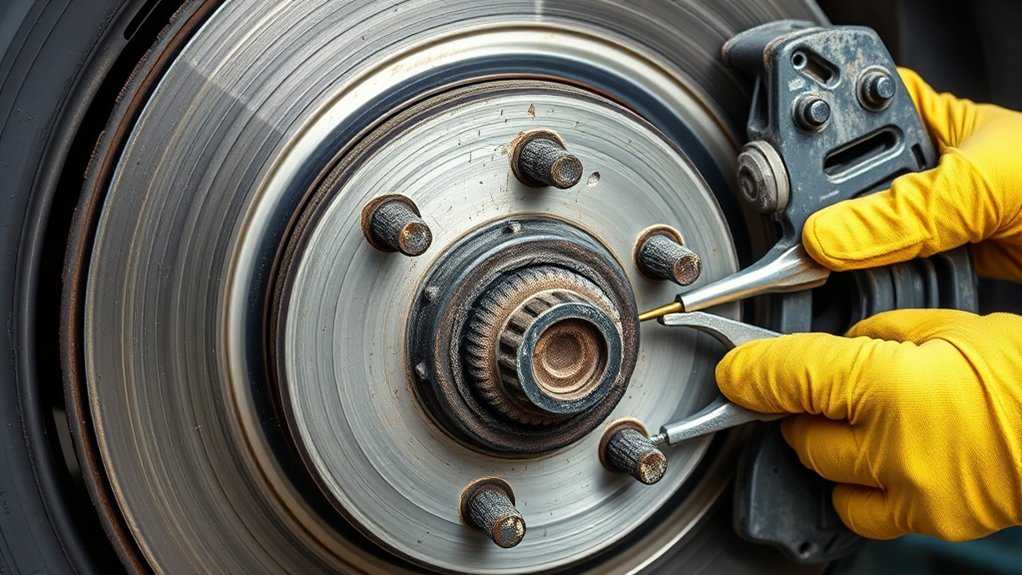
A sticking caliper may keep a pad in contact with the rotor after you release the brake pedal. Causes can include corrosion, a seized piston, binding slide pins, damaged boots, incorrect hardware, or a restricted flexible brake hose.
Common warning signs include:
- The Camry pulls to one side while braking or driving
- An acrid hot-brake odor after a short trip
- Smoke near one wheel
- One wheel becoming much hotter than the others
- Rapid or uneven pad wear
- Heavy brake dust concentrated at one wheel
- Poor fuel economy caused by continuous brake drag
Cleaning and lubricating approved caliper contact points may be part of a proper service, but it will not repair a seized piston, leaking seal, damaged hose, distorted bracket, or heavily corroded component.
Warning: Never apply grease, oil, anti-seize compound, penetrating fluid, or silicone spray to a brake pad’s friction material or the rotor’s braking surface. Contamination can sharply reduce friction and may require component replacement.
Environmental Effects on Brake Noise
Humidity, rain, road salt, washing, temperature changes, and extended parking can affect brake noise. Light surface rust may create a brief scraping sound during the first few stops after the Camry has been parked.
Sand or small stones can become trapped near the rotor. Road grime, grease, or leaked brake fluid can alter friction and create noise. Cold temperatures may also change how some pad materials sound before the brakes warm.
Note: Temporary rust noise should fade quickly during gentle braking. Do not assume weather is responsible when grinding persists, braking feels different, or the vehicle pulls or vibrates.
Can You Drive a Camry With Grinding Brakes?
You should not continue normal driving with persistent grinding. Even when the car still stops, metal contact may be damaging the rotor and exposing the brake assembly to excessive heat.
Stop and arrange towing or immediate professional assistance when you notice any of the following:
- A soft, sinking, unusually hard, or unusually low brake pedal
- A red brake warning light that remains on
- Noticeably longer or inconsistent stopping distances
- Strong pulling during braking
- Smoke, a fluid leak, or an intense hot-brake odor
- Grinding that is loud, constant, or rapidly worsening
- One wheel that appears severely overheated
- Brake fluid that is visibly falling below its normal range
If the only symptom is a faint scrape during the first stops after rain and it disappears promptly, light rotor rust may be responsible. Continue monitoring the brakes and arrange an inspection if the sound returns or any other symptom develops.
Note: Adding brake fluid is not a repair for a falling level. Low fluid can result from normal pad wear, a leak, or another problem. A sudden drop, visible leak, or warning light requires diagnosis before the vehicle is driven.
Step-by-Step Brake Noise Check
- Move to a safe location. Leave traffic if possible and avoid steep grades, towing, high speeds, and repeated hard braking.
- Check the instrument panel. Note any red brake, ABS, stability-control, parking-brake, or master-warning lights and any displayed messages.
- Evaluate the pedal. A soft, low, sinking, unusually hard, or inconsistent pedal requires urgent professional help.
- Record when the sound occurs. Note whether it happens only with pedal pressure, continuously while rolling, during turns, during ABS activation, or only after rain.
- Look for obvious hazards. From a safe distance, check for smoke or fluid beneath the vehicle. Do not touch hot wheels or brake parts.
- Check the fluid reservoir from outside. Where the reservoir is safely visible, note whether the level appears unexpectedly low. Do not open the hydraulic system or treat topping up as a substitute for diagnosis.
- Review recent work. Grinding after brake or tire service may involve installation, hardware, dust-shield contact, rotor condition, wheel-fastener tightening, or an incorrect bedding procedure.
- Arrange inspection. Persistent grinding should be diagnosed before the vehicle returns to regular use.
Pro Tip: Record the approximate speed, pedal pressure, weather, vibration, direction of any pull, warning lights, and whether the sound changes during turns. These details help a technician reproduce an intermittent condition.
Camry Hybrid and Electronic Parking-Brake Considerations
A Camry Hybrid blends regenerative braking with its friction brakes. Regenerative braking can create a smooth electric or motor-like sound, and ABS or brake-control systems may create brief operating sounds. Persistent metallic grinding, pulling, overheating, or changed pedal feel still requires inspection.
Regenerative braking does not eliminate wear or corrosion at the pads and rotors. Friction brakes continue to provide stopping force and are used under conditions such as firm braking, low speed, limited battery charging, system operation, or when additional stopping force is required.
Some newer Camrys use an electronic parking brake. Rear-brake service may require a specified release or service procedure. Do not force the rear caliper piston or operate the parking-brake switch while parts are removed. Use service information for the exact year, trim, and brake package.
Hybrid brake-control, ABS, actuator, and electronically controlled brake faults may require a capable scan tool and model-specific bleeding or initialization procedures. These are not appropriate areas for trial-and-error repair.
What Not to Do With Grinding Brakes
- Do not keep driving normally to see whether persistent grinding disappears.
- Do not perform repeated hard stops to “clean” the brakes unless an approved bedding procedure specifically requires them and the system has already been confirmed safe.
- Do not spray lubricant, penetrating oil, cleaner residue, or dressing near brake friction surfaces.
- Do not top off falling brake fluid and ignore the reason the level changed.
- Do not depend on the parking brake as a substitute for a malfunctioning service-brake system.
- Do not crawl beneath the vehicle or remove a wheel unless it is supported at the correct points with properly rated equipment.
- Do not assume new pads make the rest of the brake assembly safe; rotors, calipers, hoses, hardware, and installation still require inspection.
What a Technician Should Inspect
A complete brake diagnosis should examine more than the visible outer pad. Depending on the symptoms and Camry model year, the inspection may include:
- Inner and outer pad thickness and wear pattern
- Rotor thickness, scoring, cracking, corrosion, and heat damage
- Rotor thickness variation and lateral runout
- Hub cleanliness, bearing condition, and hub runout
- Caliper piston movement, slide pins, boots, clips, shims, and brackets
- Flexible brake hoses and visible hydraulic leaks
- Brake-fluid level, condition, and hydraulic pedal performance
- Brake-assist, actuator, ABS, and stability-control fault codes when relevant
- Dust shields and trapped debris
- Wheel bearings, suspension joints, and steering components
- Wheel-fastener condition, tightening sequence, and correct torque
- Electronic parking-brake operation and required service procedures
Toyota’s 2025 Camry maintenance guide specifically calls for checking pads for excessive wear and discs for runout, wear, and fluid leakage. The repair decision should follow measurements and the service limits for the exact vehicle. Use Toyota’s manual and warranty portal rather than applying one specification or schedule to every Camry.
Why Brakes May Grind After Pad Replacement
New pads may produce a light sound during their approved bedding process, but harsh grinding is not something to dismiss as normal. Possible causes include:
- A bent dust shield touching the rotor
- Incorrectly installed, damaged, or missing hardware
- A severely scored or unsuitable old rotor
- Debris between components
- A sticking caliper or slide pin that was not corrected
- Parts that do not match the vehicle or brake package
- Improper wheel, hub, or rotor installation
- Uneven or incorrect wheel-fastener tightening
- An electronic parking-brake procedure that was not completed correctly
Follow the brake-part manufacturer’s bedding instructions. Do not perform repeated hard stops unless the procedure specifically requires them, the brakes have been confirmed safe, and traffic and road conditions allow the process to be completed safely.
When to Call in the Pros for Brake Problems
Professional diagnosis is the safest choice when grinding persists or you cannot identify a harmless temporary cause. Call for immediate assistance when the pedal is soft, sinking, unusually hard, or low; the vehicle pulls; stopping distance changes; a red warning appears; fluid is leaking; or a wheel is overheating.
Brake repair also requires professional equipment when the work involves opening the hydraulic system, bleeding an ABS or electronically controlled brake system, measuring rotors, diagnosing brake-assist faults, operating an electronic parking brake in service mode, or lifting the vehicle without suitable tools and support points.
If you suspect a recurring safety defect, check the Toyota and NHTSA databases. Toyota’s recall and service-campaign lookup accepts a VIN or license plate. You can also use the NHTSA recall lookup.
A recall lookup does not diagnose a grinding sound, and an open campaign may concern an unrelated system. Recall information can change, so use the vehicle’s VIN rather than assuming that every Camry from one model year is affected.
A pattern that is not covered by a recall can be reported through NHTSA’s safety-complaint system.
Preventive Measures for Maintaining Your Toyota Camry Brakes
Have the brakes inspected at the intervals specified for your exact Camry and whenever you notice a change in sound, pedal feel, vibration, warning lights, or stopping performance. Tire service often creates a practical opportunity to inspect pads, rotors, hoses, shields, and visible hardware.
Anticipate traffic and lift off the accelerator early so you can brake smoothly while remaining in gear. Avoid repeated hard stops when they are unnecessary, and reduce speed before long descents rather than riding the brakes continuously.
Regular inspections and smooth braking habits can reduce unnecessary heat and help identify uneven wear before it damages additional components.
Use components that meet the specifications for the model year and brake package. Correct fit, hardware, installation, wheel-fastener torque, rotor-to-hub mounting, and bedding procedures all affect noise and braking consistency.
Keep friction surfaces free from oil and grease. Only approved hardware points should receive the correct high-temperature brake lubricant during service.
Related Guides
Frequently Asked Questions
What causes a grinding sound when braking?
A serious common cause is a brake pad worn through to its metal backing plate. Scored rotors, a sticking caliper, trapped debris, dust-shield contact, contamination, or heavy corrosion can also create grinding.
Why does my car make noise when braking if the brakes seem fine?
Light rust, pad vibration, debris, a bent dust shield, hardware movement, regenerative braking, ABS operation, or uneven rotor deposits may create noise before stopping power noticeably changes. Persistent metallic noise still deserves an inspection.
Why does my car make a grinding noise when slowing down?
Grinding during deceleration may come from worn pads when the brake pedal is pressed. If it continues while coasting without pedal pressure, inspect for a dust shield, trapped debris, dragging brake, wheel-bearing problem, or another rotating component.
Why does my Toyota Camry make noise when I brake?
The cause may be temporary surface rust, worn pads, rotor variation, debris, hardware, a sticking caliper, ABS operation, or hybrid regenerative braking. The model year, recent repairs, pedal feel, and timing of the sound help narrow the cause.
Can I drive my Toyota Camry if the brakes are grinding?
Persistent grinding should be inspected before normal driving continues. Stop and arrange towing when it comes with reduced braking, a soft or hard pedal, pulling, a red warning, smoke, leaking fluid, or an overheated wheel.
Can rust make Camry brakes grind?
Yes. Light rotor rust after rain or washing can cause brief scraping during the first gentle stops. The sound should fade quickly. Persistent noise may indicate heavy corrosion or another brake problem.
Why are my brakes grinding after new pads were installed?
Possible causes include damaged rotors, incorrect hardware, dust-shield contact, trapped debris, a sticking caliper, improper installation, mismatched parts, or incorrect electronic parking-brake service. Harsh grinding after service should be checked promptly.
Can ABS make a grinding or buzzing sound?
ABS activation can create rapid mechanical sounds, vibration, and pedal pulsation during hard braking on a slippery or loose surface. Persistent grinding during normal stops or apparent ABS activation at low speed on dry pavement requires diagnosis.
Do Toyota Camry Hybrids make normal braking sounds?
A Camry Hybrid may make a smooth regenerative-braking whine or brief brake-system motor sound. Harsh metallic scraping, pulling, overheating, strong vibration, or changed pedal feel should not be dismissed as normal hybrid operation.
Conclusion
A persistent grinding noise from your Toyota Camry deserves immediate attention. Worn pads are a major concern, but a complete inspection should also cover rotors, calipers, hoses, hardware, shields, hydraulic components, brake-assist systems, wheel bearings, and recent installation work.
Brief scraping after rain may be harmless surface rust if it disappears quickly. ABS activation and Camry Hybrid regenerative braking can also produce normal operating sounds, but they should not cause continuing harsh metal scraping.
Grinding accompanied by a soft, sinking, unusually hard, or low pedal; reduced braking; pulling; warning lights; smoke; leaking fluid; or excessive heat is different. Stop driving safely and arrange professional service or towing before the problem causes further damage or compromises braking performance.
Sources
- Toyota: Signs You May Need New Brake Pads — grinding, scraping, pad wear, rotor damage, and inspection guidance.
- 2025 Toyota Camry Warranty & Maintenance Guide — brake-pad, rotor, runout, leakage, and scheduled-inspection guidance.
- Toyota Manuals and Warranties — model-specific owner, warranty, operating, and maintenance information.
- Toyota Safety Recall and Service Campaign Lookup — VIN and license-plate lookup for applicable Toyota campaigns.
- National Highway Traffic Safety Administration Recall Lookup — official recall, investigation, complaint, and manufacturer-communication information.
- NHTSA Report a Safety Problem — official system for reporting a potential vehicle safety defect.
