Last Updated: September 22, 2026
Toyota Camry engine bay cleaning can make leaks, damaged hoses, loose wiring, and other problems easier to spot while improving the car’s appearance. The safest method is gentle and controlled: work only when the vehicle is cool, check the owner’s manual for your exact model year, keep moisture away from electrical and air-intake parts, and dry everything before starting the car.
Quick Answer
To safely clean a Toyota Camry engine bay, let the vehicle cool completely, remove loose debris, protect exposed electrical and intake components, apply a compatible automotive cleaner with a towel or controlled spray, agitate with soft brushes, wipe or rinse lightly, and dry every area before removing the covers and starting the vehicle.
Key Takeaways
- Use the owner’s manual for your exact Camry model year and powertrain before disconnecting a battery or cleaning near electrical components.
- Never clean a hot engine or use a pressure washer in the engine compartment.
- Cover the alternator, fuse and relay boxes, exposed filters, open intake ducts, damaged connectors, and sensitive aftermarket electronics.
- Use soft nylon brushes, microfiber towels, and an automotive cleaner that is safe for plastic, rubber, painted metal, and aluminum.
- Capture oily residue and keep degreaser and wash water out of streets, gutters, and storm drains.
At a Glance
| Time Required | Varies with grime level, engine cool-down, and drying time; do not use elapsed time alone to decide when the engine is safe to clean |
| Difficulty | Beginner to intermediate; professional service is safer when wiring is damaged, fluids are leaking, or hybrid components are exposed |
| Tools Needed | Automotive cleaner or degreaser, soft nylon brushes, microfiber towels, plastic covers, rubber bands or low-tack tape, and a low-volume sprayer or bucket |
| Cost | Varies by the cleaner, protective gear, and supplies already on hand |
Which Engine-Bay Cleaning Method Should You Use?
Use the least-wet method that will remove the contamination. This reduces the chance of forcing liquid into connectors, intake openings, bearings, or other areas that are difficult to dry.
| Condition | Best Starting Method | When to Stop |
|---|---|---|
| Loose dust, leaves, or dry grit | Vacuum, soft brush, and dry microfiber towel | Stop if debris is packed into wiring, belt areas, or an air opening |
| Light film or fingerprints | Cleaner applied to a towel or brush, followed by a damp wipe | Do not spray directly into connectors, fuse boxes, intake openings, or hybrid components |
| Localized oily grime | Spot-clean with a compatible degreaser, soft brush, and absorbent towels | If fresh fluid returns, diagnose the leak instead of repeatedly washing it away |
| Active leak, burnt wiring, damaged connector, or damaged hybrid part | Do not continue with cosmetic cleaning | Repair or professionally inspect the fault first |
Warning: A Camry Hybrid contains high-voltage components. Do not touch, disconnect, open, or spray orange cables, high-voltage connectors, the inverter, or other labeled hybrid components. A 12-volt battery disconnection does not make the high-voltage system safe to service.
Why You Should Clean Your Engine Bay
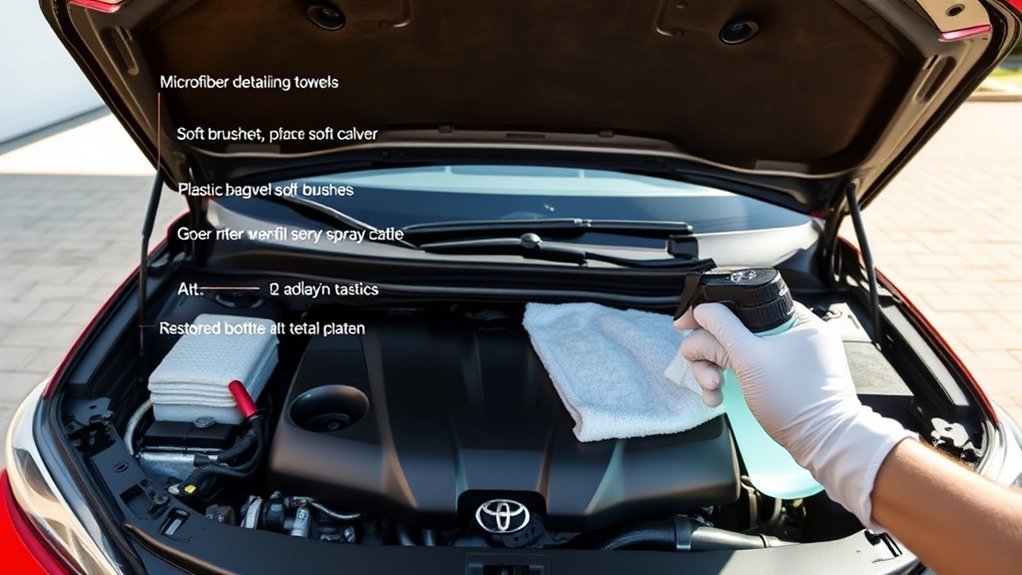
A clean engine bay makes routine inspection easier. Oil seepage, coolant residue, rodent damage, cracked hoses, corrosion, and loose wiring are easier to notice when they are not hidden beneath dust and grime. Removing leaves and other loose debris can also keep drainage channels and ventilation areas clear.
Cleaning the outside of an engine does not normally add horsepower or produce a measurable increase in fuel economy. Cooling-system condition, oil level, tire pressure, filters, and scheduled maintenance have a much greater effect on reliability and efficiency. Treat engine-bay cleaning as inspection and appearance maintenance rather than a performance modification.
A tidy engine compartment may also create a better impression during resale or service. However, excessive gloss, freshly washed leaks, or heavy dressing can hide problems. The goal is a clean, dry, inspectable surface—not a wet showroom finish.
How Should You Prepare a Toyota Camry Engine Bay for Cleaning?
Park outdoors or in a well-ventilated work area on a flat surface. Set the parking brake, switch the ignition off, remove the key or move the smart key away from the vehicle, and open the hood. Before cleaning, use the Toyota Manuals and Warranties portal to find the instructions for your exact model year.
Do not begin cleaning if you see an active fuel, oil, brake-fluid, or coolant leak; burnt wiring; a swollen battery; exposed conductors; or damaged hybrid-system parts. Repair or professionally inspect those conditions first. Toyota’s current Camry maintenance guidance warns owners not to touch or attempt to remove orange-colored high-voltage wiring or connectors.
[Amazon Products Picked for You]

【COMPLETE 10-PCS UNDER HOOD DETAILING KIT】 Everything you need for a deep engine bay clean. This pro-grade set features our Extra-Long Flexible Brush, a unique natural bamboo horsehair Bristle Brush , a Soft Detailing Brush, a Heavy-Duty Scrub Brush, a Plush Wash Mitt, Two Hex-Logic Applicators for protectants, a Twist Loop Drying Towel, and a durable HDPE Tote Storage Bag. Tackle grease, dust, and grime on any vehicle.
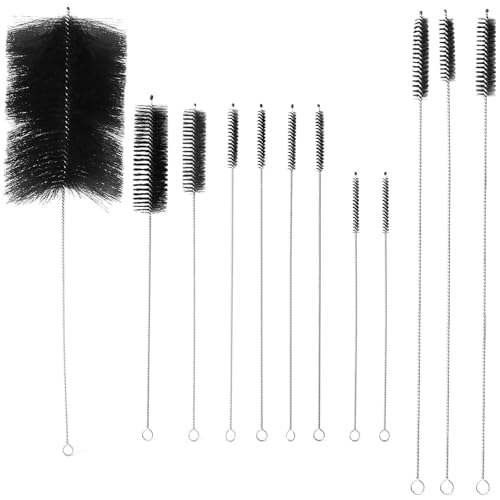
12Pcs Car Cleaning Brush Kit Replacement Parts<br> Replacement Part Number:<br> 61820<br> Reliable Materials:<br> Stainless steel wire<br> Nylon bristles<br> Specifications:<br> About 10inches, 12 inches, 18 inches, 34 inches in brush handle length<br> Handling various cleaning scenarios

The Exact Detailing Pack for Engine Bays: Oesee clean engine bay kit including 1pcs exterior surface brush, 1pcs extra long& slim Bendable Brush, 2pcs soft horsehair detailing brush, 2pcs professional grade microfiber towel and 1pcs fluffy microfiber hands-on applicator mitt. Easy scrub stubborn grease away from the engine bay
Let the Engine Cool Completely
Allow the engine, exhaust components, radiator area, and nearby metal parts to cool until they are comfortable to touch. Cooling time varies with outside temperature, driving conditions, and engine load, so elapsed time alone is not a reliable safety test. Never apply cool water or cleaner to a hot engine.
| What You Find | Action |
|---|---|
| Engine, radiator area, exhaust parts, or nearby metal still feels hot or distinctly warm | Keep waiting; do not apply cleaner or water |
| All accessible surfaces are cool and the vehicle is fully off | Proceed with inspection and dry cleaning first |
| You are unsure whether a hidden or high-temperature component has cooled | Wait longer rather than relying on a fixed number of minutes |
Inspect for Leaks, Damage, and Loose Parts
Remove leaves, twigs, nesting material, and other loose debris by hand, with a soft brush, or with a vacuum. Check that the oil cap, coolant caps, dipstick, air-filter housing, intake ducts, electrical connectors, and fuse-box covers are properly seated. Do not push debris into belt areas, drain channels, or air openings.
Pay special attention to aftermarket wiring, alarm modules, remote-start equipment, exposed cone filters, modified air intakes, and connectors with broken locks or seals. These parts may require additional covering or professional cleaning.
Decide Whether the 12-Volt Battery Should Be Disconnected
Battery disconnection is not automatically required for every light, mostly dry cleaning job. Disconnecting the 12-volt battery can clear stored information or trigger model-specific initialization steps, so follow the owner’s manual or service information for your exact Camry before removing a terminal. If battery service is actually needed, see this Toyota Camry 12V battery replacement overview before disconnecting anything.
If the applicable procedure calls for disconnecting a conventional 12-volt battery, switch the vehicle completely off, keep the smart key away, and disconnect only the 12-volt system as directed. A commonly used sequence is to remove the negative cable first and reconnect it last, but the model-specific procedure takes priority. Never disconnect an orange high-voltage cable or hybrid service plug.
Note: Removing a 12-volt battery cable does not protect an uncovered connector from direct water entry. Physical moisture control and gentle cleaning remain necessary.
Cover Sensitive Components
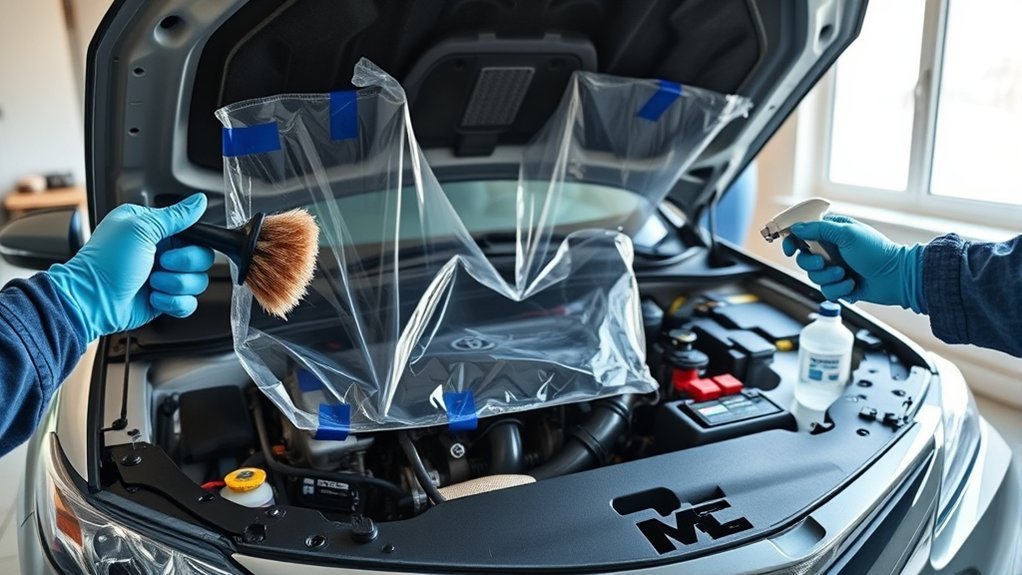
Use loose plastic bags, plastic film, or suitable covers to protect the alternator, fuse and relay boxes, exposed air filters, open intake ducts, aftermarket electronics, damaged connectors, and any component specifically identified in the owner’s manual. Secure covers with rubber bands or low-tack tape without pulling on wires or hoses.
Do not tightly wrap a hot component, and do not use bungee cords around wiring or delicate parts. Count the covers as you install them so every cover can be removed before the engine is started.
Essential Tools and Supplies for Engine Bay Cleaning
Gather all supplies before applying liquid. A controlled setup helps prevent cleaner from drying on surfaces while you search for a brush or towel.
Must-Have Cleaning Supplies
- Automotive cleaner or degreaser: Choose a water-based product labeled as safe for the materials in the engine bay. The EPA’s Safer Choice product search includes car-care categories for shoppers seeking products made with safer ingredients.
- Spray bottle or low-volume pump sprayer: Use it for controlled application rather than flooding the compartment.
- Microfiber towels: Keep separate towels for applying cleaner, lifting grime, rinsing by hand, and final drying.
- Soft nylon brushes: Use several sizes for broad surfaces, seams, fasteners, and tight spaces.
- Plastic covers and fasteners: Use bags or film with rubber bands or low-tack tape.
- Absorbent pads or old towels: Place them beneath dirty areas to capture oily residue.
- Optional plastic protectant: Use only on compatible cosmetic plastic after the area is clean and dry.
Avoid abrasive pads and stiff metal brushes on installed engine-bay parts. Stainless-steel brushes can damage paint, plastic, rubber, plated fasteners, aluminum, labels, and wiring insulation. Reserve any metal brush for a detached, suitable bare-metal part only when an approved service procedure allows it.
Recommended Safety Gear
Read the cleaner label and safety data before use. Work where fresh air can circulate, and avoid breathing spray mist. The following gear helps reduce exposure to grime, sharp edges, and chemical splash:
| Gear | Purpose |
|---|---|
| Chemical-resistant gloves | Reduce contact with cleaner, oil, and grime |
| Safety glasses or splash goggles | Protect the eyes from splashes and loosened debris |
| Mask recommended by the product label | Reduce exposure when the label identifies an inhalation hazard |
| Non-slip footwear | Improve footing around wet pavement |
| Long sleeves and pants | Protect skin from grime, irritants, and sharp edges |
OSHA’s eye and face protection guidance explains the importance of suitable protection where chemical and mechanical hazards are present.
What Parts of a Toyota Camry Engine Bay Should You Not Spray?
A modern Camry is designed to tolerate normal road splash, but that does not make every under-hood component safe for direct cleaning spray. Keep cleaner and water away from:
- The alternator and its vents
- Fuse, relay, and control-module boxes
- Electrical connectors, especially damaged or unlatched connectors
- Ignition-coil openings and spark-plug wells
- Exposed air filters and open intake ducts
- Battery terminals and battery vents
- Aftermarket alarms, audio wiring, remote-start equipment, and exposed splices
- Orange hybrid-system cables, connectors, and labeled high-voltage parts
- Belt surfaces, pulleys, and tensioners when applying dressings
Near these areas, spray cleaner onto a towel or brush rather than onto the component. Wipe carefully and use the smallest amount of moisture that will do the job.
[Amazon Products Picked for You]

FORMULA: CRC Heavy Duty Pro-Strength Degreaser foaming water-based formula is aggressive yet gentle enough for various applications. It's no- odor avoids a harsh chemical smell.
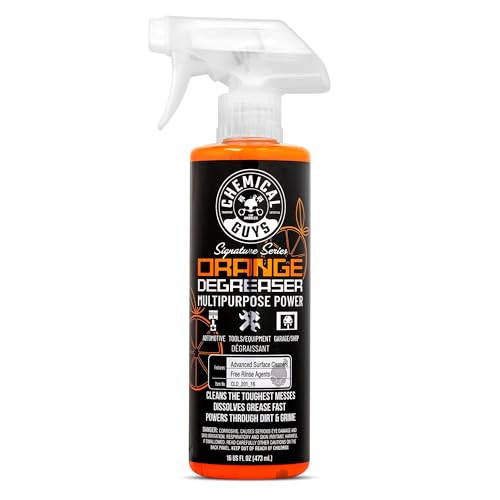
Powerful Degreaser (CLD_201_16SW) - Signature Series Orange engine cleaner and degreaser spray quickly breaks down grease, oil, grime, and dirt on engines, tires, undercarriages, tools, and more for a deep professional clean

Powerful Degreasing: Quickly breaks down heavy oil, grease, dirt, and grime on contact for fast, thorough cleanup in demanding environments.
How to Apply Degreaser Safely
Work in the shade on cool surfaces. Test the cleaner on a small, inconspicuous area first, especially when the engine bay contains aged plastic, painted covers, aluminum, decals, or aftermarket finishes.
- Dilute the product as directed. Stronger is not always better. Excess concentration can stain metal, dry rubber, or discolor plastic.
- Apply from the bottom of the dirty area upward when practical. This can reduce streaking on broad vertical surfaces.
- Use controlled application. Spray broad, non-sensitive surfaces lightly. Apply cleaner to a towel or brush near electrical parts.
- Allow the labeled dwell time. Five minutes may be suitable for some products, but the manufacturer’s directions take priority.
- Do not let the cleaner dry. Work in manageable sections and re-wet with the approved solution if necessary.
Concentrate on oily deposits without saturating seams or connectors. A thick leak should be diagnosed before it is cleaned away; otherwise, you may remove useful evidence of where the fluid originated.
Pro Tip: Photograph the engine bay before cleaning. The image records hose routing, connector positions, existing stains, and the location of every protective cover.
How Should You Scrub and Rinse a Toyota Camry Engine Bay?
Begin with the gentlest method. Use a soft nylon brush to agitate the cleaner on plastic covers, painted metal, accessible brackets, and other compatible surfaces. Do not force a brush beneath connector seals, into alternator openings, or around exposed intake elements.
- Dry clean first: Vacuum or brush away loose dust, leaves, and grit.
- Clean one section at a time: Apply cleaner, agitate gently, and lift the dirty solution with a microfiber towel.
- Use damp towels near sensitive areas: Wipe several times with clean, lightly dampened towels instead of spraying.
- Rinse only when needed: On suitable open surfaces, use a low-volume flow or pump sprayer. Keep the stream moving and pointed away from electrical, intake, battery, and hybrid parts.
- Never use a pressure washer: High-pressure water can drive moisture beneath seals and into connectors or bearings.
- Inspect before drying: Check for remaining cleaner, pooled water, loose covers, and displaced hoses or wires.
Note: Place absorbent material beneath greasy areas and collect dirty residue. Do not hose oil, grease, degreaser, or contaminated wash water into a driveway, street, gutter, or storm drain. Follow local disposal requirements.
[Amazon Products Picked for You]

Unparalleled Cleaning Performance: Our microfiber towels provide outstanding water absorption and adhesion; effortlessly absorb dirt and liquid, delivering exceptional cleaning results that will leave your car looking brand new

Super Absorbent: Experience the excellent quality of AIDEA all-purpose microfiber cleaning cloths; made from premium materials; offering exceptional absorbency and quickly wicking away water to keep you dry; ideal for swiftly and safely removing dirt, grime, and liquids

12-pack of 16 x 16-inch microfiber car drying towels for wiping down painted or delicate surfaces
How to Properly Dry and Protect Engine Components
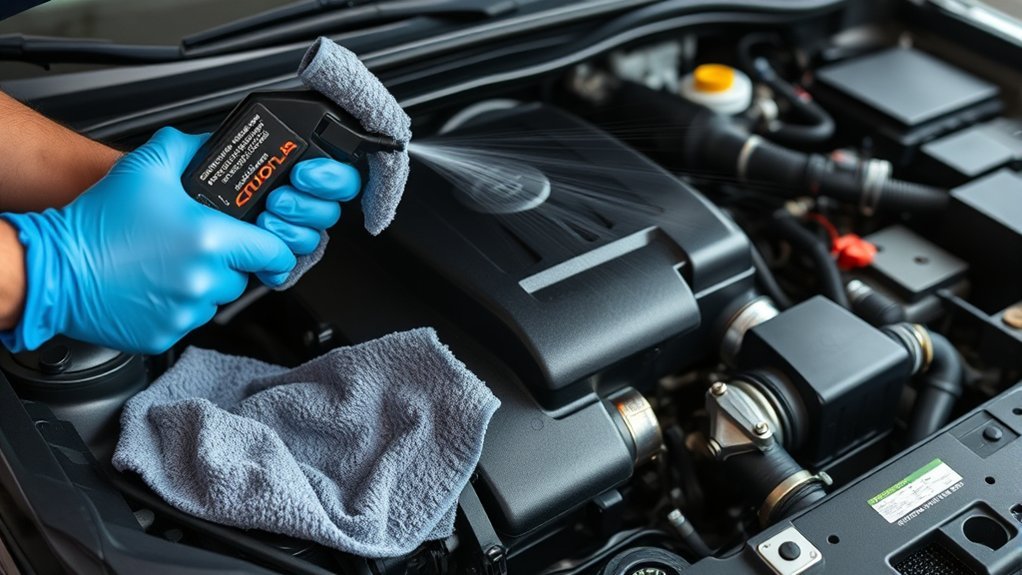
Drying is as important as cleaning. Blot accessible surfaces with clean microfiber towels and replace saturated towels promptly. For narrow spaces, wrap a towel around a smooth plastic tool or use a dedicated microfiber wand. Do not use a sharp screwdriver or metal rod that could puncture insulation or hoses.
A low-speed blower can help move droplets out of open, non-sensitive recesses, but keep the nozzle at a safe distance. Avoid high-pressure compressed air, which can force water farther into connectors or propel dirt toward your eyes.
| Step | Action | Purpose |
|---|---|---|
| Dry accessible components | Blot with microfiber towels | Remove standing moisture |
| Reach narrow areas | Use a microfiber wand or towel on a smooth tool | Dry recesses without damaging parts |
| Inspect electrical areas | Confirm connectors and covers are dry and seated | Reduce the chance of moisture-related faults |
| Treat connectors only when specified | Use dielectric grease only as directed by applicable service information | Avoid contaminating terminals or interfering with connector fit |
| Protect cosmetic plastic | Apply a compatible non-greasy protectant sparingly | Improve appearance without attracting excess dust |
| Complete a final inspection | Remove all covers, towels, bags, tape, and tools | Prevent obstruction or heat damage after startup |
Detailing Your Toyota Camry Engine Bay After Cleaning
Once the compartment is fully dry, detail it conservatively:
- Apply a plastic restorer sparingly: Use it only on compatible cosmetic plastic. Follow the product’s directions and buff away excess rather than leaving a wet coating.
- Use a suitable detail spray where allowed: Apply it to a towel first and wipe the approved surface.
- Access hard-to-reach areas safely: Use a microfiber wand or a towel wrapped around a smooth plastic tool.
- Leave safety-critical parts untreated: Do not apply dressing to belts, pulleys, hose connections, brake components, hot exhaust parts, electrical terminals, connectors, warning labels, or walking surfaces.
Inspect for cleaner residue and overspray. If the 12-volt battery was disconnected according to the applicable procedure, reconnect it only after every surface is dry, every protective cover has been removed, and no tool remains in the engine compartment.
Inspecting Your Engine Bay: Key Checks
Cleaning provides a useful opportunity to examine visible components. Do not loosen, remove, or probe a part simply to inspect it.
| Key Check | What to Look For |
|---|---|
| Fluid leaks | Fresh wet spots, colored residue, or recurring stains |
| Electrical connections | Loose plugs, broken locks, cracked insulation, corrosion, or moisture |
| Rubber hoses and gaskets | Cracks, swelling, abrasion, hardening, or seepage |
| Battery area | Corrosion, loose mounting, swelling, leakage, or damaged cables |
| Belts and pulleys | Cracks, fraying, contamination, or misalignment visible without touching moving parts |
| Air intake | Loose clamps, open ducts, damaged housings, or a wet exposed filter |
Do not start the vehicle if water is pooled near electrical or intake components, a cover is still installed, the air filter is wet, or a connector has been pulled loose. Correct the problem or arrange professional service first.
Starting the Camry After Cleaning
- Confirm that all plastic bags, tape, towels, absorbent pads, brushes, and tools have been removed.
- Check that caps, covers, ducts, connectors, and battery cables are in their correct positions.
- Allow additional air-drying time when any uncertainty remains.
- Start the vehicle without leaning over rotating components.
- Listen for unusual noises and check the instrument panel for warning lights.
- Let the vehicle idle briefly while you look for leaks, smoke, belt slippage, or an abnormal smell.
Do not treat smoke, sparking, a persistent burning smell, belt squeal, rough running, or a new warning message as normal after cleaning. Switch the vehicle off and investigate safely before driving.
What to Do If the Engine Runs Rough After Cleaning
If the engine misfires, runs roughly, stalls, or displays new warning lights immediately after cleaning, moisture may have reached an ignition or electrical area. Turn the vehicle off rather than repeatedly restarting it.
- Look for visible water around accessible connectors, ignition-coil areas, fuse-box covers, and aftermarket wiring.
- Blot visible moisture with clean towels and use cool, gentle airflow.
- Do not unplug random connectors, apply high heat, or spray additional chemicals into the affected area.
- Do not touch orange hybrid-system wiring or open a high-voltage component.
- Arrange professional diagnosis if the problem continues after the accessible area is fully dry.
A warning light can also indicate a separate fault exposed during the inspection rather than a cleaning-related problem. Reading diagnostic trouble codes is more reliable than guessing or repeatedly disconnecting the battery.
Tips for Maintaining a Clean Engine Bay
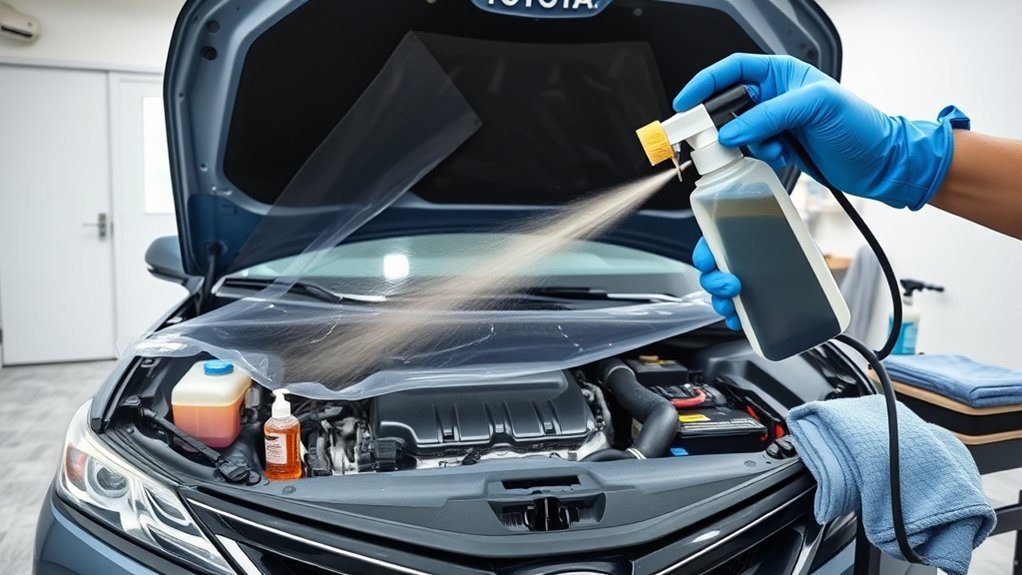
There is no universal cleaning interval. Inspect the engine bay during routine fluid checks and clean it when accumulated dust, leaves, salt residue, oil film, or animal nesting material makes inspection difficult. For service timing beyond cleaning, use the Toyota Camry service-interval guide together with the maintenance guide for your exact model year.
- Inspect regularly: Look for new leaks, loose debris, damaged wiring, and worn hoses.
- Remove dry debris promptly: A soft brush or vacuum may be all that is needed between full cleanings.
- Use gentle cleaners: Choose compatible products and follow their dilution and dwell-time directions.
- Organize components correctly: Secure only genuinely loose wiring or hoses with vehicle-appropriate retainers. Do not alter factory routing.
- Clean after unusual exposure: Inspect after muddy travel, rodent activity, severe dust, flooding, or heavy road-salt exposure.
- Repair leaks instead of repeatedly washing them away: Recurring residue is a diagnostic clue.
- Use protectant sparingly: Reapply only when the product instructions and surface condition justify it.
Frequent wet cleaning can create more risk than benefit. A light dry wipe or targeted spot cleaning is usually preferable when the engine bay is only dusty.
Frequently Asked Questions
How do you clean a Toyota Camry engine bay without damaging it?
Work on a completely cool vehicle, check the exact model-year manual, remove loose debris first, cover sensitive electrical and intake parts, use a compatible cleaner with soft brushes, avoid pressure washing, and dry the entire area before starting the car.
Is it safe to spray a Toyota Camry engine with water?
A small, controlled amount of water may be used on suitable open surfaces, but direct spraying of the alternator, fuse boxes, connectors, ignition areas, air intake, battery, control modules, and hybrid components should be avoided. Damp wiping is safer near sensitive parts, and a pressure washer should not be used.
What is the best cleaner for a Toyota Camry engine bay?
Use a water-based automotive cleaner or degreaser labeled as compatible with plastic, rubber, painted metal, and aluminum. Follow the dilution instructions, test a hidden area, and never allow the product to dry on the surface.
Should I disconnect the battery before cleaning the engine bay?
Not for every light cleaning job. Disconnection requirements and reset effects vary by model year. Follow the Toyota procedure for the vehicle’s 12-volt battery. Never disconnect or service orange high-voltage components on a Camry Hybrid.
Can I clean a Toyota Camry Hybrid engine bay myself?
Light surface cleaning may be possible when the owner’s manual permits it, but do not touch, disconnect, uncover, or spray orange high-voltage cables, connectors, the inverter, or other labeled hybrid components. Use minimal moisture and seek professional service when a high-voltage part is damaged or contaminated.
Is it okay to spray WD-40 over a car engine?
Do not treat every WD-40-branded product as interchangeable. WD-40 sells a Specialist Machine & Engine Degreaser specifically for automotive engines, while its Multi-Use Product is a different formula with different uses. For engine-bay cleaning, use a product whose label specifically approves the surface and purpose, protect sensitive electrical and intake areas, and follow the product directions rather than blanket-spraying the compartment.
Conclusion
Safely cleaning a Toyota Camry engine bay is less about using large amounts of water and more about careful inspection, controlled application, and complete drying. A clean compartment can make leaks, damaged parts, and loose connections easier to see, but it should not be expected to produce a specific performance or fuel-economy gain.
Use the instructions for your exact model year, keep moisture away from electrical, intake, battery, and hybrid components, and stop when damaged wiring or active fluid leaks are present. Gentle cleaning performed only when needed is safer than frequent pressure washing or heavy dressing.
Sources
- Toyota Manuals and Warranties — model-year-specific owner information and vehicle instructions
- OSHA Eye and Face Protection — protection from chemical splash and mechanical hazards
- EPA Safer Choice — cleaners and car-care products formulated with safer ingredients
- EPA Vehicle Maintenance and Washing BMP — vehicle-wash runoff can carry detergents, oil, grease, metals, and other pollutants into stormwater systems
- Toyota 2025 Camry Warranty & Maintenance Guide — high-voltage safety precautions and orange-cable warnings
- WD-40 Specialist Machine & Engine Degreaser — manufacturer description of a WD-40-branded product intended for automotive engine cleaning
