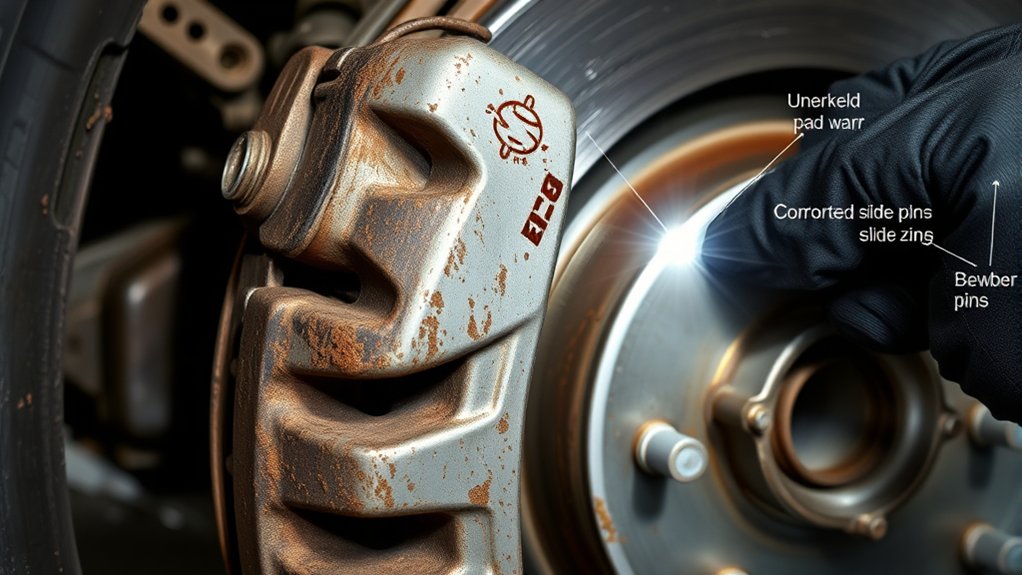
Toyota Camry brake calipers have no fixed replacement interval. Keep a caliper in service while it remains dry, moves freely, releases the pads correctly, and wears the pads evenly. Replace or rebuild it only after diagnosis confirms a fluid leak, seized piston or guide pin, structural damage, or repeated binding. A restricted brake hose, pad-hardware problem, or parking-brake fault can mimic caliper failure, so diagnose the complete brake assembly before ordering parts.
Last updated: September 19, 2026. This guide focuses on U.S.-market Toyota Camry models; brake hardware and service procedures vary by model year, axle, powertrain, build specification, and VIN.
Quick Answer
Toyota Camry brake calipers do not have a fixed replacement interval. Replace or rebuild one only when diagnosis confirms leakage, a seized or damaged piston, badly restricted guide-pin movement, structural damage, or binding that proper service cannot correct. Check the hose, pad hardware, bracket, rotor, and parking-brake system first because they can mimic caliper failure. If fluid is leaking, the pedal is sinking, braking is reduced, or a wheel is smoking or severely overheated, stop driving and arrange towing.
Key Takeaways
- Do not replace a Camry brake caliper only because the vehicle reached a certain mileage or age.
- Pulling, uneven pad wear, excess heat, fluid leakage, and a wheel that does not turn freely can point to a caliper problem, but each symptom has other possible causes.
- Do not drive if the brake pedal is sinking, fluid is leaking, a wheel is smoking, or braking power is reduced.
- Replacing one caliper can be acceptable when the caliper on the other side passes inspection, unless a model-specific Toyota procedure calls for both sides.
- Toyota T-SB-0088-22 is a model-specific exception: for certain 2018 Camry and Camry Hybrid vehicles with front brake squeal, Repair Procedure A calls for replacing both front caliper assemblies. Later applicable vehicles use a different fitting-kit procedure.
- Opening a brake hydraulic circuit requires the correct fluid, bleeding procedure, torque specifications, leak checks, and post-repair testing for the exact model year.
How Long Do Toyota Camry Brake Calipers Last?
There is no universal Toyota Camry brake-caliper replacement interval. Unlike brake pads, calipers are not friction material that is replaced at a routine mileage. A caliper may remain serviceable for much of the vehicle’s life, or it may fail earlier because of corrosion, damaged rubber parts, seized hardware, contaminated fluid, or impact damage. For pad and rotor wear separately, see the Toyota Camry brake system lifespan guide.
The best way to judge caliper life is by condition. Use the Toyota Manuals and Warranties portal to find the maintenance guide for your exact year. For specifications and repair procedures, Toyota identifies its Technical Information System as the service-support source for Toyota vehicles sold in North America.
Factors That Can Shorten Caliper Life
- Road salt and moisture: Corrosion can seize guide pins, damage piston surfaces, or weaken mounting hardware.
- Torn piston or guide-pin boots: A damaged boot allows water and dirt to reach moving parts.
- Old or contaminated brake fluid: Contamination can damage hydraulic components and contribute to internal corrosion.
- Overheated brakes: Driving with a dragging brake can damage the piston seal, pads, rotor, wheel bearing, and nearby rubber parts.
- Long storage periods: A vehicle that sits unused can develop rust where the piston or sliding parts should move.
- Incorrect previous repairs: Wrong grease, twisted hoses, reused damaged hardware, improper torque, or contaminated friction surfaces can create new problems.
Note: Mileage alone cannot confirm that a caliper is good or bad. A high-mileage caliper that moves freely and does not leak may still be serviceable, while a lower-mileage unit exposed to corrosion can seize.
What Are the Signs of a Bad Toyota Camry Brake Caliper?
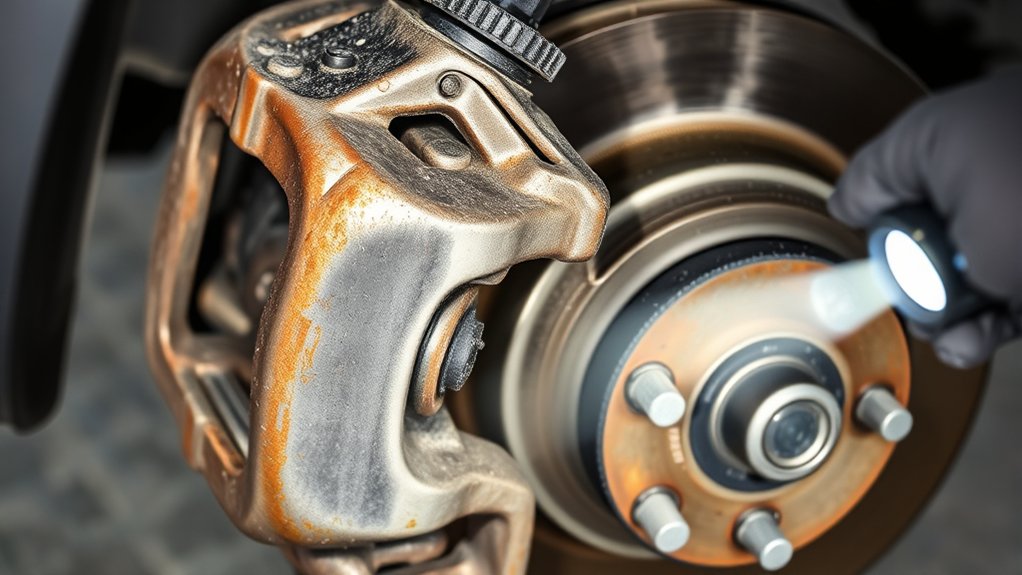
A failing or sticking caliper can affect stopping distance, steering, tire wear, fuel use, and brake temperature. However, no single symptom proves that the caliper is the cause. The complete brake, tire, steering, and suspension system may need inspection.
| Symptom | Possible Caliper Cause | Other Causes to Check |
|---|---|---|
| Vehicle pulls while braking | One caliper applies weakly, applies late, or remains partly engaged | Brake hose restriction, contaminated pad, tire pressure, tire damage, alignment, suspension, or road crown |
| One wheel is much hotter | Sticking piston or seized guide pins cause brake drag | Restricted hose, parking-brake fault, wheel-bearing problem, or incorrect assembly |
| Uneven inner and outer pad wear | Caliper cannot slide correctly or the piston does not retract | Incorrect hardware, damaged bracket, pad binding, or installation error |
| Brake-fluid leak near the wheel | Piston seal, bleeder screw, hose connection, or caliper casting leak | Damaged hose, hard line, ABS hydraulic part, or fluid running from another location |
| Squealing or grinding | A sticking caliper may cause abnormal pad contact | Worn pads, wear indicator, glazed pads, damaged rotor, debris, missing shims, or loose hardware |
| Poor fuel economy or sluggish rolling | Brake remains partly applied after the pedal is released | Low tire pressure, alignment, wheel bearing, drivetrain, or engine issue |
Warning: Do not keep driving if you see brake-fluid loss, the pedal sinks toward the floor, a wheel smokes, you smell burning material, the car pulls sharply, or stopping power is reduced. Park safely and arrange professional inspection or towing. Do not touch a rotor or caliper that may be overheated.
A mild squeak by itself does not confirm caliper failure. Have the brake assembly inspected before buying parts. Replacing a caliper without finding the real cause can leave the original problem in place. If the red brake-system warning is illuminated, use the Toyota Camry brake warning-light guide; if the pedal feels soft or sinks, see the Toyota Camry soft brake-pedal guide.
2018–2022 Camry Front Brake Squeal: Toyota Bulletin Exception
Toyota Technical Service Bulletin T-SB-0088-22 applies to some 2018–2022 Camry and Camry Hybrid vehicles with a front brake squeal or squeak. The bulletin does not say that every 2018–2022 Camry needs new calipers. For certain 2018 vehicles built before specified production-change VINs, Repair Procedure A calls for replacing both front caliper assemblies. For later applicable 2018 vehicles and all applicable 2019–2022 vehicles, Repair Procedure B addresses front fitting-kit components instead. Check the VIN and current Toyota service information before choosing parts.
How Do You Diagnose a Sticking Toyota Camry Brake Caliper?
Start with the least invasive checks. If you are not trained to lift a vehicle or test hydraulic brakes, have a qualified technician perform the inspection.
- Confirm the complaint. Note when the problem happens, which direction the car pulls, whether the pedal changes, and whether the symptom appears only after the brakes warm up.
- Check warning lights and fluid level. A low reservoir may indicate worn pads or a leak. Do not simply add fluid without finding the cause.
- Compare the wheels. Look for excess brake dust, discoloration, a burning smell, or one wheel that is noticeably hotter. Never touch the rotor to test its temperature.
- Lift the vehicle correctly. Use the specified lifting points, wheel chocks, a suitable jack, and rated jack stands on a firm surface.
- Inspect both pads on the wheel. Compare inner and outer pad thickness and compare the affected side with the opposite side of the same axle.
- Inspect the caliper and bracket. Check the piston boot, guide-pin boots, bleeder screw, hose connection, mounting bolts, bracket, and pad-support areas.
- Check for free movement. A technician can determine whether the guide pins slide correctly, the pads move in their supports, and the piston retracts as required.
- Rule out a restricted hose. A deteriorated flexible hose can sometimes hold pressure at the wheel and imitate a seized caliper. Diagnosis should occur before either part is replaced.
- Inspect related parts. Check the rotor, wheel bearing, tires, suspension, alignment, parking-brake mechanism, and hardware.
Caliper, Hose, or Hardware? Use the Failure Pattern
Brake drag can come from the caliper, but it can also come from trapped hydraulic pressure or pads that cannot move freely in the bracket. A qualified technician can use the pattern below to avoid replacing a good caliper.
| Diagnostic Clue | What It Suggests | Next Check |
|---|---|---|
| Guide pin will not move smoothly | Corroded or damaged slide hardware | Inspect the pin, boot, bore, bracket, lubricant, and pad fit before replacing the hydraulic caliper body. |
| Pads bind in the bracket | Rust scale, damaged clips, incorrect hardware, or installation error | Correct the pad-support and hardware problem, then recheck for free movement. |
| Brake stays applied, then releases when hydraulic pressure is safely relieved during diagnosis | Pressure may be trapped by a restricted flexible hose or another upstream hydraulic fault | Test the hose and upstream hydraulic system rather than assuming the caliper piston is seized. |
| Piston remains difficult to retract after the correct vehicle-specific procedure is confirmed | Piston or caliper-bore damage may be present | Inspect for corrosion, torn boots, leakage, and internal damage before deciding to rebuild or replace. |
Diagnostic caution: Relieving hydraulic pressure or opening a bleeder introduces brake-fluid and air-management risks. This is a technician-level test unless you have the correct equipment and bleeding procedure. A restricted brake hose can look normal externally yet still cause brake drag.
Repair, Rebuild, or Replace?
| Condition | Likely Response |
|---|---|
| Dry or corroded guide pins, with a sound piston and bore | Clean, inspect, and service the sliding parts with the correct brake lubricant and replacement boots or hardware as required. |
| Torn boot but no confirmed piston or bore damage | Disassemble and inspect according to the repair manual. A boot alone may not correct corrosion that has already started. |
| Leaking seal, seized piston, heavy corrosion, damaged bleeder, or cracked casting | Replace the caliper or have it professionally rebuilt if the design and component condition permit. |
| Brake stays applied until hydraulic pressure is released | Test the hose and upstream hydraulic system before blaming the caliper. |
Pro Tip: Record the VIN, model year, trim, axle position, wheel size, and build information before ordering parts. A listing that only says “fits Toyota Camry” may not account for every brake package or production change.
How to Replace Brake Calipers
Brake-caliper replacement is an advanced safety repair because it opens the hydraulic system. The steps below explain the process, but they do not replace the Toyota repair manual for your exact Camry.
At a Glance
| Time Required | Varies by model year, axle, corrosion, and the bleeding procedure. Seized hardware or electronic parking-brake service requirements can extend the job. |
| Difficulty | Advanced DIY. Professional service is recommended if you have not opened and bled a modern hydraulic brake system before. |
| Tools Needed | Wheel chocks, jack, jack stands, hand tools, flare-nut or line wrench where applicable, torque wrench, line cap or plug, drain pan, bleeder equipment, brake cleaner, specified brake fluid, and any required electronic parking-brake service tool. |
| Cost | Varies by model year, axle, brake package, part type, local labor rate, and whether pads, rotors, hoses, hardware, or fluid also require service. Obtain a VIN-based estimate. |
Warning: Never work under a vehicle supported only by a jack. Brake fluid can damage paint and must remain free of dirt, water, oil, and other contamination. If you cannot obtain a firm pedal, stop all testing and correct the problem before moving the car.
- Identify the exact vehicle and procedure. Use the VIN and model year to obtain the correct caliper, hardware, fluid specification, torque values, and bleeding sequence. Consult Toyota TIS when factory repair information is required.
- Check for an electronic parking brake. Depending on the model year and axle, rear-brake service may require a prescribed maintenance or service mode. Do not force an electronic actuator or rotate a piston based on a procedure for a different Camry.
- Secure and lift the vehicle. Park on a firm, level surface, chock the wheels, loosen the lug nuts as appropriate, lift at approved points, and support the vehicle with rated stands.
- Remove the wheel and inspect the complete assembly. Confirm that the caliper is the actual fault. Inspect the hose, rotor, pads, bracket, guide pins, boots, and mounting points.
- Remove the old caliper without stressing the hose. Support the caliper before detaching it. If the hydraulic connection must be opened, control fluid loss with an approved cap or plug. Do not hang the caliper from the flexible hose or crush the hose with locking pliers.
- Prepare the replacement part. Compare the piston, bleeder position, hose connection, bracket, guide pins, boots, and mounting points with the removed part. Transfer only the components allowed by the repair procedure.
- Install new sealing parts. Use new sealing washers or other specified seals at hydraulic connections. Keep brake fluid and grease away from pad and rotor friction surfaces.
- Install and torque the caliper. Tighten the caliper, bracket, hose, and wheel fasteners to the specifications for the exact vehicle. Do not rely on generic internet torque values.
- Bleed the hydraulic system. Use only the fluid type specified by Toyota for that vehicle. Follow the prescribed bleeding order and procedure. Prevent the reservoir from running dry.
- Restore pedal pressure. Before moving the car, press the brake pedal as required to seat the pads against the rotors. The pedal must become firm and consistent.
- Inspect for leaks and interference. Check the bleeder, hose connection, hose routing, reservoir level, caliper clearance, and every disturbed fastener.
- Reinstall the wheel correctly. Tighten the wheel fasteners in the specified pattern and to the correct torque.
- Perform controlled testing. Begin with a stationary pedal check. Then test at very low speed in a safe area. Confirm normal pedal feel, straight braking, free wheel rotation, and no leaks or unusual heat before normal driving.
Note: Opening the hydraulic circuit requires bleeding. A complete brake-fluid exchange is a separate decision based on the maintenance guide, fluid condition, contamination, and repair procedure. Federal brake-fluid rules instruct users to follow the vehicle manufacturer’s recommendations and keep the fluid clean and dry.
Should You Replace Toyota Camry Brake Calipers in Pairs?
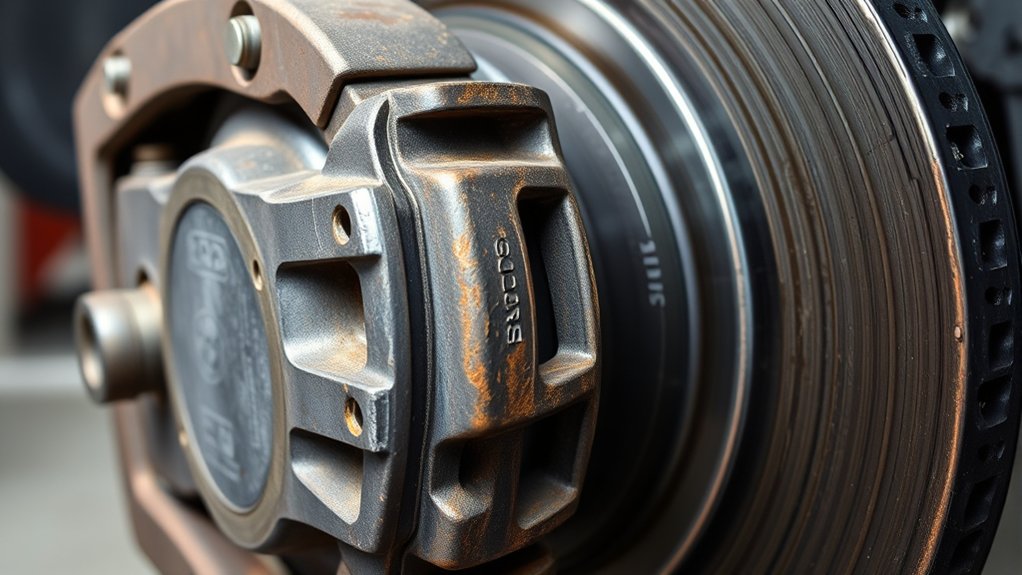
You do not always have to replace both calipers on an axle. If one caliper has an isolated defect and the opposite caliper passes a thorough inspection, replacing only the failed unit can be reasonable. However, a Toyota bulletin or repair procedure for a specific VIN can override that general approach.
Replacing both may be sensible when both units have similar corrosion, damaged boots, sticking hardware, abnormal pad wear, or heat damage. A documented Toyota procedure can also require both sides for a specific condition. For example, T-SB-0088-22 Repair Procedure A calls for both front caliper assemblies on certain 2018 Camry and Camry Hybrid vehicles with the bulletin’s specified front-brake squeal condition; that requirement does not apply to every Camry or every caliper failure.
| Replace One Caliper When | Consider Replacing Both When |
|---|---|
| The failure resulted from isolated physical damage. | Both units have heavy corrosion or damaged protective boots. |
| The opposite caliper moves freely, remains dry, and wears the pads evenly. | Both sides show uneven wear, sticking hardware, or signs of overheating. |
| The other caliper was replaced recently and is still in good condition. | Both are original, similarly aged, and one failed because of age-related deterioration. |
Brake pads should be matched across the axle, and the rotors should be measured and evaluated on both sides. Whether you choose Toyota Genuine, new aftermarket, or professionally remanufactured calipers, confirm the exact fitment and use a reputable supplier.
Key Maintenance Practices to Extend Your Brake Calipers’ Lifespan
Caliper maintenance focuses on keeping moisture and contamination out, preserving free movement, and correcting pad or hardware problems before they create excess heat.
| Maintenance Practice | Why It Helps | When to Do It |
|---|---|---|
| Inspect the brakes during scheduled service and tire rotation | Finds torn boots, leaks, uneven pad wear, and damaged hardware before major overheating occurs | Follow the maintenance guide and inspect immediately when symptoms appear |
| Service guide pins and pad supports correctly | Allows a floating caliper and its pads to move without binding | During brake service or when inspection finds restricted movement |
| Replace torn boots and damaged hardware | Reduces dirt and water entry and prevents pads from binding | As soon as damage is found and after checking for hidden corrosion |
| Replace pads based on measured condition | Prevents metal-to-metal contact and excessive piston extension | At the service limit or sooner if cracked, contaminated, tapered, or damaged |
| Use only the specified brake fluid | Protects hydraulic seals and maintains the intended boiling and viscosity performance | Whenever fluid is added, the system is opened, or service is required |
| Investigate excess wheel heat promptly | Prevents a dragging brake from damaging the rotor, bearing, seals, pads, and tire | Immediately after detecting odor, drag, discoloration, smoke, or abnormal heat |
A rebuild kit is not routine preventive maintenance. Rebuilding requires careful inspection of the piston, bore, seal groove, bleeder, and casting. If these areas are corroded or damaged, replacing the complete caliper is usually the safer choice.
You should also check your VIN for open safety recalls or service campaigns through the Toyota recall lookup and the NHTSA recall database. A recall search is not a substitute for diagnosing the brake problem, but it can identify repairs that may be available at no charge.
Frequently Asked Questions
How long do Toyota Camry brake calipers last?
Toyota does not specify one universal caliper lifespan. A caliper can remain usable for many years when its piston, seals, boots, guide pins, bracket, and hydraulic connection stay in good condition. Replace it when inspection confirms leakage, seizure, damage, or another fault that cannot be safely corrected.
Is 20% brake life left an emergency?
The percentage usually refers to an estimate of remaining brake-pad material, not caliper life. Arrange an inspection soon and ask for the actual pad-thickness measurement. Stop driving sooner if you hear grinding, see fluid leakage, feel a soft pedal, notice severe pulling, or detect smoke or excess heat.
How long do brakes usually last on a Toyota Camry?
There is no dependable mileage that applies to every Camry. Pad life depends on traffic, terrain, driving habits, vehicle load, pad material, regenerative braking on applicable hybrids, and caliper condition. Measure the pads and rotors and compare them with the specifications for the exact model year.
How frequently should brake calipers be replaced?
Replace calipers only when their condition requires it. Reasons include an external leak, seized or badly corroded piston, damaged casting, unusable bleeder, severe guide-pin damage, or repeated binding that proper service does not correct.
Can I drive with a sticking brake caliper?
You should not continue driving with a confirmed sticking caliper. The dragging brake can overheat the pad, rotor, fluid, wheel bearing, hose, and tire. If the wheel is very hot, smoking, pulling sharply, or reducing braking power, stop safely and arrange towing.
Does a squeaky 2018–2022 Toyota Camry mean the brake calipers need replacement?
Not automatically. Toyota T-SB-0088-22 covers a specific front squeal/squeak condition on some 2018–2022 Camry and Camry Hybrid vehicles. Certain 2018 vehicles use a procedure that replaces both front caliper assemblies, while later applicable vehicles use a fitting-kit procedure. Check the VIN and confirm that the bulletin’s condition applies before replacing calipers.
Do Toyota Camry brake calipers have to be replaced in pairs?
Not always. One caliper can be replaced when the other passes inspection and the failure is isolated. Replacing both is more sensible when they have similar corrosion, age-related damage, sticking hardware, uneven wear, or overheating.
Conclusion
Your Toyota Camry’s brake calipers should be replaced according to condition, not a fixed mileage or calendar schedule. Watch for fluid leakage, abnormal heat, uneven pad wear, pulling, and brake drag, but rule out restricted hoses, binding pad hardware, rotor problems, and parking-brake faults before blaming the caliper. If replacement is needed, use the exact model-year and VIN-specific procedure, especially when a Toyota bulletin applies. After any hydraulic repair, use the specified fluid and bleeding method, torque every disturbed fastener correctly, verify a firm pedal, check for leaks, and complete a controlled low-speed test before normal driving.
Sources
- Toyota Manuals and Warranties — model-specific owner manuals, warranty information, and maintenance guides.
- Toyota Technical Information System — factory repair manuals, service information, technical bulletins, and diagnostic resources.
- Toyota T-SB-0088-22: Front Brake Squeal/Squeak Noise — Toyota bulletin for certain 2018–2022 Camry and Camry Hybrid front-brake noise conditions, including VIN-dependent repair procedures.
- Toyota Safety Recall and Service Campaign Lookup — VIN- and license-plate-based Toyota campaign information.
- National Highway Traffic Safety Administration Recall Lookup — federal recall, investigation, complaint, and manufacturer-communication search.
- Raybestos Brake Hose Restriction Technical Bulletin — diagnostic guidance for internal hose restrictions that can mimic caliper drag.
- 49 CFR § 571.116, Motor Vehicle Brake Fluids — federal brake-fluid performance, labeling, contamination, and manufacturer-recommendation requirements.
