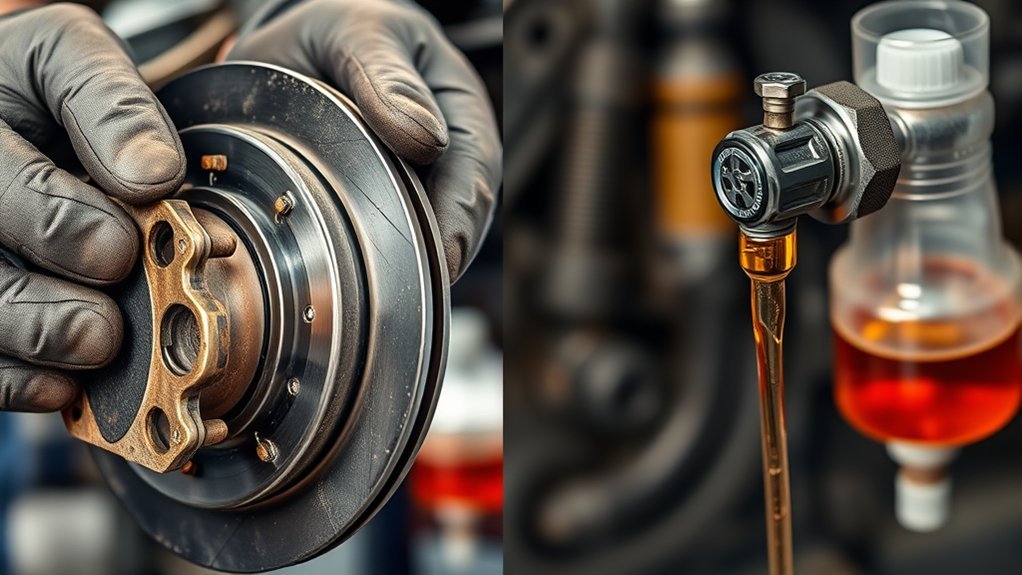
Brake pad replacement and a brake fluid flush are separate brake services, and needing one does not automatically mean you need the other. Brake pads are friction parts that wear as you stop. Brake fluid transfers pedal force through the hydraulic system and can become contaminated or fall outside the vehicle maker’s service requirements. You may need one service, both services, or neither after a proper inspection.
Last updated: September 19, 2026. Cost references and source links were rechecked against current published data.
Quick Answer
Replace brake pads when their friction material reaches the manufacturer’s minimum thickness or when inspection confirms damage or unsafe wear. Flush or exchange brake fluid according to your owner’s manual, a valid fluid-condition test, or hydraulic-system repairs. A pad change does not automatically require a fluid flush, but both can be due at the same visit.
Key Takeaways
- Brake pads create friction at the rotors; brake fluid transfers hydraulic pressure from the pedal to the brakes.
- There is no universal mileage at which every vehicle needs new pads or fresh brake fluid.
- Grinding, fluid leaks, a pedal that sinks, or sharply reduced braking requires immediate professional inspection.
- Replace pads as an axle set, meaning both front sides or both rear sides, and inspect the rotors and calipers at the same time.
- Use only the brake-fluid specification listed by the vehicle manufacturer. Never assume DOT 5 is interchangeable with DOT 3, DOT 4, or DOT 5.1.
Brake Pad Replacement vs. Brake Fluid Flush: The Main Difference
| Service | What It Replaces | Why It Is Done | Typical Trigger |
|---|---|---|---|
| Brake pad replacement | Worn friction pads on one axle | Restores adequate friction material and protects the rotors from metal-to-metal contact | Measured wear, a wear warning, grinding, contamination, cracking, or uneven wear |
| Brake fluid flush or exchange | Old hydraulic fluid throughout the system | Removes aged or contaminated fluid and restores the specified fluid condition | Manufacturer schedule, failed fluid test, contamination, or hydraulic repair |
| Brake bleeding | Air and some fluid from the hydraulic circuit | Restores a firm pedal after the system has been opened or air has entered | Hydraulic component replacement, leak repair, or confirmed air in the lines |
The services can overlap, but they are not substitutes. New pads cannot correct moisture-contaminated fluid, a leak, or air in the hydraulic system. Fresh fluid cannot restore friction material that has worn away.
Understanding Brake Pads and Their Role in Your Vehicle
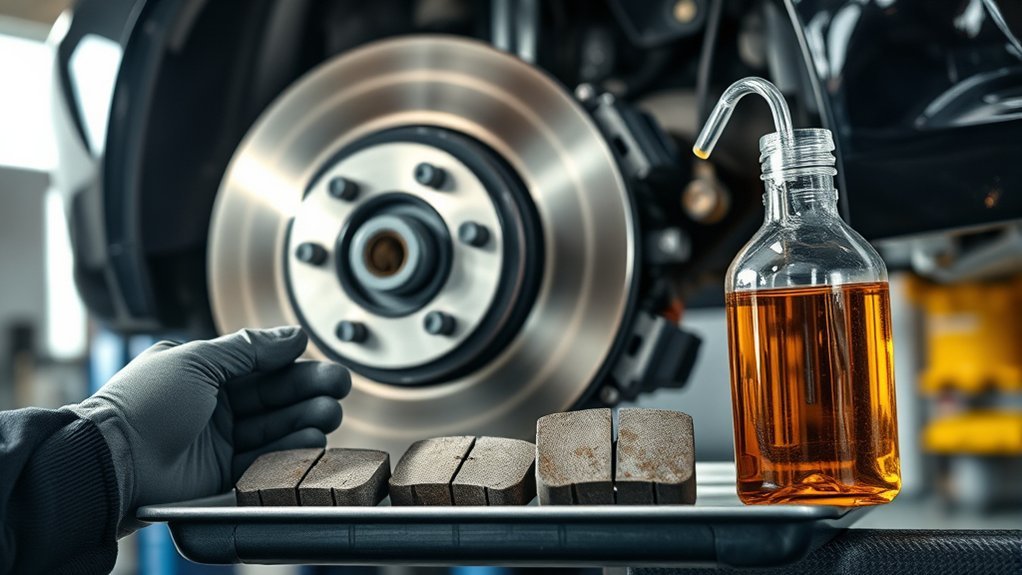
When you press the brake pedal, hydraulic pressure moves the caliper pistons and clamps the brake pads against the rotors. Friction converts the vehicle’s motion into heat, which slows the wheels.
Pad life varies widely with vehicle weight, pad material, driving style, terrain, towing, traffic, corrosion, and regenerative braking. For that reason, a mileage range such as 30,000 to 70,000 miles is only a rough observation, not a replacement rule. Inspection and the manufacturer’s minimum thickness specification are more reliable.
Brake pads should be replaced because inspection shows they are worn or damaged, not simply because the odometer reaches a generic number.
Brake pads should normally be replaced in pairs across the same axle. The technician should also inspect rotor thickness and condition, caliper movement, slide pins, hardware, hoses, and any sign of fluid contamination before approving the repair.
Signs Your Brake Pads May Need Replacement
No single sound proves that pads are worn. Squeaks can come from a wear indicator, vibration, surface rust, debris, glazing, or pad compound. Grinding is more urgent because it can mean the friction material is gone and metal is contacting the rotor. For a broader symptom guide, see how to tell when your brakes need attention.
Brake Noises and What They Can Mean
| Symptom | Possible Causes | Best Response |
|---|---|---|
| High-pitched squeal | Wear indicator, vibration, glazing, rust, or debris | Schedule an inspection, especially if the noise repeats after the brakes warm up |
| Grinding or scraping | Severely worn pads, damaged hardware, or debris | Stop driving when safe and arrange immediate inspection |
| Clicking or clunking | Loose or damaged hardware, caliper movement, or suspension play | Have the brake and suspension hardware checked |
| No noise | Normal operation or silent wear | Do not use silence as proof that the pads are healthy; inspect them at scheduled service |
Visual and Driving Symptoms
- Low pad thickness: The friction material is at or near the vehicle or pad maker’s service limit.
- Brake wear warning: A dashboard message or sensor indicates that one or more monitored pads are near the replacement point.
- Vehicle pulls while braking: This may involve uneven pad wear, a sticking caliper, contamination, tire issues, or a hydraulic fault.
- Vibration through the pedal or steering wheel: Possible causes include rotor thickness variation, runout, deposits, loose parts, or suspension problems.
- Longer stopping distance: This requires prompt diagnosis because pads are only one of several possible causes.
Note: A visual check through the wheel can miss the inner pad, which may wear faster than the outer pad when a caliper or slide pin sticks. A complete inspection should compare all pads on the axle.
What Does a Brake Fluid Flush Do?
Brake fluid is the hydraulic medium that carries pedal force to the wheel brakes. In the United States, Federal Motor Vehicle Safety Standard 116 sets performance and labeling requirements for DOT brake fluids, including dry and wet boiling points.
Most modern passenger vehicles use a glycol-based DOT 3, DOT 4, or DOT 5.1 fluid. These fluids can absorb moisture over time. A fluid exchange removes old fluid from the reservoir and hydraulic circuits and replaces it with fresh fluid of the specified type. The exact procedure determines how the ABS hydraulic unit, calipers, and wheel cylinders are serviced.
Warning: Use only the fluid listed in the owner’s manual or service information. DOT 5 silicone fluid is not the same as DOT 5.1 and must not be added to a system designed for glycol-based DOT 3, DOT 4, or DOT 5.1 fluid. For more detail on fluid grades, see DOT 3 vs. DOT 4 brake fluid.
A flush and a bleed are related but not identical. Bleeding focuses on removing air after the hydraulic system has been opened or a leak has allowed air in. A complete fluid exchange replaces old fluid throughout the system. Some vehicles require a scan tool or a manufacturer-specific sequence to cycle ABS valves correctly.
When Do You Need a Brake Fluid Flush?
The best starting point is the maintenance schedule for your exact year, make, model, and powertrain. Some manufacturers specify a time interval, some use a maintenance reminder, and others call for inspection or testing. A universal rule of every two years or 30,000 miles is too broad for all vehicles.
A fluid service may be appropriate when:
- The owner’s manual or maintenance system says it is due.
- A qualified test shows excessive moisture or a boiling point below the service limit.
- The wrong fluid, dirt, petroleum product, or another contaminant entered the reservoir.
- A hydraulic component was replaced and the service procedure calls for bleeding or exchanging fluid.
- The system was opened for leak repair.
- The fluid has been overheated in severe service and no longer meets the required performance.
What a Spongy or Sinking Brake Pedal Means
A soft, spongy, or sinking pedal is not a normal sign that you should simply schedule a routine flush. It can indicate air in the lines, a fluid leak, a failing master cylinder, a flexible hose problem, overheated fluid, or another hydraulic fault. Worn pads alone do not normally let air enter a sealed brake system.
Warning: If the pedal suddenly sinks, braking power drops, fluid is leaking, or a red brake warning light stays on after the parking brake is released, stop driving as soon as it is safe and arrange a tow or professional inspection.
Can Fluid Color Tell You It Is Bad?
Fresh DOT 3, DOT 4, and DOT 5.1 fluid is generally clear to amber. Darkening can suggest age, heat, or contamination, but color alone does not measure moisture content or boiling point. Use the manufacturer’s schedule, correct test method, and a system inspection rather than relying on a reservoir color check by itself.
Do You Need Brake Pads and a Fluid Flush at the Same Time?
Sometimes, but not automatically. The correct decision depends on two separate inspections.
| Inspection Result | Likely Service |
|---|---|
| Pads are worn, but fluid is within specification and no hydraulic repair is needed | Replace pads only, with rotor and caliper inspection |
| Pads have usable material, but the fluid service is due or testing shows a problem | Exchange fluid only, after checking for leaks and hydraulic faults |
| Pads are worn and the fluid service is also due | Perform both services during the same visit |
| Pedal is spongy or sinking, fluid is low, or a leak is visible | Diagnose and repair the fault first; bleeding or fluid exchange may be part of the repair |
[Amazon Products Picked for You]

【Compatible with Shimano Hydraulic Brakes】This specialized brake bleed kit is engineered to be a perfect fit for all Shimano hydraulic brakes. Whether you own a high - performance mountain bike or a sleek road bike equipped with Shimano brakes, our kit ensures seamless compatibility. It's designed to meet the unique requirements of Shimano brake systems, making it an essential tool for any cyclist who values optimal braking performance.

Transparent Funnel: Liquid and bubbles are clearly visible during the bleeding of bicycle brakes.

Can Be Changed Several Times: 2 x 60ml Bottles mineral oil brake fluid
What Should You Ask Before Approving Both Services?
- What are the inner and outer pad measurements? Ask for the measured friction-material thickness on both sides of the axle.
- What is the rotor condition? Ask whether thickness, runout, damage, or surface condition justifies additional work.
- Why is the fluid service due? The reason should be a manufacturer requirement, valid fluid-condition finding, contamination, or a hydraulic repair.
- Was the hydraulic system opened? Replacing a caliper, hose, line, master cylinder, or another hydraulic part can create a separate need for bleeding.
Pro Tip: Ask the shop to record pad thickness, rotor measurements, fluid condition, and the reason each service is recommended. Those details make it easier to separate needed work from a generic package.
Cost Breakdown: Brake Pad Replacement vs. Brake Fluid Service
Prices depend on the vehicle, axle, labor rate, pad material, rotor condition, electronic parking brake design, fluid specification, and whether seized or damaged parts are found. National estimates should be treated as starting points, not quotes.
As of September 3, 2026, RepairPal lists an average brake pad replacement cost of $335 to $394. Kelley Blue Book currently lists an average brake fluid flush cost of $173 to $205. RepairPal separately lists a brake bleed estimate of $115 to $169. A bleed and a full fluid exchange are not necessarily the same service, so confirm the exact scope before comparing quotes.
- Pads only: The estimate may cover one axle, but confirm whether hardware, sensors, rotor machining, or rotors are included.
- Fluid service: Confirm that the quote uses the correct fluid and follows the manufacturer’s bleeding or exchange sequence.
- Combined service: Labor may overlap slightly, but the two jobs still require separate parts and procedures.
[Amazon Products Picked for You]

Specifications: The Brake Bleeder bottles can simply drain old brake fluid, rubber joints fit most bleeding screws, 60 cm (24 in) hose and chain with hooks to hold in place while collecting old brake fluid
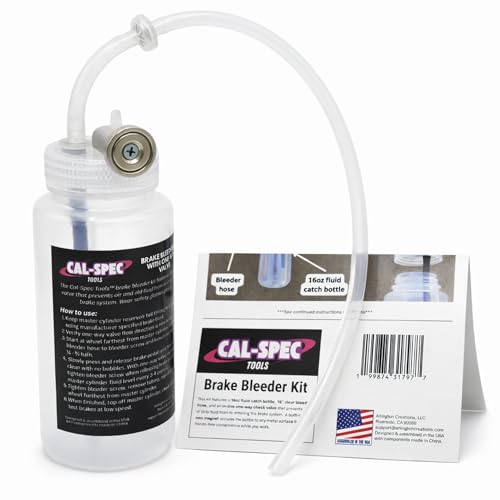
Cal-Spec Tools Brake Bleeder Kit - No need to close the bleeder before releasing the pedal, no spilled dirty fluid on the floor, and no dripping hoses when you’re done. This kit eliminates the mess and hassle from brake bleeding.

EFFICIENT ONE-PERSON BRAKE BLEEDING KIT: Say goodbye to needing a second person for brake maintenance. This complete brake bleeder kit allows a single user to quickly and efficiently flush old brake fluid and remove air bubbles from the brake and clutch systems. The kit includes a 3L pressure tank for fresh fluid, a 1L waste fluid collection bottle, and all necessary components for an effortless fluid change
Brake Maintenance Schedule: When to Inspect and Service
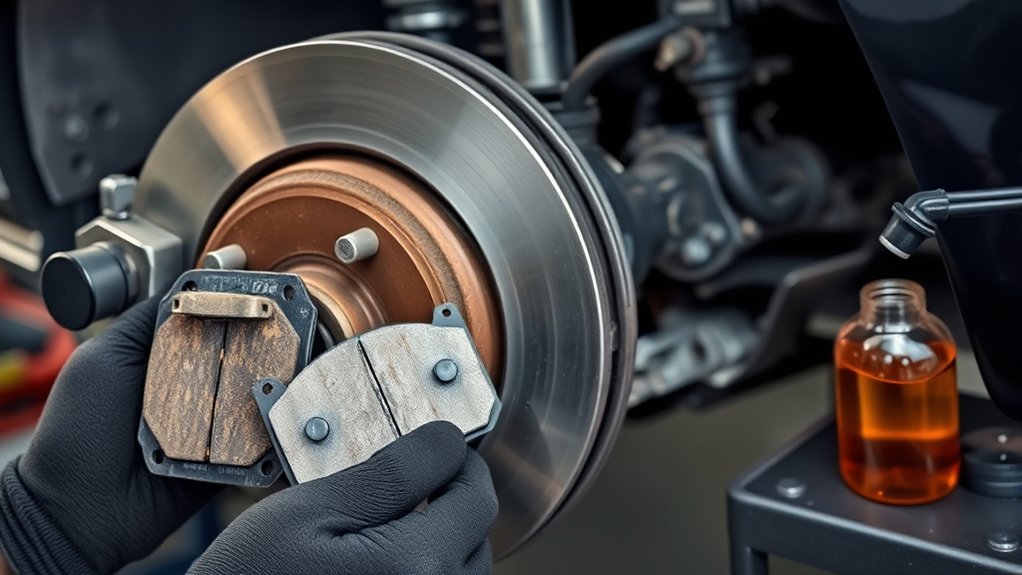
Your owner’s manual and service information should control the schedule. Generic mileage ranges cannot account for every braking system or driving pattern.
Work and tow duty shortens those intervals further, because heat and load wear friction material faster than light commuting does. If you run a heavy-duty pickup, matching the pad compound to the job matters as much as the schedule — our guide to the best F-250 Super Duty brake pads covers the tow-rated and severe-duty sets worth comparing.
Recommended Inspection Approach
- At routine service or tire rotation: Check accessible pad thickness, rotor condition, leaks, hoses, and warning indicators.
- When pads are measured near the service limit: Plan replacement before the backing plate contacts the rotor.
- At the manufacturer’s fluid interval: Exchange the fluid using the exact specification and procedure listed for the vehicle.
- After opening the hydraulic system: Bleed it as required and verify a firm pedal with no leaks.
- After brake work: Confirm the reservoir level, pedal feel, wheel torque, warning lights, parking brake operation, and a safe low-speed road test.
Conditions That Can Shorten Brake Service Life
Frequent stop-and-go driving, mountain descents, towing, track use, heavy loads, corrosion, sticking calipers, and aggressive braking can increase pad and rotor wear. Long storage can promote rotor rust and seized hardware. Electric and hybrid vehicles may wear pads more slowly because of regenerative braking, but low mechanical-brake use can also allow corrosion or sticking in some climates.
Why Both Services Matter for Brake Safety
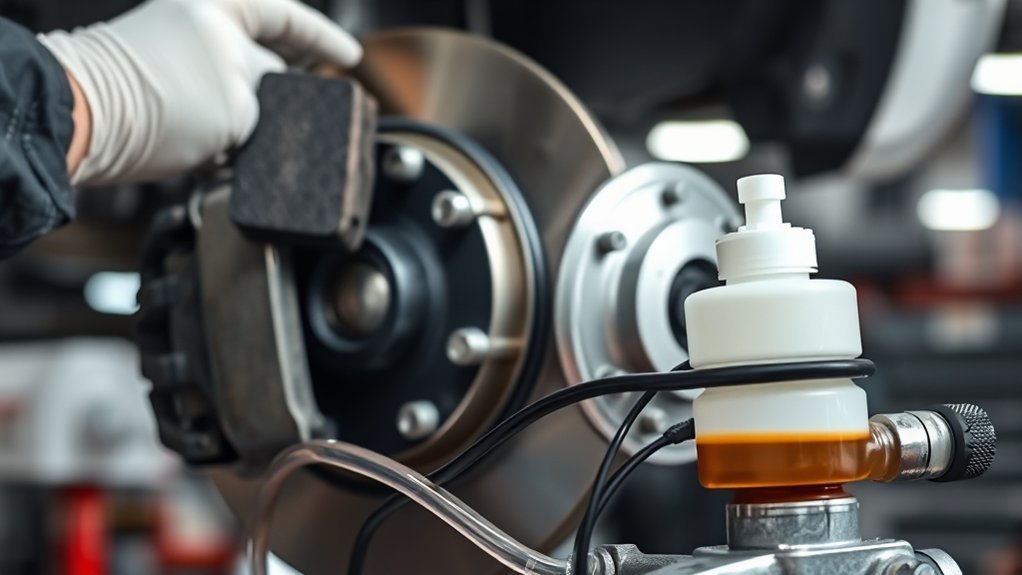
Brake pads must retain enough friction material to stop consistently without allowing the backing plate to damage the rotor. Brake fluid must remain clean, dry, compatible with the system, and able to perform across the temperatures defined for its grade.
The federal brake-fluid standard requires containers to direct users to follow the vehicle manufacturer’s recommendation, keep the fluid clean and dry, and keep the container tightly closed to limit moisture absorption. That is why the correct specification and clean handling matter as much as the service interval.
Ignoring brake symptoms can increase stopping distance, damage rotors and calipers, or allow a hydraulic fault to worsen. Preventive inspection is less expensive and safer than waiting for grinding, a leak, or a sinking pedal.
Should You DIY Brake Service or Use a Professional?
Brake pad replacement can be within reach for an experienced DIYer who has the correct service information, tools, lifting equipment, torque specifications, and a safe work area. If you are considering the job yourself, review the complete guide to changing brake pads at home. Brake fluid work requires an understanding of hydraulic systems, bleeding order, fluid compatibility, and ABS procedures.
Professional service is the safer choice when:
- You do not have rated jack stands, a torque wrench, or a level work surface.
- The vehicle has an electronic parking brake that requires service mode.
- The ABS unit requires scan-tool activation during bleeding.
- A bleeder screw is seized, a caliper is sticking, or a hose is damaged.
- The pedal is sinking, fluid is leaking, or warning lights remain on.
- You cannot verify the correct fluid specification and service sequence.
Warning: Never work under a vehicle supported only by a jack. Do not allow brake fluid to contact painted surfaces, and do not pour used fluid into a drain, onto the ground, or into a storm sewer.
For disposal, follow the product label and contact your local environmental, health, or solid-waste agency. The U.S. Environmental Protection Agency’s household hazardous waste guidance advises against pouring hazardous household products down drains or onto the ground and recommends using local collection options.
[Amazon Products Picked for You]
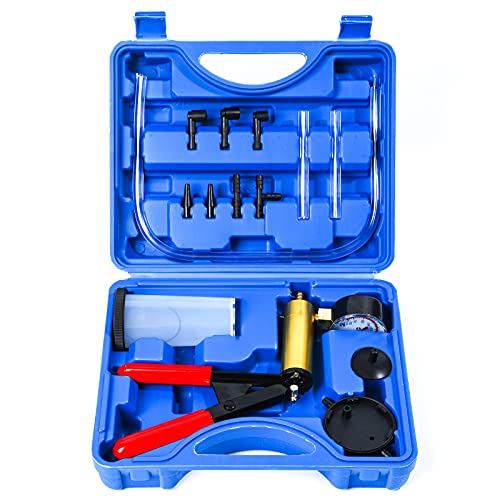
Versatile: Brake bleeder kit comes with a vacuum gauge to help you take accurate readings. Pressure range: 0-30 inches Hg, 0-760 mmHg. It includes accessories for brake bleeding and automotive diagnostics.

EFFICIENT UNIVERSAL BLEEDING KIT: This Brake Bleeder Kit allows you to bleed each wheel in a short period of time by one person.The Brake Bleeder Kit includes a compression tester and a set of adapters that will work with virtually any vehicle's system.
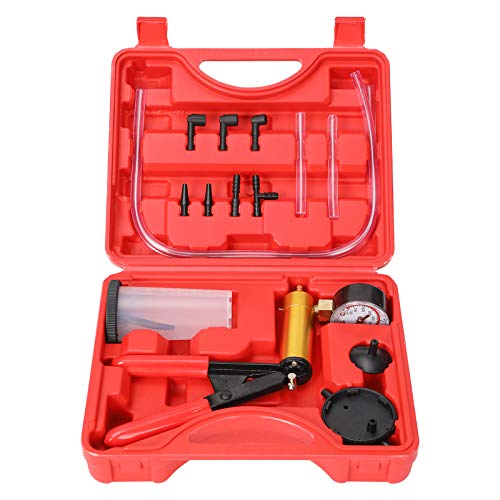
Multi-Functional Professional Testing Kit:The handheld vacuum pump kit with a vacuum pressure gauge enables precise pressure readings, covering a measurement range of 0-30 inches Hg (0-760 mmHg). Equipped with accessories for brake bleeding and automotive diagnostics, it is suitable for testing and diagnosing components and systems of bikes, motorcycles, trucks, pickups, and various vehicles, meeting professional needs in multiple scenarios.
Common Misconceptions About Brake Maintenance
- “New pads always require a fluid flush.” False. Fluid service depends on the manufacturer’s schedule, testing, contamination, or hydraulic repairs.
- “A spongy pedal means the pads are worn.” Usually false. A soft or sinking pedal points more strongly to a hydraulic problem that needs diagnosis.
- “Dark fluid proves it has too much moisture.” Not by itself. Color is a clue, not a moisture or boiling-point measurement.
- “Brake pads must be replaced at a fixed mileage.” False. Wear depends on the vehicle, driving conditions, pad material, and mechanical condition.
- “DOT 5 is a higher-grade substitute for DOT 4.” False. DOT 5 silicone fluid is chemically different and must not be used unless the vehicle specifically requires it.
- “If the brakes are quiet, the pads are fine.” False. Some pads wear without making a warning sound.
How to Monitor Your Brake System
- Read the owner’s manual. Note the fluid specification, maintenance schedule, warning-light meanings, and any electronic parking brake procedure.
- Notice changes early. Pay attention to pedal travel, stopping distance, pulling, vibration, odors, and recurring noise.
- Check the reservoir without opening it unnecessarily. A falling level may reflect normal pad wear, but it can also indicate a leak. Do not simply top it off without finding the cause.
- Request measurements. Ask for inner and outer pad thickness, rotor thickness, and the fluid-service basis.
- Inspect after severe use. Towing, mountain driving, track use, flooding, or overheating can justify an earlier check.
- Act on red flags. A sinking pedal, visible leak, grinding, smoke, severe pulling, or a red brake warning light requires prompt attention.
Frequently Asked Questions
Should you flush brake fluid when replacing brake pads?
Not automatically. Replace the pads if they are worn, and service the fluid if the manufacturer’s schedule, a valid test, contamination, or a hydraulic repair calls for it. Both services may be convenient at the same visit, but one does not prove the other is needed.
Do you need to bleed brakes after replacing brake pads?
Usually not. A basic pad replacement normally does not open the hydraulic circuit. Bleeding may be required if a hydraulic component was disconnected or replaced, the reservoir ran low enough for air to enter, a bleeder was opened, or the manufacturer’s service procedure specifically calls for it.
Are brake fluid and a brake flush the same thing?
No. Brake fluid is the hydraulic liquid in the system. A brake fluid flush or exchange is a service that removes old fluid and replaces it with fresh fluid of the required specification.
Is a brake fluid flush worth it?
Yes, when it is due or supported by testing or repair needs. It helps maintain the specified boiling performance and removes aged or contaminated fluid. It is not a cure for leaks, a failing master cylinder, damaged hoses, or worn pads.
What is the difference between flushing and bleeding brakes?
Bleeding removes air from the hydraulic circuit, usually after the system has been opened or repaired. A flush or exchange aims to replace old fluid throughout the system. A full exchange includes bleeding steps, but a small bleed does not necessarily replace all old fluid.
Can worn brake pads cause a spongy pedal?
Worn pads can increase caliper-piston travel and lower the reservoir level, but they do not normally introduce air into a sealed system. A spongy or sinking pedal should be checked for air, leaks, hose expansion, overheated fluid, master-cylinder trouble, or another hydraulic fault.
Can you mix DOT 3, DOT 4, DOT 5, and DOT 5.1 brake fluid?
Do not choose fluid by number alone. Use the exact specification approved for the vehicle. DOT 5 is silicone-based and is not interchangeable with glycol-based DOT 3, DOT 4, or DOT 5.1. Mixing or using the wrong fluid can damage components or reduce braking performance.
How long do brake pads last?
There is no single lifespan. Vehicle weight, pad compound, traffic, terrain, towing, corrosion, driving style, and regenerative braking all affect wear. Use measured thickness, condition, wear sensors, and the manufacturer’s specifications rather than mileage alone.
Conclusion
Brake pad replacement restores worn friction material. A brake fluid flush renews the hydraulic fluid. Treat them as separate maintenance decisions, then combine them only when inspection shows both are due. Ask for pad and rotor measurements and a specific reason for any fluid-service recommendation. Follow the vehicle maker’s specifications, act quickly on hydraulic warning signs, and use a qualified technician whenever you cannot verify the correct procedure or complete the work safely.
Sources
- 49 CFR 571.116, Motor Vehicle Brake Fluids: DOT fluid performance, labeling, wet boiling points, compatibility, and moisture-control requirements.
- RepairPal Brake Pad Replacement Cost Estimate: current average pad-replacement estimate and axle-pair service overview.
- Kelley Blue Book Brake Fluid Flush Costs: current average brake-fluid-flush cost and service-scope guidance.
- RepairPal Brake Bleed Cost Estimate: current bleed estimate and professional-service cautions.
- U.S. EPA Household Hazardous Waste Guidance: safe handling and local disposal guidance for hazardous household products.
