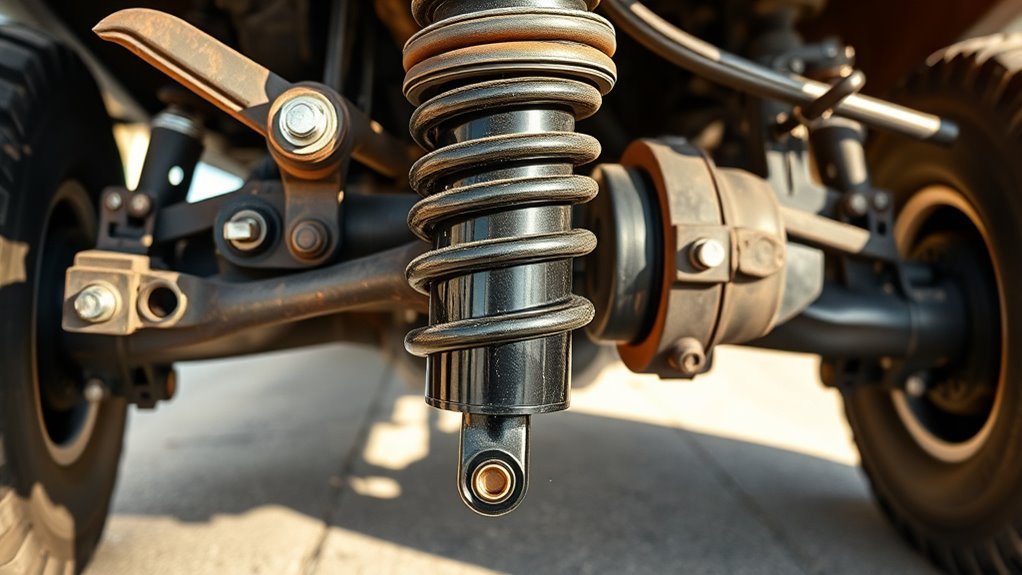
Yes, new front shocks can improve front-end suspension on a 2000 Ford by restoring damping control and reducing bounce, nose dive, and harsh impacts. They help keep the tires planted, improve steering response, and limit excess body motion without making the ride too stiff. Correct shock length matters for proper fitment and travel. Worn control arms, tie rods, and bushings should be inspected at the same time. More detail is available below.
Key Takeaways
- Yes, new front shocks improve ride quality, steering response, and tire contact on a 2000 Ford.
- Worn shocks can cause nose dive, bouncing, clunking, and a harsh, unstable ride.
- Monotube shocks like Bilstein 5100s offer firmer control and better handling than worn stock units.
- Shock length must match suspension height to avoid topping out or bottoming out.
- Inspect control arms, tie rods, and bushings during replacement to maximize the benefit of new shocks.
Do New Front Shocks Help Ride Quality?
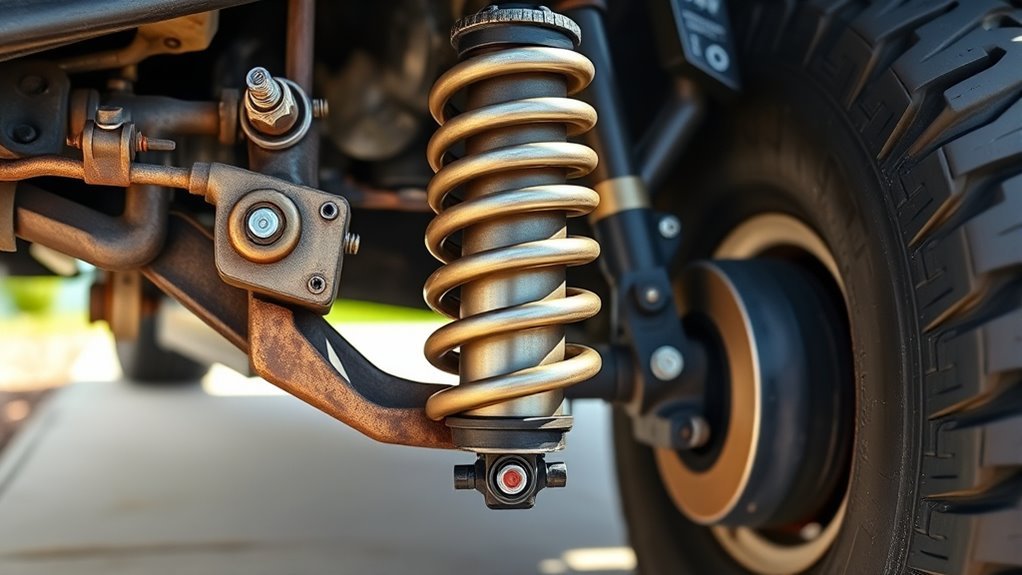
Yes—new front shocks can materially improve ride quality on a 2000 Ford by restoring proper damping control over bumps, dips, and other road irregularities.
When front shocks are worn or marginal, the suspension loses authority; fresh units reestablish calibrated resistance, allowing the tire contact patch to remain more consistent over imperfect pavement. That improvement can reduce oscillation, sharpen steering response, and limit excess body motion without compromising compliance.
Fresh front shocks restore damping authority, keeping tire contact steadier, reducing oscillation, and sharpening steering over rough pavement.
Monotube front shocks may provide stronger control than basic stock designs, especially when the vehicle has been leveled or otherwise altered. Properly matched shocks also help preserve suspension geometry and alignment, supporting stable tracking and predictable behavior.
For drivers seeking liberation from vague, unsettled motion, the correct front shocks are a practical, mechanical upgrade. Fitment must match the chassis and suspension setup to guarantee full performance and avoid compromised travel or ride balance.
What Bad Front Shocks Feel Like
When front shocks on a 2000 Ford are worn out, the symptoms are usually easy to detect in motion. Bad front shocks allow excessive nose dive under braking, so the front end compresses sharply and stability drops. The vehicle may also develop a boating sensation, with body sway over bumps and in turns. Steering input can feel delayed, because inadequate dampening weakens road connection. Clunking from the suspension often accompanies this condition, signaling internal wear and possible tire damage. Ride quality becomes harsh, as impacts pass through the chassis with little control.
| Symptom | Effect |
|---|---|
| Nose dive | Reduced braking stability |
| Boating sway | Loose handling |
| Steering lag | Slower response |
| Clunking noise | Safety concern |
For drivers seeking freedom from uncertainty, these signs indicate bad front shocks and justify prompt inspection before control erodes further.
Best Front Shock Styles for a Leveled F-250
For a leveled 2000 Ford F-250, the best front shock styles are typically high-quality monotube units with extended travel, such as Bilstein 5100s or Fox 2.0s, because they maintain proper suspension articulation while improving damping control.
These best front shock styles match the added ride height and preserve full stroke without topping out or harshly compressing. Monotube construction improves heat dissipation, which helps sustain consistent damping during rough roads, towing, and repeated suspension cycling.
Diagnostic signs of a suitable setup include reduced body roll, less fore-aft oscillation, and improved stability over expansion joints. Drivers often report a firmer, more settled response compared with stock shocks, especially when load varies.
For a leveled front end, extended-length shocks support correct fitment and keep the axle free to move without restriction. The result is controlled, liberated motion: a front suspension that responds cleanly, tracks predictably, and resists the floating sensation associated with worn or undersized dampers.
Bilstein vs. KYB Front Shocks
With front shock fitment already narrowed to extended-travel units on a leveled 2000 Ford F-250, the comparison between Bilstein and KYB centers on damping character, load control, and cost.
Bilstein’s monotube architecture improves heat rejection and resists fade under repeated compression, so the front end typically feels more tied down over broken pavement and when carrying weight. That added authority can expose more road texture, but it also gives sharper steering response and stronger recovery after impacts.
Bilstein’s monotube design resists fade, keeps the front end planted, and sharpens response over rough pavement.
KYB’s twin-tube design is calibrated softer, closer to stock behavior, and usually delivers a smoother, less severe ride in daily service. It is less costly, which matters when budget is the controlling variable.
For drivers seeking liberated, confident control over rough roads or towing loads, Bilstein is the stronger technical choice. For standard commuting, comfort, and economical replacement, KYB remains a practical, serviceable alternative for the front end.
How Front Shock Length Affects Fitment
Shock length is a hard fitment constraint, not a minor tuning detail. On a 2000 Ford with leveled front suspension, the installed Shock Absorbers must match the chassis’ compressed and extended limits exactly.
Too long, and the front end can top out before the axle reaches full droop; too short, and it can bottom out under compression, stealing travel and stressing mounts. Proper length preserves stroke, keeps the damper centered in its operating range, and supports clean installation without forcing brackets or bushings.
- A front wheel hanging at full droop, with the shock still relaxed.
- A bump stop kissed by a short unit before suspension travel is used.
- Mounting eyes aligned square, without pry bar pressure.
- A level truck gliding over pavement, free from binding.
Verification should include stroke length, mounting style, and published dimensions. Fitment accuracy is the path to mechanical freedom.
Why Front Shocks Change Handling
Because front shocks control how quickly the suspension moves, they directly shape steering feel, stability, and tire contact on a 2000 Ford. By damping road impacts, front shocks keep the tires pressed against the pavement instead of letting the front end skip, wander, or lose composure.
When they are worn, the vehicle may roll more in corners, react sluggishly to steering input, and feel less secure under load transfer. New front shocks restore controlled rebound and compression, which reduces nose dive during braking and helps the front end recover after bumps with less oscillation.
That tighter damping can improve front-end grip, especially during acceleration and turn-in, giving the driver more predictable response and confidence. In a suspension system that may include leveling kits or new springs, properly matched front shocks help balance motion and preserve ride quality.
The result is more precise handling and a freer, more stable drive.
What to Replace During a Front Shock Swap
Front shocks on a 2000 Ford F250 are often removed as part of a broader suspension inspection, since worn damping can mask other faults in the front end.
During the swap, technicians should evaluate control arms, tie rods, sway bar links, bushings, and ball joints, because degraded parts can defeat the benefit of new shocks.
During the swap, inspect control arms, tie rods, sway bar links, bushings, and ball joints for worn front-end components.
Replace any loose upper or lower control arm bushings, as alignment drift and vague steering often trace to that wear.
Shocks should be installed in pairs to preserve balanced damping and straight-line stability.
Compatibility must be verified if the truck has been leveled or modified; incorrect valving or length can limit travel and reintroduce harshness.
- Control arm bushings
- Tie rods and ends
- Sway bar links
- Ball joints and matching shock pairings
Owner-Recommended Front Shocks
When a 2000 Ford F250 is leveled or regularly worked under load, owners often report the best results with premium monotube front shocks such as Bilstein 5100 or Fox 2.0.
These shocks typically improve front-end control, reduce pitch, and suppress the floating “boating” feel common with tired factory units. Monotube construction helps dissipate heat more effectively, so damping stays consistent during towing, hauling, or rough-road use.
Community feedback repeatedly points to strong durability and firmer, more controlled ride quality from both brands.
Fitment remains critical: the chosen shocks must match the leveled suspension geometry to preserve travel and avoid premature topping out or binding.
For drivers seeking mechanical honesty and less compliance with road chatter, these performance shocks offer a practical, liberation-oriented upgrade.
Properly matched shocks can restore confidence, sharpen handling, and support the truck’s heavy-duty purpose without unnecessary compromise.
Frequently Asked Questions
Will New Shocks Make Rides Smoother?
Yes; new shocks can make the ride smoother by improving Ride Quality, reducing bounce, and damping impacts more precisely. Properly matched units restore control, especially when worn originals have weakened, freeing the suspension from excess movement.
What Else Should I Change When Replacing Shocks?
When replacing shocks, it is prudent to inspect control arms, ball joints, sway bar links, bushings, and body mounts. These Suspension Upgrades restore geometry, reduce roll, and preserve a liberated, stable ride.
What Are Two Symptoms of Worn Shock Absorbers?
Nose dive and excessive bouncing often indicate worn shock absorbers. When Shock Performance declines, braking becomes unstable and the vehicle rebounds like a sprung plank, revealing poor damping, uneven tire wear, and compromised control.
What Brand Shocks Does Ford Use?
Ford commonly uses Monroe and Motorcraft shocks as original equipment. Shock Compatibility should be verified by model year and suspension code; Motorcraft preserves factory calibration, while aftermarket Bilstein or KYB can enhance control and ride.
Conclusion
New front shocks can materially improve ride quality on a 2000 Ford F-250, especially if the existing units are worn, underdamped, or mismatched to a leveled suspension. Typical symptoms include excess rebound, nose dive, and wheel hop. A leveled truck often responds best to properly valved Bilstein or KYB shocks with correct extended and compressed lengths. For example, a 2-inch leveled F-250 with worn OE shocks may regain steering control and bump absorption after replacement.
