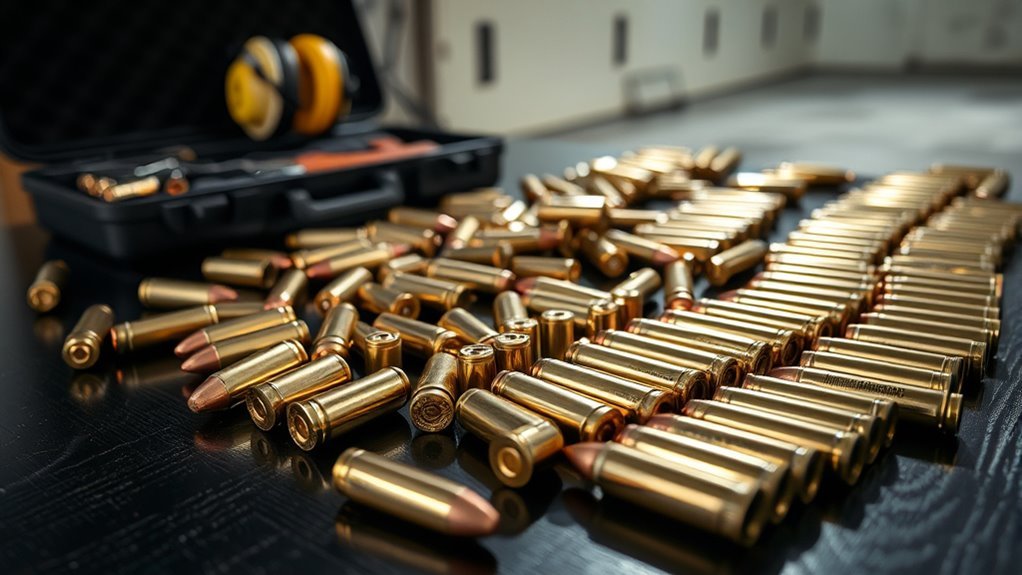
FMJ is the safest default in WARDOGS because it performs reliably against unarmored targets and low-level armor. HP is strongest on soft targets, but it drops sharply once armor appears. AP is the correct buy when Level 3-4 armor is common, since it is built for penetration. Early Access can shift all three values through balance changes. For a first purchase, FMJ is usually the most practical baseline, with more detail below.
Key Takeaways
- FMJ is a balanced, cost-effective default for unarmored enemies and Level 1–2 armor.
- HP is strongest against unarmored targets but performs poorly against armor.
- AP is best for Level 3–4 armor and improves penetration against heavily protected opponents.
- Choose ammo based on likely enemy armor, not convenience, to avoid wasting money and damage.
- Recheck ammo effectiveness after updates, since balance changes can shift which round is best.
What Are FMJ, AP, And HP In WARDOGS?
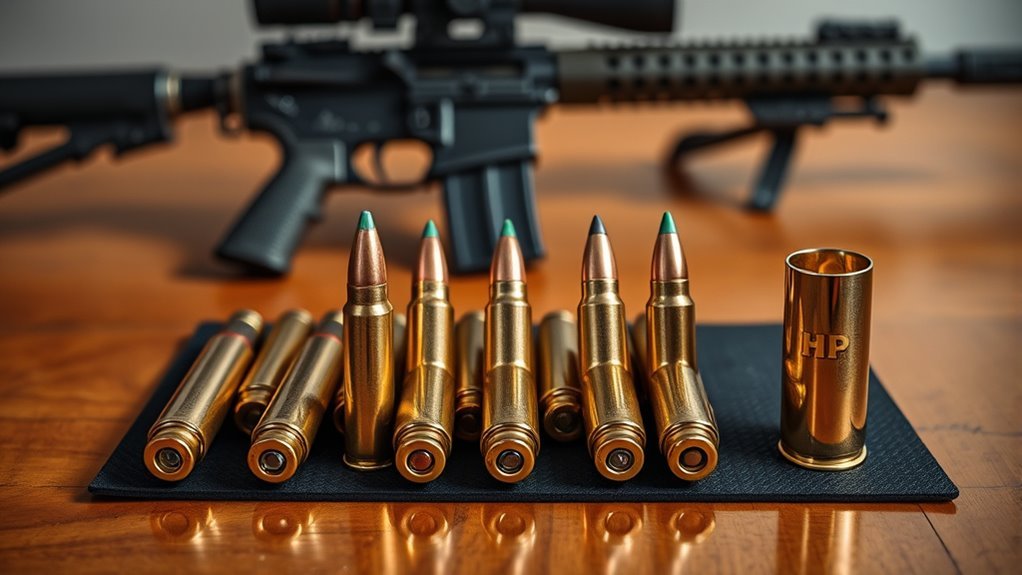
In WARDOGS, ammunition type directly shapes combat effectiveness: FMJ is the default general-purpose round, performing reliably against unarmored targets and Level 1–2 armor; HP is optimized for unarmored opponents, where its expansion increases damage but leaves it weak against protective gear; and AP is engineered to defeat Level 3–4 armor, making it the preferred choice when heavily armored enemies are expected.
FMJ offers balanced performance when enemy protection is uncertain, giving operators a practical baseline for mixed encounters. Hollow Point, by contrast, is built for exposed targets, where terminal expansion raises lethality but demands accurate placement and fails against stronger armor.
AP exists for hostile environments dominated by advanced protection, where penetration becomes decisive. In liberated play, the selection logic is straightforward: match the round to the expected armor tier, then apply it with discipline.
That technical alignment preserves momentum, limits waste, and improves survival under pressure.
Why FMJ Is The Default WARDOGS Ammo
FMJ functions as the default WARDOGS ammunition because it offers the most dependable balance of cost, consistency, and battlefield flexibility. FMJ is valued for predictable damage, which supports disciplined cash management and reduces wasted expenditure when enemy armor is unknown.
FMJ serves as WARDOGS’ default ammo, balancing cost, consistency, and flexible performance against unknown armor.
Against unarmored targets, it is highly effective, and it maintains practical performance against Level 1 and Level 2 armor without demanding immediate specialization. Its lower expansion on impact can also limit excessive penetration in close engagements, preserving control in chaotic spaces.
For players seeking liberation from premature optimization, FMJ offers a stable baseline for tactical autonomy. It functions well as ammunition for concealed loadouts and remains viable while operators learn map flow, recoil behavior, and threat patterns.
As progression continues, FMJ still serves as a reliable bridge to AP or HP, but its default status comes from efficiency, not compromise.
When HP Works Best In WARDOGS
HP becomes the stronger option when the target profile is predictable: unarmored opponents, exposed limbs, and clean sightlines where precision can be maintained. In those conditions, Hollow Points convert placement into severe trauma, delivering pronounced stopping power with each well-aimed impact.
Their value in WARDOGS is situational, not universal, and depends on disciplined shot selection rather than volume of fire.
- Prioritize open angles where the enemy lacks armor and movement is limited.
- Aim for exposed body parts to exploit expansion and maximize damage.
- Reassess after every contact, because barriers, thick clothing, and armor rapidly reduce effectiveness.
For a player seeking tactical freedom, HP supports decisive engagements against soft targets while preserving ammunition efficiency. The drawback is clear: when certainty about protection level disappears, the round’s advantage collapses.
Precision, consequently, is the condition that makes Hollow Points work.
Why AP Matters Against Heavy Armor
Armor, when it reaches Level 3 or Level 4, changes the engagement equation enough that AP ammunition becomes the practical answer. Its harder core, often steel or tungsten, gives AP the structural integrity needed to defeat dense protective layers where FMJ rounds lose effectiveness.
Against heavy armor, the difference is not cosmetic; it determines whether a shot is absorbed, deflected, or translated into decisive damage. In tactical shooters, that reality becomes more pronounced as higher-level armor appears more often, forcing a shift toward AP for sustained combat performance.
This is not merely an efficiency choice; it is a matter of preserving operational freedom against opponents who rely on protection to control the fight. Selecting AP ammunition strategically supports a loadout built for resistance, breach, and consistent lethality.
In high-stakes encounters, AP remains the technically superior answer when armor thickness is the primary barrier to liberation.
Which Ammo Fits Each Armor Level?
Once armor level is known, ammunition choice becomes a simple matter of matching penetration to protection. Against unarmored opponents, HP is the most efficient option because it concentrates damage on exposed tissue and maximizes lethality.
FMJ remains a practical alternative when encounters may include Level 1 or Level 2 armor, where its penetration is still generally adequate and its versatility is useful in early-game conditions. For higher protection, however, FMJ and HP lose consistency. AP is the only category that reliably preserves effectiveness against Level 3 and Level 4 armor, where penetration must exceed the barrier rather than merely damage what lies beyond it.
- Unarmored targets: HP
- Level 1-2 armor: FMJ
- Level 3-4 armor: AP
This framework supports disciplined selection. By reading the armor profile first, the operator avoids wasted rounds, conserves resources, and maintains tactical freedom through superior ammo matching.
Should You Switch To AP Right Away?
Not immediately, because AP only becomes the preferred choice when the expected threat profile shifts toward Level 3 or Level 4 armor. Early release does not justify a full conversion; the environment should be audited first.
If most encounters involve light protection or mixed targets, FMJ remains the more efficient baseline: it is versatile, cost-effective, and less punishing against unarmored opponents. AP should enter the loadout when heavy armor appears consistently and the objective is maximum penetration, not generalized reliability.
This distinction matters for players seeking tactical autonomy, since ammunition choice should follow observed conditions rather than novelty. In practical terms, AP is a specialized tool, while FMJ supports broad engagement profiles.
A premature switch can reduce overall effectiveness and waste resources. The disciplined approach is to evaluate common armor types in the current arena, then shift to AP only when heavier defenses dominate.
Does Caliber Change Ammo Performance?
Caliber changes how ammunition performs because cartridge dimensions and pressure levels directly affect penetration, expansion, and terminal behavior.
In practical terms, caliber is not a cosmetic label; it is a mechanical parameter that shapes FMJ vs. hollow point outcomes. Larger calibers, such as .45 ACP, often deliver stronger impact and wider wound potential, yet they can also increase over-penetration risk.
Smaller calibers, such as 9mm, frequently balance penetration and expansion more efficiently, giving users a flexible middle ground.
Hollow point design within each caliber further alters behavior, since cavity geometry and jacket construction determine how reliably the bullet opens in tissue or through intermediate material.
- Penetration depth varies by caliber and load.
- Expansion depends on bullet design, not caliber alone.
- Legal rules and availability can narrow the lawful choice.
Is HP Worth Using In Most Gunfights?
In most defensive shootings, hollow point ammunition is generally worth using because its controlled expansion increases wound diameter and energy transfer while reducing the likelihood of dangerous over-penetration. For an unarmored threat, a quality Hollow load can reach the FBI’s 12 to 18 inch standard while limiting risk to bystanders. Yet performance is not absolute; thick clothing or poor construction may prevent reliable expansion, reducing depth and terminal effect. | Factor | HP vs FMJ |
| — | — |
|---|---|
| Expansion | HP expands; FMJ usually does not |
| Penetration | HP often balanced; FMJ tends to pass through |
| Best use | HP for most self-defense; FMJ for armor or hard barriers |
In practical terms, HP is usually the more responsible choice for liberation-minded civilians seeking decisive stops without excess hazard. However, in gunfights involving armored foes, HP loses effectiveness, and FMJ may offer more consistent penetration. The decision depends on target type, barriers, and the need for controlled terminal performance.
How Early Access Changes Ammo Balance
Early Access development can reshape ammo balance quickly, making the relative value of FMJ, HP, and AP rounds change as armor models and damage systems are revised. Each patch can shift penetration thresholds, recoil-driven time-to-kill, and the practical meaning of best ammo, especially when developers tune damage values after data review.
FMJ may remain a stable baseline, yet its advantage can narrow or expand as armor interactions evolve.
- Patch notes reveal altered penetration and damage coefficients.
- Armor revisions can elevate previously weak rounds or suppress favored ones.
- Community feedback often drives rapid recalibration of loadout efficiency.
In this environment, the liberated player treats ammunition as a moving variable rather than a fixed hierarchy. Continuous monitoring of updates becomes essential, because a round that underperforms today may dominate tomorrow.
Strategic flexibility, not habit, defines sustained performance.
What Ammo Should You Buy First In WARDOGS?
For first purchases in WARDOGS, FMJ is the most efficient baseline because it handles mixed target types at low cost and remains practical against Level 1 armor. This makes FMJ the first round type to acquire for most players seeking flexible, resource-conscious progression.
HP should be held in reserve for unarmored opponents, where its expansion improves damage transfer, but it loses value once armor enters the equation. AP becomes a priority only when Level 3 or Level 4 armor is expected, since penetration matters more than raw economy at that stage.
Against Level 2 armor, FMJ and AP both remain viable, so the choice should follow threat assessment rather than inventory convenience. Ammunition selection should always match anticipated armor profiles.
In that framework, FMJ is often recommended for self-defense early, while AP and HP serve specialized roles.
Frequently Asked Questions
Is AP or FMJ Better?
AP is better against armor; FMJ is better for general use. Ballistic performance favors AP when penetration depth matters, while FMJ remains economical and reliable for mixed targets, supporting practical, liberated choice.
Do Police Use FMJ or HP?
Police departments typically use HP for duty, valuing HP performance and reduced over-penetration. FMJ advantages appear mainly in training and some barrier scenarios. Agency policy, legal standards, and threat-management requirements ultimately determine cartridge selection.
Which Ammo Is Better, HP or AP?
HP suits unarmored targets; AP suits armored ones. Like a locksmith choosing the right key, one round maximizes ballistic performance through expansion, the other through penetration depth. Choice depends on threat, mission, and desired liberation.
Is It Illegal to Conceal Carry With FMJ?
Not usually; concealed carry with FMJ is legal in many U.S. states, though legal implications vary by jurisdiction. He should verify local statutes, since some areas restrict ammunition choices or strongly recommend hollow points.
Conclusion
In WARDOGS, ammo choice cuts like a clean edge through a dense armor grid: FMJ offers reliable baseline impact, AP bites into plated targets, and HP blooms devastatingly only when armor gives way. The best round is never universal; it is shaped by caliber, armor tier, and the shifting logic of early access balance. Smart players read the battlefield like a schematic, buying the round that matches the threat before the first shot is fired.
