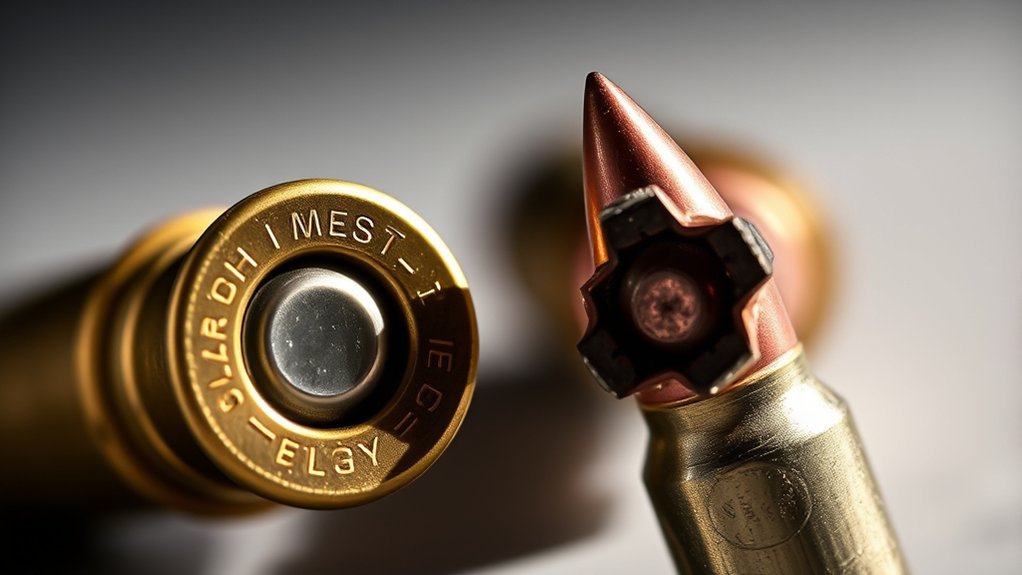
Full Metal Jacket (FMJ) and hollow point ammunition are built for different jobs. In common handgun use, FMJ is usually the economical choice for range practice because it normally does not expand and often feeds smoothly, while purpose-built jacketed hollow point (JHP) ammunition is designed to expand for lawful defensive use. For hunting, precision-rifle ammunition, and indoor-range lead concerns, the label alone is not enough: check the exact bullet design, firearm compatibility, range rules, and current law.
Last updated: September 21, 2026.
Quick Answer
For most routine range sessions, FMJ is the practical choice because it is commonly available, usually costs less, and is designed as a non-expanding projectile. For lawful defensive handgun use, purpose-built JHP ammunition is designed for controlled expansion and may reduce pass-through risk compared with non-expanding FMJ. Do not assume every bullet with a hollow or open tip is an expanding defensive or hunting bullet; some rifle open-tip match designs are made for accuracy rather than controlled expansion.
Key Takeaways
- FMJ bullets have a jacket that encloses most of the core but commonly leaves the base exposed; they are widely used for training and target shooting.
- Purpose-built HP/JHP bullets use a cavity in the nose to facilitate expansion, but an open or hollow-looking tip does not automatically mean a rifle bullet is designed to expand.
- FMJ is usually the practical choice for high-volume training, target shooting, competition, and plinking where range rules permit it.
- Purpose-built JHP is commonly used for lawful defensive handgun applications, while hunting ammunition should be selected according to game-specific expanding-bullet and non-lead rules.
- Laws, range policies, and hunting rules vary, so always check current regulations before buying, carrying, transporting, or using ammunition.
FMJ vs HP Comparison Table
This side-by-side table summarizes the main differences, but the exact load and manufacturer-stated purpose still matter.
| Feature | FMJ Ammunition | Purpose-Built HP/JHP Ammunition |
|---|---|---|
| Main Design | Jacket encloses most of the bullet core, commonly leaving the base exposed | Nose cavity intended to facilitate expansion |
| Typical Use | Training, target shooting, plinking, many competition formats | Lawful defensive handgun use and some hunting applications when the specific bullet is designed for that purpose |
| Expansion | Usually minimal | Designed to expand under intended conditions |
| Penetration | Often deeper in comparable non-expanding handgun loads | Often more controlled when expansion occurs as designed |
| Over-Penetration Risk | Can be higher in defensive settings | Can be lower when the bullet expands properly, but the risk is never eliminated |
| Cost | Generally lower | Generally higher |
| Important Caveat | FMJ is not the same as fully encapsulated TMJ | Not every hollow or open-tip rifle bullet is designed for controlled expansion |
How this guide was reviewed: This comparison uses published terminology and guidance from SAAMI, NIOSH/OSHA, ammunition manufacturers, and the legal sources listed below. It does not report original ballistic testing.
Understanding Full Metal Jacket (FMJ) Ammunition
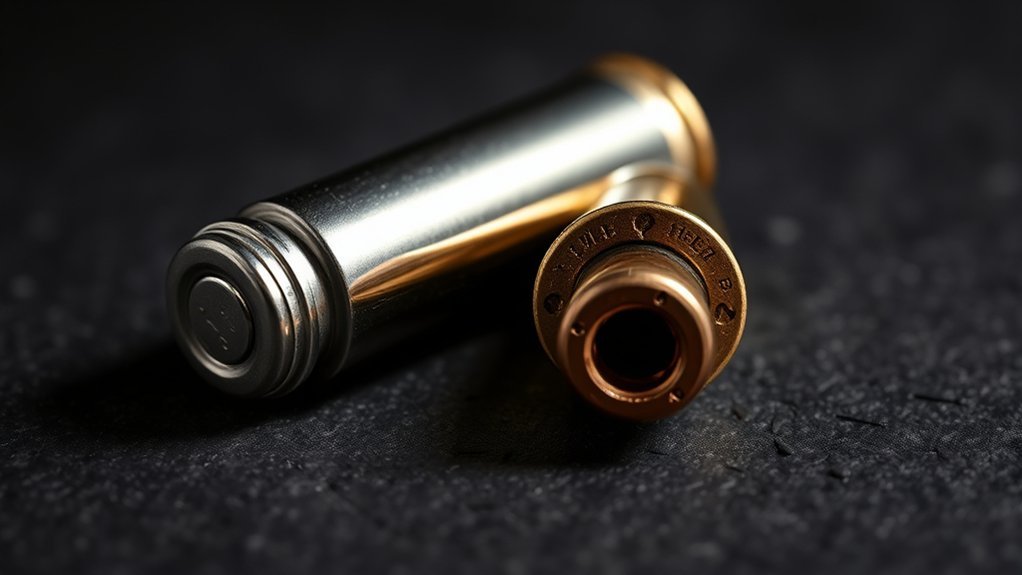
When you compare ammunition types, start with what Full Metal Jacket (FMJ) means. SAAMI defines an FMJ bullet as a projectile whose jacket encloses most of the core except the base. The jacket is commonly made from copper or a copper alloy and helps protect the softer core while giving the bullet a durable outer surface.
FMJ is widely used for training and target shooting because it is commonly available, often costs less than specialized expanding ammunition, and tends to feed reliably in many firearms. Its construction normally produces little or no controlled expansion, so penetration can be relatively deep compared with an expanding bullet fired under comparable conditions.
That penetration can be a drawback in a defensive setting because a projectile that passes through the intended target can remain hazardous beyond it. Ammunition selection does not remove the need to know the target and what is behind it.
Note: FMJ ammunition is generally used for civilian range shooting in many parts of the United States, but range rules and state or local laws can affect what ammunition is permitted. Hunting regulations may separately require expanding or non-lead projectiles.
Health note for indoor ranges: FMJ does not eliminate airborne lead exposure. NIOSH notes that some FMJ bullets leave lead exposed at the base, where hot propellant gases can contribute to lead emissions. Fully encapsulated bullets, non-lead bullets, and non-lead primers can reduce some sources of exposure, but ventilation, cleaning practices, hand hygiene, and range controls remain important.
Understanding Hollow Point (HP) Ammunition
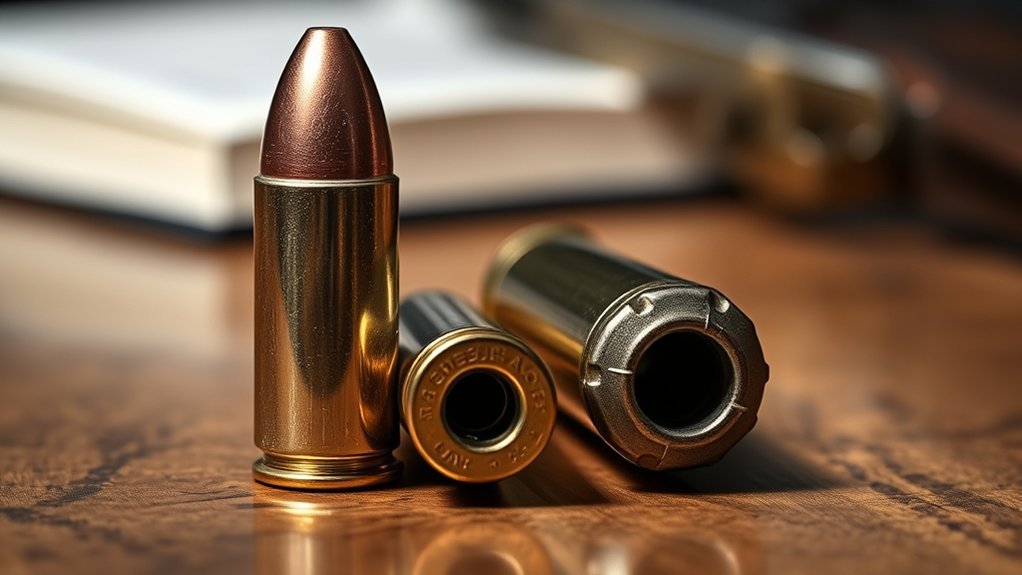
SAAMI defines a hollow point bullet as a bullet with a cavity in the nose to facilitate expansion. In common defensive-handgun discussions, that usually means purpose-built hollow point or jacketed hollow point (JHP) ammunition designed to open after impact under intended conditions.
When a purpose-built expanding bullet opens as designed, its diameter increases and it usually slows more quickly than a comparable non-expanding FMJ projectile. That can produce a wider wound path and may reduce the chance of the bullet continuing beyond the target, although no ammunition eliminates that risk.
Do not identify intended performance from appearance alone. Some rifle open-tip match (OTM) or hollow-point-style match bullets have a small opening created by the manufacturing process and are designed primarily for accuracy. Federal Premium, for example, states that its OTM rifle bullets are not designed for controlled expansion. Check the manufacturer’s stated purpose rather than assuming every hollow-looking bullet behaves like a defensive JHP.
For purpose-built expanding HP/JHP ammunition, the main characteristics are:
- Expansion: A nose cavity is used to help initiate expansion under the conditions the bullet was designed for.
- Penetration: Expansion can limit penetration compared with non-expanding FMJ, but results depend on bullet construction, caliber, velocity, and what the projectile encounters.
- Weight Retention: Some expanding bullets are engineered to retain much of their mass as they expand.
- Intended Use: Defensive handgun, hunting, and match bullets can use superficially similar shapes while being engineered for different purposes.
- Legal Considerations: Rules governing expanding or hollow-nose ammunition vary by jurisdiction and activity.
The practical lesson is to choose ammunition by its manufacturer-stated purpose and verified compatibility, not just by whether the bullet looks round-nosed, hollow, or pointed.
Performance Differences: FMJ vs. HP
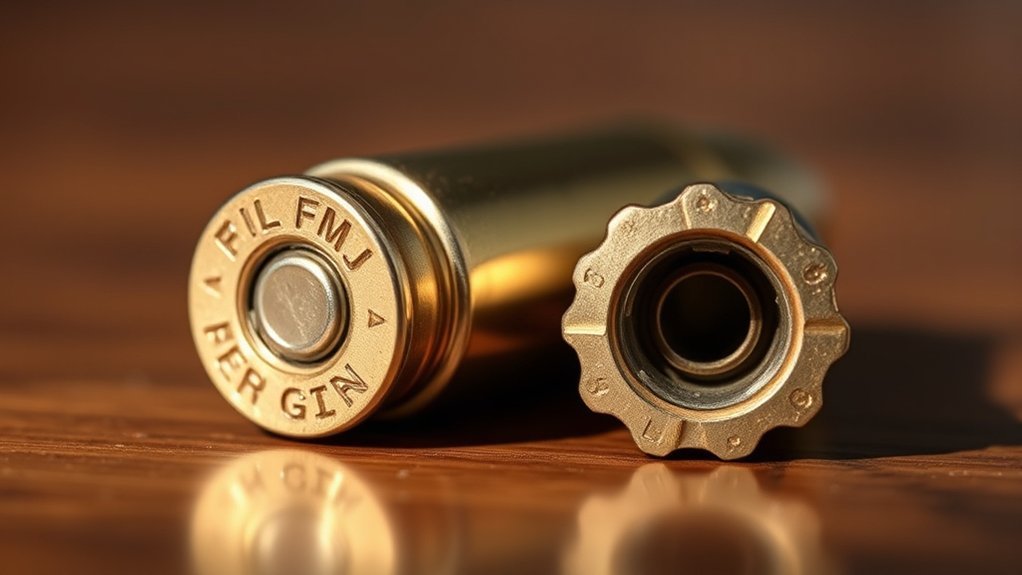
For comparable handgun ammunition, the key FMJ-versus-JHP difference is what the projectile is intended to do after impact. FMJ normally keeps roughly the same profile and may penetrate relatively deeply. Purpose-built JHP is intended to increase in diameter, which can slow the projectile sooner and reduce pass-through risk when expansion works as designed.
Ballistic gelatin and other controlled test media are useful for comparing ammunition under repeatable conditions, but no laboratory medium can predict every real-world result. Clothing, intermediate materials, impact velocity, projectile construction, and firearm barrel length can all influence performance.
Penetration and Expansion
Penetration and expansion are related rather than independent. A bullet that expands creates more frontal area and normally loses velocity more quickly in a given medium. A non-expanding projectile usually presents less frontal area and may continue farther.
- FMJ normally shows little controlled expansion and can penetrate deeply.
- Purpose-built JHP is engineered to expand under a defined range of conditions.
- FMJ can pass through a target, creating a hazard beyond it.
- JHP may reduce pass-through risk when it expands properly, but misses, ricochets, fragments, and barrier penetration remain possible.
- Individual load design matters; the letters FMJ or HP alone do not predict every performance characteristic.
Warning: No ammunition choice is risk-free. Bullets can miss, ricochet, fragment, or pass through barriers. Safe storage, safe handling, proper training, and awareness of what is beyond the target remain essential.
If your goal is economical paper-target practice, FMJ commonly fits that role. For lawful defensive handgun use, many purpose-built JHP loads are engineered around controlled expansion. In either case, follow the firearm manufacturer’s ammunition requirements and the rules where you shoot.
Terminal Ballistics Impact
Terminal ballistics describes projectile behavior after impact. Bullet construction is one variable among many. Caliber, bullet mass, velocity, impact medium, clothing, and intermediate materials can change penetration and expansion.
That is why broad claims such as “all hollow points stop sooner” or “all FMJ penetrates the same” are unreliable. Compare the exact load and its documented intended use rather than treating the bullet-category label as a complete performance specification.
What FMJ vs HP Does Not Tell You
The FMJ or HP label describes projectile construction, but it does not by itself tell you how much recoil a load produces, how accurate it will be in a specific firearm, how cleanly it burns, or how a particular projectile will behave in every material.
Use the bullet label as a starting point, then check the exact load, manufacturer-stated purpose, firearm compatibility, and applicable rules.
- Recoil: Depends on factors including projectile weight, velocity, propellant gases, and firearm weight; FMJ versus HP alone does not determine recoil.
- Accuracy: Neither FMJ nor HP is automatically more accurate. Match ammunition may use specialized open-tip designs that are not intended to expand.
- Rifle vs. handgun bullets: A hollow-looking rifle match bullet can serve a very different purpose from a defensive handgun JHP.
- Indoor lead exposure: Ordinary FMJ may still expose lead at the bullet base. Fully encapsulated or non-lead designs address a different problem than terminal expansion.
- Legal use: Hunting, range, transport, and possession rules can depend on jurisdiction and activity rather than simply “FMJ versus HP.”
Note on military use: The 1899 Hague Declaration prohibits expanding bullets in conflicts covered by that treaty, and the ICRC also describes a customary international humanitarian-law prohibition on bullets that expand or flatten easily in the human body. These rules of armed conflict do not determine ordinary U.S. civilian self-defense, range, or hunting law.
Ideal Uses for FMJ Rounds
FMJ rounds are commonly used for target shooting and training because they are widely available and often less expensive than purpose-built expanding ammunition. For frequent practice, lower cost can make it easier to maintain a regular training schedule.
Target Shooting Applications
FMJ works well for many ordinary range sessions, provided the range permits the projectile construction. Some ranges separately restrict steel-core, magnetic, tracer, incendiary, or other ammunition because of backstop or fire concerns.
- Cost-effective: FMJ is often less expensive than premium expanding ammunition.
- Commonly available: Many popular handgun and rifle cartridges are widely sold in FMJ training loads.
- Feeds reliably: The smooth projectile profile can support dependable feeding in many semi-automatic firearms.
- Indoor-range consideration: TMJ, fully encapsulated, non-lead bullets, or non-lead primers may help reduce some lead sources when paired with proper ventilation and range controls.
- Minimal controlled expansion: Ordinary FMJ generally retains a relatively similar profile after impact compared with an expanding bullet.
These traits make FMJ practical when the main goal is repetition. Training value comes from safe, consistent practice, not from the FMJ label itself.
Training and Practice
FMJ can help you practice basic firearm handling and range skills economically. However, a training load and another lawful load can differ in bullet weight, velocity, recoil impulse, feeding behavior, and point of impact, even when both use the same cartridge designation.
If you maintain a separate lawful defensive or hunting load, follow the firearm and ammunition manufacturers’ instructions and confirm that the combination functions properly during controlled range use.
Here’s a quick comparison highlighting the ideal uses for FMJ rounds:
| Aspect | FMJ Rounds |
|---|---|
| Penetration | Often relatively deep because ordinary FMJ is not designed for controlled expansion |
| Recoil | Depends on load variables including projectile weight, velocity, propellant gases, and firearm weight, not bullet type alone |
| Accuracy | Load- and firearm-dependent; FMJ is not automatically more or less accurate than other bullet constructions |
| Cost | Generally lower than specialized expanding ammunition |
| Training Value | Practical for high-volume range practice where permitted |
Cost-Effective Ammunition
Choosing FMJ rounds for routine range use often makes sense when cost matters. The price difference between practice and specialized ammunition varies by cartridge, manufacturer, and market conditions, so compare current per-round pricing rather than assuming a fixed percentage.
Common FMJ uses include:
- Training: Routine range practice where the projectile type is permitted.
- Competition: Many match formats allow FMJ, but always follow the specific match rules.
- Plinking: Informal target shooting in a lawful and safe location.
- Practice with common service-style cartridges: FMJ is widely available in many common chamberings.
- Not a universal hunting choice: Game laws may require expanding projectiles, non-lead ammunition, or other specific constructions.
Pro Tip: Choose practice ammunition that matches your firearm manufacturer’s specifications and your range rules. Do not assume that two loads will behave identically simply because they share the same cartridge designation.
Ideal Uses for Hollow Point Rounds
Purpose-built expanding hollow point and jacketed hollow point ammunition is widely associated with lawful defensive handgun use because controlled expansion can increase projectile diameter and reduce pass-through risk compared with comparable non-expanding ammunition.
That does not make an expanding bullet harmless beyond the intended target. Expansion can fail or vary, and any projectile can remain dangerous after a miss, ricochet, or barrier strike.
For hunting, choose ammunition by the game species, firearm, manufacturer-stated purpose, and local regulations rather than by the words “hollow point” alone. Some jurisdictions require expanding projectiles; others impose non-lead requirements. Some hollow/open-tip rifle match bullets are not designed as hunting bullets at all.
Purpose-built expanding ammunition may fit when:
- The manufacturer identifies the load for the intended lawful use.
- Your firearm manufacturer permits the cartridge and load type.
- Applicable state and local law permits possession and use.
- Your range permits that ammunition for controlled testing.
- Hunting regulations permit or require that specific projectile construction or material.
Bullet construction is only one part of responsible firearm use. Safe handling, storage, training, judgment, and current legal knowledge remain essential.
Legal Considerations for FMJ Ammunition
FMJ ammunition is commonly used for civilian range shooting, but legality and permitted use can vary by location and activity. State hunting laws, public-land rules, local ordinances, and individual range policies can impose restrictions that have nothing to do with whether a cartridge will chamber in your firearm.
Key legal and policy questions include:
- Hunting regulations: Some jurisdictions require expanding ammunition, non-lead ammunition, or both for specific wildlife.
- Range policies: Ranges may prohibit steel-core, armor-piercing, incendiary, tracer, magnetic, or other projectiles because of backstop and fire concerns.
- Transport and possession: Ammunition laws can differ across state and local boundaries.
- Military context: Laws of armed conflict concerning expanding bullets are separate from ordinary civilian U.S. law.
Before shooting or transporting ammunition, check the rules for the location and activity involved. Hunting regulations can change by species, season, ammunition material, and land designation.
Legal Considerations for Hollow Point Ammunition
Hollow-point and hollow-nose ammunition laws are not uniform across the United States. Many jurisdictions permit purpose-built hollow points for civilian use, while some impose additional possession, transport, or use restrictions.
New Jersey is a notable example because its law contains restrictions relating to hollow-nose ammunition together with specific exemptions. Because statutory language and official guidance can change, verify the current law before possessing, carrying, or transporting hollow-nose ammunition there rather than relying on a general summary.
Hunting law is a separate issue. Some jurisdictions require softnose or expanding projectiles for specified game, while others impose non-lead requirements. California, for example, requires nonlead ammunition for taking wildlife and separately regulates authorized methods and projectile types for big game.
Note: This article provides general educational information, not legal advice. Ammunition laws and agency guidance can change. Check current statutes, regulations, range rules, and official agency guidance for the place and activity involved.
Making an Informed Decision: FMJ vs. HP
Choose ammunition by purpose first, then by the exact product’s intended use and compatibility. “FMJ” and “HP” are useful construction labels, but they do not replace the firearm manual, manufacturer documentation, range rules, or hunting and transport laws.
For routine practice, FMJ is commonly the economical option. For another lawful purpose, choose ammunition specifically designed and approved for that purpose rather than relying on bullet shape alone.
- Routine range practice: FMJ is commonly used; TMJ or lead-reduced options may be worth considering for indoor-range exposure control.
- Purpose-built defensive handgun ammunition: JHP is designed for controlled expansion, subject to local law and firearm compatibility.
- Hunting: Follow game-specific expanding-projectile, caliber, and non-lead requirements instead of assuming all HP ammunition is appropriate.
- Precision or match rifle use: Open-tip match ammunition may use a hollow-looking nose for manufacturing and aerodynamic reasons rather than controlled expansion.
- Recoil: Compare the exact load; bullet construction alone does not determine recoil.
- Reliability and compatibility: Follow the firearm manufacturer’s approved ammunition specifications.
This approach avoids the most common mistake in the FMJ-versus-HP debate: treating two broad projectile categories as if every load within each category performs identically.
Common Mistakes When Choosing Ammunition
Many ammunition-selection errors come from reading the bullet label as a complete performance specification. Avoid these assumptions:
- Assuming every hollow-looking bullet expands: Open-tip match rifle bullets may not be designed for controlled expansion.
- Assuming FMJ fully encapsulates the lead core: Conventional FMJ commonly leaves the base exposed.
- Assuming bullet type determines recoil: Projectile weight, velocity, propellant gases, and firearm weight all matter.
- Ignoring range rules: A range may prohibit particular projectile materials even when the ammunition is otherwise lawful.
- Ignoring hunting rules: Expanding and non-lead requirements can vary by jurisdiction, species, and season.
- Choosing only by price: The correct choice must also match the firearm, intended use, manufacturer guidance, and applicable law.
Use the projectile label as a starting point, then verify the exact load and the rules that apply to your intended activity.
Conclusion
For most shooters, the core FMJ-versus-hollow-point distinction is straightforward: conventional FMJ is a non-expanding construction commonly used for economical range practice, while purpose-built JHP is designed to expand for applications where controlled expansion is appropriate and lawful.
The important exceptions are just as useful. Conventional FMJ may leave lead exposed at the base, so it is not the same as fully encapsulated TMJ. A hollow or open-tip rifle match bullet is not automatically an expanding hunting or defensive projectile. Recoil, accuracy, penetration, legality, and suitability still depend on the exact load, firearm, intended use, and applicable rules.
Frequently Asked Questions
Is FMJ or hollow point better for range practice?
FMJ is commonly the more practical choice for routine range practice because it is widely available and generally less expensive than specialized expanding ammunition. Always follow the range’s ammunition rules. At indoor ranges, fully encapsulated, non-lead, or lead-reduced ammunition may help address some lead-exposure sources.
Do hollow points always penetrate less than FMJ?
No. Purpose-built expanding hollow points often penetrate less than comparable non-expanding FMJ when expansion occurs, but penetration varies with projectile design, velocity, caliber, impact medium, clothing, and intermediate materials. The FMJ or HP label alone does not predict an exact penetration depth.
Are hollow points legal in the United States?
There is no single rule that applies identically in every state and locality. Many jurisdictions permit hollow-point ammunition, while some impose additional restrictions or exemptions. New Jersey is one commonly cited example. Verify current state and local law before possession, carry, or transport.
Does FMJ eliminate lead exposure at an indoor range?
No. NIOSH notes that some FMJ bullets have an exposed lead base that can contribute to airborne lead when exposed to hot propellant gases. Ammunition design, primer composition, ventilation, cleaning, and hygiene all affect lead exposure.
Does every hollow or open-tip bullet expand?
No. Purpose-built defensive or hunting hollow points may be engineered to expand, but some open-tip match rifle bullets use the opening as part of their manufacturing or aerodynamic design and are not intended for controlled expansion. Check the manufacturer’s description of the exact projectile.
Sources
- SAAMI: Full Metal Jacket Bullet — Industry definition of FMJ construction.
- SAAMI Glossary: Hollow Point Bullet — Industry definition of a hollow-point bullet.
- NIOSH: Preventing Occupational Exposure to Lead and Noise at Indoor Firing Ranges — Lead sources, bullet construction, primers, and exposure controls.
- OSHA Lead Publications — Indoor firing-range lead-exposure resources.
- SAAMI Recoil Formulae — Recoil factors and calculation background.
- Federal Premium FAQ — Manufacturer explanation of open-tip match rifle bullets and their intended performance.
- ICRC: Hague Declaration IV,3 — Treaty text concerning expanding bullets.
- ICRC Customary IHL Rule 77 — ICRC summary of the customary-law rule concerning expanding bullets.
- New Jersey Revised Statutes § 2C:39-3 — Hollow-nose ammunition restrictions and referenced exemptions; verify against current official state law before relying on it.
- California Code of Regulations, Title 14, §250.1 — Nonlead ammunition requirements for taking wildlife.
- California Code of Regulations, Title 14, §353 — Big-game projectile and method requirements.