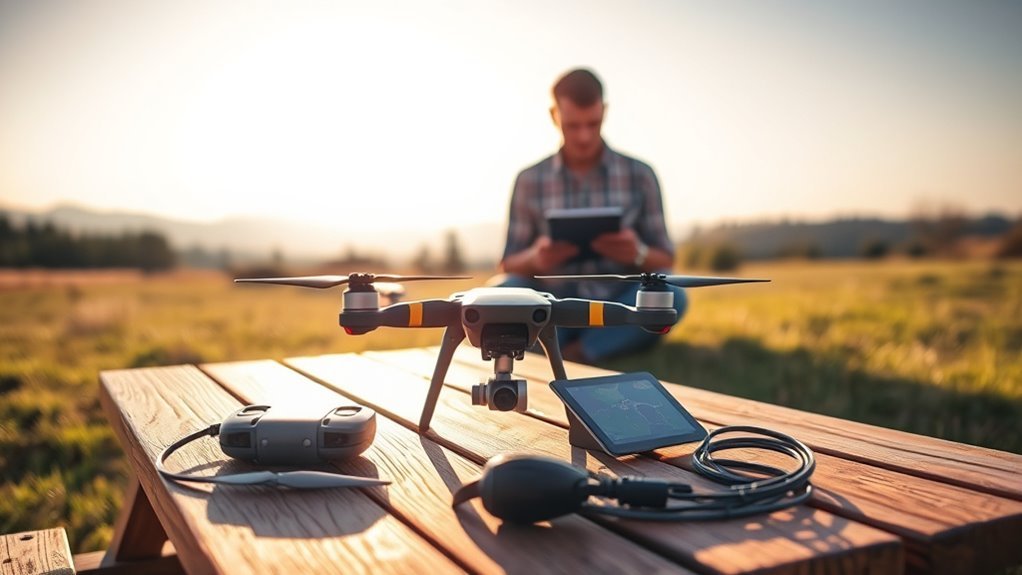
The DJI Mini 4K is a sub-250 g drone built for entry-level aerial work without the registration burden in many regions. It combines a 4K camera, 3-axis gimbal stabilization, up to 31 minutes of flight time, and a claimed 10 km transmission range. Those numbers look straightforward, but real-world performance depends on conditions, controls, and use case. The more important question is whether its limits match the user’s needs.
What Is the DJI Mini 4K?
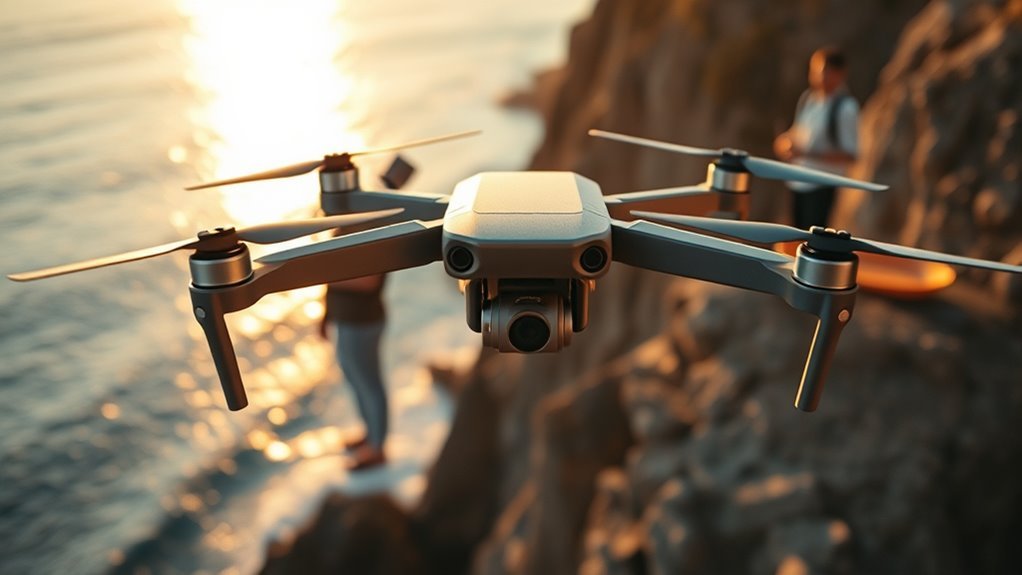
The DJI Mini 4K is a sub-250 g consumer drone designed for accessible aerial imaging. Its lightweight build means it does not require FAA registration for recreational use.
As a DJI Mini model, it combines portability with practical control, giving pilots a compact tool for capturing the world from above without unnecessary regulatory burden.
Its 4K Ultra HD camera, paired with a 3-axis gimbal, produces stable video and sharp stills suitable for cinematic work. A maximum flight time of up to 31 minutes supports longer sessions, while a transmission range of up to 10 km expands creative reach across open terrain.
One-tap takeoff and landing simplify operation, and GPS Return to Home adds a reliable safety layer. The result is a streamlined aerial platform for users seeking freedom, precision, and straightforward flight.
DJI Mini 4K Specs at a Glance
Weighing under 249 g, the DJI Mini 4K stays in the sub-250 g category that avoids FAA registration for recreational use, while its 4K Ultra HD camera and 3-axis gimbal deliver stabilized, cinematic footage.
The DJI Mini 4K Drone combines portability with controlled precision, giving pilots a compact platform for creative work and uncomplicated travel. Its design favors users who value mobility without sacrificing image quality or flight reliability.
- Camera: 4K Ultra HD recording with stabilized output.
- Gimbal: 3-axis mechanical stabilization for smoother frames.
- Range: up to 10 km via OcuSync 2.0.
- Flight intelligence: QuickShots automate Dronie and Helix sequences.
These specifications place the aircraft in a practical category for independent aerial capture, where streamlined operation supports expressive flight and efficient content creation.
How Long Does the DJI Mini 4K Fly?
Flight endurance is a major part of the DJI Mini 4K’s appeal, complementing its compact frame and stabilized camera system. Under ideal conditions, its flight time reaches up to 31 minutes, giving operators enough margin for deliberate framing, route changes, and repeat passes without immediate pressure.
Actual endurance varies with wind, battery condition, payload, and temperature, so real-world results may fall below the stated maximum. For users seeking greater independence in the field, multiple batteries expand total air time substantially; three batteries can deliver up to 93 minutes combined.
The aircraft is also built to remain reliable at altitudes up to 4,000 meters, preserving performance across demanding environments. GPS Return to Home adds a practical safeguard, helping recover the drone as power declines.
That combination supports efficient, liberated flying with less interruption and more control over each session.
How Far Can the DJI Mini 4K Go?
How far the DJI Mini 4K can travel depends on signal conditions, with a maximum transmission range of up to 10 km (32,800 feet) in ideal, interference-free environments.
In practice, the maximum range is shaped by regulatory mode, terrain, and local interference. CE mode generally limits control distance to about 3 km, while FCC mode can extend usable range to roughly 8 km. Reports from users suggest connection loss may occur near 1 mile when obstacles, buildings, or radio noise intrude.
- Clear line of sight improves signal stability.
- Strong battery levels support longer, safer outbound flights.
- Dense urban areas reduce effective range.
- Auto return engages after link loss, helping recovery.
For operators seeking freedom of movement, range should be treated as a variable, not a promise.
The drone can reach far, but disciplined planning and direct sight remain essential for reliable control and safe return.
DJI Mini 4K Camera and Gimbal Quality
Beyond range considerations, the DJI Mini 4K’s imaging system is built for reliable aerial capture, pairing a 4K Ultra HD camera at 30 fps with a 3-axis gimbal for stable footage. This camera arrangement reduces shake and preserves detail, even when wind or motion would otherwise blur the image.
The sensor also supports stills up to 12 MP, recorded in both JPEG and DNG, giving users flexibility between fast sharing and greater post-processing control. For those seeking visual expression without heavy equipment, the Mini 4K keeps the imaging package compact and easy to carry.
Intelligent shooting modes such as QuickShots can automate cinematic moves, helping produce polished results with less manual complexity. The lightweight frame supports portability while maintaining camera quality, making the drone practical for travel, daily use, and independent content creation.
Easy-to-Use Flight Features
The DJI Mini 4K includes one-tap takeoff, streamlining launch procedures for novice operators.
GNSS and infrared sensing support stable hovering, helping maintain position for consistent aerial capture.
QuickShots modes such as Dronie and Helix automate complex maneuvers for efficient creative filming.
One-Tap Takeoff
DJI Mini 4K includes a One-Tap Takeoff feature that starts flight with a single button press, reducing setup complexity for new pilots. One-Tap Takeoff streamlines launch and supports rapid access to aerial capture, freeing the operator from procedural friction.
It is engineered for beginners seeking confident entry into drone control.
- Single-button launch
- Fast altitude acquisition
- Immediate mode readiness
- Safer beginner workflow
This function reduces preflight hesitation and helps users begin filming with minimal training. Its automated ascent sequence enables the aircraft to reach operating height efficiently, while preserving control simplicity.
For novice pilots, the result is practical autonomy: less time managing launch steps, more time exploring aerial photography and creating visuals.
Stable Hovering
Stable hovering is another part of the DJI Mini 4K’s beginner-friendly flight system, combining GNSS positioning and infrared sensing to help maintain a steady hold in the air even when conditions change.
This stable hovering support reduces pilot workload, allowing attention to remain on framing and movement rather than constant correction.
At 246 g, the aircraft benefits from a lightweight build that aids control and responsiveness without unnecessary bulk.
Up to 31 minutes of flight time gives ample margin for extended hovering sessions, useful for learning and for collecting footage from a fixed point.
The DJI Fly app adds practical learning tools, giving users a clear path to master stable hovering quickly and fly with greater confidence, precision, and freedom in open air.
QuickShots Modes
Five QuickShots modes—Helix, Dronie, Rocket, Circle, and Boomerang—give the DJI Mini 4K an easy route to professional-looking footage by automating complex camera movements for the pilot.
These QuickShots modes, accessed in the DJI Fly app, reduce manual workload and help users create liberated, cinematic results with minimal training. Stable stabilization keeps motion smooth while the drone executes preset paths.
- Helix for expanding spiral reveals
- Dronie for fast backward ascents
- Rocket for vertical launch shots
- Circle and Boomerang for orbiting, looping perspectives
Each mode can be tuned for duration and distance, allowing controlled variation across scenes.
In-app tutorials streamline setup, making the system practical for beginners seeking expressive aerial control without technical barriers.
Why Range and Flight Time Vary
Range and flight time on the DJI Mini 4K vary primarily because real-world conditions rarely match laboratory test conditions.
The drone’s 10 km transmission claim assumes ideal airspace, minimal interference, and optimal antenna alignment. In practice, obstacles, radio noise, and controller orientation can shorten usable distance. Clear line of sight usually strengthens the link and helps preserve control authority.
Mode selection also matters: CE limits range to about 3 km, while FCC can extend it to about 8 km.
Flight duration follows the same pattern. Although the aircraft can reach 31 minutes, wind resistance, aggressive maneuvers, and battery health reduce endurance.
Battery level is also decisive; higher charge generally supports longer flights and greater range before power management restricts performance.
These variables reflect operating reality, not defect, and they shape how far and how long the Mini 4K can fly under autonomous conditions.
DJI Mini 4K vs Beginner Drones
Compared with typical beginner drones, the DJI Mini 4K stands out for its longer operational envelope and more capable imaging system. Its battery cell supports up to 31 minutes of flight, while many entry-level models stop at 10-20 minutes.
OcuSync 2.0 delivers 10 km video transmission, and the DJI RC-N1C remote controller gives cleaner control than basic links. The 4K camera, stabilized by a 3-axis gimbal and recording to microSD card, exceeds the low-resolution output common in starter craft.
Product information also highlights intelligent flight functions, including QuickShots, plus auto return for safer recovery. Under 249 g, it remains less encumbered by registration than heavier beginner drones. Its wind resistance and range expand operational freedom without sacrificing portability.
- Longer endurance from a single battery cell
- Broader control envelope through stronger video transmission
- More disciplined image capture via gimbal stabilization
- Higher autonomy through intelligent flight modes
Who Should Buy the DJI Mini 4K?
The DJI Mini 4K suits beginners who need stable, manageable flight characteristics without the burden of FAA registration for recreational use.
Its sub-249 g frame and compact form factor also make it practical for travel-oriented users who want portable aerial capability.
For creators seeking an affordable 4K upgrade, the camera system and 3-axis gimbal provide a clear entry point into higher-quality video capture.
Beginner-Friendly Flight
Designed for first-time pilots and casual flyers, the DJI Mini 4K combines one-tap takeoff and landing, GPS Return to Home, and an included DJI Fly app with built-in learning resources to simplify the early learning curve.
The DJI Mini 4K Drone supports practical autonomy for users seeking control without complexity. Its sub-249 g mass avoids FAA registration for recreational use, reducing administrative friction.
Up to 31 minutes of flight time permits longer practice intervals, while the 4K Ultra HD camera and 3-axis gimbal enable stable footage with minimal skill demand.
- Simplified launch and recovery
- Automated safety assistance
- Extended training time
- High-quality image capture
Travel-Friendly Portability
Weighing under 249 g, the DJI Mini 4K suits travelers and casual creators who want a compact drone that is easy to pack and does not require FAA registration for recreational use.
Its foldable frame supports efficient storage in a backpack or carry-on, reducing friction for mobile shooting. The DJI Mini is built for movement without compromise, giving users a lightweight platform for aerial capture anywhere.
Up to 31 minutes of flight time limits interruptions, while the 10 km transmission range preserves control and live view over wide terrain.
A 4K Ultra HD camera with 3-axis gimbal stabilization delivers steady footage suitable for travel documentation.
For users seeking freedom from bulk and setup delays, this drone offers a practical balance of portability, range, and image quality.
Affordable 4K Upgrade
For hobbyists, beginners, and budget-conscious creators, the DJI Mini 4K offers an accessible entry point into aerial imaging by combining a sub-249 g airframe with 4K Ultra HD recording and 3-axis gimbal stabilization.
The DJI Mini 4K Drone removes FAA registration barriers while preserving capable imaging and controlled flight. It suits users seeking a liberated, low-friction workflow:
- novices learning basic flight with one-tap takeoff and landing;
- creators needing cinematic footage without higher-end pricing;
- travelers wanting up to 31 minutes of flight, extendable with spare batteries;
- explorers requiring up to 10 km transmission and GPS Return to Home.
Its balance of portability, stability, and range makes it a practical upgrade for those prioritizing freedom, efficiency, and visual quality.
Is the DJI Mini 4K Worth It?
The DJI Mini 4K presents a strong value proposition for recreational pilots and content creators alike, combining a sub-249 g frame with FAA-registration-free operation for casual use, up to 31 minutes of flight time, and a 10 km transmission range. For those seeking a DJI Mini 4K Drone that removes regulatory friction, the package is compelling.
| Feature | Benefit | User Value |
|---|---|---|
| 4K camera | Sharp UHD footage | Better edits |
| 3-axis gimbal | Stable video | Cleaner shots |
| GPS RTH | Safer recovery | Less pilot stress |
The value is strongest for beginners and mobile creators who want cinematic output without heavy logistics. One-tap takeoff simplifies launch, while the long range supports freer composition and wider framing. In practical terms, it trades premium complexity for accessible performance. For users prioritizing portability, autonomy, and image quality, it is worth it.
Frequently Asked Questions
How Far Away Can I Fly My DJI Mini 4K?
The DJI Mini 4K can fly up to 10 km in ideal, interference-free conditions, though practical range is often far less.
In CE mode, about 3 km is typical; FCC mode may reach 8 km.
Obstacles, wind, battery level, and controller orientation reduce signal strength.
Flight Restrictions and local regulations still govern legal distance, so the drone’s true freedom depends on maintaining clear line of sight and compliant operation.
How Much Flight Time Does the DJI Mini 4K Have?
The DJI Mini 4K offers up to 31 minutes of flight time per battery under ideal conditions.
Battery performance depends on wind, temperature, payload, and flying style, so real-world duration is often lower. Its 5200 mAh battery supports efficient power delivery for extended aerial use.
With three batteries, total airtime can reach about 93 minutes, enabling longer, more independent flights while still requiring careful battery monitoring for safe return.
Can FAA Know You Flew a DJI Drone?
Yes, the FAA can know a DJI drone was flown if an incident, complaint, or airspace violation occurs.
For most recreational flights, it does not actively monitor every sortie, especially when Regulatory Compliance is maintained.
However, controlled airspace authorization, registration, or remote ID can expose flight data.
A sub-249 g Mini 4K may reduce paperwork, not responsibility.
Freedom remains strongest when flight rules are observed and records are kept.
Can DJI Mini 4K Fly at Night?
Yes, the DJI Mini 4K can technically fly at night, but performance is constrained.
Night Photography is possible, yet low-light sensor sensitivity, no night vision, and no obstacle avoidance make operations risky.
Cold temperatures may reduce battery efficiency despite the 31-minute rating.
Compliance depends on local airspace rules, since night flight can require authorization or be restricted.
For liberated use, daylight remains the safer, more reliable operating window.
Conclusion
The DJI Mini 4K stands out for one notable statistic: despite weighing under 250 g, it delivers up to 31 minutes of flight time and a claimed 10 km transmission range. That combination makes it unusually capable for a beginner-friendly drone. Its 4K camera and 3-axis gimbal further strengthen its value for casual aerial filming. For travelers, new pilots, and content creators, it offers a practical balance of portability, image quality, and ease of use.
