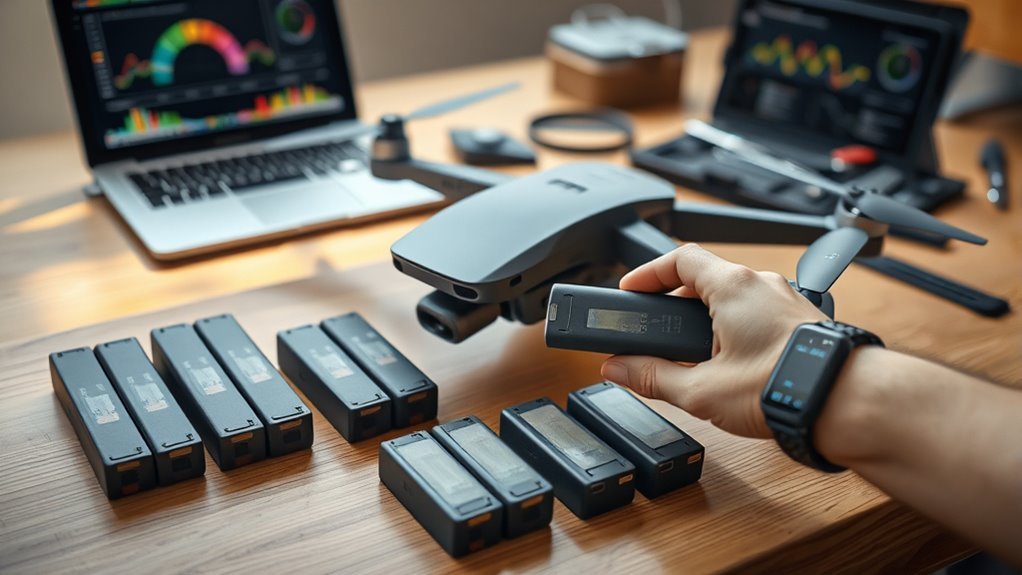
Drone batteries rarely fail all at once. Their usable life is usually measured in charge cycles, with many packs declining after 200 to 300 cycles and OEM batteries often lasting 3 to 4 years under normal use. Performance changes first: shorter flight times, higher internal resistance, and slower charging. Storage, charging habits, and temperature all affect that timeline, but the real question is when a pack stops being merely aged and becomes unsafe.
How Long Do Drone Batteries Last?
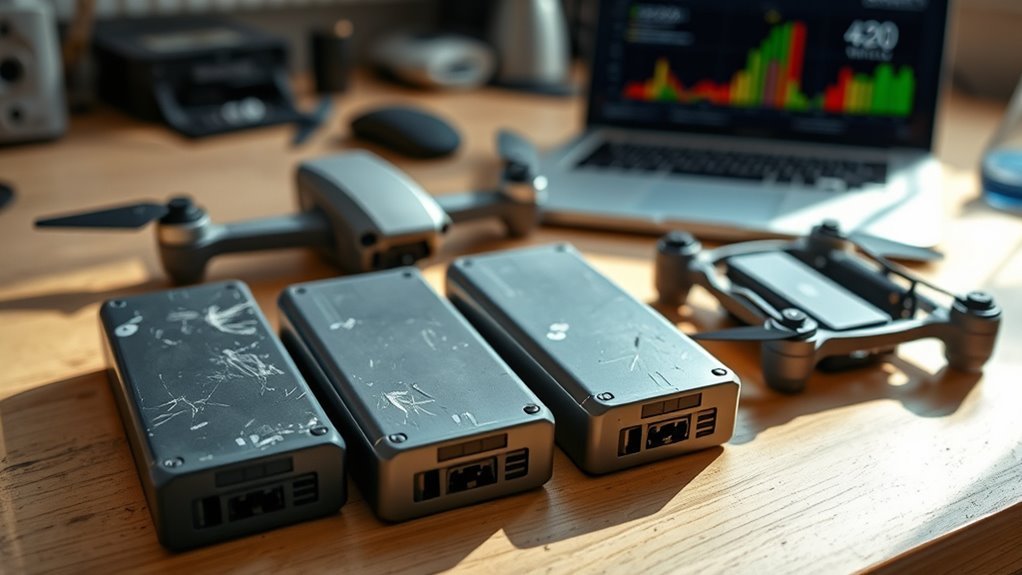
Drone batteries typically last several hundred charge cycles, with many units remaining serviceable after 200–300 cycles when they are used and maintained properly.
In practical terms, drone battery life is shaped by storage temperature, discharge depth, and charging discipline. OEM DJI packs often deliver a lifespan of 3–4 years, while careful maintenance can extend useful service to six years or more.
Performance usually declines gradually, not abruptly, and operators may observe reduced flight time, slower voltage recovery, or weaker power delivery as the cells age. Regular inspection through the GO4 app provides a direct measure of individual battery health, helping identify replacement signs before unsafe operation occurs.
Around the 90% lifespan mark, efficiency loss may become more visible, especially under demanding payload or wind conditions.
For users seeking operational autonomy, disciplined care preserves energy capacity and delays unnecessary replacement, keeping the drone capable, reliable, and economically sustainable.
How Battery Cycle Counts Work
Battery cycle counts measure how many full charge and discharge events a drone battery has completed, making them a direct indicator of wear and remaining service life.
Mavic batteries commonly sustain several hundred cycles, and reported counts such as 33, 33, and 35 suggest that relatively low usage can still correspond to healthy performance.
Tracking cycle count, individual cell values, and overall status in tools like GO4 helps identify early degradation before flight reliability declines.
Cycle Count Basics
A battery cycle refers to one complete discharge and recharge event, and drone packs are typically rated for several hundred cycles before noticeable performance degradation begins.
Cycle counts thus provide a quantitative basis for evaluating battery performance and battery health. Monitoring these numbers helps determine expected lifespan and identify replacement signs before reliability drops. A pack at 33 cycles is usually near the beginning of service, while some units remain functional beyond 300 cycles, though capacity and output may decline.
Because individual cells can age unevenly, precise monitoring of cell values and overall status through tools such as the GO4 app supports safe operation.
For users seeking autonomy from unexpected failure, cycle counts offer a simple, technical indicator of when a battery is still serviceable and when replacement should be considered.
Tracking Battery Health
Cycle counts provide a practical measure of battery health by recording how many complete discharge and recharge events a pack has undergone. For DJI batteries, battery cycle counts in the GO4 app help monitor battery health without guesswork, allowing operators to assess remaining service life. Typical charging cycle counts for Mavic packs may sit near 33 to 35, yet many units endure several hundred cycles before performance decline becomes evident.
| Metric | Meaning |
|---|---|
| 0–35 | Low use, minimal wear |
| 36–200 | Moderate use, watch closely |
| 200+ | Elevated scrutiny |
The table frames replacement signs: shortened flight time, voltage sag, and swelling. Some batteries remain usable beyond 200 cycles, but disciplined tracking supports informed, autonomous decisions about maintenance, continued use, and timely replacement.
Battery Life by Drone Type
Battery life varies substantially by drone type, with Mini 5 Pro batteries typically sustaining hundreds of charge cycles and maintaining usable performance under normal conditions.
Mavic series batteries, including the Mavic 2 and Mavic 4 Pro, often show similar or greater longevity, with service life extending to several years when storage and charging practices are controlled.
In contrast, the DJI Spark’s shorter advertised flight time and lower real-world endurance indicate faster practical degradation and reduced efficiency over time.
Mini Series Battery Life
For the Mini 5 Pro, battery life is typically about 30 minutes per flight, though actual runtime varies with wind, payload, temperature, and flight profile.
Mini 5 Pro batteries thus deliver practical flight times that suit disciplined use rather than unlimited freedom. Observed cycle counts often exceed 200 before visible decline, and some packs remain serviceable for up to six years when proper maintenance is followed.
Battery health can be reviewed in the GO4 app, which reports cell balance and overall condition. To preserve lifespan, discharge should generally stay above 20%, limiting deep depletion and unnecessary stress.
Regular cycling, careful storage, and prompt attention to cell anomalies support reliable performance. Such management extends usable autonomy and reduces dependence on premature replacement.
Mavic Series Battery Life
Mavic series packs typically deliver several hundred charging cycles under proper conditions, with many operators reporting satisfactory performance even after 230 flights. The Mavic Pro, in particular, usually shows a battery lifespan of 3 to 4 years when proper care is maintained. Performance may remain acceptable after 30 to 40 charging cycles, though gradual decline is expected as cells age.
| Cycle Range | Observed Condition | Implication |
|---|---|---|
| 0-40 | Strong performance | Early service life |
| 40-150 | Stable, gradual wear | Monitor closely |
| 150-230 | Variable output | Evaluate risk |
| 230+ | Reduced reserve | Replacement likely |
The GO4 app can expose individual cell health, helping determine whether a pack remains safe and balanced. With disciplined cycling and storage, some users report over six years of use.
Spark Battery Life
DJI Spark batteries are commonly rated for about 15 to 16 minutes of flight time, though real-world use often yields closer to 10 to 12 minutes depending on conditions and battery health.
This spark battery life is shaped by load, temperature, and maintenance discipline. Fully draining the pack is discouraged because deep discharge accelerates capacity loss and weakens performance across cycles.
After repeated use, some operators report near 10 minutes of usable flight time, indicating measurable degradation. Regular monitoring battery health helps identify drift before mission reliability declines.
Community reports show wide variation, so replacement signs should be judged by consistent runtime drops, swelling, or unstable voltage behavior. Proper care preserves autonomy and reduces dependence on premature battery replacement.
Signs a Drone Battery Is Wearing Out
Drone batteries often begin to show clear signs of aging after roughly 200 to 300 charge cycles, when performance starts to decline in measurable ways. At higher cycle counts, reduced flight time is one of the most reliable replacement signs; a 10 to 20 percent drop from baseline often indicates diminished battery lifespan.
Drone batteries often show aging after 200 to 300 cycles, with a 10 to 20 percent flight-time drop signaling decline.
Technical monitoring should also examine individual cell balance. If cell values fluctuate widely or diverge under load, the pack may be developing internal wear or damage.
Another warning is failure to hold a charge, or rapid self-discharge after storage, both of which suggest reduced capacity and unstable output. Declining health metrics in apps such as GO4 provide a quantified view of this degradation, helping operators identify when the battery can no longer support dependable flight.
Careful tracking of charging cycles and output trends supports informed replacement decisions and preserves operational autonomy.
How Charging Affects Drone Battery Life
Charging practices directly influence drone battery longevity by affecting cycle wear, cell balance, and internal resistance over time. Each charging cycle adds measurable stress, so tracking charging cycles helps estimate battery lifespan and predict when capacity decline may appear.
DJI Mavic packs often retain solid performance beyond 300 cycles, yet longevity depends on disciplined charging behavior. Avoiding discharge below 20% reduces deep-stress events and supports peak performance across repeated flights.
Adhering to manufacturer guidelines matters because improper charging can elevate internal resistance, reduce power delivery, and accelerate wear. Cell health should also be checked periodically in the GO4 app, where voltage spread can reveal imbalance or emerging faults before safety degrades.
For users seeking operational freedom, consistent charging discipline preserves range, responsiveness, and dependable launch readiness without unnecessary replacement costs or avoidable downtime.
How Storage Affects Drone Batteries
Storage conditions strongly influence drone battery longevity because lithium cells continue to self-discharge and chemically age even when unused. Under typical conditions, a drone battery’s shelf life is about 3-4 months, though ideal proper storage can extend it toward a year.
Moderating temperature and avoiding abrupt fluctuations reduces degradation and preserves usable capacity. Placing the pack in a hibernation state is standard practice, since it lowers charge dissipation and slows self-discharge. Even so, stored batteries should be checked periodically, because small losses accumulate and may reduce readiness.
Before purchase, the manufacturing date deserves scrutiny; older stock often arrives with hidden aging that narrows performance margins. Reports from users indicate that batteries stored correctly can remain functional for long periods, but only if individual cell balance is monitored consistently.
That balance reveals whether the pack is aging evenly or drifting toward reduced efficiency. Careful storage consequently supports autonomy, extends service life, and keeps power systems responsive.
When a Drone Battery Is Unsafe to Use
A drone battery should be regarded as unsafe to use when the app flags a defective pack or when individual cell health is compromised, because either condition can lead to unstable flight or sudden power loss.
Technical review should also consider charging cycles: units beyond 200-300 cycles often show diminished performance and warrant closer inspection before operation.
Visible signs such as swelling, leakage, or casing deformation indicate structural failure and make continued use unsafe.
Uneven charging or an inability to hold charge suggests internal damage within the pack, reducing reliability and increasing risk.
Shelf life matters as well; batteries kept past 3-4 months in storage may have degraded chemistry even if they appear normal.
For operators seeking dependable, liberated flight, the prudent standard is simple: any battery with app warnings, cell imbalance, physical damage, or charge instability should be treated as unsafe to use until verified by testing or professional assessment.
When to Replace Your Drone Battery
Replacement becomes appropriate once a drone battery shows measurable performance decline, such as reduced flight time, erratic discharge behavior, or a companion-app health indicator that reports significant degradation.
In practical terms, cycle counts provide a defensible threshold for action: many packs remain usable through 200 to 300 charging cycles, yet batteries nearing 100 cycles should be evaluated more closely.
Lifespan is not defined by age alone; usage patterns, storage discipline, and charge habits materially affect deterioration. A battery should be replaced if internal resistance rises sharply, cell balance becomes unstable, or it can no longer hold more than 20% capacity without rapid loss.
Mavic units at 33 to 35 cycles may still perform well, but that cannot justify complacency. The objective is operational freedom, not false economy.
Once degradation becomes repeatable, the rational choice is to replace the pack and preserve safety, reliability, and mission continuity.
Frequently Asked Questions
What Happens if a Drone Battery Dies While Flying?
If a drone battery dies while flying, the aircraft usually triggers emergency procedures, such as an automatic return-to-home or an immediate descent, depending on settings.
If power collapses suddenly, flight stability can be lost and the drone may fall uncontrolled.
Effective battery safety depends on battery maintenance, app monitoring, and risk management.
Skilled landing techniques and preflight checks reduce damage, protect property, and support safer, more liberated aerial operation.
How Much Does a Drone Battery Cost?
Drone battery costs are often higher than expected. OEM DJI packs typically range from $50 to $200, while premium battery brands can exceed that.
A theory that charging stations and battery maintenance always reduce long-term expense proves only partly true; voltage ratings, environmental impact, and battery upgrades alter the calculation.
The market appears uneven, yet informed buyers can choose durable options and resist inflated pricing, preserving operational freedom through disciplined procurement.
How Long Do Drone Batteries Take to Charge?
Drone batteries usually require 1 to 2 hours to reach full charge, though charging time varies by battery types and charger output.
Environmental factors such as temperature can lengthen the process, and maintenance tips include cooling batteries before charging.
Charging safety matters because hot batteries may charge slowly and suffer performance impact.
Hibernation modes can delay readiness slightly, but monitored, disciplined handling preserves power autonomy and operational freedom.
What Is the Price of a Battery for a DJI Mini Drone?
A DJI Mini battery typically hovers between $50 and $80, a modest toll for sustained flight.
Pricing varies by battery types, retailer, and model, while charging tips and maintenance practices influence long-term value.
Performance factors and replacement intervals also matter, especially when compatibility issues arise with non-OEM packs.
OEM options usually command higher prices yet deliver more reliable performance, offering pilots greater operational freedom and fewer interruptions in the field.
Conclusion
Drone batteries last, but not indefinitely: they age through charge cycles, lose capacity through repeated use, and degrade faster under heat, deep discharge, and poor storage. They should be monitored for falling flight time, rising internal resistance, and visible swelling. They should be inspected regularly, especially near 100 cycles, and replaced when they can no longer hold charge safely. In drone power systems, longevity depends on care, but safety depends on timely replacement.
