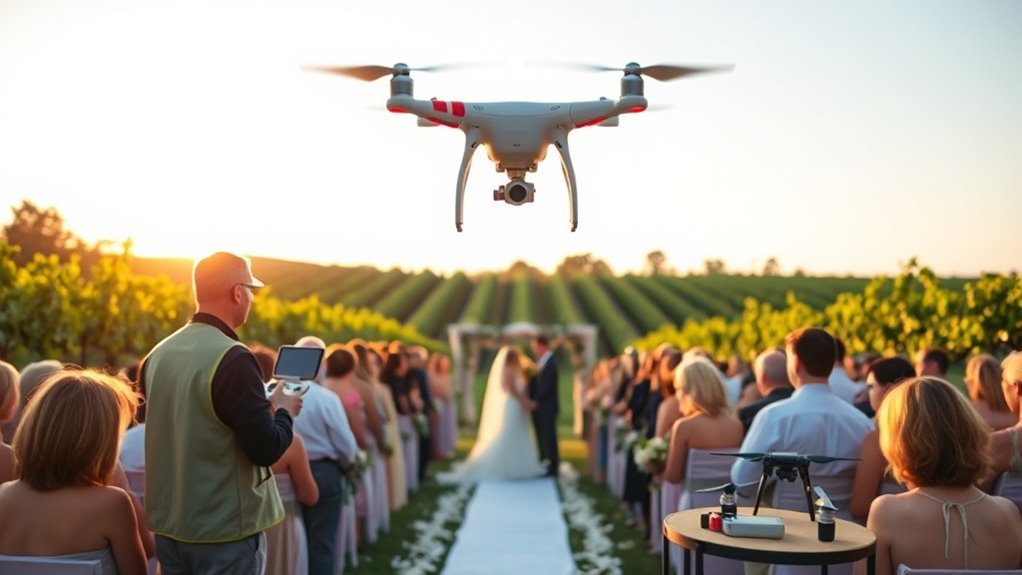
Filming a wedding with a drone can add scale and elegance, but it also brings rules, permits, and timing to manage with care. The best plans balance FAA compliance, venue approval, and a quiet shot list that captures the setting without intruding on the ceremony. Establishing views, key arrivals, and selective moments can work well, provided there is a backup if weather shifts or equipment fails. The details begin to matter quickly.
Know Drone Rules, Permits, and Weather
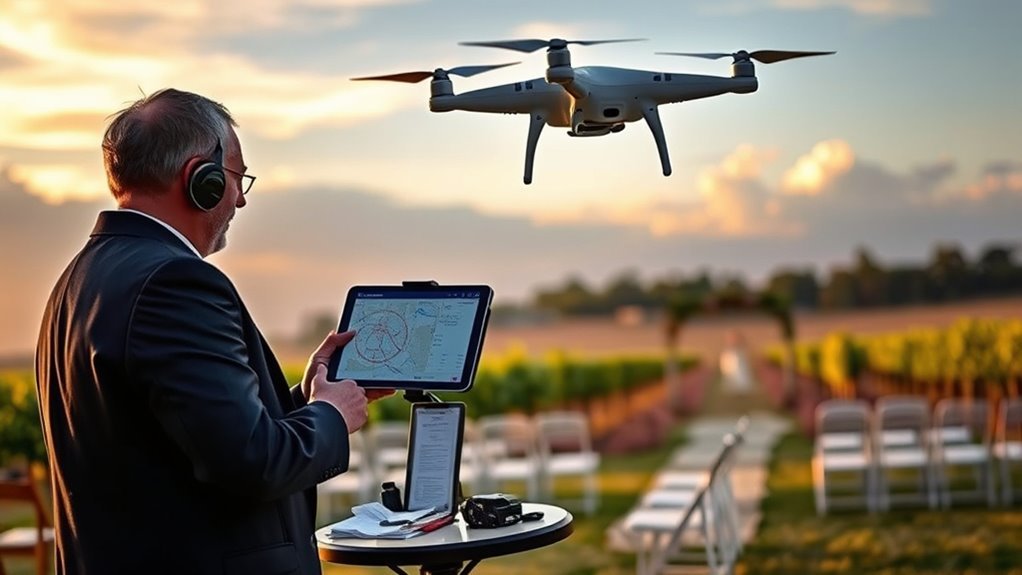
Before a wedding flight ever begins, the operator must confirm the legal and practical conditions are in order. Responsible drone pilots begin with FAA regulations, distinguishing commercial work from recreation. A Part 107 license is required for paid aerial coverage, while hobby use follows different rules and demands the TRUST test.
Venue policies deserve equal attention, since some sites prohibit flights outright or reserve no-fly zones around guests, structures, or ceremonies. Permits may also be necessary, especially in cities, near sensitive infrastructure, or within restricted airspace, where local rules can be strict.
Weather conditions should be checked repeatedly on the day itself; strong winds above 15 knots, rain, or other precipitation can make flight unsafe and unwise. A discreet pre-flight inspection should confirm airworthiness, registration, and a visible, legible number before takeoff.
Build a Wedding Drone Shot List
A well-structured wedding drone shot list begins with essential moments, starting with establishing views of the venue and its surroundings to frame the setting with clarity and scale.
It should also include key aerial shots of the couple, such as the first look or the walk down the aisle, while reserving drone use for intervals that limit disruption.
Careful sequencing between aerial and ground footage helps preserve a seamless flow and guarantees the coverage remains complete.
Essential Drone Moments
What moments matter most in a wedding drone shot list? The answer usually begins with the couple’s grand entrance and exit, where drone shots can reveal the venue’s scale while preserving the emotional charge of the day.
During the ceremony, aerial footage offers a composed overview of guests and vows, so long as wedding videography remains discreet and respectful of venue expectations.
The photo session is another natural window for drone photography, especially when the couple is framed against gardens, water, or architecture. A dronie can add motion and breadth, uniting intimacy and landscape in one clean image.
Strong planners also prepare backup shots for weather or airspace limits, ensuring the story still holds together through grounded, elegant alternatives.
Safe Shot Sequencing
Once the key wedding moments are identified, the next step is to sequence drone flights so they support the day rather than interrupt it. A wedding videographer should build a shot list that places aerial shots around the couple’s photo session, before the ceremony, and after major events, allowing drone footage to unfold with ease.
- Check venue regulations early, marking no-fly zones and approved launch points.
- Pair wide landscape views with close-ups and gentle orbits to balance the narrative.
- Keep flights brief during low-noise periods, preserving the atmosphere and guest comfort.
When weather turns, a backup plan should redirect the crew to sheltered angles or ground-based coverage. This measured order protects the ceremony, serves the couple, and leaves room for liberated movement without risk.
Film Wedding Drone Shots Safely
Safe wedding drone work begins with careful preparation and strict attention to venue rules, permissions, and FAA requirements.
In drone videography, a professional approach starts with confirming what the wedding venue allows, securing written approval, and aligning each flight with FAA regulations.
Weather deserves close monitoring; wind and rain can compromise aerial videography and make safe operation impossible.
A pre-flight checklist should verify battery status, propellers, controls, and clear take-off and landing zones before any launch.
Flights should remain measured and purposeful, with altitude and distance managed to preserve control and reduce disruption.
Because conditions can change quickly, a backup plan is essential. Ground-based coverage can preserve key moments if flying becomes unsafe or restricted.
This disciplined method protects the couple’s celebration while supporting the freedom to create graceful, unobtrusive images.
The result is footage that feels expansive, yet remains grounded in responsible practice and reliable execution.
Keep Drone Shots Guest-Friendly
Guest-friendly drone coverage depends on restraint, timing, and coordination. In a wedding, the drone should support the day without drawing attention from guests or interrupting the natural flow of the celebration. Proper etiquette means choosing moments when people are seated, socializing, or focused elsewhere, so the footage feels elegant rather than intrusive.
- Plan flights during cocktail hour or couple portraits.
- Keep the drone at a respectful distance from guests.
- Coordinate with the photographer to avoid overlap and crowding.
This approach preserves a calm atmosphere and gives everyone room to enjoy the event with ease. A discreet drone presence can still deliver sweeping footage, but only when its movement is measured and its timing is selective.
Verifying venue policies early also helps keep the wedding experience smooth and respectful.
Navigate Venue Rules and FAA Limits
Even the most discreet drone plan depends on clear rules before takeoff. A professional drone operator should confirm venue rules early, since some properties prohibit flights altogether or limit launch areas, altitude, and timing.
FAA regulations must also be reviewed, especially restrictions over large gatherings and near airports or other no-fly zones. Local laws may add permits, insurance requirements, or municipal limits that shape what is possible on the day. These checks preserve freedom by preventing avoidable interruptions and preserving the couple’s flow.
The videography team should share every venue-specific restriction and airspace limitation with the couple in advance, so expectations stay aligned and no one is surprised later.
Weather deserves equal attention; strong wind or rain can ground a drone and narrow options quickly. Clear planning, supported by backup plans, keeps the schedule steady while leaving room for graceful aerial coverage when conditions and regulations allow.
Plan Backup Shots for Drone Failures
A reliable wedding plan keeps a ground camera ready to capture key moments if the drone is grounded by weather or technical issues.
It also accounts for alternative angles from traditional equipment so important scenes remain covered without interruption.
A brief pre-wedding review with the couple and photographer can confirm which shots matter most and how backup coverage will proceed.
Ground Coverage Alternatives
When drone coverage is limited by weather, venue rules, or technical failure, a reliable ground plan becomes essential. Ground coverage should be assigned to a second camera operator or videographer, ideally the wedding photographer working in concert with traditional videography.
Clear backup plans allow the team to preserve the event’s freedom of movement while protecting the story. A precise shot list should name wide venue views, intimate ceremony moments, guest reactions, and detail shots that keep the film complete.
- Use stabilizers and gimbals for smooth handheld footage.
- Coordinate with the couple and vendors before the ceremony.
- Match ground angles to the aerial sequence for continuity.
With disciplined preparation, the film remains elegant, unobtrusive, and fully documented, even if the drone never leaves the bag.
Weatherproof Shot Coverage
Weather can interrupt aerial plans without warning, so a wedding film crew should treat backup coverage as part of the original shot design. A practical weather backup plan accounts for rain, wind, and any restriction that may ground drone work.
The crew should scout alternative indoor locations at the venue, selecting spaces that can still provide elegant visual movement and atmosphere. When aerial shots are unavailable, ground-based cameras can preserve vows, close-ups of the couple, and guest reactions with discreet precision.
The couple should be informed in advance about possible weather scenarios and the alternative filming strategy. A prepared list of essential moments guarantees thorough coverage, even if the drone remains unused. This approach protects the film’s freedom, continuity, and visual grace.
Frequently Asked Questions
What Is the 30-5 Minute Rule for Weddings?
The 30-5 minute rule at weddings means a drone operator waits at least 30 minutes before and 5 minutes after key moments, such as vows or speeches, to avoid noise and distraction.
It supports wedding drone regulations, protects guest privacy concerns, and allows careful aerial shot angles.
Good drone battery management and weather impact assessment help guarantee discreet, reliable coverage while preserving the ceremony’s calm and the couple’s freedom.
What Is the 1:1 Rule for Drones?
The 1:1 rule for drones requires that, for every foot of altitude, the pilot keeps roughly one foot of horizontal distance, preserving visual contact and compliance with drone regulations.
Such an old-world safeguard supports aerial perspectives without courting risk. It depends on lighting conditions, battery management, and careful post production editing.
In crowded settings, it protects people, limits errors, and helps operators fly with discreet confidence and practical freedom.
How to Make a Shot List for Your Wedding?
A wedding shot list is made by listing essential moments first, then organizing them by the day’s sequence.
It should include wedding shot types such as portraits, ceremony coverage, and reception details, with creative angles planned for variety.
Location scouting helps identify practical setups, while timing protects the flow.
Coordination with the couple, photographer, and videographer keeps it precise.
Finally, editing tips should guide coverage toward a cohesive, liberating visual story.
Is $4000 a Lot for a Wedding Photographer?
$4000 is not necessarily a lot for a wedding photographer; it often sits in the mid-to-high range.
Like a fine frame around a cherished scene, the price reflects wedding photography costs, photographer experience levels, editing, travel, and coverage.
Careful budget breakdown tips help when comparing packages. For many couples, the value of memories outweighs the number.
In discerning markets, such pricing can be entirely reasonable and thoughtfully earned.
Conclusion
Done well, wedding drone footage becomes more than a record; it is a quiet lantern lifted above the day. When rules are followed, permissions secured, and timing chosen with care, the camera can capture the venue, the vows, and the gathering without disturbing the moment it seeks to honor. And if weather or equipment fails, thoughtful backups keep the story intact. In that balance of caution and grace, the celebration remains both seen and respected.
