Choosing commercial and professional drones for mapping, film, and inspection means balancing camera quality, flight time, portability, and software support. A drone that captures beautiful footage may not have the equipment needed for accurate survey work.
The DJI Mavic 4 Pro is our overall pick for professional aerial imaging, thanks to its 100MP main camera and versatile triple-camera system. The DJI Air 3S offers a more affordable route into dual-camera production.
We compared manufacturer specifications, controller configurations, flight features, and suitability for real commercial workflows. None of these three consumer-camera models should be confused with a dedicated RTK surveying platform.
Commercial and Professional Drones Compared
| Product | Best for | Main camera | Max flight time | Aircraft weight |
|---|---|---|---|---|
|
Premium
|
Professional filmmaking and detailed visual inspection | 100MP 4/3 CMOS Hasselblad | 51 minutes | Approximately 1,063 g |
|
Mid-range
|
Portable dual-camera production | 50MP 1-inch CMOS | 45 minutes | 724 g |
|
Mid-range
|
Single-camera Hasselblad imaging | 20MP 4/3 CMOS Hasselblad | 46 minutes | 895 g |
Commercial and Professional Drones: Our Top Picks
1. DJI Mavic 4 Pro
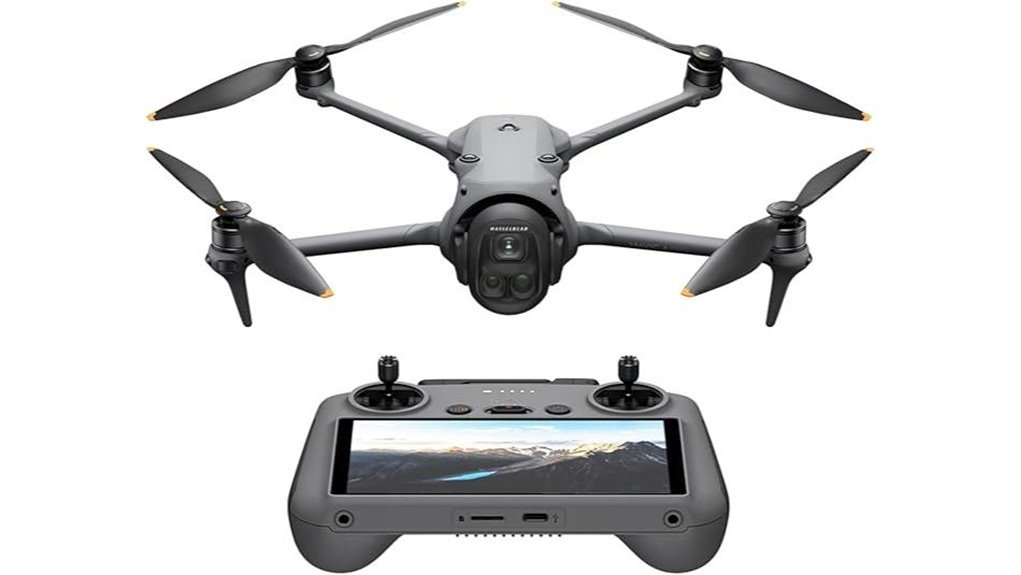
Bottom line: The DJI Mavic 4 Pro suits filmmakers and visual-inspection operators who need detailed images, multiple focal lengths, and flexible camera angles.
- Main camera: 100MP 4/3 CMOS Hasselblad, for detailed still images.
- Video: Up to 6K/60fps HDR, for high-resolution production.
- Max flight time: 51 minutes, under DJI test conditions.
- Transmission: O4+ up to 30 km FCC, in ideal conditions.
- Aircraft weight: Approximately 1,063 g, requiring careful transport planning.
The triple-camera system combines a 100MP Hasselblad main camera with medium telephoto and telephoto cameras. This allows you to switch between wide establishing shots and closer views without moving the aircraft as much.
Its Infinity Gimbal supports 360-degree roll rotation, opening up creative framing options. The aircraft also features omnidirectional obstacle sensing and forward-facing LiDAR for supported low-light detection.
The linked standard package includes DJI RC 2. The larger seven-inch DJI RC Pro 2 belongs to a different package configuration, so check the controller before ordering.
- 100MP Hasselblad main camera and two telephoto cameras.
- 6K/60fps HDR recording for professional video workflows.
- Infinity Gimbal offers flexible cinematic framing.
- Up to 51 minutes of manufacturer-rated flight time.
- Omnidirectional obstacle sensing with forward-facing LiDAR.
- Premium purchase cost.
- Heavier than the other drones in this comparison.
- Standard package does not include the RC Pro 2 controller.
2. DJI Air 3S
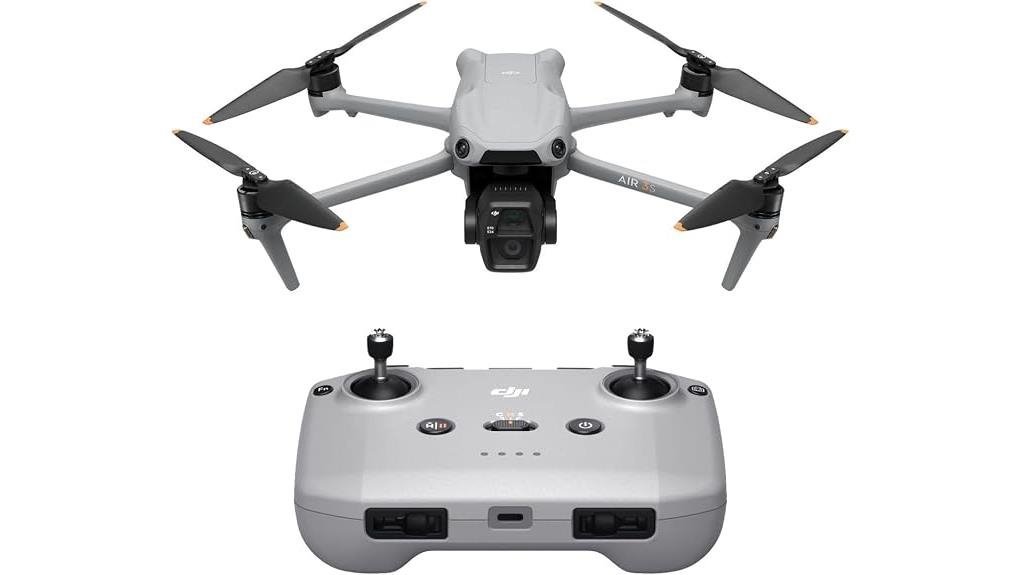
Bottom line: The DJI Air 3S provides a practical balance of camera quality, flight time, portability, and cost for small production teams.
- Main camera: 50MP 1-inch CMOS, for detailed wide shots.
- Video: 4K/60fps HDR, for flexible video production.
- Max flight time: 45 minutes, under DJI test conditions.
- Transmission: O4 up to 20 km FCC, in ideal conditions.
- Aircraft weight: 724 g, lighter than both Mavic models.
The Air 3S combines a 24mm-equivalent wide camera with a 70mm-equivalent medium telephoto camera. Its 1-inch primary sensor supports 50MP photography and 4K/60fps HDR video.
Forward-facing LiDAR works alongside omnidirectional sensing to support obstacle detection in suitable conditions. These systems assist the pilot but cannot eliminate collision risk.
The linked RC-N3 configuration requires a compatible smartphone for the live camera feed. If you prefer a controller with its own display, check the separate DJI RC 2 package.
- 50MP main camera with a 1-inch CMOS sensor.
- Dual cameras offer wide and medium telephoto perspectives.
- 4K/60fps HDR recording.
- Forward-facing LiDAR and omnidirectional obstacle sensing.
- 724 g aircraft weight improves portability.
- RC-N3 configuration requires a compatible smartphone.
- Shorter rated flight time than the Mavic models listed here.
- Does not provide a dedicated survey-grade RTK system.
3. DJI Mavic 3 Classic
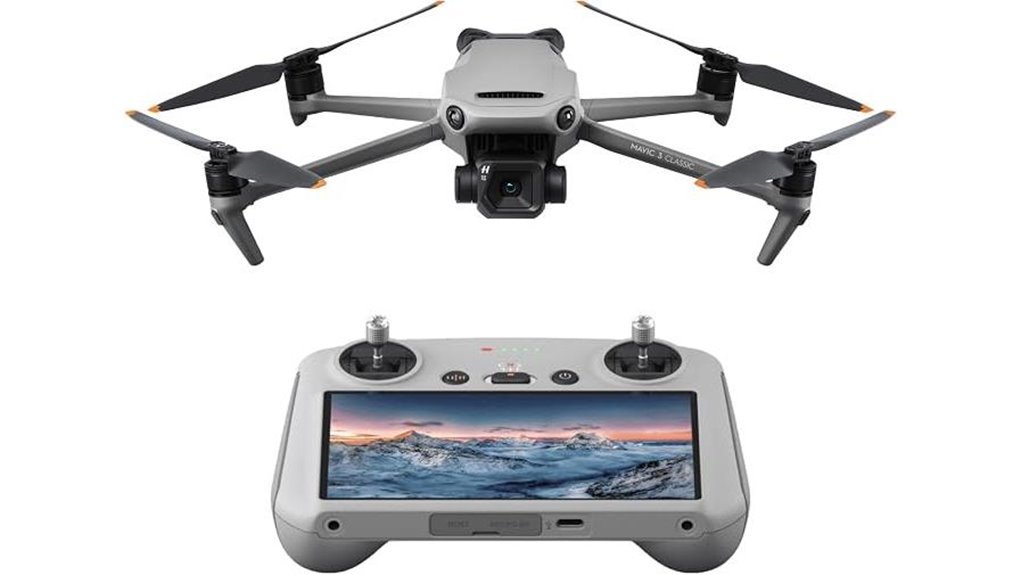
Bottom line: The DJI Mavic 3 Classic suits photographers and filmmakers who prefer a single large-sensor Hasselblad camera over a multi-camera system.
- Main camera: 20MP 4/3 CMOS Hasselblad, for large-sensor imaging.
- Video: Up to 5.1K/50fps, for high-resolution footage.
- Max flight time: 46 minutes, under DJI test conditions.
- Transmission: O3+ up to 15 km FCC, in ideal conditions.
- Aircraft weight: 895 g, between the other two models.
The 4/3 CMOS Hasselblad camera supports 20MP stills, an adjustable f/2.8–f/11 aperture, and 5.1K recording. Its single-camera design works well for landscape photography and conventional aerial video.
Omnidirectional obstacle sensing, Waypoint Flight, and Advanced Return to Home help with planned operations. However, the Mavic 3 Classic is not the same aircraft as the Mavic 3 Enterprise.
The linked configuration includes DJI RC with an integrated display. Check seller availability and warranty terms because this is an older-generation model.
- 20MP 4/3 CMOS Hasselblad camera.
- 5.1K/50fps video recording.
- Adjustable aperture for greater exposure control.
- Up to 46 minutes of rated flight time.
- Omnidirectional obstacle sensing and Advanced RTH.
- No separate telephoto camera.
- Older transmission generation than the other picks.
- No dedicated enterprise RTK mapping system.
DJI Mavic 4 Pro vs DJI Air 3S: Is the Upgrade Worth It?
The main difference is camera flexibility. The Mavic 4 Pro provides three cameras, higher-resolution stills, and 6K recording. The Air 3S offers two useful focal lengths in a lighter, less expensive package.
- Camera system: The Mavic 4 Pro adds a third camera and a 100MP main sensor.
- Video: The Mavic 4 Pro records up to 6K/60fps HDR; the Air 3S reaches 4K/60fps HDR.
- Flight time: DJI rates the Mavic 4 Pro at 51 minutes versus 45 minutes for the Air 3S.
- Portability: The Air 3S weighs 724 g versus approximately 1,063 g for the Mavic 4 Pro.
Which Professional Drone Should You Buy?
- Professional filmmaking: Get the DJI Mavic 4 Pro for its triple-camera system.
- Portable commercial production: Get the DJI Air 3S.
- Single-camera Hasselblad imaging: Get the DJI Mavic 3 Classic.
- Detailed visual inspection: Consider the DJI Mavic 4 Pro for its multiple focal lengths.
- Survey-grade mapping: Choose a dedicated enterprise surveying platform with suitable RTK, camera, and mission-planning support rather than assuming these camera drones meet the requirement.
How We Chose
- Camera specifications: We compared manufacturer-confirmed sensor sizes, still-image resolution, focal lengths, and recording formats.
- Flight performance: We reviewed rated flight times, transmission systems, and aircraft weight.
- Operational features: We considered obstacle sensing, controller configurations, and automated flight functions.
- Commercial suitability: We distinguished filmmaking and visual inspection from precision surveying.
- Sources: We checked DJI specifications and support documentation, linked Amazon product identities, and available safety and regulatory information. No independent flight testing is claimed.
Factors to Consider When Choosing Commercial & Professional Drones (2026): For Mapping, Film & Inspection
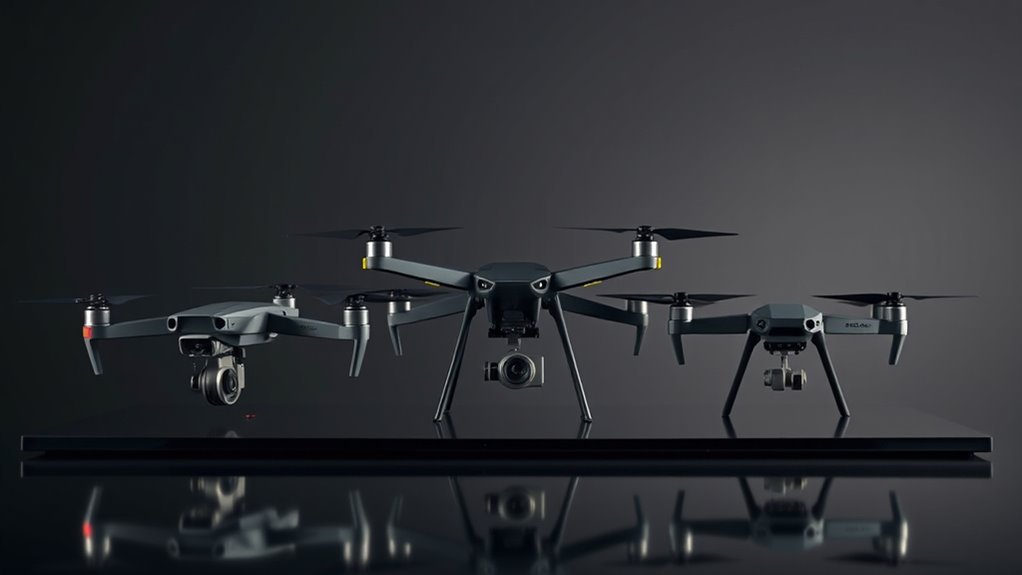
Camera quality, flight time, software compatibility, and regulatory requirements all affect the usefulness of a commercial drone. Start with the deliverables your clients actually need.
Camera Quality and Resolution
High-resolution cameras help capture detailed photographs, but megapixels alone do not determine image quality. Sensor size, lens quality, exposure settings, and image-processing options also matter.
For filmmaking, consider recording resolution, frame rates, color profiles, and focal lengths. The DJI Mavic 4 Pro provides a 100MP main camera and multiple focal lengths. The DJI Air 3S offers dual-camera versatility in a smaller aircraft.
Flight Time Efficiency
The drones in this comparison have manufacturer-rated maximum flight times of 45–51 minutes. These figures come from controlled testing rather than typical working conditions.
Wind, temperature, flight speed, and repeated positioning can reduce usable airtime. Plan missions with enough battery reserve for a safe return and landing.
For longer assignments, additional batteries and a suitable charging system may be more useful than a small difference in maximum flight time.
Obstacle Avoidance Systems
Modern drones use cameras and other sensors to detect obstacles. Some also use LiDAR to improve detection under supported conditions.
However, obstacle avoidance cannot detect every hazard. Thin wires, reflective surfaces, poor lighting, and unusual structures can still create problems.
For building or infrastructure inspection, maintain safe clearance and check the aircraft’s sensor limitations before flying.
Transmission Range Capabilities
The models listed here advertise maximum transmission distances of 15–30 km under specific FCC test conditions.
These numbers describe communication performance, not permission to fly that far. Buildings, terrain, interference, and local regulations can reduce practical operating distance.
Always maintain the required visual line of sight unless your operation has the necessary authorization.
Payload and Portability
Portability affects how easily you move between filming locations or inspection sites. The Air 3S is the lightest aircraft in this comparison.
Do not assume a camera drone can carry additional sensors simply because it has powerful motors. The aircraft must explicitly support the intended equipment and operating configuration.
If your work requires thermal cameras, LiDAR payloads, or interchangeable industrial sensors, investigate dedicated enterprise platforms.
Mapping Accuracy and Software Compatibility
Taking aerial photographs is not the same as producing a survey-grade map. Accurate photogrammetry depends on suitable image overlap, camera behavior, positioning, ground control, and processing software.
Dedicated mapping drones may provide RTK positioning, mechanical shutters, and automated survey missions. Verify compatibility with your chosen mapping software before purchasing.
Commercial Flight Requirements
For US commercial operations, check the FAA’s applicable Part 107 requirements, aircraft registration, Remote ID compliance, airspace restrictions, and authorization requirements.
Camera features do not replace pilot certification or operating permission. Regulations vary by country, so confirm the rules for every location where you intend to work.
Mistakes to Avoid When Buying Professional Drones
- Buying on megapixels alone: Compare sensor size, lens options, and required deliverables.
- Confusing transmission range with legal range: Plan flights around applicable operating rules.
- Assuming obstacle sensing prevents every crash: Maintain clearance and visual awareness.
- Ignoring controller packages: Confirm the exact controller and included accessories.
- Buying a camera drone for surveying: Verify RTK, shutter, and software requirements first.
Frequently Asked Questions
Are There Any New Drone Regulations Expected in 2026?
Drone regulations can change, so check the rules in force before each commercial assignment. In the United States, operators should review applicable FAA Part 107 requirements, registration, Remote ID, and airspace authorization. Other countries have separate aircraft classification and pilot requirements. Do not rely on a drone’s advertised features as proof that a planned flight is legally permitted.
What Is the Average Lifespan of a Professional Drone?
A professional drone can remain useful for several years, but there is no guaranteed universal lifespan. Battery condition, flight hours, maintenance, accidents, and replacement-parts availability all matter. Inspect propellers and batteries regularly, follow manufacturer maintenance guidance, and budget for eventual component replacement. Software support and changing project requirements may also determine when an aircraft needs upgrading.
Can These Drones Operate in Extreme Weather Conditions?
No, these drones should not be treated as all-weather aircraft. Follow each manufacturer’s operating-temperature, wind-resistance, and moisture restrictions. The DJI Air 3S is not waterproof, and severe weather can affect flight stability, visibility, and electronics. Avoid thunderstorms and precipitation outside the aircraft’s specifications. Always leave enough battery reserve to land safely if conditions change.
How Do I Insure a Commercial Drone Fleet?
Contact an insurer that offers commercial drone coverage and describe your aircraft, pilots, and intended operations. Compare third-party liability, aircraft damage, theft, and equipment coverage. Check whether inspection, night operations, or other specialized work requires additional protection. Review deductibles, geographic restrictions, and exclusions before choosing a policy.
What Are the Best Practices for Drone Data Security?
Protect commercial drone data with controlled access, secure storage, updated firmware, and encrypted transfer methods where supported. Establish clear rules for handling client footage, location data, and inspection records. Limit access to authorized staff and maintain suitable backups. Review cloud synchronization and data-sharing settings before operating on sensitive projects.
Can These Drones Produce Survey-Grade Maps?
They can capture aerial images for certain photogrammetry workflows, but survey-grade accuracy is not guaranteed. Accurate mapping requires suitable positioning, image capture, ground control or checkpoints, and compatible processing software. For professional surveying, consider a dedicated enterprise mapping platform with RTK and mechanical-shutter support. Validate the resulting accuracy against your project’s requirements.
Does Longer Transmission Range Allow Beyond-Visual-Line-of-Sight Flight?
No. A drone’s maximum transmission specification describes its communication capability under defined test conditions. It does not grant permission to operate beyond visual line of sight. Commercial pilots must follow the rules of their jurisdiction and obtain any required authorization for operations outside standard limits. Signal interference and battery capacity also restrict practical flight planning.
Final Verdict
For commercial and professional drones in 2026, the DJI Mavic 4 Pro offers the broadest camera system among these three picks. Its 100MP Hasselblad camera, telephoto options, and Infinity Gimbal make it particularly useful for demanding aerial photography and filmmaking.
For precision surveying, select equipment specifically designed for the required mapping accuracy rather than relying on camera specifications alone.
For a more affordable dual-camera option, consider the DJI Air 3S. If you prefer a single large-sensor Hasselblad camera, compare the DJI Mavic 3 Classic.
