
To extend your drone battery life, treat your Lithium Polymer batteries like precision flight gear, not disposable accessories. Charge them fully only before flying, store them around 40-60% when they will sit unused, avoid extreme temperatures, and fly with smooth, steady inputs that do not strain the motors. Let batteries cool before charging, check battery health regularly in the Potensic app when your model supports it, and never continue flying after a low-battery warning. For hobby LiPo packs, avoid dropping cells below 3.0 volts per cell unless your manufacturer gives different limits.
Quick Answer
Drone batteries last longer when you charge them shortly before flight, avoid storing them full or empty, keep them cool and dry, fly smoothly, and stop before deep discharge. For long-term storage, keep most LiPo batteries near 40-60% charge and follow your drone maker’s battery manual first.
Key Takeaways
- Charge to full only when you need maximum flight time, then fly soon after charging.
- Store LiPo batteries around 40-60% charge for longer breaks, not at 0% or 100%.
- Let batteries cool before recharging, and avoid flying in extreme heat, freezing weather, or strong wind.
- Smooth climbs, gentle turns, and steady altitude help reduce power spikes and extend flight time.
- Replace swollen, damaged, fast-draining, or error-prone batteries before they become a flight safety risk.
At a Glance
| Time Required | 5-10 minutes for pre-flight checks, plus cooling time after each flight |
| Difficulty | Easy, but consistency matters |
| Tools Needed | Original charger, Potensic app when supported, battery case or LiPo bag, clean dry storage area |
| Cost | Usually free, aside from optional battery storage bags or replacement batteries |
Understanding Lithium Polymer Battery Basics
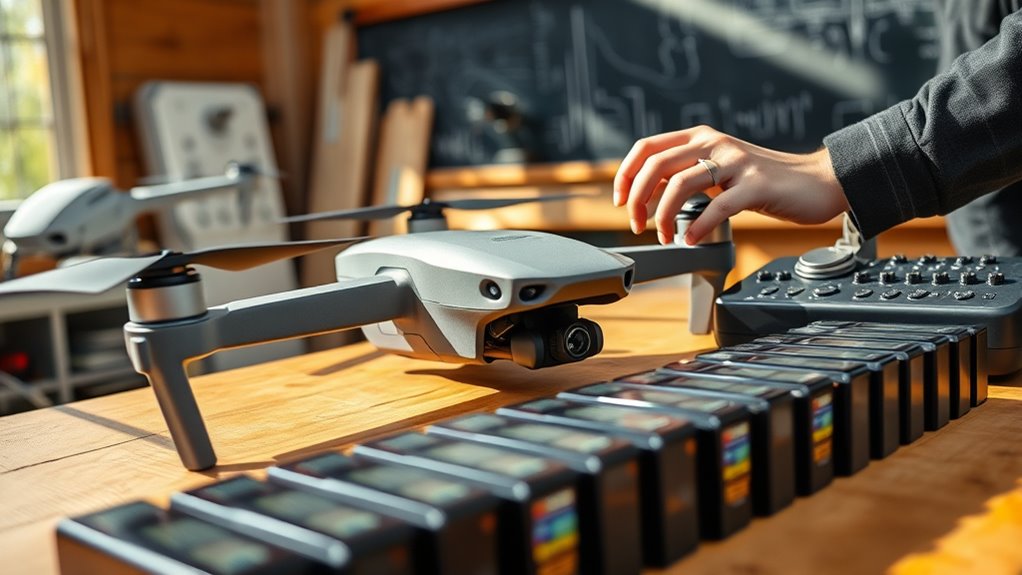
When you’re flying drones, understanding Lithium Polymer (LiPo) batteries is vital for improving performance and extending flight times. LiPo batteries are favored in the drone industry because they deliver strong power for their weight, which helps small aircraft lift, climb, hover, and record video without carrying a heavy battery pack.
Most consumer drone batteries use lithium-based chemistry inside a smart battery shell. The battery may include electronics that track voltage, temperature, charge cycles, and discharge behavior. That system helps protect the pack, but it does not make the battery indestructible.
Typically, drone batteries offer a limited number of charge cycles. Many well-maintained packs can last hundreds of cycles, but the real lifespan depends on heat, storage habits, charging behavior, discharge depth, age, crash damage, and how hard you fly.
To maximize lifespan, charge your LiPo batteries to full shortly before a flight when you need the longest possible air time. For many LiPo cells, a full charge is about 4.20V per cell, but your drone’s charger and battery management system should control that automatically. Do not force a battery outside the manufacturer’s limits.
Proper storage is just as important as charging. Keeping batteries around 40% to 60% charge during longer storage helps reduce internal stress and slows avoidable degradation. Some smart drone batteries and apps may show a broader short-term storage range, but the key rule is simple: do not leave packs fully charged or fully empty for long periods.
Maximize your LiPo battery lifespan by charging fully only before flight and storing unused batteries near a moderate charge level.
Additionally, modern LiPo batteries incorporate Battery Management Systems (BMS) that monitor voltage, temperature, and charge cycles. These systems improve safe operation and support battery health, but you still need to inspect the battery, use the correct charger, and follow safe storage habits.
Note: Battery advice can vary by drone model. Always follow the battery manual, charger instructions, and in-app warnings for your exact Potensic drone before using general LiPo care rules.
Factors Affecting Drone Battery Life
Several factors greatly influence your drone’s battery life, impacting both flight performance and duration. The most important ones are temperature, wind, payload, flight style, battery age, battery condition, and how much charge you use before landing.
Environmental conditions play a significant role. Cold weather can reduce battery efficiency and shorten flight time because lithium batteries deliver less usable power when cold. Strong headwinds also force the motors to work harder, which drains the battery faster.
Heat creates a different problem. Flying, charging, or storing batteries in hot conditions can speed up chemical aging. A warm battery after flight is normal, but a battery that feels very hot, smells odd, swells, or triggers an app warning should not be reused until you check it carefully.
Additionally, the weight of your drone’s payload can increase power draw, leading to quicker battery consumption during flights. Extra accessories, propeller guards, landing gear, action cameras, and heavy attachments all require more lift. More lift means the motors pull more current from the battery.
Aggressive flying maneuvers, like sudden climbs, full-throttle forward flight, quick stops, and sharp turns, cause rapid battery drain. Smooth flying techniques help conserve energy, reduce heat, and extend flight duration.
Moreover, the depth of discharge (DoD) impacts battery lifespan. Shallow discharges are generally easier on lithium batteries than repeated deep discharges. Landing with a safe reserve is better than pushing every flight down to the final warning.
Regularly monitoring battery health is essential. Check for swelling, dents, cracked plastic, corroded contacts, rapid drainage, charging errors, or unusual app warnings. These signs can help prevent mid-air failures and support reliable performance.
Pre-Flight Charging Best Practices
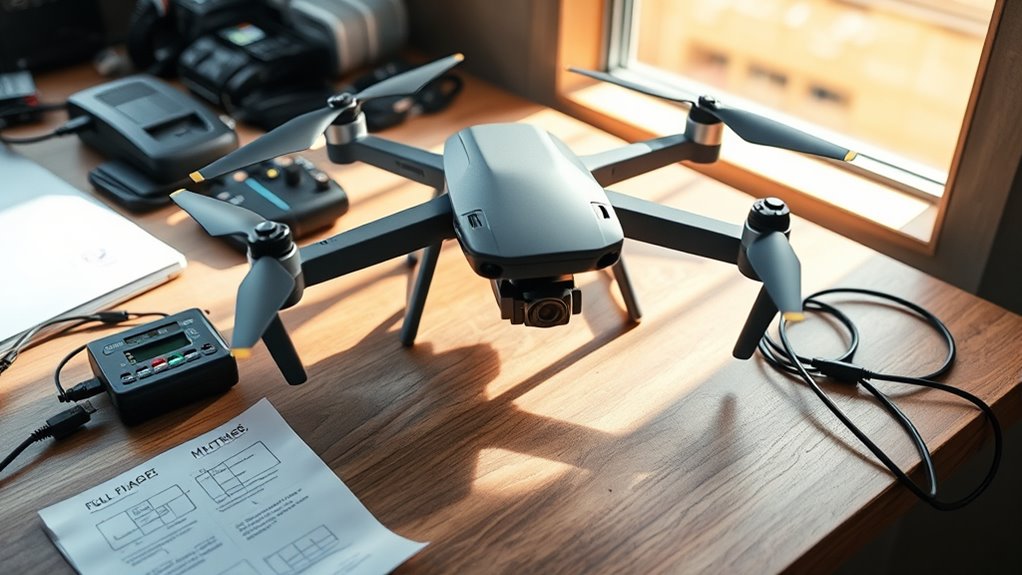
Before each flight, make certain your drone’s battery is fully charged with the original Potensic charger to support peak performance. A full battery gives you the best flight time, better voltage stability, and more room to return safely if wind or route changes increase power use.
Store your batteries in ideal conditions at a moderate charge level when you are not flying. For longer storage, aim closer to 40-60%. For short breaks between flying days, follow your app or manual if it recommends a slightly different range.
Charge Before Every Flight
Starting every flight with a fully charged battery is essential when you want the longest safe flight time. Always use the original Potensic charger or a manufacturer-approved charger that matches your battery. The wrong charger can create voltage, balance, heat, or communication problems.
It’s best to charge your drone batteries a few hours before use, not several days before use. This helps reduce time spent at full voltage and keeps the battery ready for flight. Avoid charging them immediately after use while they’re still hot; let them cool down first to reduce stress on the cells.
If you’re not flying for weeks, store your batteries at a moderate charge level instead of full or empty. Many LiPo owners use 40-60% for long-term storage, while some smart battery systems may use automatic self-discharge or storage mode. Follow the battery’s own system when it has one.
Regularly check the battery condition in the Potensic app before flights when your drone model supports that feature. Look for cell balance warnings, battery temperature warnings, abnormal discharge behavior, cycle count, or error messages. These checks help you catch problems before takeoff.
Ideal Storage Conditions
To guarantee peak battery performance and longevity, it’s crucial to store your drone batteries under ideal conditions. Small storage habits can make a major difference over months of use.
By following these best practices, you can greatly extend their lifespan and efficiency:
- Store your batteries around 40-60% charge for longer storage, unless your manual states a different range.
- Use the manufacturer’s storage mode or smart battery self-discharge feature when available.
- Always charge batteries at room temperature, avoiding charging immediately after use.
- Perform a maintenance cycle only when your manual or app recommends it.
- Use official Potensic chargers to guarantee correct voltage and charging characteristics.
- Keep battery contacts clean, dry, and protected from metal objects that could cause a short circuit.
Additionally, keep your batteries in a cool, dry place, and consider using fireproof LiPo bags or dedicated battery cases for added safety. Do not store loose batteries in pockets, backpacks, or drawers with keys, coins, tools, or other metal items.
Warning: Do not charge a swollen, punctured, crashed, wet, overheated, or fast-draining battery. Move it to a safe nonflammable area and replace it according to your local battery disposal rules.
Ideal Weather Conditions for Flying
While flying your drone, understanding ideal weather conditions is essential for maximizing battery life and overall performance. Even a healthy battery drains faster when the drone fights wind, cold air, heavy humidity, or rapid temperature changes.
The best temperature range for many consumer drones is mild weather, often around 15°C to 25°C (59°F to 77°F). Avoid extreme heat or cold, as flying in temperatures below 0°C (32°F) or above 40°C (104°F) can greatly impair battery life and increase the chance of performance warnings.
In cold weather, battery efficiency can drop, so it’s wise to keep batteries warm before flight. You can carry them in an inside pocket or insulated case until you are ready to launch. Do not heat them with an open flame, direct high heat, or unsafe homemade warming methods.
Moreover, strong winds can also affect your drone’s performance. Headwinds increase motor workload, drain your battery faster, and reduce your margin for returning home. Wind is especially important on the return leg because a drone that flew out with a tailwind may need much more battery to come back against the wind.
For the best results, aim for stable weather conditions with minimal wind and low risk of rain. Moisture can damage electronics, reduce visibility, and make emergency landings more likely. If the forecast looks unstable, delay the flight rather than risking a battery or aircraft failure.
Pro Tip: Plan your first flight of the day in mild, calm weather. A simple low-stress flight gives you a baseline for normal battery behavior before you attempt longer routes.
The Importance of Smooth Flying Techniques
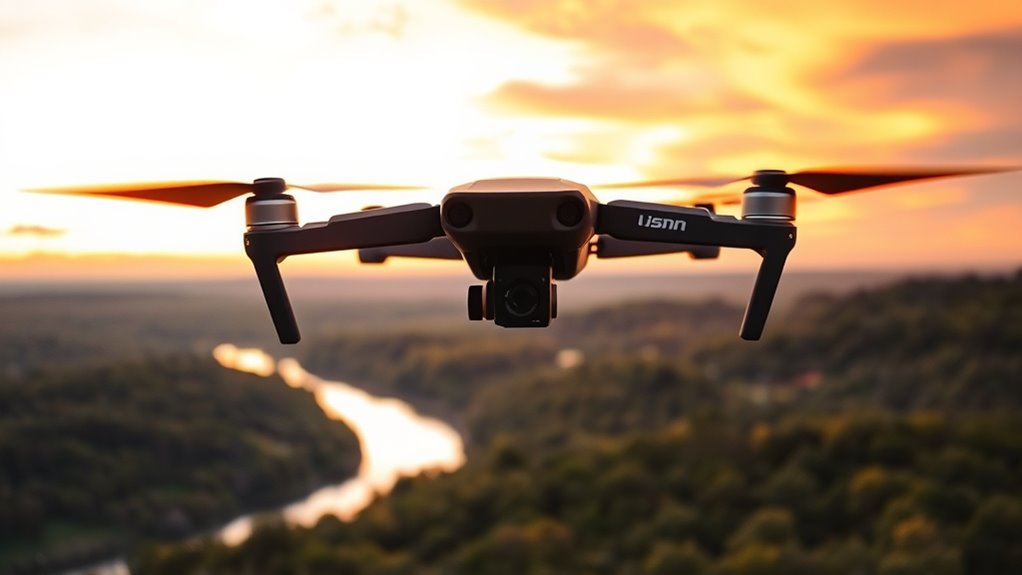
To maximize your drone’s battery life, adopting smooth flying techniques is essential. The battery feeds the motors, camera system, GPS, sensors, transmission system, and flight controller. Every hard input increases power demand, especially when the drone changes speed or altitude quickly.
Gradual climbs, gentle turns, and maintaining a consistent altitude help conserve energy and reduce power spikes associated with aggressive maneuvers. Smooth flying also improves video footage because the drone makes fewer jerky movements.
Energy Conservation Strategies
Smooth flying techniques are crucial for conserving drone battery life, as they directly influence energy consumption during flight. By adopting gentle maneuvers and maintaining steady altitude, you can enhance your drone’s efficiency and prolong its operational time.
Avoid aggressive flying behaviors, which can increase power consumption and battery heat. Repeated full-throttle climbs, fast braking, sport-mode flying, and sharp direction changes drain power faster than controlled movements.
To maximize energy conservation, consider the following strategies:
- Pre-plan your flight paths to minimize energy-draining maneuvers.
- Fly into the wind first so the return trip is easier when the battery is lower.
- Use normal or cinematic flight modes when you do not need maximum speed.
- Maintain a steady altitude instead of climbing and descending repeatedly.
- Monitor battery voltage drops or app warnings during flight.
- Land early if you notice fast battery drainage, sudden percentage drops, or reduced performance.
Implementing these techniques will help extend your drone’s battery life and guarantee peak performance during flights.
Intelligent Flight Modes
Utilizing Intelligent Flight Modes can improve your drone’s efficiency by enabling smoother control and stable flight patterns. These modes may help reduce battery consumption during some maneuvers compared to aggressive manual flying.
By practicing smooth flying techniques like gradual ascents and gentle turns, you can conserve more battery life and prevent unnecessary energy drain. A drone that holds steady speed and altitude usually works less than one that constantly accelerates, brakes, and climbs.
Engaging AI QuickShots or similar automated camera modes can help maintain consistent movement while capturing footage. However, automated modes still use battery, so you should start them with enough charge and clear space to return safely.
Maintaining steady altitude and speed reduces the workload on motors, extending overall flight time. Consistently employing smooth flying techniques not only enhances battery life but also prolongs your battery’s lifespan by minimizing stress from abrupt movements.
Embrace these practices for a more efficient drone experience.
Flight Path Optimization
When you optimize your flight path, you not only enhance your drone’s efficiency but also conserve battery life. A planned route reduces wasted hovering, repeated turns, and unnecessary altitude changes.
Applying smooth flying techniques is essential because sudden maneuvers can cause power consumption to spike. A direct route with steady throttle often uses less energy than a route full of stops, spins, climbs, and corrections.
Here are some key strategies for effective flight path optimization:
- Plan your route to avoid unnecessary turns and altitude changes.
- Check wind direction before takeoff and keep enough battery for the return path.
- Use Intelligent Flight Modes for steadier flight patterns when safe and appropriate.
- Maintain a stable altitude to reduce motor workload and energy usage.
- Avoid long hovering sessions, especially in wind, because hovering still drains power.
- Monitor voltage drops during flight and land immediately if battery drainage becomes abnormal.
Monitoring Battery Health Regularly
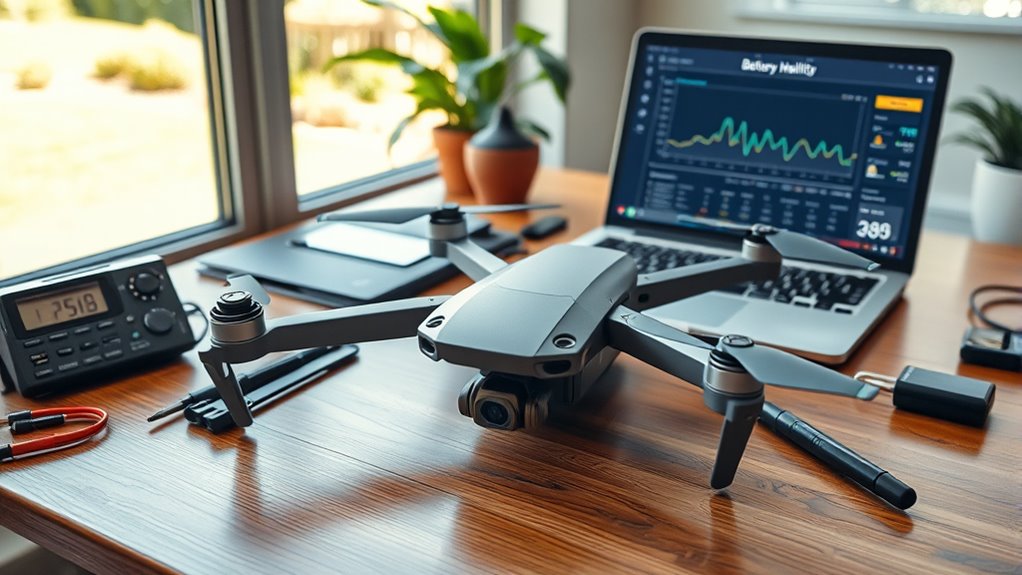
To guarantee your drone operates at peak performance, monitoring battery health regularly is vital. Before and after each flight, check the battery condition using the Potensic app when available. This practice helps you detect potential issues early.
Look for signs of swelling, rapid drainage, cracks, impact marks, loose casing, dirty contacts, charging errors, unusual heat, or irregular behavior. Any of these signs can indicate health problems requiring prompt attention or replacement.
To maintain battery health and prolong its lifespan, follow the maintenance guidance in your battery manual. Some batteries may benefit from an occasional full charge-discharge cycle, while others rely on smart battery electronics and should not be deep-cycled without reason.
Consistent monitoring prevents mid-air failures, ensuring reliable drone operation and allowing for longer, safer flights. If you notice any issues during your checks, it’s important to replace the batteries promptly, as ignoring these signs can compromise flight safety and performance.
A simple battery log can also help. Write down the purchase date, number of cycles if the app shows it, typical flight time, and any warning messages. If a battery suddenly gives much shorter flights than before, you will notice the trend sooner.
Proper Battery Storage and Maintenance
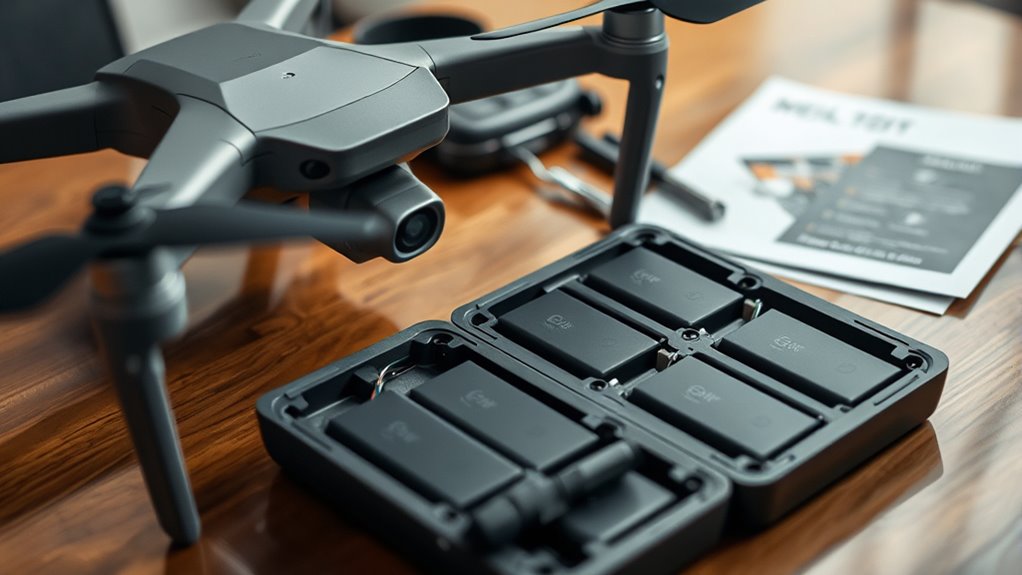
To maximize your drone’s battery life, you need to store your Lithium Polymer (LiPO) batteries at ideal charge levels. For long-term storage, a moderate range around 40-60% is usually safer than leaving packs full or empty.
Keep them in a cool, dry environment to prevent cell degradation, and always let them cool down before charging after use. Regular maintenance checks are essential, so inspect your batteries for any signs of damage or irregular performance every few months and before every flying session.
Optimal Charge Levels
Maintaining ideal charge levels for your drone’s Lithium Polymer (LiPo) batteries is essential for preserving their lifespan and performance. Battery stress increases when lithium batteries sit fully charged for long periods, and damage can occur if they stay deeply discharged.
Storing your batteries at a charge level between 40% and 60% helps reduce stress on their internal chemistry, ensuring your battery will last longer. If your Potensic battery has an automatic storage discharge feature, allow it to work as designed instead of constantly topping off the battery.
Here are key practices to enhance battery health:
- Avoid charging batteries to 100% days before use; instead, charge them closer to flight time.
- Do not store batteries at 0% because deep discharge can make them unsafe or unusable.
- Perform a maintenance cycle only when the manufacturer recommends it.
- Allow batteries to cool before charging after flights, as heat can cause LiPo batteries to degrade faster.
- Regularly inspect batteries for swelling or irregular behavior to prevent mid-air failures.
Temperature Control Practices
While proper battery storage and maintenance are essential for extending the life of your drone’s LiPo batteries, temperature control plays an important role in this process. Heat speeds up aging, while cold reduces available power during flight.
Store your batteries in a cool, dry place at a moderate charge level to extend their lifespan. Cold temperatures reduce battery efficiency during operation, so aim for room temperature before takeoff whenever possible.
Always let batteries cool to room temperature before charging. Charging hot batteries can lead to capacity loss and may increase safety risks. Monitor battery temperatures during operation, especially in summer, direct sun, or repeated back-to-back flights.
For long-term storage, check the battery every few months and recharge it back to the recommended storage level if it has dropped too low. Do not leave batteries forgotten in a car, garage, attic, or damp storage area where temperatures can swing sharply.
Finally, utilize fireproof LiPo bags or dedicated battery boxes for safe storage, especially in extreme temperature conditions.
Regular Maintenance Checks
Regular maintenance checks are essential for ensuring the longevity and reliability of your drone’s LiPo batteries. Proper storage and handling can considerably extend battery life while preventing safety hazards.
Here are key practices to adopt:
- Store batteries at a moderate charge level in a cool, dry place.
- Allow batteries to cool down after flights before charging to avoid overheating.
- Check the manual before performing full charge-discharge cycles during long-term storage.
- Regularly inspect for swelling, rapid drainage, cracked casing, corrosion, or irregular behavior.
- Replace any compromised batteries promptly instead of trying to save a failing pack.
- Keep terminals covered and away from metal objects during transport.
Utilizing fireproof LiPo bags or dedicated battery boxes will help protect your batteries from physical damage and environmental hazards, ensuring they remain safe and functional for your next flight.
Myths About Drone Battery Usage

Many drone users fall prey to common myths about battery usage that can negatively impact their flying experience. These myths often come from older battery types, phone-charging habits, or advice that does not fit modern smart drone batteries.
For instance, charging batteries to 100% before every flight is useful when you need maximum flight time, but leaving them at 100% for days is not ideal. Keeping them at a moderate charge when not in use helps slow degradation.
Additionally, flying in cold weather can severely affect battery performance. Temperatures below freezing may reduce usable power, shorten flight time, and trigger low-voltage warnings faster than expected.
Flying in temperatures below freezing can sharply reduce usable battery power, so keep batteries warm before takeoff and land with a larger safety reserve.
Some pilots believe aggressive flying maneuvers won’t drain their batteries, but sudden climbs and sharp turns can quickly deplete power. The harder the motors work, the faster the battery drains.
Furthermore, not all third-party batteries perform reliably like official ones. Using incompatible batteries can lead to errors, poor fit, communication issues, inaccurate battery readings, or safety risks during operation.
Finally, don’t assume it’s safe to recharge once a battery is fully drained. Allowing a lithium battery to drop too low can cause long-term damage and may prevent it from charging normally again.
Future Innovations in Battery Technology
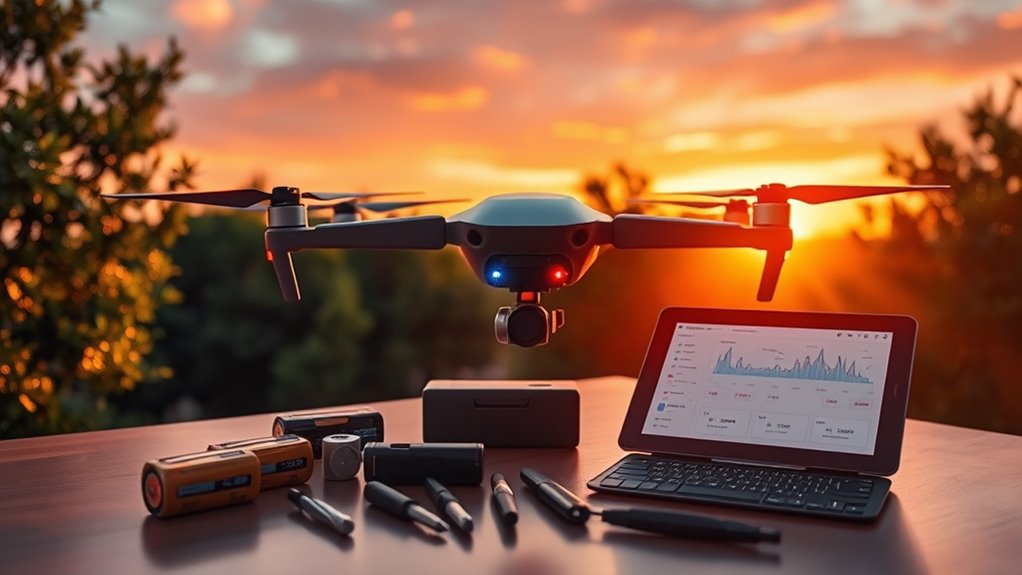
As drone technology evolves, innovations in battery systems promise to enhance flight performance and duration. Better batteries could mean longer flights, safer charging, faster turnaround times, and more stable power delivery.
Key advancements include:
- Lithium-metal batteries: These may offer higher energy density than common lithium-ion or LiPo packs, which could support longer endurance when the technology becomes practical, safe, and affordable for more drones.
- Hydrogen fuel cells: These can support much longer flight times in some professional and industrial drone applications, especially where long-range inspection matters more than compact consumer convenience.
- Graphene supercapacitors: These may help deliver rapid bursts of power, faster charging, or improved high-load performance as the technology matures.
- Battery management systems (BMS): These systems continue improving by monitoring performance in real time and helping protect against overcharging, over-discharging, overheating, and cell imbalance.
Companies in the drone and battery industries are working to enhance drone battery technology, but most everyday pilots still rely on careful LiPo battery care today. Future battery designs may improve endurance, but good charging, storage, and flight habits will still matter.
With these innovations, you’re set to experience more reliable, efficient, and longer-lasting flights as battery technology improves. Until then, the best way to protect your drone battery is to use correct charging habits, avoid extreme conditions, and replace weak packs before they fail.
Common Mistakes to Avoid for Battery Longevity
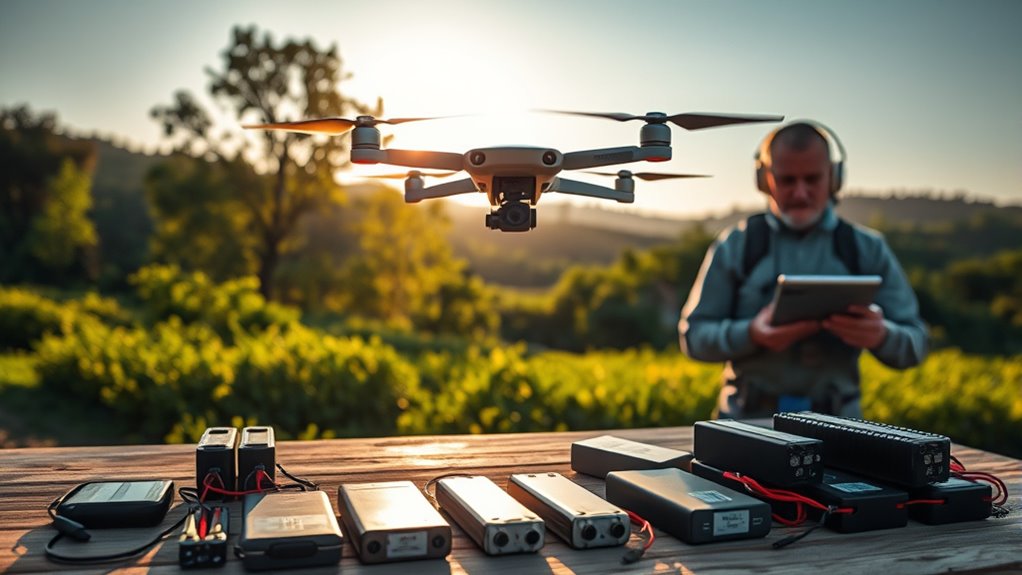
To guarantee your drone’s battery lasts as long as possible, it’s crucial to avoid several common mistakes that can accelerate degradation. Most battery problems come from heat, deep discharge, poor storage, rough handling, or ignoring early warning signs.
First, don’t charge your battery to full capacity immediately after use while it is still hot. Let it cool first. If you are storing the battery, bring it to a moderate storage level rather than leaving it full.
Leaving your battery plugged in for extended periods can also lead to unnecessary wear. Smart chargers are helpful, but they are not a reason to ignore basic charging safety. Unplug batteries when charging is complete unless the manufacturer specifically instructs otherwise.
Next, flying in extreme weather conditions can greatly impact efficiency. Avoid freezing temperatures, heavy wind, rain, and extreme heat. These conditions reduce flight time, increase stress, and can make battery percentage readings less predictable.
Additionally, refrain from aggressive maneuvers like sudden climbs and sharp turns when your goal is longer battery life. Fast sport-style flying may be fun, but it drains power quickly and can increase heat buildup.
Regularly monitor your battery health using the Potensic app when available. Check for swelling or rapid drainage, as these can indicate that replacement may be necessary.
Finally, avoid storing batteries at 0% or keeping them fully charged for long periods, as both practices can severely shorten lifespan. Following these guidelines will help maintain your drone’s battery health.
Related Guides
Frequently Asked Questions
How to Make a Drone Battery Last Longer?
To make your drone battery last longer, charge it shortly before flights, fly in mild weather, use smooth flying techniques, monitor battery health regularly, and store it at a moderate charge level after use. Avoid storing it full, empty, hot, wet, or damaged.
What Is the 40 80 Rule for Batteries?
The 40-80 rule means you avoid keeping a lithium battery near empty or full for routine use. For storage, many drone owners aim around 40-60%. For actual flights, charging to full is normal when you need maximum flight time, but you should fly soon after charging.
Is It Better to Charge to 80 or 100?
For storage and everyday battery health, stopping around 80% can reduce stress. For drone flights, a full 100% charge gives the safest flight-time margin when used soon after charging. Do not leave the battery full for long periods unless the manufacturer says it is safe.
How Do I Keep My Battery 100% Healthy?
You cannot keep any lithium battery 100% healthy forever, because all batteries age. You can slow wear by storing it at a moderate charge, avoiding heat, avoiding deep discharge, using the correct charger, letting it cool before charging, and replacing it when it shows damage or abnormal behavior.
Should I fully drain my drone battery before charging it?
No. Fully draining a lithium drone battery can damage it. Land before the battery reaches a critically low level, especially in wind or cold weather. Follow your app’s low-battery warnings and keep a safety reserve for returning and landing.
Can I use third-party drone batteries?
Use third-party batteries only if they are specifically compatible with your drone and come from a reliable source. Official or manufacturer-approved batteries are usually safer because they fit correctly, communicate with the drone, and match the required charging system.
Conclusion
To summarize, optimizing your drone’s battery life involves understanding battery basics and adopting consistent best practices. Charge fully before flying, store at a moderate charge when the battery will sit unused, avoid extreme temperatures, and fly smoothly to reduce motor strain.
Flying aggressively can shorten flight time because fast climbs, hard turns, and sudden stops demand more power. By flying smoothly, charging correctly, and storing your battery properly, you can extend both flight time and battery lifespan.
Remember to avoid common myths and stay informed about future innovations in battery technology, as these can further enhance your flying experience. Prioritize these habits to enjoy longer flights, safer landings, and improved performance every time you launch.
Sources
- Battery University: How to Prolong Lithium-Based Batteries — supports lithium battery storage, charge stress, and aging guidance.
- Federal Aviation Administration: Unmanned Aircraft Systems — supports general drone safety and responsible flight planning.
- FAA B4UFLY — supports checking flight conditions and airspace awareness before flying.
