The most useful reef fishing techniques are to position yourself so bait or lures move naturally with the current, keep the presentation close to productive structure without dragging the reef, choose rigs and tackle for the depth and target species, and repeat productive drifts or anchor positions. You also need to manage snags, handle fish correctly, and follow the current size limits, bag limits, seasons, and protected-zone rules for the exact water you are fishing.
Last updated: September 22, 2026 — refreshed with condition-based tackle guidance, deep-water release practices, clearer reef-versus-pelagic distinctions, current safety sourcing, and updated FAQ coverage.
Quick Answer
Fish reefs by locating ledges, wreck edges, rock, coral boundaries, or artificial structure; then position up-current or plan a controlled drift so your bait or lure reaches the strike zone naturally. Match the rig, line strength, leader, weight, and bait to the target species, depth, current, and abrasion risk. Avoid anchoring on coral, handle released fish quickly, and check current local regulations before every trip.
Key Takeaways
- Choose tackle strength for the target fish, depth, current, and structure instead of relying on one line-and-leader combination for every reef.
- Find productive reefs by reading charts, depth changes, baitfish, current seams, bird activity, and tide-facing edges.
- Match your rig, weight, bait, and lure presentation to the conditions instead of fishing every reef the same way.
- Follow current size and bag limits, respect protected zones, release fish carefully, and use low-impact methods that reduce damage to reef habitat.
At a Glance
| Best For | Saltwater anglers targeting snapper, grouper, jacks, mackerel, and other structure-associated species |
| Difficulty | Beginner to intermediate, depending on depth, current, boat handling, target species, and local reef rules |
| Core Gear | Saltwater rod and reel, abrasion-resistant leader, hooks, sinkers or jigs, bait or lures, measuring tool, PFD, pliers, release tools, ice, and first-aid kit |
| Main Risk | Cut lines, snags, rough water, sharp spines, barotrauma in deep-water fish, illegal harvest, and damage to fragile reef habitat |
Reef Fishing Techniques: A Practical Decision Guide
Start with the conditions rather than choosing a favorite rig first. Current speed, depth, bottom type, fish behavior, and the distance between your bait and the reef should determine how you fish.
| Condition | Technique | Why It Works |
|---|---|---|
| Light current, fish near an edge | Free-line live bait or use a light sliding sinker | Lets the bait move naturally without repeatedly contacting bottom |
| Fish tight to heavy structure | Use a compact bottom rig and tackle strong enough to turn the fish quickly | Reduces the time a hooked fish has to reach rock, coral, or wreckage |
| Cautious bites over cleaner bottom | Fish-finder or sliding-sinker rig | Allows the bait to move with less immediate sinker resistance |
| Deep fish showing directly below the boat | Vertical jig or dropper-style rig | Improves depth control and keeps the presentation near the sonar target |
| Repeated snags | Move to the sand-to-reef edge, shorten the presentation, or fish higher | Reduces contact with coral, rock, and wreck structure |
What Is Reef Fishing and Why It Matters
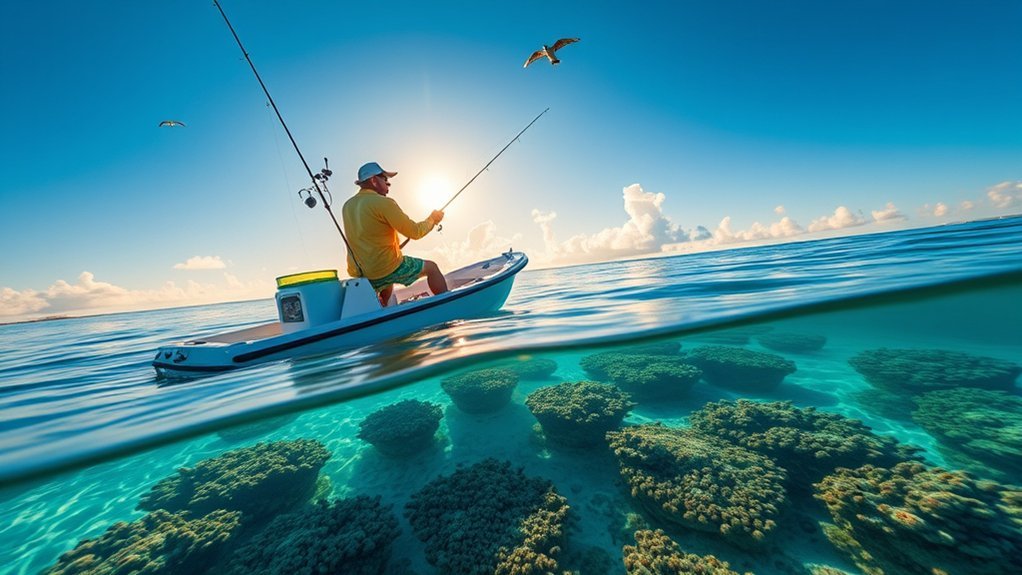
Reef fishing means targeting fish that feed, shelter, or travel around coral reefs, rocky ledges, wrecks, artificial reefs, and similar hard structure. These places concentrate baitfish and crustaceans and create shelter, ambush points, feeding lanes, and current breaks.
You may encounter snapper, grouper, jacks, mackerel, grunts, porgies, triggerfish, amberjack, and other species depending on the region. Pelagic fish such as mahi mahi may also pass near reef edges, current lines, weed lines, or nearby floating structure, but they are not core bottom-dwelling reef fish.
Reef fishing is not just about dropping bait near structure. Consistent results come from matching boat position, current, depth, rig choice, and bait movement to where fish are actually holding.
Conservation matters because reef habitat can be damaged by anchors, discarded line, dragged tackle, careless fish handling, and illegal harvest. Take only legal fish, retrieve lost line when it is safe to do so, avoid damaging bottom structure, and leave the area cleaner than you found it.
If you are brand new to this style of fishing, start with our beginner-focused Reef Fishing Basics: Beginner’s Guide. This guide goes further into rig choice, current, boat position, troubleshooting, and fish-handling decisions.
Choosing the Right Gear for Reef Angling

Choose reef tackle by starting with the fish, structure, depth, and current. A setup that works for moderate snapper fishing over an open reef edge may be too light for a large grouper beside a wreck and unnecessarily heavy for smaller fish over shallow, clear structure.
Braided main line offers sensitivity and high strength for its diameter, while an abrasion-resistant monofilament or fluorocarbon leader helps around rock, coral, shell, and wreck edges. A combination such as 30 lb braid with a 40 lb leader can suit some moderate reef situations, but it is not a universal standard. Move lighter or heavier when target size, water clarity, abrasion, current, or depth demands it.
Use a saltwater-rated rod with enough backbone to control the expected fish and a reel with a smooth drag and enough line capacity for the depth. For vertical jigging, select the lightest jig that still reaches and stays in the target zone. Deeper water and stronger current generally require more weight, while shallow or slower water may allow a lighter presentation.
Pro Tip: Set and test your drag before the first drop. Too little pressure can let a fish reach structure; excessive drag can break leaders, pull hooks, or overload tackle.
Keep spare leaders, hooks, swivels, sinkers, and pliers ready. Reef abrasion can damage terminal tackle quickly, so inspect leaders after a fish, snag, or contact with rough structure.
- Saltwater-rated rod and reel matched to the target fish and depth
- Braided or monofilament main line appropriate for the application
- Abrasion-resistant leader matched to structure and water clarity
- Rule-compliant circle hooks, J hooks, assist hooks, swivels, and sinkers where appropriate
- Jigs or other lures sized for depth and current
- Measuring board, dehooker, pliers, gloves, knife, ice, release gear, and first-aid kit
NOAA Fisheries recommends tackle strong enough to land a fish efficiently and identifies circle or barbless hooks as useful catch-and-release tools; some fisheries also require particular hook types. Check the rule for your specific fishery before rigging. See NOAA Fisheries catch-and-release best practices.
If you plan to rely heavily on vertical presentations, see What Is Jigging in Fishing? Beginner’s Guide.
Best Rigs for Reef Fishing
The best reef rig is the one that keeps your bait controlled near feeding fish without creating unnecessary resistance, tangles, or contact with the reef. Choose according to current, depth, bottom type, bait size, and target species.
Knocker Rig
A knocker rig lets the sinker slide down close to the hook. Its compact layout can reduce tangles and keep bait near bottom, making it useful when you need direct control around structure. Use only enough weight to reach and hold the intended depth.
Fish-Finder Rig
A fish-finder rig uses a sliding sinker above a swivel and leader. The sliding design lets a fish move with the bait before feeling as much fixed resistance. It is useful over cleaner bottom or reef edges where a longer leader will not constantly snag.
High-Low Rig
A high-low rig presents two baits at different levels above the sinker. It can be effective for mixed reef species such as grunts, porgies, and snapper, but the additional hook increases snag potential around heavy coral, rock, or wreckage.
Live-Bait Rig
Rig live bait so it can swim naturally without spinning excessively. Match the hook to the bait and target species, keep the hook point exposed, and choose the hooking method according to bait type, current, and whether the bait needs to swim downward, forward, or naturally with the drift.
Note: Circle hooks can reduce deep hooking in many bait-fishing situations, and some fisheries require them. When using a circle hook, let the line tighten and the rod load rather than making a hard traditional hook-set.
Locating Productive Reef Spots and Reading Structure
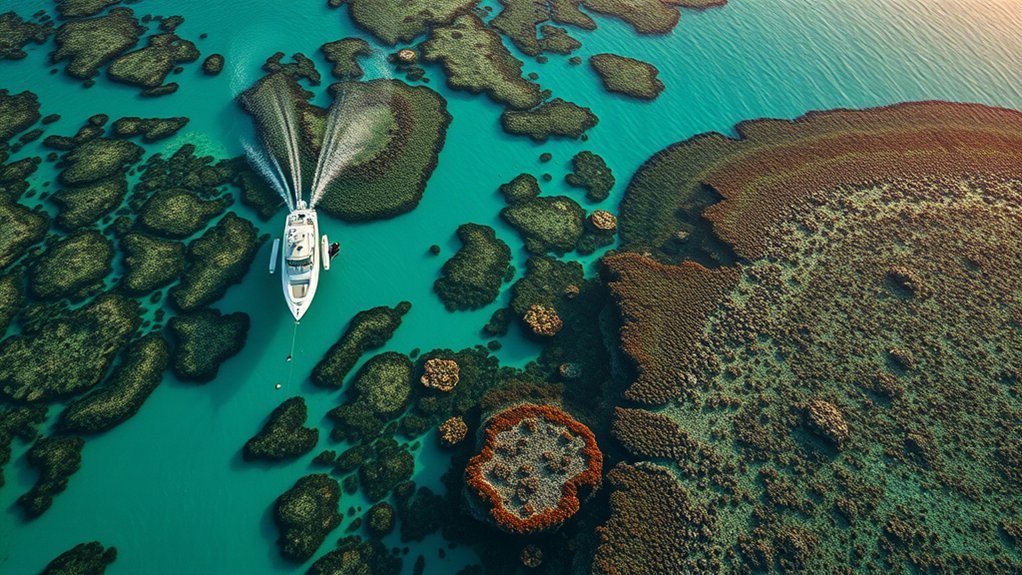
Start with charted structure, then narrow your search to places where structure and moving water intersect. Drop-offs, ledges, holes, wreck edges, isolated rock, and changes in bottom relief can hold bait and create ambush positions for predators.
Use a chart plotter and depth sounder to identify irregular bottom contours and bait schools. Surface signs also matter: diving birds, nervous bait, slicks, color changes, and visible current seams can identify an active feeding zone above or beside the structure.
Record the tidal phase and current direction when you get bites. Moving water can concentrate food along reef points, drop-offs, and current-facing edges, while slack periods may reduce bait movement at some locations.
Plan the drift or anchor position before deploying gear. Set up so the bait reaches the productive edge without the boat, anchor gear, sinker, or line unnecessarily contacting fragile bottom.
Mark each productive pass on the plotter. If several bites occur along one track, repeat that track while the wind and current remain safe rather than wandering across the entire reef.
Understanding Current, Tides and Boat Position
Boat position determines whether your bait reaches feeding fish naturally. A productive reef can still fish poorly if the bait hangs above the fish, moves across the structure at the wrong angle, or repeatedly drags into snags.
When conditions allow, position the boat so the current carries the presentation toward the target area. Many predators orient into current because food is being delivered toward them, so current-facing edges and pressure points deserve attention.
- Favor moving water when local experience shows the reef becomes active with current.
- Start a drop slightly up-current so the presentation reaches the intended depth near the structure.
- Use enough weight for control, but reduce weight when a lighter presentation still holds the strike zone.
- Repeat productive drift tracks instead of crossing the reef randomly.
- Avoid anchoring directly on coral, live bottom, or other fragile habitat.
Warning: Never compromise boat safety to hold a fishing position. If wind, current, waves, visibility, or traffic make a setup unsafe, reset the drift or move to safer water.
Baits, Lures and Presentation Techniques

Choose bait and lure presentations according to the local forage, target species, water depth, and current. Shrimp, squid, crabs, pilchards, pinfish, sardines, other legal baitfish, and cut bait can all be effective where locally appropriate.
Free-lining live bait works when the bait can naturally reach an ambush zone without excessive weight. This is often most practical in shallower water, lighter current, or when fish are feeding above bottom. Add weight only when depth or current requires more control.
Jigs and soft plastics can work well around snapper, grouper, jacks, and other predators holding near ledges or wreck edges. In deeper water, a vertical jig keeps the lure close to the boat and makes depth easier to manage. Trolling can be useful for roaming fish along reef edges, current lines, or nearby open water.
Pelagic species such as mahi mahi may be encountered near weed lines, floating debris, or current boundaries close to offshore reefs, but treat them as a separate nearby opportunity rather than assuming they will hold on bottom structure like snapper or grouper.
- Free-line live bait where current can carry it naturally through the target zone.
- Use squid or cut bait when scent and durability matter.
- Work soft plastics or jigs along drop-offs and ledges.
- Fish vertically when sonar shows fish directly below the boat.
- Troll suitable lures along reef edges when predators are roaming.
- Change sinker or jig weight as current changes so you retain depth control.
If fish short-strike, change one variable at a time: bait size, retrieve speed, hook exposure, depth, or leader length. If you repeatedly snag, move toward the sand-to-reef boundary or keep the rig higher above bottom.
Anchoring, Drift and Wading Tactics
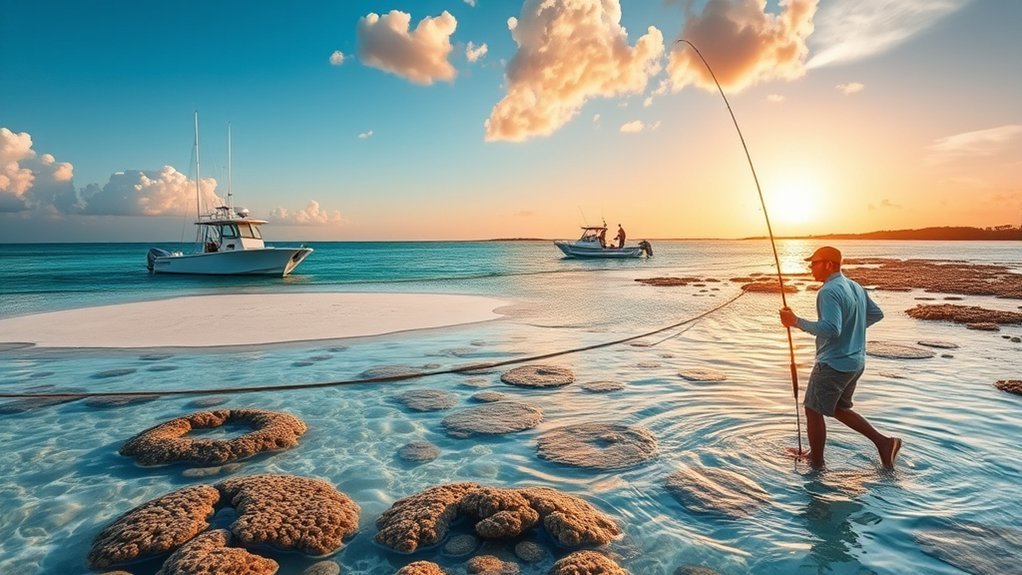
Anchor when you can safely hold a precise position without damaging habitat; drift when you need to cover a reef line or avoid anchoring; and wade only where access, footing, depth, marine life, and current make it safe.
When anchoring is legal, choose sand, mud, a designated mooring, or another suitable non-reef bottom. Account for wind, current, scope, and the vessel’s swing so the anchor or chain cannot drag across coral or sensitive structure.
Use controlled drifting to search a long reef edge or flat. Manage speed with the motor or a drift-control device where appropriate, mark each bite, and repeat successful tracks.
When wading, move slowly and avoid stepping on coral. Watch changing depth and current, wear appropriate footwear, and work the edges of legal structure rather than walking directly across fragile habitat.
Choose the method that gives you control of the presentation while protecting both the boat and the reef.
Species-Specific Strategies and Seasonal Patterns
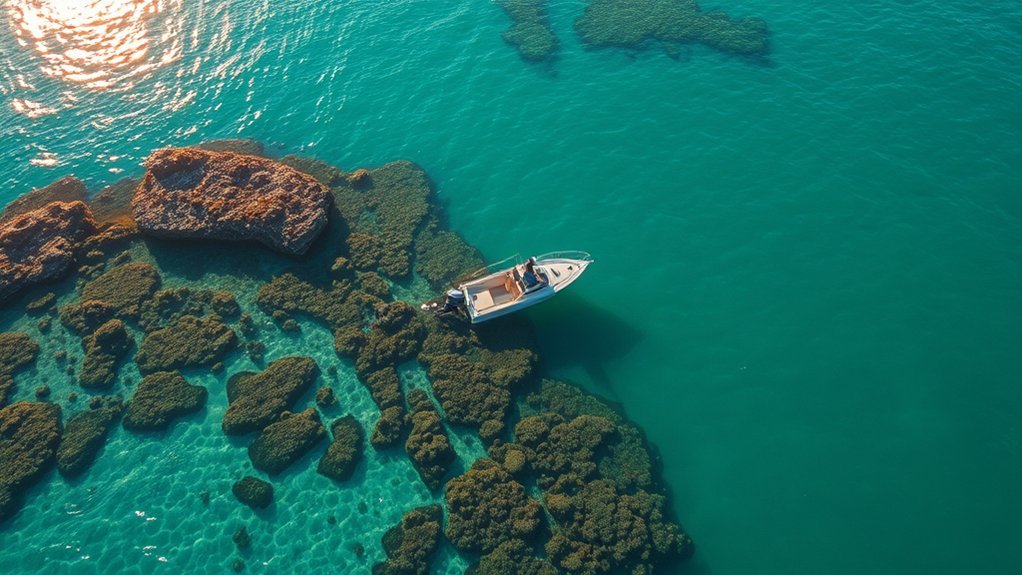
Species behavior changes with region, season, water temperature, spawning activity, forage, and current. Match the technique to the species rather than treating every fish found near a reef as a bottom-feeder.
For snapper, concentrate on ledges, reef edges, current breaks, and natural bait or lures that match local forage. For grouper, use tackle strong enough to gain line immediately after the bite because many species try to return to holes, rock, or wreck structure.
Jacks and mackerel often respond to faster-moving lures, flash, and active bait schools. Mahi mahi and sailfish are pelagic species; when encountered around offshore reef areas, they are more commonly associated with current edges, bait, floating debris, or open-water travel routes than with sitting directly on bottom structure.
Always check size limits, bag limits, seasons, closures, gear rules, and protected species before fishing. Seasonal concentrations can create excellent fishing, but spawning closures or special management measures may restrict harvest at exactly those times.
- Time trips around local species behavior rather than a generic calendar.
- Match bait size and presentation to the available forage.
- Use reef contours and sonar to locate depth changes and feeding edges.
- Change tactics when fish shift depth or current changes.
- Check the controlling regulations before targeting seasonal concentrations.
Common Reef Fishing Mistakes to Avoid
Most preventable reef-fishing failures come from poor positioning, mismatched tackle, uncontrolled bottom contact, or failing to change tactics when conditions change.
- Fishing too light for the structure: A fish that reaches coral, rock, or wreckage can cut the line quickly. Match tackle to the expected fish and abrasion risk.
- Fishing unnecessarily heavy: Excessive leader, sinker, or tackle size can reduce natural presentation when the conditions do not require it.
- Ignoring current: Poor drift angle can keep the bait away from fish or drag it repeatedly into snags.
- Anchoring badly: Dropping too close, too far away, or onto fragile habitat can ruin the setup and damage the reef.
- Using one presentation all day: Change depth, weight, bait, or lure when current, light, fish position, or feeding behavior changes.
- Not measuring fish: Guessing length can result in illegal harvest. Keep the correct measuring device ready.
- Ignoring deep-release problems: Fish brought rapidly from depth may suffer barotrauma and require an appropriate release method.
- Leaving lost line behind: Retrieve discarded braid, monofilament, leaders, hooks, and plastics whenever it is safe.
Pro Tip: After a bite, apply controlled pressure early enough to keep a strong fish from reaching nearby structure, but stay within the limits of the leader, hook, rod, and drag system.
Safety, Handling Fish and On-Board Best Practices

Reef fishing combines moving water, boat traffic, hooks, knives, heavy sinkers, slippery decks, and fish with sharp teeth, gill plates, or venomous spines. Secure loose tackle, keep a first-aid kit and communication device accessible, and use a properly fitted PFD.
Personal Flotation Devices
The U.S. Coast Guard requires an approved wearable PFD of the correct size aboard a recreational vessel for each person and recommends wearing a life jacket whenever the vessel is underway. State, age, vessel, and activity-specific rules can be stricter. In 2024 boating fatalities where PFD use was known, the Coast Guard reports that 87% of drowning victims were not wearing a PFD. Review U.S. Coast Guard life-jacket guidance before boating.
- Use a U.S. Coast Guard-approved PFD appropriate for the wearer and activity when fishing in U.S. waters.
- Check fit, condition, and accessibility before leaving the dock.
- Maintain inflatable PFDs according to the manufacturer’s instructions.
- Secure hooks, knives, sinkers, and rods when they are not in use.
- Carry a first-aid kit, communication device, drinking water, and sun protection.
For fish you plan to release, minimize fight time, wet your hands before touching the fish, keep air exposure short, and use a dehooker when appropriate. NOAA Fisheries recommends dehooking fish in the water when possible and cutting the line close to a deeply swallowed hook rather than causing excessive injury during removal.
Releasing Deep-Water Reef Fish and Barotrauma
Fish brought rapidly from depth can suffer barotrauma as gases expand inside the body. Signs may include bloating, bulging eyes, an extended stomach or other tissue, or difficulty swimming back down. Do not assume that simply tossing the fish overboard will result in a successful release.
NOAA Fisheries reports that descending devices can improve survival in many barotrauma situations by returning fish to depth, where expanding gases recompress. In U.S. Gulf federal waters, NOAA states that reef anglers must have a venting tool or descending device aboard under the DESCEND Act. Other regions have different requirements, so check the exact rule for your location before the trip. See NOAA reef-fish release guidance.
Note: Do not vent a fish unless you understand the correct technique and the method is appropriate and legal where you are fishing. Incorrect puncturing can cause additional injury.
Proper Bleeding and Storage
If you legally retain a fish and bleeding is appropriate for that species, dispatch and bleed it promptly, then chill it quickly in an ice-water slurry or on sufficient ice.
Use a sharp knife, control the fish securely, and keep hands away from sharp gill plates, teeth, hooks, and venomous spines. Rapid chilling helps preserve meat quality.
Follow all local rules governing possession, landing condition, filleting at sea, reporting, and species-specific handling.
Sustainable Practices and Local Regulations
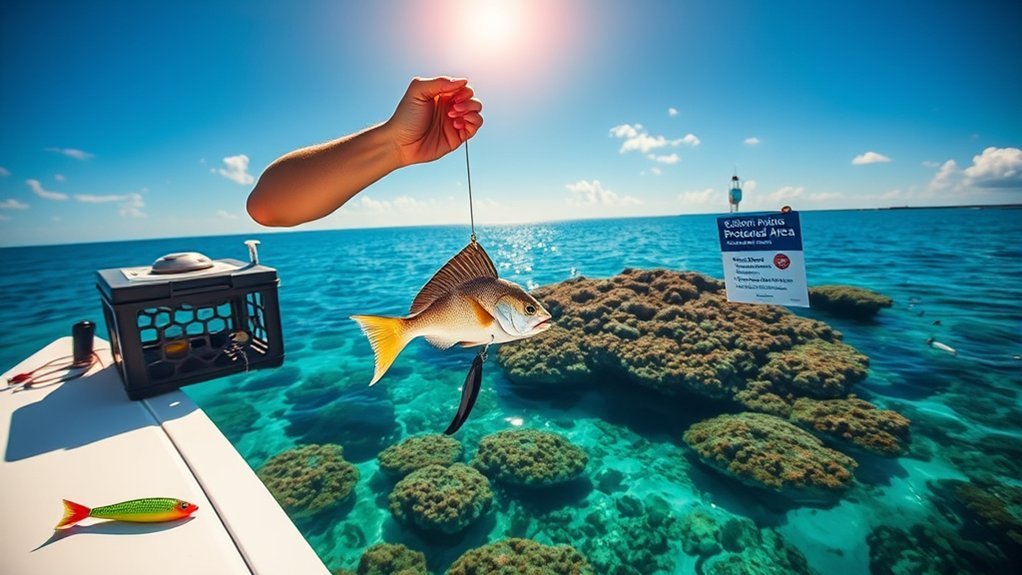
Fishing rules can change by species, season, jurisdiction, management zone, vessel type, and even during a season. Check the controlling state, federal, territorial, or regional agency for the exact water you plan to fish on the day of the trip rather than relying on an old screenshot or remembered limit.
For U.S. anglers, NOAA Fisheries and the appropriate regional fishery council provide current information on federal seasons, closures, permits, and reef-fish requirements. State rules may also apply, and the more restrictive rule can control in some situations.
Follow Local Size Limits
Size limits, bag limits, possession limits, seasons, and closures protect fish populations and can differ sharply between neighboring jurisdictions. Identify the fish before keeping it and know how the regulation requires that species to be measured.
Measure questionable catches promptly and release undersized, protected, or closed-season fish with as little handling as practical.
- Carry an appropriate ruler or measuring board.
- Check species-specific rules before leaving the dock.
- Know whether the regulation uses total length, fork length, or another measurement.
- Release illegal fish promptly and carefully.
- Ask the controlling agency when a rule is unclear.
Use Selective Gear
Choose tackle, hook style, bait size, and presentation to reduce unwanted catches and land intended fish efficiently. Strong enough tackle can shorten fights and reduce break-offs, while properly selected hooks can reduce unnecessary hooking injury.
Inspect and replace damaged leader, retrieve lost line when safe, and avoid allowing sinkers, hooks, or lures to drag repeatedly across live coral or sensitive bottom.
Respect Protected Zones
Marine sanctuaries, no-take areas, ecological reserves, spawning zones, and reef-protection areas can restrict fishing, anchoring, possession, or access. Learn the boundaries before you launch and do not assume that possession of a fishing license permits fishing everywhere.
Use legal moorings where available, anchor on suitable non-reef bottom where permitted, or use controlled drifting or positioning when anchoring could damage habitat.
- Check protected-area boundaries before the trip.
- Carry the licenses and permits required for the location.
- Release protected or undersized species promptly.
- Monitor official regulation updates, emergency closures, and seasonal notices.
Conclusion
Successful reef fishing comes from combining structure, current, depth, and boat position instead of relying on one bait or rig. Locate a productive edge, choose a presentation that reaches it with minimal bottom contact, use tackle strong enough for the fish and structure, and repeat the exact drift or position that produces bites.
Before every trip, check the current regulations and weather, carry the required safety and release equipment, and avoid anchoring or dragging gear across fragile habitat. Those habits improve both fishing efficiency and the condition of the reef you return to next time.
Glossary
- Reef fishing
- Targeting fish that feed, shelter, or travel around natural reefs, artificial reefs, wrecks, rock, ledges, and similar hard structure.
- Braided line
- A thin, strong fishing line made from woven fibers that offers high sensitivity and strength for its diameter.
- Fluorocarbon leader
- A leader material valued for abrasion resistance and relatively low underwater visibility.
- Personal flotation device (PFD)
- A wearable flotation device designed to provide buoyancy if a person enters the water.
- Barotrauma
- Injury or loss of buoyancy control caused by pressure changes when some fish are brought rapidly from deeper water.
- Descending device
- A weighted release tool used to return a fish suffering from barotrauma to depth before releasing it.
- Protected zone
- An area where fishing, anchoring, possession, access, or other activities may be restricted to protect habitat or wildlife.
Frequently Asked Questions
How do you fish a reef effectively?
Locate a reef edge, ledge, wreck, or depth change that holds bait, then position up-current or plan a controlled drift so your bait or lure reaches the structure naturally. Keep the presentation close enough for fish to find it without repeatedly dragging the bottom, and repeat any drift or position that produces bites.
What pound-test line should you use for reef fishing?
There is no single correct line strength for every reef. Choose the main line and leader according to the target fish, depth, current, water clarity, and how much coral, rock, shell, or wreckage can cut the line. A 30 lb braid and 40 lb leader combination can suit some moderate reef situations, while heavier or lighter tackle may be appropriate elsewhere.
What is the best rig for reef fishing?
The best rig depends on conditions. A compact knocker rig works well when you need direct bottom control, a fish-finder rig allows a more natural bait presentation over cleaner bottom, a high-low rig presents multiple baits above the sinker, and a vertical jig or dropper-style rig provides good control in deeper water.
What is the best bait for reef fishing?
The best bait is usually a legal local forage species that matches what your target fish are eating. Depending on the region, shrimp, squid, crabs, pilchards, pinfish, sardines, live baitfish, and cut bait can all work. Jigs and soft plastics are useful alternatives when you want a durable artificial presentation.
What tide is best for reef fishing?
Moving water is often productive because current carries bait past reef edges and concentrates food at pressure points and current breaks. There is no universally best incoming or outgoing tide; record which direction and speed make a particular reef productive and return under similar conditions.
Do you need a descending device for reef fishing?
A descending device can help release reef fish suffering from barotrauma after being brought up from depth. Requirements depend on location. NOAA states that anglers reef fishing in U.S. Gulf federal waters must have a venting tool or descending device aboard, so check the current rules for the exact water you plan to fish.
How can you avoid damaging coral while reef fishing?
Do not anchor on coral or drag anchor chain, sinkers, or other heavy gear across live bottom. Use legal moorings or suitable sand or mud bottom where available, retrieve broken line when safe, avoid standing on coral, and follow all protected-zone and no-anchoring rules.
About the author
Asher Coleman is the named author of this fishing guide for GomyReview. This article focuses on practical reef-fishing decisions, current-aware presentation, safety, fish handling, and habitat protection.
Related articles
Sources
- NOAA Fisheries Recreational Fishing — official recreational-fishing information and links to regulations and management resources.
- NOAA Fisheries: Catch and Release Fishing Best Practices — supports tackle selection, circle-hook guidance, reduced handling, and release practices.
- NOAA Fisheries: Reef Fish Release and Descending Devices — supports barotrauma guidance, descending devices, and Gulf reef-fishing release-gear requirements.
- NOAA Coral Reef Conservation Program — supports reef conservation and habitat protection.
- U.S. Coast Guard Boating Safety: Life Jacket Wear — supports life-jacket carriage, fit, condition, and wear guidance.
- FAO Code of Conduct for Responsible Fisheries — supports responsible fishing, selective harvest, and habitat protection principles.