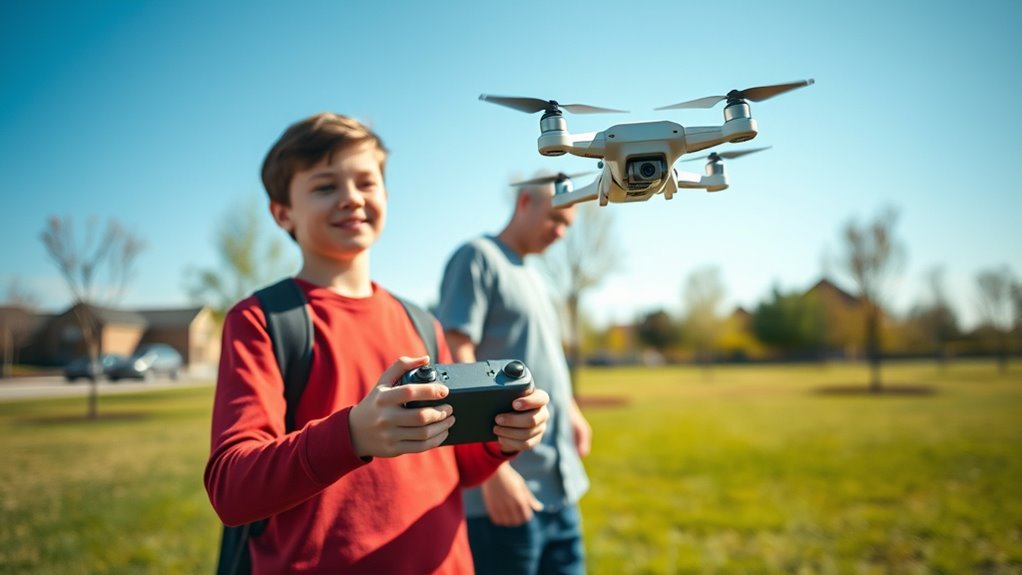
Choosing a drone for a teenager involves more than picking the lowest price or the sharpest camera. Age, flight skill, safety features, and local rules all shape the right choice. The DJI Neo 2 may suit teens who want newer controls and stronger protection, while the original DJI Neo can appeal to budget-minded buyers. The real question is which model matches the teen’s ability, and the answer is not always obvious.
Best Drone for Teenagers: What to Know First
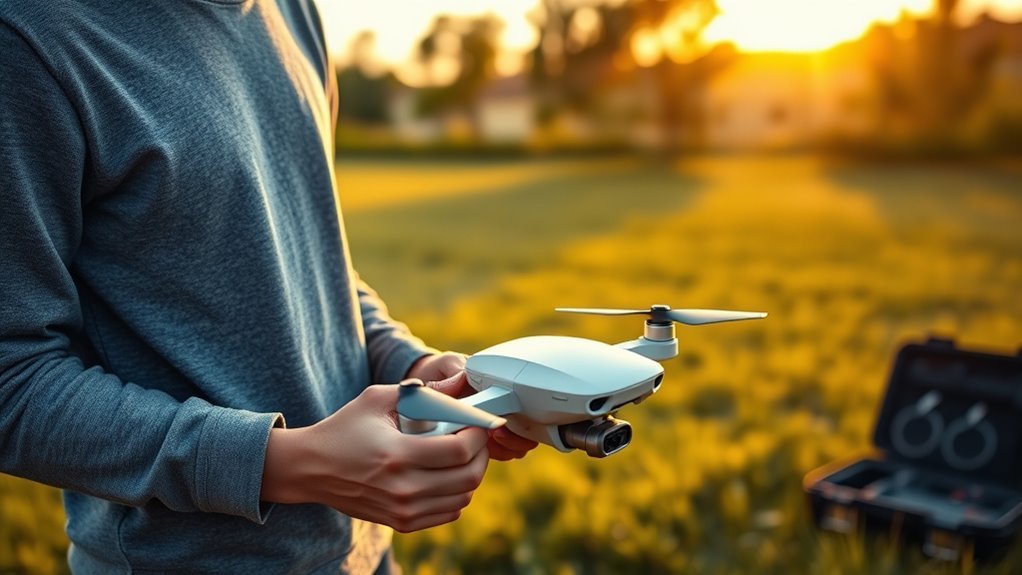
When choosing the best drone for teenagers, several factors stand out: age suitability, safety features, camera quality, and price.
Among the best drones, the DJI Neo 2 suits teens aged 10+ with advanced protections and a 4K camera at 100fps, supporting sharper footage and more confident flight.
The original DJI Neo, at $199, offers a lower-cost path with 4K/30fps video and 18 minutes of airtime, balancing value and performance.
At $199, the original DJI Neo balances value and performance with 4K/30fps video and 18 minutes of airtime.
For teens who prefer hands-on learning, the Techvio Mini Drone, priced at $62.99, invites DIY building and customization for ages 8+.
The $39.99 Pterosaur Drone serves younger teens with simple controls and dinosaur styling.
For content creators, camera quality remains decisive; better resolution and frame rates expand freedom to capture clean photos and video without compromise.
Each option addresses a different level of skill, budget, and creative ambition, making choice dependent on the teen’s goals.
Why the DJI Neo 2 Stands Out for Teens
The DJI Neo 2 stands out for teenagers because it combines strong safety features with creator-friendly performance. For buyers comparing options, it offers a rare mix of protection, simplicity, and camera quality.
Omnidirectional obstacle avoidance and fully enclosed propellers reduce injury risk, which matters for users aged 10 and up. The 4K camera at 100fps gives young creators sharp footage for school projects, social clips, or channels that can help make money later. Its palm launch and landing system makes takeoff feel intuitive and supports fun flying without a steep learning curve.
- Safer than many entry drones
- Better for content creation
- More engaging for independent practice
A 19-minute flight time supports longer sessions, while smartphone control keeps operation familiar. Compared with more complex drones, it feels less restrictive and more liberating, though the 50-meter Wi-Fi range and device requirement mean supervision still helps younger pilots.
What’s New in the DJI Neo 2?
The DJI Neo 2 introduces notable safety upgrades, including omnidirectional obstacle avoidance and fully enclosed propellers, which set it apart from many entry-level teen drones.
Its 4K camera, capable of 100fps capture, supports smoother action shots than standard models, while the upgraded ActiveTrack system improves subject following for more reliable dynamic footage.
Together with a 19-minute flight time and palm launch and landing, these changes make the drone more capable and easier to use.
Safety Upgrades
Compared with earlier beginner-friendly drones, the DJI Neo 2 adds several safety-focused upgrades that make it easier for teenagers to use with less risk.
Its omnidirectional obstacle avoidance helps prevent collisions from every angle, while fully enclosed propellers reduce injury concerns during handling and takeoff.
The palm launch and landing system gives users a simple way to fly your drone without mastering complex controls, supporting a more independent experience.
The upgraded ActiveTrack also improves subject following while keeping flight behavior more controlled.
With a 19-minute flight time, it offers enough freedom for practice without pushing endurance too far.
- Obstacle detection from all directions
- Safer propeller design for younger users
- Simple palm launch and landing
4K Action Shots
Delivering crisp 4K video at 100 frames per second, the DJI Neo 2 is built for smooth action shots that keep up with fast-moving subjects. Its image quality is strong enough for detailed edits and cropping, giving teen creators more freedom in post-production.
| Feature | Benefit |
|---|---|
| 4K/100 fps | Smooth motion |
| High resolution | Better cropping |
| 19-minute flight time | Longer sessions |
| Enclosed propellers | Safer use |
Compared with lower-resolution drones, it records cleaner movement and more usable footage in active scenes. The 19-minute flight time supports extended sequences without constant battery swaps, while the fully enclosed propellers add a practical layer of protection around kids. The result is a drone that balances performance, safety, and creative control.
Smarter Tracking
With upgraded ActiveTrack, the DJI Neo 2 follows moving subjects more smoothly and accurately than its predecessor, making it better suited to teen creators filming action, sports, or fast-paced outdoor clips.
This smarter tracking turns the craft into a real drone for freer, more confident shooting.
- Omnidirectional obstacle avoidance helps it steer around hazards from every angle.
- Palm launch and landing simplify operation while reducing handling risk.
- 4K at 100fps preserves detail during rapid motion, and 19 minutes of flight supports longer takes.
Compared with earlier models, the Neo 2 offers more reliable subject lock and fewer interruptions, letting young pilots focus on movement and composition instead of constant corrections.
DJI Neo 2 Buying Checklist
The DJI Neo 2’s safety features, including omnidirectional obstacle avoidance and fully enclosed propellers, make supervision especially relevant for users as young as 10.
Its smartphone-only control setup also requires checking device compatibility, since it has no remote controller and depends on guided operation.
With a control range of about 50 meters, buyers should compare that limit against the flying space to reduce flyaway risk.
Safety And Supervision
Even with its safety-focused design, the DJI Neo 2 still benefits from close adult oversight, especially for younger pilots. Its omnidirectional obstacle avoidance and fully enclosed propellers improve safety compared with open-propeller mini drones. Yet supervision remains essential because control relies on smartphone taps or palm gestures. For children under 10, direct supervision is strongly recommended.
- Check that the pilot understands the app and gesture controls before takeoff.
- Fly in open spaces where mistakes are easier to correct.
- Monitor the drone continuously to reduce the risk of loss or collision.
Compared with more complex models, this drone lowers barriers to entry, but freedom is best paired with guidance. Its Wi-Fi limit of about 50 meters also calls for attentive supervision and clear flight discipline.
Phone And Range Limits
Because the DJI Neo 2 relies on smartphone control, its buying appeal depends in part on whether the pilot already owns a compatible device and is comfortable flying without a dedicated remote controller. The phone becomes the command center, so compatibility affects access to full features and steadier performance. These range limits are modest: Wi-Fi control reaches about 50 meters, far less than many controller-based drones. For teenagers seeking freedom, that shorter leash can still work if supervision stays close and expectations remain realistic.
| Check | Meaning |
|---|---|
| Compatible phone | Full function |
| No remote | Less flexibility |
| Wi-Fi range | About 50 meters |
| Close oversight | Safer flights |
| Range limits | Reduced flyaway risk |
These constraints should be weighed carefully before purchase.
Who Should Buy the DJI Neo 2?
Families with children aged 10 and older are the primary audience for the DJI Neo 2, as its safety features, palm launch, and simple smartphone control make it approachable while still delivering high-quality 4K video. At $249, it suits households that want to buy a drone without trading away reliability or image quality; the main things to evaluate are supervision, range, and the child’s readiness for responsible use.
- Safety-first families: built-in protections reduce risk during first flights.
- Young creators: upgraded ActiveTrack and selfie tools support expressive footage.
- Educators: the controls offer a practical way to teach drone basics.
Compared with more complex models, the Neo 2 lowers the barrier to entry while preserving room for skill growth. Its limited range makes it less suitable for independent long-distance use, yet that constraint can encourage careful, confident operation.
Why the Original DJI Neo Is a Smart Budget Pick
The original DJI Neo stands out as a smart budget pick for teenagers because it delivers a practical mix of affordability and capability at $199, making it easier for families to enter the drone market without a major upfront cost.
The DJI Neo is a smart budget pick for teens, balancing affordability with capable features at just $199.
For buying a drone, this price places it below many rivals while still offering 4K video at 30 frames per second, enough for beginner creators who want usable footage without paying for premium specs. Its 18-minute flight time is also competitive among cheaper drones, giving teens enough airtime to practice takeoffs, framing, and control.
At 249 grams, it avoids FAA registration requirements, reducing paperwork and helping first-time pilots start sooner. Although it leaves out advanced features found in higher-end models, its simple controls support learning and experimentation.
That balance of low cost, manageable performance, and regulatory ease makes it a practical choice for families seeking freedom without overspending.
Best Drones for Teens by Interest
Different teen interests call for different drone choices, and the best option depends on whether the priority is photography, budget, hands-on building, or pure novelty.
Among the best drones, the DJI Neo 2 stands out for teens focused on image-making, with 4K/100fps video, palm control, and tracking that suit content creators who want to move freely and post polished clips.
Budget buyers need to know that the original DJI Neo remains a strong starter at $199, delivering 4K/30fps without excess cost.
- DJI Neo 2: best for creative teens
- DJI Neo: best value for newcomers
- Techvio Mini Drone: best for builders
For hands-on learners, the Techvio Mini Drone offers 159 easy-build pieces and a clear introduction to construction.
Dinosaur fans may prefer the Pterosaur Drone, a $39.99 novelty model with beginner-friendly controls and playful styling.
Each option serves a different kind of teen independence.
Drone Rules, Safety, and Supervision for Teens
Even the most teen-friendly drone should be matched with clear supervision and basic regulatory awareness, because safe flying depends on more than ease of use. In practice, drone rules are straightforward: models over 250 grams require FAA registration, while lighter DJI units often avoid that burden. Yet freedom in the air still depends on discipline. Teens should fly under adult supervision, especially with advanced aircraft, so safety decisions are guided rather than improvised.
| Rule | Why it matters |
|---|---|
| Keep line of sight | Preserves control and awareness |
| Stay under 400 feet | Reduces airspace conflict |
| Avoid crowds and airports | Protects people and compliance |
Local laws can be stricter than federal rules, so a field that feels open may still be restricted. The most liberating flights are consequently the most informed: clear airspace, clear sight, and clear supervision.
Frequently Asked Questions
What Do I Need to Know Before I Buy a Drone?
A buyer should compare camera quality, flight range, control simplicity, and drone safety before purchasing.
Higher-resolution cameras, such as 4K, offer better editing flexibility, while limited Wi‑Fi ranges may suit supervised use.
Safety features like obstacle avoidance and enclosed propellers reduce risk.
It is also essential to check flying regulations, including FAA registration and airspace limits.
Models with intuitive controls usually provide a freer, more confident flying experience.
What Is the Best Drone for Teenagers?
The best drone for teenagers is the DJI Neo 2, because its drone features include advanced safety systems and a sharp 4K camera, making it the strongest all-around choice.
For families seeking lower cost, the original DJI Neo offers reliable 4K video and solid flight time.
The Techvio Mini suits hands-on builders, while the Pterosaur is an easy, playful starter.
Careful attention to safety tips helps guarantee freer, confident flying.
What Is the 1:1 Rule for Drones?
The 1:1 rule for drones means matching flight time with charging time: one hour of flying should be followed by at least one hour of charging.
This practice supports battery health, reduces over-discharging, and lowers crash risk from sudden power loss. Compared with lax habits, it offers greater reliability and longer battery life.
It also aligns with drone regulations and practical safety tips, helping pilots fly with more freedom and confidence.
What Age Should a Kid Get a Drone?
A kid can get a drone as early as age 6, if the model is beginner-friendly and adult supervision is present.
By age 8, children can handle simple DIY options, while age 10+ suits more capable drones with stronger drone safety features.
Selection should reflect maturity, coordination, and local flying regulations.
Younger pilots gain freedom gradually, with safer control and better confidence as skills and responsibility develop.
Conclusion
For teenagers, the best drone is the one that balances safety, ease of use, and value. The DJI Neo 2 appears to strengthen the case for newer beginners with improved features and teen-friendly controls, while the original DJI Neo remains a strong budget option. The broader lesson is that age, skill, and supervision matter as much as camera quality. In practice, the safest and most satisfying choice is the drone that matches the teen’s experience level.