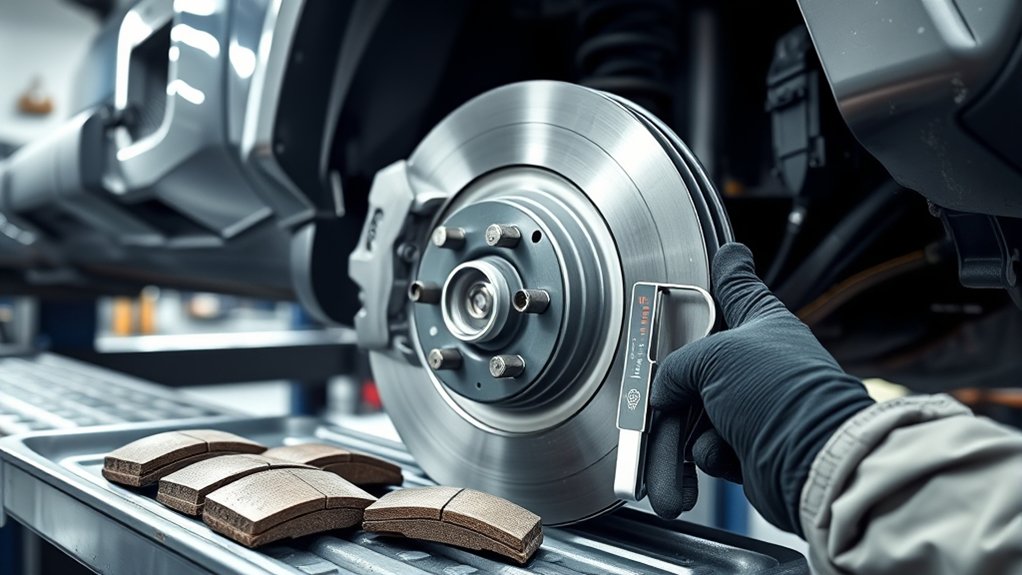
Last updated: September 19, 2026
Toyota does not set one fixed replacement mileage for every Tacoma brake pad set. Toyota’s maintenance guidance calls for inspecting brake pads and discs for excessive wear rather than replacing them at one universal mileage. A broad real-world planning range is roughly 30,000 to 70,000 miles, but pad thickness, wear pattern, braking symptoms, towing, terrain, and brake hardware matter more than the odometer.
Quick Answer
Toyota does not publish one universal brake-pad replacement mileage for every Tacoma. Many service sources use about 30,000 to 70,000 miles as a broad planning range. Around 3mm of friction material is a sensible point to plan replacement, but it is not a universal Toyota wear limit. Check the specification for your model year, and have the brakes inspected immediately for grinding, a soft or sinking pedal, fluid loss, severe pulling, or reduced braking.
Key Takeaways
- Use roughly 30,000 to 70,000 miles only as a planning range; measured pad thickness and wear pattern matter more than mileage.
- Around 3mm is a conservative replacement-planning point, not a universal Toyota minimum. Confirm the wear limit for your exact model year.
- Squealing can be a wear warning, but grinding, severe pulling, a soft or sinking pedal, fluid loss, or reduced braking needs urgent attention.
- The 2024 Tacoma redesign moved to standard four-wheel disc brakes; earlier generations commonly used rear drums, so rear service differs by model year.
- Certain 2024–2025 Tacoma 4WD vehicles are covered by NHTSA recall 25V-058 for a rear brake-hose condition, so check your VIN before paying for related repairs.
At a Glance
| Time Required | About 10 to 20 minutes for a basic visual check with the wheel off; replacement time varies by axle, corrosion, hardware condition, and whether rotors or rear drums also need service. |
| Difficulty | Easy for inspection when the wheel is off; moderate for DIY replacement if you have brake-service experience. |
| Tools Needed | Flashlight, brake pad gauge or ruler, jack stands, lug wrench, torque wrench, and basic hand tools for replacement. |
| Cost | RepairPal listed a national Tacoma brake-pad replacement estimate of $274 to $341 on September 3, 2026, before taxes, fees, location differences, and related repairs. |
How Long Do Toyota Tacoma Brake Pads Last?
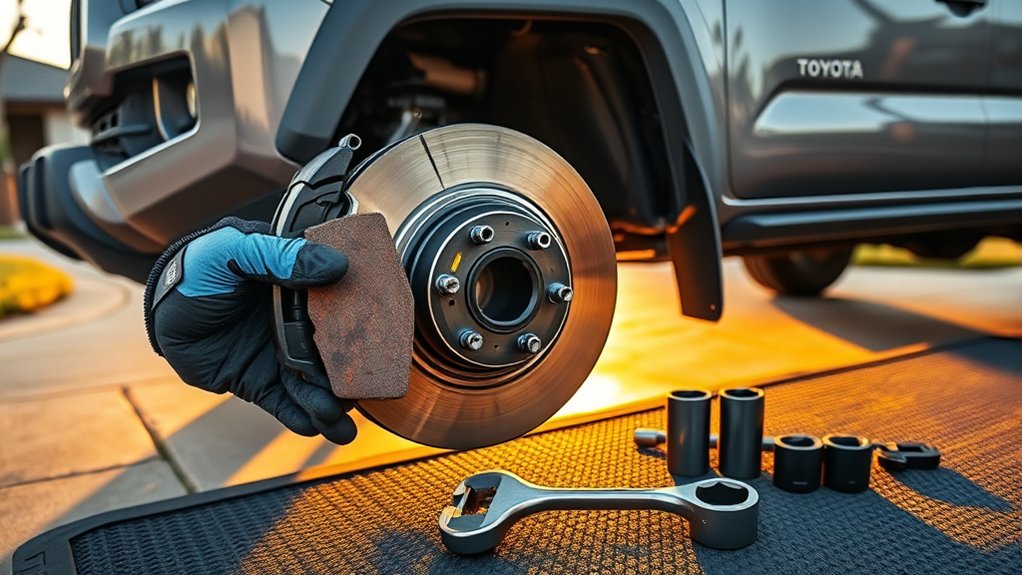
There is no single factory mileage at which every Toyota Tacoma needs new brake pads. Current Toyota-dealer service guidance commonly uses about 30,000 to 70,000 miles as a broad planning range, but that is not a Toyota-issued replacement interval. Highway use and smooth braking can extend pad life, while towing, city traffic, mountain descents, larger tire-and-wheel packages, and off-road contamination can shorten it.
The safest answer comes from inspection, not from the odometer. A Tacoma with 50,000 miles can still have usable pad material if it has seen mostly smooth highway driving. Another Tacoma can wear pads much faster if it tows often, runs larger tires, or spends time on steep roads.
Also remember that brake pads are only one part of the system. Rotors, calipers, brake fluid, brake hoses, rear drums, and parking brake hardware can affect braking feel and repair cost.
Note: Tacoma rear-brake design changed with the fourth generation. Toyota says the 2024 Tacoma introduced standard disc brakes at all four wheels, while the previous generation commonly used rear drums. Confirm the brake layout for your model year before ordering parts or estimating rear-service cost.
Brake Pad Thickness Guide: When to Replace
Brake pad thickness gives you a more useful answer than mileage alone. Several Tacoma owner manuals, including 2020 and 2022, list a brake-pad wear limit of 1.0mm (0.04 in.); the correct specification should still be confirmed for your exact model year. Treat 3mm as a conservative planning point rather than a universal Toyota minimum. Check both the inner and outer pads on each side because uneven caliper or hardware wear can leave one pad thinner than the one you can see most easily.
| Pad Thickness | What It Means | Best Action |
|---|---|---|
| 6mm or more | Healthy pad life remains. | Recheck at your next routine service. |
| 4mm to 5mm | Usable, but getting lower. | Monitor closely, especially before towing or long trips. |
| Around 3mm | A conservative planning point, not a universal Toyota wear limit. | Schedule service soon, especially before towing or a long trip, and inspect the rotors and hardware. |
| Around 2mm | Very little friction material remains, even if the exact model-year wear limit is lower. | Arrange replacement promptly and confirm the factory wear limit for your Tacoma. |
| At or below the model-year wear limit | The pad is at or beyond the service specification for that vehicle. | Replace the pads and inspect the rotors, calipers, and hardware before returning to normal driving. |
Signs You Need to Replace Your Toyota Tacoma Brake Pads
Recognizing the signs that your Toyota Tacoma brake pads need replacement can help protect your rotors and keep the truck safer to drive. Some noises are minor, but others point to urgent brake service.
- Squealing or screeching: A wear indicator may be touching the rotor. Moisture, dust, and pad vibration can also cause squeak, so inspect the pads instead of guessing.
- Grinding noises: Grinding often means the friction material is worn down and metal may be contacting the rotor or drum surface.
- Pulsation or vibration: A shaking brake pedal or steering wheel can point to rotor problems, uneven pad deposits, or damaged brake parts.
- Burning smell: A hot odor may come from overheated brakes, a dragging caliper, a stuck parking brake, or repeated hard braking.
- Pulling to one side: Uneven braking can come from uneven pad wear, a sticking caliper, contaminated lining, or hydraulic problems.
- Longer stopping distance: If your Tacoma takes more room to stop than usual, schedule an inspection right away.
- Brake warning light: Do not assume this is only a pad issue. It can also point to low fluid, a leak, parking brake engagement, or another system fault.
Warning: Do not keep driving normally if you hear grinding, feel a soft or sinking brake pedal, see a brake warning light, notice brake fluid loss, or feel the truck pulling hard under braking. Park safely and have the brake system inspected before continuing.
Factors That Affect the Lifespan of Brake Pads
Understanding the factors that influence the lifespan of your Toyota Tacoma’s brake pads can help you make smarter maintenance decisions. These conditions can shorten brake pad life:
- Driving habits: Frequent hard braking, late braking, and stop-and-go traffic create more heat and wear.
- Towing and payload: Trailers, heavy cargo, bed loads, and rooftop gear make the brakes work harder.
- Mountain roads: Long downhill braking can overheat pads and rotors if you ride the brake pedal.
- Off-road driving: Mud, sand, water, and grit can collect around brake hardware and increase noise or wear.
- Oversized tires and wheels: Heavier tire-and-wheel setups can add rotating mass and increase braking demand.
- Pad material: Ceramic, semi-metallic, and other pad compounds can feel, wear, and create dust differently.
- Caliper and hardware condition: Sticking slide pins, weak hardware, or a dragging caliper can wear one pad faster than the other.
- Rotor condition: Rust, grooves, heat spots, and uneven surfaces can reduce pad life and cause vibration.
Pro Tip: Ask your shop to write down the actual pad thickness in millimeters at each tire rotation. A number is more useful than a vague “good” or “low” note.
Cost Breakdown for Replacing Toyota Tacoma Brake Pads
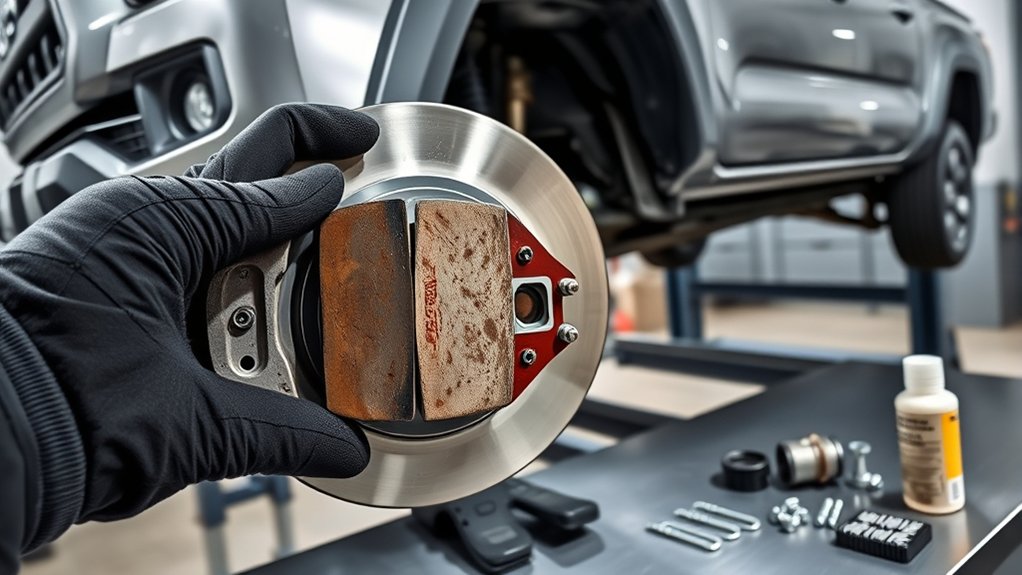
Replacing the brake pads on your Toyota Tacoma involves parts, labor, and inspection costs. The final price changes with model year, brake design, pad quality, local labor rates, and whether the rotors, calipers, or rear drum components also need work. RepairPal’s estimate, last updated September 3, 2026, puts Toyota Tacoma brake-pad replacement at $274 to $341 on average, with taxes, fees, location, and related repairs excluded.
| Service Type | Cost Pattern | Notes |
|---|---|---|
| DIY front pad replacement | Usually the lowest parts-only cost | Only attempt this if you can lift the truck safely, use correct torque specs, and verify braking before driving. |
| Shop-installed pads, one axle | Current national estimate: about $274 to $341 before taxes, fees, location differences, or related repairs | Labor rate, pad brand, and shop type affect the final bill. |
| Pads plus rotors | Higher cost | Needed if rotors are too thin, deeply grooved, heat-damaged, or causing pulsation. |
| Rear drum service | Varies by hardware condition | Older Tacomas may need shoes, drums, springs, adjusters, or wheel-cylinder inspection instead of rear pads. |
| Brake diagnosis | May be charged separately | Important for warning lights, fluid leaks, soft pedal feel, pulling, or uneven wear. |
Replace brake pads or shoes in pairs on the same axle. If the front-left pad is worn out, service the front-right side too. You do not automatically need front and rear service at the same time unless both axles are worn or the inspection finds related damage.
Top Tips for Maintaining Your Toyota Tacoma Brake Pads
To keep your Toyota Tacoma’s brake pads in good condition, combine regular inspections with smoother driving habits. These tips can help you extend pad life and spot problems early:
- Schedule regular inspections: Check brake pad thickness during tire rotations or at least every routine service visit.
- Watch your driving habits: Brake earlier, avoid tailgating, and use smooth pedal pressure when possible.
- Use engine braking on descents: Downshift when appropriate on long grades so you do not ride the brakes.
- Clean after muddy trips: Rinse mud and grit from the wheel and brake area after off-road driving, but avoid blasting sensitive parts with high pressure.
- Check for uneven wear: One thin pad may point to a sticking caliper, seized slide pin, or hardware issue.
- Use correct replacement parts: Choose pads or shoes that match your Tacoma’s model year, trim, axle, and driving needs.
- Listen for warning signs: Squealing, vibration, grinding, pulling, and longer stopping distance should never be ignored.
- Inspect rotors too: New pads on damaged rotors can lead to noise, vibration, and shorter pad life.
Check Recalls Before Brake Service
Before paying for brake-related repairs, check your Tacoma’s VIN for open recalls or service campaigns. Toyota offers a safety recall and service campaign lookup at Toyota.com/recall, and the National Highway Traffic Safety Administration offers an official lookup at NHTSA.gov/recalls.
NHTSA campaign 25V-058 covers certain 2024–2025 Tacoma 4WD vehicles because mud and dirt can damage the rear brake hoses, allowing brake fluid to leak and reducing braking ability. Toyota’s recall chronology identifies the condition in affected 4WD configurations with 16-inch rear brakes and 17-inch Toyota wheels. This is a hydraulic safety issue, not normal pad wear, so fluid loss, a brake warning, or reduced braking needs a full brake-system inspection.
You can also use Toyota’s Manuals and Warranties page to confirm specifications and maintenance guidance for your exact model year.
Related Guides
Frequently Asked Questions
How long do Toyota Tacoma brake pads last?
Use about 30,000 to 70,000 miles only as a broad planning range. Toyota does not set one replacement mileage for every Tacoma. Actual life depends on pad thickness, towing, traffic, terrain, wheel-and-tire weight, caliper condition, and driving style, so inspection is more reliable than mileage alone.
Is 20% brake life left on a Tacoma enough to keep driving?
A percentage estimate is less useful than an actual thickness measurement. Ask for the thinnest pad measurement in millimeters and compare it with the factory wear limit for your model year. Around 3mm is a reasonable point to plan replacement; do not wait for the percentage to reach zero or for grinding to begin.
How much does it cost to replace Tacoma brake pads?
RepairPal listed a national Toyota Tacoma brake-pad replacement estimate of $274 to $341 on September 3, 2026, before taxes, fees, location differences, and related repairs. Your final cost depends on model year, parts choice, axle, labor rate, rotor condition, and whether other brake components need service.
What year was the worst year for Toyota Tacoma brakes?
No official source names one Tacoma model year as the worst for brake pad wear. Brake life depends more on use, maintenance, parts quality, terrain, and brake-system condition. For safety issues, search your exact VIN through Toyota or NHTSA.
Is 3mm on Tacoma brake pads okay?
3mm is generally a planning point rather than an emergency by itself. It is not a universal Toyota wear limit. Schedule service, inspect the rotors and hardware, and confirm the exact minimum thickness for your model year. If you tow, drive steep grades, or have uneven wear, service the brakes sooner.
Why do Tacoma brakes squeak if the pads still have life?
Brake squeak can come from dust, moisture, surface rust, pad vibration, glazing, or a wear indicator. If the noise continues after a few normal stops, inspect the pads, rotors, shims, and caliper hardware.
Should I replace Tacoma pads and rotors together?
Not always. You can replace pads without rotors if the rotors are smooth, thick enough, and free of major heat damage or grooves. Replace or resurface rotors when they are too thin, deeply scored, rust-damaged, or causing brake pulsation.
Conclusion
Keeping your Toyota Tacoma’s brake pads in good condition protects stopping performance and can prevent avoidable rotor or hardware damage. Use mileage only to plan inspections; the thinnest measured pad, wear pattern, brake feel, and the factory specification for your model year should decide when service is due.
At your next tire rotation, ask for the inner and outer pad thickness in millimeters on each wheel. Replace friction parts in axle pairs, inspect the rotors and hardware at the same time, and act quickly for grinding, a soft pedal, fluid loss, severe pulling, or reduced braking. Owners of 2024–2025 Tacoma 4WD models should also check VIN recall status for NHTSA campaign 25V-058.
Sources
- Toyota Manuals and Warranties — official Toyota owner manual and warranty/maintenance guide lookup.
- 2024 Toyota Tacoma Warranty & Maintenance Guide — Toyota maintenance guidance for brake linings, pads, discs, hoses, and related inspections.
- 2024 Toyota Tacoma Is the Ultimate Adventure Machine — Toyota newsroom overview confirming four-wheel disc brakes on the fourth-generation Tacoma.
- Toyota Safety Recalls and Service Campaigns — official Toyota VIN and license-plate recall lookup.
- NHTSA Recall Lookup — official U.S. recall, investigation, complaint, and manufacturer communication search.
- NHTSA Recall 25V-058 — official recall notice for certain 2024–2025 Toyota Tacoma 4WD rear brake hoses.
- Toyota Vallejo: How Long Do Brake Pads Last? — current Toyota-dealer service guidance on the broad 30,000–70,000-mile planning range and wear factors.
- RepairPal Toyota Tacoma Brake Pad Replacement Cost — current U.S. cost estimate reviewed September 2026.
- NHTSA Report a Safety Problem — official resource for reporting vehicle safety concerns.
