Understanding rifling twist rate is essential if you want better shooting accuracy and more consistent bullet flight. Twist rate affects how well a bullet stabilizes after it leaves the barrel, especially when bullet length, bullet weight, velocity, and caliber all work together. Choosing the right combination is not just personal preference; it helps your firearm and ammunition perform as intended. This guide explains what twist rate means, how it is measured, how bullet stabilization works, and how to choose a practical setup for your needs.
Last updated: September 20, 2025
Quick Answer
Twist rate tells you how quickly rifling spins a bullet, usually shown as 1 turn in a set number of inches, such as 1:10. Faster twist rates usually stabilize longer bullets better, while slower twist rates often suit shorter bullets. The best choice depends on bullet length, weight, velocity, caliber, and real-world testing.
Key Takeaways
- Twist rate measures how many inches of barrel travel it takes for rifling to spin a bullet one full turn.
- Longer bullets usually need faster twist rates because length drives stability more directly than weight alone.
- A poor bullet-and-twist match can cause yaw, keyholing, wider groups, and inconsistent downrange performance.
- Manufacturer recommendations, stability calculators, and range testing all help confirm the right setup.
- Twist rate matters, but grip, trigger control, sights, barrel condition, wind, and ammunition consistency still affect accuracy.
What Is Twist Rate?
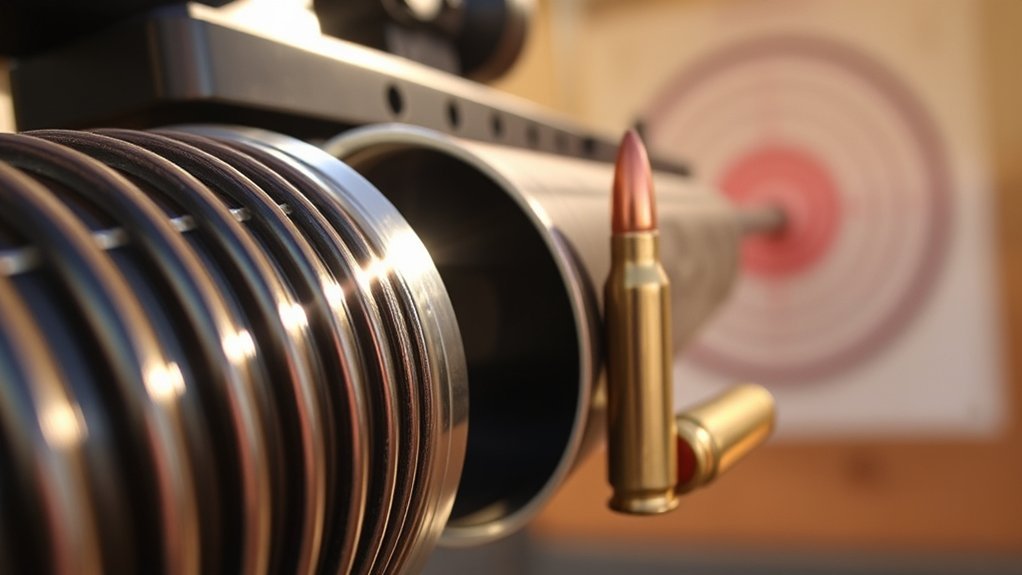
Twist rate refers to the rate at which the rifling in a firearm’s barrel rotates the bullet as it travels down the bore. It is typically expressed as a ratio, such as 1:10, meaning the bullet completes one full rotation for every ten inches of barrel travel. A 1:8 twist is faster than a 1:12 twist because the bullet makes a full turn in fewer inches.
The twist rate strongly influences bullet stabilization. In general, a faster twist stabilizes longer, heavier-for-caliber bullets, while a slower twist may be enough for shorter, lighter projectiles. Good stability helps the bullet maintain a consistent point-forward attitude, reduce yaw, and follow a more predictable trajectory.
Twist rate does not work alone. Bullet length, bullet construction, muzzle velocity, air density, barrel condition, and ammunition consistency all affect final performance. That is why two rifles with the same marked twist rate can still show different results with the same load.
How Twist Rate Is Measured

Measuring twist rate means finding the distance a bullet travels in inches for one complete rotation of the rifling. You will usually see twist rates written as ratios, such as 1:10 or 1:12. This notation shows how many inches of barrel travel are needed for one full turn of the rifling.
For a simple at-home check, use a one-piece cleaning rod with a rotating handle and a snug patch. Mark the rod at the muzzle, push the rod forward until it makes exactly one full turn, then measure the distance between your starting mark and ending mark. That distance in inches is your approximate twist rate.AccurateShooter (2025-09-15)Berger Bullets FAQ (accessed 2025-09-20)
At a Glance
| Time Required | About 5 to 10 minutes |
| Difficulty | Easy, but careful measurement matters |
| Tools Needed | One-piece cleaning rod, rotating handle, snug patch, marker, and tape measure |
| Cost | Usually no added cost if you already own basic cleaning tools |
Warning: Always confirm the firearm is unloaded, remove the magazine, open the action, and follow safe handling practices before measuring twist rate or cleaning a barrel.
The Science Behind Bullet Stabilization
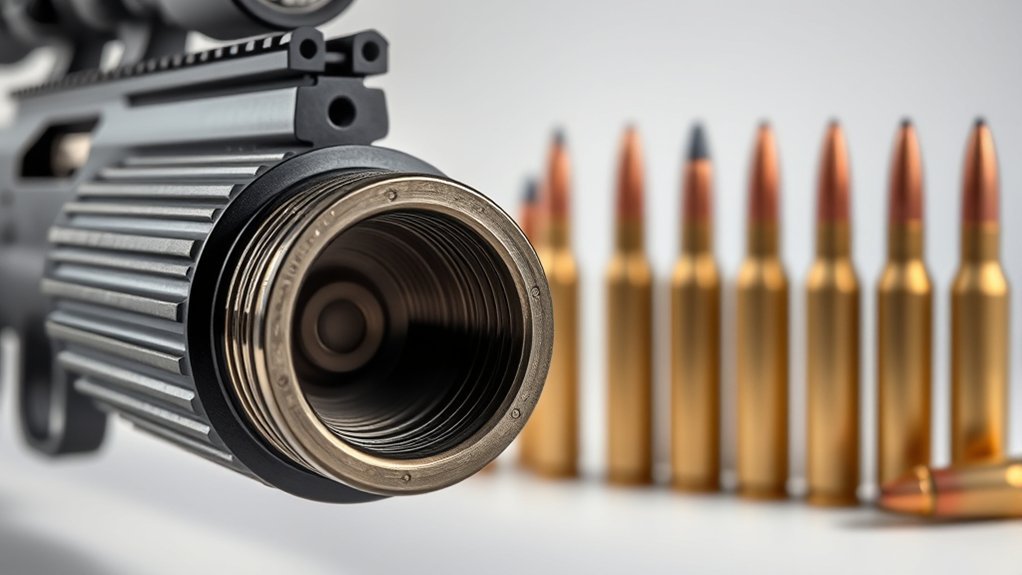
To understand bullet stabilization, you need to understand gyroscopic stability. A spinning bullet behaves somewhat like a spinning top. The rotation helps the bullet resist tipping forces during flight. The barrel twist rate directly influences how fast the bullet spins, while bullet design controls how much spin the bullet needs.
Good stabilization keeps the bullet pointed in the direction of travel. Poor stabilization can cause the bullet to wobble, yaw, tumble, or strike the target sideways. This is why twist rate, bullet length, and velocity matter so much when you want predictable accuracy.
Gyroscopic Stability Principles
While many factors influence bullet performance, gyroscopic stability stands out as a critical principle in accurate flight. This stability comes from the bullet’s rotation around its long axis. The right amount of spin helps prevent unwanted movement caused by drag, wind, and small imperfections in the bullet or barrel.
| Factor | Impact on Stability |
|---|---|
| Spin Rate | Higher rates can improve stability when matched to the bullet |
| Bullet Length | Longer bullets require faster twist; under-twisted bullets can become less stableSSUSA/NRA (2019-11-06) |
| Weight Distribution | Even and predictable distribution improves control |
| Environmental Factors | Wind, temperature, altitude, and air density can affect stability |
| Barrel Twist Rate | Must match bullet design, length, velocity, and intended use |
Importance of Twist Rate
Understanding the importance of twist rate is crucial for achieving reliable bullet stabilization. The twist rate affects how well your bullet maintains its trajectory and accuracy throughout flight. A proper twist rate helps the bullet spin at a useful speed, reducing yaw and preventing tumbling.
Here are the main reasons twist rate matters:
- Affects gyroscopic stability and accuracy.
- Determines compatibility with different bullet weights and lengths.
- Influences drag and energy retention over distance.
- Impacts performance in different environmental conditions.
- Helps optimize the barrel, caliber, velocity, and ammunition combination.
Bullet Design Considerations
Bullet design plays a pivotal role in stabilization, directly influencing how effectively a bullet performs in flight. Factors such as bullet shape, length, weight distribution, jacket design, and construction materials can greatly affect aerodynamic efficiency.
A streamlined profile helps reduce drag, while a stable center of mass helps the bullet stay balanced. The bullet’s length relative to its diameter also affects how it interacts with the rifling, which then affects gyroscopic stability. Optimizing these design elements helps the bullet maintain a true trajectory and deliver more consistent performance. By understanding these considerations, you can better appreciate the balance between design, twist rate, and accuracy.
Effects of Twist Rate on Bullet Performance
Your choice of twist rate can greatly influence bullet accuracy and overall performance. A proper twist ratio stabilizes the projectile, improves consistency, and helps the bullet maintain a cleaner flight path. A poor match can make an otherwise accurate rifle perform inconsistently.
Impact on Accuracy
While many factors influence a firearm’s accuracy, the twist rate of a barrel plays an essential role in stabilizing a projectile during flight. A properly matched twist rate helps the bullet stay stable, which can tighten groups and improve repeatability.
When the twist rate is not ideal, you may experience:
- Increased bullet yaw, leading to erratic flight paths.
- Reduced terminal performance due to insufficient stabilization.
- A higher likelihood of keyholing, which harms precision.
- Variances in ballistic coefficient, affecting distance accuracy.
- Greater sensitivity to environmental factors like wind.
Understanding the relationship between twist rate and bullet performance allows you to make informed choices about ammunition and firearm setup. That knowledge can improve your shooting accuracy and effectiveness in the field or at the range.
Optimal Twist Ratios
Finding the ideal twist ratio for a specific bullet is fundamental for maximizing performance and accuracy. The twist rate directly influences stabilization, which affects trajectory, velocity retention, and downrange consistency.
A faster twist rate can stabilize longer, heavier-for-caliber bullets and help them maintain a predictable point of impact at distance. Conversely, a slower twist may suit lighter, shorter bullets, especially when shooting at shorter ranges. Understanding the bullet’s length, weight, and velocity is critical when determining the best twist rate.
Manufacturers often provide recommendations, but testing in your specific firearm is essential for practical validation. Modern rules of thumb and calculators based on the Greenhill or Miller formulas can help you sanity-check your setup before range time.JBM Stability Calculator (accessed 2025-09-20)Miller (2009)
Pro Tip: Do not choose a twist rate from bullet weight alone. When two bullets weigh the same, the longer bullet usually needs more spin because length is the bigger stability driver.
Choosing the Right Twist Rate for Your Caliber
Selecting the appropriate twist rate for your caliber plays a crucial role in achieving reliable bullet stabilization and accuracy. A mismatch can reduce performance, so it helps to look at your bullet, velocity, and intended use together instead of focusing on one factor.
Consider the following factors when choosing your twist rate:
- Bullet weight: Heavier bullets often require faster twist rates for stabilization, mainly because they are often longer.
- Bullet length: Longer bullets typically need a higher twist rate due to increased gyroscopic stability demands.SSUSA/NRA (2019-11-06)
- Velocity: Muzzle velocity can affect stabilization, so verify that your twist rate complements your expected velocity.Miller Twist Rule (updated 2025-08)
- Intended use: Target shooting, hunting, and tactical applications may have different accuracy and stability needs.
- Caliber specifics: Each caliber has common recommended twist ranges, so check bullet-maker and firearm-maker guidance before choosing ammunition.
A practical approach is to start with the ammunition or bullet you plan to use most often. Then compare that bullet’s manufacturer guidance against your barrel twist rate. If you are between two choices, test several loads at the range and watch for group size, consistency, and any signs of instability.
The Role of Bullet Length and Weight
Bullet length and weight are critical factors that significantly influence stabilization and accuracy. A longer bullet typically requires a faster twist rate to maintain gyroscopic stability, as its increased length is harder to stabilize at a given spin rate.
Heavier bullets also often need specific twist rates because bullet mass often increases with bullet length. However, weight itself is not the only factor. A long, sleek bullet and a shorter flat-base bullet can weigh the same but require different levels of stabilization.
It is essential to match bullet specifications with your rifle’s twist rate for peak performance. If the twist rate is too slow for the bullet’s length or weight, you may experience tumbling, keyholing, or inaccurate trajectories. Understanding these dynamics helps you make informed choices, improve your accuracy, and create a better shooting experience. Always consider both length and weight when selecting ammunition.Miller (2009)
Common Myths About Twist Rate
Understanding bullet specifications is just the beginning. Many misconceptions surround twist rates, and those myths can lead to poor ammunition choices or unrealistic expectations.
Misunderstanding twist rates can lead to confusion; matching bullet design, length, velocity, and barrel twist is more useful than chasing the fastest twist rate.
- Faster twist always means better accuracy: A twist rate must match the bullet’s characteristics for peak performance.
- All bullets stabilize with the same twist rate: Bullet length and weight significantly influence stabilization.
- You can’t change your twist rate: Barrel replacement is possible when you need to accommodate different bullet types.
- Twist rate affects velocity: Twist rate usually has only a small effect on velocity in like-for-like barrels, often showing single-digit fps differences.AccurateShooter (2025-08-23)
- Heavier bullets require faster twist rates: This is often true because heavier bullets are usually longer, but length is the key driver of required twist.SSUSA/NRA (2019-11-06)
Practical Tips for Improving Shooting Accuracy
While achieving high shooting accuracy can be challenging, specific techniques can greatly improve your consistency. Start by ensuring a consistent grip and stance. This foundation reduces movement and helps every shot start from the same position.
Next, focus on your trigger control. Apply steady pressure without jerking the trigger. Practice breath control by inhaling, exhaling, and breaking the shot during a stable pause. These simple habits can reduce human error before you even adjust your equipment.
Also, familiarize yourself with your rifle’s twist rate and bullet type. This knowledge helps you select the best ammunition for your setup. Do not overlook environmental factors; wind, temperature, and distance can all affect trajectory. Finally, maintain your equipment. A clean barrel, secure mounts, and properly adjusted sights are essential for consistent precision.
Note: If your groups suddenly open up, check basic issues first: loose optics, inconsistent ammunition, dirty barrel, damaged crown, unstable rest, or changing wind conditions.
Conclusion
Understanding twist rate is essential for achieving accuracy, enhancing stability, and optimizing performance. By selecting the right twist rate for your caliber and bullet, you improve your bullet’s trajectory and your overall shooting experience.
The key is to recognize the relationship between bullet length, bullet weight, velocity, and twist rate. Avoid common myths, use manufacturer guidance, and confirm results through careful range testing. Ultimately, mastering twist rate helps you shoot with more confidence, precision, and consistency.
Sources
- AccurateShooter — backs up the cleaning-rod method for checking barrel twist rate.
- Berger Bullets FAQ — supports practical barrel twist measurement guidance.
- SSUSA/NRA — supports the relationship between bullet length and required twist rate.
- JBM Stability Calculator — provides a practical stability calculator for estimating bullet stabilization.
- Miller Stability Paper — supports the use of Miller-based stability calculations.
- AccurateShooter — supports the point that twist rate usually has a small velocity effect in like-for-like comparisons.