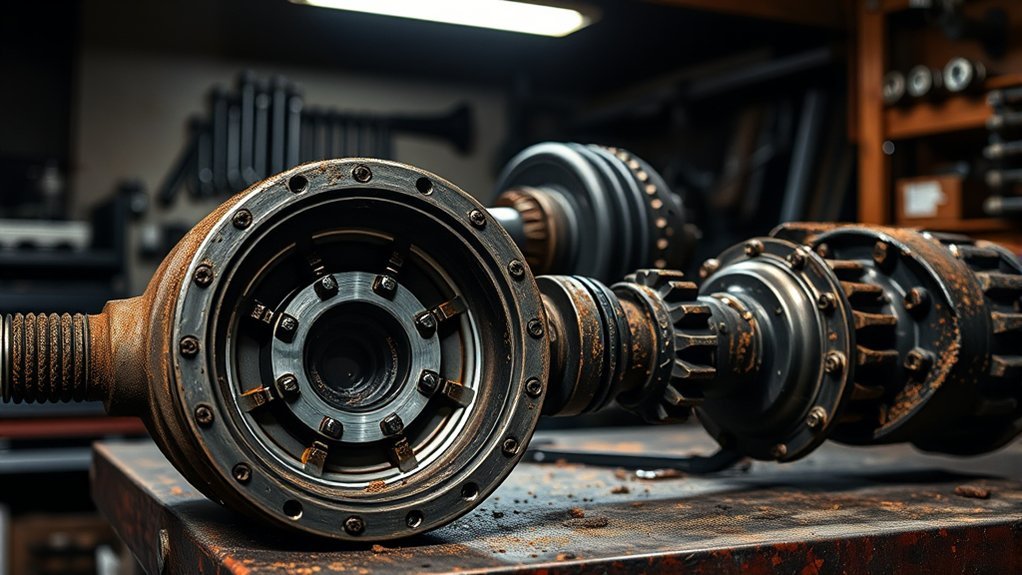
For serious off-road traction, a locking differential usually has the advantage when one wheel may lift off the ground or lose almost all grip. A limited-slip differential (LSD) is usually the better compromise for a daily-driven vehicle because it improves traction while still allowing normal left-to-right wheel-speed differences during turns.
A locker does not simply create a fixed 50/50 torque split. When fully locked, it mechanically links the axle shafts so both wheels rotate at the same speed. That lets the tire with usable grip continue producing drive force even when the opposite tire is heavily unloaded. An LSD instead biases torque between the wheels while preserving some differential action, so its effectiveness depends on the LSD design and how much traction remains at each tire.
Last updated: September 11, 2026
Quick Answer
Choose a locking differential for technical rocks, deep ruts, steep loose climbs, or situations where a wheel regularly lifts. Choose a limited-slip differential for a daily driver that also sees gravel, snow, sand, forest roads, and moderate trails. A selectable locker offers the greatest off-road capability with normal open-differential behavior when disengaged.
Limited-Slip vs Locking Differential for Off-Road: Key Differences
| Factor | Limited-Slip Differential | Locking Differential |
|---|---|---|
| Wheel-speed behavior | Allows left and right wheels to rotate at different speeds while limiting excessive speed difference | When fully locked, forces both axle shafts to rotate at the same speed |
| Best use | Daily driving, gravel, snow, sand, light-to-moderate trails | Rock crawling, deep ruts, steep loose climbs, severe uneven traction |
| One wheel nearly off the ground | Effectiveness varies; many LSDs lose much of their advantage when one side has almost no resistance | Strong advantage because the grounded wheel can continue to receive useful drive force |
| Pavement behavior | Usually smooth and automatic | Selectable lockers should normally be disengaged on high-traction pavement |
| Driver control | Usually automatic | May be selectable or automatic depending on design |
| Maintenance | Varies by clutch, helical-gear, viscous, or other design | Varies by automatic, electronic, air, or other locking mechanism |
Understanding Differentials: The Basics of LSD and Locking Differentials
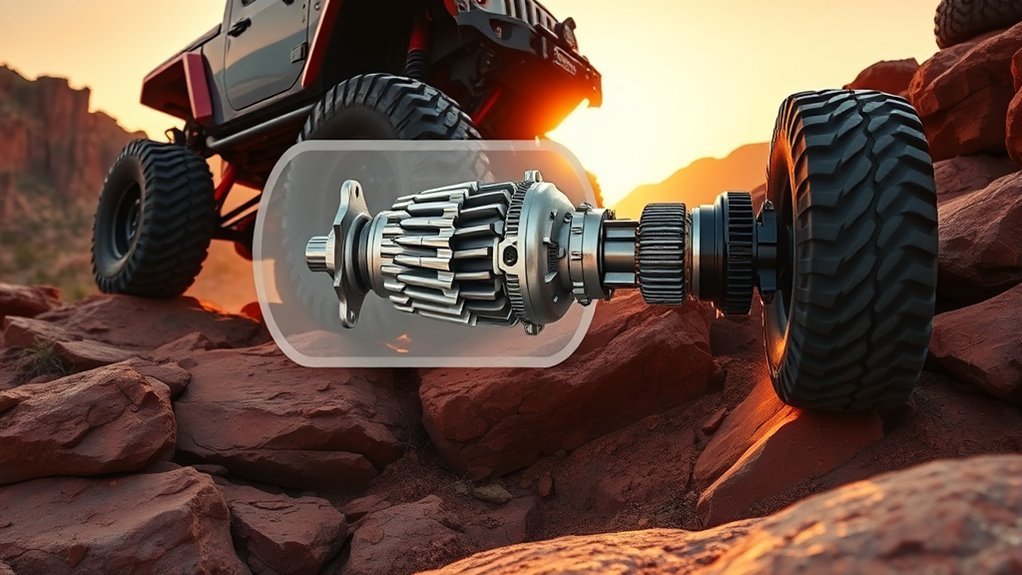
A differential lets the two wheels on an axle rotate at different speeds. That matters during a turn because the outside tire travels farther than the inside tire. An open differential handles that difference smoothly, but it can struggle off-road when one tire has very little traction.
A limited-slip differential still permits wheel-speed differences but adds a mechanism that resists excessive slip and biases more usable torque toward the higher-traction side. The exact behavior depends on its design.
A locking differential can mechanically couple the two axle shafts. Once fully locked, both wheels must rotate at the same speed. This is especially valuable when one tire is in the air, on a loose rock, or buried in a rut while the other tire remains on a surface with usable grip.
This distinction is more accurate than saying a locker always sends a fixed percentage of torque to each side. A locked axle controls the speed relationship between the axle shafts; the amount of useful force each tire can put into the ground still depends on traction and drivetrain load.
How Limited-Slip Differentials Improve Off-Road Performance
An LSD improves traction without completely eliminating differential action. That makes it useful for vehicles that spend substantial time on pavement but also encounter loose gravel, wet roads, packed snow, sand, dirt, or moderate trails.
Enhanced Traction Control
There is more than one type of LSD. A clutch-type LSD uses friction elements to resist a large speed difference between the axle shafts. The amount of locking effect depends on the unit’s preload, clutch design, wear, lubricant, and operating load.
A helical-gear LSD uses internal gears to create a torque-biasing effect. The Eaton Detroit Truetrac is one example. Eaton describes a typical aftermarket Truetrac as capable of delivering approximately three times the torque of the slipping wheel to the wheel with more traction. That figure is specific to the product family and should not be treated as a universal LSD ratio.
The limitation becomes important when one tire has almost no resistance, such as when it is fully airborne. A torque-biasing LSD needs some reaction torque at the low-traction wheel before it can multiply that torque at the gripping wheel. Brake-based traction control can sometimes help by adding resistance to the spinning wheel, but the result depends on the vehicle and differential design.
Smooth Power Distribution
The main advantage of an LSD is that it can add traction without making the axle behave like a permanently locked unit. In normal turns, the wheels can still rotate at different speeds. As traction becomes uneven, the LSD reduces excessive speed difference and biases torque toward the side that can use more of it.
- Daily driving: usually smoother and more transparent than a locked axle.
- Loose surfaces: can reduce one-wheel spin and help preserve momentum.
- Cornering: retains differential action instead of forcing both tires to travel at identical speeds.
- Wheel lift: generally less capable than a true locker when one wheel loses nearly all resistance.
An LSD is therefore not simply a weaker locker. It is a different compromise: more traction than an open differential while preserving better road manners than a fully locked axle.
The Advantages of Locking Differentials in Challenging Terrain
A locking differential becomes most valuable when traction differs sharply from one side of the axle to the other. Once fully engaged, the two axle shafts rotate at the same speed. A tire that is lightly loaded or in the air can no longer simply accelerate independently while the tire with grip contributes little useful drive.
This is why lockers are especially effective on rock ledges, deep cross-axle ruts, steep loose climbs, mud holes, and other terrain where a wheel may unload. The vehicle can often move through an obstacle more slowly and with less wheelspin than it could with an open differential.
Lockers are not all operated the same way. A selectable locker lets the driver choose when the axle is open and when it is locked. Air lockers and electronic lockers are common examples. An automatic locker uses a mechanical design that locks and differentiates according to load and wheel-speed conditions without a dashboard switch.
Do not assume instructions for one locker apply to every design. Engagement speed, allowable wheel-speed difference, drivetrain mode, and disengagement procedure depend on the exact vehicle and locker. Follow the manufacturer’s instructions.
Important pavement warning
A selectable axle locker should normally be disengaged on dry, high-traction pavement unless the vehicle manufacturer specifically permits locked operation. Forcing both wheels to the same speed in a tight paved turn can cause tire scrub, difficult steering, driveline wind-up, and component stress.
LSD vs Lockers: Key Differences and Applications
The right choice depends less on which design is “better” and more on how large the traction difference becomes between the two tires on an axle.
- Mixed street and trail use: An LSD is often the easier all-around choice because it operates automatically and retains normal differentiation in turns.
- Technical off-roading: A locker has the advantage when wheels repeatedly lift or encounter sharply different traction.
- Driver control: A selectable locker lets you keep normal differential behavior most of the time and lock the axle only for difficult obstacles.
- Maintenance: Do not assume every LSD requires more maintenance or every locker requires less. Clutch LSDs may have friction components that wear, while some helical-gear LSDs have no clutch packs. Air and electronic lockers add their own engagement components.
- Steering: Locking a front axle can make the vehicle resist turning, especially on surfaces with more grip.
A locker gives up left-to-right wheel-speed differentiation when locked in exchange for stronger traction when one wheel is severely unloaded. An LSD preserves more differentiation and road refinement but cannot always match a full locker in extreme cross-axle situations.
Selecting the Right Differential: Limited-Slip vs Locking for Your Driving Needs
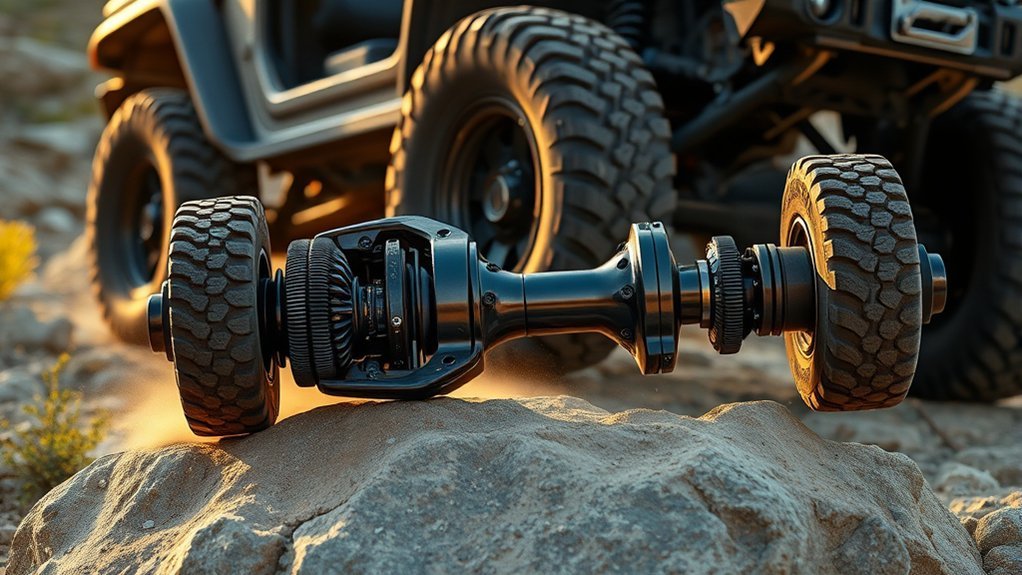
Start with how the vehicle spends most of its time. A daily-driven truck or SUV that occasionally explores forest roads, snow, sand, or moderate trails generally benefits from the smooth automatic behavior of an LSD. A dedicated trail vehicle that regularly encounters rock ledges, deep ruts, wheel lift, or very uneven traction benefits more from a locker.
A selectable locker can bridge those two uses well. When disengaged, the differential can behave normally for street driving. When the trail becomes difficult, the driver can lock the axle before attempting the obstacle, subject to the vehicle or locker manufacturer’s operating procedure.
| Driving Pattern | Better Starting Point | Why |
|---|---|---|
| Mostly pavement, occasional gravel or snow | Limited-slip | Improved traction with normal road manners |
| Daily driving plus moderate trails | Limited-slip or selectable rear locker | Choice depends on how often wheel lift or deep ruts occur |
| Technical rock crawling | Selectable locker | Full lock remains useful when one wheel is unloaded |
| Deep mud and severe cross-axle terrain | Locker | Reduces the chance that one spinning wheel consumes the axle’s useful motion |
| Winter road driving | Usually limited-slip | Preserves normal differential action and predictable road behavior |
What You Notice From LSDs and Lockers on the Trail
The biggest difference appears when traction becomes extremely uneven.
- Both tires still have some grip: A good LSD can bias torque effectively while allowing smoother steering and wheel-speed differences.
- One wheel starts spinning: The LSD attempts to limit the speed difference and transfer more usable torque to the better-supported tire.
- One wheel lifts completely: Many LSD designs lose much of their advantage because the unloaded side provides almost no reaction torque. A fully locked differential maintains the mechanical connection between both axle shafts.
- Both tires regain solid traction: A selectable locker should usually be disengaged when full lock is no longer needed, especially before returning to high-traction pavement.
This is why a locker can let a vehicle crawl an obstacle at lower speed instead of relying on wheelspin or momentum. It does not create additional tire grip; it helps the drivetrain make better use of the grip that remains.
Which Differential Is Best for Mud, Sand, Snow, or Rocks?
The terrain matters because “low traction” can describe very different conditions.
| Terrain | Typical Better Choice | Reason |
|---|---|---|
| Rock crawling / wheel lift | Locking differential | Maintains drive through severe left-to-right traction differences |
| Deep mud | Locker | Strong advantage when one tire unloads or spins much more than the other |
| Loose sand | LSD or selectable locker | Both can help; tire pressure, momentum, steering, and vehicle weight also matter |
| Deep off-road snow | LSD or selectable locker | A locker can help when traction is highly uneven, while an LSD can be smoother when both tires retain some grip |
| Icy or snowy paved roads | Usually LSD | Better suited to continuous road use and normal cornering |
| Gravel / forest roads | LSD | Adds traction without requiring the axle to remain locked |
No differential can compensate for unsuitable tires. Tire construction, tread, inflation pressure, vehicle weight, suspension travel, throttle control, and the surface itself still determine how much traction is available.
Selectable vs Automatic Locking Differentials
Selectable lockers are controlled by the driver. Depending on the system, engagement may use compressed air, an electric actuator, or another mechanism. Their biggest advantage is flexibility: the axle can remain open for normal driving and become fully locked when difficult terrain requires it.
Automatic lockers do not rely on a dashboard engagement switch. Their internal mechanism responds to load and wheel-speed conditions. Some are designed to allow differentiation during turns, but their on-road feel can include clicking, tire chirp, or changes in throttle-on handling.
Because the operating rules vary, never apply a universal engagement speed or procedure to every locker. Check the instructions for the exact differential and vehicle.
Rear Locker vs Front Locker: Which Should You Choose First?
For many mixed-use 4x4s, a rear selectable locker is a practical first locking upgrade because it adds substantial traction without directly locking the steering axle. It is not a universal rule: axle strength, suspension design, factory traction control, existing LSDs, terrain, and vehicle weight distribution can change the best setup.
A front locker can provide another major traction gain on technical terrain, especially when the front suspension unloads a wheel. The tradeoff is steering. When the front axle is locked, both front tires are forced toward the same rotational speed, which can make the vehicle push straighter and require more steering effort.
For that reason, a selectable design is particularly useful in a front axle: lock it for the obstacle, then unlock it when normal steering is more important.
Which Requires More Maintenance: an LSD or a Locker?
Maintenance depends on the mechanism, not simply on whether the differential is called an LSD or locker.
- Clutch-type LSD: friction plates can wear, and some designs require a specified friction modifier.
- Helical-gear LSD: has no clutch pack. Eaton describes Detroit Truetrac’s internal helical gears as maintenance-free beyond normal lubricant service.
- Air locker: adds pneumatic seals, air lines, and a compressor or air source.
- Electronic locker: adds an electrical actuator, wiring, and related controls.
- Automatic locker: uses a mechanical locking/unlocking mechanism and may change normal road feel.
Always use the lubricant specified for the exact differential and axle. A fluid or additive that is correct for one LSD can be wrong for another.
Related Guides
Frequently Asked Questions
Is a Limited Slip Diff Good for Offroad?
Yes. A limited-slip differential can work very well on gravel, sand, packed snow, dirt, forest roads, and moderate trails. It is especially useful on a daily-driven vehicle because it improves traction without permanently forcing both axle shafts to the same speed. Its main limitation appears when one tire has almost no traction or lifts completely, where a true locker usually has the advantage.
What Is the Best Differential for Off-Roading?
For technical off-roading where wheels regularly lift or encounter sharply different traction, a selectable locking differential is usually the most capable option. For mixed pavement and moderate trail use, an LSD may provide the better balance of traction, steering behavior, and everyday refinement.
Which Is Better, Limited Slip or Locking Differential?
A locking differential is better when maximum cross-axle traction is the priority. A limited-slip differential is better when you want improved traction while keeping smoother pavement behavior and normal wheel-speed differences in turns. The right choice depends on where the vehicle spends most of its time.
Is Diff Lock Good for Off-Road?
Yes. A differential lock is especially useful in rocks, deep ruts, mud, steep loose climbs, and other low-speed terrain where one wheel may lose most of its grip. When fully locked, both axle shafts rotate at the same speed. Use selectable lockers only under the operating conditions specified by the vehicle or locker manufacturer.
Can You Drive With a Differential Lock on Pavement?
A selectable axle locker should normally be disengaged on dry, high-traction pavement unless the manufacturer specifically allows otherwise. A locked axle cannot freely accommodate the different wheel speeds required in a turn, which can cause tire scrub, difficult steering, driveline wind-up, and component stress. Automatic lockers operate differently, so follow the instructions for the exact design.
Does a Locker Help When One Wheel Is Off the Ground?
Yes. This is one of a locker’s strongest advantages. A fully locked differential mechanically couples the axle shafts, so the wheel still on the ground can continue producing useful drive force even when the opposite wheel has almost no traction. Many LSDs are less effective in this situation because their torque-biasing action depends on resistance remaining at both outputs.
Conclusion
Choose a limited-slip differential if your vehicle is primarily a daily driver and you want extra traction for gravel, snow, sand, wet roads, and moderate trails without giving up normal road manners.
Choose a locking differential if your priority is technical off-road capability and you regularly face rocks, deep ruts, steep loose climbs, or situations where a wheel leaves the ground. For a vehicle that must do both jobs, a selectable locker offers a useful compromise because you can retain normal differential behavior when the lock is not needed.
Whichever system you choose, remember that the differential only manages how drivetrain torque reaches the tires. Tires, inflation pressure, suspension articulation, vehicle weight, throttle control, terrain, and recovery planning remain equally important parts of off-road traction.