Last updated: September 21, 2026
Trolling in fishing means pulling bait or artificial lures behind a moving boat or other watercraft at a controlled pace. It works in freshwater and saltwater because it lets you cover water, test different depths, and keep a lure moving through productive areas. There is no single correct trolling speed: the right pace depends on the lure, target species, current, and conditions. Beginners can start with one line, a suitable rod and reel, a secure rod holder, and a lure that runs cleanly before adding more specialized gear.
Quick Answer
Trolling is a fishing method where you pull bait or lures behind a moving boat at a controlled speed and depth. It helps you search large areas and target fish such as walleye, trout, tuna, marlin, bass, and mackerel. Successful trolling depends on matching lure action, depth, setback, and boat speed to the species and conditions rather than following one universal speed.
Key Takeaways
- Trolling lets you cover more water than still fishing or casting from one location.
- Lure action, depth, line setback, spread, and boat speed all affect your presentation.
- Freshwater trolling often targets walleye, trout, pike, and bass, while saltwater trolling can target tuna, marlin, sailfish, mackerel, and striped bass.
- Beginners should start with one simple line where regulations allow, then add more lines or specialized gear only after mastering boat and line control.
At a Glance
| Best For | Covering large areas and finding active or suspended fish |
| Difficulty | Beginner to advanced, depending on the number of lines and depth-control gear used |
| Core Gear | Suitable rod and reel, line and leader, lure or bait, and a secure rod holder; electronics and specialized depth-control gear are optional |
| Typical Speed | No universal speed; match speed to lure action, target species, current, and water conditions |
Understanding Trolling
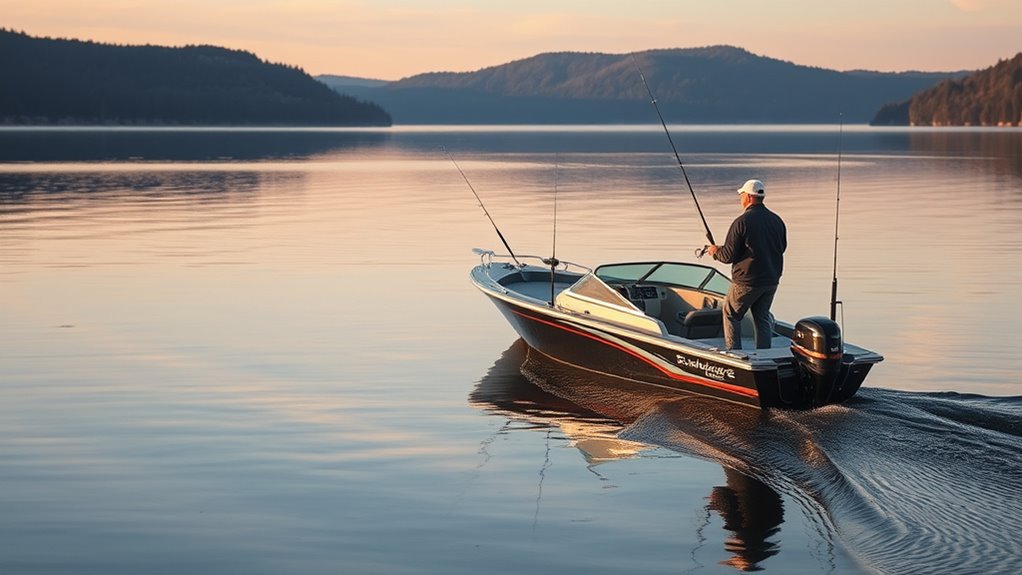
Trolling involves pulling one or more lines with bait or lures behind a moving boat or other watercraft. The boat supplies the forward motion, while lure design, line length, added weight, and speed determine how the presentation behaves in the water.
Fish location matters as much as lure choice. Look for schooling baitfish, diving birds, temperature changes, underwater structure, weed edges, reefs, drop-offs, and current breaks. These clues can help you identify productive locations before spending too much time in empty water. For more detail on how flow changes presentation, see the current speed and fishing guide.
Start with gear that matches the species and lure rather than assuming every trolling setup needs specialized equipment. A secure rod holder and dependable rod-and-reel combination are enough for many simple presentations, while line counters, fishfinders, downriggers, divers, and planer boards add repeatability or control when the situation calls for them.
There is no single trolling-speed range that works across freshwater crankbaits, live bait, salmon gear, tuna lures, and offshore billfish spreads. Watch how the lure runs beside the boat first, then choose a speed that keeps it tracking correctly and adjust from there.
Note: Trolling is not just “dragging a lure.” Speed, lure action, line setback, turning pattern, and depth control work together. Change one major variable at a time so you can identify what produces a strike.
Pros and Cons of Trolling
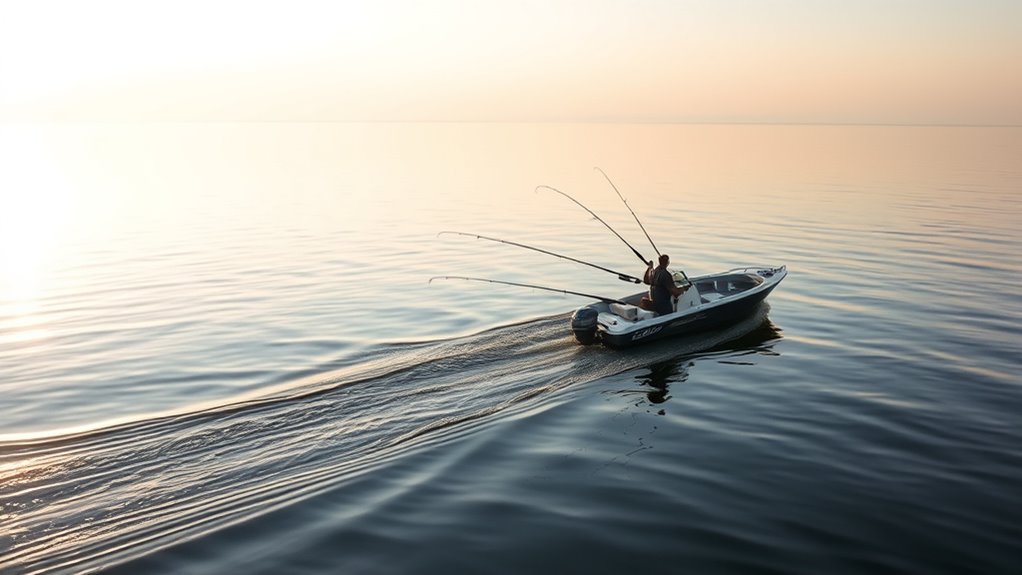
Trolling covers large areas efficiently and can keep lures in a chosen depth zone for long periods. That makes it useful when fish are scattered, suspended, or moving with bait.
You can also test different lure styles, setbacks, and depths at the same time when regulations and boat control allow multiple lines.
The tradeoff is complexity. A one-line flatline setup can be simple, but larger spreads with boards, divers, or downriggers demand more equipment, space, and line management.
Advantages of Trolling
Trolling is especially useful for searching open water because the boat continually moves your lure through new water instead of repeatedly casting to one spot.
Where multiple lines are legal, you can run them at different distances or depths to learn where fish are feeding. Once one combination produces a strike, you can repeat the same speed, depth, setback, and path.
Trolling also gives you a practical way to compare lure presentations. A turn naturally slows the inside line and speeds the outside line, which can reveal whether fish respond better to slower or faster lure action.
Disadvantages of Trolling
Trolling can become expensive if you add multiple rod-and-reel combinations, electronics, planer boards, divers, or downriggers, but those accessories are not required for every trolling method.
Running several lines also increases the risk of tangles and gives the operator more tasks to manage while steering the boat.
Trolling is less precise than casting when fish are concentrated on a very small target. Once you locate a tight school or piece of structure, another presentation may sometimes be more efficient.
Beginners can reduce these drawbacks by starting with one line, learning how speed and setback affect the lure, and adding complexity only when it solves a specific problem.
Warning: Always follow local boating and fishing regulations before trolling. Limits on rods, lines, hooks, seasons, species, motors, and required safety equipment vary by location. The National Park Service trolling guide also advises anglers to check water-specific boating and fishing rules before a trip.
Common Fish Caught by Trolling
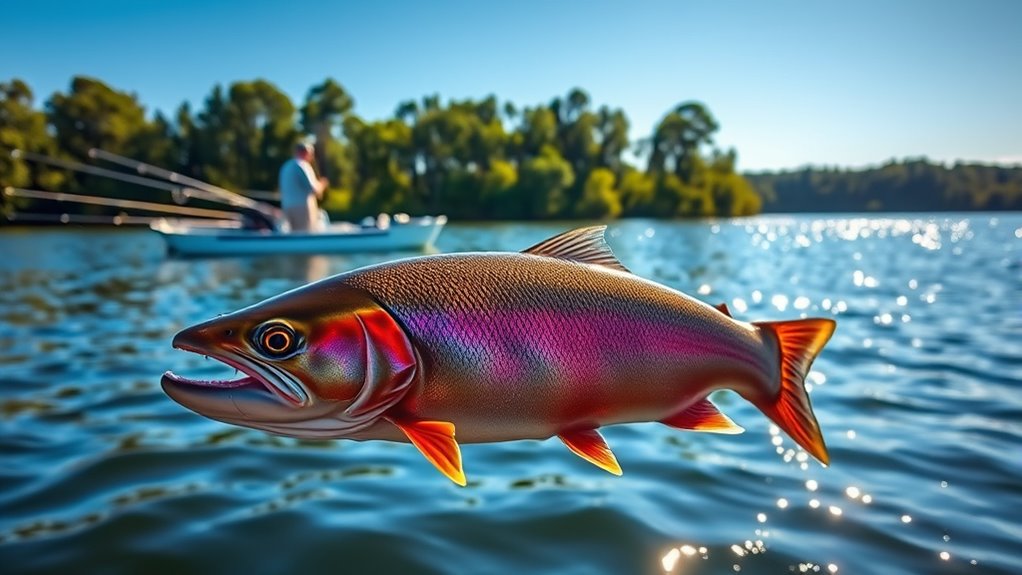
Freshwater trolling can target species such as walleye, lake trout, northern pike, salmon, and several bass species. The useful depth and presentation vary with species, season, temperature, forage, and local conditions.
Saltwater trolling can target tuna, marlin, sailfish, mackerel, striped bass, mahi-mahi, and other predators. Depending on the species, productive water may include bait concentrations, current edges, temperature breaks, weed lines, reefs, drop-offs, or other offshore structure.
Bird activity can reveal feeding baitfish near the surface, while sonar can help identify bait clouds, thermoclines, ledges, points, and suspended fish below the boat.
If you mark fish without getting bites, first make sure the lure is actually running in the same part of the water column. Then adjust speed or presentation before cycling through lure colors and sizes.
Essential Gear for Trolling
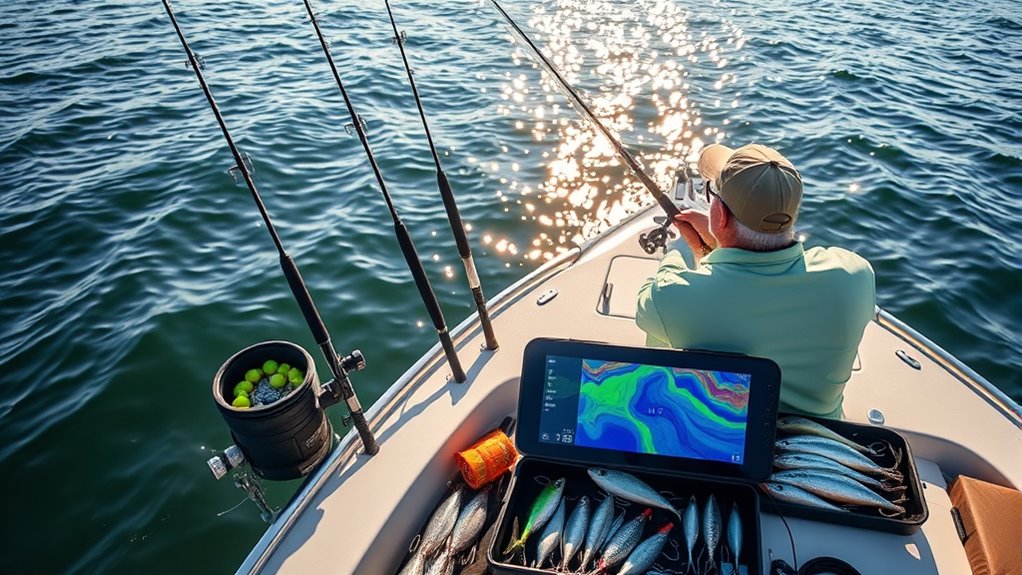
A basic trolling setup does not require every accessory sold for the technique. Start with equipment that lets you control the boat, present one lure safely, and repeat a productive setup.
- Rod and Reel: Choose equipment strong enough for the target species and suitable for the lure or bait being trolled.
- Secure Rod Holder: Keeps the rod angle consistent and prevents a strike from pulling an unattended rod overboard.
- Line and Leader: Match strength and material to the fish, lure, water clarity, and cover.
- Lure or Bait: Choose a presentation that runs correctly at your target depth and speed.
- Line-Counter Reel: Optional but useful for repeating the same amount of line or setback after a productive strike.
- Fishfinder: Optional electronics that can help identify depth, bait, structure, and suspended fish.
- Downrigger: An optional tool for placing a lure at a controlled, repeatable depth in deeper water.
- Planer Board: An optional tool that moves a line horizontally away from the boat to widen the spread.
Other useful equipment can include swivels, release clips, diving devices, snap weights, lead-core line, pliers, and a landing net. The right combination depends on how deep you need to fish and how many lines you can legally and safely manage.
For a first trip, one suitable rod and reel, a secure holder, a few proven lures, and basic boat-safety equipment are enough to learn the fundamentals.
Techniques for Successful Trolling
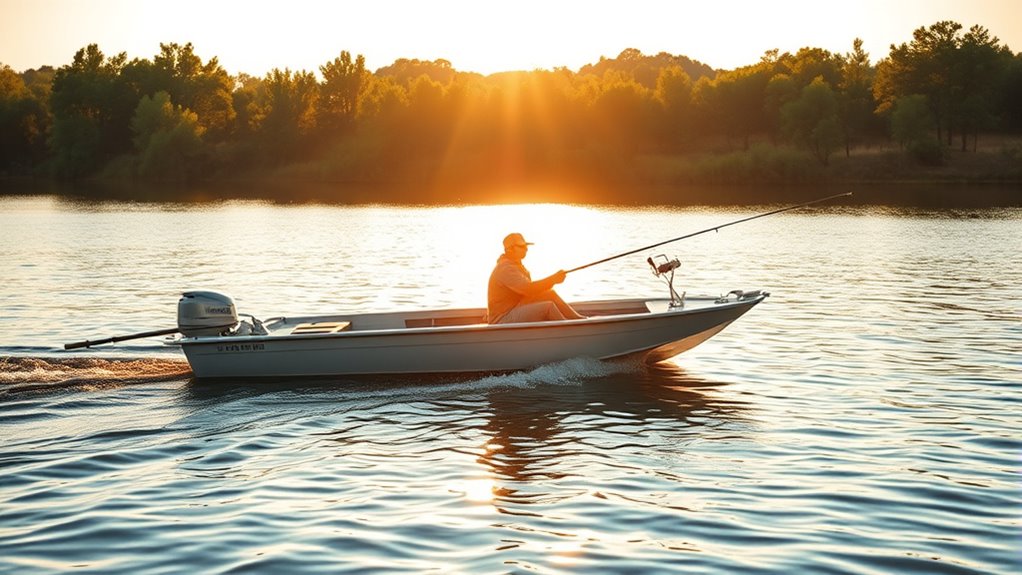
Successful trolling depends on putting a lure where fish can see it while keeping that lure running correctly. Speed and depth therefore need to be adjusted together rather than treated as separate settings.
Start by checking the lure beside the boat. It should track cleanly instead of spinning, rolling, or repeatedly breaking out of the water. Then deploy it to the desired setback and make small speed changes while watching the rod tip and lure behavior.
If the fish are deeper than the lure naturally runs, use an appropriate depth-control method such as added weight, a diving device, weighted line, or a downrigger.
Speed Variation Strategies
There is no universal trolling speed for every lure and species. Use lure action and fish response as your primary feedback, then record the GPS speed so you can repeat a productive pass.
Useful speed-control habits include:
- Check the lure beside the boat before deploying it to make sure it runs cleanly.
- Start with a moderate speed appropriate for the lure and species, then adjust in small steps.
- Use GPS speed for repeatability, but remember that current changes how fast the lure moves through the water.
- Watch the rod tip for changes in lure vibration or action.
- Use gentle turns to vary the speed of the inside and outside lines without making abrupt throttle changes.
Pay close attention during turns. Inside lines usually slow while outside lines speed up. If strikes repeatedly occur on one side during a turn, that can indicate whether fish prefer a slower or faster presentation.
Depth Management Techniques
Depth management means keeping the lure in or near the water layer where fish and bait are holding. Lure design, setback, speed, added weight, line type, and specialized depth-control equipment can all affect running depth.
Downriggers provide precise vertical depth control by lowering a weighted cable and releasing the fishing line when a fish strikes. The National Park Service describes downriggers as one method for placing trolling gear deeper than a basic flatline.
Planer boards serve a different purpose. They move fishing lines horizontally away from the boat, widening the spread and helping separate multiple lines where regulations allow them. Indiana DNR guidance likewise describes planer boards as tools for spreading lines horizontally in a trolling spread: Spring Coho Trolling 101.
Lead-core line can help a lure run deeper without a downrigger. Its color changes let you repeat how much weighted line is deployed, but do not assume every color equals one fixed depth. Actual running depth changes with speed, lure design, leader, line model, and conditions. A Major League Fishing lead-core guide also treats depth-per-color figures as rough approximations rather than exact formulas.
Use electronics, known lure dive information, controlled passes, or contact with known-depth structure to refine your setup. Once a combination produces fish, record the speed, line-out amount, lure, and route so you can repeat it.
Pro Tip: Change only one major factor at a time. Adjust depth, speed, setback, lure size, or color separately so you know which change actually helped.
Choosing Lures and Bait for Trolling
Your lure or bait should match the fish you want to catch, the depth you need to reach, and the forage available in the water. Crankbaits, spoons, plugs, soft plastics, skirted lures, and natural bait can all work when matched to the right situation.
For freshwater trolling, crankbaits and spoons are common choices for species such as walleye, trout, pike, and bass. Match the lure profile to local forage and confirm that it runs correctly at your chosen speed.
For saltwater trolling, plugs, feathers, skirted lures, rigged baits, and spoons can be used for fast-moving predators. Color can be adjusted for visibility and forage, but it should be treated as one variable rather than a guaranteed rule for clear or stained water.
Before sending any lure far behind the boat, watch it beside the boat. If it spins, rolls, or tracks poorly, change speed, inspect the rigging, remove weeds, or correct line twist before continuing. See the artificial bait fishing basics guide for more detail on lure types and presentation.
Trolling Patterns and Boat Control
Boat path changes lure speed, depth, and presentation, so effective trolling involves more than driving in a straight line.
An S-shaped path can help when fish are scattered because every turn changes the relative speed of the inside and outside lines. That gives you information about how fish are responding without changing every lure at once.
Use straighter passes when following a defined weed edge, reef, channel break, or contour. After a strike, mark the location on your GPS and repeat the pass at the same depth and speed before changing the setup. The mapping structure for fishing guide explains how contours and breaklines can be turned into repeatable trolling routes.
Wind and current can make a GPS speed different from the lure’s actual speed through the water. Use GPS for repeatability, but also watch lure action, rod-tip vibration, downrigger cable angle where applicable, and strike response.
How Do You Adjust Trolling When Fish Won’t Bite?
When fish are visible on sonar or you are trolling productive water without strikes, avoid changing everything at once. Use a fixed adjustment order so each pass teaches you something.
- Check lure action: Make sure the lure is clean, free of weeds, and tracking normally.
- Check depth: Put the lure at or near the depth where bait and target fish are holding.
- Adjust speed: Make small changes and watch for cleaner action or strikes.
- Adjust setback or spread: Move the lure closer to or farther from the boat, or change horizontal separation where appropriate.
- Change lure profile: Try a different size, action, or color only after presentation basics are correct.
- Repeat productive settings: When you get a strike, note the location, speed, depth, lure, and amount of line out before making another change.
Getting Started With Trolling
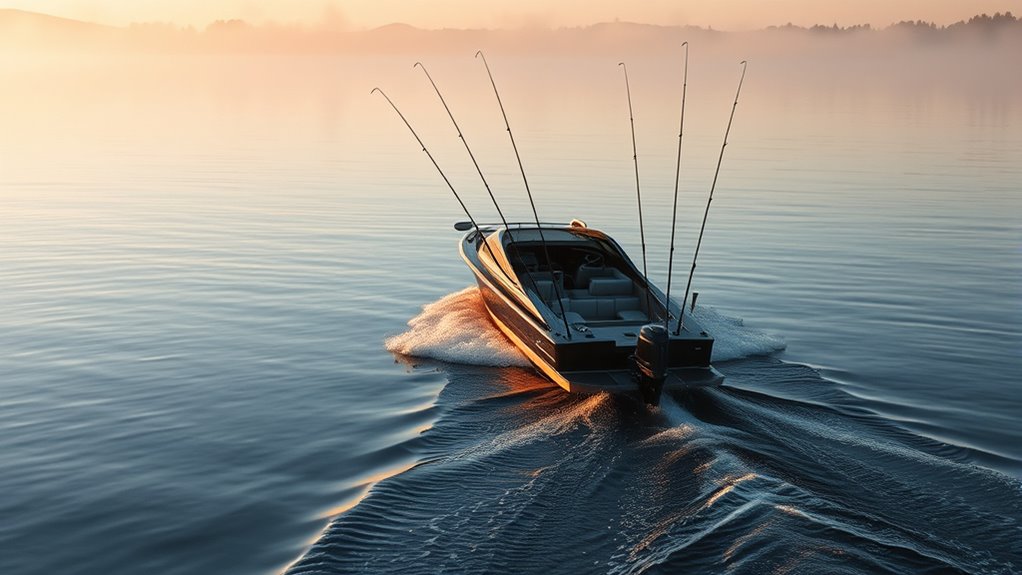
Your first trolling setup should be simple enough that you can steer the boat, watch the water, control the line, and land a fish safely without managing several pieces of specialized equipment at once.
Use this beginner sequence:
- Check local regulations: Confirm fishing licenses, rod or line limits, legal bait, seasons, and boating requirements.
- Start with one line: Add more only where legal and after you can manage a single lure without tangles.
- Check lure action: Run the lure beside the boat before letting it back.
- Set a repeatable setback: Note how much line you let out so a successful presentation can be duplicated.
- Choose speed by lure action: Do not assume one mph or knot figure is ideal for every lure.
- Watch your route: Use sonar, maps, visible structure, bait activity, and safe navigation to choose productive water.
As you gain experience, add line counters, planer boards, divers, lead-core line, or downriggers when they solve a specific depth or spread problem.
When a fish strikes, maintain safe boat control and steady line tension. Depending on the species, spread, current, sea state, and remaining lines, you may continue forward briefly, reduce to idle, clear other lines, turn, or reposition the boat. Keep fishing line away from the propeller and put crew safety ahead of maintaining a particular trolling speed.
After a hookup, protect line tension and boat control first; the correct throttle response depends on the fish, spread, water, and crew.
A simple, repeatable setup will teach you more than a large spread that you cannot control.
Beginner Trolling Mistakes to Avoid
Many beginners struggle because they change too many variables at once or run more equipment than they can comfortably manage. Start simple, record what works, and make controlled adjustments.
- Running too many lines too soon: Extra lines create more opportunities for tangles. Start with one and add more only where legal and manageable.
- Ignoring lure depth: Even an effective lure will struggle if it spends the day well above or below feeding fish.
- Using a fixed speed without checking lure action: Match speed to the lure, species, and conditions instead of relying on one universal number.
- Skipping safety checks: Watch for other boats, floating debris, shallow hazards, changing weather, and fishing line near the propeller.
- Not repeating productive passes: When you get a bite, mark the area and repeat the same speed, depth, and path before changing the setup.
Frequently Asked Questions
What Is Trolling Fishing for Beginners?
Trolling for beginners means pulling a lure or bait behind a moving boat while controlling its speed, depth, and distance from the boat. Start with one legal line, check the lure beside the boat, use a repeatable amount of line, and make one adjustment at a time before adding a larger spread.
What Does It Mean to Troll While Fishing?
Trolling while fishing means moving bait or artificial lures through the water behind a moving boat or other watercraft. Anglers control the lure by adjusting boat speed, line setback, depth, lure choice, and boat path.
What Are Examples of Trolling?
Examples include pulling crankbaits for walleye, spoons for lake trout, plugs for striped bass, or skirted lures and rigged baits for offshore predators. Flatlines, weighted rigs, diving devices, lead-core line, planer boards, and downriggers can all be used in different trolling systems.
How Do You Troll Correctly?
Choose equipment and a lure that match the target species, check that the lure runs correctly, put it at the required depth, and use a controlled boat speed. Keep lines organized, watch your route and surroundings, and record the speed, depth, setback, and location when a setup produces a strike.
What Speed Should You Use When Trolling?
There is no universal trolling speed. The correct speed depends on the lure or bait, target species, current, and conditions. Start at a speed that gives the lure clean, stable action, record the GPS speed for repeatability, and adjust in small steps based on lure behavior and strikes.
Can You Troll Without Downriggers?
Yes. Many anglers troll with flatlines, diving lures, added weights, diving devices, or weighted line. A downrigger is useful when you need precise, repeatable depth control, but it is optional for many trolling methods.
Conclusion
Trolling is a search-and-presentation method built around four main controls: lure action, depth, setback, and boat speed. You do not need a large spread or specialized depth equipment to learn it.
Start with one legal line and a lure that runs correctly. Find fish or productive structure, put the lure at the right depth, and change one variable at a time. When a strike comes, record the speed, depth, line-out amount, and route so you can reproduce the same presentation on the next pass.