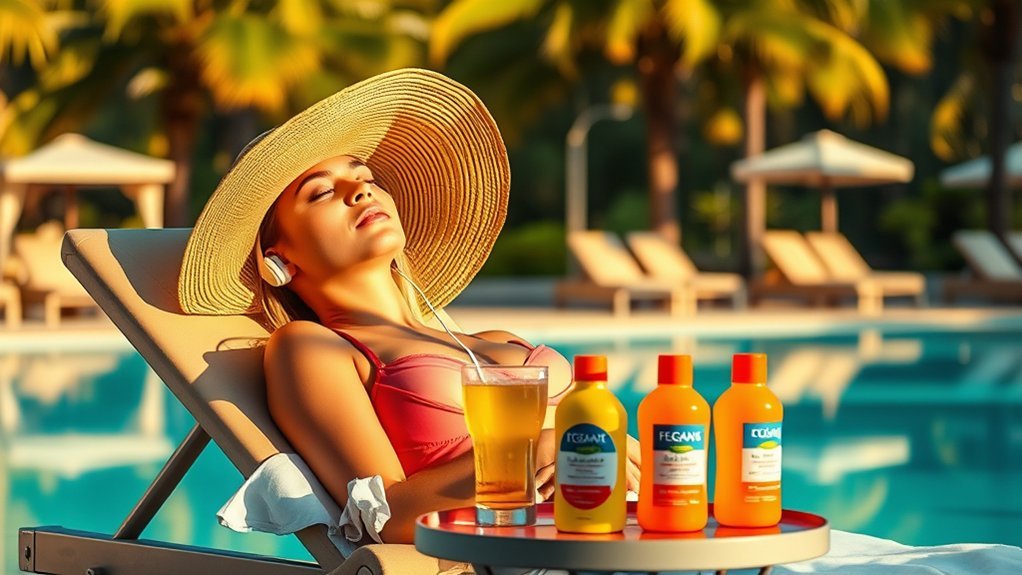
Sunbathing while sleeping may sound relaxing, but you cannot monitor your skin or body temperature once you doze off. This makes an outdoor nap different from spending a few minutes awake in the sun. Understanding the risks, choosing proper protection, and recognizing early warning signs can help you enjoy outdoor relaxation without unnecessary sun damage.
Quick Answer
Sleeping in direct sunlight is not recommended because you may develop sunburn, dehydration, or heat illness without noticing early symptoms. For a safer outdoor nap, choose a cool, well-ventilated shaded area, wear protective clothing, and apply broad-spectrum SPF 30 or higher sunscreen to exposed skin. Do not use sleep as a tanning session.
Key Takeaways
- There is no universal number of minutes that makes unprotected sun exposure safe for every skin type.
- Shade reduces direct sunlight, but reflected UV radiation can still reach your skin.
- Sunscreen requires reapplication and cannot replace protective clothing or a shaded resting area.
- Vitamin D can be obtained through food and supplements without deliberately tanning.
Understanding the Risks of Sunbathing While Sleeping
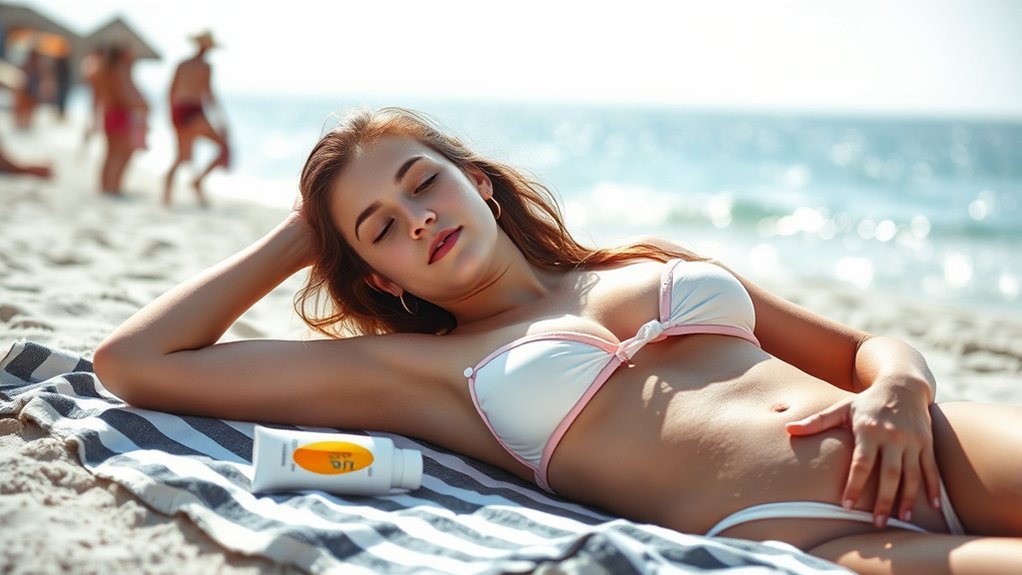
Sleeping in direct sunlight increases the chance of prolonged, unintentional UV exposure. You cannot reliably notice discomfort, move into shade, or reapply sunscreen while asleep.
Ultraviolet (UV) radiation can damage skin cells even before a sunburn becomes visible. Repeated exposure contributes to premature skin aging and increases skin cancer risk.
The Centers for Disease Control and Prevention recommends combining shade, protective clothing, and sunscreen to reduce harmful exposure.
Sleeping outdoors also introduces several immediate risks:
- Sunburn: Skin may become painful, swollen, or blistered after prolonged exposure.
- Dehydration: Sweating causes fluid loss, particularly in hot weather.
- Heat exhaustion: Rising body temperature may cause dizziness, weakness, headache, or nausea.
- Heatstroke: Severe overheating can cause confusion, loss of consciousness, and life-threatening complications.
- Eye irritation: UV radiation can damage exposed eyes.
- Sleep disruption: Heat, bright light, noise, and insect bites can make outdoor rest uncomfortable.
Fair skin often burns more readily, but people with every skin tone can experience UV damage.
Warning: Never rely on sunscreen alone to make sleeping in direct sunlight safe. If you become unusually sleepy, dizzy, confused, or overheated, move to a cool location immediately. Confusion or loss of consciousness during heat exposure requires emergency medical care.
Choosing the Right Sunscreen for Sunbathing
The best sunscreen for outdoor relaxation offers broad-spectrum protection, SPF 30 or higher, and water resistance. Choose a formula you can apply generously and comfortably.
Sunscreen reduces UV exposure, but no product blocks every harmful ray. It works best alongside shade and clothing.
Types of Sunscreen Formulations
Sunscreens come in lotions, creams, sprays, sticks, and gels. Each offers a different application experience.
- Lotions and creams: Useful for covering larger areas of skin evenly.
- Sprays: Convenient for difficult-to-reach areas, but require careful application and rubbing in.
- Sticks: Helpful around the face and other smaller areas.
- Gels: Often preferred for oily skin or areas with body hair.
Mineral sunscreens contain zinc oxide, titanium dioxide, or both. These ingredients absorb UV radiation and also reflect some rays.
Other sunscreen ingredients provide protection mainly by absorbing UV radiation. Both mineral and chemical formulations can work effectively.
Mineral products are often recommended for sensitive skin. The American Academy of Dermatology recommends choosing a broad-spectrum, water-resistant product with SPF 30 or higher.
SPF Ratings Explained
Sun Protection Factor (SPF) measures protection against sunburn caused primarily by UVB radiation. A higher number provides greater protection when sunscreen is applied correctly.
SPF 30 blocks approximately 97% of UVB rays, while SPF 50 blocks approximately 98%.
These figures do not mean you can safely stay outdoors for 30 or 50 times longer. UV intensity, the amount applied, sweating, and water exposure all affect protection.
Look for the words broad spectrum to confirm that the product protects against both UVA and UVB radiation.
The FDA’s sunscreen guidance explains that water-resistant products are tested for either 40 or 80 minutes of protection during swimming or sweating.
No sunscreen is waterproof or sweatproof. Check the expiration date, and replace products that have expired or deteriorated after prolonged heat exposure.
Application Techniques for Effectiveness
Proper application matters as much as the SPF number. Applying too little sunscreen leaves your skin less protected than the label suggests.
- Apply sunscreen to dry skin approximately 15 minutes before going outdoors.
- Use about one ounce for an average adult’s exposed body, adjusting for body size and clothing coverage.
- Cover your neck, ears, face, shoulders, tops of feet, and other exposed areas.
- Use an SPF 30 or higher lip balm to protect your lips.
- Reapply approximately every two hours while outdoors.
- Reapply after swimming, sweating, or towel drying, following the product’s label.
For spray sunscreen, apply enough to cover the skin evenly and rub it in. Avoid inhaling the spray or applying it near an open flame.
If you plan to sleep outdoors, apply protection before settling down. Do not depend on waking naturally when sunscreen needs reapplication.
Must-Have Gear for Safe Sunbathing and Napping
A comfortable outdoor nap starts with reliable shade, airflow, and protection from reflected sunlight. The goal is to create a resting area that remains protected as the sun moves.
Useful equipment includes:
- Beach umbrella: Provides portable shade when secured properly.
- UV-protective canopy or tent: Offers a larger shaded area for resting.
- Breathable beach towel or mat: Creates a comfortable surface without trapping excessive heat.
- Sun-protective clothing: Covers exposed skin without requiring repeated sunscreen application underneath.
- Wide-brimmed hat: Shields the face, ears, and neck.
- UV-protective sunglasses: Help protect your eyes during outdoor activities.
- Insulated water bottle: Keeps drinking water nearby.
For clothing and fabric shelters, look for an ultraviolet protection factor (UPF) label. Tightly woven fabrics generally provide better protection than loose, thin material.
A specialized mat or blanket may improve comfort, but it should not be treated as a substitute for shade.
Remember that sand, water, pavement, and other reflective surfaces can redirect UV radiation into shaded areas.
Choose a well-ventilated shelter rather than an enclosed space that traps heat. Position your belongings securely so they cannot blow away or collapse onto you.
When Is the Best Time to Sunbathe for Vitamin D?
UVB radiation helps your skin produce vitamin D, and its intensity generally increases around midday. However, this is also when UV exposure can cause skin damage more quickly.
There is no universal exposure time that guarantees adequate vitamin D without increasing skin cancer risk.
The American Academy of Dermatology’s vitamin D guidance recommends obtaining vitamin D through dietary sources rather than deliberately exposing unprotected skin to UV radiation.
If your goal is outdoor relaxation, early morning or late afternoon generally offers lower UV intensity than midday. In the continental United States, UV radiation is typically strongest between 10 AM and 4 PM during daylight saving time.
Actual exposure depends on several factors:
- Season and geographic location.
- Cloud cover and atmospheric conditions.
- Altitude and surrounding reflective surfaces.
- Skin pigmentation and age.
- The amount of skin exposed.
- Use of sunscreen and protective clothing.
Clouds do not eliminate UV exposure. Even on overcast days, substantial UV radiation can reach the ground.
For outdoor planning, pay attention to the UV Index. When it reaches 3 or higher, take precautions against excessive exposure.
People living closer to the equator may experience stronger UV radiation, but that does not make prolonged unprotected exposure advisable.
Sunlight passing through ordinary window glass also does not provide the UVB exposure needed for vitamin D production.
Understanding Your Skin Type for Safe Sunbathing
Your skin type affects how readily you burn or tan, but it does not determine a guaranteed safe period of unprotected exposure.
People with lighter skin often develop visible burns sooner. Darker skin contains more melanin, which provides some natural protection, but does not eliminate UV damage or skin cancer risk.
Skin Type Variations
The Fitzpatrick scale describes six skin types based on their typical responses to sunlight.
Types I and II burn easily, while Types III and IV generally tan more readily. Types V and VI contain more natural pigmentation and are less likely to develop a typical visible sunburn.
However, a tan is a response to UV exposure, not proof that the skin has become resistant to damage.
Skin type should guide your level of caution rather than encourage longer tanning sessions.
Sun Sensitivity Awareness
Sun sensitivity can vary even among people with similar skin tones. The Fitzpatrick categories describe typical reactions, not exact limits for outdoor exposure.
The following table summarizes the first four categories using the NIH-hosted Fitzpatrick classification.
| Skin Type | Typical Response to UV Exposure |
|---|---|
| Type I (Very Fair) | Always burns; does not tan |
| Type II (Fair) | Burns easily; tans minimally |
| Type III (Light Brown) | Burns moderately; tans gradually |
| Type IV (Olive) | Burns minimally; tans readily |
Type V skin rarely burns and tans deeply. Type VI skin has the greatest natural pigmentation and is least sensitive to visible burning.
These descriptions do not replace sun protection for any skin type.
Some medications and skin treatments can also increase sensitivity. Examples include certain antibiotics, diuretics, retinoids, and exfoliating skin products.
If you use medication that may cause photosensitivity, ask your pharmacist or healthcare professional about additional precautions.
Stay Hydrated: Essential Tips for Sunbathing
Hydration helps your body regulate temperature during outdoor activities. However, drinking water does not make prolonged exposure to extreme heat safe.
Fluid needs vary with temperature, humidity, activity level, sweating, and individual health conditions.
Drink water before going outdoors and continue drinking regularly. Keep a bottle within reach, especially when relaxing at a beach or park.
During extended periods of heavy sweating, beverages containing electrolytes may help replace lost minerals.
Avoid alcohol during hot-weather activities, and limit drinks containing large amounts of caffeine or sugar.
According to the CDC’s heat illness guidance, dehydration and excessive salt loss contribute to heat exhaustion.
Watch for headache, dizziness, nausea, weakness, unusual thirst, or reduced urination.
If these symptoms appear, stop the activity, move into a cooler area, and begin cooling down. Do not return to direct sunlight while symptoms continue.
How to Spot Sunburn and Skin Reactions
Sunburn and other skin reactions may develop during exposure or become noticeable afterward. Recognizing the differences helps you respond appropriately.
Common problems include sunburn, heat rash, and polymorphous light eruption, a condition involving an abnormal skin reaction to sunlight.
Recognizing Sunburn Symptoms
Sunburn usually causes skin inflammation, tenderness, and warmth. Symptoms may become more noticeable several hours after excessive UV exposure.
Signs include:
- Redness or a change in skin color.
- Warmth and tenderness.
- Swelling or itching.
- Blistering in more severe cases.
- Peeling as damaged skin heals.
On darker skin, redness may be less obvious. Tenderness, warmth, swelling, and changes in pigmentation can still indicate damage.
If you develop sunburn, move indoors or into reliable shade immediately.
The American Academy of Dermatology’s sunburn treatment advice recommends cool baths or showers, soothing moisturizer, extra water, and leaving blisters intact.
Aloe vera or soy-based moisturizer may ease discomfort. Avoid deliberately exposing damaged skin to more sunlight while it heals.
Seek medical advice for extensive blistering, worsening symptoms, or signs of infection.
Identifying Skin Rashes
Not every rash that develops outdoors is sunburn. Heat, sweating, and sunlight sensitivity can produce different reactions.
Heat rash develops when sweat becomes trapped in the skin. It often causes clusters of small, itchy bumps or blisters, especially in hot and humid conditions.
Polymorphous light eruption (PMLE) is a sunlight-triggered rash that may appear as itchy patches, bumps, or small blisters.
PMLE often occurs after renewed sun exposure in spring or early summer, when the skin has had less recent exposure.
Move to a cooler area if a rash develops. Keep irritated skin protected and seek medical advice if symptoms persist, worsen, or repeatedly return.
Monitoring Long-Term Effects
UV damage can accumulate over time, even when exposure does not produce an obvious burn.
Regularly examine your skin for new growths, unusual spots, or changes in existing moles.
Changes in size, shape, color, or appearance deserve attention from a dermatologist.
Keeping a simple record of outdoor exposure and skin reactions may also help you identify patterns, particularly if you have sensitive skin.
If you experience recurring sunburn or unexplained rashes, discuss your symptoms with a healthcare professional rather than attempting to build tolerance through repeated exposure.
Can Gradual Sun Exposure Help You Build a Safe Tan?
Gradually increasing UV exposure does not make tanning harmless. A tan indicates that your skin has responded to radiation, and repeated exposure can cause cumulative damage.
Although skin may become more accustomed to sunlight, this does not provide reliable protection against sunburn or skin cancer.
If you enjoy spending time outdoors, focus on protected exposure instead of extending tanning sessions.
- Choose lower-UV periods for outdoor relaxation when practical.
- Wear broad-spectrum sunscreen and protective clothing.
- Use shade instead of lying directly beneath the sun.
- Stop outdoor activity if your skin becomes uncomfortable or irritated.
Do not use redness or burning as a signal that you have reached an appropriate tanning duration. Skin damage may already have occurred before these symptoms appear.
For a tanned appearance without deliberate UV exposure, consider a self-tanning lotion or bronzer.
Self-tanning products do not automatically provide UV protection, so sunscreen remains necessary outdoors.
Creating a Comfortable Setup for Napping Outdoors
A good outdoor nap setup should prioritize shade, ventilation, and a comfortable resting surface. Avoid positioning yourself in direct sunlight simply to feel warmer.
Use the following practical setup:
- Select a shaded location away from intense reflected sunlight.
- Position a secure umbrella or canopy so your resting area remains covered.
- Place a breathable towel or mat on a clean, dry surface.
- Wear lightweight protective clothing and a wide-brimmed hat when appropriate.
- Keep drinking water nearby.
- Check that the shelter has adequate airflow.
- Use a comfortable sleep mask if excess light makes resting difficult.
- Set an alarm so your nap does not extend unexpectedly.
A sleep mask can improve comfort, but it does not replace shade or appropriate eye protection while awake.
Check the position of the shade before settling down. The sun moves throughout the day, and a protected area can become exposed later.
Also consider nearby insects, uneven ground, and the stability of your umbrella or shelter.
Pro Tip: Before lying down, check whether your entire resting surface remains shaded. A canopy that covers your head but leaves your legs or feet exposed may still allow a painful sunburn.
If the weather is extremely hot or humid, choose an indoor, air-conditioned resting area instead.
Alternatives to Sunbathing: Safe Ways to Get Vitamin D
You do not need to deliberately tan or sleep in sunlight to obtain vitamin D. Food and appropriate supplements provide alternatives without unnecessary UV exposure.
Vitamin D supports calcium absorption, bone health, and normal muscle function.
Useful dietary sources include:
- Fatty fish, such as salmon, trout, tuna, and mackerel.
- Vitamin D-fortified milk and certain plant-based milk alternatives.
- Fortified breakfast cereals and selected dairy products.
- Egg yolks, which contain smaller amounts.
- UV-exposed mushrooms, which can provide vitamin D2.
The NIH Office of Dietary Supplements lists recommended daily intakes of 600 IU for adults aged 19–70 and 800 IU for adults aged 71 and older.
These recommendations cover vitamin D from food and supplements and are not instructions to obtain a specific amount through sunlight.
Vitamin D supplements are available in D2 and D3 forms. Both can increase vitamin D levels, although D3 may raise them more effectively and for longer.
UV lamps marketed for tanning should not be used as a routine vitamin D strategy. Artificial tanning devices expose the skin to radiation that can increase cancer risk.
Note: If you suspect vitamin D deficiency, have limited sun exposure, or have a medical condition affecting vitamin D absorption, discuss testing and supplementation with a healthcare professional. Routine blood testing is not necessary for every healthy adult, and excessive supplementation can cause harm.
Frequently Asked Questions
How Long Do You Have to Be in the Sun to Get 100% Vitamin D?
There is no fixed amount of sunlight that guarantees your daily vitamin D requirement. Production varies with skin pigmentation, age, season, location, and UV intensity. Deliberate unprotected exposure is not recommended as a reliable vitamin D strategy. Food and supplements can help meet your nutritional needs.
What Is 10 Minutes in a Tanning Bed Equal To?
Ten minutes in a tanning bed cannot be converted into a universal number of minutes outdoors. UV intensity and the balance of UVA and UVB radiation vary between devices and natural sunlight. Both can damage skin and increase cancer risk. A shorter tanning session is not automatically safe.
Is It Better to Lay Out in the Sun or Go to a Tanning Bed?
Neither deliberate outdoor tanning nor tanning-bed use is a risk-free option. Both expose your skin to harmful UV radiation. Outdoor relaxation can be enjoyed with shade, protective clothing, and sunscreen. If your goal is a darker appearance, a sunless tanning product avoids the deliberate UV exposure involved in either method.
What Do 20 Minutes of Sunshine Do to Your Body?
Twenty minutes of sunshine may support vitamin D production and provide an opportunity for outdoor relaxation. However, the amount of vitamin D produced cannot be predicted from time alone. Depending on UV intensity and skin type, the same exposure may also cause damage. Use appropriate sun protection rather than treating 20 minutes as a guaranteed safe limit.
Can You Get Sunburned While Sleeping in the Shade?
Yes, sunburn is still possible in the shade. UV radiation can reach your skin through gaps in shelter or reflect from nearby surfaces. The sun’s changing position can also expose an area that was initially shaded. Combine shade with clothing and sunscreen for better protection.
Can You Sleep Outdoors After Applying SPF 50 Sunscreen?
SPF 50 sunscreen does not make sleeping in direct sunlight safe. It reduces UV exposure when applied correctly, but protection decreases with time, sweating, and contact with water. You also remain vulnerable to overheating and dehydration. Choose a cool shaded area for outdoor sleep.
Conclusion
Sunbathing while sleeping creates avoidable risks because you cannot respond to increasing UV exposure or rising body temperature. The American Academy of Dermatology estimates that approximately one in five Americans will develop skin cancer during their lifetime, reinforcing the value of consistent protection.
For a comfortable outdoor nap, choose shade, maintain airflow, stay hydrated, and protect exposed skin. Obtain vitamin D through appropriate dietary sources rather than relying on intentional tanning. These precautions allow you to enjoy outdoor relaxation while reducing unnecessary health risks.
Sources
- Centers for Disease Control and Prevention — Sun Safety Facts: UV exposure risks, shade, clothing, sunscreen, and sun protection.
- American Academy of Dermatology — Sunscreen FAQs: SPF recommendations, application amounts, skin cancer risk, and sunscreen formulations.
- U.S. Food and Drug Administration — Sun Safety: Sunscreen labeling, water resistance, and UV protection.
- U.S. Surgeon General — Fitzpatrick Skin Type Classification: Typical burning and tanning responses across skin types.
- American Academy of Dermatology — Vitamin D: Vitamin D guidance and the risks of intentional UV exposure.
- NIH Office of Dietary Supplements — Vitamin D: Recommended intake, dietary sources, and supplements.
- CDC/NIOSH — Heat-related Illnesses: Heat exhaustion, heatstroke, dehydration, and warning signs.
- American Academy of Dermatology — How to Treat Sunburn: Sunburn symptoms, treatment, and blister care.
