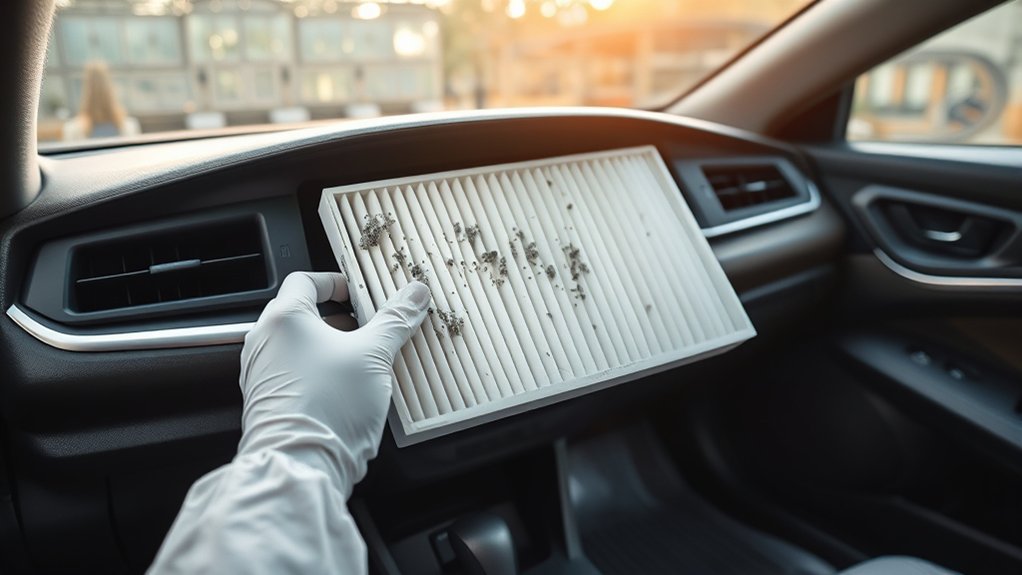
Toyota Camry cabin air filter replacement is usually a short DIY maintenance job, but the service interval and glove-box access method vary by model year. Check the maintenance guide for your exact Camry before starting. Toyota’s 2024 U.S. Camry and Camry Hybrid guides list replacement at 10,000 miles or 12 months, while Toyota’s 2025 U.S. Camry maintenance chart also marks the cabin air filter for replacement at 10,000-mile intervals. Inspect sooner after unusually dusty, smoky, high-pollen, or debris-heavy driving.
Last updated: September 11, 2026 — maintenance guidance rechecked against Toyota’s 2024 and 2025 U.S. guides.
Quick Answer
Check the maintenance guide for your exact Toyota Camry model year. Toyota’s 2024 U.S. Camry and Camry Hybrid schedules call for cabin air filter replacement at 10,000 miles or 12 months, and Toyota’s 2025 U.S. Camry maintenance chart also marks replacement at 10,000-mile intervals. Inspect sooner when driving conditions load the filter quickly or airflow becomes noticeably weaker.
Key Takeaways
- Use your exact model-year maintenance guide rather than a universal mileage rule.
- Weak vent airflow, a visibly loaded filter, or recurring debris are practical reasons to inspect it.
- Musty odors and fogging can involve the filter, but they may also indicate moisture, drainage, or other HVAC problems.
- Many Camry cabin filters are accessible in the glove-box area, but the exact access method can vary by model year.
- Install the correct filter in the marked direction and make sure the cover and glove box are fully secured.
At a Glance
| Time Required | About 5–15 minutes for many Camry model years |
| Difficulty | Easy, provided the glove box and filter cover release normally |
| Tools Needed | Often none; gloves and a flashlight are useful. Use a screwdriver only if your model-year procedure requires one. |
| Cost | The filter price if you do it yourself; professional service adds labor. Cost varies by model year, media type, seller, and location. |
What Is a Cabin Air Filter and What Does It Do in a Toyota Camry?
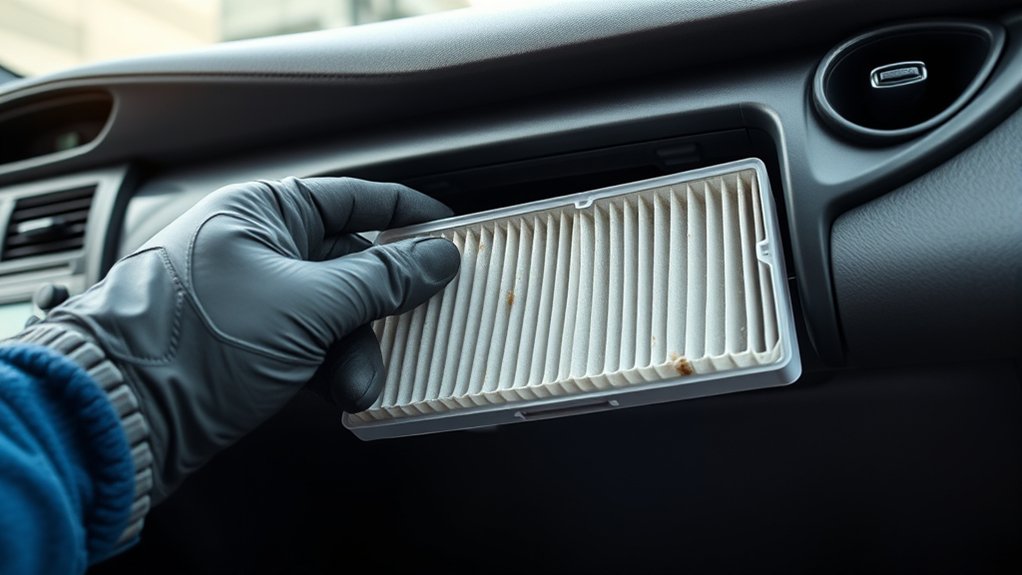
The cabin air filter cleans air entering the passenger compartment through the heating, ventilation, and air-conditioning system. Depending on the filter media, it can capture dust, pollen, leaves, road grit, and other airborne particles before they reach the vents.
On many Toyota Camry model years, the filter housing is behind the glove compartment. The exact access method can vary, so consult Toyota’s manuals and warranties lookup for your vehicle before forcing any panel or glove-box component.
Note: The cabin air filter is not the engine air filter. The cabin filter serves the passenger-compartment HVAC system, while the engine filter cleans air entering the engine.
Why Regular Cabin Air Filter Replacement Matters
As debris accumulates, airflow resistance can increase. You may notice less air from the vents at the same fan setting, especially when the filter is heavily loaded. Replacing it at the appropriate service interval helps the HVAC system move air as designed and can improve heating, cooling, and defroster airflow.
A dirty or damp filter may also contribute to stale or musty smells. However, odor can come from other sources, including leaves in the intake, moisture on the evaporator, a blocked condensate drain, spilled liquids, or damp carpeting. Treat the filter as one part of the diagnosis rather than assuming it is always the cause.
The correct replacement interval is the one listed for your Camry’s model year—not a single mileage figure applied to every generation.
How Often Should You Replace a Toyota Camry Cabin Air Filter?
Start with the maintenance schedule for your exact year, powertrain, and market. Toyota lets owners select their vehicle through its official manual portal.
For example, the official U.S. 2024 Camry Warranty & Maintenance Guide and 2024 Camry Hybrid Warranty & Maintenance Guide list cabin air filter replacement at the 10,000-mile or 12-month service. Toyota’s 2025 Camry Warranty & Maintenance Guide also marks cabin air filter replacement at 10,000-mile intervals. The 2025 guide notes that heavy traffic, dirt roads, and urban, desert, or dusty conditions may shorten filter life and require more frequent replacement. Always use the schedule for your own model year rather than assuming these examples apply unchanged to every Camry.
| Driving Situation | Recommended Approach |
|---|---|
| Normal use | Follow the mileage and time interval in the exact model-year maintenance guide. |
| Heavy traffic, smoke, pollen, or industrial dust | Inspect between scheduled services. Replace early if the media is heavily loaded, damaged, damp, or causing a meaningful airflow restriction. |
| Dirt roads, construction areas, or unusually dusty travel | Inspect after substantial exposure rather than relying on an unsupported universal 5,000- or 10,000-mile rule. |
| Low annual mileage | Do not ignore the time interval in the maintenance guide merely because the mileage is low. |
Replace Now or Inspect?
- Replace now: The filter is due under the exact maintenance schedule, heavily loaded, wet, torn, crushed, or clearly restricting airflow.
- Inspect and reassemble: The filter is only lightly dusty, remains dry and undamaged, is not yet due, and airflow is normal.
- Diagnose beyond the filter: Odor, fogging, weak airflow, or poor temperature control continues after a correctly installed replacement.
Signs That Your Cabin Air Filter May Need Replacement
Service intervals are the starting point, but the filter’s condition and the vehicle’s symptoms also matter. The following signs justify an inspection.
Reduced Airflow From the Vents
A heavily restricted filter can reduce airflow at every fan speed. Compare the airflow with what you normally experience, and check whether all vents are affected. If only one vent is weak or the fan does not respond correctly to speed changes, the problem may involve a duct, actuator, blower motor, resistor, control module, or electrical fault rather than the filter alone.
Unpleasant Odors Inside the Cabin
A musty or stale smell when the fan starts can justify inspecting the filter for damp debris or contamination. Replace a wet, damaged, or badly soiled disposable filter. If the odor remains after replacement, inspect the air intake and have the evaporator, condensate drain, carpeting, and possible water leaks evaluated.
Reduced Defogging Performance
A clogged filter may weaken the volume of air reaching the windshield, which can slow clearing. It does not automatically explain why moisture is present. Persistent fogging may also involve wet floor mats, a water leak, recirculation mode, high cabin humidity, a heater-core problem, or another HVAC fault.
Visible Dirt, Damage, or Debris
Replace the filter if the media is torn, crushed, wet, mold-stained, or packed with debris. Color alone is not always decisive because some filters are manufactured with dark carbon media, and ordinary use can discolor a filter before it becomes severely restricted.
Warning: Do not rely on a cabin filter to make smoke, exhaust, chemical fumes, or other hazardous air safe. Close the windows, use recirculation when appropriate, leave the affected area when possible, and follow local public-health or emergency guidance.
How to Check the Condition of Your Cabin Air Filter
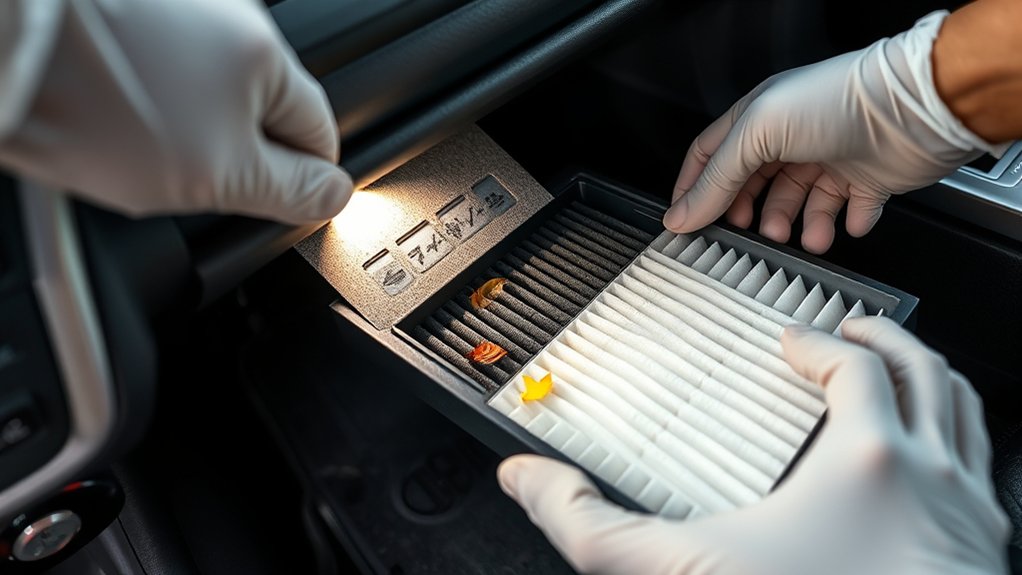
Inspecting the filter takes only a few minutes on many Camry models. Work with the vehicle parked, the ignition off, and the blower switched off.
Visual Inspection
- Confirm the filter location and glove-box procedure for your model year.
- Empty the glove box so its contents do not fall out.
- Access the filter housing using the procedure for your model year. If the glove box must be lowered, detach its damper arm first if equipped and release the stops gently. If your model uses an access cover within the glove-box area, open that cover as directed in the vehicle information.
- Open the filter housing and note the old filter’s orientation before removal.
- Check for leaves, insects, dust buildup, wet areas, tears, collapsed pleats, and damaged seals.
A lightly dusty filter may still be usable if it is within its service interval and airflow remains normal. Replace it when it is heavily loaded, damaged, wet, or due according to the maintenance schedule.
Airflow Test
After reassembly, start the vehicle and compare airflow at low, medium, and high fan settings. Listen for rubbing, fluttering, whistling, or a loose-cover rattle. A new filter should sit flat and should not be pulled into the blower opening.
Odor and Symptom Check
| Symptom | Possible Cause | Next Step |
|---|---|---|
| Weak airflow from all vents | Loaded filter, blocked intake, blower problem, or restricted evaporator | Inspect the filter first, then diagnose the HVAC system if airflow remains weak. |
| Musty odor when the fan starts | Damp filter, leaves, evaporator moisture, drain issue, or wet interior | Replace a contaminated filter and investigate moisture if the smell remains. |
| Windows clear slowly | Low airflow, high humidity, wet carpet, recirculation use, or HVAC fault | Inspect the filter, switch to fresh-air mode when appropriate, and check for moisture sources. |
| Strong airflow but air is not cold | Air-conditioning or temperature-control problem rather than filter restriction | Have the A/C system diagnosed; replacing the cabin filter may not correct the temperature. |
Step-by-Step Guide: How to Replace a Toyota Camry Cabin Air Filter
Many Camry owners can complete this job without specialized equipment. Before beginning, obtain a filter specifically listed for the vehicle’s year, model, and applicable configuration. Glove-box and filter-cover access can vary by model year, so confirm the applicable procedure before releasing panels, stops, or dampers.
Tools and Supplies Needed
- Correct replacement filter: Toyota Genuine or a reputable equivalent that matches the exact application.
- Gloves: Helpful when handling a dirty filter and loose debris.
- Flashlight: Useful for inspecting the housing and cover.
- Small vacuum with a narrow attachment: Optional for loose leaves and debris outside the blower opening.
- Screwdriver: Only if the model-year procedure specifically requires one; do not pry plastic parts unnecessarily.
Installation Step-by-Step Guide
- Confirm the part and procedure. Match the replacement filter to the Camry’s year and configuration. Review the owner information for the glove-box and filter-cover design.
- Park and switch off the HVAC system. Set the parking brake, turn off the ignition, and empty the glove box.
- Access the filter housing using the model-year procedure. If your Camry requires lowering the glove box, disconnect its damper if equipped and release the stops gently. If access is through a cover within the glove-box area, open that cover as directed in the vehicle information. Do not force either design.
- Remove the filter cover. Release its tabs or clips by hand. Stop if the cover does not move normally; hidden screws or a different release method may apply to that model year.
- Record the old filter’s orientation. Take a photo before removal. Note whether the marking says UP or AIR FLOW.
- Remove the old filter slowly. Keep it level so leaves and dust do not spill into the blower housing.
- Remove accessible loose debris. Vacuum loose material near the housing opening. Do not push tools deep into the HVAC case or allow debris to fall into the fan.
- Install the new filter. A filter marked UP should have that arrow facing upward. A filter marked AIR FLOW must point in the actual airflow direction shown by the housing, manual, or filter instructions. Do not assume those two markings mean the same thing.
- Check the fit. The filter should sit flat without crushed pleats, curled seals, or gaps around the edges.
- Reinstall the cover and glove box. Engage every cover tab, return any released glove-box stops to position, and reconnect the damper arm if equipped.
- Test the system. Run the fan through several speeds and check for normal airflow, unusual noise, or a loose cover.
Pro Tip: Photograph the old filter and housing markings before removal. This provides a reliable reference if the replacement filter uses different wording or arrow symbols.
Common Mistakes to Avoid When Replacing Your Cabin Air Filter
- Buying by model name alone: Verify the year, applicable trim or powertrain information, dimensions, and part application before opening the package.
- Confusing “UP” with “AIR FLOW”: “UP” describes physical orientation. “AIR FLOW” describes the direction in which air passes through the filter.
- Forcing the glove box: Check for a damper arm, stop, screw, access cover, or alternate release method before applying more pressure.
- Dropping debris into the blower: Remove the old filter slowly and clean only accessible areas.
- Crushing the new filter: Bent pleats or rolled seals can create gaps, noise, or excess restriction.
- Washing a disposable filter: Water can damage ordinary pleated media. Clean a filter only when its manufacturer explicitly identifies it as reusable and provides cleaning instructions.
- Assuming every odor is filter-related: Persistent odor may require evaporator, drain, intake, leak, or interior-moisture diagnosis.
- Assuming OEM is the only acceptable choice: Toyota Genuine filters are designed for the vehicle, but a reputable exact-fit equivalent may also be suitable. Avoid poorly fitting or excessively restrictive products.
- Ignoring the service guide: Online mileage rules do not replace the schedule for the exact model year.
Cost of Cabin Air Filter Replacement: What to Expect
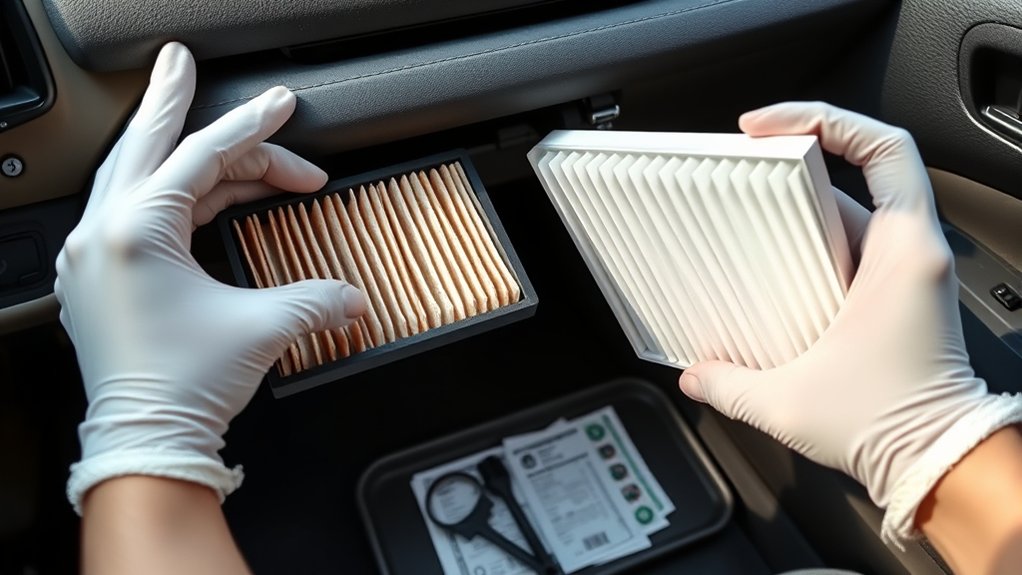
The total cost depends on the Camry’s model year, the filter brand and media, local pricing, taxes, and whether you perform the work yourself. A DIY replacement normally involves only the filter purchase because many installations require no special tools.
A professional quote may include the filter, labor, shop supplies, inspection fees, or additional HVAC services. Ask for an itemized estimate so you can distinguish a simple cabin-filter replacement from unrelated cleaning, deodorizing, or diagnostic work.
| Option | What You Pay For | What to Check |
|---|---|---|
| DIY replacement | Replacement filter and any optional basic supplies | Exact fit, return policy, media type, and arrow markings |
| Independent shop | Filter plus labor and any disclosed shop charges | Itemized quote and filter brand |
| Toyota dealer | Toyota Genuine part, labor, and any separately authorized services | Current service offer, part number, and whether extra HVAC work is included |
Standard vs. Activated Carbon Cabin Air Filters: Which Is Right for You?
Choose a filter that fits correctly and provides acceptable airflow. The best media depends on the environment, odor sensitivity, budget, and the filter manufacturer’s specifications.
| Filter Type | Primary Benefit | Limitations | Best Fit |
|---|---|---|---|
| Standard particulate filter | Captures dust, pollen, and other particles according to the media’s design | Limited odor and gas control | Drivers seeking a basic, exact-fit replacement |
| Activated-carbon filter | Adds carbon media intended to reduce some odors and gaseous contaminants | Performance varies and declines as the carbon becomes saturated; it does not remove every gas or hazard | Urban traffic, recurring nuisance odors, or drivers who prefer added odor control |
| Multi-layer or high-efficiency filter | May provide finer particle capture or combined particulate and carbon media | Quality and airflow resistance vary; marketing terms are not always directly comparable | Drivers who have verified fit, performance specifications, and HVAC compatibility |
Note: A premium label does not compensate for poor fit. A filter that leaves gaps, collapses, or restricts airflow excessively is not a good choice for the vehicle.
What Happens If You Don’t Replace Your Cabin Air Filter?
As a disposable filter loads with debris, several problems may develop:
- Vent airflow may gradually decrease.
- Heating, cooling, and windshield-clearing performance may feel weaker because less air is moving.
- Dust or debris may accumulate around the housing and air intake.
- A damp or contaminated filter may contribute to unpleasant odors.
- The blower may need to work against greater airflow resistance, although a filter alone does not prove that a blower failure will occur.
- Passenger comfort may decline, especially during high-pollen or dusty conditions.
These effects are generally progressive rather than immediate. Following the model-year schedule and checking the filter when symptoms appear is more reliable than waiting for severe restriction.
When a New Filter Does Not Fix the Problem
A cabin filter is a maintenance item, not a cure for every HVAC complaint. Seek further diagnosis when:
- Airflow remains weak with the new filter installed correctly.
- The fan works only at certain speeds or makes grinding, scraping, or intermittent noises.
- Airflow is strong but the air does not become cold or warm as commanded.
- A musty, sweet, chemical, fuel, or exhaust odor persists.
- The passenger floor or carpet is wet.
- Windows fog repeatedly despite normal airflow and appropriate climate-control settings.
- The filter becomes wet again shortly after replacement.
Possible causes include a blocked exterior intake, blower fault, clogged evaporator surface, condensate-drain problem, HVAC door or actuator fault, refrigerant-system issue, heater-core leak, body-water leak, or an odor source elsewhere in the vehicle.
Related Guides
Frequently Asked Questions
How often should I replace the cabin air filter on my Toyota Camry?
Use the maintenance guide for the exact model year. Toyota’s 2024 U.S. Camry and Camry Hybrid guides list replacement at 10,000 miles or 12 months, and Toyota’s 2025 U.S. Camry maintenance chart also marks replacement at 10,000-mile intervals. Inspect earlier when unusually dusty or debris-heavy conditions load the filter more quickly.
Should I change a Toyota Camry cabin air filter every 10,000 miles?
The reviewed 2024 U.S. Camry schedules list replacement at 10,000 miles or 12 months, and the 2025 U.S. Camry chart also marks replacement at 10,000-mile intervals. That does not make 10,000 miles a universal rule for every Camry, so check the mileage and time requirements for your exact model year and market.
How can I tell whether the cabin air filter needs replacement?
Inspect it for heavy debris, wetness, tears, collapsed pleats, or damaged seals. Reduced airflow from all vents can also justify inspection. Do not rely on color alone because activated-carbon filters may be dark when new.
Can I clean my cabin air filter instead of replacing it?
Ordinary disposable pleated filters should be replaced rather than washed. Lightly tapping or vacuuming them does not restore the original filtration performance and can damage the media. Follow separate cleaning instructions only when the product is explicitly sold as reusable.
Which way should the cabin air filter arrow point?
Follow the exact marking. An arrow labeled “UP” points upward. An arrow labeled “AIR FLOW” points in the direction air moves through the housing, which should be confirmed from the housing label, vehicle information, or filter instructions. Photograph the old orientation before removal.
Can a dirty cabin air filter cause the air conditioner to stop cooling?
A restricted filter can reduce the amount of air reaching the cabin, making cooling feel less effective. It normally does not explain strong airflow that remains warm. That symptom may involve refrigerant, the compressor, temperature doors, sensors, or another A/C-system fault.
Conclusion
Replace your Toyota Camry’s cabin air filter according to the maintenance guide for its exact model year, and inspect it sooner when the vehicle encounters unusually dusty, smoky, or debris-heavy conditions. A correctly fitted filter supports normal HVAC airflow, but persistent odors, fogging, weak airflow, or poor temperature control may require broader diagnosis rather than repeated filter replacement.
Sources
- Toyota Manuals and Warranties — official model-year vehicle manual and warranty lookup.
- 2024 Toyota Camry Warranty & Maintenance Guide — supports the 10,000-mile or 12-month cabin-filter service example for the U.S. gasoline Camry.
- 2024 Toyota Camry Hybrid Warranty & Maintenance Guide — supports the 10,000-mile or 12-month cabin-filter service example for the U.S. Camry Hybrid.
- 2025 Toyota Camry Warranty & Maintenance Guide — shows cabin air filter replacement at 10,000-mile intervals and notes that heavy traffic, dirt roads, and urban, desert, or dusty conditions may shorten filter life.
