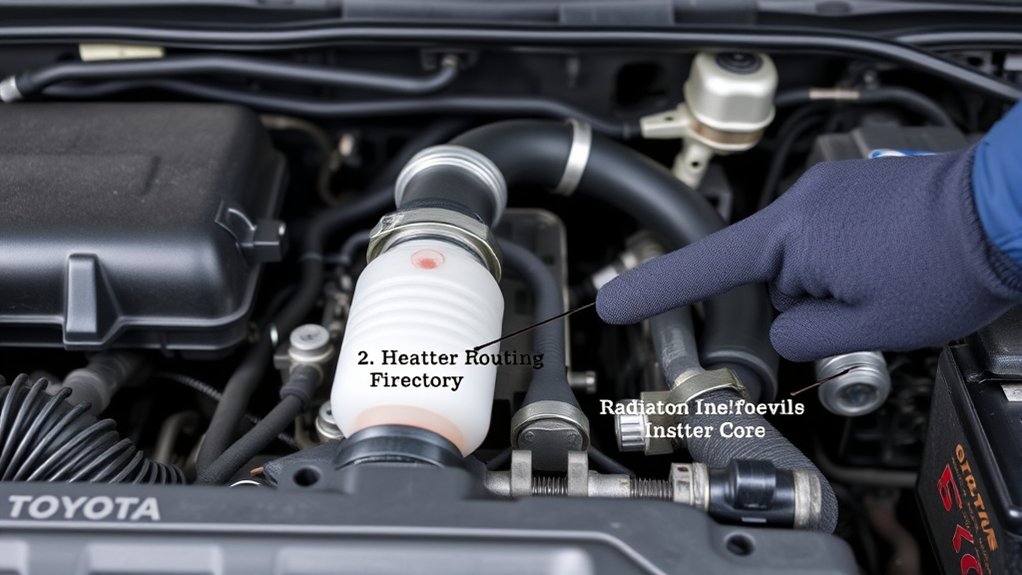
A Toyota Tacoma heater-core problem is more likely when the engine is fully warm and vent airflow is normal but one heater hose stays much cooler than the other, or when a coolant odor, greasy windshield film, damp passenger-side carpet, and repeated coolant loss point to a leak. Cold vents alone do not prove the heater core is bad: low coolant, trapped air, a thermostat fault, weak coolant circulation, poor blower airflow, or a blend-door problem can produce the same symptom.
Last Updated: September 11, 2026
How this guide was checked: This update was reviewed against current Toyota owner and service resources plus ATSDR/CDC, EPA, and infrared-temperature measurement guidance. It does not claim hands-on testing across every Tacoma generation. Hose routing, coolant specifications, heater-control hardware, pressure limits, and bleeding procedures must be confirmed for the exact model year, engine, and powertrain.
Quick Answer
Start by separating an airflow problem from a heat problem. If airflow is weak at every fan speed, check the blower system and cabin filter first. If both heater hoses are hot but the vents stay cold, check the blend door and HVAC controls. If one heater hose is hot and the other remains much cooler, investigate restricted flow or trapped air. If both hoses stay cool after normal engine warm-up, check coolant level, thermostat behavior, trapped air, and circulation. Backflush only when testing supports a restriction, and use low pressure plus the model-specific refill and bleeding procedure.
Key Takeaways
- A heater core is only one possible cause of low cabin heat. Check coolant, engine temperature, airflow, and HVAC controls first.
- A sweet coolant odor, greasy windshield film, damp passenger-side carpet, or falling coolant level may indicate a heater-core leak.
- One hot heater hose and one much cooler hose can suggest restricted flow, while two hot hoses with cold vent air often point toward an airflow or blend-door problem.
- Do not use CLR, vinegar, drain cleaner, or full household water pressure inside the heater core.
- Tacoma cooling-system layouts and bleeding procedures vary by model year, engine, and hybrid configuration. Use the correct Toyota manual or service information.
At a Glance
| Time Required | Varies by model year and access. Basic diagnosis is usually quicker than hose removal, backflushing, refill, and bleeding. |
| Difficulty | Basic diagnosis: easy to moderate; hose removal, backflushing, and bleeding: moderate |
| Tools Needed | Gloves, eye protection, drain pan, flashlight, pliers or hose-clamp tool, shop towels, low-pressure flush hose, correct coolant, and an infrared thermometer if available |
| Cost | Low for inspection; moderate for coolant and flushing supplies; much higher if dashboard removal and heater-core replacement are required |
Warning: Never open a radiator cap, pressurized reservoir, or cooling-system hose while the engine is hot. Hot coolant can cause severe burns. Antifreeze can also harm people and animals, so wear gloves and eye protection, catch every spill, and store used coolant in a sealed, labeled container.
What Are the Symptoms of a Bad Toyota Tacoma Heater Core?
A failing or restricted heater core can reduce cabin heat, but you should look for a pattern of symptoms before blaming the core. Weak heat by itself does not prove that the heater core has failed.
- Lukewarm or cold vent air: The engine reaches normal temperature, but the vents never become properly warm.
- Sweet coolant odor: A sweet smell inside the cab can point to a small coolant leak in the heater core or its connections.
- Greasy windshield film or repeated fogging: Coolant vapor can leave an oily film on the inside of the glass and reduce visibility.
- Damp passenger-side carpet: Wetness near the HVAC housing may come from coolant, although air-conditioner drain problems can also wet the floor.
- Falling coolant level: A repeated need to add coolant means the system has a leak that needs diagnosis.
- Gurgling behind the dashboard: This can indicate trapped air, low coolant, or uneven flow through the heater core.
- Heat changes with engine speed: Heat that is weak at idle but improves as engine speed rises can point toward a circulation, coolant-level, trapped-air, or restriction problem and needs further testing.
Engine overheating changes the situation from a comfort problem to a possible engine-damage risk. Stop driving safely if the temperature warning appears, the gauge climbs abnormally, steam is present, or coolant is pouring from the vehicle.
How Do You Diagnose Low Heat in a Toyota Tacoma?
Start with the simplest causes and move toward heater-core testing. This order reduces unnecessary flushing and helps you avoid replacing a good heater core.
- Confirm the engine warms normally. A thermostat stuck open can keep coolant too cool for strong cabin heat, especially in cold weather.
- Check coolant only when the engine is cold. Low coolant can reduce flow through the heater circuit and allow air into the system.
- Check blower airflow. Weak airflow can come from a clogged Toyota Tacoma cabin air filter, blower problem, blocked inlet, or HVAC door fault.
- Set the temperature to full hot. Listen for changes as you move the temperature control. Clicking, no movement, or heat on only one side can point to a blend-door or actuator issue.
- Compare heater-hose temperatures. After warm-up, use an infrared thermometer or careful non-contact checks near the two heater hoses. Avoid touching hot hoses or moving engine parts.
- Check for trapped air. Recent coolant work, a leak, or an incorrect refill can leave air in the heater circuit.
- Consider a backflush only after testing. A repeatable temperature drop across the core, restricted return flow, or contaminated coolant can support a blockage diagnosis.
Check Coolant Levels
Park on level ground and let the engine cool fully. Check the reservoir against its cold-level marks. Some Tacoma model years also require a radiator-level check, but only follow that step when the owner’s manual calls for it and the system is completely cold.
If the level is low, inspect the radiator area, reservoir, water pump, hose joints, heater hoses, and passenger-side floor for leaks. Do not treat repeated topping-off as normal maintenance. Find and repair the source of the coolant loss. See the Toyota Tacoma coolant leak guide for the broader leak-diagnosis sequence.
Use the coolant type and mixture specified for your exact model year. For example, Toyota’s 2024 Tacoma maintenance data specifies Toyota Super Long Life Coolant or a similar high-quality ethylene-glycol coolant with long-life hybrid organic acid technology and says not to use plain water alone. That is an example, not a universal specification for every Tacoma year. Check your exact truck through Toyota’s Manuals and Warranties portal, and see the Tacoma coolant types guide for additional selection context.
Inspect Heater Core Condition
Inspect the two heater hoses where they enter the firewall. Look for swollen rubber, cracked ends, damaged clamps, dried coolant residue, or fresh wetness. A leak at a hose connection can mimic a leaking heater core.
Once the engine reaches operating temperature, compare the hose temperatures:
- Both hoses stay cool: Hot coolant may not be reaching the core because of low coolant, trapped air, a thermostat issue, weak circulation, or a control component used by that configuration.
- The inlet is hot and the outlet is much cooler: The core may have restricted flow, but confirm the result under steady operating conditions before flushing.
- Both hoses are hot but vent air stays cold: Coolant is probably reaching the core. Check the blend door, actuator, blower airflow, and HVAC case before replacing the core.
Pro Tip: Record vent temperature and both heater-hose temperatures before making repairs, then repeat the measurements afterward under similar conditions. With an infrared thermometer, aim at comparable rubber surfaces on both hoses and avoid shiny metal fittings because reflective surfaces can distort IR readings. Keep the measuring distance similar and use the readings as a relative comparison rather than applying one universal pass/fail temperature difference.
Check Airflow and Temperature Controls
A heater core can be hot while the cabin remains cold. Check the cabin air filter, blower speed, vent selection, and temperature-door operation. A blocked filter lowers airflow, while a stuck blend door may route air around the hot core.
Dual-zone systems can also produce heat on one side and cold air on the other when an actuator or door fails. Electronically controlled and newer Tacoma HVAC systems may require model-specific scan-tool tests or service flowcharts rather than heater-core flushing.
Can a Water Pump Cause Weak Tacoma Heater Output?
The heater circuit needs reliable coolant circulation. If circulation falls, cabin heat may become weak at idle and improve when engine speed rises. Low coolant, trapped air, restricted passages, or a pump or control fault can create that pattern.
Do not diagnose a water pump from heater performance alone. Look for coolant leaks, overheating, unstable temperature, poor circulation across the cooling system, and model-specific diagnostic results. Tacoma pump and heater-control designs vary by generation and powertrain, and late-model systems can require additional HVAC circulation or electric-heater diagnostics.
Can Trapped Air Cause No Heat in a Toyota Tacoma?
Yes. Air trapped in the cooling or heater circuit can interrupt coolant flow through the heater core. The heater may alternate between warm and cold, gurgle behind the dashboard, or lose heat at idle.
Air commonly enters after a coolant drain, hose repair, thermostat replacement, water-pump service, or an unresolved leak. Bleeding methods vary by Tacoma generation and powertrain. Some systems need a specific fill sequence, heater setting, vacuum-fill tool, or scan-tool procedure.
Use the model-year repair procedure instead of relying on a universal “run it with the cap off” method. Toyota’s Technical Information System provides factory service information for North American Toyota vehicles.
How Do You Know if a Tacoma Heater Core Is Clogged?
A blocked heater core restricts coolant movement through its narrow tubes. Rust, mixed coolant, sealant residue, mineral contamination, or neglected coolant can contribute to deposits. Testing should separate a flow problem from an airflow or temperature-door problem.
Common Signs of Blockage
| Observation | What It May Mean | Next Check |
|---|---|---|
| Hot inlet hose, much cooler outlet hose | Restricted flow or unusually high heat transfer | Confirm coolant level, engine temperature, and repeatable hose readings |
| Both heater hoses hot, vents cold | Air is bypassing the core or airflow is weak | Inspect blend door, actuator, blower, and cabin filter |
| Both heater hoses cool | Hot coolant is not reaching the core | Check coolant level, trapped air, thermostat, circulation, and applicable controls |
| Sweet odor, oily glass film, or wet carpet | Possible heater-core or connection leak | Pressure-test the cooling system and inspect the HVAC drain and case |
Effective Testing Methods
Use several tests together instead of relying on a visual estimate of water flow. A “pencil-sized stream” is not a model-specific Toyota specification and does not account for hose size, system design, pressure, or testing setup.
- Temperature comparison: Compare inlet and outlet temperatures after the engine and HVAC settings stabilize, measuring comparable surfaces.
- Cooling-system pressure test: Check for external leaks and pressure loss with the correct adapter and model-specific pressure limit.
- HVAC actuator test: Confirm the blend door reaches the commanded hot position.
- Coolant condition check: Look for oil contamination, rust, suspended debris, mixed coolant, or stop-leak residue.
- Controlled flow test: When the service procedure allows hose disconnection, observe low-pressure flow through the isolated core in both directions.
A small temperature difference does not prove that the core is clogged. When both hoses are nearly the same temperature, coolant may be flowing well. Cold vent air in that situation often points toward airflow or blend-door control.
How Do You Maintain a Toyota Tacoma Heating System?
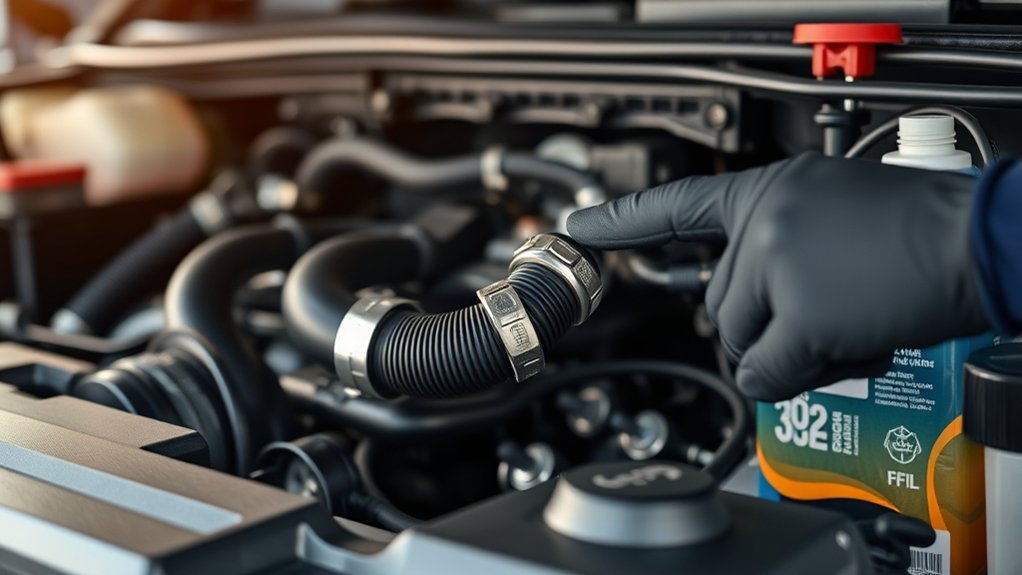
Good cooling-system care protects the heater core, radiator, water pump, seals, and engine. Avoid using one universal coolant-change interval for every Tacoma. Toyota’s schedule depends on the model year, engine, coolant specification, and operating conditions. Check the Toyota Tacoma coolant-change interval guide alongside the maintenance guide for your exact truck.
- Check the coolant level when the engine is cold and investigate any repeated loss.
- Use the coolant specification listed in the owner’s manual or maintenance guide.
- Do not mix coolant types based only on color. Color does not guarantee chemical compatibility.
- Inspect hoses, clamps, and visible connections during routine service and whenever you notice odor, residue, or dampness.
- Replace the cabin air filter at the model-specific interval or sooner when inspection shows it is dirty or airflow is restricted.
- Avoid stop-leak products unless a qualified technician approves them for a specific emergency because added material can contribute to restrictions in narrow cooling passages.
- Follow the correct refill and air-bleeding procedure after cooling-system work.
The best heater-core maintenance is correct coolant, a leak-free system, proper bleeding, and early diagnosis before contamination becomes a hard blockage.
When Should You Replace a Toyota Tacoma Heater Core?
Replacement becomes reasonable when testing confirms that the core itself leaks or remains internally restricted after an appropriate low-pressure backflush. Low heat alone is not enough evidence because thermostat, coolant-level, blend-door, blower, and circulation problems can produce the same complaint.
Strong replacement indicators include:
- Coolant leaking from the HVAC case or appearing on the passenger-side floor
- A pressure test that isolates leakage to the heater core
- Persistent coolant odor and oily windshield film with confirmed core leakage
- Repeated restriction after the rest of the cooling system has been cleaned and repaired
- Physical damage to the core tubes or connections
Depending on the model year, heater-core replacement can require substantial dashboard and HVAC-case disassembly. Air bags, electrical connectors, trim, and refrigerant-system work may be involved in some procedures. Professional repair is usually the safer choice unless you have the correct service manual, equipment, and experience with interior HVAC work.
What Is the Safest Way to Clean a Tacoma Heater Core?
Cleaning can help when the core has a mild internal restriction and does not leak. It cannot repair corrosion, cracked tubes, damaged seams, or failed connections.
Use Water or an Approved Cooling-System Cleaner Only
Toyota service information does not specify CLR, vinegar, drain cleaner, or other household chemicals as heater-core service fluids. Do not introduce an unapproved household chemical into the cooling system. A chemical that loosens contamination can also move debris elsewhere in the system.
If plain low-pressure water does not restore acceptable flow, use only a cooling-system cleaner that is compatible with the vehicle’s materials and permitted by its product instructions and the applicable Toyota service information. If the restriction remains, investigate the cause instead of repeatedly exposing the core to stronger cleaners.
Why Flow Testing Matters
Test before and after cleaning. Record heater-hose and vent temperatures, then verify that the isolated core passes water freely at low pressure when the service procedure permits it. Clear discharge water alone does not prove the repair worked, so confirm cabin heat after the cooling system is refilled and correctly bled.
If flow stays weak, the core leaks, or contamination quickly returns, stop flushing and diagnose the source. Repeated debris may come from corrosion, mixed coolant, stop-leak material, or another cooling-system problem.
How Do You Flush a Toyota Tacoma Heater Core Safely?
The steps below describe a general low-pressure backflush, not one universal Tacoma factory procedure. Hose routing, clamps, fill points, coolant capacity, heater-circulation hardware, and bleeding procedures vary. Review the exact Toyota procedure before disconnecting anything.
- Let the engine cool completely. Park on level ground, set the parking brake, and keep the keys away from the vehicle.
- Verify the correct procedure and coolant. Use the owner’s manual or Toyota service information for your model year, engine, and hybrid or non-hybrid configuration.
- Protect yourself and the work area. Wear gloves and eye protection. Place a large drain pan below the heater hoses and keep absorbent material nearby.
- Lower the coolant level as directed. Drain enough coolant into a clean container to prevent uncontrolled spilling when the heater hoses are removed.
- Identify the heater hoses by routing, not color. Trace the two coolant hoses that enter the firewall or confirm them in a model-specific diagram. Do not assume red means inlet or blue means outlet.
- Disconnect the hoses carefully. Release the correct clamps without crushing fittings. Work stuck hoses loose at their ends instead of pulling hard on heater-core tubes.
- Backflush with low pressure. Send clean water through the outlet side first so debris moves opposite its normal direction. Never connect unrestricted household water pressure directly to the core.
- Flush in both directions. Alternate directions with controlled low flow until discharge runs clear and flow improves. Stop immediately if the core leaks, deforms, or shows another sign of damage.
- Reconnect and secure the hoses. Replace damaged hoses or clamps. Confirm that every connection is fully seated and routed away from sharp or moving parts.
- Refill with the specified coolant. Do not reuse dirty or contaminated coolant. Follow the exact fill and bleeding procedure for the vehicle.
- Check operation and leaks. Warm the engine while monitoring its temperature. Verify stable cabin heat, inspect every disturbed connection, and recheck the cold coolant level after the vehicle cools again.
Note: Used coolant should not be poured onto the ground, into a storm drain, or down a household drain. Keep it separate from oil and other chemicals, then use an appropriate local collection or recycling option. The U.S. Environmental Protection Agency recommends checking with local environmental, health, or solid-waste agencies for disposal options.
Why Does Coolant Flow Matter for Tacoma Cabin Heat?
The heater core needs a steady supply of hot coolant, but heating performance also depends on air moving through the core and the HVAC doors routing that air into the cabin. Good coolant flow cannot overcome a stuck blend door, and a working blower cannot create heat from cool or air-bound coolant.
Use the complete system when diagnosing weak heat:
- Heat source: The engine must reach its intended operating temperature.
- Coolant quantity: The system must remain full and leak-free.
- Circulation: The applicable pumps, valves, and passages must move coolant through the heater circuit.
- Heat exchange: The heater core must transfer heat without a major internal or external blockage.
- Air delivery: The blower, filter, ducts, and doors must move heated air to the selected vents.
- Control: Sensors, actuators, valves where fitted, and the climate-control system must respond correctly.
This system view prevents a common mistake: replacing or flushing the heater core before proving that the problem is inside the core.
Related Guides
Frequently Asked Questions
What controls coolant flow through a Toyota Tacoma heater core?
The cooling system provides circulation, while the thermostat helps the engine reach and maintain its intended temperature. Cabin temperature is commonly controlled by an air-mix or blend door. Some Tacoma configurations can use additional coolant-control or heater-circulation components, so confirm the exact layout for your model year and powertrain.
How do I identify the heater-core inlet and outlet hoses?
Trace the two coolant hoses at the firewall and use a model-specific cooling-system diagram. Do not rely on hose color because red and blue coding is not a universal Tacoma standard. Temperature readings may help after warm-up, but the service diagram is the reliable reference.
How does coolant circulate through the heater core?
The vehicle’s cooling and heater-circulation system moves hot coolant through the heater circuit. The coolant releases heat inside the core and then returns to the cooling system. Exact routing and control hardware vary by engine, powertrain, and model year.
Does coolant flow through the heater core when the heater is off?
It depends on the Tacoma configuration. Some HVAC layouts can keep coolant moving while cabin temperature is controlled mainly by an air-mix or blend door, while other layouts can use additional coolant-control hardware. Check the cooling and HVAC diagram for the exact truck rather than assuming one answer applies to every Tacoma.
What does one hot heater hose and one cold hose mean?
A large, repeatable temperature difference can point to restricted flow through the heater circuit. First confirm that the coolant level is correct, the engine is fully warm, and trapped air has been addressed. Compare equivalent hose surfaces under steady conditions instead of relying on one touch test.
Can a bad thermostat cause weak Tacoma heat?
Yes. A thermostat that stays open can delay engine warm-up and reduce cabin heat, especially in cold conditions. A thermostat problem is only one possibility, so also check the cold coolant level, trapped air, heater-hose temperatures, circulation, and blend-door operation before replacing parts.
Can low coolant cause no heat in a Toyota Tacoma?
Yes. Low coolant can reduce circulation through the heater circuit and can allow air into the system, causing weak heat, changing heater-hose temperatures, or gurgling. If the level drops again after being corrected, find the leak instead of repeatedly topping off the reservoir.
Can a clogged Tacoma heater core be flushed?
A mild internal restriction may improve with a controlled low-pressure backflush when testing supports a blockage and the core is not leaking. Use the model-specific service procedure, avoid unrestricted household water pressure, refill with the specified coolant, and bleed the system correctly afterward.
Can I flush a Tacoma heater core with a garden hose?
Only if the water flow is carefully restricted to low pressure and the model-specific procedure permits the connection method. Do not attach unrestricted household water pressure directly to the heater core because excessive pressure can damage a weak or restricted core.
Can I drive with a leaking heater core?
Driving is risky because coolant loss can lead to overheating, and coolant vapor or film can reduce windshield visibility. Stop and arrange repair if the engine temperature rises, the coolant level drops quickly, the windshield becomes hard to clear, or coolant enters the cabin.
Conclusion
A Toyota Tacoma heater-core diagnosis should start with airflow, cold coolant level, engine warm-up, and heater-hose temperatures before any flushing or replacement. One hot hose and one much cooler hose supports further flow testing; two hot hoses with cold vent air point more toward HVAC air control; coolant odor, oily glass film, wet carpet, or repeated coolant loss raise concern for leakage. If testing confirms a restriction, use a controlled low-pressure backflush and the exact refill procedure. Stop driving and arrange repair when coolant loss, overheating, or impaired windshield visibility makes continued operation unsafe.
Sources
- Toyota Manuals and Warranties — model-year owner’s manuals, warranty information, and maintenance guides
- Toyota 2024 Tacoma Maintenance Data — Tacoma coolant type and cooling-system maintenance specifications
- Toyota Technical Information System — factory repair manuals, service bulletins, wiring diagrams, and diagnostic information
- ATSDR/CDC Ethylene Glycol ToxFAQs — antifreeze exposure, health risks, and handling precautions
- U.S. EPA Household Hazardous Waste Guidance — safe storage and local disposal guidance for potentially hazardous household chemicals
- Fluke Infrared Thermometer Guidance — measurement distance, reflective-surface, and emissivity considerations