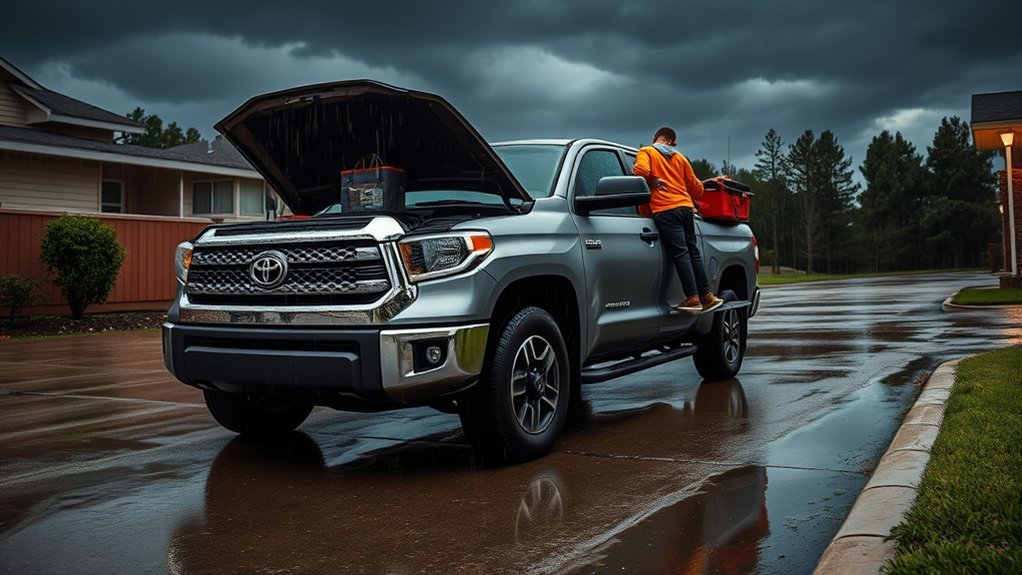
Heavy rain can reduce visibility, lengthen stopping distances, and overwhelm roads faster than expected. Preparing your Toyota Tundra means checking the truck before the storm, adjusting how you drive, and recognizing one firm limit: four-wheel drive and ground clearance do not make a flooded roadway safe to cross.
Quick Answer
Check your Tundra’s cold tire pressure against the driver-door placard, inspect tread, brakes, wipers, lights, cargo, and emergency supplies, then review current road closures. Drive slowly with low beams and extra following space. Never enter a flooded roadway, even in four-wheel drive.
Key Takeaways
- Use the cold tire pressure printed on your Tundra’s driver-door placard, not a universal PSI range or the maximum pressure on the tire sidewall.
- Consider replacing tires near 4/32 inch when dependable wet-road performance is important, even though 2/32 inch is the minimum replacement threshold identified by NHTSA.
- Slow down, avoid cruise control, use low-beam headlights, and leave substantially more stopping space in heavy rain.
- Four-wheel drive can help with acceleration traction in some slippery conditions, but it cannot prevent hydroplaning or shorten wet-road braking distance.
- Never drive through floodwater or around a barricade. Turn around and use an officially open route.
At a Glance
| Time Required | About 20 to 30 minutes for a basic inspection |
| Difficulty | Easy, except repairs that require a qualified technician |
| Tools Needed | Tire-pressure gauge, tread-depth gauge, flashlight, clean cloth, washer fluid, and emergency supplies |
| Cost | Usually little or no cost if the truck is already serviceable; replacement tires, wipers, brakes, or lights vary |
Note: Tundra tire pressures, four-wheel-drive controls, towing limits, and operating instructions vary by model year and configuration. Check the driver-door placard and the Toyota owner’s manual for your exact truck.
Assess Your Tundra Tires for Rain Readiness
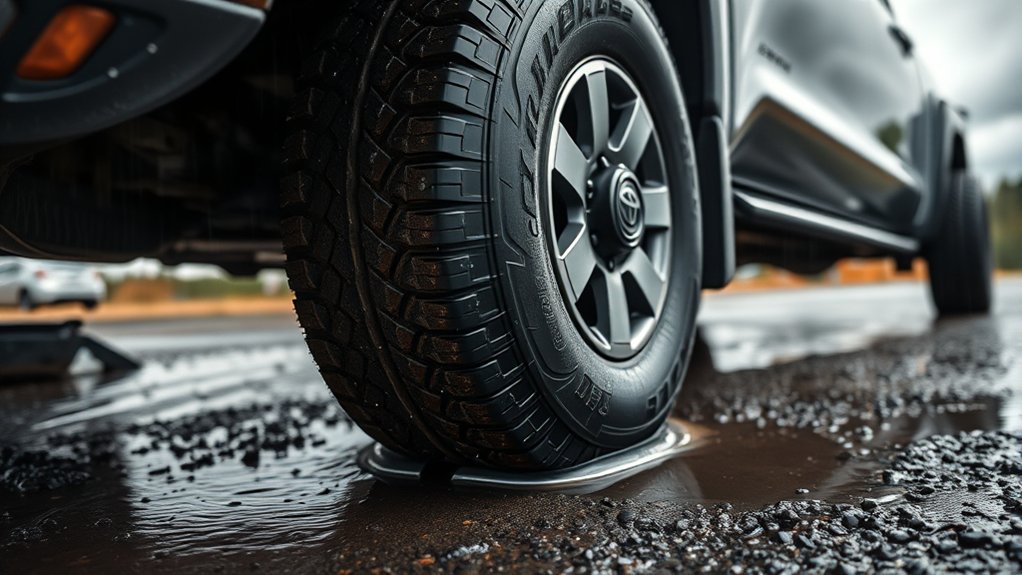
Your tires create the only direct contact between the truck and the road, so inspect all four before severe rain arrives. Check them while they are cold, preferably before driving or after the truck has been parked for several hours.
Use the Correct Cold Tire Pressure
Inflate each tire to the pressure listed on the driver-side doorjamb placard or in the owner’s manual. Do not assume every Tundra needs 35 to 38 psi. The correct value can differ by model year, tire size, axle, and equipment.
Do not use the maximum pressure molded into the tire sidewall as your normal target. That number describes the tire’s maximum permissible pressure under specified conditions, while the vehicle manufacturer determines the recommended operating pressure. The NHTSA TireWise guide also recommends checking tire pressure and tread regularly.
Measure Tread Depth and Inspect for Damage
Measure several grooves across each tire because uneven wear can hide a weak area. NHTSA identifies 2/32 inch as the replacement threshold, but wet-road performance can decline before a tire reaches that point.
AAA wet-weather testing found substantial braking and handling losses with tires worn to 4/32 inch. If you frequently drive in heavy rain, shopping for replacements near 4/32 inch provides a more cautious margin.
- Look for cuts, cracks, bulges, exposed cords, nails, and other damage.
- Check for wear on the inner and outer shoulders, not only the center grooves.
- Inspect the spare tire if your Tundra carries one.
- Have persistent vibration, pulling, or uneven wear diagnosed before the storm.
Pro Tip: Record each tire’s pressure and tread depth in your phone. Comparing the readings over time can reveal a slow leak or developing alignment problem before it becomes an emergency.
Choose Tires by Fit and Verified Performance
Do not assume an LT-designated tire will automatically handle rain better. An LT tire may provide the load capacity needed for certain hauling or towing applications, but wet traction also depends on tread design, rubber compound, wear, pressure, and water depth.
Use the tire size and load capacity approved for your truck. When replacing tires, compare manufacturer wet-traction information and choose a set suited to your climate, normal load, and driving conditions.
Complete These Vehicle Preparations Before Heavy Rain
Inspect the Wipers, Washer System, and Defroster
Replace wiper blades that streak, chatter, skip, or leave unwiped sections. Fill the washer reservoir with suitable washer fluid and confirm that the nozzles spray the windshield correctly.
Run the front defroster before leaving. A working climate-control system helps clear interior condensation, which can become severe when wet clothing and humid air enter the cab.
Check Every Exterior Light
Confirm that the low beams, taillights, brake lights, turn signals, and hazard lights work. Clean mud and road film from the lenses. Use low-beam headlights during rain so other road users can see you and to reduce reflected glare compared with high beams.
Evaluate the Brakes
Your brake pedal should feel consistent, and the truck should stop without pulling, grinding, vibration, or warning lights. Have abnormal symptoms inspected before driving in a storm. Wet roads already reduce available traction, so worn or malfunctioning brakes leave less room for error.
Clean Windows, Mirrors, Cameras, and Sensors
Clean both sides of the windshield and side windows. Wipe the mirrors, rear camera, and accessible driver-assistance sensors according to Toyota’s instructions. Dirt, wax, ice, and water droplets can reduce visibility or interfere with camera-based features.
Secure the Bed and Cabin
Remove unnecessary loose objects from the bed or secure them with suitable tie-downs. Rain and wind can move unsecured cargo, while sudden braking can turn it into a serious hazard.
Do not add sandbags as routine rain preparation. Extra weight consumes payload capacity, increases stopping demands, and can shift during an emergency maneuver. If you carry cargo or tow a trailer, remain within the truck’s payload, axle, hitch, and towing limits.
Prepare Fuel, Power, and Emergency Supplies
Keep enough fuel for delays and detours. Charge your phone and pack a basic roadside kit. NHTSA severe-weather guidance recommends planning your route and stocking the vehicle before travel.
- Phone charger or charged power bank
- Flashlight with spare batteries
- Drinking water and shelf-stable food
- First-aid supplies and required medication
- Reflective vest and warning triangles
- Blanket or dry outer layer
- Basic tire tools and pressure gauge
- Paper map in case mobile service fails
Move the Truck Before Flooding Begins
If authorities issue a flood warning and you have time to act safely, park the Tundra on higher ground away from underpasses, drainage channels, riverbanks, low garages, and known flood zones. Follow evacuation instructions immediately rather than waiting to see whether water reaches the vehicle.
Use Safe Driving Techniques in Heavy Rain
Even a fully maintained truck has less grip and visibility in heavy rain. Your speed and control inputs matter more than the vehicle’s size or drivetrain.
Slow Down and Increase Following Distance
Reduce your speed before reaching standing water, curves, intersections, and downhill sections. Leave much more space than you would on dry pavement so you can slow gradually without abrupt steering or braking.
Roads may be especially slick when rain first mixes with oil, dust, rubber residue, and other surface contaminants. No universal “first ten minutes” rule applies, so treat the road as slippery from the beginning of the storm.
Use Smooth Steering, Braking, and Acceleration
Avoid sudden lane changes, sharp steering, hard acceleration, and late braking. Brake earlier and apply pressure progressively. Keep both hands ready on the wheel when crossing areas where water is collecting.
Turn Off Cruise Control
Drive with direct control of the accelerator in heavy rain. Cruise control can make it harder to respond smoothly when traction changes or the truck begins to hydroplane.
Use Low Beams and Control Interior Fog
Turn on the low-beam headlights and wipers. Use the defroster and air conditioning as needed to remove interior fog. Do not use high beams in heavy precipitation because reflected light can increase glare.
Know How to Respond to Hydroplaning
Hydroplaning occurs when the tires lose effective contact with the road and ride on a layer of water. Steering may feel unusually light, engine speed may change, or the truck may begin drifting.
- Stay calm and look toward the open path where you want the truck to travel.
- Ease off the accelerator gradually.
- Hold the steering wheel steady and avoid a sudden turn.
- Avoid slamming on the brakes.
- Wait for the tires to regain contact before making a strong steering or braking input.
The California DMV’s wet-weather guidance similarly advises drivers to slow gradually and avoid sudden braking during hydroplaning.
Pull Over When Visibility Becomes Unsafe
Do not continue simply because other traffic is moving. When you cannot see far enough to identify hazards and stop safely, leave the roadway at the next safe location. Choose a parking area or exit rather than stopping in a travel lane or beneath an overpass.
Stay clear of trees, power lines, drainage channels, and low ground. Follow local rules regarding hazard-light use while stopped.
Navigating Flood Conditions: What You Need to Know
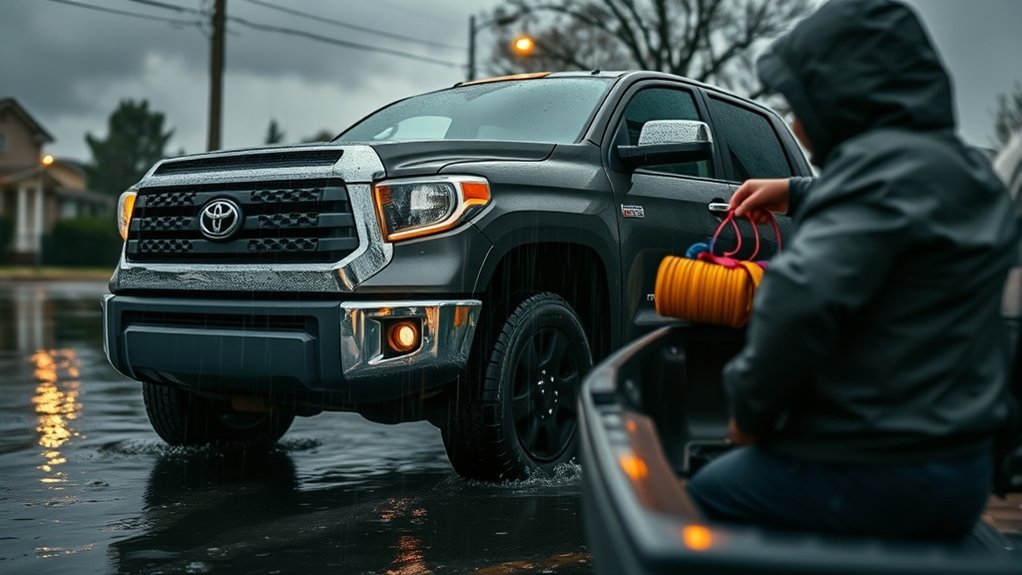
Warning: Never drive your Tundra into floodwater or around a road barricade. You cannot reliably judge the water’s depth, current, road condition, or hidden debris from the driver’s seat. Turn around and take an officially open route.
The National Weather Service warns that just two feet of rushing water can carry away trucks and SUVs.
The National Weather Service states that 12 inches of rushing water can carry away most cars and two feet can carry away trucks and SUVs. Water can also conceal a washed-out road, open drain, debris, downed power line, or strong current.
- Turn around immediately: Do not test the depth with the truck and do not follow another vehicle into the water.
- Obey barricades: Never move, pass, or drive around a flood-closure barrier.
- Use current information: Check official road closures, emergency alerts, and evacuation routes. A familiar road may no longer be passable.
- Move to higher ground: Leave low areas before water reaches the road, provided you can do so without entering floodwater.
- Call for help: If you become trapped, contact emergency services and follow their instructions rather than attempting a risky crossing.
The CDC also advises drivers to stay out of flooded areas because vehicles can stall or be swept away.
If Water Rises Around Your Tundra
If the truck is stationary and water begins rising, call emergency services and follow local instructions. Move to higher ground only when you can do so without entering moving water, stepping near a downed power line, or exposing yourself to a stronger current.
Do not remain focused on saving the truck at the expense of personal safety. Flood conditions can change within minutes.
After the Truck Has Been in Deep Water
Do not restart a stalled or submerged Tundra. Starting the engine can draw water into mechanical components or worsen hidden damage. Arrange towing to a qualified repair facility.
A professional inspection may need to cover:
- Engine intake, oil, and internal water contamination
- Transmission, transfer case, and differential fluids
- Wheel bearings, brakes, and parking-brake components
- Wiring, connectors, sensors, computers, and safety systems
- Cabin water, mould risk, and restraint-system components
- Hybrid and high-voltage components on i-FORCE MAX models
Do not touch exposed, damaged, or submerged high-voltage components. Follow Toyota’s model-specific emergency guidance and have the vehicle inspected by trained personnel.
Community Insights: Practical Tips for Tundra Owners
Advice from other owners can help you identify useful habits, but your owner’s manual and official emergency instructions should take priority. Apply community recommendations only when they match your exact model and do not conflict with manufacturer guidance.
Do Not Rely on Truck Size
A tall seating position can make a flooded road look manageable. It does not reveal a washed-out surface, current speed, or hidden drop-off. A pickup can float or lose traction when water displaces enough tire contact and vehicle weight.
Use 4WD as a Traction Tool, Not a Safety Shield
Four-wheel drive may help the truck move on a genuinely slippery surface, depending on the system and model-year instructions. It does not provide extra braking grip, remove standing water, or stop hydroplaning.
Do not select 4L for ordinary rainy-road driving. Low range is intended for specific low-speed situations requiring high traction or torque. Consult the exact Toyota manual before changing drive modes.
Be More Cautious When Towing
A trailer adds weight, length, wind exposure, and another set of tires and brakes. Reduce speed further, leave substantially more following distance, avoid sudden lane changes, and verify that the trailer lights, tires, brakes, hitch, and safety chains are serviceable.
Postpone towing when rainfall, wind, standing water, or visibility makes the trip difficult to control.
Check for Open Recalls by VIN
Do not judge a Tundra only by model year. Maintenance history, repairs, condition, and unresolved recalls matter more than a blanket “good year” or “bad year” label.
Enter the truck’s 17-character VIN in the Toyota recall lookup or NHTSA recall database. Complete open safety recalls promptly.
Frequently Asked Questions
Should I use 4H or 4L during rain in my Toyota Tundra?
Do not use 4L for normal rainy-road driving. Use 4H only when the road is genuinely slippery and your exact Tundra owner’s manual permits it. Four-wheel drive may help acceleration traction, but it does not shorten wet braking distance or prevent hydroplaning.
What Toyota Tundra model year should I avoid?
No model year should be rejected solely because of a broad online list. Inspect the individual truck, review its service and corrosion history, obtain a professional pre-purchase inspection, and check its VIN for open Toyota and NHTSA recalls.
What is the best way to prepare a Tundra for heavy rain?
Check cold tire pressure, tread, brakes, wipers, washer fluid, lights, windows, cameras, cargo, fuel, and emergency supplies. Review weather alerts and road closures before leaving, then reduce speed, use low beams, turn off cruise control, and increase following distance.
What should I do if my Tundra starts hydroplaning?
Ease off the accelerator, hold the steering wheel steady, look toward your intended path, and avoid abrupt braking or steering. Wait for the tires to regain contact before making a strong correction.
Can a lifted Tundra safely drive through deeper floodwater?
No. A lift does not reveal the water’s depth, protect a washed-out road, eliminate current, or waterproof the truck’s mechanical and electrical systems. Never enter floodwater, regardless of ride height, tires, snorkels, or four-wheel drive.
How do I prepare my vehicle for extreme weather conditions?
Follow the vehicle’s maintenance schedule, correct any tire, brake, battery, lighting, or visibility problems, carry emergency supplies, keep communication devices charged, monitor official alerts, and postpone travel when conditions exceed your vehicle or driving ability.
Conclusion
Preparing your Toyota Tundra for heavy rain starts with model-specific maintenance, good tires, clear visibility, secured cargo, and a realistic travel plan. Once you are driving, slow down, leave extra space, avoid cruise control, and make every steering and braking input smooth.
The most important rule applies to every Tundra, regardless of trim, tires, lift, or drivetrain: never enter floodwater. Turn around, follow official closures and evacuation instructions, and protect people before the truck.
Sources
- Toyota Manuals and Warranties – model-specific tire, drivetrain, towing, and operating guidance
- NHTSA TireWise – tire pressure, inspection, and tread-safety guidance
- NHTSA Driving in Severe Weather – route planning, emergency supplies, wet-road driving, and flood avoidance
- National Weather Service: Turn Around Don’t Drown – floodwater force, vehicle risks, and barricade safety
- CDC Floodwater Safety – dangers of driving in flooded areas
- AAA Wet-Tire Testing – wet braking and handling losses at 4/32-inch tread depth