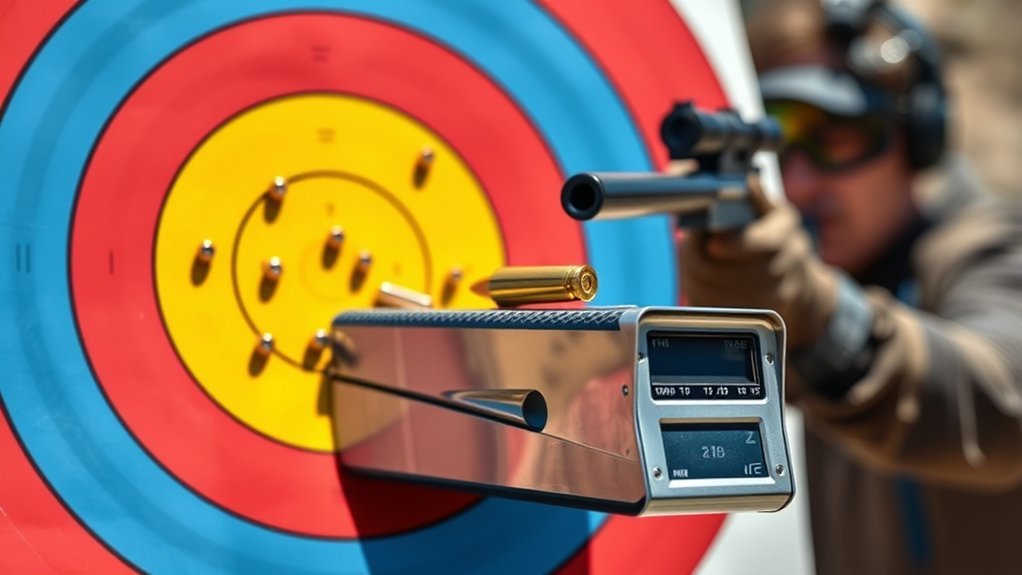
Target shooting scoring systems decide how each shot, ring, time limit, and penalty affects your final result. Whether you shoot paper targets, electronic scoring targets, precision events, speed stages, field target, or multi-gun matches, you need to know the rulebook before you plan your strategy. A good score comes from accuracy, safe gun handling, clean record keeping, and smart choices under pressure.
Quick Answer
Most target shooting scoring systems award more points for shots closer to the center of the target. Some disciplines also factor in time, penalties, equipment rules, and tie-breaking methods. Paper targets often use scoring rings, while electronic systems measure shots automatically and may support decimal scoring in precision events.
Key Takeaways
- Scoring rules change by discipline, so always read the match rulebook before you compete.
- Traditional paper targets usually score by rings, with the center carrying the highest value.
- Electronic scoring systems reduce manual scoring delays and can provide instant shot values.
- Speed-based sports may combine points, time, and penalties instead of using ring values alone.
- Safety rules, equipment compliance, and accurate record keeping can protect both your score and your eligibility.
Warning: Target shooting must only happen in legal, controlled settings with proper supervision, approved equipment, and strict range safety rules. Keep every firearm pointed in a safe direction, follow all range commands, and stop immediately if a safety concern appears.
Understanding Target Types
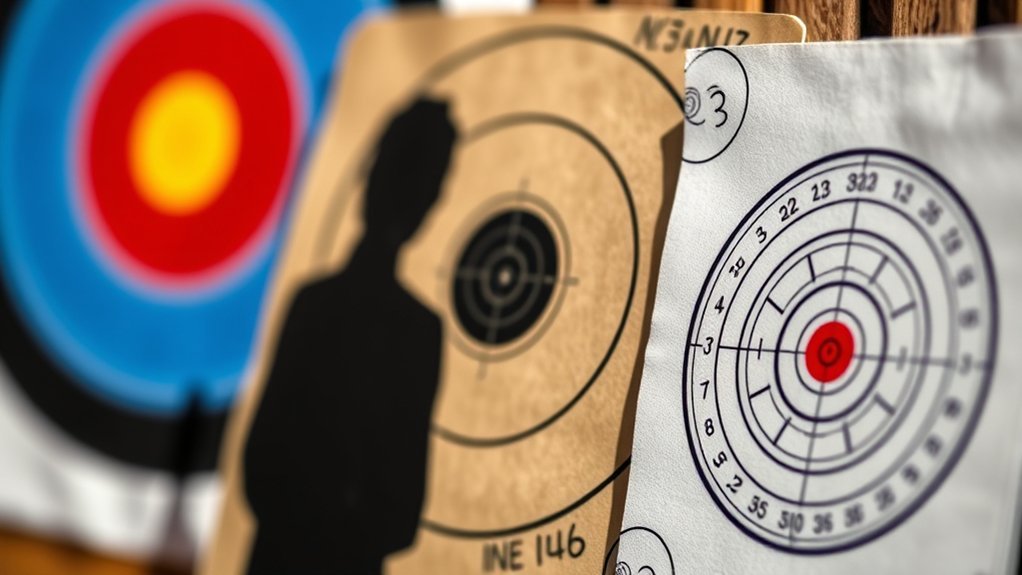
When you immerse yourself in target shooting, understanding the different types of targets is essential for honing your skills and improving your scores. Each target type serves a unique purpose, from traditional paper targets that provide clear scoring zones to reactive targets that offer instant feedback upon impact.
You’ll encounter silhouettes, which help simulate practical target shapes, and precision targets that challenge your accuracy at varying distances. Knowing these types allows you to tailor your practice sessions effectively. For example, using paper targets can sharpen your aim, while reactive targets can show visible feedback after a safe, controlled shot.
By familiarizing yourself with each target, you’ll enhance your overall shooting proficiency and develop a more strategic approach to your training. You should also confirm whether a target is approved for your match, because unofficial targets may not match the exact scoring dimensions used in competition.
Traditional Paper Target Scoring

When it comes to traditional paper target scoring, understanding the scoring zones is essential for accurate point allocation. Each zone represents a different point value, and knowing how these work can greatly impact your overall score.
Paper scoring can look simple at first, but the details matter. Match officials may use specific gauges, overlays, or rulebook procedures to decide whether a shot breaks a higher-value scoring ring. That decision can change a close result, especially in precision events where one point, or even a decimal fraction, can separate competitors.
Scoring Zones Overview
Scoring zones on traditional paper targets serve as the foundation for evaluating a shooter’s accuracy and skill. Each target typically features concentric circles, with the center, known as the bullseye, representing the highest score. As you move outward, scoring zones decrease in value, reflecting the shooter’s precision.
Understanding these zones is essential; they directly impact your performance and strategy. For instance, hitting the bullseye not only boosts your score but also helps you confirm that your sight alignment, trigger control, and follow-through are working together. Familiarizing yourself with these zones allows you to assess your strengths and weaknesses, guiding your practice sessions.
Ultimately, mastering the scoring zones helps you develop a sharper focus and improve your overall shooting technique, making every shot count. Instead of only asking whether a shot was “good,” you can study exactly where it landed and adjust your next training session with better information.
Point Allocation System
Understanding how points are allocated in traditional paper target scoring is essential for any shooter aiming to improve their game. Each shot you take earns points based on where it lands on the target. The closer you hit to the center, the higher your score.
Here’s a quick breakdown of the point allocation system (example only—match rules vary by discipline and governing body):
| Zone | Points | Description |
|---|---|---|
| 10-ring | 10 | Center bullseye hit |
| 9-ring | 9 | Immediate surrounding |
| 8-ring | 8 | Second ring |
| 7-ring | 7 | Third ring |
| Missed | 0 | Outside the target |
Note: Some events, such as 10 m air rifle, may use decimal scoring and certified electronic targets, while others, such as air pistol, may score by full rings. Always check the match rulebook before using any example chart as your scoring guide. One example is the European Shooting Confederation EYOF 2025 format.
Note: A scoring example is not a universal rule. Rifle, pistol, airgun, smallbore, field target, and action shooting events can all use different target sizes, scoring zones, time limits, and penalties.
Electronic Scoring Systems
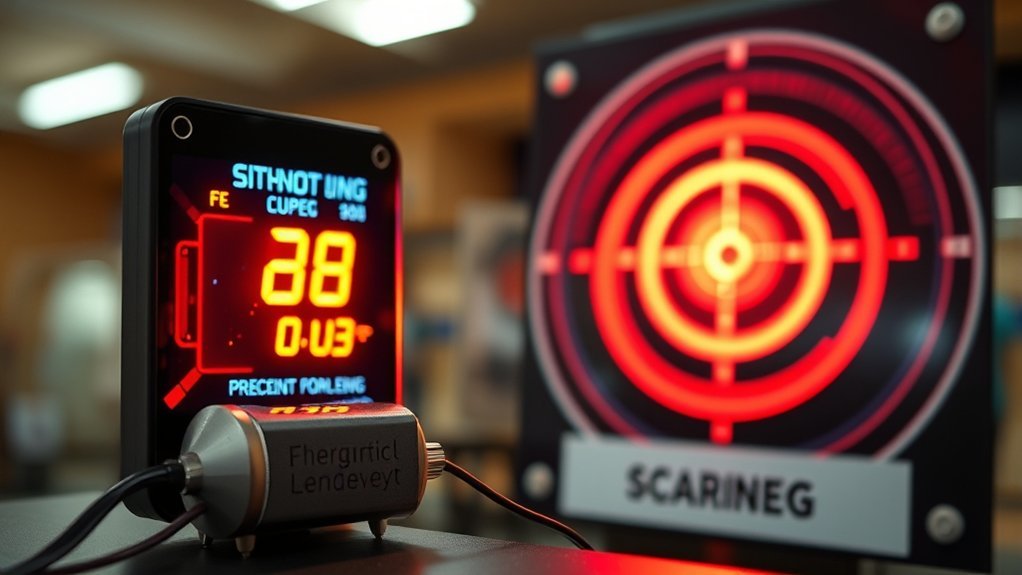
As technology continues to advance, electronic scoring systems have transformed the way target shooting events are conducted and scored. These systems use sensors, acoustic methods, optical detection, or camera-based technology, depending on the target system, to detect and score shots. The goal is to provide fast, consistent, and transparent scoring.
You no longer have to rely only on manual scoring, which can be prone to human error. With electronic systems, accuracy improves greatly when the equipment is certified, calibrated, and used under the correct match conditions. Furthermore, real-time data can be displayed on screens, enhancing the spectator experience and keeping shooters informed.
You’ll appreciate the efficiency these systems bring, as they streamline event administration and reduce the time spent on scoring. Overall, electronic scoring systems represent a major step forward in supporting fairness and accuracy in target shooting competitions.
Standards update: International federations, including ISSF and ESC, specify certified Electronic Scoring Targets for many events, and 10 m air rifle commonly uses decimal scoring on ESTs. For examples, review the ESC EYOF format and the ISSF EST certification notice.
Scoring Zones Explained
In target shooting, the concept of scoring zones plays an essential role in determining the outcome of competitions. Each target is divided into distinct areas, or zones, each assigned a specific score based on its proximity to the center. As you shoot, your goal is to hit these zones accurately, as they directly influence your overall score.
Understanding these zones helps you strategize your shots, focusing on precision and technique. The closer you hit to the center, the higher your score will be, emphasizing the importance of control. Familiarizing yourself with the layout of scoring zones can enhance your performance, allowing you to maximize your scoring potential during competitions.
So, practice targeting these zones to sharpen your skills and improve your accuracy. Just as important, practice reading the target after each string. Shot grouping, vertical spread, and side-to-side movement can reveal problems with position, grip, breathing, or follow-through.
Value of Each Scoring Ring
Each scoring zone has a specific value that plays a key role in your overall performance. Typically, the innermost ring, often called the bullseye, scores the highest, often 10 points in many ring-based formats. As you move outward, the values decrease, often ranging from 9 to 1, depending on the target and discipline.
Understanding these values is essential; aiming for the higher-scoring rings can greatly boost your total score. You’ll want to develop a strategy that prioritizes precision over speed when your discipline rewards ring value more than raw pace. Hitting one higher-value shot can make all the difference in a close competition.
Furthermore, knowing the scoring system helps you gauge your progress and adjust your training focus. By mastering the value of each ring, you’ll enhance both your tactical approach and your shooting accuracy. In decimal-scored events, even tiny differences in shot placement can matter, so consistency becomes just as important as occasional perfect hits.
Time Limits and Scoring Implications
Time constraints can really influence your performance in target shooting. You might find that the pressure of a ticking clock alters your focus and decision-making, impacting your overall score. Understanding how to manage these time limits is essential for improving your shooting accuracy under stress.
In precision events, time limits may shape your rhythm and recovery between shots. In speed-based events, time may become part of the score itself. That difference changes your strategy. You should know whether the best result comes from slow, centered shots, fast hits in acceptable scoring zones, or a balanced combination of both.
Time Constraints Impact Performance
While competing in target shooting, the pressure of time constraints can greatly influence your performance and overall scoring. When the clock’s ticking, several factors come into play that can affect your results:
- Focus and Concentration: You may struggle to maintain focus, leading to mistakes in your shots.
- Decision-Making: Quick decisions on aiming and shooting can result in hasty choices that compromise accuracy.
- Breathing and Heart Rate: The urgency can elevate your heart rate, impacting your steadiness and control.
- Mental Fatigue: Constantly racing against time can drain your mental energy, reducing your overall effectiveness.
Understanding these impacts can help you develop strategies to manage time pressure, ultimately improving your performance and scoring potential. A structured practice session can also help you learn when to slow down, when to accept a safe shot, and when to reset before continuing.
Scoring Under Pressure
As you navigate the pressures of competition, understanding how scoring works under time constraints becomes essential. When you’re racing against the clock, every second counts, and your focus shifts between accuracy and speed. Typically, scoring systems incorporate both direct hits and timing, which means rushed shots can lead to lower scores.
It’s vital to balance quick execution with precision; a well-placed shot often outweighs multiple hasty attempts in accuracy-focused events. Be aware of the penalties for missed targets and how they can impact your overall score. Practicing under simulated time limits can help you find that sweet spot between speed and precision, ensuring you maximize your score even when the pressure’s on.
Remember, mastering this balance sets successful shooters apart from the rest. However, safety always comes before score. Never rush a shot, movement, reload, or equipment adjustment in a way that violates the range commands or match safety rules.
Pro Tip: Before a match, write down how the event scores misses, late shots, procedural errors, and ties. A simple rule reminder can prevent costly mistakes when pressure rises.
Scoring for Different Disciplines
Scoring systems in target shooting vary considerably across different disciplines, each designed to reflect the unique objectives and challenges of the sport. Understanding these differences can enhance your performance and strategy. Here are four key scoring systems you might encounter:
- Precision Shooting: Points are awarded based on accuracy with higher scores for shots closer to the center of the target.
- Speed Shooting: Scoring emphasizes the time taken to hit targets, rewarding both speed and accuracy.
- Field Target Shooting: This combines hunting-style distance judgment with target shooting and requires you to adjust for distance, angle, and environmental conditions.
- 3-Gun Competition: Scoring evaluates your performance across three different firearms, emphasizing versatility and adaptability.
Quick references: IDPA uses a “time-plus” method where points down add seconds to your raw time, as explained in the IDPA Rulebook. USPSA uses hit factor scoring, calculated as points divided by time, with standardized penalties listed through the USPSA Rules. For Field Target specifics, consult current federation rules through the World Field Target Federation rules and guides.
Precision vs. Speed Scoring
Precision and speed scoring reward different skills. In precision shooting, one small error can cost a point or decimal value, so you focus on repeatable fundamentals. In speed scoring, a fast time may help, but only if your hits stay inside the required scoring zones and you avoid penalties.
This difference changes how you train. A precision shooter may spend more time on position, sight picture, breathing, and shot process. A speed-stage competitor may also practice transitions, target order, movement rules, and safe match procedures. Both approaches require discipline, but they measure performance in different ways.
Tie-Breakers and Final Rankings
Many competitions include tie-breaking rules. A match may compare the number of inner tens, X-counts, final strings, last series scores, fastest clean time, or other rulebook criteria. You should know these rules before the event starts, because they can influence your shot strategy near the end of a match.
For example, two competitors may finish with the same total score, but the one with more center hits may rank higher. In a time-plus system, a competitor with fewer penalties may beat a faster shooter who made avoidable mistakes. These details show why scoring knowledge is part of competition preparation.
Impact of Penalties on Scores
When you’re competing in target shooting, penalties can greatly alter your final score. Understanding the different types of penalties and how they adjust your scoring is essential for maintaining a competitive edge. Not only do these penalties affect your individual score, but they can also impact your overall rankings within the sport.
Penalties are not just technical details. They help enforce fairness, safety, equipment standards, timing rules, and consistent match procedures. A strong shooter can lose ground quickly by ignoring a rule that seemed minor during practice.
Types of Penalties
While penalties in target shooting may seem like minor inconveniences, they can considerably impact your overall score. Understanding the types of penalties can help you avoid them and improve your performance. Here are four common penalties you might encounter:
- Equipment Violations: Using unauthorized gear can lead to disqualification or point deductions.
- Safety Infractions: Failing to follow safety protocols can result in severe penalties, including immediate disqualification.
- Time Violations: Not adhering to time limits can cost you valuable points or entire rounds.
- Improper Scoring: Misjudging your shot placement or incorrectly marking your score can lead to penalties that may affect your final tally.
Scoring Adjustments
Understanding how penalties impact your overall score is essential for any target shooter aiming for success. When you incur a penalty, it directly affects your score in various ways, often subtracting points or adding time to your performance. Each type of penalty has specific consequences, so knowing these can help you strategize effectively.
For instance, hitting an unintended target might cost you more points than a simple procedural error, depending on the event. By staying aware of potential penalties, you can adjust your approach, ensuring you minimize mistakes. Always remember, every point counts in competitive shooting, and the difference between winning and losing can hinge on how well you manage your scoring adjustments related to penalties.
Stay focused, and keep your score in check. If you are unsure about a call, follow the match procedure for review instead of arguing informally. Clean communication helps officials resolve scoring questions fairly.
Impact on Rankings
The impact of penalties on your scores can greatly influence your rankings in competitive target shooting. Understanding how these penalties work is essential for maintaining your position in competitions. Here are some key factors to reflect on:
- Score Deduction: Penalties often involve subtracting points from your total, which can quickly drop your rank.
- Time Penalties: Delays in shooting or failure to follow time limits can lead to additional penalties, further affecting your overall score.
- Equipment Violations: Using non-compliant gear can result in disqualification or point deductions, impacting your rankings considerably.
- Behavioral Infractions: Unsportsmanlike conduct can lead to penalties that not only reduce scores but also tarnish your reputation in the sport.
Safety reminder for U.S. shooters: Always follow established range safety rules and local laws. The NRA Gun Safety Rules provide a broad safety overview, and the NRA Family explainer gives additional context for common safety principles.
Record Keeping and Performance Tracking
Effective record keeping and performance tracking in target shooting can greatly enhance your skills and help you identify areas for improvement. By logging your scores, conditions, and techniques, you can analyze trends and make informed adjustments. Here’s a simple table to illustrate what to track:
| Date | Score | Notes |
|---|---|---|
| 2023-09-01 | 85 | Windy, adjusted stance |
| 2023-09-08 | 90 | No wind, focused on breathing |
| 2023-09-15 | 88 | Tired, need more rest |
| 2023-09-22 | 92 | New grip technique successful |
Using this data, you can pinpoint what works best for you and refine your approach for improved performance. Consistent tracking empowers you to reach your shooting goals more effectively.
You can also track target type, distance, lighting, ammunition, equipment setup, match format, penalties, and mental notes. Over time, this gives you a clearer picture of whether your score changed because your skill improved, the conditions changed, or the scoring method was different.
What to Log After Each Session
A useful shooting log should be simple enough that you actually use it. Record the date, discipline, target type, distance, total score, penalties, time limit, and any rulebook notes. Then add one short comment about what went well and one thing to practice next time.
Avoid relying only on memory. Scores can feel better or worse than they really were, especially after a stressful match. Written data keeps your progress honest and helps you set training goals based on patterns instead of emotion.
Tips for Improving Scoring Accuracy
To boost your scoring accuracy in target shooting, focus on refining your technique and mental approach. Here are four essential tips to enhance your performance:
- Establish a Consistent Stance: Verify your feet are shoulder-width apart and your body is balanced, providing a stable foundation for each shot.
- Practice Controlled Breathing: Develop a breathing rhythm to help steady your aim. Inhale deeply, exhale lightly, and pull the trigger during your natural pause.
- Focus on the Trigger Pull: Use a smooth, slow trigger pull to prevent jerking the gun, which can throw off your accuracy.
- Visualize Success: Before each shot, visualize hitting your target. This mental rehearsal can enhance your confidence and focus during practice and competition.
These fundamentals support better scoring because they reduce shot-to-shot variation. Still, your exact technique should match your discipline, firearm, range rules, and coaching guidance. A certified instructor or experienced match official can help you correct errors safely.
Common Scoring Mistakes to Avoid
Many shooters lose points because they misunderstand the scoring method, not because they lack skill. Common mistakes include assuming every match uses 10-point rings, overlooking time penalties, ignoring tie-breakers, failing to confirm target distance, and practicing on targets that do not match the event format.
You can avoid these issues by reading the stage briefing or rulebook before you begin. Confirm how misses are counted, how late shots are handled, and whether scoring is by full rings, decimal values, hit factor, time-plus, or another method. This small preparation step can protect your final score.
Sources
- European Shooting Confederation EYOF 2025 format — supports references to event formats, electronic targets, and scoring differences by discipline.
- ISSF EST certification notice — supports the discussion of certified electronic scoring targets.
- IDPA Rulebook — supports the explanation of time-plus scoring and points down.
- USPSA Rules — supports the explanation of hit factor scoring and penalties.
- World Field Target Federation rules and guides — supports the field target scoring reference.
- NRA Gun Safety Rules — supports the general firearm safety reminder.
Conclusion
In target shooting, mastering the scoring system is like fine-tuning a musical instrument; every detail matters for a harmonious performance. By understanding different target types, scoring zones, time limits, discipline rules, and the impact of penalties, you can elevate your game and sharpen your focus.
Keep track of your progress and embrace the challenge of improvement, as each shot taken is a step closer to your goals. With safe practice, rulebook awareness, and a clear scoring strategy, you’ll build the consistency needed to hit the bullseye of success over time.


5 thoughts on “Target Shooting Scoring Systems Explained”