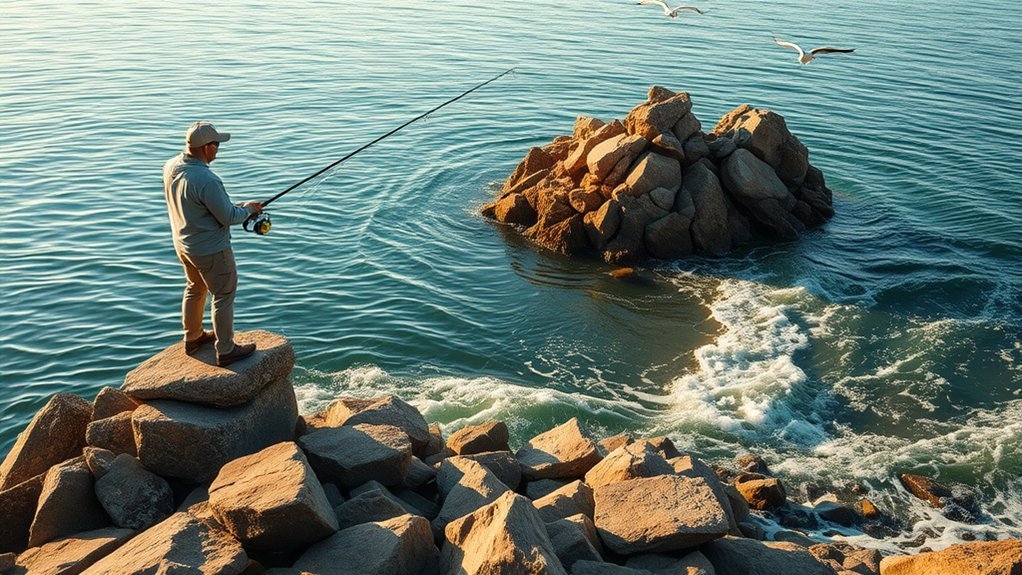
To fish rock piles for bass, first find isolated rock near bait, a depth change, current, or a hard-to-soft bottom transition. Confirm the structure with side imaging, mark its edges with GPS, then fish it from several angles. Start with a reaction bait when fish are active, switch to a bottom-contact presentation when they hold tight, and use finesse baits when they follow without committing. The goal is not to fish every rock you find; it is to identify the depth, edge, and presentation producing bites, then repeat that pattern on similar piles.
Last updated: September 21, 2026
This guide is bass-first. Walleye, crappie, and other predators also use rocky structure, but their ideal rigs, depths, and seasonal patterns may differ.
Quick Answer
Find a rock pile with side imaging or mapping, mark the top and important edges, then position the boat so your lure spends as much time as possible in the productive zone. Make a first pass with a crankbait, jerkbait, spinnerbait, bladed jig, or topwater when fish are active. Follow with a football jig, swing head, Carolina rig, Ned rig, or drop shot when fish hold close to bottom. Change casting angle, retrieve speed, and weight before abandoning a good-looking pile.
Key Takeaways
- The best rock piles combine hard cover with food, depth change, current, a bottom transition, or nearby deep water.
- Use mapping to identify candidates, side imaging to confirm rock, and GPS waypoints to mark the exact edge or isolated piece you want to cast to.
- Do not assume cooling water always pushes bass deeper; follow bait and use sonar and recent bites to identify the productive depth.
- Fish a pile from multiple angles and use reaction, bottom-contact, then finesse presentations before leaving.
- Around sharp rock, inspect and retie damaged line often and use the lightest weight that still gives reliable lure control.
At a Glance
| Best Time | Year-round when bait or bass are using rock. Low light, wind, current, seasonal transitions, and stable feeding windows can make specific piles more productive. |
| Difficulty | Moderate. The hardest parts are finding isolated rock, controlling boat position, and maintaining useful contact without constantly snagging. |
| Tools Needed | Side imaging or sonar, GPS or mapping, and baits matched to depth: crankbaits, jerkbaits, jigs, swing heads, Carolina rigs, drop shots, Ned rigs, or other local confidence baits. |
| Main Goal | Identify the productive depth and edge, keep your lure in that zone, then repeat the same depth-and-structure pattern on similar rock piles. |
Why Rock Piles Hold Fish
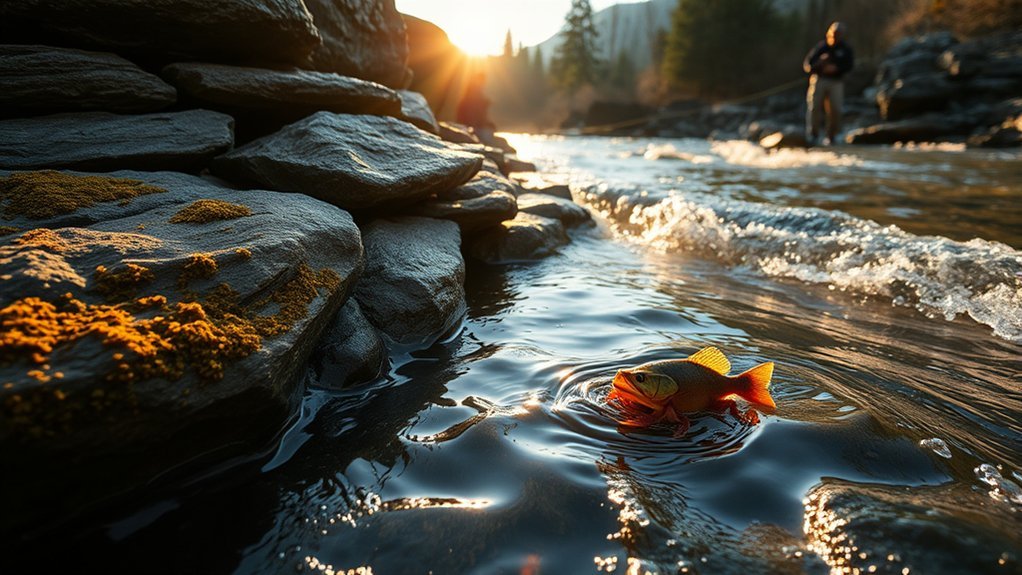
Rock piles can concentrate forage, create hard edges, provide cavities and ambush cover, and break current. Fisheries agencies also use rock piles as habitat because they can support aquatic insects and crustaceans and attract baitfish and larger fish looking for food.
For bass, the most useful pile is usually not simply the biggest one. Look for an isolated boulder, a change from gravel to chunk rock, a gap, a ledge, the downstream side of current, or an outside edge next to deeper water. Those small differences give fish a defined place to hold and feed.
Treat the rock pile as a group of smaller targets: the top, deep edge, current side, slack side, gaps, and hard-to-soft transition can each fish differently.
Sun-exposed rock can sometimes create a localized temperature edge, but do not use warmth as a universal rule. Bait location, current, depth, water clarity, oxygen, fishing pressure, and nearby escape water usually give you more useful clues.
At night, the same piles can remain productive, but lure vibration, silhouette, boat control, and knowledge of the surrounding hazards become more important.
Seasonal Patterns and Timing
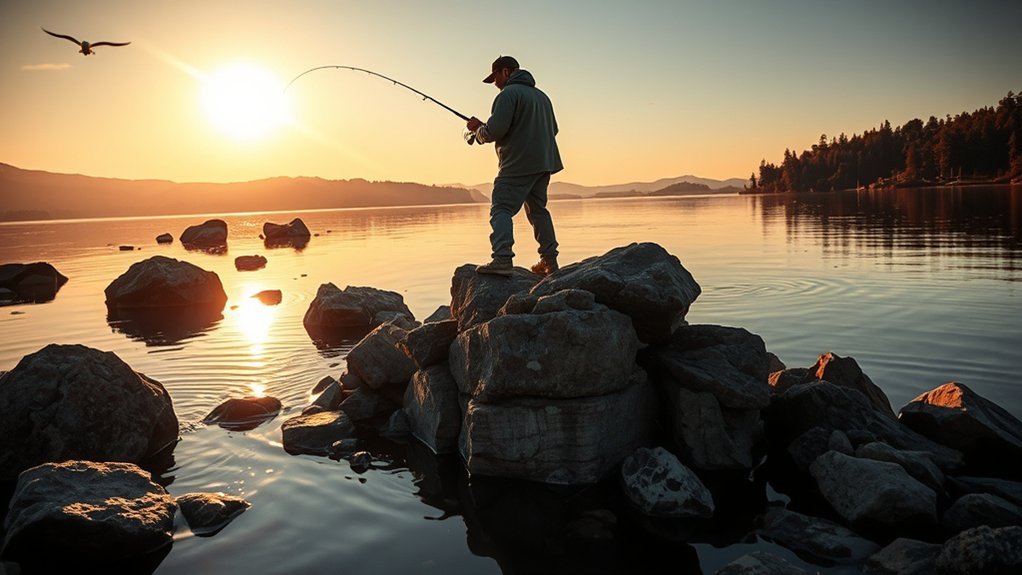
Rock piles can produce throughout the year. Instead of assuming bass always move in one direction as the water warms or cools, use each season as a starting point and then let bait, sonar, current, weather, and actual bites refine the pattern.
| Season | Where to Start | What to Watch |
|---|---|---|
| Spring | Rock near spawning pockets, secondary points, first breaks, and warming shorelines | Staging fish, clearer water, crawfish activity, and access to shallow spawning areas |
| Summer | Offshore piles, humps, channel edges, main-lake points, and current-washed rock | Deep bait, thermocline position where relevant, current, shade, and fishing pressure |
| Fall | Both shallow feeding rock and deeper offshore structure | Bait movement; do not assume every fish automatically moves deeper as water cools |
| Winter | Steeper rock, deep edges, channel-related structure, and nearby vertical depth change | Slow fish, short feeding windows, bottom-hugging marks, and the need for controlled presentations |
In fall specifically, some bass move shallow with bait while others remain offshore. Creek mouths, points, flats with isolated rock, and deeper edges can all produce. Follow the forage first, then determine whether the fish are using the top, side, or base of the structure.
During spring, shallow rock near spawning areas can become a staging zone. In summer, deeper piles near channels, humps, bridges, and offshore points may become more important, especially during bright conditions or heavy fishing pressure.
Note: Depth numbers are starting points, not fixed rules. Water clarity, current, lake level, forage, sunlight, oxygen, and fishing pressure can move fish shallower or deeper during the same day.
How Do You Find Rock Piles With Side Imaging?
Side imaging is most useful as a search tool. It scans to the sides of the boat so you can cover a broad flat, point, creek arm, or channel edge without driving directly across every potential target. Current Humminbird guidance also supports marking promising structure directly as GPS waypoints.
Use side imaging to find the pile, its edges, and isolated pieces; use a waypoint and a second sonar view to refine where you actually want to cast.
Rock typically appears as a hard, irregular return compared with smoother soft bottom. Defined shadows can help reveal the shape and height of larger rocks or boulders. A sudden change in brightness, texture, or shadow can also reveal the hard-to-soft transition around the pile.
Do not try to interpret every bright mark as a fish. Rock and fish can be difficult to separate on a single sonar view. Use traditional sonar, down imaging, or forward-facing sonar when available to add context, and pay attention to nearby bait.
- Scan wide first: cover the flat, point, creek arm, or ledge before making casts.
- Identify differences: prioritize isolated boulders, larger pieces, gaps, hard-to-soft transitions, and the steepest edge.
- Mark the target: save the exact feature, not merely the general area.
- Check depth and bait: note where bait and fish are positioned relative to the top and base.
- Plan the cast: approach from a direction that keeps the lure on productive rock for the longest distance.
If you get a bite, record the depth and exact structural detail. Finding another pile with the same combination is often more productive than continuing to fish random rock.
Locating Isolated Rock Piles Using Google Earth and GPS
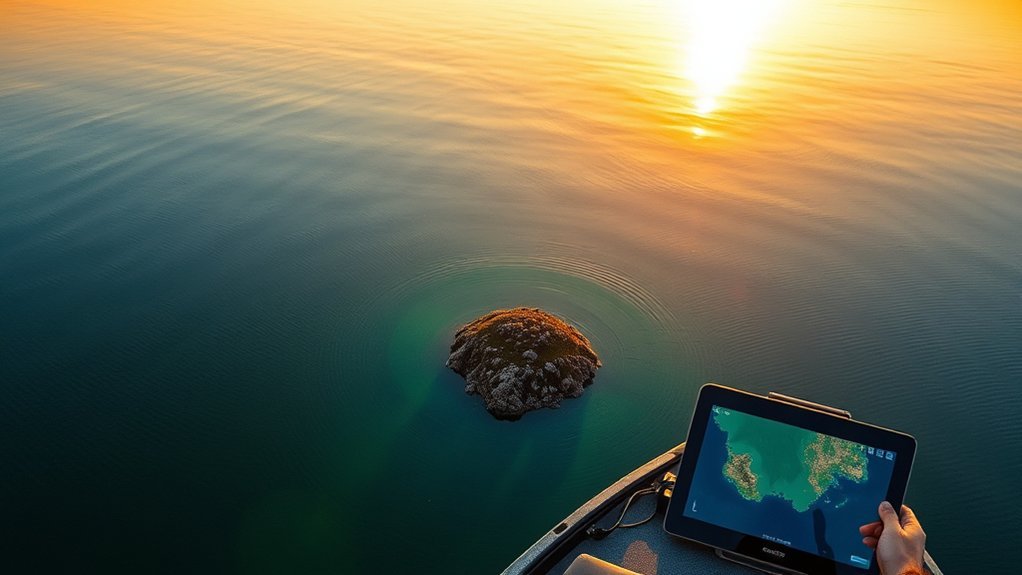
Use Google Earth as a scouting aid, not as a substitute for sonar. Low-water or clear-water imagery may reveal exposed rock, old roads, shoreline extensions, points, foundations, or other clues that continue beneath the surface. Deep or stained water may hide the structure completely.
Save promising coordinates, then verify them on the water with side imaging or another sonar view. Standard contour maps can also miss small isolated piles, so scan the surrounding flat or break instead of assuming the waypoint itself is the only target.
| Tool | Best Use | Action |
|---|---|---|
| Google Earth | Low-water and shoreline clues | Save candidate locations |
| Fish finder | Confirm rock, depth, bait, and edges | Scan the surrounding area |
| GPS | Precise return and boat setup | Mark the exact high-value feature |
For a broader explanation of contour maps, sonar, and structural features, see the mapping structure for fishing guide. Keep this page’s workflow focused on rock: locate, confirm, mark, fish, and repeat.
How to Fish a Rock Pile Before Changing Spots
A productive rock pile deserves more than one cast, but it also does not need endless random lure changes. Use a simple 3-pass system so every change answers a question.
- Pass 1 — Locate and angle: mark the pile’s top, deep edge, isolated rock, and current or wind side. Make casts that cross the best feature from different directions.
- Pass 2 — Reaction: cover active fish with a crankbait, jerkbait, spinnerbait, bladed jig, swimbait, or topwater when conditions suit them.
- Pass 3 — Bottom and finesse: slow down with a football jig, swing head, Carolina rig, Ned rig, drop shot, or worm if the first pass produces followers, missed strikes, or no response.
- Repeat the productive detail: if the bite comes from the 14-foot downhill edge beside a hard-to-soft transition, search for that same combination on nearby piles.
- Log the result: record depth, lure, retrieve, wind/current direction, water temperature, and where on the structure the bite occurred.
In moving water, approach so the lure can enter the holding area naturally from upstream or up-current. In still water, use wind direction, depth contour, and the steepest edge to choose the first casting angle.
Pro Tip: When a bottom-contact bait bumps a rock and suddenly feels light, heavy, or different, reel down before deciding it is another snag. Strikes often occur as a lure clears an obstruction or falls off an edge.
Best Baits for Shallow Rock Piles
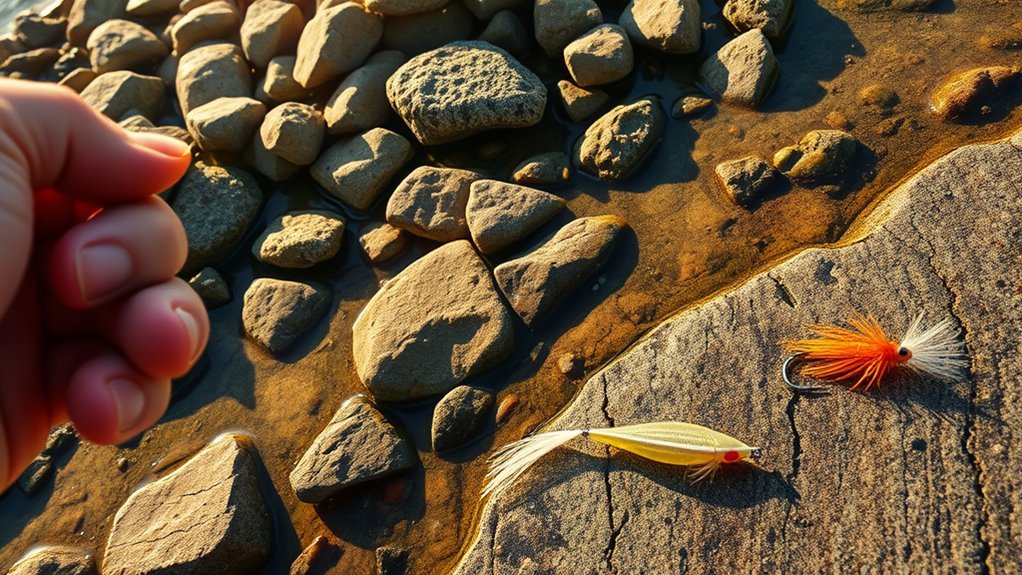
On shallow rock, choose lures according to fish activity, water clarity, wind, and how aggressively you can contact the structure without wedging the bait into cracks.
A crankbait can be excellent when its running depth lets it tick or deflect off the rock without constantly burying between stones. Jerkbaits and topwater become stronger choices when fish are looking up, while Ned rigs and other soft plastics let you slow down after the reaction bite fades.
- Crankbait: select a running depth that reaches the rock; pause or change cadence after deflection.
- Jerkbait: work it over or beside the pile when fish are suspended or feeding on baitfish.
- Topwater: use during suitable low-light, calm-to-moderate conditions, or when bait is visibly high in the water column.
- Ned rig or finesse plastic: use when fish are pressured, inactive, or holding tightly to individual rocks.
- Spinnerbait or bladed jig: use wind, stained water, or low light to help fish track vibration around broken rock.
Do not force a lure simply because it is labeled a “rock bait.” If it hangs repeatedly, change the casting angle, running depth, weight, or head style.
[Amazon Products Picked for You]

SHALLOW SQUAREBILL: Designed and tested by Kevin VanDam, the Strike King KVD 2.25 Shallow squarebill is engineered to deflect off rocks in extremely shallow water and run true where other lures cannot. Each pack includes 1 lure only

SHALLOW SQUAREBILL: Designed and tested by Kevin VanDam, the Strike King KVD 2.25 Shallow squarebill is engineered to deflect off rocks in extremely shallow water and run true where other lures cannot. Each pack includes 1 lure only

Smallest member of model a family, perfect for rocky banks, 4-6 feet diving range
What Baits Work Best on Deep Rock Piles?
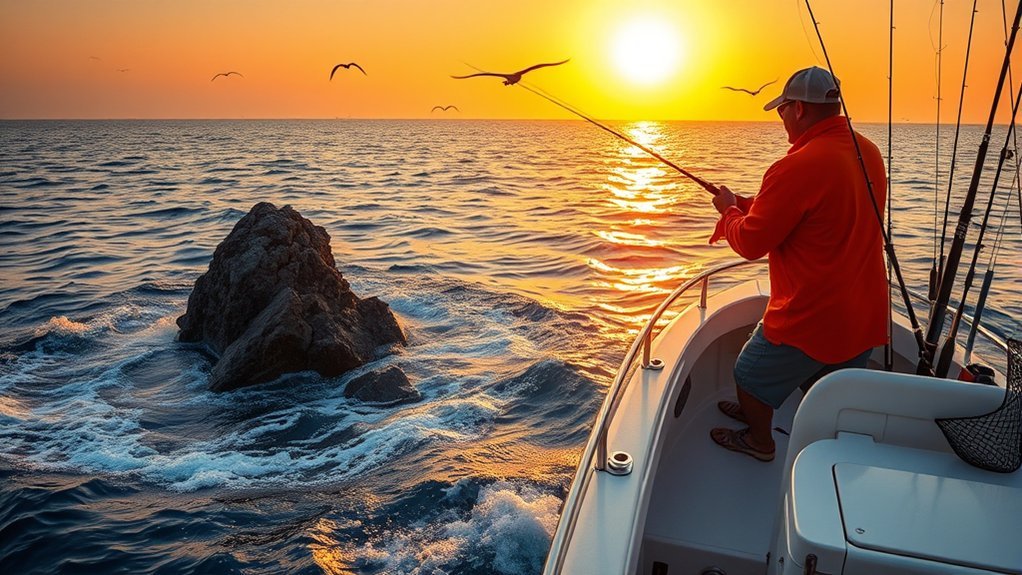
Deep piles usually reward presentations that reach the target efficiently and remain controllable in wind, depth, or current. Football jigs are a standard choice on hard bottom because their wide head can crawl and deflect through many rocky areas. Carolina rigs, drop shots, swing heads, deep crankbaits, and finesse rigs give you different combinations of bottom contact and lure movement.
| Bait Type | Best Role | Adjustment |
|---|---|---|
| Football Jig | Crawl hard bottom | Drag slowly and change angle if it wedges |
| Carolina Rig | Cover a broad bottom zone | Match sinker weight to depth/current |
| Drop Shot | Hold a bait above bottom | Useful when fish are close to rock but not pinned to it |
| Deep Crankbait | Reaction and deflection | Choose diving depth to contact the target without excessive wedging |
| Ned Rig | Finesse | Use a controllable weight and watch line on the fall |
| Swing Head | Steady bottom-contact retrieve | Use enough weight to maintain feel without forcing the head into cracks |
The correct weight is the lightest one that still lets you control the lure and understand what it is contacting. If a heavy bait wedges constantly, lighten it, change angle, or switch to a more snag-resistant presentation.
[Amazon Products Picked for You]

PREMIUM JIG: The Strike King Tour Grade Football Jig bass fishing lure is the ultimate jig for deep water fishing. Each pack includes 1 lure only

What you receive: package comes with 8 pieces bass football jigs kits, including 8 pieces different colors silicone skirts for your option; Enough quantity and diverse colors can meet your daily use and replacement; They are good assistants for fishing

GREAT FISHING JIG BAIT - Having a tough time catching good fish lately? Buckeye Lures 3/4 oz Football Jig is a great choice to revolutionize your game; Try this skirted jig bait to catch all the fish you want to catch
Retrieve Techniques and Presentation Tips
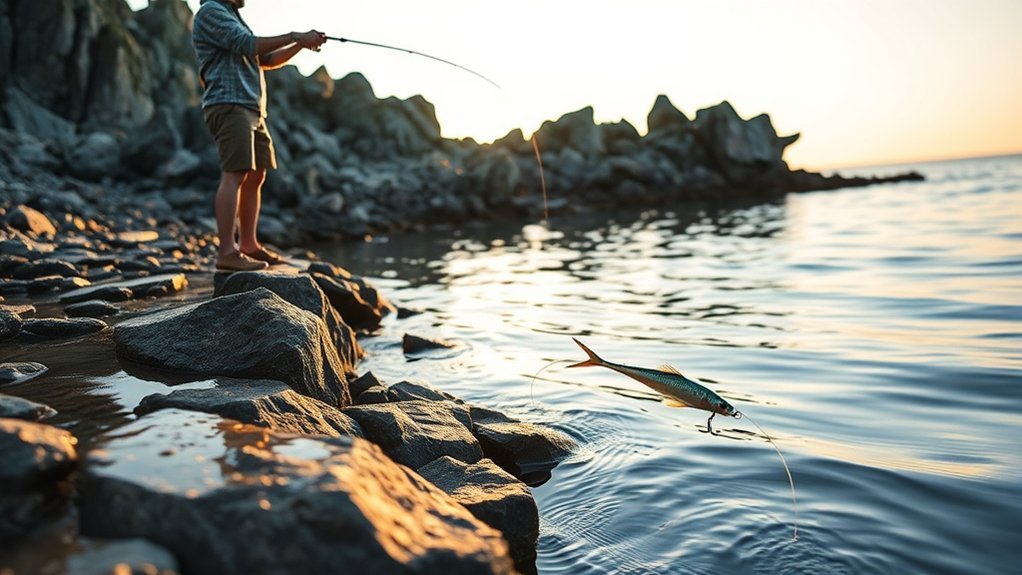
On rock, the retrieve should tell you something about the bottom. A sudden change from rough contact to smooth bottom may mark the edge. A sharp drop may signal a ledge. Repeated wedging may mean your weight or casting angle is wrong.
For moving lures, use controlled contact rather than trying to smash every rock. For jigs and rigs, maintain enough tension to detect changes without pulling the lure continuously into crevices.
- Establish contact: know whether the lure is touching rock, hovering above it, or running too deep.
- Pause after a change: deflection, a ledge, or the end of hard bottom can trigger a bite.
- Change cadence: try a short pause, twitch, drag, or acceleration before changing lures.
- Change weight when necessary: use enough to maintain control, but reduce weight if the lure repeatedly wedges.
- Change boat position: a new angle often changes how the bait crosses the same cracks and edges.
When you get a strike, repeat the exact retrieve and structural contact before making a major change.
Boat Position, Casting Angles, and Line Control
Boat position determines how long your lure stays on useful rock. If you sit too close, the bait may rise away from the structure quickly. If you sit too far away, wind and excess line can reduce control and bite detection.
A good starting position is outside the deep edge, casting beyond or across the target so the lure travels through the highest-percentage feature. If that fails, reposition to fish parallel to the edge or bring a bottom bait uphill or downhill.
In current, cast upstream or up-current when the presentation allows it so the lure approaches the holding area naturally. On windblown lake structure, position the boat so you can control the line without being pushed directly over the fish.
Fluorocarbon is commonly used around rock for sensitivity and abrasion resistance, while braid with a fluorocarbon leader can improve feel and hook-setting power at distance. Neither is immune to damage. Inspect the final few feet of line frequently and retie whenever you find roughness, flattening, or a nick.
Warning: Rocks can damage line quickly. Check the final few feet after a snag, hard scrape, or fish catch. Replace or retie damaged line before making another important cast.
Night Fishing Strategies Around Rocks
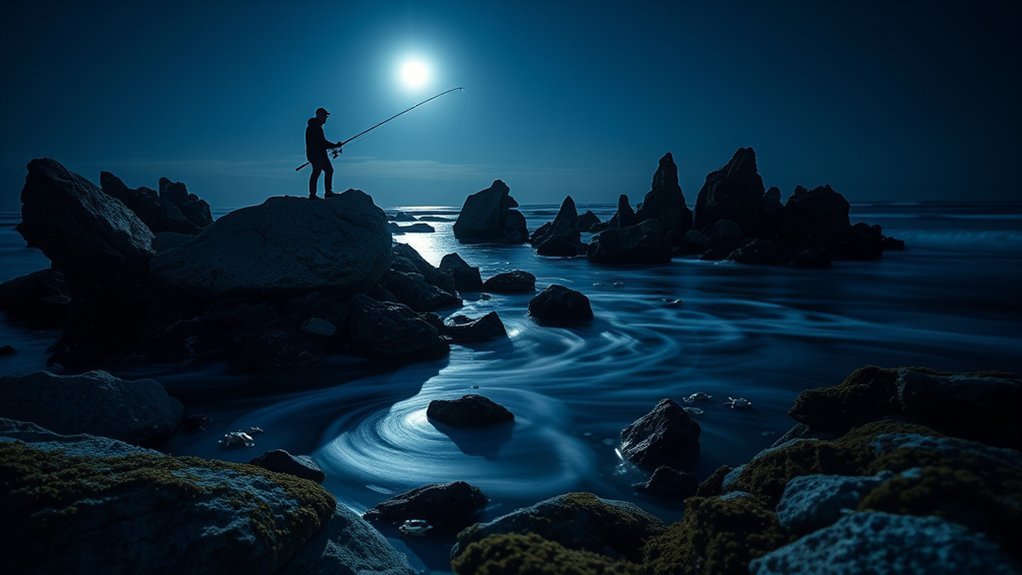
At night, simplify your presentation and concentrate on places you already understand. Bass may use the same tops, edges, current seams, and isolated rocks they use during daylight, but you have less visual information for boat positioning and snag avoidance.
A dark spinnerbait can create a strong silhouette and vibration, while jigs, worms, and other bottom presentations let you work known edges slowly. Do not treat black as a mandatory color; profile, vibration, speed, water clarity, and forage still matter.
Use a sensitive setup, maintain line control, and reduce unnecessary lure changes. If fish stop responding to a moving bait, slow down with a worm or jig along the same productive edge before leaving.
Navigation matters more than lure selection after dark. Slow down around unfamiliar rock, operate the navigation lights required for your boat and location, know your safe route, and check applicable local boating and fishing rules before the trip.
Jig, Swing-Head, and Hair-Jig Setups That Work
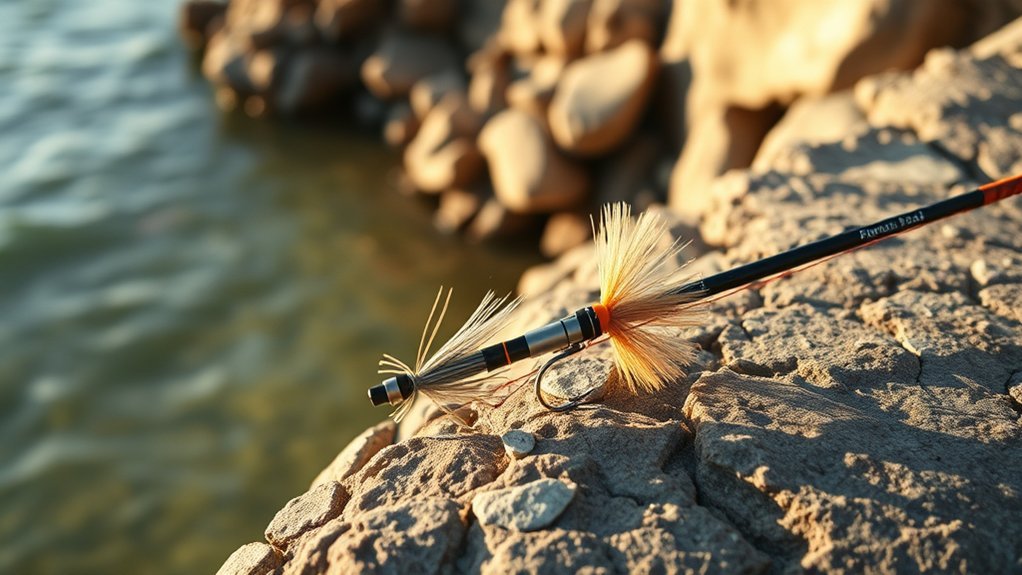
Do not treat a swing-head jig and a hair jig as the same setup. A swing head is typically a heavier bottom-contact system with a freely pivoting soft-plastic hook. A hair jig is commonly a lighter, subtler presentation, particularly for smallmouth and cold or clear water.
For a swing head, 1/2 to 1 oz is a practical range seen in established bass techniques, with hook size matched to the soft plastic. A 3/4 oz head can be useful in deep water, wind, or current, but it is not automatically the correct starting weight on every pile.
For a hair jig, use a much lighter setup when conditions allow. Hair-jig anglers commonly use light spinning tackle and lighter line, with jig weight chosen according to current, depth, casting distance, and desired fall rate.
[Amazon Products Picked for You]
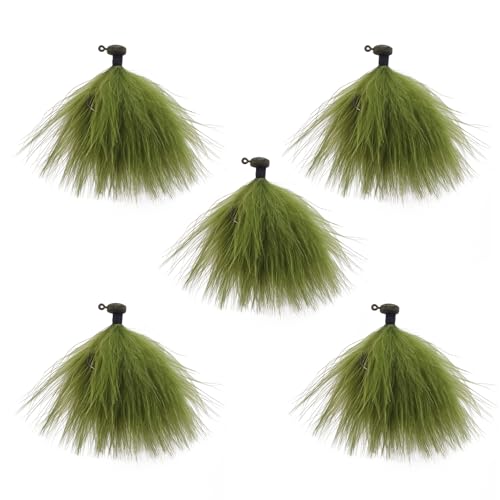
Combine the natural underwater action of a classic marabou jig with the bottom-sensitive, stand-up power of a Ned jig head. Ideal for targeting finicky bass in cold or pressured waters.

Beautiful Appearance:Simulated fish head combined with 3D simulation of fish eyes, plus hand-tied colorful skirt, with advanced dyed deer hair and crystal glitter, so that they are in the water as in swimming, so that our bucktail jigs more realistic more attractive fish effect.

Double the Strength:2X High-carbon steel sharp hooks with strong pulling power, allowing you to catch big fish easily, black nickel graphic layer, anti-rust makes your hooks more durable.
Hair Jig Rigging Tips
Hair jigs work best when the profile, fall rate, and retrieve match the forage and conditions. Bucktail, marabou, or other hair can imitate small baitfish or bottom forage without requiring aggressive rod movement.
Start light enough to preserve the jig’s natural movement while still reaching and controlling the target. Around shallow or moderate-depth rock, small hair jigs can be crawled, glided, or slowly swum. In deeper water or current, increase weight only as much as necessary.
- Use light spinning tackle when fishing small hair jigs.
- Choose line and leader strength for the jig size, water clarity, fish size, and abrasion risk.
- Cast past the key rock and let the jig reach the intended depth before beginning the retrieve.
- Use a slow drag, glide, deadstick, or steady retrieve before adding aggressive hops.
Jig Weight & Action
Match jig or swing-head weight to depth, current, wind, bottom shape, and desired retrieve. More weight can improve bottom feedback, but excessive weight may fall too quickly or wedge more often.
Football jigs are especially useful on hard bottom and rocks. Dragging rather than repeatedly hopping them can keep the bait in contact with the structure while reducing unnecessary vertical movement.
For swing heads, a steady retrieve that lets the head contact bottom is a common approach. For hair jigs, preserve the lighter presentation and let subtle material movement do more of the work.
Common Mistakes When Fishing Rock Piles
The biggest mistake is treating every rock pile as equal. Productive piles usually have an extra reason for fish to be there: forage, a depth break, current, an isolated object, a bottom transition, shade, or nearby deep water.
- Leaving after one angle: Work the top, deep edge, and at least one alternate casting direction before abandoning a high-quality pile.
- Ignoring the outside edge: Fish may sit where rock ends and deeper or softer bottom begins.
- Using one lure too long: Start with an efficient presentation, then slow down if fish are present but not chasing.
- Using too much weight: More weight improves feel only until it begins wedging constantly or kills the presentation.
- Forgetting line damage: Retie after abrasion instead of waiting for the next hookset to expose a weak spot.
- Driving over shallow fish: Scan and approach from outside the target when possible.
- Ignoring bait: Attractive-looking rock without food may be less productive than a smaller pile surrounded by forage.
- Failing to log the bite: Depth, position, lure, wind/current, and retrieve can reveal a repeatable pattern.
Mapping, Practice, and Continuous Learning
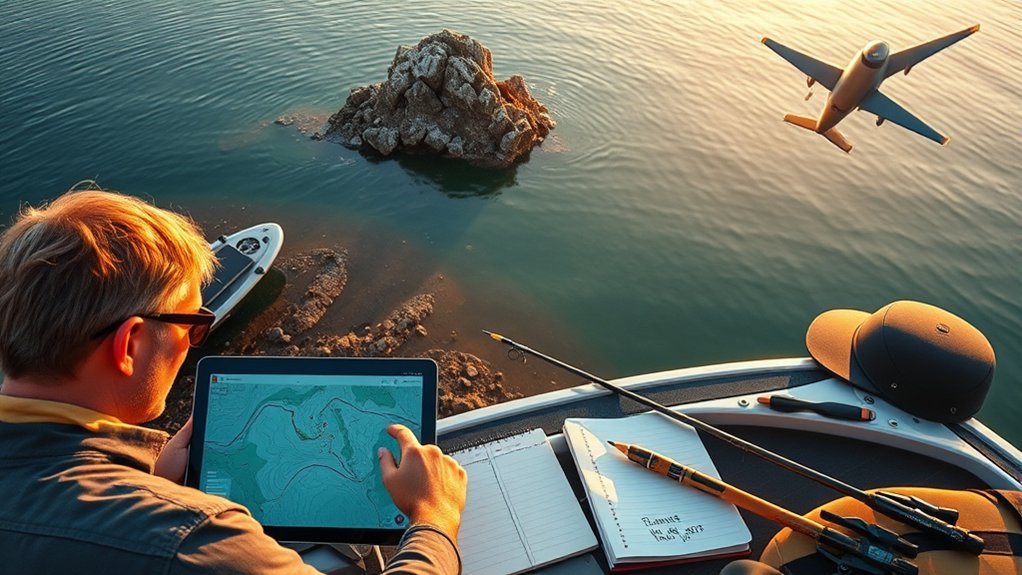
Build a personal map of productive rock by combining candidate locations from maps or aerial imagery with waypoints confirmed on the water. The important information is not simply “rock here.” Record the useful detail: isolated boulder, 15-foot deep edge, current seam, hard-to-soft transition, or bait concentration.
Practice returning to those marks from different directions. Accurate casting and boat position are part of the pattern, especially on small offshore piles that may hold only a few fish.
Review sonar screenshots and trip notes after fishing. The goal is to recognize which structural details repeat across productive locations rather than accumulating hundreds of undifferentiated waypoints.
Map and Mark Spots
Use mapping to narrow the search, then let sonar confirm what is actually underwater. Keep separate waypoints for the top, deep edge, isolated rock, or other high-value feature when one general waypoint is not precise enough.
- Use aerial imagery and contour maps to identify candidate zones.
- Scan the surrounding area rather than driving only over the initial mark.
- Use side imaging to distinguish isolated rock, edges, and hard-bottom changes.
- Refine or delete weak waypoints after fishing them so your map becomes more useful over time.
Practice With Equipment
Electronics become useful when you can interpret them without spending the entire trip changing settings. Practice on visible or already-known structure so you can compare what you know is underwater with what appears on the screen.
Keep the system dependable: inspect power connections, battery condition, transducer position, saved waypoints, and chart data. Back up important marks when your electronics allow it.
Practice casting to a waypoint from several boat positions so you learn how wind, current, line angle, and casting distance affect the path of the lure across the structure.
Organize a small group of reaction, bottom-contact, and finesse baits so you can run the 3-pass system without wasting time searching through tackle.
Related Guides
Frequently Asked Questions
What is the 80/20 rule in fishing?
The 80/20 rule is a practical way to describe how a small percentage of water often produces a large percentage of bites. Around rock piles, use it as a reminder to identify the productive depth, edge, current seam, bait zone, or isolated rock instead of treating the entire pile equally.
Do bass like rock piles?
Yes. Bass commonly use rocky structure when it provides forage, cover, current breaks, depth change, or access to nearby feeding and resting water. An isolated boulder, outside edge, gap, or hard-to-soft transition can be more important than the size of the entire pile.
What is the best bait for bass on rock piles?
There is no single best bait for every rock pile. Use crankbaits, jerkbaits, spinnerbaits, bladed jigs, or topwater for active fish when conditions suit them. Use football jigs, swing heads, Carolina rigs, drop shots, Ned rigs, worms, or hair jigs when bass hold tighter to the structure or need a slower presentation.
How do you find rock piles with side imaging?
Scan likely flats, points, creek arms, and offshore breaks while watching for hard, irregular returns, defined shadows, isolated boulders, and changes from smooth to broken bottom. Mark the exact feature as a waypoint, then use another sonar view when available to check depth, bait, and fish position before casting.
How do you stop getting snagged in rocks?
Use the lightest weight that still gives you control, change the casting angle if the lure repeatedly enters the same cracks, and choose snag-resistant rigging or head shapes where necessary. Lift or crawl a bait instead of aggressively dragging it through large gaps, and inspect your line after every hard scrape or snag.
Should you fish the top or bottom of a rock pile first?
Start where the current conditions suggest active fish should be, then check the other zone. During feeding activity, wind, current, or low light, the top and upper edges may be productive. During bright conditions, heavy pressure, or inactive periods, the deep edge, base, and bottom transition may deserve attention sooner.
Conclusion
Rock-pile fishing becomes more repeatable when you stop treating the whole pile as one spot. Find the exact high-value feature with side imaging, mark it, choose a casting angle that keeps the lure in contact with productive water, and work through reaction, bottom-contact, and finesse presentations.
Use crankbaits, jerkbaits, spinnerbaits, and topwater when bass are active. Reach for football jigs, swing heads, Carolina rigs, drop shots, Ned rigs, worms, and properly matched hair jigs when fish hold closer to the structure.
Most importantly, record what produced the bite. When depth, bait, bottom transition, current or wind, and lure presentation line up on one pile, look for the same combination on the next one.