
You might think your baby can sit forward in a stroller as soon as they seem curious about their surroundings, but age alone is not the safest guide. Before using a forward-facing stroller seat, your baby needs steady head and neck control, enough trunk strength to sit with support, and a secure harness fit. Most babies reach this point around 6 months, but some need more time.
Quick Answer
Most babies can sit forward in a stroller around 6 months, once they can hold their head steady, sit with minimal support, and fit securely in the stroller harness. Newborns and younger infants should use a bassinet, infant car seat, or fully reclining stroller seat instead.
Key Takeaways
- Most babies are ready for a forward-facing stroller seat around 6 months, but development matters more than age.
- Your baby should have strong head and neck control before sitting upright in a stroller.
- Newborns need a bassinet, infant car seat, or fully reclining stroller seat with proper support.
- Always use the stroller harness, check the brakes, and follow the stroller’s age and weight limits.
- If your baby slumps, fusses, or cannot stay supported, return to a reclined or rear-facing position.
At a Glance
| Typical Age | Around 6 months, depending on your baby’s development |
| Main Readiness Sign | Steady head and neck control without flopping or slumping |
| Best for Newborns | Bassinet, infant car seat attachment, or fully reclining stroller seat |
| Safety Must-Haves | Five-point harness, stable seat, working brakes, and correct age and weight rating |
Understanding Newborn Stroller Usage

Understanding how to use a stroller for your newborn is fundamental for their safety and comfort. You should always choose a newborn stroller setup designed for infants, such as a bassinet, an approved infant car seat attachment, or a stroller seat that reclines fully. This type of setup helps protect your baby’s head, neck, airway, and spine because newborns cannot hold their heads up on their own.
A young baby should not be placed upright in a stroller seat too early. If their head falls forward, slumps sideways, or bobs with movement, they are not ready for that position. A reclined position gives better head and neck support and reduces the chance of discomfort during walks.
You should also securely buckle your baby into the stroller every time, even for a short walk or a quick stop. Use the parking brake whenever you stop, and avoid hanging heavy bags from the handle because that can make the stroller tip backward. Regularly check the stroller for any signs of wear and tear, including loose wheels, weak brakes, torn straps, or a seat that no longer locks firmly into place.
For most babies, it is safer to wait until they show reliable head and neck control, often around six months, before moving to a forward-facing stroller seat. Observing signs of readiness, such as holding the head steady and sitting with support, is critical in this process. Your baby’s safety should always come first.
Warning: Do not use pillows, loose blankets, or aftermarket positioners to prop your baby upright in a stroller. These items can shift during movement and may create a safety risk. Use only inserts or accessories approved by the stroller manufacturer.
When to Transition to Forward-Facing Stroller
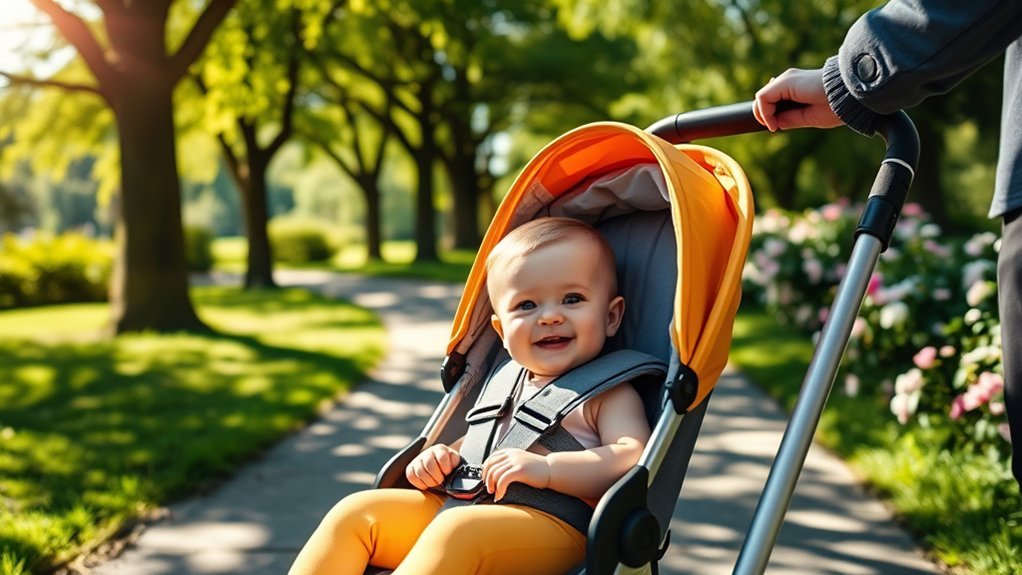
As your baby grows and gains head and neck control, you might start considering when it is time for them to sit in a forward-facing stroller seat. Typically, this change occurs around 6 months, but readiness can vary. Some babies may seem ready closer to 4 or 5 months, while others may need more time before they can sit safely in a more upright position.
The safest decision depends on your baby’s strength, posture, comfort, and the stroller’s instructions. Before making the switch, check your stroller manual for the approved age, weight, and seat-position limits. Some stroller seats are safe for younger babies only when fully reclined, while others require the child to sit independently before using the upright seat.
When choosing stroller types, make sure your model has a secure harness that meets safety standards. Observing your baby’s comfort is also vital. Watch whether they enjoy sitting more upright or whether they slump, cry, stiffen, or seem tired. Their curiosity about the world can often influence the timing of this change, but curiosity alone does not mean their body is ready.
Consulting with a pediatrician can provide personalized guidance on when to make the switch, especially if your baby was premature, has low muscle tone, has reflux, or has any developmental concerns. Ultimately, trust your instincts as you navigate this exciting milestone for your little one, but let safety and readiness guide the timing.
[Amazon Products Picked for You]

Fits almost stroller wagons:Myvikcar stroller wagon support bar allows you to customize the interior layout of your stroller, It fitting kids’ seating and activity needs without crowding. Designed for the internal width 14.2''-24.8''(36-63cm),include 2 seats,4 seats and 6 Seats of most brands on the marketing.Compatible with Wonderfold W,L,X series,Jeep Stroller wagon by delta children,EVER ADVANCED,KEENZ,SPORARY,Baby Trend Expedition LTE 2-in-1 Stroller Wagon,ELEMARA,MOMFANN and Rovique.

Flexible Space Customization: The VIOTIIN Stroller Wagon Support Bar allows you to customize the interior layout of your stroller, adjusting the space according to your child’s needs
Car iPad Holder For Peace of Mind: A Must-Have iPad Or Tablet Holder to Keep Your Young Ones Entertained for A Calm and Enjoyable Ride While Driving For A Long Time.
Signs Your Baby Is Ready to Face Forward
Readiness for a forward-facing stroller seat is easier to judge when you look for clear physical and comfort cues. Your baby may be ready when they can keep their head upright during movement, sit with little support, and stay centered in the stroller seat without sliding to one side.
- Steady head control: Your baby can hold their head up without it flopping forward, backward, or sideways.
- Better trunk strength: They can sit with support and do not collapse into a curled or slumped position.
- Secure harness fit: The straps sit correctly on the shoulders and hips without leaving large gaps.
- Interest in sitting up: Your baby looks around, reaches, smiles, or seems engaged while upright.
- Comfort during the ride: They remain relaxed and supported instead of fussing, arching, or sliding down.
If your baby cannot maintain a steady position, move them back to a reclined seat, bassinet, or rear-facing setup. It is normal to try forward-facing for a short walk first and then adjust based on your baby’s reaction.
Importance of Head and Neck Control

Understanding your baby’s head and neck control is essential for safe stroller use. You’ll want to monitor their development closely, as adequate control typically emerges between 4 to 6 months. Recognizing these milestones helps guarantee a smooth shift to a forward-facing seat when they’re ready.
Developmental Milestones Assessment
While evaluating developmental milestones, head and neck control is essential for determining when your baby can sit in a forward-facing stroller seat. Typically, babies develop this control around 4 to 6 months of age. During your developmental assessments, observe if your baby can hold their head steady and sit with minimal support.
These growth milestones indicate readiness for a forward-facing position. Look for signs like your baby showing curiosity about their surroundings while maintaining a stable head position. Also watch how they behave during tummy time, when being carried upright, and when placed in a supported sitting position. If they can lift their head, turn it side to side, and recover their posture without struggling, they may be getting closer to stroller readiness.
Remember that each infant grows at their own pace, so it’s important to shift gradually. This guarantees your baby’s comfort and safety as they adapt to this new seating arrangement, promoting their independence and exploration of the world.
Safe Seating Transition
Before changing your baby to a forward-facing stroller seat, ensuring they have developed adequate head and neck control is essential. Typically, this occurs around 4 to 6 months of age. You should observe:
- Your baby can hold their head steady without assistance.
- They can sit with minimal support, demonstrating strength and stability.
- If needed, use a snug manufacturer-approved insert for added safety and support.
Forward-facing seating not only caters to baby preferences but also encourages cognitive development as they engage with their surroundings. However, always prioritize safety by regularly inspecting stroller features, especially the harness and seat stability. This way, your baby can enjoy their new view while remaining secure during outings.
Monitoring Head Control
Monitoring your baby’s head and neck control is essential for their safety in a stroller. Typically, this ability develops between 4 to 6 months. Before moving to an upright position, your baby should be able to hold their head steady and sit with minimal support.
Weak neck muscles in newborns require adequate head support to prevent discomfort or potential injury from head flopping. Look for signs of readiness, like pushing up while lying on their tummy and showing interest in their surroundings. Consult your pediatrician to assess your baby’s neck strength and individual growth, ensuring they’re prepared for the stroller. Prioritizing this development helps you enjoy outings with confidence, knowing your little one is secure and comfortable.
Note: Premature babies may need extra time before they are ready for upright stroller seating. Ask your pediatrician whether to judge readiness by actual age, adjusted age, or individual development.
Safety Considerations for Stroller Use

When using a stroller, it’s essential to guarantee your baby has proper head and neck support, especially if they’re under 6 months. Always secure the harness system to keep your little one safe and prevent any risk of sliding out. Regularly inspect the stroller for stability to avoid tipping while your child is seated.
Proper Head and Neck Support
Guaranteeing proper head and neck support is vital for your baby’s safety while using a stroller. Newborns have underdeveloped muscles, so you should prioritize their comfort until they can maintain head control. Here are some key points to take into account:
- Use a bassinet or fully reclining seat for newborns to support infant posture.
- Transition to a stroller seat around 6 months when your baby can hold their head steady for better stroller stability.
- Incorporate a snug, stroller-approved insert only if the manufacturer allows it.
Regular supervision is essential when your baby is upright to prevent accidents. Always inspect the stroller for wear and verify the harness system is secure for maximum safety.
Secure Harnessing Importance
A secure harness is essential for your child’s safety in the stroller, as it keeps them from sliding or falling out during movement. Most strollers feature a five-point harness system, providing optimal security and support for young children. Always buckle your infant in, even when the stroller is stationary, to prevent accidental falls or tipping.
Regular harness adjustments are vital as your child grows. The harness should be snug but not too tight, ensuring comfort while maintaining harness safety. A good fit usually means the straps lie flat, the chest clip is positioned correctly if your stroller has one, and you cannot pinch loose webbing at the shoulder. Check the harness frequently for proper fit and functionality. This practice safeguards your child and allows you to enjoy outings with peace of mind.
Regular Safety Inspections
To maintain your child’s safety while using a stroller, you must conduct regular safety inspections. Adhering to these safety protocols can prevent accidents and guarantee a smooth ride. Use this inspection checklist to guide your evaluations:
- Check for Wear and Tear: Inspect wheels, brakes, locks, frame joints, and the harness system for proper functionality.
- Verify Secure Harness: Ascertain the harness is adjusted correctly every time you place your baby in the stroller.
- Confirm Weight and Age Limits: Always check the manufacturer’s specifications to keep your child within safe usage parameters.
- Test the Parking Brake: Engage the brake before placing your baby in the stroller and whenever you stop.
- Avoid Handlebar Overload: Heavy bags on the handle can change the stroller’s balance and increase the risk of tipping.
Choosing the Right Stroller for Your Baby

Choosing the right stroller for your baby is vital for their comfort and safety. Start by verifying the stroller has a fully reclining seat or can accommodate an infant car seat, providing essential head and neck support for newborns. Check the age and weight limits to confirm safe use, especially for infants under six months. Look for stroller features like adjustable harnesses and snug inserts to offer extra support as your baby adapts to a seated position.
Portability and maneuverability are also important, particularly if you plan frequent outings. You’ll want a stroller that fits easily into your lifestyle. A lightweight stroller may be easier for errands, while a travel system can be helpful for younger babies who still need an infant car seat. A full-size stroller may offer better recline, storage, and suspension for longer walks.
Finally, always read customer reviews and verify safety ratings to guarantee the stroller meets necessary standards for your child’s age and development. Prioritizing these factors will help you choose a stroller that promotes both safety and baby comfort, allowing you both to enjoy your time together on the go.
[Amazon Products Picked for You]

ULTRA LIGHTWEIGHT TRAVEL DESIGN: Weighs only 13 lb, making it easy to lift, carry, and store. Perfect lightweight umbrella stroller for summer travel, vacations, and everyday errands. Compact enough for car trunks and convenient on-the-go portability for busy parents.

REVERSIBLE SEAT DESIGN – Adapt to your child's growing curiosity. The KOOLABABY Stroller features an innovative reversible seat that easily converts between parent-facing and world-facing positions. Keep your baby facing you for vital eye contact, bonding, and reassurance during the early months. As they grow older and more curious, simply flip the seat forward so they can explore the world. One stroller provides infinite possibilities for your family.

✔Upgraded Comfort Stroller - The backrest reclines to 170 degrees for napping and sits upright at 100 degrees for play, allowing your baby to sit or lie comfortably in multiple positions. Its one-handed, one-step fold mechanism allows the stroller to stand independently when folded and includes a built-in trolley bar for easy pulling like luggage.
Forward-Facing vs Rear-Facing Stroller
Many parents wonder whether forward-facing or rear-facing is better. Both positions can be useful, but they serve different needs. A rear-facing stroller lets you see your baby’s face, watch their breathing and posture, and respond quickly if they fuss. This is especially helpful for younger infants who still need close monitoring.
A forward-facing stroller gives older babies a wider view of the world. They can watch people, trees, cars, pets, and daily activity, which may make walks more exciting. However, forward-facing should come after your baby has enough strength and support to sit safely.
- Use rear-facing or reclined seating for newborns and younger infants who need more support.
- Use forward-facing seating when your baby has steady head control, better trunk strength, and a proper harness fit.
- Switch back when needed if your baby becomes overstimulated, tired, or uncomfortable.
Some stroller models allow both positions, which can be helpful during the transition. You can start with short forward-facing rides and return to rear-facing when your baby needs rest or reassurance.
Pro Tip: Try the first forward-facing stroller ride close to home. Start with 10 to 15 minutes, watch your baby’s posture and mood, then increase the time gradually if they stay comfortable.
[Amazon Products Picked for You]

Room to Grow: Use from birth as a newborn stroller with easy conversion to infant pramette mode, allowing your baby to sleep comfortably on the go. This stroller adapts as your child grows, providing a secure ride from newborn to toddler stages. Compatible with Maxi-Cosi and Nuna car seats (car seat adapter sold separately).

Reversible stroller seat can face parent or the world, for just the right ride as baby grows

Room to Grow: Use from birth as a newborn stroller with easy conversion to infant pramette mode, allowing your baby to sleep comfortably on the go. This stroller adapts as your child grows, providing a secure ride from newborn to toddler stages. Compatible with Maxi-Cosi and Nuna car seats (car seat adapter sold separately).
Observing Your Child’s Comfort and Preferences

As your baby grows, observing their comfort and preferences becomes essential in determining when they can sit forward in the stroller. Pay close attention to their baby cues; this will guide your decision. Here are three key indicators to contemplate:
Observing your baby’s cues is vital for deciding when they can sit forward in the stroller.
- Head Control: Your baby should hold their head steadily, showing they can support themselves in an upright position.
- Engagement: If they seem excited and engaged while sitting up, it’s a sign they may be ready for a more upright stroller experience.
- Comfort Level: Use a manufacturer-approved snug insert for added support if your stroller allows it, ensuring their stroller comfort during the shift.
Regularly check in with your child’s reactions and preferences. This will help you adjust their seating position, promoting safety and comfort while strolling. Remember, individual readiness can vary, so trust your instincts and your baby’s cues.
If your baby cries as soon as you turn the seat forward, they may not dislike the view itself. They may be tired, overstimulated, uncomfortable, or missing the reassurance of seeing you. Try again later, choose a shorter route, or switch back to rear-facing until they seem more relaxed.
Parental Insights on Stroller Transitions
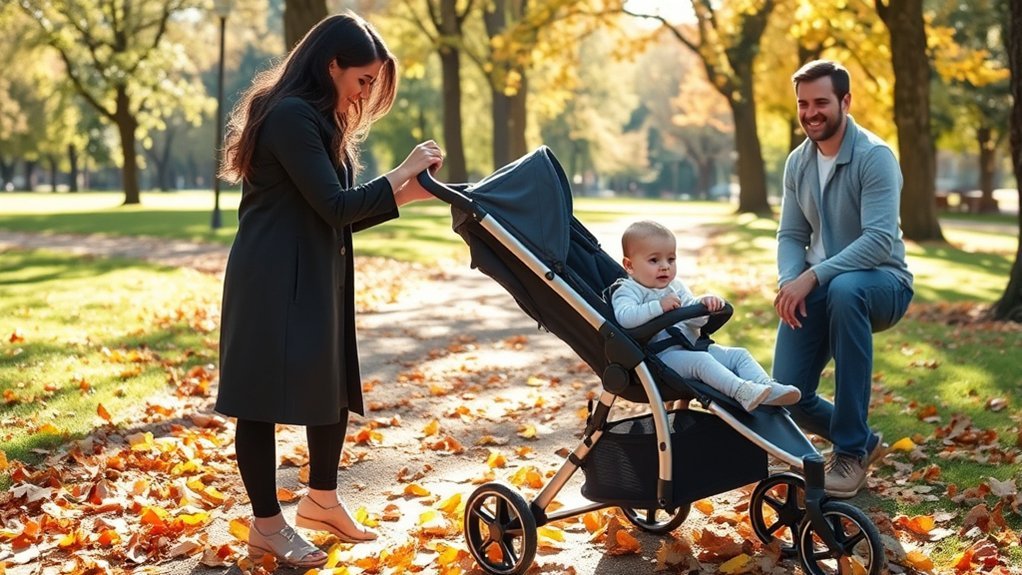
How do you know when it’s the right time to change your baby to a forward-facing position in the stroller? Many parents find that around 6 months is ideal, once their child shows adequate head and neck control. Observing milestones, like your baby’s ability to hold their head steady and sit with minimal support, is essential. You might notice that your little one prefers sitting up and engaging with the world, which can guide your timing for this shift.
Parent experiences vary widely, with some starting as early as 5 months based on individual development. Community discussions often emphasize the importance of watching your child’s cues and comfort levels. Each baby has unique stroller preferences, so take your time to assess your child’s readiness.
Changing to a forward-facing position can open up new experiences, but ensuring your baby is prepared will make the journey more enjoyable for both of you. It can also help to make the transition during a calm time of day, not when your baby is hungry, sleepy, or already fussy.
Common Mistakes to Avoid
Even a good stroller can become unsafe if it is used before your baby is ready or if small safety steps are skipped. Avoid these common mistakes when moving your baby to a forward-facing stroller seat:
- Switching based only on age: Six months is a common guideline, but your baby’s head control and posture matter more.
- Ignoring the stroller manual: Every stroller has its own age, weight, recline, and harness rules.
- Using loose padding: Extra pillows or blankets can shift and reduce harness safety.
- Leaving the harness loose: A loose harness can let your baby slide down or lean out of the seat.
- Skipping brake checks: A stroller can roll unexpectedly if the parking brake is weak or not fully engaged.
- Rushing long outings: A baby who is new to forward-facing may need shorter rides at first.
Taking a gradual approach helps your baby build comfort while giving you time to notice any posture, harness, or stroller-fit issues.
Related Guides
Frequently Asked Questions
Can I use a forward-facing stroller for newborns?
No. You should not use a forward-facing upright stroller seat for newborns unless the stroller is specifically approved for newborn use in that position, which is uncommon. Newborns need a bassinet, infant car seat attachment, or fully reclining stroller seat that supports the head, neck, and airway.
What are signs my baby is ready for forward-facing?
Your baby may be ready when they can hold their head steady, sit with minimal support, stay centered in the seat, and fit securely in the harness. Curiosity is a good sign, but it should come with enough head, neck, and trunk strength.
Are there strollers specifically designed for forward-facing seating?
Yes. Many standard strollers, lightweight strollers, jogging strollers, and travel strollers have forward-facing seats. Look for a sturdy frame, a safe recline range, a five-point harness, clear age and weight limits, and strong brakes.
How does forward-facing impact my baby’s social interaction?
Forward-facing can help an older baby observe people, movement, sounds, and surroundings more easily. This can support curiosity and engagement. However, younger babies may feel more secure rear-facing because they can see you during the walk.
What if my baby dislikes the forward-facing position?
If your baby dislikes the forward-facing position, switch back to a rear-facing or reclined setup temporarily. Try shorter rides, check the harness fit, avoid overstimulating routes, and make sure your baby is not hungry, tired, or uncomfortable.
Can my baby sit forward in a stroller before 6 months?
Some babies may be ready slightly before 6 months, but only if they have strong head control, enough trunk support, and a secure harness fit. Always follow the stroller manual and ask your pediatrician if you are unsure.
Should the stroller seat be fully upright when my baby first faces forward?
Not always. A slightly reclined forward-facing position is often more comfortable during the first transition. Use the stroller’s approved recline settings and avoid forcing your baby into a fully upright seat before they can stay supported.
Conclusion
So, while you might think your little one is ready to zoom ahead in a forward-facing stroller at six months, remember that every baby is unique. It’s not just about their age; it’s about their head and neck control, comfort, harness fit, and curiosity.
The safest approach is to use a newborn-friendly stroller setup early on, then move to forward-facing only when your baby can sit with support and keep their head steady. Start with short rides, watch their posture, and switch back if they seem uncomfortable. Trust your instincts, consult your pediatrician when needed, and enjoy the journey together.
