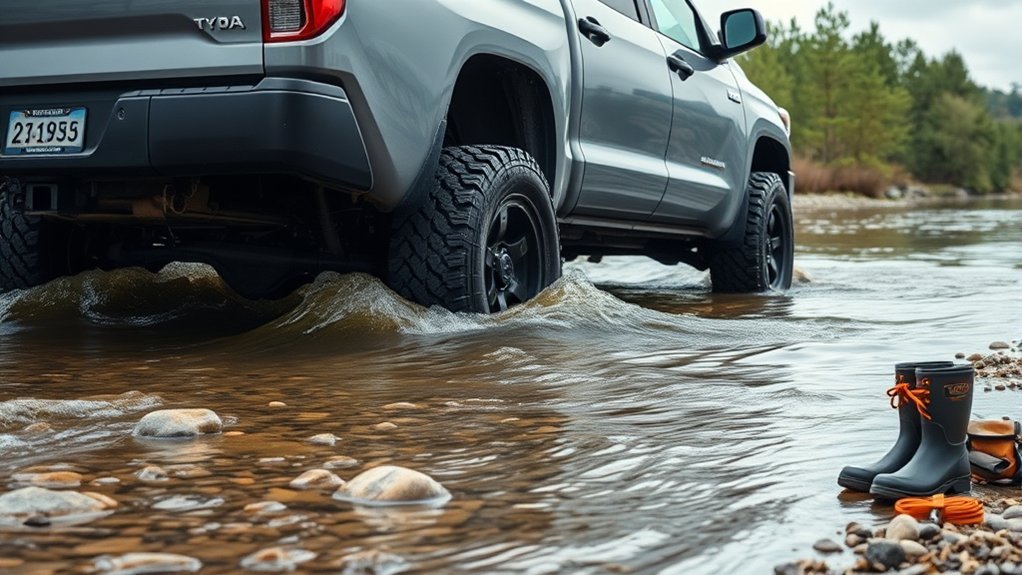
Toyota Tundra water fording depth is not one universal number for every year and configuration. One important documented example is the 2024 Tundra: its owner’s manual says trucks with electronically modulated air suspension must use HI/manual height mode when water is over about 20 in. (500 mm), stay at 18 mph (30 km/h) or less, and not drive through water deeper than about 28 in. (700 mm). That is a configuration-specific instruction, not an all-Tundra rating. For any other year or setup, use the owner’s manual for that exact truck. Never use a trail-fording number to justify entering floodwater, moving water, or water with an unknown bottom or exit.
Last updated: September 19, 2026 — checked against Toyota owner-manual resources, current 2026 Tundra information, and National Weather Service flood guidance.
Verification note: This guide separates manufacturer-published instructions from general off-road practice. It does not claim hands-on testing across every Tundra generation, trim, suspension, or modification.
Quick Answer
There is no single water-fording depth that should be applied to every Toyota Tundra. The 2024 owner’s manual gives a conditional 28 in. (700 mm) maximum for trucks with electronically modulated air suspension and specific height/speed instructions; do not transfer that figure to another year or configuration unless its manual says the same. For a controlled trail ford, verify the route, follow the exact truck’s 4WD and suspension instructions, move slowly and steadily, and inspect the truck afterward. Never enter floodwater or moving water.
Key Takeaways
- The 28-inch figure is documented for a specific 2024 Tundra air-suspension condition; it is not a universal all-year, all-trim limit.
- Never drive into floodwater, fast-moving water, or water with an unknown bottom or exit.
- A snorkel, lift, or raised suspension does not protect every drivetrain, electrical, and cabin component.
- Cross a controlled ford only at a slow, steady pace after checking the full route.
- Test the brakes and inspect the airbox, fluids, electrical components, and underbody afterward.
At a Glance
| Time Required | No fixed time. Take as long as needed to verify the full route and allow time for a post-crossing inspection. |
| Difficulty | Advanced and high-consequence. Turn around when depth, current, substrate, or exit conditions are uncertain. |
| Tools Needed | Exact model-year owner’s manual, a depth-measuring pole used only from a safe and stable position, a spotter, flashlight, gloves, and properly rated recovery equipment attached only to approved recovery points. Never enter floodwater on foot to measure it. |
| Cost | Turning around costs nothing. Recovery equipment, fluid service, damage inspection, and aftermarket modifications vary by truck and location. |
Warning: Never drive around a flood barricade or enter moving floodwater. The National Weather Service warns that 12 inches of rushing water can carry away most cars and 2 feet can carry away SUVs and trucks. A pickup’s size and four-wheel drive do not prevent it from floating or being swept downstream.
Toyota Tundra Water Fording Depth: When 28 Inches Applies
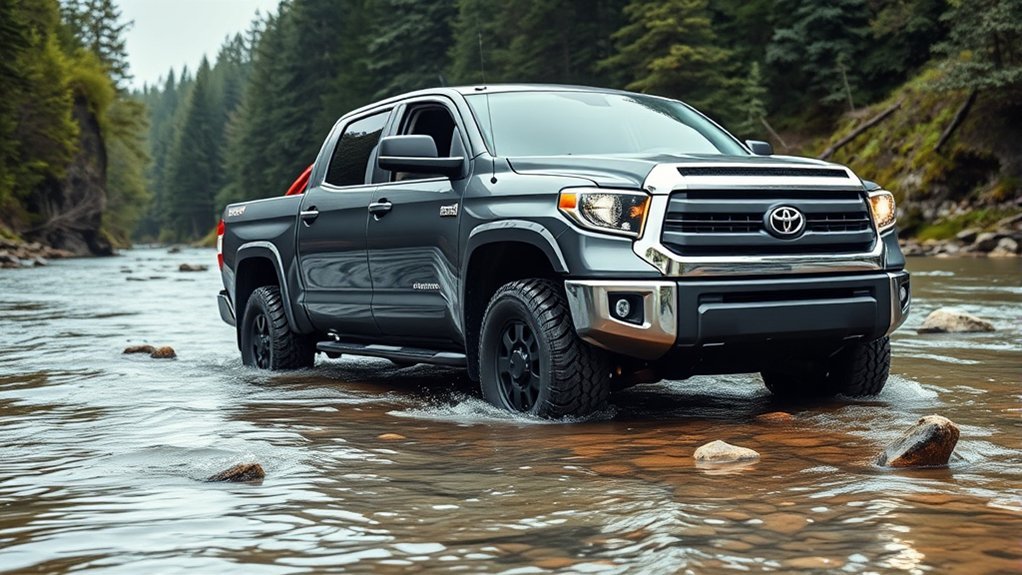
The commonly repeated 28-inch number needs context. In the 2024 Tundra owner’s manual, the instruction applies to vehicles with electronically modulated air suspension: above about 20 in. (500 mm), Toyota directs the driver to use the HI height setting and manual height-control mode, stay at 18 mph (30 km/h) or less, and not exceed about 28 in. (700 mm). That wording does not establish a 28-inch rating for every first-, second-, or third-generation Tundra, every suspension, or every modified truck.
Start with the Toyota owner’s manual for your exact model year. The manual’s warnings and operating procedures take priority over forum posts, generic depth charts, or figures published for another Toyota model.
Note: Toyota’s current public 2026 Tundra overview lists powertrains and capability equipment but does not present a universal Tundra water-fording depth. Treat any numeric limit as model-year- and equipment-specific unless Toyota states otherwise for your exact truck.
What Does the 28-Inch Tundra Number Actually Mean?
| Situation | What the Number Means |
|---|---|
| 2024 Tundra with electronically modulated air suspension | The owner’s manual gives special instructions above about 20 in. (500 mm) and says not to drive through water deeper than about 28 in. (700 mm), even in HI mode. |
| Another Tundra year or configuration | Do not assume the same 28-inch figure applies. Check the exact model-year manual and the equipment fitted to that truck. |
| Floodwater or moving water | Do not use a vehicle fording figure. Floodwater can hide washouts and exert enough force to move a truck. |
Wheel-hub height is sometimes used as a conservative visual reference in off-road practice, but it is not an official Tundra-wide rating. The air intake is also not the only limit: axle and drivetrain breathers, electrical connectors, door seals, starter components, cooling-system parts, and cabin electronics can remain vulnerable.
The safe decision is based on the lowest vulnerable component and the conditions of the crossing—not merely the height of the air intake.
Floodwater Versus a Controlled Trail Ford
A planned off-road ford is a known crossing with a stable bottom, visible entry and exit, little or no current, and a route that has been assessed before the truck enters. Floodwater is uncontrolled. It may hide a washed-out road, debris, open manholes, deep channels, unstable shoulders, or a current strong enough to move a truck.
Do not use an off-road water-depth figure to justify driving through a flooded road. Follow the National Weather Service’s Turn Around, Don’t Drown guidance whenever flooding is involved.
Preparing for Water Fording
Preparation begins before the front tires touch the water. If any part of the route cannot be verified safely, choose another path.
| Step | Action |
|---|---|
| Check the manual | Confirm the instructions and warnings for the exact model year, powertrain, four-wheel-drive system, and suspension. |
| Assess the water | Check depth across the entire route, current, bottom firmness, hidden holes, debris, and whether the water level is rising. |
| Confirm the exit | Make sure the far bank has enough traction, clearance, and space for the truck to leave without stopping. |
| Prepare recovery gear | Identify approved recovery points before entering. Keep bystanders away from tensioned straps, winch lines, and the vehicle’s travel path. |
| Select the drive setting | For 4WD models, select the mode specified for the conditions before entering. Do not assume 4L is required for every crossing; follow the shift procedure and limitations in the exact owner’s manual. |
| Secure the truck | Close the windows and sunroof, secure cargo, remove loose exterior items, and avoid crossing while towing a trailer. |
Pro Tip: Watch a similar vehicle complete the route only as one data point. Its tire size, lift, weight, line, and drivetrain may differ from yours, and the bottom may change after each vehicle passes.
[Amazon Products Picked for You]

EXTREME STRENGTH & HEAVY-DUTY BUILD: This complete recovery kit is built for the toughest jobs. It features two 1/2" soft shackles crafted from 12-strand UHMWPE rope with a massive 56,000 lbs breaking strength. Paired with a solid 7075 aerospace-grade aluminum recovery ring, this system provides unmatched strength and reliability when you need it most

Premium Material: This recovery ring winch is made of 7075 aluminum alloy for superior strength and durability. It is stronger, corrosion-resistant and less prone to rust than traditional grip blocks, ensuring a longer service time for a wide range of off-road gear and winch lines

Feel the Strength of 30,000 lbs: Gear up with our recovery kit! With durable 3 in x 30 ft and 3 in x 8 in polyester straps, you can anchor your vehicle securely and tackle any breakdowns with ease. Say goodbye to worries during heavy-duty operations – this strap is all about endurance and exceptional durability!
Breathers and Suspension Height
Axles, transmissions, and transfer cases use breathers to equalize internal pressure. If a low breather, damaged seal, or loose hose is submerged, contaminated fluid may result. Aftermarket breather extensions can reduce one pathway for water intrusion, but they must be routed correctly and fitted to the exact truck.
Do not rely on letting a hot differential cool as a substitute for checking depth, vent routing, and seal condition. Toyota guidance for Tundras warns that water can enter differentials, the transmission, and the transfer case and reduce the lubricant’s protective qualities. If those components may have been submerged, inspect for contamination after the crossing.
If your Tundra has height-control suspension, use it only as described in the owner’s manual. The 2024 electronically modulated air-suspension instruction above is a good example of why equipment matters. Raising the body does not raise the axle housings or every vulnerable component, so suspension height alone is not a safe-depth gauge.
Risks of Deep Water Crossings: What to Avoid
Water can damage a truck even when the engine continues running. The main risks include:
- Hydrolock: Water entering the intake can fill a cylinder. Because water does not compress like air, attempting to restart the engine can bend connecting rods or cause other internal damage.
- Loss of traction or flotation: Water reduces tire contact and can exert enough force to move the truck sideways.
- Hidden road or trail damage: A firm-looking surface may conceal a hole, washed-out shoulder, rock, stump, or sudden drop.
- Driveline contamination: Water can enter axle, transmission, or transfer-case lubricant through vents, seals, or submerged components.
- Wet-brake performance: Pads and rotors may provide less braking force until they dry.
- Electrical and cabin damage: Connectors, sensors, control modules, seat wiring, cameras, and interior electronics may be damaged if water reaches them.
- Cooling-system damage: A mechanical or electric fan operating in deep water can strike the water, flex, or damage nearby components.
Warning: If the engine stalls in water, do not repeatedly crank or restart it. Switch the ignition off, recover the truck using approved procedures, and have the intake, cylinders, engine oil, wiring, starter, and driveline inspected before operation.
Water Fording Modifications for Enhanced Safety
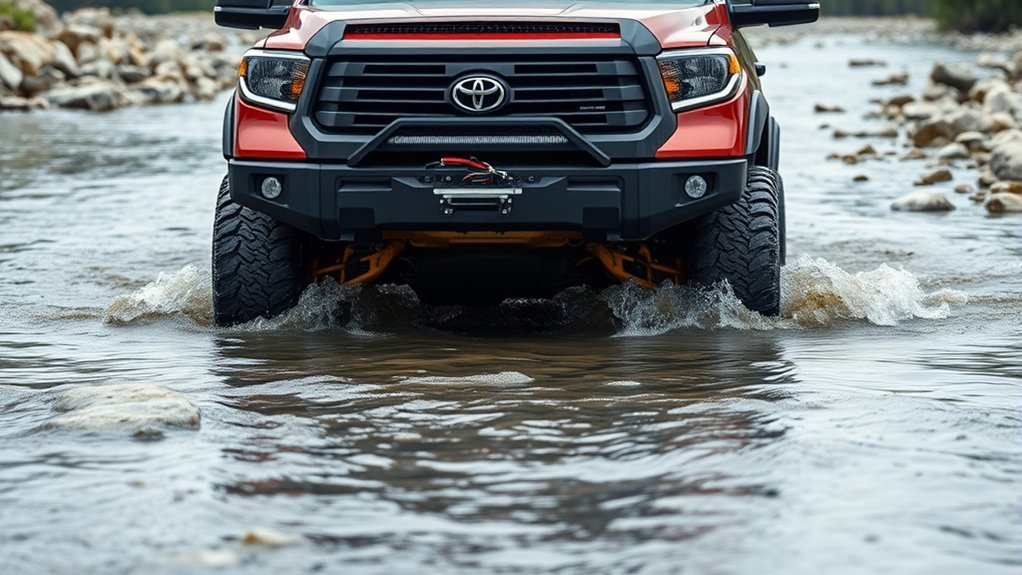
Modifications can reduce particular risks, but no single modification makes a Tundra waterproof. Every change should be selected for the exact generation and installed so that it does not interfere with emissions equipment, wiring, airbags, cooling, or warranty coverage.
[Amazon Products Picked for You]

Compatible For : 2014-2021 Toyota Tundra
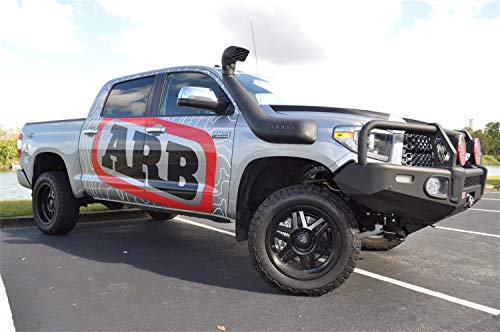
KEEPING YOUR ENGINE SAFE: It is vital to count with ARB SS56HF Safari Snorkel every time you may encounter severe environmental conditions such as deep water, heavy raining, dust and more. Safari snorkel will protect and safe your engine from any of these constant threats every time you hit the road into wild adventures.
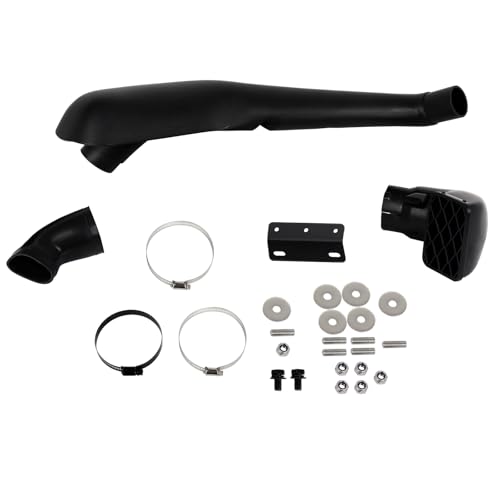
SUITABLE MODELS -For Toyota for Tundra 2-nd gen facelift 2014-2021
Differential Breather Modifications
A properly designed breather extension moves a vent opening higher and may reduce the chance of water entering through that vent. A complete evaluation should consider the rear axle, front differential, transfer case, transmission, hose connections, check valves, and routing.
Breather lines should be secured away from heat, sharp edges, suspension movement, exhaust components, and locations where mud can block the opening. An extension does not repair worn axle seals, and contaminated lubricant can still result from prolonged or repeated submersion.
Snorkel Installation Benefits
A correctly sealed snorkel raises the engine’s air-entry point and can reduce the chance of ingesting splash or dust. It does not automatically raise the Tundra’s approved water depth.
The factory airbox, lid, drain, duct joints, fender connections, and snorkel body must all be sealed for the system to protect against water. Even then, axle breathers, electronics, starter components, door seals, cooling fans, transmission vents, and cabin openings remain vulnerable.
Warning: Never use the height of a snorkel head as the truck’s maximum water-depth marker. A snorkel protects an intake path, not the complete vehicle.
How to Safely Navigate Water Crossings
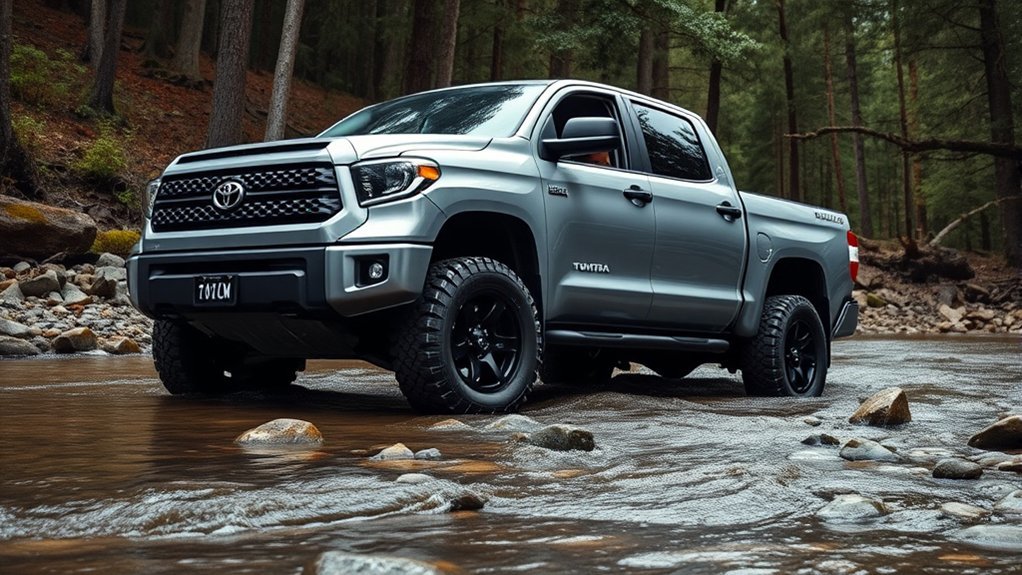
Proceed only when the route is controlled, the bottom and exit are known, there is no dangerous current, and the crossing remains within the instructions for your truck. If you need a refresher on the transfer-case modes before the trail, see the Toyota Tundra 4WD system guide before attempting the crossing.
- Stop and reassess: Check for changing weather, rising water, debris, or another vehicle blocking the exit.
- Select the correct setting before entering: On 4WD models, choose the mode and transmission range specified for the terrain in the owner’s manual. Do not change ranges in the water unless the manual specifically permits the procedure.
- Enter slowly: Avoid a hard splash that can force water into the grille, intake, electrical connectors, or engine bay.
- Maintain a very slow, steady pace: Use smooth throttle and only enough momentum to continue without spinning the tires or creating a large splash.
- Stay on the assessed line: Do not turn sharply, change gear unnecessarily, or chase another vehicle’s path without confirming it remains suitable.
- Avoid stopping mid-crossing when it is safe to continue: A stop can leave components submerged longer and make it harder to regain movement. If conditions become unsafe, prioritize occupant safety and recovery rather than forcing the truck forward.
- Exit gradually: Avoid sudden acceleration on the far bank, where wet tires and loose soil can reduce traction.
At low speed, a small bow wave may form naturally in still water. Do not accelerate to create a large wave. A large wave can return toward the truck, enter the engine bay, or affect nearby vehicles and trail users.
[Amazon Products Picked for You]
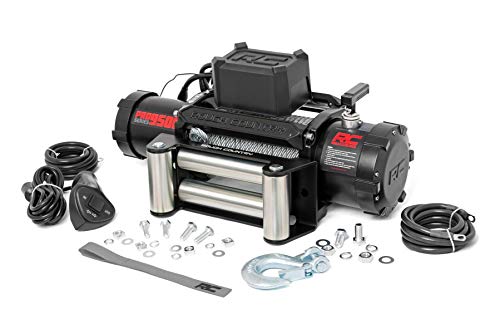
Built for the Extreme: Tackle tough recoveries with this IP67 waterproof and dustproof winch built to perform through water crossings, muddy trails, and dusty backroads....
If the Truck Loses Traction
Use smooth steering and throttle inputs. Aggressive wheelspin can dig the tires into a soft bottom. If forward movement stops, avoid repeated high-throttle attempts. Recover the truck using rated equipment and approved recovery points, with everyone clear of straps, shackles, winch lines, and the truck’s path.
If the Engine Stalls
Do not restart it in the water. Turn the ignition off and arrange a controlled recovery. Once the truck is on dry ground, inspect the air filter and airbox for water. A qualified technician may need to check the cylinders, engine oil, turbocharger intake path, electrical systems, and exhaust before the engine is turned over.
Post-Crossing Maintenance to Protect Your Vehicle
Even a successful crossing should be followed by a basic inspection. Mud, water, and silt can remain in areas that are not visible from the driver’s seat.
Inspect Fluids and the Air Intake
- Check the air filter and airbox: Stop driving if the filter, intake duct, or airbox contains water.
- Inspect axle lubricant: Milky, cloudy, foamy, or unexpectedly high fluid can indicate water contamination.
- Inspect transfer-case and transmission fluid as applicable: Follow the model-specific service procedure rather than opening components at the trail.
- Check engine oil: A milky appearance, rising level, or water droplets require immediate professional diagnosis.
- Service contaminated fluid promptly: Water reduces lubrication and can damage bearings, gears, clutches, and internal surfaces.
A fluid level alone does not prove that the lubricant is clean. If the water reached a breather or the truck remained submerged, arrange an inspection even when no immediate symptom appears. For component-specific fluid selection, see the Toyota Tundra differential fluid guide.
Check Electrical Components
| Component | Post-Crossing Check |
|---|---|
| Alternator and starter area | Look for packed mud, silt, unusual noise, slow cranking, or charging warnings. |
| Connectors and wiring | Check for trapped water, damaged seals, corrosion, loose harnesses, or warning lights. |
| Cameras and sensors | Clean lenses and verify parking sensors, driver-assistance systems, and exterior lighting. |
| Breather hoses | Confirm that hoses remain connected, unpinched, unobstructed, and securely mounted. |
Test the Brakes and Inspect the Underbody
After leaving the water, test the brakes gently at low speed in a safe area. Wet pads and rotors may provide less braking force. Light, controlled brake application can help dry the friction surfaces, but stop driving and arrange service if the pedal, stopping distance, vibration, noise, or warning lights remain abnormal.
Do not routinely open the brake-fluid reservoir to look for water. The hydraulic circuit is sealed. Persistent braking problems require a proper inspection.
Remove mud and vegetation from skid plates, suspension parts, the radiator, brake components, and the underbody. Check wheel bearings, axle seals, exhaust shields, recovery points, and protective panels for damage. Follow the owner’s manual for any required lubrication after off-road or water use.
Note: Have the truck inspected promptly if water entered the cabin or airbox, the engine stalled, a warning light appeared, a fluid looks contaminated, the brakes remain weak, or the water reached components above the level anticipated in the owner’s manual.
Related Guides
Frequently Asked Questions
How deep of water can a Toyota Tundra drive through?
There is no single depth to apply to every Tundra. The 2024 owner’s manual gives a specific maximum of about 28 in. (700 mm) for trucks with electronically modulated air suspension, together with height-mode and speed instructions. Use the manual for your exact year and equipment rather than transferring that number to another truck.
Is 28 inches the Toyota Tundra water-fording depth?
Not as a universal rating. The 28-inch figure is documented in the 2024 owner’s manual for vehicles with electronically modulated air suspension. That same passage says to use HI/manual height mode above about 20 in. (500 mm), stay at 18 mph (30 km/h) or less, and not exceed about 28 in. (700 mm). Confirm the instruction in the manual for your own model year before relying on it.
Can a stock Toyota Tundra drive through 2 feet of water?
A static 24-inch trail crossing cannot be judged by depth alone. The exact Tundra year, suspension, intake and breather locations, bottom condition, current, load, and exit all matter. Never apply a trail-fording number to floodwater: the National Weather Service says 2 feet of rushing water can carry away SUVs and trucks.
Should I use 4H or 4L for a Tundra water crossing?
Use the four-wheel-drive mode required by the terrain and your exact owner’s manual. Do not assume 4L is mandatory for every ford. Select the appropriate mode before entering and follow Toyota’s model-specific shift procedure and speed limitations.
Does a snorkel make a Tundra safe in deep water?
No. A sealed snorkel may protect the engine’s air-intake path, but it does not waterproof axle breathers, the transmission, transfer case, starter, electrical connectors, cabin, cooling-system components, or door seals. It does not create a new whole-vehicle water-depth rating.
What should I do if my Tundra stalls in water?
Turn the ignition off and do not attempt to restart the engine. Recover the truck using approved recovery points and properly rated equipment. Have the air intake, cylinders, engine oil, turbocharger plumbing on applicable engines, starter, electrical system, and driveline inspected before the engine is cranked.
Conclusion
Toyota Tundra water fording depth must be matched to the exact truck, not a generic 28-inch claim. The documented 2024 air-suspension instruction is useful context, but it should not be transferred to another year or configuration without checking that owner’s manual. Never enter floodwater, moving water, or a route with an unknown bottom or exit. For a controlled trail ford, verify the route, select the model-appropriate drive and suspension settings before entering, move slowly and steadily, and inspect the brakes, intake, drivetrain fluids, electrical systems, and underbody afterward.
Sources
- Toyota Manuals and Warranties — model-year owner’s manuals, operating instructions, warnings, and maintenance guidance.
- 2026 Toyota Tundra Official Vehicle Page — current Tundra lineup, powertrains, and capability information.
- National Weather Service: Turn Around, Don’t Drown — official floodwater guidance, including vehicle sweep-away thresholds.
