The most common Toyota Camry wheel bearing symptoms are a humming, rumbling, or growling noise that follows road speed and may change during gentle turns. Vibration, wheel movement, heat, or an ABS-related warning may also occur, but tires, brakes, CV joints, suspension parts, and drivetrain components can produce similar symptoms. Use the pattern of symptoms to judge urgency, then confirm the source before replacing parts.
Last updated: September 22, 2026 — reviewed against current Toyota owner guidance, NHTSA TireWise, and Timken wheel-hub technical guidance.
Quick Answer
Common Toyota Camry wheel-bearing symptoms include a hum or growl that rises with road speed, noise that changes during gentle turns, roughness, wheel play, or an ABS warning. Arrange an inspection promptly. Stop driving and tow the car if the wheel is loose, steering is unstable, grinding is severe, or the wheel area is hot or smoky.
Key Takeaways
- Wheel-bearing noise normally follows vehicle speed rather than engine rpm.
- A sound that changes during gentle left or right turns is a useful clue, but sound can travel through the body and identify the wrong side.
- Tires, brakes, CV joints, suspension parts, and drivetrain components can imitate bearing noise or vibration.
- A bearing can be noisy before it develops obvious wheel play, so a firm wheel does not rule out damage.
- Tow the car if you find wheel looseness, unstable steering, severe grinding, smoke, or unusual heat accompanied by worsening control or braking symptoms.
Toyota Camry Wheel Bearing Symptoms at a Glance
The most characteristic pattern is a low hum, growl, or rumble that becomes faster or louder as the Camry gains road speed. The sound may also change when the vehicle’s weight shifts from one side to the other during a gentle curve.
| Symptom | What You May Notice | Common Look-Alikes |
|---|---|---|
| Humming, rumbling, or growling | Noise rises with road speed and may change during a gentle turn | Cupped tires, aggressive tread, transmission noise, or differential noise |
| Grinding or roughness | Harsh sound, rough wheel rotation, or rapidly worsening noise | Brake pad, rotor, parking-brake, or backing-plate contact |
| Clicking or popping | Noise during sharp turns or direction changes | Outer CV-joint wear, inadequate bearing clamp, or excessive bearing end play |
| Vibration or wobble | Vibration through the steering wheel, floor, or seat | Wheel imbalance, tire damage, bent wheel, alignment, or suspension wear |
| Wheel looseness | Play at the wheel, vague steering, or changing brake feel | Ball joint, tie-rod, control-arm, lug-nut, or axle-nut problems |
| ABS or stability warning | A wheel-speed signal is missing, inconsistent, or outside the expected range | Sensor, wiring, connector, encoder, battery-voltage, or other brake-system faults |
Three-clue screening rule: A wheel bearing becomes more suspect when (1) the noise follows road speed, (2) the noise changes as a gentle turn shifts load from side to side, and (3) a second inspection clue points to the same wheel end, such as rough rotation, measurable play, localized hub noise, or abnormal wheel-speed data. This is a screening framework, not a substitute for a model-specific diagnosis.
The strongest clue is not noise volume by itself. It is a repeatable sound that follows road speed and changes when cornering shifts load from one side of the car to the other.
Uneven tire wear can appear alongside a loose bearing or suspension problem, but it does not identify the bearing. Incorrect inflation, alignment problems, tire damage, and worn suspension components are more common explanations. Inspect pressure, tread condition, and wear patterns using NHTSA’s TireWise guidance before blaming the hub.
An ABS or stability warning also has several possible causes. A damaged hub, bearing seal, magnetic encoder, wheel-speed sensor, connector, or wire can affect the signal used by the control system. Check the model-specific manual and Toyota’s warning-light guidance rather than assuming the bearing has failed.
Note: A standalone ABS warning is not the same as a red brake-system warning. Follow the instructions for your exact Camry. Stop safely and arrange assistance if a red brake warning appears, braking response changes, the pedal feels abnormal, or the vehicle becomes difficult to control.
What a Toyota Camry Wheel Bearing Does
A wheel bearing supports the hub and vehicle load while allowing the wheel to rotate with low friction. It also helps keep the hub, wheel, and brake rotor correctly positioned as the suspension and steering move.
Modern passenger-car wheel bearings are generally sealed and lubricated for service. Their seals keep lubricant inside while helping exclude water, salt, and road debris. Once a sealed bearing, race, seal, or encoder is damaged, the normal repair is replacement of the bearing or hub assembly rather than external lubrication or adjustment.
Some wheel ends use a magnetic encoder built into a seal or hub component. A nearby wheel-speed sensor reads that encoder and sends wheel-speed information to ABS, traction-control, and stability-control systems. The encoder, sensor, wiring, and connector are separate possible fault points even when they are located close together.
Why Model Year and Axle Position Matter
Camry wheel-end design varies by generation, model year, drivetrain, market, and front or rear position. A bearing may be pressed into a steering knuckle, incorporated into a bolt-on hub assembly, or paired with different sensor and axle hardware. Front-wheel-drive, all-wheel-drive, gasoline, and hybrid configurations can therefore require different parts and procedures.
Confirm the vehicle year, drivetrain, axle position, and VIN before ordering parts. Use Toyota’s manual lookup for owner information and Toyota’s Technical Information System for model-specific repair procedures, torque values, hardware rules, and inspection specifications.
Does Mileage Tell You When a Camry Wheel Bearing Is Bad?
There is no dependable mileage at which every Toyota Camry wheel bearing fails or must be replaced. One may last for much of the vehicle’s service life, while impact damage, contamination, corrosion, improper installation, or severe operating conditions can cause much earlier failure. For a deeper mileage-focused discussion, see Toyota Camry wheel bearing lifespan and failure signs.
Do not replace a bearing only because the odometer has reached an online estimate. Inspect the wheel end when symptoms appear, after a hard curb or pothole impact, or when a technician finds abnormal noise, roughness, heat, play, physical damage, or a related diagnostic trouble code.
Why Online Lifespan Estimates Are Limited
Published mileage ranges are broad aftermarket estimates, not universal Toyota maintenance intervals. Actual life depends on bearing design, road conditions, impact history, installation quality, corrosion exposure, tire condition, wheel condition, vehicle load, and previous repairs.
Your Camry’s maintenance guide may specify inspections of tires, brakes, steering, suspension, and related chassis components. The schedule varies by model year and market, so select the correct vehicle through Toyota’s manual and warranty lookup.
Factors That Affect Bearing Life
| Factor | How It Affects the Bearing | What Helps |
|---|---|---|
| Potholes and curb impacts | Can dent bearing surfaces or damage the hub, wheel, tire, knuckle, or alignment | Inspect the wheel end after a severe impact or a sudden new noise |
| Water, road salt, and damaged seals | Can allow corrosion or contamination to damage precision surfaces | Repair damaged related components and investigate corrosion during service |
| Incorrect pressing or installation | Force through the wrong race can damage rolling elements, seals, or the encoder | Use the correct support, tools, pressing direction, and Toyota procedure |
| Incorrect fastener torque | Too little or too much clamp can contribute to looseness, heat, or premature damage | Use a calibrated torque wrench and the exact year-specific specification |
| Wheel and tire problems | Damage or severe imbalance can add vibration and make diagnosis harder | Maintain pressure, balance, alignment, wheel condition, and correct tire fitment |
| Excess load or repeated harsh use | Raises operating load and heat at the wheel end | Stay within the vehicle’s rated loading limits |
Signs That Inspection Is Due
Arrange an inspection for a new road-speed-related hum or growl, rough wheel rotation, changing cornering noise, wheel movement, unexplained heat, or an ABS-related warning. A worn bearing does not have to show every symptom.
Noise alone cannot confirm the diagnosis. A technician may need a controlled road test, tire and brake inspection, lift inspection, scan-tool data, temperature comparison, and chassis-listening equipment to separate hub noise from tire, brake, axle, suspension, or drivetrain noise.
Can a Wheel Bearing Be Bad Without Wheel Play?
Yes. Damage to a raceway or rolling element can produce noise before looseness becomes easy to feel by hand. Some loaded bearings also sound different on the road than they do while the vehicle is raised. A wheel that feels firm during a basic shake test therefore does not rule out bearing damage.
The opposite is also true: wheel play does not automatically identify the bearing. Ball joints, tie rods, control-arm components, loose lug nuts, axle-nut problems, or damaged mounting parts can create movement. The source must be isolated before parts are replaced.
What Causes Toyota Camry Wheel Bearings to Fail?
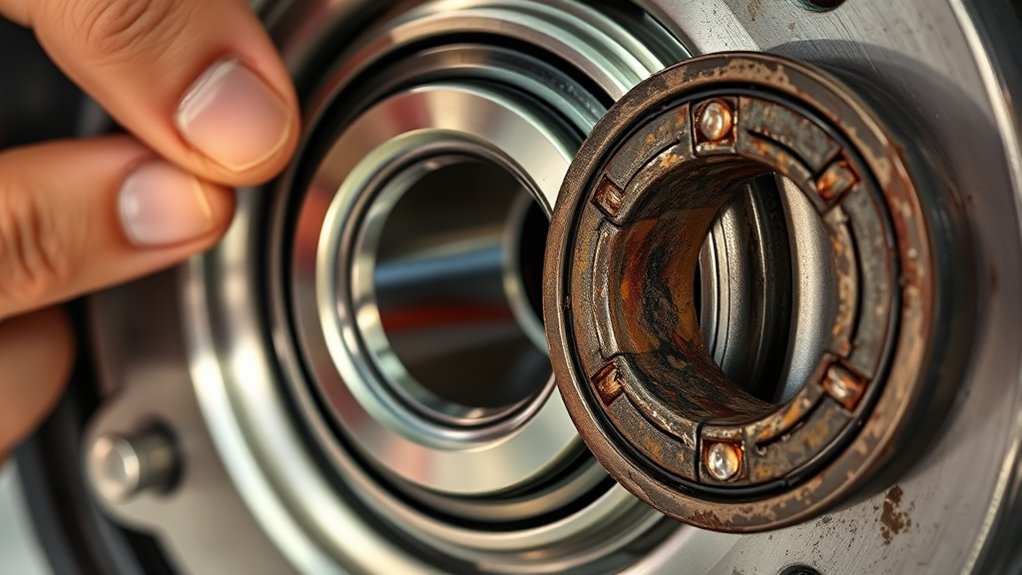
Wheel bearings can fail through accumulated fatigue, impact damage, contamination, corrosion, loss of proper clamp, or installation errors. A hard pothole or curb strike may damage the bearing directly or bend the wheel, affect the tire, disturb alignment, or damage nearby suspension parts.
Water and road salt can accelerate wear when a seal or mounting surface is compromised. Corrosion can also make removal difficult and prevent a replacement hub from seating squarely unless the mounting surface is cleaned and inspected.
Installation technique is especially important. Pressing force must pass through the correct bearing race, and the bearing must not be hammered into place. Mounting faces should be clean, sensors and encoders must be protected, and fasteners must be tightened to the exact Toyota specification. Hardware that Toyota identifies as non-reusable should be replaced. Timken’s hub-unit installation guidance likewise calls for manufacturer torque specifications and a torque wrench rather than an impact wrench.
Note: Tire imbalance does not prove that it caused bearing failure. It can create vibration, place additional demands on wheel-end components, and conceal the real noise source, so the tire, wheel, hub, and suspension should be checked together.
How a Bad Wheel Bearing Affects a Camry
As wear progresses, a bearing can increase road noise, create roughness or vibration, reduce steering precision, and allow movement at the wheel. Severe movement may affect tire contact, brake-rotor position, and the consistency of the wheel-speed signal.
Continued driving can damage the hub, steering knuckle, axle, brake components, tire, mounting surfaces, or sensor wiring. In an extreme mechanical failure, the wheel may no longer remain securely controlled.
Does an ABS Warning Mean the Bearing Is Bad?
No. On wheel ends with a magnetic encoder or hub-related wheel-speed components, bearing movement, encoder damage, or corrosion can disrupt the signal. However, a damaged sensor, broken wire, poor connector, contamination, electrical fault, or another brake-system problem can produce the same warning.
A technician can scan the stored diagnostic trouble codes and compare live wheel-speed data. That information narrows the affected circuit, but the hub, encoder, sensor, wiring, tire size, and mechanical condition still need inspection before a bearing is condemned.
Warning: Stop driving and arrange a tow if the wheel is visibly loose, steering becomes unstable, severe grinding develops, the vehicle pulls unpredictably, braking response changes, or the wheel area becomes unusually hot or smoky. Heat is not bearing-specific; a dragging brake can also make one wheel dangerously hot.
How to Recognize Wheel-Bearing Noise
Begin by separating road-speed noise from engine-speed noise. A wheel-end sound usually changes as the vehicle moves faster or slower, even when the engine rpm changes because the transmission shifts. Engine, exhaust, belt, and accessory noises normally follow engine rpm more closely.
Common Noise Patterns
- Humming, rumbling, or growling: The most characteristic pattern; it normally rises with road speed and may intensify during a slight turn.
- Grinding or grating: A more urgent sign of wheel-end damage, although brake contact can create a nearly identical sound.
- Clicking, snapping, or popping: Can indicate an outer CV-joint problem, inadequate bearing clamp, or excessive bearing end play, especially during sharp turns.
- Vibration with noise: Possible with advanced mechanical damage, but tire, wheel, alignment, and suspension faults are generally more common causes of steady-speed vibration. If vibration is the main symptom, compare the checks in Toyota Camry vibration at highway speed.
- Knocking during acceleration and coasting changes: More often points toward an axle, CV joint, mount, or drivetrain backlash than a wheel bearing.
Timken’s wheel-hub symptom guide emphasizes the same overlap: wheel-end noises can originate in tires, brakes, suspension, CV joints, or drivetrain parts, so the sound pattern should guide inspection rather than dictate the repair.
Diagnostic Clues That Help Separate the Causes
| Observation | More Consistent With a Wheel End | What Else to Check |
|---|---|---|
| Noise rises with vehicle speed but not engine rpm | Bearing, tire, brake, axle, or differential | Compare the sound during transmission shifts and coasting |
| Noise changes during a gentle curve | Loaded bearing or tire | Repeat only on a safe road; sound may travel across the vehicle |
| Noise changes greatly with road surface | Tire tread or irregular tire wear is more likely | Pressure, cupping, feathering, damage, tread design, and alignment |
| Noise changes when the brake pedal is applied lightly | Brake or rotor contact becomes more likely | Pads, rotors, calipers, backing plates, and parking-brake parts |
| Clicking is strongest during tight acceleration turns | Outer CV joint becomes a leading possibility | CV boots, joint play, axle condition, and bearing clamp |
| One wheel is much hotter after similar use | Bearing friction is possible | Dragging brake, parking brake, tire pressure, and recent braking |
On a safe, smooth road, record the speed at which the noise begins and whether it changes during gentle left and right curves. Do not make abrupt steering inputs, weave through traffic, or test a severe noise at highway speed. Compare more than one road surface because coarse pavement can make a healthy but aggressive tire sound like a worn bearing.
During a properly supported lift inspection, a technician may check for movement, rotate the wheel or hub by hand, compare all four corners, inspect tires and brakes, examine sensor wiring, and listen near each hub. Play at the 12 and 6 o’clock positions can also come from a ball joint or another suspension component, so that test is not bearing-specific.
Pro Tip: Record the starting speed, road surface, turning direction, braking effect, vibration location, warning lights, recent impacts, and whether the sound changes under acceleration or coasting. A repeatable symptom log can shorten the diagnostic process.
How to Tell Which Wheel Bearing Is Bad
If the noise becomes louder while gently turning left, the right side may be more suspect because the vehicle places more load on that side. If it becomes louder while turning right, the left side may be more suspect. This is only a directional clue, not a final diagnosis.
Sound can pass through the subframe, body, axle, floor, and suspension, making a rear bearing sound like a front bearing or a right-side noise appear to come from the left. Tire noise can also react to cornering load. The most reliable approach is to compare all four wheel ends during a controlled road test and lift inspection.
A technician may use a mechanic’s stethoscope on a safely raised vehicle, wireless chassis microphones during a road test, vibration measurements, or live wheel-speed data to confirm which corner is abnormal. No single tool replaces the full inspection.
What Else Can Sound Like a Bad Wheel Bearing?
- Cupped, feathered, damaged, underinflated, or aggressive-tread tires
- A bent wheel or loose, damaged, or incorrectly tightened lug hardware
- A brake pad, rotor, caliper, dust shield, or parking-brake component rubbing
- A worn outer or inner CV joint or axle; see Toyota Camry CV axle symptoms and function for the main differences
- Worn ball joints, tie rods, control-arm bushings, or strut mounts
- Transmission, final-drive, or differential noise
- A loose axle nut or damaged hub mounting surface
- Road-surface noise transmitted through the body
What Happens if You Drive With a Bad Wheel Bearing?
Continued driving can allow noise, heat, roughness, and looseness to increase. The bearing may damage nearby parts and make steering or braking feel less predictable. If a wheel-speed signal is affected, ABS, traction-control, or stability-control functions may also be limited until the fault is corrected.
No universal safe driving distance applies. A mildly noisy bearing may remain stable for a time or worsen rapidly after an impact, seal failure, or loss of clamp. An already loose, hot, or grinding wheel end may be unsafe immediately. Avoid unnecessary driving and arrange diagnosis promptly.
Do not judge safety by sound volume alone. Wheel movement, rising heat, altered braking, unstable steering, smoke, or severe grinding makes the situation more urgent than a steady noise with no other symptoms.
What to Do if You Suspect a Bad Wheel Bearing
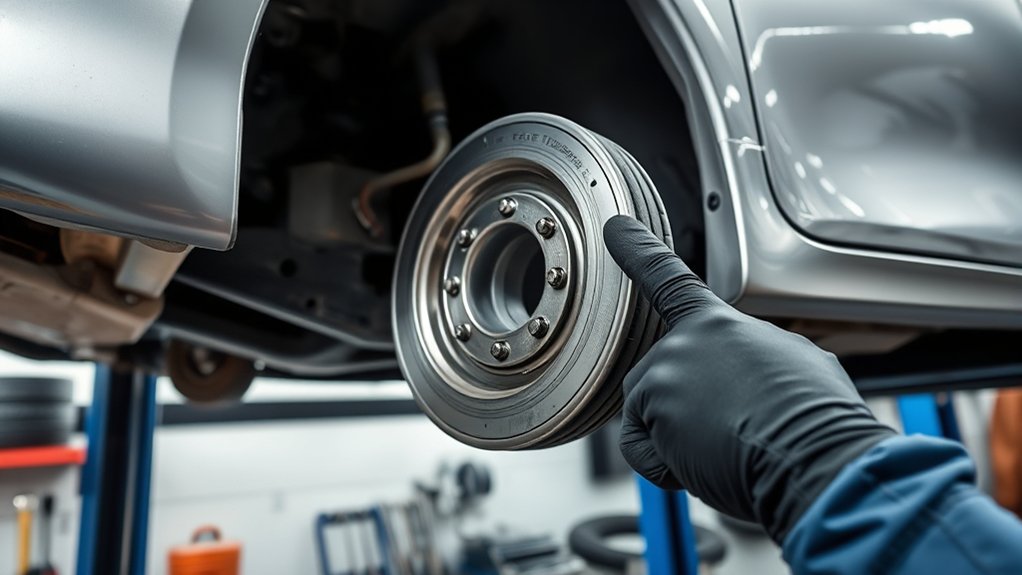
- Reduce speed and avoid unnecessary trips. Do not continue high-speed testing or make abrupt steering movements to reproduce a severe noise.
- Check the tires visually. Look for low pressure, tread separation, bulges, cuts, cupping, feathering, uneven wear, or an object in the tread.
- Check the wheel area without touching hot parts. Look for a bent wheel, missing or visibly loose lug hardware, smoke, fluid, or obvious movement. Do not drive if the wheel is loose.
- Record the symptom pattern. Note road speed, road surface, turning direction, braking effect, acceleration or coasting, vibration location, warning lights, and recent curb or pothole impacts.
- Follow the exact lifting instructions. If the vehicle must be raised, use the jacking and support points in the correct Toyota owner’s manual. Never work beneath a vehicle supported only by a jack.
- Arrange a complete diagnosis. Ask the shop to inspect the tires, wheels, brakes, suspension, axle, hub, mounting surfaces, sensor wiring, and wheel-speed data rather than replacing a bearing based only on noise.
- Check for model-specific campaigns. Search the VIN through Toyota’s recall and service-campaign lookup and the NHTSA recall database. A general recall search does not imply that every Camry has a wheel-bearing campaign.
How a Professional Confirms and Repairs the Problem
Wheel-bearing diagnosis can be difficult because tire, brake, axle, suspension, and drivetrain faults overlap. A qualified technician can reproduce the symptom safely, inspect each wheel end, compare sides, and verify that the suspected bearing is actually the loudest or loosest component.
Typical Diagnostic Process
- Road-test the vehicle. The technician notes speed, steering load, acceleration, coasting, braking, road surface, and vibration location.
- Inspect tires, wheels, and brakes. Tire wear and brake contact are common bearing look-alikes and should be checked before hub replacement.
- Raise and support the vehicle correctly. Each wheel is checked for rough rotation, abnormal movement, damage, and mounting problems.
- Scan ABS-related systems when needed. Trouble codes and live wheel-speed data help identify an affected circuit but do not automatically condemn the bearing.
- Compare noise and vibration at each corner. A stethoscope, chassis microphones, or vibration equipment can help identify the strongest source.
- Verify the year-specific procedure. The technician checks Toyota service information for part design, sensor orientation, pressing method, torque, and non-reusable hardware.
What Wheel-Bearing Replacement May Involve
Replacement procedures differ by Camry generation and axle position. A bolt-on hub assembly may be removed from the knuckle after the brakes, sensor connections, and axle hardware are handled. A press-fit bearing may require removal of the knuckle, a hydraulic press, correct adapters, a new retaining ring or seal, and careful support of the correct race.
The mounting surface must be clean and undamaged. The new bearing or hub must be seated squarely, the encoder side must face the correct direction when applicable, and axle, hub, caliper, and wheel fasteners must be tightened to Toyota specifications with appropriate tools.
Alignment requirements vary by Camry generation and by how much of the suspension is disturbed during the repair. Follow the model-specific Toyota procedure. An alignment check is especially relevant when the steering knuckle, strut, control arm, tie rod, or alignment-related fasteners were loosened; when impact damage is present; or when the vehicle shows uneven tire wear, pulling, or an off-center steering wheel.
What Affects Repair Cost?
A single national price is not dependable. The final estimate depends on the Camry’s model year, drivetrain, front or rear position, press-fit bearing versus complete hub design, parts quality, local labor rate, corrosion, sensor condition, and whether the axle, knuckle, brake, wheel, or mounting surface is damaged.
Ask for a written diagnosis and itemized estimate showing the failed side, parts, labor, required hardware, related damage, and any recommended alignment. The opposite-side bearing should be inspected, but a healthy bearing does not automatically need replacement simply because the other side failed.
Toyota’s Technical Information System is the official source for model-specific repair procedures and specifications.
Frequently Asked Questions
What are four common symptoms of a defective wheel bearing?
Four common signs are a humming or growling noise that rises with road speed, noise that changes during gentle turns, roughness or vibration from a wheel area, and excessive wheel movement. An ABS-related warning may also appear, but none of these symptoms proves the bearing is defective by itself.
What happens when a wheel bearing goes bad?
The bearing may become noisy, rough, hot, or loose. Continued driving can damage the hub, axle, brakes, tire, steering knuckle, mounting surfaces, or wheel-speed components. Advanced wear can reduce steering stability and, in an extreme mechanical failure, compromise control of the wheel.
Do wheel bearings usually give warning before they fail?
Many worn bearings produce a hum, growl, roughness, changing cornering noise, heat, play, or a warning light before severe failure. The timing is unpredictable, however, and some symptoms remain subtle. Prompt inspection is safer than waiting for the sound to become loud.
Can a wheel bearing be bad without having wheel play?
Yes. Raceway or rolling-element damage can create noise before looseness becomes measurable by hand. A bearing may also sound different under road load than it does while raised. A firm shake test does not rule out damage, and wheel play can also come from suspension, steering, lug, or axle-hardware faults.
Does an ABS light mean a Camry wheel bearing is bad?
No. Bearing movement or encoder damage can affect a wheel-speed signal, but sensor, wiring, connector, voltage, and other brake-system faults can trigger the same warning. The stored codes, live wheel-speed data, hub condition, encoder, sensor, and wiring must be checked before replacing the bearing.
How can you tell if a Camry wheel bearing needs replacing?
Replacement is appropriate when inspection confirms abnormal bearing noise, roughness, excessive play, heat, physical damage, loss of clamp, or a hub or encoder fault. A road-speed hum by itself is not enough because tires, brakes, axles, suspension parts, and drivetrain components can sound similar.
Can you drive a short distance with a noisy wheel bearing?
No fixed distance is guaranteed safe. Avoid unnecessary driving and arrange inspection promptly. Tow the car if the wheel is loose, steering or braking is unstable, grinding is severe, the wheel area is unusually hot or smoky, or the vehicle pulls unpredictably.
Can bad tires sound like a bad wheel bearing?
Yes. Cupped, feathered, damaged, underinflated, or aggressive-tread tires can create a hum or growl that resembles bearing noise. Tire noise often changes more with road surface, while a bearing-related sound is more suspicious when it follows road speed and changes with gentle cornering load. Inspect tire pressure, tread condition, balance, and wear before replacing a hub.
Should both wheel bearings on the same axle be replaced together?
Not automatically. Replace the bearing that fails inspection and check the opposite side because it has experienced similar mileage and road conditions. Replacing a healthy side is a condition-based decision that may consider age, corrosion, parts quality, labor overlap, and owner preference.
Conclusion
A Toyota Camry wheel-bearing problem often begins with a hum, rumble, growl, roughness, or cornering-related noise that follows road speed. Those clues deserve attention, but tires, brakes, CV joints, axles, suspension parts, and drivetrain components can create similar symptoms. Have the source confirmed before buying parts. Stop driving and arrange a tow when wheel looseness, unstable steering or braking, severe grinding, excess heat, or smoke appears.
Sources
- Toyota Manuals and Warranties — model-specific owner information, maintenance guidance, warning instructions, and approved lifting references.
- Toyota Technical Information System — official model-specific repair procedures, torque values, inspection specifications, and hardware requirements.
- Toyota Warning Lights — general guidance for ABS, brake, and other safety-system indicators.
- Toyota Safety Recall and Service Campaign Lookup — VIN-based Toyota recall and campaign information.
- NHTSA TireWise — tire pressure, tread wear, damage, aging, vibration, and tire-safety guidance.
- Timken Wheel Hub Bearing TechTips — bearing-noise patterns, common look-alikes, wheel vibration, tire wear, and ABS-related hub symptoms.
- Timken Light-Vehicle Hub Unit Bearing Installation Guidance — hub removal, sensor-wire handling, mounting-surface inspection, and manufacturer-specific fastener requirements.
- NHTSA Recalls — VIN-based federal recall lookup for U.S.-market vehicles.

1 thought on “Toyota Camry Wheel Bearing Explained (Function + Symptoms)”