
If your Toyota Camry’s windshield wipers are not working, start by clearing ice or debris, testing every wiper setting, checking the model-year-specific fuse, and listening for the motor. If you hear the motor but the arms stay still, inspect the arm connections and linkage. If the system is silent, diagnose the fuse, power and ground, switch, wiring, control circuit, and motor before replacing parts. The exact fuse location and control layout vary by model year, so use Toyota’s instructions for your specific Camry.
Last updated: September 22, 2026 — model-year guidance, recall resources, federal wiper requirements, and winter-visibility recommendations reviewed.
Quick Answer
First clear ice and debris, then check the model-year-specific wiper fuse. If the fuse is good, listen for the motor. A silent system points toward power, switch, wiring, control, or motor trouble. A running motor with stationary arms usually points toward loose arm nuts, damaged splines, or a disconnected linkage.
Key Takeaways
- Do not switch on wipers that are frozen to the windshield or blocked by heavy snow.
- Use the fuse chart for your exact Camry model year and replace a blown fuse only with the specified amperage.
- A motor sound with no arm movement usually indicates a mechanical connection or linkage problem.
- A fuse that blows again signals an unresolved electrical fault or an overloaded mechanism.
- There is no universal five-second reset procedure that repairs Toyota Camry wiper faults.
At a Glance
| Time Required | Varies by fault: obstruction and fuse checks are usually brief; powered-circuit or linkage diagnosis can take much longer |
| Difficulty | Beginner for obstruction, blade, arm, and fuse checks; intermediate to advanced for powered-circuit diagnosis |
| Tools Needed | Owner’s manual, flashlight, fuse puller or needle-nose pliers, and an optional digital multimeter; a socket may be needed for a loose arm nut |
| Cost | Basic inspection may cost nothing; repair cost depends on the model year and whether the fault is a fuse, arm, linkage, switch, wiring, control component, or motor |
Warning: Switch the wipers off, turn the vehicle off, and keep your hands away from the arms and linkage before inspecting them. The arms can move unexpectedly when power is restored. If the wipers fail during rain or snow and you cannot see clearly, slow down and pull off the road in a safe location instead of continuing to drive.
Why Toyota Camry Windshield Wipers Are Not Working
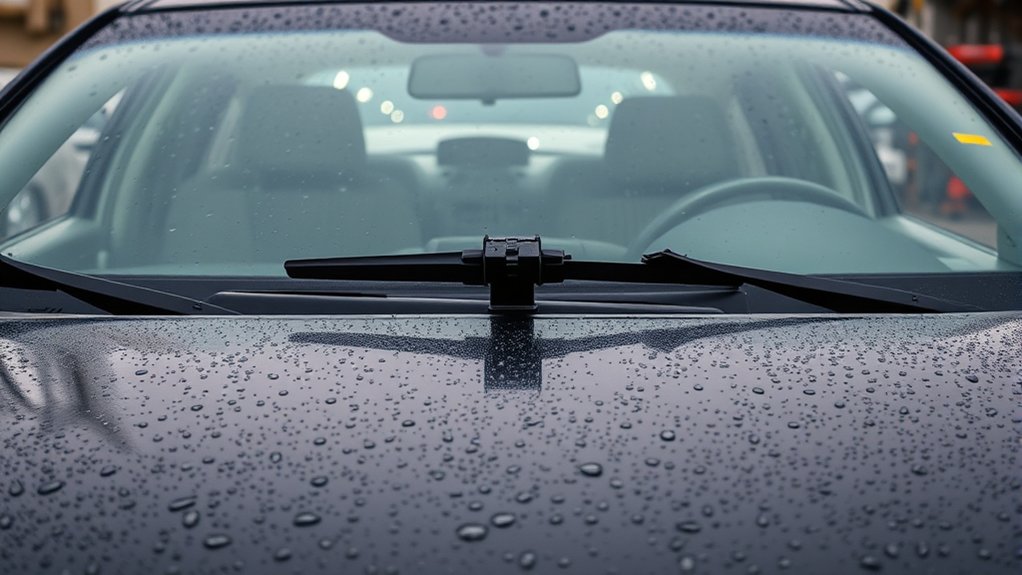
A Toyota Camry’s windshield wipers can stop because of an electrical failure, a mechanical disconnection, an obstruction, or worn wiping components. The most likely cause depends on what the wipers do when you operate the control.
Match the Symptom to the Next Check
| Symptom | Likely Areas to Check |
|---|---|
| Both wipers are silent on every setting | Obstruction, fuse, power supply, ground, switch, wiring, control circuit, or motor |
| Motor can be heard, but the arms do not move | Loose arm nuts, stripped arm splines, disconnected linkage, or failed linkage joint |
| Only one wiper moves | Loose or stripped arm connection, separated linkage, or damaged pivot on the stationary side |
| Wipers move slowly or stop partway | Ice, heavy snow, binding pivots, weak voltage, poor connection, worn motor, or excessive mechanical resistance |
| Wipers work on some settings but not others | Combination switch, intermittent-control circuit, relay or electronic control component where applicable, or wiring |
| Wipers do not return to the parked position | Motor park circuit, linkage indexing, arm installation position, switch, wiring, or control fault |
| Blades move normally but streak or skip | Dirty glass, contaminated or worn blade rubber, incorrect blade fit, or bent arm |
Common causes include a blown fuse, a failed wiper motor, loose electrical connections, damaged wiring, a worn combination switch, a failed control component, loose wiper-arm hardware, stripped splines, or a disconnected linkage. Moisture and corrosion can also affect connectors, especially if water has entered the cowl area or a connector seal has been damaged.
Do not assume that intermittent movement automatically means the motor is bad. A poor connection, worn switch contact, binding linkage, or control fault can produce similar behavior.
Why this matters: U.S. Federal Motor Vehicle Safety Standard No. 104 specifies requirements for powered windshield wiping and washing systems. A failed wiper system can therefore become a visibility and safety problem, not just an inconvenience.
How Do You Diagnose Toyota Camry Windshield Wipers That Are Not Working?
Start with the safest and simplest checks. Record exactly which speeds and functions work before removing parts. This prevents replacing a motor when the real problem is a fuse, loose arm, damaged linkage, or control circuit.
Note: Toyota Camry fuse locations, fuse labels, wiper controls, service-position procedures, and electrical diagrams vary by model year and trim. Use Toyota’s official Manuals and Warranties portal to find the instructions for your exact vehicle.
Is There a Toyota Camry Wiper Reset?
There is no universal reset that repairs a blown fuse, disconnected linkage, failed motor, damaged wiring, or another physical wiper fault. Some Camry model years use a model-specific service position so the recessed wiper arms can be lifted safely, but service position is for access rather than fault repair.
If your goal is to lift or reposition the arms, follow the exact owner’s manual for your model year. Do not force a recessed arm upward from below the hood, and do not treat a temporary power cycle as proof that an intermittent electrical or mechanical fault is fixed.
1. Check for Ice, Snow, Leaves, or Other Obstructions
Make sure the blades are not frozen to the glass and that packed snow, leaves, or debris are not blocking the arms near the bottom of the windshield. Clear the windshield with the defroster, a suitable brush, and a plastic ice scraper before operating the wipers.
If the arms were trapped and the fuse blew, do not replace the fuse until the obstruction has been removed. A jammed mechanism can overload the electrical circuit or damage the linkage.
2. Compare the Washer and Wiper Functions
Try the low, high, intermittent, mist, and washer functions while observing from inside the vehicle.
- Washer sprays but the arms do not move: The washer circuit has power, but the wiper motor circuit or mechanism still needs diagnosis.
- Neither the washer nor the wipers responds: Check the relevant fuses and shared power or control inputs listed for the exact model year.
- Only one speed or intermittent mode fails: The switch, wiring, intermittent-control function, relay, or electronic control circuit may be involved.
- Blades move but do not clean the glass: Focus on blade condition, glass contamination, arm alignment, and blade fit rather than the motor.
3. Inspect the Correct Wiper Fuse
Turn the vehicle off. Locate the fuse diagram in the owner’s manual or on the fuse-box cover and identify the fuse assigned to the front wiper circuit for your specific Camry.
- Remove the identified fuse with the fuse puller or suitable insulated tool.
- Inspect the internal metal strip. A visible break or melted section usually indicates a blown fuse.
- If the condition is unclear, test the removed fuse for continuity with a digital multimeter.
- Replace a failed fuse only with the amperage specified by Toyota.
Warning: Never install a higher-amperage fuse to prevent it from blowing. If the correct replacement fuse blows again, stop replacing it. The circuit may have a short, damaged wiring, a seized mechanism, or an overloaded motor that needs diagnosis.
4. Listen for the Wiper Motor
With the hood closed and everyone clear of the arms, restore power and briefly operate the wipers while listening near the lower windshield area.
- No motor sound: The motor may not be receiving power or ground, or the motor itself may have failed.
- Motor sound with no arm movement: Inspect the arm connections and linkage before replacing the motor.
- Motor strains, clicks, or moves slowly: Stop the test. The pivots or linkage may be binding, or the motor may be overloaded.
5. Inspect the Wiper Arms and Retaining Nuts
Remove the small protective cap at the base of each arm if it is designed to be removed without damage. Check whether the retaining nut is loose and whether the arm shifts on its pivot shaft.
A loose nut can allow the shaft to turn while the arm stays still. If tightening is required, use the model-specific procedure and torque specification. If the splines inside the arm are stripped, tightening the nut may not provide a lasting repair and the damaged arm may need replacement.
Pro Tip: Before removing an arm that still parks correctly, place removable tape on the windshield to mark the blade’s parked position. Incorrect reinstallation can make the blade strike the trim, overlap the other blade, or stop too high on the glass.
6. Check the Linkage and Pivots
If the motor runs but one or both arms do not move, the linkage under the cowl may be disconnected, worn, broken, or binding. The linkage transfers motor movement to the two wiper pivots.
Access often requires removing plastic cowl trim and clips. Stop if the procedure is unclear, the trim is brittle, or the linkage is difficult to reach. Incorrect cowl removal can damage clips, weather seals, or nearby components.
7. Check the Switch, Wiring, Connectors, and Control Circuit
If the fuse is good and the motor is silent, the next step is to determine whether the motor receives the correct voltage, ground, and control signal. Depending on the Camry’s model year, the circuit may involve the combination switch, wiring, connectors, relays, or electronic body-control functions.
Look for obvious loose connectors, damaged insulation, water intrusion, or corrosion without pulling apart sealed connectors unnecessarily. Accurate powered-circuit testing requires the correct wiring diagram and suitable back-probing methods.
Note: A continuity test on a removed fuse is a basic owner check. Testing live motor, switch, body-control, or communication circuits is different and is best left to someone with the correct wiring diagram and electrical-testing experience.
8. Check for Open Recalls or Service Campaigns
Before paying for a major repair, enter the vehicle’s 17-character VIN in Toyota’s Safety Recall and Service Campaign lookup. U.S. owners can also use the NHTSA recall lookup. Recall coverage is VIN-specific, so a general model search is not a substitute for checking the individual vehicle.
Which Repairs Fix Toyota Camry Windshield Wipers?
Replace a component only after the symptoms and tests point to it. Parts swapping can increase the repair cost without fixing the underlying fault.
| Repair Component | When It Is Suspect | Appropriate Action |
|---|---|---|
| Wiper Motor | Correct power, ground, and control reach the motor, but it does not run correctly | Replace the motor after confirming the linkage is not seized or overloaded |
| Blown Fuse | The correct model-year fuse has an open element or fails continuity testing | Remove any obstruction and replace it once with the specified amperage; diagnose the circuit if it blows again |
| Combination Switch or Control Circuit | Some settings fail, or testing shows the expected command is not reaching the circuit | Confirm the fault with the correct wiring diagram before replacement |
| Wiper Linkage or Pivot | The motor operates but the arms do not move normally, or the mechanism binds | Reconnect or replace damaged linkage components and correct any seized pivot |
| Wiper Arms | An arm slips on the shaft, only one arm moves, or the internal splines are damaged | Tighten to the specified procedure or replace an arm with stripped splines |
| Wiper Blades | The system moves normally but leaves streaks, skips, chatters, or fails to clear water | Clean the glass and blade edge, then replace worn, split, hardened, or incorrectly fitted blades |
| Wiring or Connector | Operation changes with vibration, moisture, or harness movement, or testing finds excess resistance or an open circuit | Repair damaged wiring or terminals using an appropriate automotive electrical procedure |
After a repair, confirm low speed, high speed, intermittent operation, washer activation, full sweep, and correct parking. Make sure the arms do not contact the windshield trim, hood, or each other.
When Should You Get Professional Help for Camry Wiper Problems?

Professional diagnosis is appropriate when the basic checks do not identify the fault or when the repair requires live electrical testing, cowl disassembly, control-module diagnosis, or motor and linkage removal.
Arrange service when:
- The correct fuse blows again after replacement.
- The motor strains, overheats, clicks, or smells hot.
- The arms move unexpectedly or will not stop.
- The wipers stop in the middle of the windshield or park in the wrong position.
- Water or corrosion is visible in an electrical connector.
- The linkage is damaged, disconnected, or difficult to access.
- The fuse is good but the motor receives no power or control signal.
- A rain-sensing or body-control fault is suspected.
- You do not have the correct wiring diagram or suitable electrical-test equipment.
If the wipers fail while you are driving in precipitation, reduce speed smoothly, increase following distance, and move to a safe parking area as soon as possible. Do not continue through rain, sleet, or snow when the windshield cannot be kept clear.
How Can You Prevent Future Toyota Camry Wiper Problems?
Inspect the blades regularly instead of relying on one universal replacement interval. Replace them when the rubber is split, hardened, deformed, loose, or unable to clear water without streaking or skipping. NHTSA’s winter-driving guidance also recommends confirming that windshield wipers and defrosters work and replacing worn blades before winter conditions.
- Clean the windshield and blade edges with products suitable for automotive glass and rubber.
- Remove leaves and debris from the cowl area so water can drain as designed.
- Keep the washer reservoir filled with appropriate fluid; use winter-rated fluid where freezing temperatures occur.
- Do not use the wipers to scrape heavy snow or solid ice from the windshield.
- Do not let an unprotected metal wiper arm snap against the glass when changing a blade.
- Watch for slower-than-normal operation, clicking, uneven sweep, loose arms, or a changed parking position.
- Use the correct blade size and attachment for the vehicle’s exact model year.
- Check open recalls periodically with the VIN, particularly before paying for a major safety-related repair.
Pro Tip: Test the wipers and washer on a wet windshield before a long trip or severe-weather season. Running blades repeatedly on dry glass can create unnecessary friction and may hide how well they clear actual water.
Related Guides
Frequently Asked Questions
Why are the windshield wipers not working on my Toyota Camry?
Possible causes include ice or debris, a blown fuse, a failed motor, a loose wiper arm, stripped arm splines, a disconnected linkage, a switch fault, damaged wiring, a poor ground, corrosion, or an electronic control problem. The motor sound and the number of working speeds help narrow the diagnosis.
What could cause both windshield wipers to stop working at once?
When both arms stop together, check for a shared obstruction, the correct wiper fuse, motor power and ground, the combination switch, wiring, the motor, and the linkage connection. If the motor can be heard, inspect the mechanical linkage and arm connections before replacing electrical parts.
How do I reset Toyota Camry windshield wipers?
There is no universal five-second reset that repairs Camry wiper failures across all model years. Switch the vehicle off, clear any obstruction, and follow the exact owner’s manual for service-position or model-specific operating instructions. A blown fuse, loose linkage, failed motor, or wiring fault requires diagnosis rather than a reset.
How can I tell whether the wiper fuse is blown?
Use the owner’s manual to identify the correct fuse, turn the vehicle off, and remove it. A broken or melted internal strip indicates failure. You can also test the removed fuse for continuity with a digital multimeter. Replace it only with the amperage specified for the vehicle.
What does it mean if the wiper motor runs but the arms do not move?
The motor is producing movement, but that movement is not reaching the arms. Check for loose retaining nuts, stripped arm splines, a disconnected linkage, a failed linkage joint, or a damaged pivot. Do not replace the motor until the mechanical connection has been inspected.
Why does only one Toyota Camry wiper move?
A single stationary arm commonly points to a loose arm nut, stripped splines, a separated linkage connection, or a failed pivot on that side. Stop operating the system if the moving arm could strike the stationary arm or windshield trim.
Why do the wipers stop in the middle of the windshield?
Possible causes include a motor park-circuit fault, incorrect arm installation, linkage indexing problems, binding pivots, low voltage, switch trouble, wiring damage, or an electronic control fault. A wiring diagram and motor-circuit test may be needed.
What should I do if the replacement wiper fuse blows again?
Do not install another fuse or use a higher rating. Confirm that the arms and linkage are not frozen or seized, then have the circuit checked for damaged wiring, a short to ground, an overloaded motor, or excessive mechanical resistance.
Conclusion
If your Toyota Camry’s windshield wipers are not working, begin with the obstruction, blade, fuse, motor-sound, arm, and linkage checks before replacing parts. Use the manual for the exact model year, and treat a repeatedly blown fuse, binding mechanism, live electrical fault, or incorrect parking position as a reason for professional diagnosis. Most importantly, do not continue driving in weather that prevents a clear view through the windshield.
Sources
- Toyota Manuals and Warranties — model-year-specific owner’s manuals, fuse information, controls, and operating instructions
- Toyota Safety Recall and Service Campaign Lookup — VIN-based Toyota recall and campaign information
- National Highway Traffic Safety Administration Recall Lookup — U.S. vehicle recall, investigation, complaint, and manufacturer-communication information
- NHTSA Winter Weather Driving Tips — windshield-wiper, washer-fluid, defroster, visibility, and winter-preparation guidance
- 49 CFR 571.104, Windshield Wiping and Washing Systems — federal windshield wiping and washing system requirements
