
Changing the engine coolant in a Toyota Camry can help protect the cooling system from corrosion, freezing, and overheating. The exact coolant, capacity, drain points, replacement interval, and air-bleeding procedure vary by model year, engine, market, and powertrain, so identify the vehicle and obtain its Toyota procedure before opening the system.
Last updated: July 13, 2026
Quick Answer
Let the Camry cool completely, confirm the correct coolant circuit and factory procedure, drain the specified circuit into a clean pan, close every drain with any required new seal, refill slowly with approved coolant, bleed trapped air exactly as directed, and recheck the cold level and leaks after normal heat cycles.
Key Takeaways
- Use the maintenance and repair information for your exact model year, engine, market, and coolant circuit.
- Never open a hot cooling system, work beneath a vehicle supported only by a jack, or touch orange high-voltage hybrid components.
- Use the written coolant specification, not color alone, and never add water to a premixed product.
- A scheduled coolant service is normally a drain and refill; flush only when contamination, mixed coolant, a repair, or the factory procedure requires it.
- After bleeding, inspect for leaks and recheck the cold level after one or two normal heat cycles.
At a Glance
| Time Required | About 1 to 2 hours of active work after the engine has cooled completely; bleeding and final rechecks may add time |
| Difficulty | Intermediate; professional service is safer when the circuit, drain points, lifting method, or bleeding procedure is unclear |
| Tools Needed | Drain pan, clean funnel, gloves, eye protection, basic hand tools, torque wrench when specified, safe lifting equipment, and any model-specific bleeding tool |
| Cost | Varies with coolant quantity, circuit count, replacement seals, tools, labor, and local collection fees; price the exact service quantity before buying supplies |
Warning: Never remove a radiator, pressure, or coolant-reservoir cap while the system is hot. Pressurized coolant can cause severe burns. On a hybrid Camry, keep the vehicle switched off and stay away from orange high-voltage wiring and components. Never work beneath a vehicle supported only by a jack.
Why Toyota Camry Coolant Changes Matter
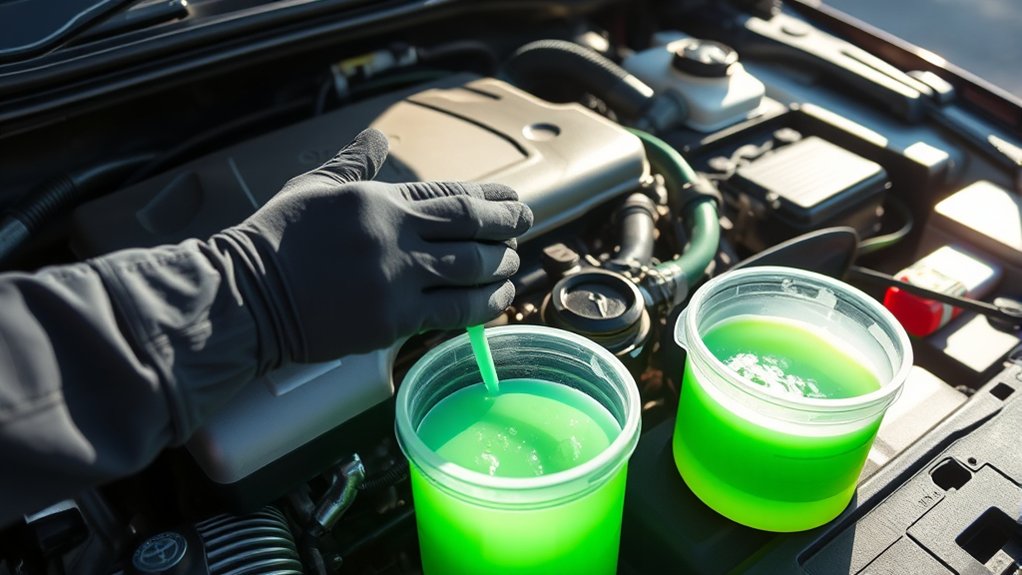
Coolant carries heat away from the engine while helping protect metal surfaces, seals, the radiator, the water pump, and other cooling-system components. Its corrosion inhibitors age, so the fluid eventually needs replacement even when the level still looks normal.
The correct interval depends on the model year and coolant circuit. For example, Toyota’s 2024 Camry Warranty & Maintenance Guide lists the initial engine-coolant replacement at 100,000 miles or 120 months, followed by replacement every 50,000 miles or 60 months. That schedule should not be applied automatically to every older Camry.
The 2026 Camry Warranty & Maintenance Guide separates engine or intercooler coolant from inverter or intercooler coolant, when applicable. The two categories have different initial replacement intervals.
The correct coolant interval comes from the maintenance guide for your exact model year and powertrain, not from a universal mileage rule.
Identify Your Camry and Cooling Circuit First
Before buying coolant or removing a splash shield, record the model year, engine, drivetrain, market, and whether the vehicle is a hybrid. Use the VIN when necessary to prevent confusion between similar trims.
Visit Toyota’s official manuals and warranties portal and select the exact vehicle. For factory repair procedures, Toyota’s Technical Information System provides service information for North American Toyota vehicles. Confirm all of the following before starting:
- The required coolant specification and whether the product is premixed or concentrated
- The circuit being serviced: engine, inverter, or another listed cooling circuit
- The specified fill point, drain point or points, and reservoir
- The expected service-fill quantity and the total system capacity, if both are listed
- Whether a drain-plug seal, O-ring, gasket, or clip must be replaced
- Fastener and drain-plug torque specifications
- The required air-bleeding method and any special operating mode or scan-tool procedure
A non-hybrid Camry normally has an engine-cooling circuit. Many hybrid Camrys also have a separate inverter-cooling circuit. Draining one circuit does not service the other, and the reservoirs are not interchangeable.
Note: Coolant color alone does not prove compatibility. Different formulas can use similar dyes, and a compatible product may use a different color. Match the written chemistry and performance specification.
Decide Whether This Is a Safe DIY Job
A basic drain and refill may be manageable when you can positively identify the circuit, reach the drain safely, obtain the correct coolant, and follow the exact bleeding procedure. Stop and use a qualified technician when any of these conditions apply:
- The vehicle is overheating, losing coolant rapidly, or showing a temperature warning
- The coolant contains oil, thick sludge, heavy rust, metal particles, or an unknown mixture
- A hose, radiator, water pump, reservoir, cap, or drain fitting is cracked or leaking
- The drain plug is seized, rounded, damaged, or threaded into a fragile component you cannot service confidently
- The vehicle requires a vacuum-filling tool, scan tool, electric-pump routine, or special hybrid operating mode that you do not have
- You cannot identify the engine and inverter reservoirs or keep clear of high-voltage components
- You cannot raise and support the vehicle safely
Tools and Parts Needed
Gather everything before opening the cooling system. The exact list varies by Camry generation, but a typical drain and refill requires:
- Specified coolant: Use Toyota Genuine Super Long-Life Coolant or the exact equivalent permitted by the model-year manual.
- Drain pan: Choose one large enough for the expected service quantity, with extra room to prevent splashing.
- Clean funnel: Use a funnel that has not held engine oil, brake fluid, or other contaminants.
- Protective equipment: Wear chemical-resistant gloves and eye protection.
- Basic hand tools: You may need sockets, screwdrivers, trim tools, or pliers for a splash shield or hose clamp.
- Clean drain hose: Use one only if the drain fitting is designed to accept it.
- Replacement seal or gasket: Install one when specified for the drain plug, drain cock, or removed connection.
- Torque wrench: Use the published specification for threaded plugs and removed fasteners.
- Safe lifting equipment: Use ramps or appropriately rated jack stands if underbody access is necessary.
- Sealable waste container: Store drained coolant securely until it reaches an approved collection point.
- Model-specific bleeding equipment: This may include a spill-free funnel, vacuum filler, scan tool, or another Toyota-specified tool.
A coolant tester can help check freeze protection or concentration when used correctly, but it does not replace the vehicle specification. It is unnecessary for confirming the concentration of a sealed container that is correctly labeled as premixed.
Total Capacity Versus Service-Fill Quantity
Do not assume that a normal drain will remove the entire published system capacity. Coolant can remain in the engine block, heater core, hoses, heat exchangers, or a separate hybrid circuit. Use the factory service-fill guidance for the exact procedure, and keep enough approved coolant available to complete bleeding and later cold-level corrections.
How to Drain Old Coolant Safely
- Park on a level surface. Set the parking brake, switch the vehicle off, and keep the key or smart key away from the vehicle.
- Let the system cool completely. Wait until the engine, hoses, radiator area, and coolant components are cool to the touch. If you are unsure, wait longer.
- Confirm the circuit. On a hybrid, identify whether you are servicing the engine circuit or inverter circuit before opening any cap or drain.
- Gain safe access. Remove the splash shield only as directed. Support the vehicle with rated stands or ramps when lifting is required.
- Position the drain pan. Place it beneath the specified drain point before loosening anything, and protect nearby pavement from spills.
- Relieve pressure only when cold. Slowly remove the correct cap after confirming the system is fully cool.
- Open the specified drain. Use a hose only if it fits the drain securely. Do not force a plastic drain cock with pliers.
- Open any additional specified drain. Some procedures use more than one drain point. Follow the Toyota sequence and do not improvise.
- Allow the circuit to drain. Keep coolant off belts, electrical connectors, painted surfaces, pavement, and soil.
- Inspect the drained fluid. Heavy rust, oil, sludge, metal particles, or an unusual amount of debris requires diagnosis before refilling.
- Close the drain correctly. Replace the seal when specified and tighten threaded components only to the published torque.
Pro Tip: Measure the quantity removed when practical, but compare it with the expected amount for that service procedure—not automatically with the total dry-system capacity. A partial drain normally leaves coolant in parts of the system.
Transfer used coolant into a labeled, sealed container that cannot be mistaken for food or drink. Do not pour it into a sink, toilet, storm drain, onto the ground, or into ordinary recycling. The U.S. Environmental Protection Agency’s household hazardous waste guidance recommends following product-label instructions and checking with local environmental, health, or solid-waste agencies for collection options. Follow the rules where you live.
Drain and Refill Versus a Cooling-System Flush
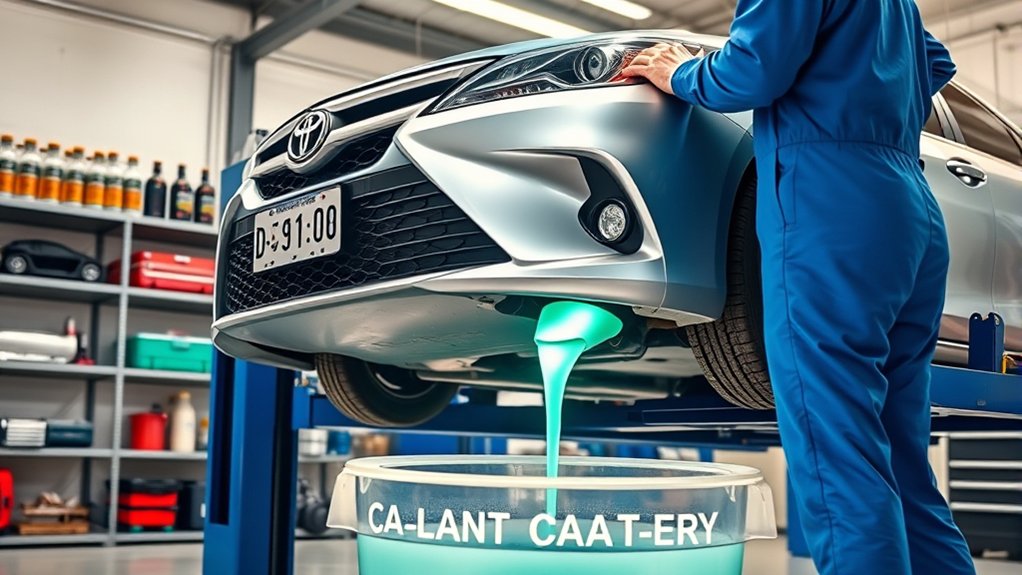
A routine coolant service and a cooling-system flush are not the same job. Scheduled Toyota maintenance describes draining and refilling the specified circuit. A flush may be appropriate after incompatible coolant has been mixed, contamination is present, a component has failed, or a repair procedure specifically calls for one.
Do not automatically add distilled water or chemical cleaner after every drain. Water left inside the circuit can weaken the final concentration when premixed coolant is installed. Chemical cleaners may also be unsuitable for some seals, metals, pumps, or heat exchangers.
When a Toyota-approved water flush is necessary:
- Follow the exact fill, circulation, cool-down, and drain sequence.
- Use distilled or deionized water only when the procedure requires it.
- Never open the system while hot.
- Calculate the final coolant concentration while accounting for water that remains in the engine or heat exchangers.
- Flush only the intended circuit; do not assume engine and inverter circuits share the same path.
- Repeat the process only as directed, and do not use a chemical cleaner unless the vehicle or product procedure approves it.
If the drained coolant contains oil, thick sludge, or recurring rust, another flush may hide the underlying problem. Diagnose the failed component before continuing.
How to Refill With the Correct Coolant
Toyota’s current maintenance guidance calls for Toyota Genuine Super Long-Life Coolant or a similar high-quality coolant meeting the listed chemistry requirements. The model-year manual remains the final authority because older vehicles and different markets can use different specifications.
- Read the container. Confirm that the product meets the written specification for your Camry.
- Check the product form. Use premixed coolant as supplied. Dilute a concentrated product only according to the vehicle procedure and product label.
- Verify every drain is closed. Check the drain cock, threaded plugs, seals, and any hoses removed during service.
- Refill slowly. Add coolant through the specified fill point to reduce trapped air and spills.
- Fill only the intended circuit. Engine and inverter reservoirs are not interchangeable.
- Pause as directed. Some procedures require waiting for the level to settle, opening a bleed point, operating an electric pump, or using a vacuum filler.
- Stop at the specified level. Do not overfill the radiator, pressurized reservoir, or overflow tank.
- Clean spills immediately. Follow the coolant label’s cleanup instructions and keep children and animals away from the work area.
Never top up with an unknown coolant merely because its color looks similar. Mixing incompatible formulations can reduce corrosion protection or create deposits.
How to Bleed Air From the Cooling System
Air trapped after a coolant change can reduce circulation, cause gurgling, create unstable heater output, or produce temperature fluctuations. The correct bleeding method depends on the Camry’s model year and circuit.
Check the Cold Coolant Level
Before starting the vehicle, verify that the cold level is at the mark specified in the owner’s or repair manual. Check every reservoir associated with the circuit you serviced.
Do not assume the radiator is full merely because the overflow bottle contains coolant. Some systems require filling at a separate pressure cap, while others use a pressurized reservoir.
Follow the Model-Specific Bleeding Procedure
Depending on the vehicle, the process may involve a bleed valve, a specified engine speed, a heater or climate-control setting, an electric-pump procedure, a vacuum-filling tool, or professional diagnostic equipment. Follow the Toyota sequence exactly.
Monitor the temperature gauge and warning messages continuously. Stop the engine or switch the vehicle off if the temperature rises abnormally, coolant overflows, the heater suddenly turns cold, or warning lights appear. Never open a hot cap to correct the level.
Do not squeeze hoses, rev the engine, or place a hybrid vehicle into a special operating mode unless the model-specific instructions call for it. Toyota’s current maintenance guide states that a qualified technician should perform coolant replacement services.
Recheck After the System Cools
Allow the vehicle to cool completely before opening or adjusting the system. Recheck the cold level and add only the specified coolant if the level has fallen during normal air purging.
Repeat the cold-level inspection after one or two normal heat cycles. A small initial correction can occur after trapped air escapes, but a continuing drop requires leak diagnosis.
How to Check for Leaks and Verify the Repair
Inspect the system before driving and again after it reaches normal operating temperature. Use a light to examine:
- The radiator drain cock and any engine drain plugs
- Hose connections and clamps
- The radiator seams and end tanks
- The water-pump area
- The pressure cap and reservoir cap
- The engine and inverter reservoirs on applicable hybrid models
- The ground beneath the vehicle
Watch the temperature gauge or temperature warning while the vehicle runs. Shut the vehicle down if it overheats or loses coolant rapidly.
When the temperature remains stable, the heater output is normal, and no leak is visible, take a short, low-stress verification drive close to home. Avoid heavy traffic, high speeds, towing, or long climbs until the system has completed a normal heat cycle without warnings or coolant loss.
After the system cools, check the level again. Do not dismiss repeated coolant loss simply because no puddle is visible. A pressure-cap problem, a small hot-only leak, heater-core leakage, or an internal engine fault may leave little fluid on the ground.
When to Change Toyota Camry Coolant
Note: Do not use a generic 30,000-mile rule. The correct interval depends on the exact model year, coolant type, and cooling circuit.
Use the maintenance guide for your exact Camry rather than relying on a universal interval. The examples below show why the model year and coolant circuit matter.
Example Toyota Camry Coolant Intervals
| Example | Initial Replacement | Later Replacements |
|---|---|---|
| 2024 U.S. Camry engine coolant | 100,000 miles or 120 months | Every 50,000 miles or 60 months |
| 2026 U.S. Camry engine or intercooler coolant, if applicable | 100,000 miles or 120 months | Every 50,000 miles or 60 months |
| 2026 U.S. Camry inverter or intercooler coolant, if applicable | 150,000 miles or 180 months | Every 50,000 miles or 60 months |
These are manufacturer examples for specific U.S. model years, not a schedule for every Camry ever produced. Earlier generations, replacement coolants, severe contamination, cooling-system repairs, and regional specifications can change the service requirement.
Signs the Coolant System Needs Earlier Attention
Service or diagnose the system sooner when you find:
- Rust, heavy sediment, sludge, oil, or metal particles in the coolant
- Incompatible or unknown coolant that has been mixed accidentally
- Cooling-system repairs that required significant fluid loss
- Freeze-protection or concentration readings outside specification
- Recurring overheating, unstable temperature readings, or a heater that turns cold
- A sweet coolant odor, visible crust, damp fittings, or falling cold levels
Do not judge coolant condition by color alone. Dye can darken with use, and coolant colors are not standardized across every brand and formulation.
A declining level is a reason to find the cause. Coolant does not normally disappear simply because its additives have aged.
Common Toyota Camry Coolant-Change Mistakes
- Opening a hot system: This can release pressurized steam and coolant.
- Using a universal interval: Camry schedules vary by model year and circuit.
- Selecting coolant by color: Color does not confirm chemistry or compatibility.
- Diluting premixed coolant: Added water weakens the intended concentration.
- Confusing total capacity with drain quantity: A routine drain often leaves coolant in the system.
- Flushing without a reason: Unnecessary water or chemicals can complicate the refill.
- Draining the wrong hybrid circuit: Engine and inverter cooling systems can be separate.
- Forcing a plastic drain cock: Excessive tool pressure can crack it.
- Reusing a required seal: An old gasket or seal can leak after the service.
- Guessing at torque: Over-tightening can damage plastic or aluminum components.
- Using a generic bleeding method: Air-removal procedures differ by generation and powertrain.
- Ignoring heater-output changes: A heater that turns cold during bleeding can indicate poor coolant circulation or trapped air.
- Ignoring a falling coolant level: Continuing loss requires diagnosis.
- Improper disposal: Used coolant must follow product-label and local collection requirements.
Long-Term Toyota Camry Cooling-System Maintenance
Check the coolant level only when the vehicle is cool and parked as directed by the owner’s manual. Inspect the reservoirs, radiator area, hose connections, and the ground beneath the vehicle for leakage.
Keep the radiator and condenser exterior free from heavy debris without bending their fins. Replace damaged hoses, caps, seals, or clamps with parts that meet the vehicle specification.
Monitor the temperature display or warning lights while driving. Pull over safely and switch the vehicle off if it overheats. Continuing to drive an overheating engine can turn a small cooling-system fault into major engine damage.
Record the date, mileage, coolant brand, written coolant specification, product form, quantity used, and circuit serviced. Good records prevent accidental early servicing and help the next technician understand what is already in the system.
Frequently Asked Questions
Can I change Toyota Camry engine coolant myself?
A drain and refill may be suitable for an experienced DIYer who has the exact model-specific procedure, approved coolant, safe lifting equipment, replacement seals, torque data, and bleeding instructions. Toyota’s current guidance says a qualified technician should perform coolant replacement services. Use professional service when the vehicle has separate hybrid circuits, requires diagnostic equipment, or continues to overheat or lose coolant.
How often should I change the coolant in my Toyota Camry?
Check the maintenance guide for your exact model year and circuit. As examples, the 2024 U.S. Camry guide lists the first engine-coolant replacement at 100,000 miles or 120 months, followed by every 50,000 miles or 60 months. The 2026 guide lists a different first interval for the applicable inverter circuit.
How much coolant does a Toyota Camry need?
There is no single Camry capacity. The amount varies by model year, engine, market, and circuit. A routine drain also may remove less than the total dry-system capacity because coolant remains in the engine, heater core, hoses, or heat exchangers. Use the exact factory service-fill information for your vehicle.
How much does a Toyota Camry coolant change cost?
The total depends on coolant capacity, local product prices, labor rates, collection charges, required seals, special tools, and whether the Camry has more than one coolant circuit. Ask for a written shop estimate that identifies the circuit and whether the price covers a drain and refill or a corrective flush.
Is it better to flush or drain and refill the coolant?
A drain and refill is the normal choice for scheduled service when the existing coolant is compatible and the system is clean. A flush may be justified after mixed coolant, severe contamination, component failure, or when a Toyota repair procedure specifically requires it.
Can I mix coolant that has the same color?
Do not select or mix coolant based on color alone. Match the written coolant specification and chemistry in the vehicle manual. When the existing fluid cannot be identified, have the system evaluated before adding another formulation.
Does a hybrid Toyota Camry have two coolant systems?
Many hybrid Camrys have an engine-cooling circuit and a separate inverter-cooling circuit. Their reservoirs, drain points, bleeding procedures, capacities, and initial replacement intervals may differ. Confirm the layout in the exact model-year manual before servicing either circuit.
Why did the coolant level drop after the change?
A small one-time drop can occur when trapped air leaves the system during the first heat cycles. Let the vehicle cool completely, correct the level with the specified coolant, and inspect for leaks. A continuing drop, temperature change, sweet odor, damp fitting, or cold heater requires diagnosis.
Conclusion
A safe Toyota Camry coolant change begins with identifying the exact model, powertrain, market, cooling circuit, and manufacturer specification. Let the vehicle cool completely, capture the old coolant, use the correct product without unintended dilution, and follow the model-specific drain, refill, and bleeding procedure.
Recheck the cold level and inspect for leaks after normal heat cycles. Stop and seek qualified help if the engine overheats, the heater turns cold, the coolant contains oil or heavy sludge, the level keeps falling, or the required hybrid-circuit procedure is unclear.
Sources
- Toyota 2026 Camry Warranty & Maintenance Guide — engine and inverter coolant intervals, coolant chemistry, qualified-technician guidance, and hybrid safety precautions
- Toyota 2025 Camry Warranty & Maintenance Guide — hybrid-system safety precautions and maintenance guidance
- Toyota 2024 Camry Warranty & Maintenance Guide — engine-coolant interval and coolant specification for the cited model year
- Toyota Manuals and Warranties Portal — model-specific owner’s manuals and maintenance guides
- Toyota Technical Information System — factory repair manuals and service information for North American Toyota vehicles
- U.S. EPA Household Hazardous Waste Guidance — safe handling, label-following, and local collection-program guidance
