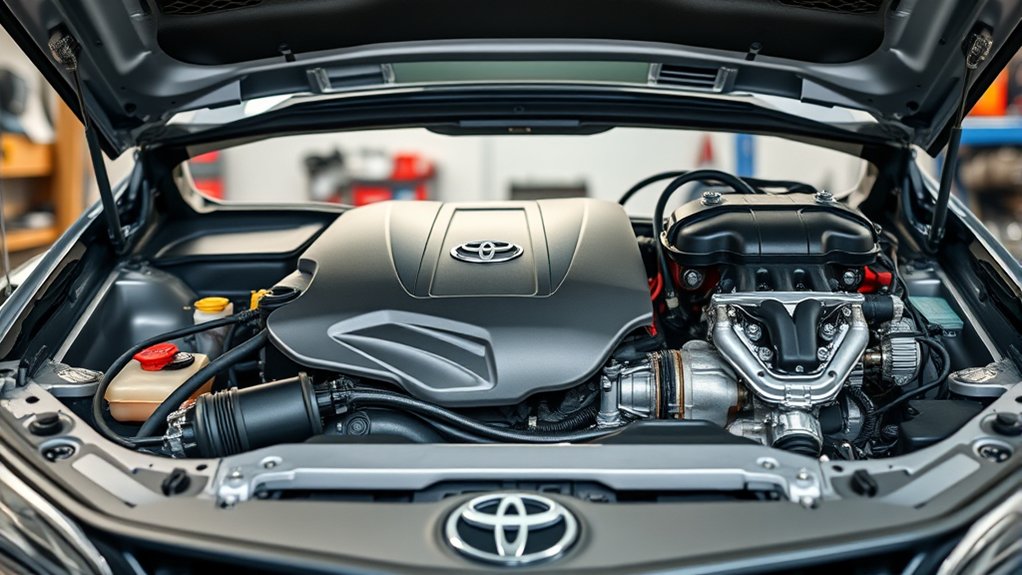
The Toyota Camry engine labels 2AR-FE and 2GR-FE identify two different gasoline engine families, not check-engine fault codes. The 2AR-FE is a 2.5-liter inline-four used in many 2010–2017 U.S.-market Camrys, while the 2GR-FE is a 3.5-liter V6 used in many 2007–2017 V6 models. Knowing which engine you have helps you choose correct parts, fluids, specifications, and repair information.
Quick Answer
The 2AR-FE is Toyota’s 2.5-liter four-cylinder Camry engine, while the 2GR-FE is the 3.5-liter V6. Confirm yours from the underhood emissions label, VIN-based vehicle information, or Toyota service data. Do not confuse these engine-family names with OBD-II codes such as P0300 or P0015.
Key Takeaways
- 2AR-FE identifies a 2.5-liter inline-four; 2GR-FE identifies a 3.5-liter V6.
- Horsepower and torque depend on the Camry’s model year and trim, so one figure does not fit every 2AR-FE application.
- A diagnostic trouble code describes a detected system fault; it does not automatically identify the failed part.
- Oil loss has several possible causes, so measure consumption and inspect for leaks before assuming piston-ring failure.
- Use your exact VIN and model year before ordering parts or following a repair procedure.
How to Identify Your Toyota Camry Engine Code

Start with the underhood Vehicle Emission Control Information label. This label usually lists the engine family or other identifying information needed for emissions and service work. You can also check the vehicle’s registration records, parts catalog information, or Toyota service documentation.
For a VIN-based check, enter the 17-character VIN into the NHTSA VIN Decoder. The result can confirm the model year, engine configuration, manufacturing details, and other manufacturer-reported information. For the most precise Toyota repair data, use the model year and VIN in Toyota’s Technical Information System.
Note: The 2AR-FE gasoline engine is different from the 2AR-FXE hybrid engine. Similar-looking Toyota engine names can use different combustion cycles, controls, parts, and service procedures.
Engine Code vs. Diagnostic Trouble Code
An engine code, such as 2AR-FE or 2GR-FE, names the engine design. A diagnostic trouble code, such as P0301, is stored by the vehicle’s control module when it detects a fault condition. The two code systems serve different purposes.
| Code Type | Example | What It Tells You |
|---|---|---|
| Toyota engine-family code | 2AR-FE | The basic engine family and design variant |
| Toyota engine-family code | 2GR-FE | The V6 engine family and design variant |
| OBD-II trouble code | P0301 | A misfire was detected on cylinder 1 |
Toyota Camry 2AR-FE vs. 2GR-FE Specifications
The figures below describe common U.S.-market Camry applications. Toyota used these engines in other vehicles and markets with different calibrations, so always match specifications to the exact year, trim, and VIN. Confirm final service specifications through Toyota’s model-specific manuals or Toyota TIS.
| Specification | 2AR-FE | 2GR-FE |
|---|---|---|
| Configuration | 2.5-liter inline-four | 3.5-liter V6 |
| Valve timing | Dual VVT-i | Dual VVT-i |
| Camshaft drive | Timing chain | Timing chain |
| Common U.S. Camry years | 2010–2017 gasoline four-cylinder models | 2007–2017 V6 models |
| Camry output examples | 169 hp and 167 lb-ft in many 2010 non-SE models; 179 hp and 171 lb-ft in the 2010 SE; 178 hp and 170 lb-ft in many 2012–2017 models | 268 hp and 248 lb-ft in U.S.-market Camry V6 applications |
Breakdown of the 2AR-FE Engine: Features and Applications
The 2AR-FE is a naturally aspirated 2.5-liter inline-four with an aluminum block and cylinder head, electronic fuel injection, Dual VVT-i, and a timing chain. Toyota introduced the engine family in North America for the 2009 RAV4 and added it to the U.S. Camry for the 2010 model year.
In the Camry, the 2AR-FE was tuned differently across model years and trims. That is why a 169-horsepower figure can be correct for one Camry but wrong for another. When buying an engine, sensor, gasket, ignition part, or timing component, use the VIN and production information rather than relying only on displacement.
2AR-FE Strengths
- Balanced daily performance: It provides adequate power without the fuel use and added packaging of the V6.
- Dual VVT-i: The system adjusts intake and exhaust cam timing to support efficiency, emissions control, and usable torque.
- Timing-chain design: The chain does not have a routine replacement interval like a traditional timing belt, though lubrication problems or worn components can still cause noise or timing faults.
- Wide parts availability: The engine appeared in several Toyota and Lexus products, but application-specific parts can still differ.
2AR-FE Problems and Symptoms to Watch
No engine is immune to age, neglected maintenance, or high mileage. On a 2AR-FE, investigate symptoms instead of assuming a famous internet diagnosis applies to every car.
- Low oil level or oil loss: Check for external leaks, PCV-system problems, incorrect oil, poor maintenance history, and internal consumption. Do not jump directly to piston-ring replacement without a measured oil-consumption test and proper diagnosis.
- Coolant seepage or water-pump wear: Look for dried coolant residue, odor, bearing noise, or a falling reservoir level. Diagnose the leak source before replacing parts.
- VVT-related trouble codes: Incorrect oil level, dirty oil, a sticking oil-control valve, wiring faults, camshaft-position signals, or mechanical timing problems can all affect cam timing.
- Ignition misfires: Spark plugs, coils, injectors, vacuum leaks, compression, and wiring can produce similar symptoms. A cylinder-specific code only identifies where the misfire was detected.
Warning: Stop the engine if the oil-pressure warning stays on, the temperature warning indicates overheating, or the engine develops severe knocking. Continuing to drive can turn a small leak or lubrication problem into major engine damage.
Exploring the 2GR-FE Engine: Power and Performance
The 2GR-FE is a naturally aspirated 3.5-liter V6 with an aluminum block and heads, Dual VVT-i, electronic fuel injection, and a timing chain. In U.S.-market Camrys, it was rated at 268 horsepower and 248 lb-ft of torque and was paired with a six-speed automatic transmission.
Its extra displacement and two additional cylinders provide stronger acceleration than the 2AR-FE. The tradeoffs include tighter engine-bay packaging, more components, and potentially higher labor costs for some repairs.
2GR-FE Problems and Symptoms to Watch
- Oil seepage: Inspect the valve-cover and timing-cover areas if you smell burning oil or see residue. Confirm whether the leak is active before authorizing a major reseal.
- Coolant leaks or water-pump wear: Check for coolant residue, bearing noise, or unexplained coolant loss. Access is tight in transverse applications, so labor can be significant, but a full engine removal is not a universal requirement.
- Cold-start rattle: A brief rattle can have several causes, including oil drain-back, VVT actuator behavior, chain tension, or another accessory. Match the symptom to Toyota service information for the exact VIN before replacing a VVT gear.
- Misfires: Coils, plugs, injectors, intake leaks, wiring, and compression should be tested. There is no sound basis for assuming cylinder 2 is always the failure point.
- Oil-hose campaign history on some early applications: Certain older Toyota and Lexus vehicles with the 2GR-FE were included in service-campaign activity involving a VVT-i oil hose. Check the VIN through Toyota’s campaign lookup or the NHTSA recall database rather than relying on engine family alone.
Why Regular Maintenance Matters for Your Toyota Engine
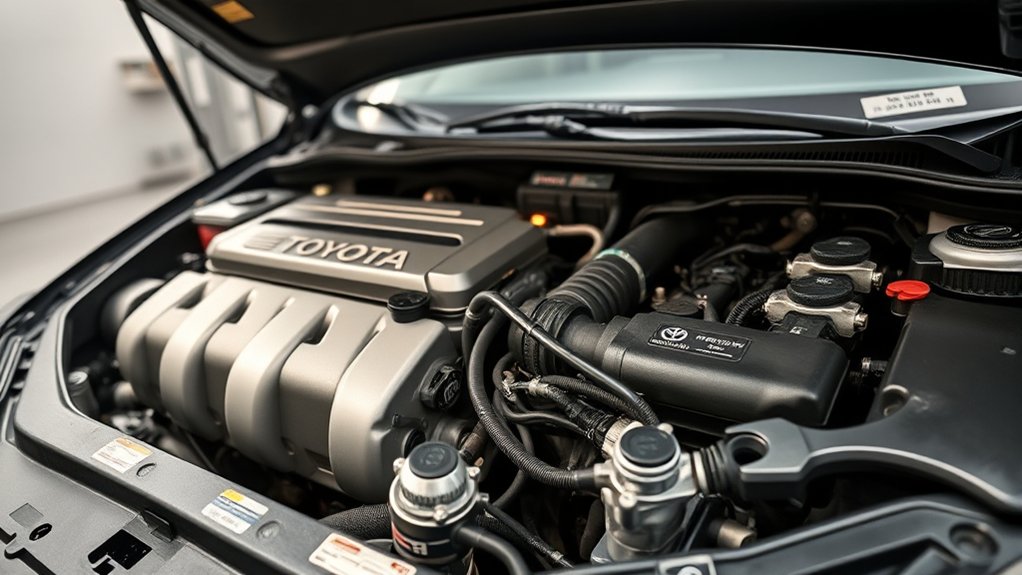
Regular maintenance protects the oil-controlled VVT system, timing-chain components, cooling system, and ignition parts in both engines. Use the schedule for your exact Camry year, driving conditions, and market. Toyota provides model-specific manuals and maintenance guides through its Owners Manuals and Warranties portal.
Maintenance Priorities
- Check the engine-oil level regularly. Use the oil grade shown in the owner’s manual and on the oil-fill cap.
- Change oil and filters on schedule. Short trips, dust, towing, extended idling, and severe temperatures may require the special-operating-condition schedule.
- Watch the cooling system. Check the reservoir only when the engine is cool, investigate repeated coolant loss, and never remove a hot radiator cap.
- Replace spark plugs at the specified interval. Use the correct plug type and torque procedure for the engine.
- Inspect leaks instead of cleaning away the evidence. The location, color, and pattern of residue help identify the source.
- Check recalls and service campaigns by VIN. Campaign coverage depends on the exact vehicle, production date, and market.
Pro Tip: Photograph the dipstick reading, coolant reservoir level, leak area, warning message, and scan-tool freeze-frame data before cleaning or clearing anything. A dated record makes intermittent problems much easier to diagnose.
Tips for Diagnosing Check-Engine Codes
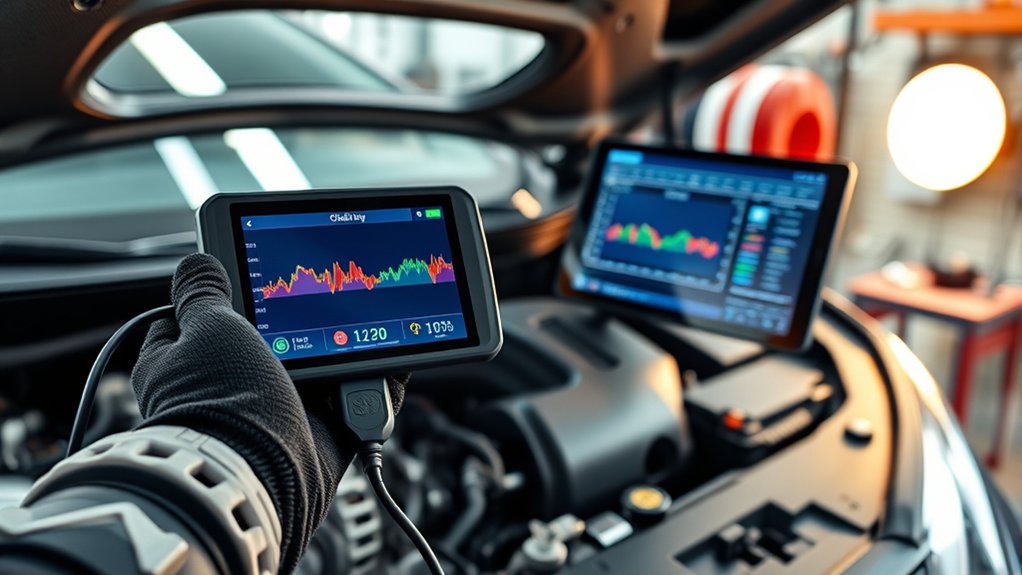
Use an OBD-II scanner to read stored, pending, and permanent codes, but treat each code as a starting point. Save freeze-frame data before clearing anything. Then check Toyota’s diagnostic procedure for the exact code, engine, model year, and VIN.
| Trouble Code | What It Means | Useful First Checks |
|---|---|---|
| P0015 | “B” camshaft timing over-retarded, Bank 1 | Oil level and condition, oil-control valve circuit, cam sensor data, VVT operation, and mechanical timing |
| P0300 | Random or multiple-cylinder misfire detected | Fuel quality, intake leaks, ignition, fuel delivery, compression, and shared electrical faults |
| P0301–P0306 | Misfire detected on a specific cylinder | Plug, coil, injector, wiring, vacuum leak near that runner, and compression |
| P0171 or P0174 | Fuel system too lean on Bank 1 or Bank 2 | Unmetered air, fuel pressure, injector delivery, air-flow data, exhaust leaks, and sensor bias |
A Safe Diagnostic Sequence
- Record every code, status, warning message, and freeze-frame value.
- Check oil, coolant, battery voltage, loose connectors, damaged hoses, and obvious leaks.
- Review technical service bulletins and the Toyota repair manual for the exact vehicle.
- Test the suspected circuit or system before replacing a part.
- Complete the repair, clear codes when appropriate, and perform the required drive cycle or verification test.
A trouble code tells you what the computer detected. It does not prove which component failed.
Frequently Asked Questions
What is the engine code for the 2AR-FE?
The engine-family code is 2AR-FE. In many U.S.-market Camrys, it identifies the 2.5-liter gasoline inline-four used from the 2010 through 2017 model years. Confirm the exact application by VIN because hybrid and non-U.S. versions can use different engine variants.
How do you read a Toyota engine code?
The first number identifies the engine’s generation within a family, the letters before the hyphen identify the family, and the suffix identifies design features or fuel-system variants. Use the full code because 2AR-FE and 2AR-FXE, for example, are not interchangeable descriptions.
What does FE mean on a Toyota engine?
In commonly used Toyota nomenclature, F is associated with an economy-oriented DOHC cylinder-head design and E indicates electronic fuel injection. The suffix is only part of the identification, so use the full engine code when researching parts or procedures.
Which Camrys have the 2GR-FE engine?
In the United States, the 2GR-FE was used in V6 Camry models from 2007 through 2017. The 2018 generation changed to the 2GR-FKS V6, so parts and procedures should not be assumed to interchange.
Is excessive oil consumption a common 2AR-FE defect?
Some 2AR-FE engines may use oil because of leaks, PCV-system faults, maintenance history, wear, or internal engine problems. The engine code alone does not prove a piston-ring defect. Measure consumption and diagnose the source before choosing a repair.
Does a timing chain mean the engine needs no timing-system maintenance?
No. A timing chain usually has no routine replacement interval, but the chain, guides, tensioner, VVT components, and oil passages still depend on correct oil level and timely maintenance. Persistent rattling or cam-timing codes require diagnosis.
Conclusion
Understanding the difference between the 2AR-FE, 2GR-FE, and OBD-II trouble codes helps you avoid wrong parts and rushed diagnoses. Confirm the engine by VIN and Toyota documentation, use model-year-specific specifications, and investigate symptoms with tests rather than assumptions. Both engines can provide long service when oil level, cooling-system health, ignition maintenance, leaks, and warning codes receive prompt attention.
Sources
- Toyota Owners: Manuals and Warranties — model-specific owner, warranty, and maintenance information.
- Toyota Technical Information System — Toyota repair manuals, service bulletins, wiring diagrams, and diagnostic information.
- NHTSA VIN Decoder — manufacturer-reported vehicle identification information.
- NHTSA Recall Lookup — VIN-based safety recall information.
