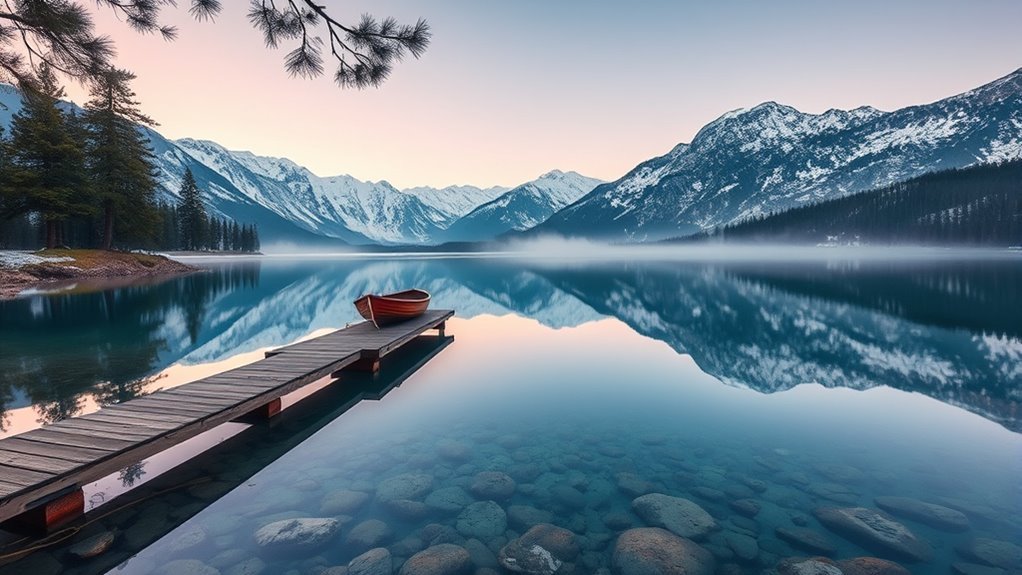
Lake fishing is a calm, beginner-friendly way to learn the sport, with easy shoreline access, steady water, and a gentle learning curve. New anglers can start with simple rod-and-reel combos and target trout, bass, walleye, catfish, or salmon in familiar shallow or deeper spots. Basic setup, smooth casting, and patient techniques build confidence fast. With the right rules, safety habits, and conservation care, the lake reveals even more as the basics come together.
Key Takeaways
- Lake fishing is beginner-friendly, with calm water, easy shore access, and simple starter gear from local tackle shops.
- Match your rod, reel, line, and bait to the target fish, such as trout, bass, walleye, salmon, or catfish.
- Set up gear correctly by threading the line, tying strong knots, and adjusting bobbers or bait depth for fish location.
- Fish early or late for better results, and use techniques like still-fishing, bobber rigs, or trolling depending on species.
- Follow local regulations, wear a life jacket, practice catch and release, and keep the lake clean for future anglers.
Why Lake Fishing Is Beginner-Friendly
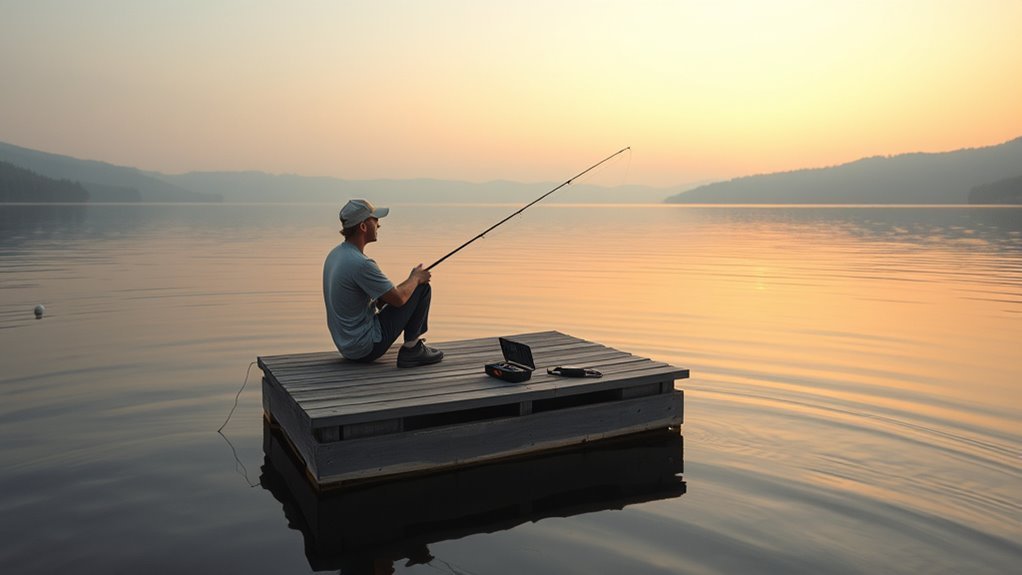
Lake fishing is often one of the easiest ways for a beginner to get started, because access is simple and the learning curve is gentle. Shorelines invite quiet steps, while small boats launched from ramps widen the horizon without demanding mastery.
In this beginners guide to lake, the calm water becomes a patient tutor, letting a fishing rod move with steadier practice and cleaner casts than in rushing rivers or rough seas. Local tackle shops and government offices often hand out maps, rules, and location tips, easing confusion and giving newcomers a firmer footing.
Ready-made beginner combos, such as the KastKing Spartacus II Twin Tip, reduce guesswork and open the door to action sooner. With each cast, lake fishing offers a practical path to confidence, freedom, and the simple joy of learning by doing, in open air and unhurried light.
Lake Fish Species to Target
Silver flashes, deep fins, and hard-running strikes define the species that make lake fishing worth learning. Among lake fish species, salmon stand tall, especially Sockeye, Coho, and Chinook, which often grow larger in lakes and create memorable battles in the Great Lakes.
Trout, including Rainbow, Brook, Brown, and Lake Trout, reward freshwater fishing with clean flavor and spirited runs, though their patterns shift with the seasons.
Bass, both Largemouth and Smallmouth, bring bold aggression and are especially inviting during spring spawning, when they strike with fearless urgency.
Walleye prefer deeper water and often feed best at dawn and dusk, asking for patience and sharp observation.
Catfish, such as Channel, Blue, and Flathead, roam widely across North American lakes and stay available through the year, often moving shallow in spring.
These fishing tips help beginners choose targets and match each lake’s living rhythm.
Essential Lake Fishing Gear
A basic rod and reel, matched to the target fish, forms the heart of lake tackle, whether in spinning or baitcasting style.
The right line, hooks, bait, and lures give each cast purpose, from live worms and minnows to flashing spinners and crankbaits that flash like fleeing prey.
A tidy tackle box keeps pliers, scissors, and essentials close at hand, while a valid fishing license keeps the outing legal and conservation-minded.
Rods And Reels
A dependable rod and reel form the foundation of lake fishing, giving beginners the control needed to cast accurately and feel even subtle bites.
A spinning rod and reel is often the easiest path, smooth in hand and forgiving on the water. A 6- to 7-foot rod usually offers the best balance of reach, comfort, and command, especially when used one-handed from shore or boat.
Closed spin-casting reels can simplify the first outings, while open-bail spinning reels reward practice with longer casts and freer line flow.
A 4- to 12-pound-test monofilament line keeps the setup responsive yet strong.
Quality combos such as KastKing Spartacus II Twin Tip or Royal Legend Glory can sharpen confidence and help fishing feel open, deliberate, and unhindered.
Hooks Baits And Tackle
Essential lake fishing gear works best when each piece has a clear purpose, from hooks sized 6–10 to match the day’s target species to baits that fit the fish’s appetite.
Larger hooks suit bass and walleye, while smaller hooks help coax bluegills and crappies. Live baits such as red wigglers, crickets, and wax worms bring panfish and trout to hand, while dough balls or corn tempt carp.
A well-stocked tackle box keeps hooks, weights, bobbers, pliers, and scissors ready, so choices stay free and efficient on the bank.
Monofilament line from 4 to 12 pound-test adds flexibility, and split-shot or egg sinkers guide bait to the right depth with quiet precision.
How to Set Up Your Rod and Bait
A rod begins with the reel locked firmly into the seat, the line threaded cleanly through each guide, and enough slack left at the end for a confident setup.
From there, the hook or lure is secured with a strong knot, while live bait is hooked carefully so it can move naturally in the water.
A bobber set to the right depth keeps the offering hovering where fish are most likely to feed, just above the lake’s hidden cover.
Rod Assembly Basics
Before a cast can touch the water, the rod must be assembled with care: the reel is secured to the rod’s seat, the line is threaded cleanly through each guide from tip to reel, and enough slack is left to match the intended bait or lure length.
A balanced rod and reel combo feels steady in hand, whether standing on shore or fishing from a boat. The hook is tied with a firm knot, the kind that holds fast when a fish pulls against freedom.
If a bobber or weight is needed, it rests in place to shape depth and movement, guiding the presentation without fuss.
When each part aligns, the setup becomes simple, responsive, and ready for open water.
Bait And Rigging
Careful baiting turns a quiet rod into a living invitation beneath the surface: a hook sized between 6 and 10 suits most freshwater setups, while red wigglers, crickets, and minnows tempt everything from panfish to bass.
With live bait, rigging matters; the hook is threaded through the body so the offering stays secure and natural in the water. A bobber set 2 to 3 feet above the hook keeps the bait hovering where fish roam, free and visible.
Monofilament line in the 4 to 12 pound range offers enough strength for battle while remaining easy to cast and reel. For lures, a simple knot holds firm and releases cleanly.
This balanced setup lets the angler move with confidence and purpose.
Best Lake Fishing Techniques
Several dependable lake fishing techniques can turn a slow day into a productive one, especially when the angler matches method to water depth and fish behavior.
Among the best lake fishing techniques, smooth casting matters first: a swift, controlled motion and well-timed release send bait where freshwater fish roam, while a casting plug helps build confidence.
The bobber and hook method offers simple freedom, suspending worms or minnows at chosen depths so bites appear clearly.
Still-fishing keeps bait resting near structure or in deeper pockets, a patient approach that suits catfish and bass.
From a boat, trolling sweeps lures behind a moving hull, covering water efficiently and reaching trout or salmon below.
As seasons shift, tactics should shift too, with deeper presentations in summer.
Each method gives anglers room to adapt, observe, and fish with purpose.
When and Where to Find Fish
Fish are most likely to feed in the soft light of early morning and late evening, when trout and bass often move closer to shore and become easier to tempt. In these liberated hours, a lake seems to open its gates, offering movement where stillness ruled. Nutrient-rich shoals draw fish species in spring and fall, especially Rainbow Trout and Brook Char, while weed beds, logs, and rocks provide cover that turns open water into refuge.
| Season | Likely Depth | Notable Fish Species |
|---|---|---|
| Spring/Fall | Shoals | Rainbow Trout |
| Summer | Deeper water | Walleye |
| Dawn/Dusk | Near shore | Bass, Trout |
Seasonal shifts matter: during warmer months, some species settle deeper, often close to the bottom, where cooler water and shadow grant relief. Monthly charts sharpen this vision, helping to predict feeding windows with quiet precision. Knowing when fish gather and where they linger lets an angler move with purpose, not guesswork.
Catch and Release Basics
After the rhythm of dawn and dusk has brought fish within reach, the angler’s next choice can be just as important as the catch itself: whether to let the fish swim away.
In catch and release, the goal is simple: preserve the pulse of the lake while still savoring the moment. Fish recover best when held wet, supported gently, and returned quickly, so handling techniques matter.
Equipment considerations also shape the outcome: barbless hooks slide free with less harm, and a soft landing net cushions the struggle.
- Keep hands wet
- Limit air exposure
- Use barbless hooks
- Choose a soft net
- Release fish promptly
A brief photo can preserve the memory without stealing the fish’s freedom.
Done well, catch and release offers a quiet form of stewardship, letting the water remain alive with possibility for the next cast.
Lake Fishing Rules, Safety, and Conservation
Before the first cast settles the surface, responsible lake fishing begins with knowing the rules that shape it: local regulations can change from one shoreline to the next, setting limits on species, size, and daily catch, while a valid fishing license often helps fund the conservation work that keeps waters healthy.
These lake fishing rules guide freedom with order, giving anglers clear boundaries and protecting fragile stocks from overuse. Safety matters just as much: life jackets, a trusted fishing buddy, and close attention to weather can keep a quiet outing from turning dangerous.
Catch-and-release, done carefully, helps slow-growing fish recover and preserves future abundance. Conservation also lives in small acts, like packing out trash and recycling fishing line so birds, turtles, and shorelines remain unscarred.
In that care, the lake stays open, alive, and generous for everyone who seeks its calm.
Frequently Asked Questions
What Is the 80/20 Rule in Fishing?
It is the idea that most catches come from a few prime spots, so anglers focus there. Smart bait selection strategies, fishing gear essentials, and casting techniques tips help reveal that productive 20% and free wasted effort.
What Are Some Tips for Starting Out With Lake Fishing?
The road to lake fishing starts with a license, simple gear essentials, and thoughtful bait selection strategies. Following seasonal fishing patterns, an early-rising angler may find worms, crickets, and calm water pay off beautifully.
What Is a Hump in a Lake?
A hump in a lake is an elevated underwater rise in the lake structure, part of the underwater topography. It creates fish habitat, drawing baitfish and predators to its shallow crest, edges, and ambush-friendly contours.
Can You Explain What a Lake Is?
A lake is a body of water resting in land’s embrace—what quiet world might shimmer there? It anchors freshwater ecosystems, shapes lake ecology, and shelters aquatic habitats, offering living space, reflection, and freedom.
Conclusion
In lakes, beginners find a welcoming start: calm water invites steady casts, common species reward simple tactics, and basic gear keeps the learning curve gentle. With a well-set rod, the right bait, and patient technique, each outing becomes a lesson in timing and reading the water. Respect for catch and release, safety, and local rules guarantees every trip remains responsible, rewarding, and sustainable, while each return to shore brings confidence, curiosity, and growth.
