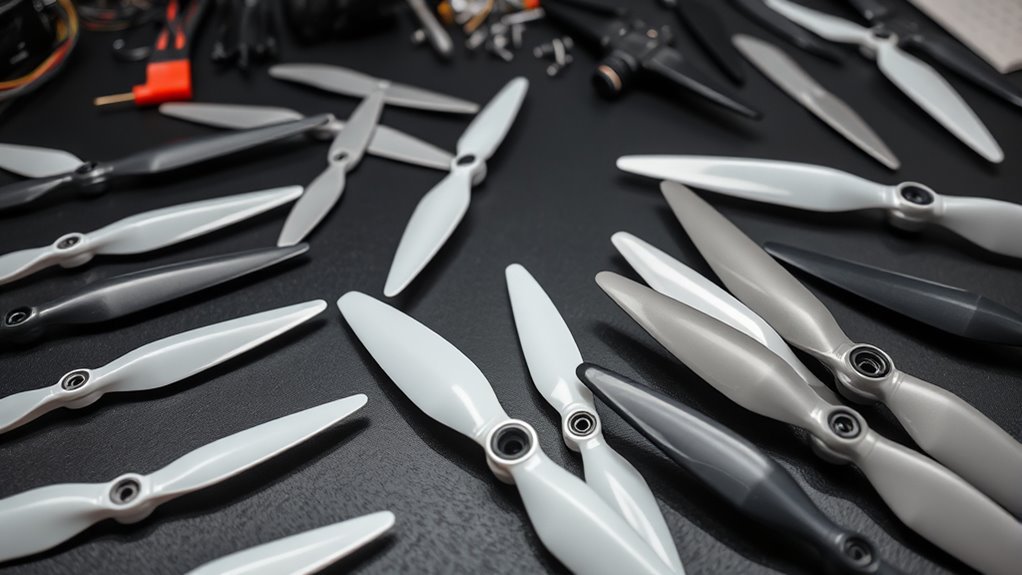
FPV propellers shape how a quad feels in the air, from throttle response to efficiency and top speed. Pitch, blade count, motor KV, and battery voltage all interact, and the wrong combination can waste power or overload a setup. A lower-pitch two-blade prop may suit one build, while a high-pitch tri-blade may suit another. The useful part is knowing which variable matters first, and that starts with the basics.
What Propeller Pitch Means for FPV
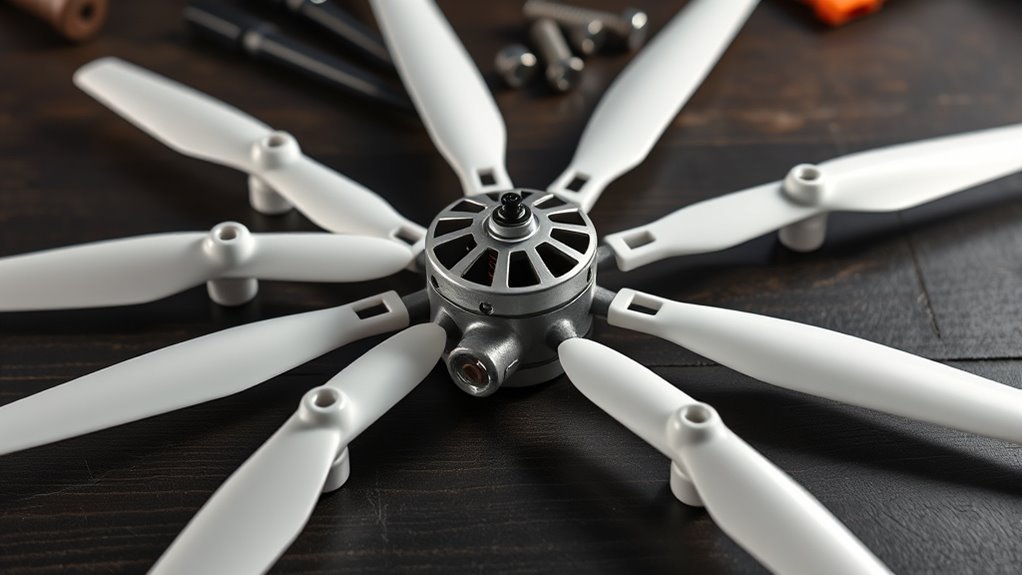
Propeller pitch describes the theoretical distance a propeller would move forward in one full revolution, and it is a key factor in FPV speed and efficiency.
In propeller design, higher pitch increases top speed potential and supports high speeds, but it also raises power consumption during launch and load changes. Lower pitch reduces demand, improves acceleration, and steadies drone performance for endurance or precise control.
For most freestyle FPV builds, a pitch near 4.5 to 5.5 inches gives a practical balance between thrust and responsiveness.
Matching propeller pitch with motor KV ratings matters: a 2300KV motor on a 5-inch build often performs best around 4.5 to 5.0 inches to avoid overspeeding and overheating.
Pairing pitch with motor KV keeps a 5-inch build fast, efficient, and cool.
Blade count can further alter the feel, but pitch remains the primary variable for choosing a propeller that preserves freedom of movement without wasting energy.
It shapes how fast the craft can move, and how efficiently it can stay free.
How Blade Count Changes Flight Feel
Blade count further refines how a propeller feels in flight. A lower blade count usually means less drag, so two-blade propellers spin faster, reach higher pitch speed, and suit direct, high-speed lines. Their lighter load also lowers current draw, which improves efficiency and preserves battery life.
Three-blade propellers trade some efficiency for stronger thrust generation, delivering roughly 10-25% more thrust at the same RPM. That extra blade area increases power consumption, often raising current draw by 10-30%, yet it also gives a more locked-in flight feel. Acceleration response is quicker, and stability improves in turbulent air and during aggressive maneuvers.
For pilots seeking control, confidence, and freedom through precise handling, blade count becomes a practical tuning tool. In practice, three-blade propellers favor freestyle and technical flying, while two-blade propellers favor speed, efficiency, and reduced load on the propeller system.
Match Prop Size to Motor KV
Motor KV must be matched to prop size and battery voltage to keep RPM, current draw, and heat within a safe range. The KV rating states no-load RPM per volt; it should guide propellers selection, not be treated as an isolated number.
For 5-inch builds on 4S, 2300-2700KV usually gives strong performance with manageable load. Above 2700KV, high-KV motors can overspeed small prop size choices, raising temperature and risking desyncs.
On 6S, 1700-1900KV is better, especially with larger props, because lower KV supports efficiency and control. Typical pairings include 1404-1507 motors for 3-inch props, 2207-2306 for 5-inch, and 2507-2806 for 7-inch long-range rigs.
Pitch also matters, since aggressive pitch increases demand. Manufacturer tables help confirm a balanced thrust-to-weight ratio for the intended flight style, so pilots keep the craft free, responsive, and reliable.
Pick Props That Fit Your Battery
Battery voltage should guide prop choice as much as motor KV, because pitch and blade count determine how hard the prop loads the system. For a 4S battery, a 5-inch prop with 4.5–5.0 pitch often balances speed, thrust and acceleration, and battery consumption. Pitch Affects current draw: lower pitch increases efficiency, smooths high RPM operation, and can extend flight time. A smaller propeller diameter is safer on high KV motors, helping prevent overspeeding and heat. The number of blades also matters; more blades add grip, but increase load and reduce efficiency. Technical specifications should be checked before installation to keep the motor within limits and preserve freedom from overheating.
| Prop type | Effect | Best use |
|---|---|---|
| 5″ / 4.5 pitch | Efficient | 4S battery cruising |
| 5″ / 5.0 pitch | Stronger push | Fast 4S setups |
| Lower pitch, more blades | More load | Control, stability |
Test Props and Tune With Telemetry
Testing different propellers is the most reliable way to refine FPV performance, and telemetry provides the data needed to compare them objectively.
Pilots should test props in controlled hover tests and short flights, then review telemetry data for motor strain, battery consumption, RPM, and thrust-to-weight ratio.
Lower pitch propellers usually improve stability and drone efficiency, while higher pitch props can raise speed at the cost of current draw and shorter pack life.
Comparing pitch propellers under identical conditions reveals which propeller choices deliver the best balance of thrust, handling, and endurance.
A practical method is to swap one variable at a time, log flight performance, and note temperature rise after each run.
This disciplined approach removes guesswork and supports freer flying through better-tuned hardware.
When telemetry shows reduced motor strain and acceptable battery consumption, the setup is closer to ideal for the pilot’s mission and style.
Frequently Asked Questions
Is a 19 or 21 Pitch Prop Faster?
A 21 pitch prop is generally faster than a 19 pitch prop, because its pitch variations move more air per rotation.
Yet propeller efficiency depends on motor compatibility, weight impact, and drag reduction. A 19 pitch usually gives sharper throttle response, better flight stability, less acoustic noise, and easier maneuverability traits.
Material types and battery setup also matter. The faster choice for liberation in motion is the one that matches the full system.
Is a 10 Pitch Prop Better Than an 11 Pitch Prop?
A 10 pitch prop is generally better for propeller efficiency, flight stability, and lower noise levels; an 11 pitch prop favors thrust generation, racing performance, and sharper responsiveness differences.
Side by side, lower pitch supports drag reduction and endurance, while higher pitch demands stronger motor compatibility and careful material choice.
Ideal configurations depend on KV, voltage, and airframe load, because freedom in flight comes from testing what the system can sustain.
How to Pick Propeller Pitch?
Pick propeller pitch by matching the mission to motor compatibility and battery voltage. Lower pitch favors propeller efficiency, flight stability, and noise reduction, while higher pitch increases ideal thrust and speed.
Material choice, durability factors, and weight considerations also affect response. Design variations should be tested in small steps, adjusting pitch to protect motors and refine tuning performance.
The best setup serves the pilot’s chosen flight style with practical freedom.
Which Is Faster, a 3 or 4 Blade Prop?
A 3-blade prop is usually faster, cutting through air like a clean blade through water. Better blade efficiency and drag reduction favor higher speed ranges, while 4-blade designs trade speed for thrust generation, flight stability, and control.
Noise levels rise with extra blades. Motor compatibility, weight considerations, material types, and design variations still matter; the freer the setup, the more the mission dictates the choice.
Conclusion
FPV propellers shape efficiency, thrust, and control more than many pilots expect. Pitch and blade count alter acceleration, top speed, and handling, while motor KV and battery voltage determine whether a prop runs safely and effectively. The best setup is rarely universal; it is the one matched to the frame, powertrain, and intended flight style. What matters most is not choosing the “best” prop, but the right prop for the system in front of it.