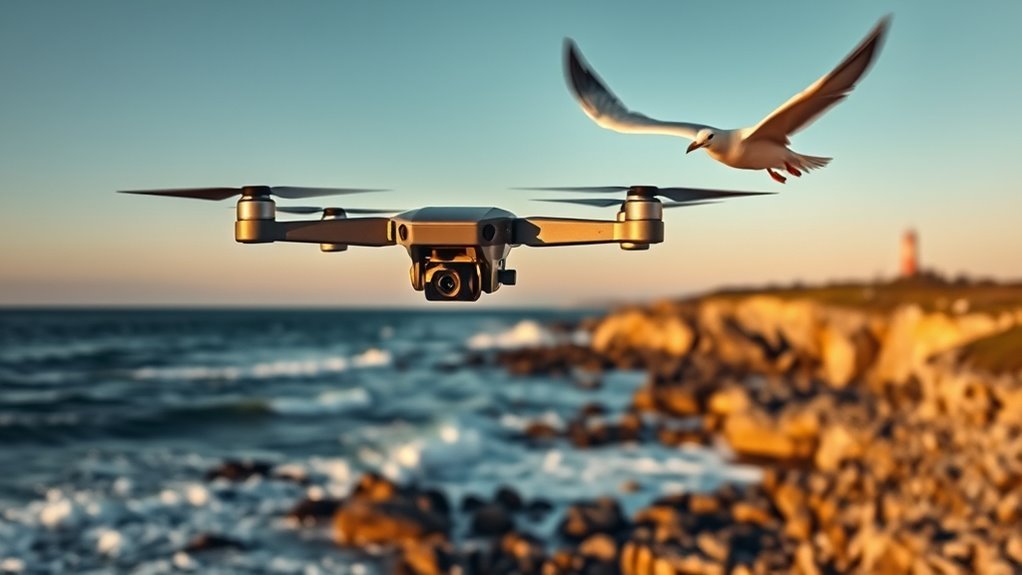
Bird attacks on drones usually follow patterns tied to nesting sites, territorial behavior, and low-altitude flights near active habitats. Operators can reduce risk by choosing open launch areas, watching local bird activity before takeoff, and avoiding flights near obvious nests or feeding grounds. Mid-flight, the response matters as much as the location. A few simple actions can change the outcome, but the next step is where the real difference begins.
What Causes Bird Attacks on Drones?
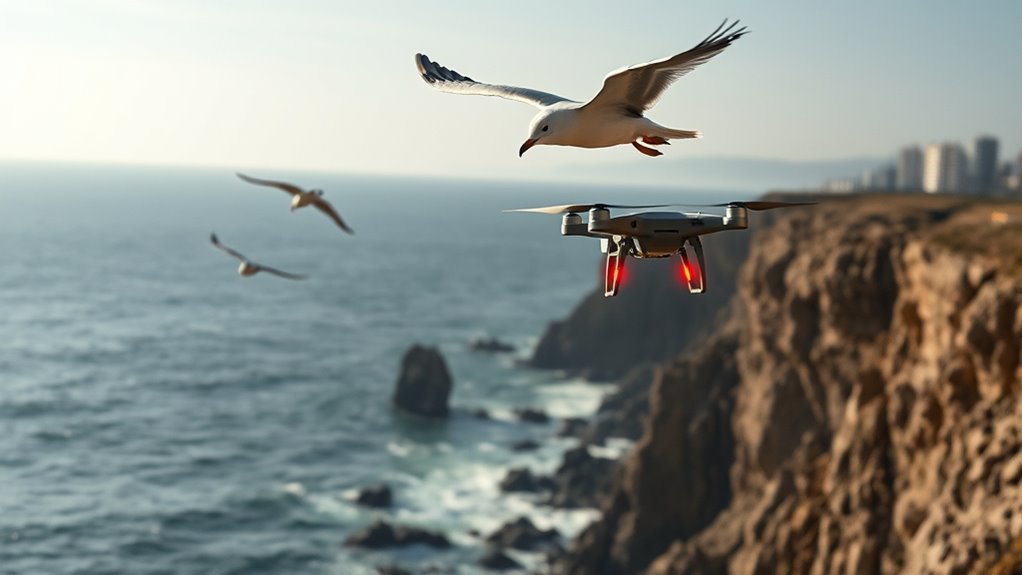
Bird attacks on drones typically occur when birds perceive the aircraft as an intruder or threat within their nesting or feeding territory. In this instance, the drone as a threat is registered through movement, noise, and proximity, which can trigger defensive action.
During nesting season, especially from spring to early summer, parent birds often show intensified aggression because their young are vulnerable. Some bird species, including hawks and gulls, engage more readily, particularly in urban areas where territorial pressure is high.
Observed behaviors such as circling, diving, or repeated close passes indicate that birds are evaluating and confronting the perceived danger.
Drone size and flight pattern also matter; larger models may be interpreted as prey or as competing aerial objects. These responses are not random. They reflect species-specific defense mechanisms shaped by territory, reproduction, and survival.
Choose Safer Places to Fly
Selecting safer flight locations can reduce the likelihood of bird encounters before takeoff ever begins. Operators should avoid flying near nature reserves, wetlands, and known nesting sites, where bird activity is concentrated and defensive responses are more probable.
A brief ground survey of at least ten minutes provides observational data on local movement patterns, allowing hazards to be identified before launch. Flight paths should be planned to bypass habitats that birds routinely use, with added caution in spring and early summer, when nesting behavior often increases aggression.
Maintaining a separation of at least 50 feet from any bird helps limit disturbance and lowers the chance of provoking a response. These measures support a more liberated use of airspace by reducing unnecessary conflict with wildlife and preserving control over the flight environment.
Maintain at least 50 feet from birds to reduce disturbance, avoid provoking responses, and preserve safer, more controlled flight.
Careful site selection does not eliminate risk, but it measurably narrows the conditions under which bird attacks can occur.
Pick the Best Time to Launch
Choosing a launch time during midday can reduce the likelihood of bird encounters, since many species are most active in the early morning and late afternoon. This window is often the best time to launch because bird traffic is typically lower and the sky is less contested.
Observers should still consult local wildlife activity reports, which can reveal temporary shifts in movement or feeding patterns. Seasonal effects matter: from spring through early summer, nesting birds may defend territory more aggressively, increasing risk around known sites.
Weather also shapes behavior; windy or rainy conditions can alter flight paths and lower avian activity. A brief site survey of at least ten minutes before takeoff provides direct evidence of current conditions and allows plans to be adjusted without delay.
Such preparation supports safer, more autonomous drone operation while minimizing unnecessary disruption to birds and preserving operational freedom.
Keep Your Drone in Sight
Maintaining visual line of sight with a drone is required in many regions and improves the detection of birds approaching from the surroundings.
Continuous observation allows early recognition of bird behavior and preserves reaction time for immediate diversion or landing if aggression appears.
This practice supports safer flight by reducing collision risk and helping the operator avoid areas with elevated bird activity.
Maintain Visual Line Of Sight
Keeping the drone within visual line of sight is often a legal requirement in many regions and provides immediate awareness of nearby bird activity and other hazards.
Visual Line of Sight supports bird avoidance by preserving direct, real-time observation of flight conditions. When the aircraft remains visible, operators can respond more quickly to circling birds, dive-bombing behavior, or sudden shifts in flock movement.
This practice improves situational awareness before and during flight, allowing assessment of changing animal patterns without delay. An observer may extend this capability by relaying alerts and maintaining communication on incoming threats.
Regular scanning of the airspace and surrounding terrain helps detect behavioral changes early, enabling controlled maneuvering or landing. Such disciplined observation increases operational freedom by reducing exposure to unnecessary risk.
Spot Birds Early
Spotting birds early depends on maintaining continuous visual contact with the drone so approaching threats can be detected before they close in. Drone pilots who keep the aircraft in sight preserve a clear field of observation, while a dedicated observer can scan the surrounding airspace for movement, calls, and sudden changes in bird posture. Before takeoff, circling or agitated birds often signal nesting activity or territorial pressure. Flights scheduled for midday frequently encounter lower avian activity. Local species knowledge further refines judgment by revealing nesting patterns and high-risk zones.
| Cue | Meaning | Risk |
|---|---|---|
| Circling birds | Territorial interest | Elevated |
| Quiet airspace | Lower activity | Reduced |
| Observer present | Wider surveillance | Early notice |
| Nesting site known | Predictable hazard | Avoidable |
React Fast, Fly Safe
Once birds are detected, a drone’s best protection is rapid, measured response while preserving legal visual line of sight (VLOS).
Drone operators should keep the aircraft within direct sight or under an observer’s watch, so hazards are recognized without delay. Circling, diving, or repeated passes suggest escalation; these patterns warrant immediate action.
If contact begins, the drone should stop forward motion at once and climb steadily, since lateral escape can trigger pursuit. Maintaining calm control helps stop birds attacking while reducing erratic inputs.
Midday flights and local wildlife reports can lower exposure before launch. This approach supports safe, informed movement and preserves the operator’s freedom to fly with awareness, not guesswork.
How to Fly So Birds Lose Interest
Birds are less likely to take interest when a drone appears unpredictable, distant, and non-threatening. In flying drones, operators can reduce birds attacking your drone by choosing neon colors, especially blue, which studies associate with lower aggression than white.
Flight paths that include quick, rocket-like changes in direction may signal capability rather than vulnerability, while slow, drifting motion can invite inspection. Timing also matters: midday flights generally coincide with lower bird activity than early mornings or late afternoons.
Quick, rocket-like turns signal capability; slow drifting invites inspection. Midday flights often face less bird activity.
Before takeoff, a site survey should last at least ten minutes to identify nests, feeding zones, or active perches. Distance remains critical; staying 50 feet from birds is a minimum, and 100 feet is preferable when the airspace allows.
These practices do not guarantee immunity, but they measurably reduce attention, preserve autonomy, and support more liberated, low-conflict operation in open sky.
What to Do When a Bird Closes In?
When a bird closes in on a drone, the safest response is to halt forward motion immediately and begin a steady vertical climb. Observations indicate that horizontal movement often provokes pursuit, raising the probability of a bird strike.
A drone pilot should maintain controlled ascent rather than sudden evasive turns, since abrupt lateral motion can intensify territorial behavior in many species. Climbing to roughly 50 to 100 meters frequently breaks engagement, especially near nests or defended airspace.
Once separation is achieved, the drone should drift laterally away from the bird’s territory before descending. This sequence reduces exposure while preserving the operator’s freedom to continue flight with minimal interference.
If aggression persists, the rational option is to land the aircraft at a secure site. Such restraint limits harm to both machine and animal, and it treats the airspace as a shared environment governed by measurable risk, not impulsive reaction.
Climb Fast and Exit the Area
When a bird engages a drone mid-flight, the aircraft should stop forward motion and begin a rapid vertical climb to break contact.
Ascending to roughly 50 to 100 meters can reduce pursuit by moving the drone beyond typical patrol levels and out of the bird’s immediate territory.
If aggression continues, the drone should exit the area and land at a safe location as soon as feasible.
Rapid Vertical Escape
A rapid vertical ascent is often the most effective response when a bird engages a drone, because climbing steadily can disrupt the bird’s focus and reduce the likelihood of continued pursuit. This rapid vertical escape is especially relevant during Bird Attacks, when altitude gain can create separation without provoking lateral chase behavior. Observations indicate that an ascent of 50 to 100 meters improves the chance of clearing hawks or gulls and leaving their territory.
| Action | Effect |
|---|---|
| Climb vertically | Reduces pursuit |
| Gain 50–100 m | Improves evasion |
| Avoid horizontal motion | Limits chase triggers |
| Maintain control | Prevents instability |
Stable control during the climb is essential; a precise ascent preserves flight integrity and supports safe departure, allowing the operator to regain open air and descend only after the threat has passed.
Break Contact Quickly
Immediate disengagement is the priority if a bird makes contact with a drone: forward motion should stop at once, and a steady vertical climb should begin to break the interaction and reduce the chance of pursuit. Observations indicate that attacking birds often track lateral motion, so ascent is the least provocative response. A drone rising 50 to 100 meters typically moves beyond common raptor patrol height and lowers encounter probability.
- Halt propulsion forward.
- Ascend vertically without weaving.
- Leave the area only after altitude is secured.
This sequence favors rapid release from pressure while preserving flight control. If aggression continues, landing at a safe location becomes the most conservative option, balancing drone protection with wildlife awareness and the practical need for freedom in the air.
Exit Territory Safely
Climbing quickly is the most reliable way to exit a bird’s territory once contact begins. In drone operations, forward motion should stop at once, and a steady vertical ascent of 50 to 100 meters should follow.
Birds often interpret horizontal movement as a chase signal, so ascent is the cleaner route to release. Sport mode can improve climb rate and shorten exposure.
Once above the immediate threat zone, the drone should move laterally beyond the birds’ range before any descent. This sequence reduces pursuit and preserves control.
Throughout the maneuver, the pilot should monitor surrounding behavior, since birds may reposition or escalate. A calm, decisive climb enables safe departure and restores operational freedom with minimal risk.
Best Drone Colors and Reflective Gear
Neon-colored drones, particularly those painted in shades such as neon blue, have been observed to attract less bird aggression than drones finished in white or black.
In drone technology, color and surface treatment shape avian perception, and reflective tape can add visible contrast without heavy modification. To remain within a 250g limit, any added material should be lightweight and minimal, preserving flight efficiency and user freedom.
- Neon blue or similar bright finishes may reduce attacks by making the aircraft less bird-like.
- Red tape or fluorescent stickers can increase visibility and discourage closer approaches.
- Lightweight reflective gear, including small protective coverings in black or blue, may further lower risk when kept within weight limits.
Observations also suggest that rapid, decisive maneuvers project strength, whereas slow drift may invite pursuit.
Selection of color and reflective material consequently functions as a practical, evidence-based defense.
What to Do After a Bird Strike
After a bird strike, the drone should be inspected for visible damage, including broken propellers, cracked arms, or other structural faults, before any further flight is attempted. If the airframe remains responsive, operators should safely land at the nearest suitable location to reduce cascading failure. The event should then be recorded with photographs and brief notes.
| Action | Purpose | Result |
|---|---|---|
| Inspect body | Find damage | Safer handling |
| Safely land | End exposure | Lower crash risk |
| Report incident | Meet authority rules | Improved oversight |
| Document species | Support analysis | Better records |
| Review flight plan | Adapt operations | Fewer encounters |
If the bird strike caused loss of control or posed danger to people or property, reporting to the appropriate aviation authority is warranted. Such documentation supports safety analysis and insurance claims. By treating the incident as observable data rather than mishap alone, operators preserve agency and maintain cleaner, safer flight decisions.
How to Prevent Repeat Attacks
Preventing repeat bird attacks begins with careful site surveys that identify areas of high bird activity before flight, especially during nesting season from April to July when aggression often increases.
Survey data should guide routes away from nests, colonies, and feeding grounds, preserving operational freedom.
- Schedule flights at midday, when bird activity is typically lower than at dawn or dusk.
- Maintain altitude discipline; flying above 400 feet can reduce encounters with raptors patrolling at lower levels.
- Watch for circling, head-turning, or dive-bombing, then land immediately if harassment begins.
Reflective tape or similar deterrents may be added, yet observations show they rarely alter behavior reliably.
Avoidance remains the primary control because it reduces exposure rather than attempting to influence wildlife.
Repeating these practices across sites helps preserve drone access, limit losses, and support safe, independent flight operations.
Frequently Asked Questions
How Do I Stop Birds Swooping My Drone?
Birds are less likely to swoop a drone when drone flight stays steady at 50–100 meters, movements remain brisk, and flights occur near midday.
A brief site survey can reveal local bird behavior and territorial zones before launch.
If a bird approaches, the drone should stop forward motion and ascend vertically, since horizontal escape can intensify pursuit.
These measures reduce conflict and support freer, safer aerial operation.
Is It Common for Birds to Attack Drones?
Yes, bird attacks on drones are fairly common in areas with active bird behavior, especially during nesting season.
Species such as hawks, gulls, and crows often interpret drone interactions as intrusion, prey, or a threat to offspring. These encounters can produce defensive strikes, damaged propellers, and occasional crashes.
Smaller drones may draw less attention, while larger, slower flights can increase the likelihood of aggression and conflict.
What Is the 1:1 Rule for Drones?
The 1:1 rule means maintaining one foot of altitude for every one foot of horizontal distance from a bird. This measured margin supports drone safety by reducing contact risk and limiting disturbance to bird behavior.
It is especially useful near nesting sites, where aggression increases. By keeping drones above typical flight paths, operators can lower strike likelihood.
Such disciplined spacing grants freer, safer movement while respecting local wildlife dynamics.
What Is an Effective Bird Deterrent for Drones?
An effective bird deterrent for drones is red reflective tape, which can disrupt avian approach patterns by increasing visual confusion.
Fluorescent stickers also improve drone visibility and may reduce strike risk. Among bird repellent devices, these low-mass additions are practical because they preserve the 250 g threshold.
Tests suggest responses vary by species, so operators should trial several options. Such drone safety tips support safer, freer flight in outdoor environments.
Conclusion
In conclusion, bird strikes on drones often coincide with predictable conditions: nesting nearby, low flight paths, and visible movement through open air. A brief ground survey, midday launch, and steady spacing from birds reduce risk. When a bird approaches, upward escape at 50–100 meters usually breaks the interaction. Observed patterns suggest that repeated vigilance, reflective equipment, and careful site selection together produce safer flights and fewer mid-air conflicts.
