
In ammunition, grain is a unit of weight. On a factory-ammunition label, a number such as 115 gr, 147 gr, or 180 gr normally identifies the nominal weight of the bullet or projectile. One grain equals 1/7,000 of an avoirdupois pound, or 64.79891 milligrams. The grain number does not by itself tell you the powder charge, chamber pressure, velocity, recoil, accuracy, or overall power of the cartridge.
Quick Answer
When an ammunition box says 115 gr or 147 gr, the number normally refers to the bullet’s weight. A higher number means a heavier projectile. Within the same cartridge, lighter factory-loaded bullets often have higher listed velocities than heavier bullets, but grain alone does not predict exact recoil, pressure, accuracy, penetration, or other performance.
Key Takeaways
- Grain is a unit of weight: 7,000 grains equal one avoirdupois pound.
- The grain number on an ammo label normally identifies projectile weight, not the weight of the complete cartridge.
- Propellant can also be measured in grains in technical loading data, so context matters.
- Heavier does not automatically mean more powerful or better: velocity, bullet construction, pressure, firearm characteristics, and other variables affect performance.
- Compatibility comes first: use only the exact cartridge and pressure designation the firearm manufacturer says the firearm can use.
Last updated: September 21, 2026
What Does Grain Mean in Ammo?
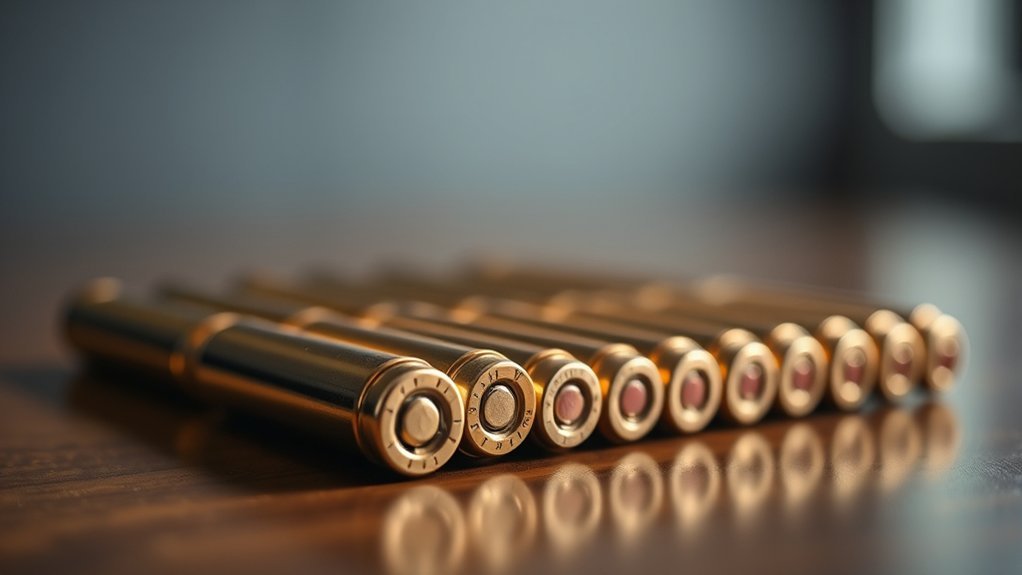
Grain, abbreviated gr, is a small unit of weight commonly used in American ammunition specifications. SAAMI defines a grain as an avoirdupois unit with 7,000 grains per pound, while NIST defines one grain as exactly 64.79891 milligrams.
When ordinary factory ammunition is labeled with a bullet weight such as 115 gr, 124 gr, or 147 gr, that number describes the nominal weight of the projectile. It does not describe the complete cartridge weight.
Context is important because ammunition components other than bullets can also be weighed in grains. Technical loading data may express propellant charge weight in grains, for example. That is separate from the bullet-weight number printed as a projectile specification on a box of factory ammunition.
Note: Grain tells you weight. It is not a direct rating for power, pressure, velocity, accuracy, recoil, or suitability.
Grain vs. Caliber: What Is the Difference?
Grain tells you projectile weight. Caliber is a separate term associated with the firearm’s chambering or an approximate bullet or bore diameter, depending on context. A cartridge designation and a grain number therefore answer different questions.
For example, two factory loads can share the same cartridge designation while using bullets of different weights. The heavier bullet will have the higher grain number, but both loads can still belong to the same cartridge family.
What Does the Grain Number Not Tell You?
| Specification | Does grain tell you this? | What to check instead |
|---|---|---|
| Projectile weight | Yes | The stated bullet-weight specification |
| Cartridge or caliber designation | No | The exact cartridge name on the firearm and ammunition |
| Propellant charge | No | Separate technical loading data |
| Exact velocity | No | Manufacturer data for the specific factory load and test conditions |
| Chamber pressure | No | The cartridge’s approved pressure designation and manufacturer specifications |
| Exact recoil or accuracy | No | The complete ammunition load, firearm, and test conditions |
The History of Grain as a Measurement

The grain is an old unit used for measuring very small masses. Modern standards no longer depend on the physical weight of an individual seed: the unit is precisely defined. NIST lists one grain as exactly 64.79891 milligrams, and one avoirdupois pound contains exactly 7,000 grains.
The unit remains convenient for ammunition because projectile and component weights would otherwise often be expressed as small decimal fractions of a pound or ounce.
Origins of Measurement Systems
The word grain has historical roots in systems that used small grains or seeds as convenient references for small quantities. Over time, formal weight systems replaced variable physical references with standardized definitions.
For modern ammunition, the historical origin matters less than the current standardized value: a grain is a defined unit that allows bullet and component weights to be stated consistently.
Transition to Modern Usage
Modern ammunition specifications use standardized weight measurements so manufacturers, laboratories, and consumers can describe components consistently.
- Consistency: A standardized grain has the same defined value wherever it is used.
- Comparison: Bullet weights within the same cartridge family can be compared without converting small decimal-pound values.
- Technical communication: Manufacturers can identify projectile and component weights precisely.
- Label clarity: A bullet-weight marking such as “124 gr” gives the reader a compact, standardized specification.
The important distinction is that a grain number describes weight; additional specifications are required to describe how a complete cartridge performs.
Does Grain Weight Affect Ballistic Performance?
Changing projectile weight can change how a particular ammunition load behaves, but weight is only one variable. The complete result depends on the cartridge, projectile construction and dimensions, velocity, propellant characteristics, barrel, and other firearm and environmental factors.
Within the same cartridge family, a lighter factory-loaded projectile will often have a higher listed muzzle velocity than a heavier option. That is a common pattern, not a universal rule.
Projectile weight can also contribute to recoil impulse, trajectory, point of impact, and downrange behavior. None of those outcomes can be calculated reliably from the grain number alone.
How Does Grain Affect Bullet Performance?
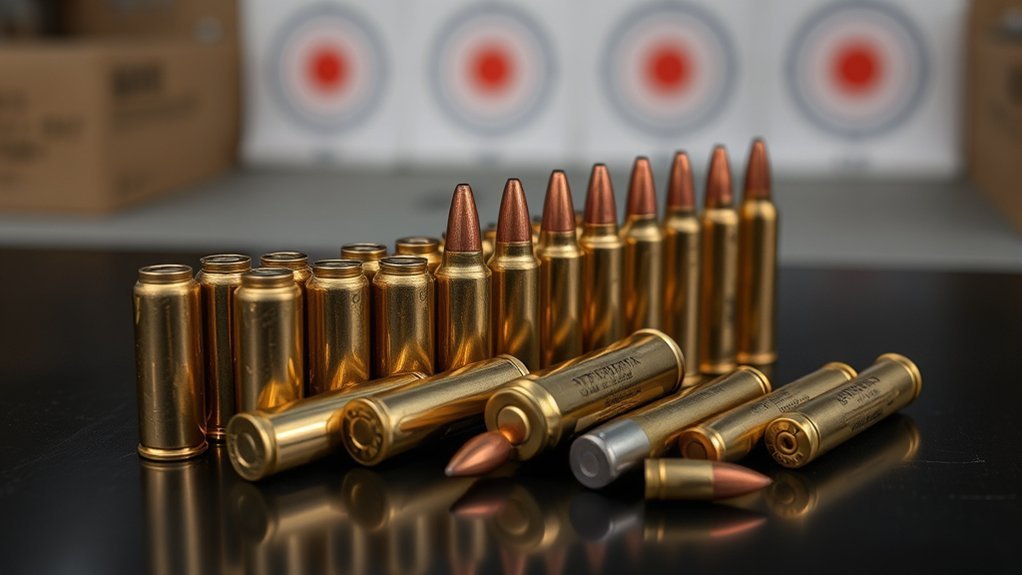
Bullet weight is one input in ammunition performance. Changing the weight while changing other parts of the load at the same time can produce different results, which is why two cartridges with different grain numbers should not be compared on weight alone.
- Velocity: Within otherwise comparable factory loads, lighter projectiles often have higher listed velocities, but exact velocity is load- and barrel-specific.
- Recoil: Projectile weight contributes to recoil, while projectile velocity, propellant gases, firearm weight, and firearm design also matter.
- Trajectory: Bullet weight can influence trajectory indirectly through velocity and projectile design, but the grain number alone does not determine bullet drop.
- Aerodynamics: Wind behavior depends on factors such as projectile shape, ballistic coefficient, velocity, and flight time rather than weight alone.
For that reason, use the grain number as one specification among several rather than as a quality or performance score.
Grain tells you projectile weight. It does not tell you the complete ballistic performance of the ammunition.
What Is the Relationship Between Grain and Velocity?
Within the same cartridge family, factory loads with lighter bullets commonly list higher muzzle velocities than loads with heavier bullets. The pattern occurs because projectile mass is one of the variables involved in the load, but it should not be treated as a fixed formula.
Powder type and amount, allowable pressure, barrel length, projectile construction, and the manufacturer’s complete load design can all change the final velocity. For an exact number, use published data for the specific factory load and note the test-barrel conditions.
Why Bullet Weight Is Only One Variable
Comparing ammunition solely by grain number leaves out several specifications that affect what the firearm and projectile do:
- Projectile velocity: The same grain weight can be loaded to different velocities in different products.
- Projectile construction: Two bullets of identical weight can have different shapes and materials.
- Pressure specification: Grain is not a pressure rating.
- Firearm characteristics: Barrel length, rifling, firearm mass, and operating design can influence measured and felt performance.
This is why “heavier” and “lighter” are descriptions, not automatic rankings.
Speed vs. Grain: Why There Is No Universal FPS Table
A grain weight cannot be assigned one universal velocity. Published velocity belongs to a specific cartridge and load tested under stated conditions.
| If you know… | You can conclude… | You cannot conclude… |
|---|---|---|
| Bullet weight is 115 gr | The projectile has a nominal weight of 115 grains | Its exact velocity, pressure, recoil, or accuracy |
| One load is heavier than another | Its projectile has more mass | That it is automatically more powerful or better |
| Two loads use the same grain weight | Their projectile weights are nominally similar | That their construction or ballistic performance is identical |
Manufacturer ballistic data is the appropriate source for exact velocity figures because it identifies the specific load and test conditions.
How Should You Compare Grain Weights?
Start with compatibility rather than bullet weight. Confirm the exact cartridge designation marked on the firearm and follow the firearm manufacturer’s ammunition guidance.
- Exact cartridge: The ammunition designation must match what the firearm manufacturer approves.
- Pressure designation: Do not treat the grain number as evidence that a cartridge uses standard or higher pressure.
- Factory specifications: Compare the manufacturer’s stated projectile weight and velocity for the exact product rather than using generic grain charts.
- Intended lawful activity: Choose ammunition designed and approved for the sporting, training, or other lawful activity in which it will be used.
If the firearm manual restricts a particular ammunition type, pressure level, or cartridge designation, follow that restriction regardless of bullet weight.
Choosing a Grain Weight for Your Firearm
There is no universal “best” grain weight. A grain number is useful only after you have confirmed that the complete factory cartridge is appropriate for the firearm.
For ordinary target or sporting use, compare compatible factory ammunition by manufacturer specifications, reliability, recoil characteristics, and point of impact rather than assuming the lightest or heaviest option is superior.
Always consult the firearm manual and ammunition manufacturer’s guidance. If the compatibility of a cartridge or pressure designation is unclear, do not rely on appearance or grain weight to decide whether it is safe.
Warning: Never use ammunition solely because it appears to fit. Follow the exact cartridge and pressure specifications approved by the firearm manufacturer.
Examples of Grain Weights Seen on Ammunition Labels
Manufacturers can offer several projectile weights within the same cartridge family. These examples illustrate why the grain number should be read as a weight specification rather than a separate cartridge designation.
Different grain numbers can appear on ammunition that shares the same cartridge designation because projectile weight and cartridge designation are separate specifications.
- .22 LR: factory ammunition is commonly sold with multiple lightweight projectile options.
- 9mm: labels commonly include projectile weights such as 115, 124, and 147 grains.
- .223 Remington: factory products are available with multiple projectile weights, including common lighter and heavier sporting options.
- .308 Winchester: factory products likewise use a range of projectile weights.
The available weights vary by manufacturer and product line. The grain number does not replace the exact cartridge designation printed on the box and firearm.
Does Grain Affect Recoil?
Projectile weight contributes to recoil, but the grain number alone cannot tell you how much recoil a load will produce or how it will feel.
SAAMI’s explanation of free recoil accounts for the momentum of the projectile or other ejecta and the propellant gases, along with firearm weight and velocity. In real factory ammunition, those variables can change at the same time.
That is why a heavier bullet should not automatically be described as having more or less felt recoil without comparing the complete loads in the same firearm.
Does Bullet Grain Affect Accuracy?
Bullet weight can influence how a particular firearm and ammunition combination performs, but grain does not function as an accuracy rating.
- Projectile dimensions: Weight often changes along with bullet length and shape, which can affect stabilization.
- Velocity: Different loads can leave the barrel at different velocities and produce different points of impact.
- Barrel characteristics: Rifling twist and other barrel characteristics interact with projectile dimensions and design.
- Ammunition consistency: Manufacturing consistency and the complete load can matter as much as nominal bullet weight.
Two factory loads with the same grain number can therefore perform differently, while one firearm may group different compatible bullet weights differently.
Pro Tip: Treat grain as one data point. When comparing factory ammunition, read the full product specification instead of judging the load from bullet weight alone.
Tips for Reading Ammunition by Grain
When comparing ammunition labels, first confirm the exact cartridge designation. Then read the bullet-weight number as a separate specification.
Do not assume that a lighter bullet must have less recoil, that a heavier bullet must be more accurate, or that either one is automatically more powerful. Those conclusions require information about the complete load.
Exact velocity should come from the ammunition manufacturer’s published data for that product. Any pressure designation should also be treated separately from bullet weight. For example, a recognized +P marking indicates a higher-pressure loading for cartridges standardized in that form; it is not another way of expressing grain weight.
Grain Selection Mistakes to Avoid
Do not assume the heaviest projectile is automatically the best. A higher grain number simply means a heavier projectile.
Do not assume the lightest bullet is automatically the fastest in every possible load. Lighter bullets often have higher velocities within comparable factory ammunition, but manufacturer load design and test conditions matter.
Do not confuse bullet weight with bullet construction. Two projectiles can have the same grain weight but use different shapes, materials, or construction.
Do not confuse grain with chamber pressure. A grain number is a weight specification, while pressure is a separate characteristic of the loaded cartridge.
Most importantly, never use bullet weight as a substitute for checking the firearm’s exact approved cartridge and pressure specifications.
Frequently Asked Questions
What does 115 grain mean on ammo?
A label stating 115 gr normally means the projectile has a nominal weight of 115 grains. It does not mean the cartridge contains 115 grains of propellant, and it does not identify the cartridge’s pressure or velocity.
Does higher grain mean more powerful ammo?
No. A higher grain number means a heavier projectile. Overall performance also depends on velocity, pressure, projectile construction, cartridge design, and the firearm, so bullet weight alone is not a power rating.
Is grain the same as caliber?
No. Grain describes projectile weight. Caliber is a separate firearm and ammunition term associated with chambering or approximate bore or projectile diameter depending on context.
Does a heavier bullet always have more recoil?
No. Projectile weight contributes to recoil, but actual recoil also depends on projectile velocity, propellant gases, firearm weight, firearm design, and the complete ammunition load.
Is grain the amount of gunpowder in ammunition?
Not when a factory-ammunition label identifies the projectile as a particular grain weight. Propellant can also be weighed in grains in technical loading data, but that is a separate component measurement.
Conclusion
Grain means projectile weight. One grain equals 1/7,000 of an avoirdupois pound, and the bullet-weight number on an ammunition label should not be mistaken for caliber, powder charge, pressure, velocity, recoil, accuracy, or overall power.
Use grain as one specification within the complete ammunition description. Confirm the exact cartridge approved by the firearm manufacturer, and use the specific ammunition manufacturer’s data when you need velocity or other load-specific information.
