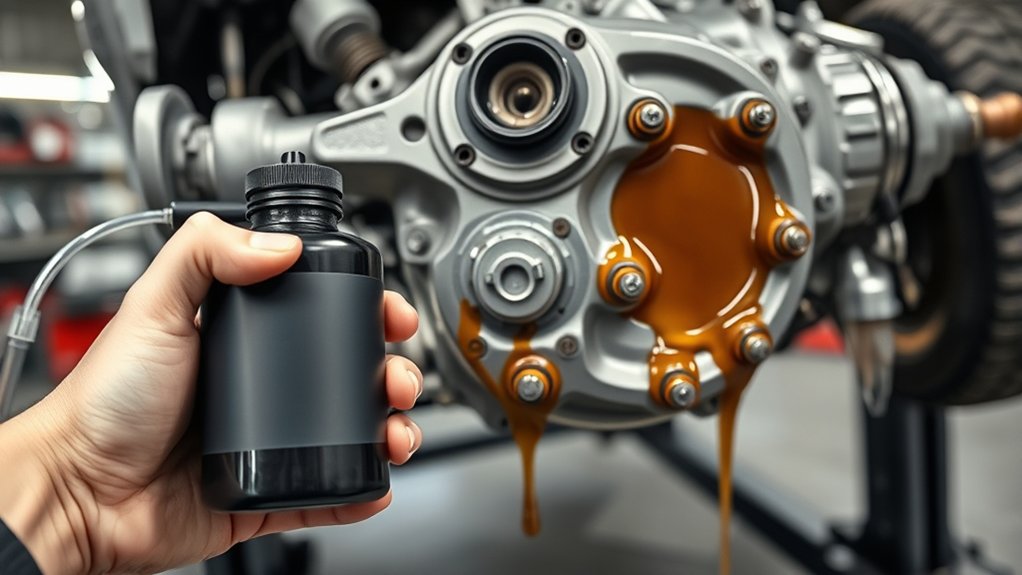
Yes—but only for specific Toyota Tacoma years and components. A 2006 U.S.-spec Tacoma lists SAE 75W-90 for the front differential and 4WD transfer case, while a 2024 Tacoma specifies 75W-85 GL-5 for the differentials and Toyota Transfer Gear Oil LF SAE 75W for the transfer case. That is why a bottle marked 75W-90 is not automatically correct for every Tacoma differential, transfer case, or transmission.
Quick Answer
Use 75W-90 in a Toyota Tacoma only when the owner’s manual specifies that viscosity and the required performance category for the exact component. Model year matters: older applications can use 75W-90 in places where later Tacomas specify 75W-85 differential oil or SAE 75W transfer-case fluid.
Last updated: September 19, 2026. Model-year examples and lubricant-standard references were rechecked during this update.
Key Takeaways
- 75W-90 is not a universal fluid for every Tacoma differential, transfer case, or transmission.
- A 2006 U.S.-spec 4WD Tacoma lists 75W-90 for the front differential and transfer case, but its rear-differential recommendation is different.
- A 2024 Tacoma specifies 75W-85 GL-5 for the differentials and Toyota Transfer Gear Oil LF SAE 75W for the transfer case.
- Match the viscosity grade and the API or Toyota performance specification; viscosity alone does not establish compatibility.
- Open, locking, and mechanical limited-slip differentials can have different lubricant or friction requirements.
- Use model-year-specific service procedures, sealing washers, fill levels, and torque values.
Check Your Tacoma’s Official Fluid Specification First

Toyota publishes manuals by model year because fluid requirements can change between Tacoma generations and driveline layouts. Before buying oil, confirm the truck’s model year and market, whether it is 2WD or 4WD, and which component you plan to service. Use Toyota’s manuals and warranties portal to locate the correct owner’s manual and maintenance guide.
A specification from one Tacoma should not become a blanket rule for every Tacoma. The front differential, rear differential, transfer case, and manual transmission can use different viscosity grades or performance specifications even on the same truck.
Tacoma Gear-Oil Examples by Model Year
| U.S.-Spec Example | Front Differential | Rear Differential | Transfer Case |
|---|---|---|---|
| 2006 Tacoma 4WD | SAE 75W-90, API GL-5 | SAE 90 above 0°F (-18°C); SAE 80W or 80W-90 below 0°F (-18°C), with the required GL-5 specification | SAE 75W-90, API GL-4 or GL-5 |
| 2024 Tacoma | Toyota Genuine Differential Gear Oil LT 75W-85 GL-5 or equivalent | Toyota Genuine Differential Gear Oil LT 75W-85 GL-5 or equivalent | Toyota Genuine Transfer Gear Oil LF or equivalent, SAE 75W |
The table shows why the question cannot be answered by truck name alone. Even the 2006 example does not use one viscosity in every axle, and the 2024 differential and transfer-case specifications are different from each other. Always verify the manual for your exact model year, drivetrain, equipment, and market before servicing the vehicle.
Warning: Do not assume the transfer case and differentials use the same fluid. Using a lubricant with the wrong viscosity or performance characteristics can cause poor operation, abnormal noise, excess heat, or accelerated wear.
Information to Confirm Before Buying Gear Oil
- Model year and market: Specifications can change between generations and countries.
- Drivetrain: A 2WD truck has no front differential or 4WD transfer case.
- Component: Identify the rear differential, front differential, transfer case, or manual transmission.
- Differential type: Check for an open differential, electronic locker, or mechanical limited-slip unit.
- Viscosity: Match the full grade, such as 75W, 75W-85, 75W-90, 80W-90, or another listed grade.
- Performance standard: Match the API category or Toyota fluid specification listed for the component.
Understanding 75W-90 Gear Oil
SAE 75W-90 is a multigrade automotive driveline-lubricant viscosity grade. SAE J306 defines viscosity classification in rheological terms; it does not determine all of the lubricant’s performance characteristics or establish that a product is suitable for a particular Tacoma component. The equipment manufacturer’s complete specification should control the final choice.
What Does 75W-90 Mean?
The letter W refers to winter performance. The 75W portion describes the lubricant’s low-temperature viscosity requirements, while the 90 portion identifies its higher-temperature viscosity grade under SAE J306. A 75W-90 generally satisfies lower-temperature requirements that an 80W-90 does not, even though both carry a 90 high-temperature grade.
Gear-oil grades use a different SAE viscosity system from engine-oil grades such as 5W-30. The numbers therefore should not be compared directly across those two lubricant categories.
Cold and Hot Temperature Performance
The winter grade matters during cold operation because the lubricant must remain fluid enough to circulate and protect moving parts. At operating temperature, the second grade becomes more relevant. Both 75W-90 and 80W-90 are classified as SAE 90 at the higher-temperature portion of the J306 system, although their formulations and exact viscosity values can still differ.
That means 80W-90 is not automatically a better hot-weather choice simply because its first number is higher. Use it only when the manual permits it for the component and operating conditions.
API GL-4, GL-5, and SAE J2360
Viscosity grade and performance category answer different questions. API Publication 1560 defines automotive gear-lubricant service designations such as GL-4 and GL-5. API GL-5 is associated with demanding gear service including hypoid axles, while limited-slip friction requirements can be specified separately by the axle manufacturer.
SAE J2360 is a separate performance specification used for automotive gear lubricants. Do not treat GL-5, J2360, or a thicker viscosity as a universal upgrade for every manual transmission or transfer case. Match the exact category or Toyota specification listed for the component you are servicing.
Where Can 75W-90 Be Used in a Tacoma?
75W-90 appears in some Tacoma specifications, but its correct location depends on the generation. The 2006 U.S.-spec example uses 75W-90 in the front differential and transfer case, while the 2024 example uses neither 75W-90 in its differentials nor in its transfer case. Manual-transmission specifications must also be checked separately rather than inferred from axle fluid.
| Component | What to Verify | Can 75W-90 Work? |
|---|---|---|
| Rear differential | Model year, viscosity, API rating, temperature guidance, and differential type | Only when the year-specific specification permits it |
| Front differential | 4WD model, viscosity, and API rating | Yes on some older applications, including the 2006 U.S.-spec example; not universal |
| Transfer case | Toyota transfer-fluid specification and viscosity | Yes on some older applications; later Tacomas can specify SAE 75W instead |
| Manual transmission | Transmission model, viscosity, and synchronizer-compatible performance specification | Use only when the transmission specification explicitly lists it |
Open, Locking, and Limited-Slip Differentials
A Tacoma badge does not identify every detail of the differential inside the axle. Depending on model year and configuration, the truck can use an open differential, an electronically locking differential, or a mechanical limited-slip differential. These designs do not automatically have the same friction requirements.
A mechanical limited-slip differential may require lubricant with the friction characteristics specified for that axle. An electronic locker does not automatically require a limited-slip friction modifier. Check the manual and axle specification before adding an aftermarket modifier.
Note: More friction modifier is not better. An unnecessary additive can alter clutch behavior and will not repair noise caused by worn bearings, incorrect fluid level, or damaged gears.
75W-90 vs. 75W-85, 80W-90, and SAE 90
| Grade | General Characteristic | Substitution Guidance |
|---|---|---|
| 75W-85 | Lower high-temperature viscosity grade than 75W-90 | Do not replace it with 75W-90 unless Toyota permits the substitution |
| 75W-90 | 75W winter grade with a 90 high-temperature grade | Use when the manual lists the grade and required performance level |
| 80W-90 | Same 90 high-temperature grade with different low-temperature requirements | Use only within the model-year and temperature guidance in the manual |
| SAE 90 | Single-grade gear lubricant without a winter grade | Use only where the manual specifically permits it |
A viscosity change can alter cold flow, drag, and lubrication behavior. The safest approach is to use the specified grade rather than choosing a thicker lubricant to mask a whine, leak, or other mechanical problem.
How Do You Verify the Right Fluid for Your Tacoma?
- Find the exact manual: Match the model year, market, drivetrain, and VIN information when necessary.
- Locate the specification: Search for “differential oil,” “transfer gear oil,” “manual transmission gear oil,” or the appropriate lubrication section.
- Identify the component: Do not confuse front differential, rear differential, transfer case, and transmission requirements.
- Match the full specification: Confirm viscosity plus the API category or Toyota fluid designation.
- Confirm the differential type: Look for any limited-slip or locker-specific wording.
- Check the product label: The lubricant should explicitly claim the required specification; a similar viscosity alone is not enough.
- Confirm service details: Verify capacity, fill-level procedure, sealing-washer requirements, and plug torque for the exact truck.
Pro Tip: Take a photo or screenshot of the manual’s fluid specification before shopping. Compare the viscosity and performance category with the product label line by line.
Safe Fluid-Change and Torque Practices
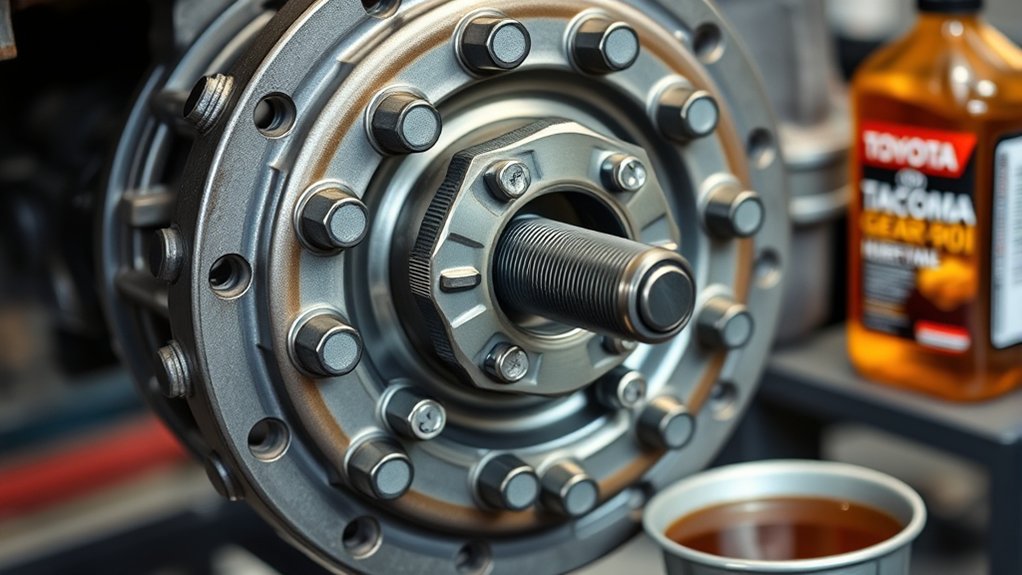
Drain- and fill-plug torque values are not the same as differential-carrier assembly torque values. They can also vary by component and model year. Use service information for the exact truck instead of copying a torque value from another Tacoma.
Basic Fluid-Change Sequence
- Park on a level surface and secure the truck against movement.
- Raise the truck only at approved lift points and support it with correctly rated jack stands when extra clearance is necessary.
- Clean the area around both plugs so dirt cannot enter the housing.
- Loosen the fill plug first. This confirms that you can refill the component before draining it.
- Place a drain pan underneath, remove the drain plug, and allow the old fluid to drain.
- Inspect magnetic plugs for paste-like residue, chips, or larger metal pieces.
- Install new sealing washers when Toyota specifies them.
- Tighten each plug to the model-year-specific torque value with a calibrated torque wrench.
- Add the specified fluid using the manual’s fill-level procedure.
- Clean the housing, drive the truck, and recheck for leaks.
For component-specific procedures, use the dedicated rear-differential and transfer-case guides linked in the Related Guides section below rather than assuming the same plugs, capacities, or torque values apply everywhere.
Fluid Level and Capacity
Fluid capacities vary with axle, drivetrain, and model year. Use a listed capacity as a purchasing estimate, then follow Toyota’s specified fill-level procedure for the final level. Keep the vehicle positioned as required by the service procedure while checking the fluid.
Underfilling can reduce lubricant supply to gears and bearings. Overfilling can also cause operating problems or leakage. Stop and verify the procedure if the component takes substantially more or less fluid than expected.
What Does Metal on the Drain Plug Mean?
A thin coating of fine metallic paste can accumulate on a magnetic drain plug as components wear. Shiny flakes, sharp chips, chunks, or a sudden increase in debris deserve closer inspection. Abnormal noise, excessive heat, or contaminated fluid alongside larger particles can indicate an internal mechanical problem.
Maintenance Intervals and Severe Service
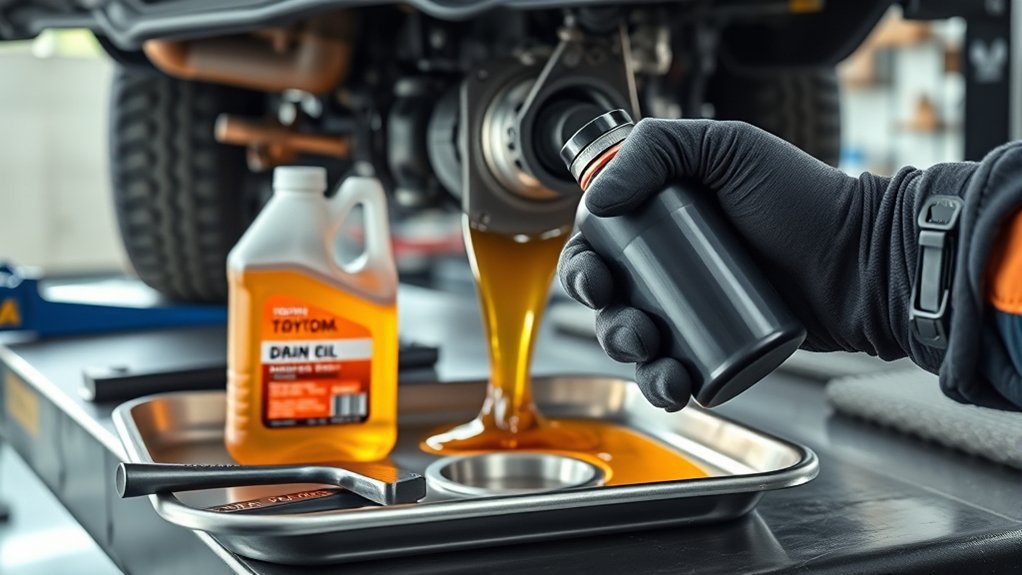
There is no single replacement mileage that applies to every Tacoma under every operating condition. Toyota’s maintenance schedules distinguish routine inspections from replacement required under particular operating conditions. For example, the 2024 U.S. maintenance guide calls for differential, transfer-case, and transmission fluid replacement at specified service points when the truck is driven primarily while towing, using a car-top carrier, or carrying heavy loads. Dirt- or dusty-road operation has its own special-maintenance items, including transfer-case oil replacement on applicable 4WD trucks.
Follow the warranty and maintenance guide for the exact model year instead of applying one universal interval. For a deeper schedule breakdown, see Toyota Tacoma Differential Service Interval Explained.
Conditions That Deserve Extra Driveline Attention
- Frequent towing or heavy vehicle loading
- Extended dirt- or dusty-road operation
- Low-speed off-road driving
- Deep-water or mud exposure
- A leaking axle seal, pinion seal, housing, fill plug, or drain plug
- Unknown maintenance history or signs of contaminated fluid
After a deep-water crossing, inspect the relevant housing if there is reason to suspect water entry. Milky or cloudy lubricant can indicate contamination and warrants prompt attention.
Common Symptoms and Troubleshooting
Whine or Hum
A speed-related whine can come from worn gears, bearings, incorrect gear setup, low fluid, or an unsuitable lubricant. A thicker oil may alter the sound, but it does not repair damaged components. Confirm the fluid level and specification before diagnosing internal wear.
Chatter or Binding in Turns
Chatter during slow turns can occur in a mechanical limited-slip differential when its lubricant does not provide the required friction behavior. Tire-size differences, driveline binding, or worn components can cause similar symptoms. Confirm the differential type before adding a friction modifier.
Leaks After Service
Leaks after service can result from a reused or damaged sealing washer, contaminated sealing surface, cross-threaded plug, vent problem, or incorrect installation torque. Clean the area and identify the source instead of tightening the plug beyond its specification.
Overheating or Burnt Odor
Dark lubricant accompanied by a burnt odor can indicate excessive temperature, oxidation, contamination, or extended service. Heavy loading and a low fluid level can accelerate degradation. Correct the underlying cause rather than treating a fluid change as the only repair.
How Should You Choose a 75W-90 Brand or Additive?
Brand name matters less than documented compliance with the specification required for the component. Choose a sealed lubricant from a reputable manufacturer whose label or technical data explicitly lists the required SAE viscosity and performance category. A synthetic base oil does not make an otherwise incompatible lubricant acceptable.
Avoid mixing viscosities simply to create a custom blend because the resulting viscosity and additive balance are not established by either original label. Also avoid adding an aftermarket friction modifier unless the axle or lubricant manufacturer calls for it.
The correct Tacoma gear oil is the lubricant that matches the exact model year, component, viscosity, and performance specification—not simply the thickest oil or the bottle marked 75W-90.
Related Guides
Frequently Asked Questions
Can I use 75W-90 in every Toyota Tacoma differential?
No. Tacoma differential specifications vary by model year, axle, and operating guidance. For example, a 2006 U.S.-spec Tacoma lists 75W-90 for the front differential, while a 2024 Tacoma specifies 75W-85 GL-5 for its differentials. Use the specification for your exact truck.
Can I use 75W-90 instead of 75W-85?
Only when Toyota permits the substitution for that model and component. SAE 75W-90 and 75W-85 have different high-temperature viscosity grades, so do not substitute 75W-90 simply because it is easier to find.
Which Tacoma components have used 75W-90?
It depends on the year and drivetrain. As one documented example, the 2006 U.S.-spec Tacoma lists SAE 75W-90 for the front differential and 4WD transfer case. Later Tacoma generations can specify 75W-85 for differentials and SAE 75W for the transfer case, so the older specification should not be carried forward automatically.
What is the difference between 75W-90 and 80W-90?
Both carry an SAE 90 high-temperature grade, but they have different low-temperature requirements under SAE J306. A 75W-90 meets the lower 75W winter grade, while an 80W-90 meets the 80W winter grade. Use whichever grade Toyota specifies for the component and conditions.
What does the W mean in 75W-90 gear oil?
The W identifies the lubricant’s winter viscosity grade. It describes low-temperature performance requirements under SAE J306. The second number identifies the higher-temperature viscosity grade.
Does a Tacoma rear differential need friction modifier?
Not every Tacoma does. Mechanical limited-slip differentials can have specific friction requirements, while an open differential or electronic locker does not automatically require an aftermarket limited-slip additive. Confirm the axle type and lubricant specification before adding a modifier.
How often should Tacoma differential and transfer-case fluid be changed?
Use the maintenance guide for your exact model year and operating conditions. Toyota distinguishes routine inspections from replacement under specific severe-use conditions, so there is no single replacement mileage that applies to every Tacoma.
Conclusion
75W-90 can be correct for specific Toyota Tacoma components, but it is not a universal Tacoma gear oil. A 2006 U.S.-spec truck demonstrates that 75W-90 can apply to the front differential and transfer case while the rear axle has different viscosity guidance. A 2024 Tacoma demonstrates the opposite direction of later specifications: 75W-85 GL-5 in the differentials and SAE 75W transfer fluid.
Before filling anything, match the model year, market, drivetrain, component, viscosity, and performance specification. If one of those does not match the manual, do not substitute fluid based solely on the 75W-90 label.
Sources
- Toyota Manuals and Warranties – official model-year owner’s manuals and maintenance information.
- Toyota 2006 Tacoma Manuals and Warranties – official manual access for the older model-year example.
- Toyota 2024 Tacoma Manuals and Warranties – official manual access for the fourth-generation example.
- Toyota 2024 Tacoma Warranty & Maintenance Guide – official maintenance schedules and special-operating-condition service requirements.
- American Petroleum Institute, Publication 1560, 9th Edition – current API gear-lubricant service-designation reference.
- SAE J306_202502, Automotive Driveline Lubricant Viscosity Classification – current SAE driveline-lubricant viscosity standard.
