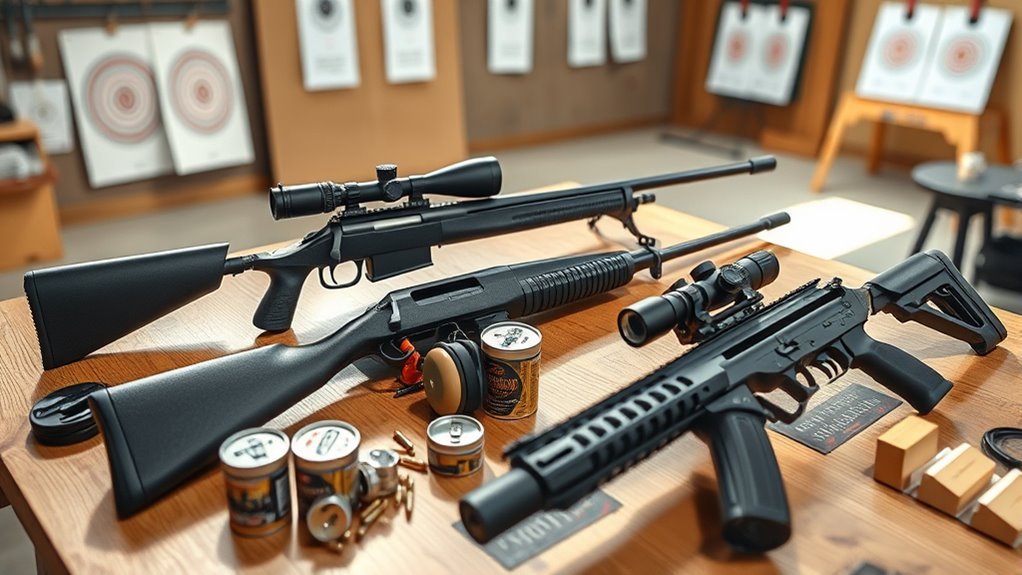
The best airguns in this 2025 guide cover several different needs, from recreational target shooting to lawful pest management. A compact PCP rifle offers a different ownership experience from a traditional break-barrel model. Before choosing, compare caliber, handling, accuracy, equipment costs, and the rules governing where you can use an airgun.
Quick Answer
The Umarex NOTOS, Air Venturi Avenger, and Beeman R9 are three notable choices from the 2025 airgun market. The NOTOS offers compact PCP ownership, the Avenger adds adjustable performance, and the R9 provides a traditional spring-piston experience. Compare their handling, equipment requirements, and intended applications before selecting a model.
Last checked: September 26, 2026. Key model specifications and safety information were checked against manufacturer and official sources. This remains a 2025 model comparison, not a new 2026 ranking.
Key Takeaways
Key Takeaways
- A regulated PCP rifle can provide consistent performance, but it requires a compatible filling system.
- Most conventional break-barrel rifles are self-contained and require manual cocking between shots.
- The Gamo Varmint and Ruger Blackhawk discussed here are .177 models, not .22 rifles.
- Trigger quality, fit, pellet compatibility, and practical accuracy matter more than advertised velocity alone.
- The cost of optics, pellets, filling equipment, and maintenance can change the overall value.
- Airguns can cause serious injury. Safe storage, a suitable backstop, and compliance with local regulations are essential.
Best .22 Air Rifles for 2025
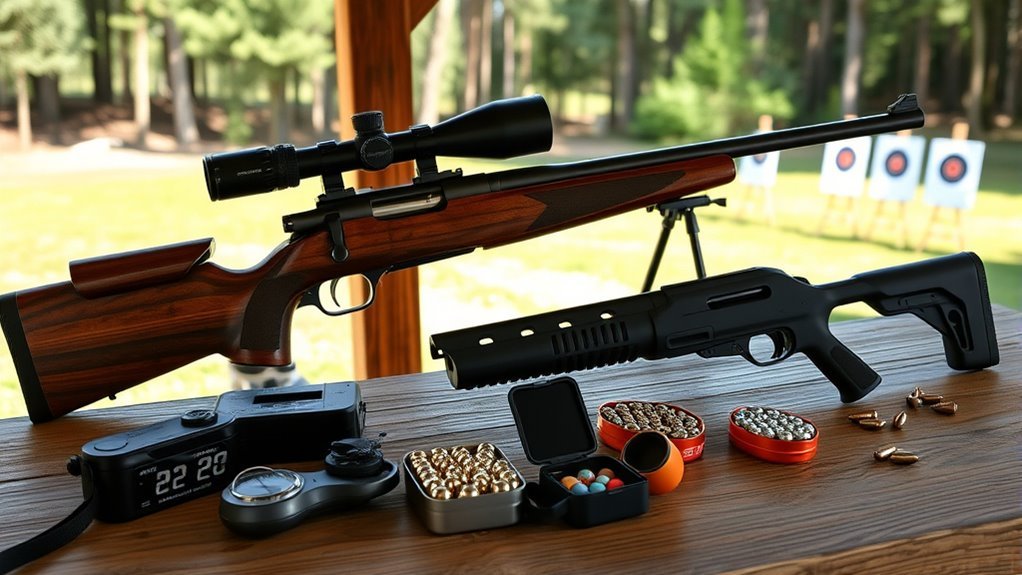
The 2025 .22 air rifle market included compact PCP carbines, adjustable pneumatic platforms, and traditional spring-powered rifles. Each design has different strengths, so the most useful comparison starts with its operating system and intended purpose.
The Umarex NOTOS .22 PCP Carbine offers a compact layout with a regulated air system. Its seven-shot magazine and lightweight construction make it different from a full-size target rifle.
The Air Venturi Avenger offers an adjustable regulator and a longer rifle configuration. The Avenge-X builds on the platform with modular components, including different stock, caliber, and air-reservoir options.
Traditional spring-piston buyers can also consider the Beeman R9. The Gamo Swarm Maxxim 10X Gen 2 provides a magazine-fed break-barrel alternative using a gas-piston powerplant.
2025 Air Rifle Comparison
The following comparison identifies the main characteristics of the original article’s featured models. Specifications can vary by caliber and configuration.
| Model | Powerplant | Main Characteristics |
|---|---|---|
| Umarex NOTOS .22 | Regulated PCP | Compact carbine; seven-shot magazine; 66cc air reservoir. |
| Air Venturi Avenger | Regulated PCP | Adjustable regulator; sidelever action; multiple caliber options. |
| Air Venturi Avenge-X | Regulated PCP | Modular stock, caliber, and air-reservoir configurations. |
| Brocock Commander XR | Regulated PCP | Compact layout; adjustable stock; Huma-Air regulator. |
| Beeman R9 | Spring piston | Single-shot break barrel with a two-stage Rekord trigger. |
| Gamo Swarm Maxxim 10X Gen 2 | Gas piston | Ten-shot magazine system; break-barrel operation. |
Umarex NOTOS: Compact PCP Design
According to the Umarex NOTOS specifications, the .22 carbine has a 66cc reservoir, a seven-shot magazine, and a maximum fill pressure of 3,625 PSI.
Its regulator operates at 1,900 PSI. The manufacturer lists a weight of 4.15 pounds without an optic in the rifle configuration.
The compact design makes storage and handling easier than with some full-length PCP rifles. However, the rifle still requires compatible high-pressure filling equipment.
Its compact size does not make it a toy or automatically suitable for unsupervised younger shooters.
Air Venturi Avenger and Avenge-X
The Air Venturi Avenger combines a regulated PCP system with an adjustable two-stage trigger and sidelever action.
Its synthetic-stock model weighs approximately 6.4 pounds. The .22 configuration uses a ten-shot magazine and has a listed maximum fill pressure of 4,351 PSI.
The Avenge-X adds flexibility through interchangeable configurations. Air Venturi’s Avenge-X specifications describe classic, tactical, and bullpup stock options, along with different air reservoirs.
Those features offer additional ownership flexibility, but the Avenge-X should not automatically be treated as a lower-cost alternative to the standard Avenger.
Brocock Commander XR and Beeman R9
The Brocock Commander XR represents the premium PCP category in the original comparison. Its compact configuration, adjustable stock, and regulated air system distinguish it from simpler rifles.
BRK Brocock maintains official XR-series manuals covering model-specific operation and maintenance.
The Beeman R9 offers a different experience. It is a conventional spring-piston break barrel with a refined two-stage trigger.
It should not be dismissed as merely average in accuracy. Published comparative testing recorded a 0.59-inch average group at 25 yards with a specific pellet and test setup.
Those results describe the tested rifle and conditions, not a guaranteed group size for every owner.
Best Air Rifles by Use Case
Different applications place different demands on an air rifle. Recreational target shooting emphasizes dependable operation and repeatability, while field use also brings legal, environmental, and animal-welfare considerations.
Before purchasing, establish whether your intended activity is permitted at the location where you plan to use the rifle.
Best For Backyard Pest Control
The Gamo Varmint is a spring-powered option for buyers considering occasional pest management where the activity is lawful and appropriate.
The manufacturer’s Varmint specifications identify it as a .177-caliber rifle with a spring-piston powerplant and an included 4×32 scope.
Gamo lists approximately 30 pounds of cocking effort and a trigger pull of 3.53 pounds.
These figures help explain the physical effort involved. Someone who finds repeated cocking difficult may prefer a different operating system.
The Ruger Blackhawk offers another traditional spring-piston design with a durable synthetic stock.
The Hatsan 95 provides a heavier alternative with a walnut stock. Its additional weight may affect comfort during longer sessions.
Warning: Never assume that backyard airgun use is legal merely because the rifle uses compressed air rather than gunpowder. Pellets can travel beyond a property boundary and cause serious injury. Use a suitable backstop, identify what lies beyond it, and never discharge an airgun toward people, roads, neighboring property, or buildings.
For residential pest problems, prevention, exclusion, and professional wildlife control may be more appropriate than shooting.
Best For Small-Game Hunting
Small-game hunting requires reliable equipment, knowledge of applicable wildlife rules, and humane judgment. Caliber alone does not establish whether a rifle is suitable for a particular animal.
The Hatsan 95 offers a rifled barrel, walnut stock, and traditional break-barrel operation.
The Gamo Whisper Fusion Mach 1 uses the company’s IGT Mach 1 gas-piston system. Its included 3-9×40 scope and noise-reduction design distinguish it from basic spring models.
The Beeman R9 combines traditional handling with a refined trigger. In Outdoor Life’s published air rifle testing, the R9 produced a reported 0.59-inch group average at 25 yards.
The same testing included the Umarex NOTOS, Air Venturi Avenger, and Gamo Swarm Maxxim 10X Gen 2.
The Ruger Blackhawk and Gamo Varmint remain .177 options in this comparison, rather than direct .22 alternatives.
For field use, confirm the lawful species, hunting season, permitted equipment, and location before proceeding. A rifle’s advertised power does not establish legal or humane suitability.
Best For Budget Buyers
Budget comparisons should include equipment required after buying the rifle. A low-priced PCP can become more expensive once compatible filling gear is included.
The Gamo Varmint and Ruger Blackhawk offer conventional spring-powered ownership without an external compressed-air supply.
The Gamo Swarm Maxxim 10X Gen 2 provides a magazine-fed break-barrel alternative. Its gas piston replaces a conventional metal mainspring.
The Gamo Swarm Maxxim specifications confirm its ten-shot loading system and availability in .177 and .22 calibers.
The Umarex NOTOS and Air Venturi Avenger introduce PCP ownership at different price and feature levels.
The Beeman R9 costs more than many entry-level spring rifles but offers a more refined traditional platform.
The Umarex Komplete NitroAir deserves separate consideration because it uses disposable high-pressure nitrogen cartridges rather than requiring a conventional PCP filling setup.
Its convenience must be balanced against the recurring cost of replacement cartridges.
Break Barrel vs PCP vs CO2 Air Rifles
The main difference between these platforms is how they store and release energy. That affects handling, recoil, maintenance, and the equipment needed for continued use.
A break barrel is generally self-contained. A PCP stores high-pressure air, while a CO2 rifle uses carbon dioxide as its propellant.
| Feature | Break Barrel | PCP | CO2 |
|---|---|---|---|
| Power source | Spring or gas piston | Stored compressed air | Carbon dioxide |
| Additional equipment | No external filling system | Compatible pump, tank, or compressor | Compatible CO2 supply |
| Shot cycle | Noticeable piston movement | Usually less mechanical movement | Generally mild recoil |
| Ongoing costs | Pellets and maintenance | Pellets and filling-system upkeep | Pellets and replacement gas |
| Main consideration | Manual cocking effort | High-pressure equipment requirements | Temperature-sensitive performance |
For occasional recreational shooting, a conventional break barrel offers a simple ownership arrangement. A regulated PCP offers greater flexibility for users who already have suitable filling equipment.
CO2 models are convenient for recreational use, although their performance can change with temperature.
How .22 Caliber Affects Power and Accuracy
A .22-caliber airgun uses a larger-diameter projectile than a .177 model. Pellet weight, shape, muzzle velocity, and barrel characteristics all affect its performance.
A .22 pellet is often heavier than a comparable .177 pellet. However, this does not mean that every .22 rifle delivers greater accuracy, better wind resistance, or a longer effective range.
Two rifles can produce different results even when they use the same caliber. Pellet design and individual barrel compatibility also matter.
Caliber is only one part of performance. The rifle, pellet, shooting conditions, and intended use must be considered together.
The original article suggested that .22 rifles remain accurate to approximately 50 yards. Some suitable rifle-and-pellet combinations can perform well at that distance, but it is not a universal operating limit or accuracy guarantee.
For recreational target use, repeatability matters more than selecting the largest projectile. Buyers should consider the complete system rather than caliber alone.
What Features Matter Most in a .22 Air Rifle
The most useful air rifle features are those that make the equipment safe, comfortable, and dependable for its intended purpose.
Instead of comparing advertised velocity alone, examine the rifle’s operating system, construction, fit, and compatibility with appropriate accessories.
- Practical accuracy: Look for results that identify the tested distance, pellet, and shooting conditions.
- Trigger quality: A predictable trigger improves the overall shooting experience.
- Fit and weight: Stock dimensions and total weight affect comfort and handling.
- Cocking effort: A powerful break barrel may require substantial physical effort between shots.
- Optics compatibility: Confirm the correct mounting system and whether the optic is suitable for the rifle’s recoil characteristics.
- Maintenance support: Consider access to manuals, replacement parts, and qualified service.
- Safety: Check the safety mechanism, storage arrangements, and suitability of the intended shooting location.
A heavier rifle can feel stable when supported but may become uncomfortable during extended carrying.
The original comparison mentioned rifles weighing more than eight pounds, cocking effort near 30 pounds, and triggers slightly above three pounds. Such specifications should always be tied to the exact model and configuration.
Factory-supplied optics also deserve inspection. An included scope is convenient, but it should not be assumed to provide the same performance as every aftermarket option.
How to Choose the Right Air Rifle for Your Budget
Start with the total ownership budget rather than the advertised rifle price. Different operating systems can have substantially different equipment and maintenance requirements.
The original article divided the market into entry-level, mid-range, and premium price groups. These remain useful planning categories, although individual product prices and availability change.
| Budget Category | Original Guide Range | What to Consider |
|---|---|---|
| Entry-level | $100–$500 | Basic spring rifles and selected compact PCP models. |
| Mid-range | $500–$1,000 | More refined construction and additional adjustment options. |
| Premium | Above $1,000; some models exceed $3,400 | Specialized designs, refined components, and advanced features. |
These are broad categories from the original buying guide, not verified September 2026 retail price quotes.
What Does a PCP Rifle Really Cost to Own?
A PCP rifle normally requires a compatible high-pressure filling system. Depending on the model, that may mean a suitable hand pump, compressor, or refillable air tank.
Additional expenses can include:
- Pellets suitable for the rifle’s caliber.
- A compatible scope and mounting hardware.
- Approved filling equipment and fittings.
- Maintenance supplies and replacement seals.
- Professional servicing when needed.
Conventional break-barrel rifles avoid the external filling requirement. However, they still need appropriate ammunition and maintenance.
The Umarex Komplete NitroAir uses another approach. Its manufacturer specifications describe a disposable nitrogen cartridge system delivering approximately 45 regulated shots or more per cartridge.
It is a nitrogen-powered PCP system, not a conventional CO2 rifle.
This arrangement reduces the need for separate filling equipment but introduces recurring cartridge purchases.
Pro Tip: Compare the complete equipment package before deciding whether a PCP is affordable. A rifle that appears inexpensive on its own may cost considerably more once the required filling system and accessories are included.
Airgun Safety and Legal Requirements
Airguns are not toys. A pellet can cause serious or fatal injury, even when the rifle is marketed for recreational shooting.
The basic handling principles apply regardless of caliber or powerplant.
- Keep the muzzle pointed in a safe direction.
- Treat every airgun as though it is loaded.
- Keep your finger away from the trigger until ready to shoot.
- Wear appropriate shooting eye protection.
- Use a suitable target and backstop.
- Store the rifle securely and prevent unauthorized access.
- Read the manufacturer’s instructions before operating or servicing the rifle.
These principles are consistent with the Umarex airgun safety guidance.
Are Airguns Legal to Use in Residential Areas?
Airgun rules vary by state, municipality, property type, and intended activity. Permission to purchase an air rifle does not automatically establish permission to discharge it at home.
Wildlife regulations can also distinguish between hunting, pest management, and recreational target shooting.
For example, the New York Department of Environmental Conservation defines an air gun for hunting purposes using caliber and velocity requirements.
Its regulations also distinguish between lawful small-game hunting and prohibited uses involving other species.
Note: For uncertain purchasing, discharge, hunting, or wildlife-control rules, obtain guidance from the relevant local authority or state wildlife agency. A licensed pest-control professional may be appropriate for problems involving protected animals or residential safety concerns.
Frequently Asked Questions
How Often Should I Service My Airgun?
Service intervals depend on the manufacturer, model, and usage. The original guide suggested inspection every 3,000 shots or annually, but this is not a universal manufacturer requirement. Follow your owner’s manual, check for visible damage or changes in performance, and use qualified service personnel for work involving high-pressure components.
Do I Need a License to Buy an Airgun?
Licensing requirements depend on your jurisdiction and the type of airgun. Some US locations allow ordinary airgun purchases without a firearm license, but purchase, possession, transport, and discharge rules can differ. The original claim that 70% of jurisdictions allow purchase without a license lacks a defined population and should not guide legal decisions.
What Pellets Work Best in Different Weather?
There is no single pellet that performs best in every weather condition. Domed pellets are commonly used for outdoor shooting, while wadcutters are popular for paper targets. Wind, temperature, pellet design, and the individual rifle affect results. Use the ammunition specified for your model and compare performance under appropriate range conditions.
How Should I Store a PCP Rifle Safely?
Store a PCP rifle securely, unloaded, and away from unauthorized users. Keep it in a dry environment and inspect it for corrosion or visible damage. Prolonged exposure to high humidity, including the 72% level mentioned in the original guide, can increase rust risk. Follow the manufacturer’s instructions for reservoir pressure during storage.
Can I Use Airguns for Pest Control?
Airguns may be permitted for certain pest-control activities, but the rules depend on the animal, location, and local regulations. Protected species and wildlife seasons may create additional restrictions. Residential safety and humane treatment must also be considered. For uncertain situations, seek guidance from the relevant wildlife authority or a qualified pest-control professional.
Conclusion
The 2025 airgun comparison shows why intended use and ownership requirements matter more than a single advertised performance figure. Compact PCP models offer a different experience from traditional break barrels, while cartridge-powered systems introduce another cost structure.
Compare the equipment you can maintain safely, the total ownership cost, and the rules governing your intended activity. Those factors provide a sound basis for selecting an appropriate air rifle.
Sources
- Umarex USA — NOTOS .22 Carbine: Official caliber, reservoir, magazine, weight, and pressure specifications.
- Air Venturi — Avenger: Official rifle specifications and configuration details.
- Air Venturi — Avenge-X: Modular configuration and product specifications.
- BRK Brocock — User Manuals: Model-specific XR-series documentation.
- Gamo — Varmint: Caliber, powerplant, optics, and cocking-effort specifications.
- Gamo — Swarm Maxxim 10X Gen 2: Magazine system, caliber options, and operating mechanism.
- Outdoor Life — Air Rifle Comparison: Published comparative accuracy and handling results.
- Umarex USA — Komplete NCR .22: Nitrogen cartridge system and stated shot count.
- Umarex USA — Air Gun Safety: Handling, eye protection, backstop, and storage guidance.
- New York Department of Environmental Conservation — Hunting Regulations: Official airgun definitions and hunting restrictions.
