Terminal ballistics explains what happens when a projectile reaches and interacts with a target. The topic can sound purely technical, but it carries serious safety, legal, medical, and ethical concerns. A responsible overview should help you understand key concepts such as penetration, energy transfer, bullet construction, and barrier interaction without encouraging unsafe testing or careless ammunition choices.
Quick Answer
Terminal ballistics studies how a projectile behaves after impact, including penetration, deformation, fragmentation, energy transfer, and target damage. For civilians, the main value is safer, more informed decision-making: understand ammunition limits, follow local law, train responsibly, and avoid drawing simple conclusions from caliber or marketing claims alone.
Key Takeaways
- Terminal performance depends on bullet design, velocity, mass, impact angle, target material, and barriers.
- Caliber matters, but it does not tell the whole story; bullet construction and shot placement also affect outcomes.
- Penetration and expansion must be balanced carefully, especially where bystander safety matters.
- Military, law enforcement, hunting, sport shooting, and self-defense contexts use different standards and priorities.
- Responsible firearm ownership requires legal compliance, safe storage, training, and ethical judgment.
Warning: Do not test ammunition on unsafe targets, improvised materials, public land without authorization, or any living target outside lawful and ethical uses. Follow local law, range rules, manufacturer guidance, and qualified training standards.
Understanding Terminal Ballistics

When you consider the impact of a projectile upon striking a target, you’re looking at terminal ballistics. This field examines what projectiles do after impact, including energy transfer, penetration, deformation, fragmentation, and target disruption.
Terminal ballistics depends on several variables working together. Bullet design, velocity, mass, construction materials, target density, clothing, intermediate barriers, and impact angle can all change the result. That is why one simple claim, such as “larger is always better” or “higher velocity always stops faster,” can be misleading.
For example, a hollow-point bullet is designed to expand under certain conditions, which can increase the diameter of the wound path and reduce over-penetration risk in some settings. A full metal jacket round usually expands less and may penetrate more deeply, depending on the target and velocity. Neither design is universally “best.” Each one has trade-offs that depend on lawful use, training, environment, and safety needs.
The Physics of Projectiles
Understanding the physics behind projectiles means looking at motion, impact, resistance, and material response. A projectile carries kinetic energy before impact, but the way that energy affects a target depends on how quickly and where it transfers.
Kinetic Energy Transfer
Kinetic energy transfer is one of the most discussed parts of terminal ballistics. A projectile’s kinetic energy is influenced by mass and velocity, but energy alone does not predict real-world effects. A lightweight projectile moving quickly can carry high energy, while a heavier projectile moving more slowly can behave differently in penetration and deformation.
When a projectile strikes a target, some energy may deform the projectile, some may deform or damage the target, and some may remain as the projectile continues through. The efficiency of this transfer depends on bullet shape, jacket design, core material, target resistance, and whether the projectile expands, fragments, yaws, or remains intact.
A higher velocity can increase deformation and temporary cavitation, but it can also cause unpredictable behavior if the projectile fails to hold together or encounters barriers. A slower projectile may penetrate reliably but transfer energy over a narrower path. Responsible analysis looks at the full system, not one number on an ammunition box.
Impact Dynamics Explained
The interaction between a projectile and its target is governed by impact dynamics. When a projectile strikes, momentum and kinetic energy interact with the target’s structure. The projectile may expand, flatten, fragment, tumble, ricochet, or pass through with limited deformation.
The angle of impact matters. A straight-on impact usually behaves differently from an oblique impact. At shallow angles, a projectile can glance off, deform unevenly, or travel in an unexpected direction. This is one reason safe backstops and controlled range environments matter so much.
Material also matters. Soft tissue, bone, fabric, glass, drywall, metal, water, and ballistic gelatin all resist projectiles differently. A result observed in one medium should not be treated as a perfect prediction for every real-world setting.
Note: Ballistic gelatin and similar test media can help compare ammunition under controlled conditions, but they are simplified models. Real-world outcomes vary because bodies, barriers, clothing, angles, and distances vary.
Types of Ammunition and Their Impact
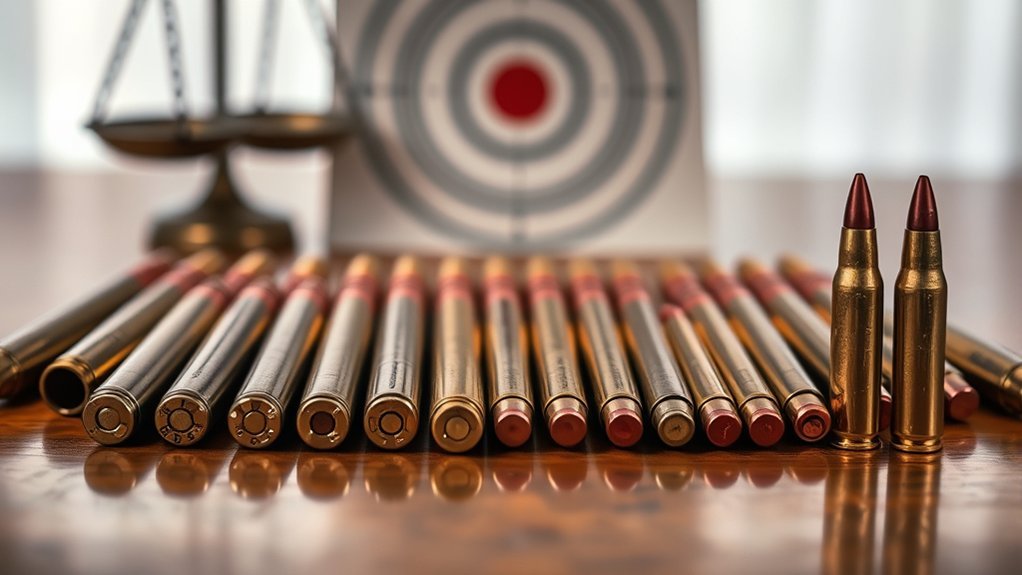
When selecting ammunition for any lawful purpose, understanding bullet design variations helps you evaluate likely performance and limitations. Different bullet types are made for different priorities, such as target shooting, hunting, duty use, barrier performance, or reduced ricochet risk.
Bullet Design Variations
Different bullet designs influence terminal performance in different scenarios. Full metal jacket rounds generally feature a lead or similar core covered by a harder jacket. They often feed reliably and work well for training, but they usually expand less than controlled-expansion bullets.
Hollow-point bullets are designed to expand under certain conditions. Expansion can increase frontal diameter, slow the bullet, and reduce the chance of excessive penetration in some settings. However, performance can vary after passing through clothing, glass, or other barriers.
Soft-point ammunition exposes part of the bullet core at the tip. This design often balances penetration and expansion, which is why it is commonly associated with hunting applications where lawful and appropriate.
Frangible bullets are designed to break apart when they hit hard surfaces. They can reduce splashback and ricochet risk in controlled training environments, but they are not a universal substitute for proper backstops, eye protection, and safe range procedures.
Caliber and Penetration Effects
Caliber refers to bullet diameter, and it can affect wound channel size, recoil, magazine capacity, firearm size, and penetration potential. Still, caliber alone cannot tell you exactly how a projectile will behave after impact.
A larger caliber may create a wider permanent path if all other factors are equal, but all other factors rarely stay equal. Bullet design, velocity, expansion, stability, and impact conditions can make two loads in the same caliber behave very differently.
Smaller calibers may offer lower recoil and easier control for some shooters. Larger calibers may offer more projectile mass and diameter but can reduce controllability for others. Ethical and practical ammunition selection should consider accuracy, training level, legal restrictions, environment, and the risk of unintended harm.
Energy Transfer and Tissue Damage
Energy transfer during a ballistic event can contribute to tissue damage, but the relationship is complex. When a bullet strikes biological tissue, it can crush tissue directly in its path, stretch surrounding tissue, and create temporary cavitation depending on speed and construction.
The most consistent injury mechanism is the permanent wound path, which comes from tissue directly cut, crushed, or disrupted by the projectile. Temporary cavitation may cause additional damage, especially with higher-velocity projectiles or less elastic tissues, but it should not be exaggerated as a guaranteed effect in every case.
High-velocity projectiles can produce more dramatic tissue displacement and secondary effects, especially when they fragment or strike bone. Lower-velocity handgun rounds often rely more on direct penetration and expansion. This distinction matters because marketing language can overstate “stopping power” while ignoring accuracy, penetration depth, and human variability.
Pro Tip: Treat ammunition claims with caution. Look for consistent, controlled testing and professional guidance, not isolated anecdotes or dramatic demonstrations.
The Role of Caliber in Terminal Ballistics
Caliber plays an important role in terminal ballistics, but it works alongside projectile construction, velocity, barrel length, distance, and target material. A larger caliber can increase potential wound diameter, yet a poorly placed shot or a projectile that fails to perform as intended may still be ineffective.
Smaller calibers can perform well when matched with appropriate bullet design and accurate shot placement. Larger calibers can offer more frontal area and mass, but they may also increase recoil, slow follow-up shots, and make training more difficult for some shooters.
For lawful civilian self-defense, the goal is not to choose the most destructive option. The goal is to choose a legal, reliable, controllable, and appropriate load while prioritizing de-escalation, safe storage, training, and bystander safety. For hunting, the ethical goal is a cartridge and bullet combination that can deliver adequate penetration and a humane result for the specific game and conditions.
Barriers, Distance, and Real-World Variables
Real-world terminal ballistics can change when a projectile passes through an intermediate barrier before reaching the target. Clothing, wallboard, glass, sheet metal, wood, and vehicle materials can clog hollow points, deform bullets, reduce velocity, or alter the path.
Distance also matters. As a projectile travels, it loses velocity. Lower impact velocity can reduce expansion, change penetration depth, and alter fragmentation behavior. This is especially important in hunting and duty contexts where distance can vary widely.
Environmental conditions can affect external ballistics before impact, but terminal effects depend most on impact velocity, bullet stability, target resistance, and bullet construction. A responsible shooter should never assume that a projectile will stop exactly where expected without a safe backstop.
Applications in Military and Law Enforcement
While many factors influence terminal ballistics, their applications in military and law enforcement are especially critical because they affect operational effectiveness, public safety, and personnel protection. Agencies may evaluate ammunition for reliability, accuracy, barrier performance, penetration, expansion, recoil, and consistency across different firearms.
Key considerations include:
- Wound ballistics: Evaluating likely injury severity and medical consequences.
- Ammunition selection: Choosing a lawful and policy-compliant caliber and projectile type for specific duties.
- Range assessment: Understanding how distance can change velocity and impact performance.
- Threat evaluation: Considering barriers, protective equipment, and public safety risks.
- Environmental factors: Accounting for wind, lighting, backstops, and nearby people or property.
Law enforcement use also raises accountability concerns. Ammunition decisions should be supported by policy, training, documentation, and review. The safest approach emphasizes restraint, judgment, and protection of the public rather than a narrow focus on projectile performance.
Civilian Uses and Considerations
Understanding terminal ballistics also matters for lawful civilian contexts, including self-defense, recreational shooting, and hunting. In each setting, the priority should be safety, legality, and responsible judgment.
In self-defense discussions, hollow-point rounds are often mentioned because they are designed to expand and may reduce over-penetration risk compared with some non-expanding bullets. Even so, no ammunition choice removes the need for safe storage, secure handling, legal awareness, and training.
In recreational shooting, ammunition selection usually centers on reliability, cost, recoil, accuracy, and safe range use. For hunting, the ethical concern is whether the cartridge and projectile are suitable for the species, distance, and local regulations. A responsible hunter chooses equipment that supports a quick, humane result and avoids risky shots.
Note: Ammunition laws vary by country, state, and locality. Some bullet types, magazine capacities, hunting loads, and carry practices may be restricted. Check current local law before buying, carrying, or using ammunition.
Ethical Implications of Terminal Ballistics
As you explore the ethical implications of terminal ballistics, consider how ammunition design and use can affect human lives, wildlife, public trust, and broader social norms. The subject is not only about what a projectile can do. It is also about when, whether, and why force should ever be used.
The decisions surrounding ammunition types and their intended applications raise serious ethical questions:
- The potential for unnecessary harm to civilians or bystanders
- The responsibility of manufacturers in design, labeling, and marketing
- The psychological effects on users, victims, families, and communities
- The different standards applied to military, law enforcement, hunting, and civilian use
- The impact of ammunition choices on public safety and community trust
- The environmental impact of certain materials, especially in hunting and outdoor ranges
Each factor contributes to the moral landscape of terminal ballistics. A responsible approach values restraint, lawful conduct, training, safe storage, and respect for life. It also avoids glamorizing injury or treating ballistic performance as entertainment detached from consequences.
Advocating for Responsible Usage
The ethical implications of terminal ballistics underscore the need for responsible usage of firearms and ammunition. Every ammunition type has specific purposes, limits, and consequences. Understanding those limits helps you avoid unsafe assumptions.
Educate yourself on the legal regulations in your area. Laws may cover possession, transportation, concealed carry, hunting use, storage, prohibited locations, and specific ammunition types. Compliance is a basic part of responsible ownership.
Training also matters. Safe handling, marksmanship, judgment, storage, and conflict avoidance are more important than chasing a theoretical “best” load. If you own firearms, use secure storage, keep unauthorized users away, and practice only in safe, lawful environments.
Responsible use also includes environmental awareness. Outdoor shooting can affect soil, water, wildlife, and public lands if shooters ignore cleanup, backstops, and local restrictions. Choose lawful locations, pack out debris, and respect land managers, neighbors, and other recreation users.
Common Misconceptions About Terminal Ballistics
Several myths make terminal ballistics harder to understand. One common misconception is that kinetic energy alone predicts effectiveness. Energy matters, but penetration, expansion, projectile path, and target anatomy also matter.
Another misconception is that caliber always decides the outcome. Caliber influences performance, but controllability, accuracy, bullet design, and impact conditions can matter just as much. A shooter who cannot control recoil may perform worse with a larger caliber.
A third misconception is that one test medium proves real-world performance. Water jugs, steel plates, clay, gel blocks, and improvised materials can show certain behaviors, but they do not perfectly copy human tissue, animal anatomy, clothing, or real barriers.
Finally, “stopping power” is often used as if it were a precise scientific value. In reality, human and animal responses vary. Responsible education avoids oversimplified promises and focuses on safety, legality, training, and evidence-based expectations.
Conclusion
In understanding terminal ballistics, you grasp not just the mechanics of projectiles but the weight of their consequences. Each choice in ammunition carries responsibility. It requires a balance between lawful purpose, practical performance, ethical judgment, and public safety.
Terminal ballistics can help you understand penetration, energy transfer, caliber, bullet design, and tissue effects. Still, knowledge should lead to more caution, not less. The most responsible approach prioritizes safe handling, secure storage, proper training, legal compliance, and a commitment to preserving life and minimizing harm.
