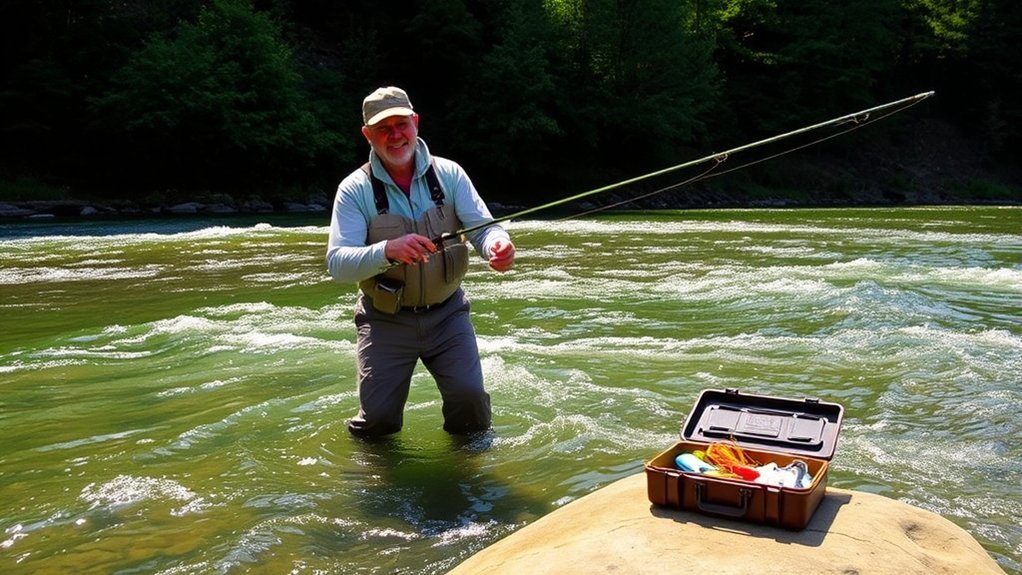
River current seams can turn a slow fishing day into a productive one when you know how to read them. These seams form where faster water meets slower water, giving fish a place to save energy while watching for food. If you learn where seams form, how fish use them, and how to present your bait naturally, you can fish rivers with far more confidence.
Quick Answer
To fish current seams, look for the line where fast water meets slower water, then cast upstream or slightly across the seam. Let your bait drift naturally through the strike zone while targeting rocks, logs, eddies, points, and bottom changes where fish can ambush food.
Key Takeaways
- Current seams form where different water speeds meet, creating natural feeding lanes for fish.
- Fish often hold on the slower side of a seam so they can conserve energy and ambush drifting food.
- Casting upstream helps your bait move with the current instead of dragging unnaturally across it.
- Rocks, logs, ledges, eddies, bridge pilings, and bottom humps can make a seam more productive.
- Adjust lure weight, casting angle, and retrieve speed based on current strength and water clarity.
At a Glance
| Best Time | Early morning, late evening, post-spawn periods, and anytime current pushes baitfish or insects through feeding lanes. |
| Difficulty | Moderate. You need to read water speed, control drift, and adjust your presentation often. |
| Helpful Gear | Jigs, crankbaits, spinnerbaits, topwater lures, split shot, weighted rigs, polarized glasses, and a GPS or mapping app. |
| Main Goal | Present your bait naturally along the seam where fish can feed without fighting the strongest current. |
Understanding River Currents and Their Impact on Fishing
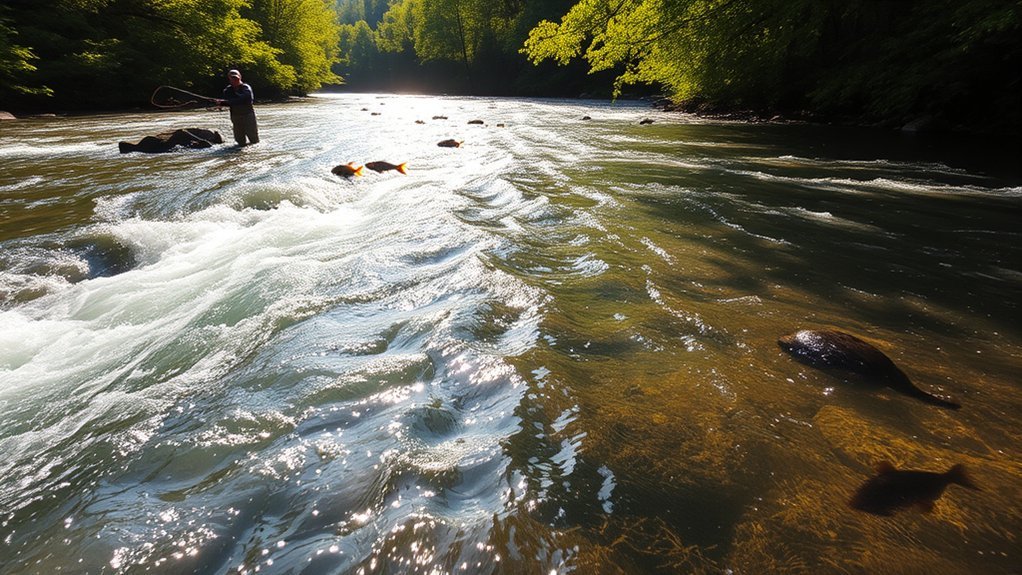
When you’re fishing in rivers, understanding how currents work is essential for success. River currents create different fish-holding areas, especially current seams, where faster water meets slower water. These seams are prime fishing spots because fish often use slower water, eddies, and current breaks to conserve energy while waiting for food to drift past.
Main currents can be too swift for many fish to hold in for long. Instead, fish often sit just outside the fastest flow, behind rocks, near logs, along undercut banks, or beside ledges. From there, they can move only a short distance to grab baitfish, insects, crawfish, or other food carried by the current.
Current also changes with water level. After rain, seams may push closer to the bank, behind flooded brush, or around new shoreline cover. During lower water, seams may become easier to see around exposed rocks, shallow riffles, and narrow channels. Paying attention to these changes helps you avoid casting randomly and focus on the water that actually holds fish.
Note: A current seam is not always a sharp visible line. Sometimes it appears as a slight color change, a bubble line, a foam trail, a slick surface edge, or a small shift in floating debris.
Identifying Productive Current Seams
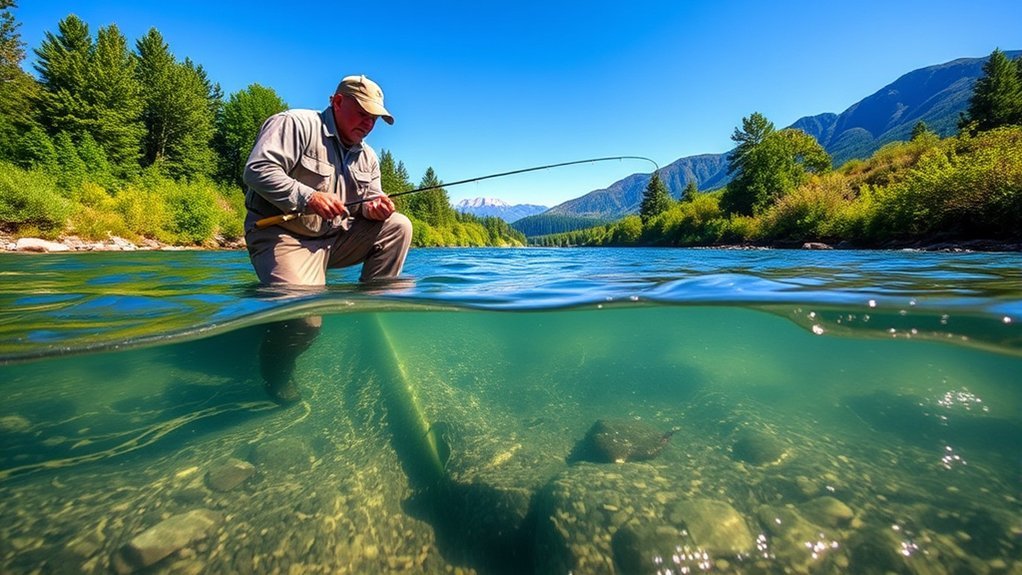
To identify productive current seams, look for places where different water speeds converge. These areas create ambush points for fish because food naturally funnels through them. The best seams usually combine current, depth, food, and cover.
Focus on structural edges and look for seams near rocks, points, islands, sandbars, bridge pilings, logs, weed edges, and bottom changes. In lakes or reservoirs with seasonal drawdowns, exposed rock seams can resemble a backbone. When water rises again, those same edges may become reliable fish-holding areas.
Mark waypoints along the ends and middle sections of productive seams when you find them. This makes future trips more efficient, especially when water levels return to a similar stage.
[Amazon Products Picked for You]

Premium GPS Tracker — The LandAirSea 54 GPS tracker provides accurate global location, real-time alerts, and geofencing. Easily attaches to vehicles, ATVs, golf carts, or other critical assets.

The Trak4 USB Rechargeable Tracker is built to be waterproof and durable. Its robust internal LIPO battery provides 12–18 months of operation per charge (when issuing reports daily) delivering many times the capacity of most competing trackers and 5 times that of smaller round trackers. With unlimited distance tracking via 4G LTE worldwide coverage, plus fallback to 2G networks, your Trak4 ensures reliable performance. It combines GPS tracking with Wi-Fi-based location technology, for precise tracking when GPS signals are unavailable inside buildings.

INCLUDES FIRST MONTH OF SERVICE – everything you need to start tracking today. After your first month, plans start as low as $22.95/mo (with a long-term prepaid plan) No contracts, no activation fees, cancel anytime.
Recognizing Current Patterns
Understanding the details of current seams is essential for successful seam fishing. These areas, where different-speed currents meet, create ideal ambush points for fish. Look for visible rock seams, especially during winter drawdowns, as they often resemble a dinosaur’s backbone and indicate prime fishing spots when water covers them again.
Pay close attention to water flow dynamics. Fish tend to hold in slower currents near eddies, behind structure, or along the inside edge of a seam. These areas let them conserve energy while still feeding effectively. Subtle changes in current flow, such as bottom humps redirecting water, can also reveal hidden seams that many anglers miss.
- Foam lines: Often show where food and debris drift along a seam.
- Slick water beside chop: Can mark slower water next to faster current.
- Color changes: May reveal depth changes, current speed shifts, or mixing water.
- Behind rocks or logs: Often creates soft water where fish can rest and feed.
- Inside bends: Usually offer slower current, while outside bends often hold deeper water.
Targeting Structural Edges
Identifying productive current seams often hinges on recognizing structural edges that influence water flow. These edges create ideal ambush points for catching fish, especially around bottom humps and narrow seams. Look for seams that resemble a dinosaur’s backbone when lakes are drawn down, with bare bottoms on either side. Eddies near faster flows are also prime spots, as they often hold fish seeking shelter.
To improve your current fishing success, mark waypoints on your GPS at the ends and midsections of these seams for future trips. Observing how current dynamics interact is key. Fish where slower currents meet faster flows to boost your catch rates and avoid wasting time on dead water.
| Feature | Description | Importance |
|---|---|---|
| Structural Edges | Bottom humps and seams | Create ambush points |
| Eddies | Shelter near fast currents | Hold active feeding fish |
| GPS Waypoints | Marking key locations | Helps you repeat productive patterns |
Techniques for Fishing Current Seams
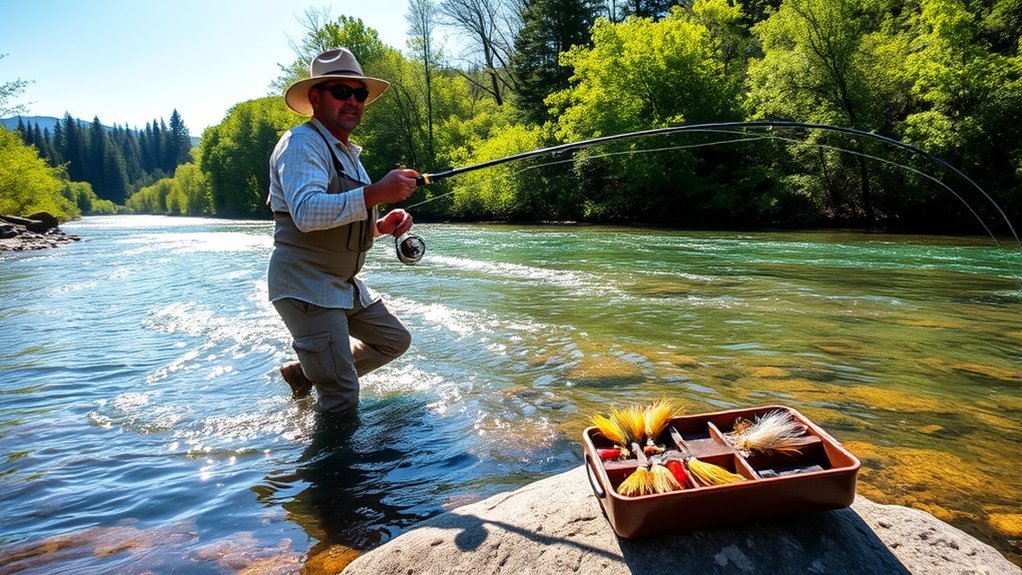
To effectively fish current seams, start by adjusting your casting angles so your bait drifts naturally into the strike zone. Target structure edges where fish often hide, because these spots provide ambush points and increase your chances of a successful catch. The right approach can make all the difference when fish are watching food drift past them.
[Amazon Products Picked for You]

STABLE & NATURAL SURF FISHING RIG-FISH FINDER RIG: The fish finder rig is one of the best surf fishing rigs, especially if you are surf fishing or using live bait! The fish finder rig Resists Wind and Current, allowing bait to move Naturally and Flexibly with the current, and can excel in challenging conditions just off the surf! Next time you are surf fishing give the fish finder rig a try!

UNBENDABLE HIGH-CARBON STEEL: Equipped with heavy-duty black nickel hooks, specifically forged for the hard-fighting Fall/Spring Striped Bass Run

FIELD TESTED HI/LOW FISHING FLOAT RIGS: Made for Surf Fishing enthusiasts of all levels. From beginners to pros, these rigs make fishing easy and enjoyable. XFISHMAN Surf Fishing Rigs can be used from the Beach, Surf, Pier or Boat. These rigs are great for Pompano, Black or Red Drum, Bluefish, Croakers, Sea Bass, Sea Trout, Snappers, Spots, Weakfish, Sheepheads, Whitings (Southern Kingfish), Flounders, Even Small Sharks
Effective Casting Angles
When it comes to fishing current seams, mastering effective casting angles is essential for success. To create natural bait movement, cast upstream or slightly across the current instead of directly at the seam. This strategy lets your bait flow downstream into fish-holding areas in a realistic way.
A cast that lands too far downstream often drags the bait against the current. That unnatural movement can make fish ignore it. A cast that lands too far into the fastest water may sweep your bait away before it reaches the strike zone. Start with a cast upstream at a shallow angle, then adjust until your bait travels along the seam instead of cutting across it too quickly.
Pay attention to the edges where different flow speeds meet, since fish often ambush prey in these transition zones. Adjust your casting technique based on water speed, and consider using weighted rigs to maintain control over your presentation. Experiment with various angles and distances to pinpoint the most productive spots in your river system.
Pro Tip: Watch your line as much as your lure. If the line bows too quickly, your bait may be moving faster than the natural drift. Recast at a softer angle or add weight.
Targeting Structure Edges
Casting at the right angles is just the beginning. Targeting structure edges in current seams can considerably increase your chances of landing fish. Focus on casting perpendicular or slightly upstream of these edges, allowing your bait to mimic the natural movement of prey carried by the current.
Look for seams where fast water meets slower areas. These spots serve as ambush points where fish conserve energy while waiting for food. Experiment with different bait presentations, such as dragging jigs, drifting live bait, swimming soft plastics, or using crankbaits to match the fish’s feeding behavior.
Also watch the bottom structure. Rock formations, ledges, gravel bars, and drop-offs often hide fish. Position yourself facing upstream when possible to improve bait control and help your lure move naturally with the current.
Step-by-Step Current Seam Approach
- Stand back and watch the water first. Look for foam lines, slick edges, eddies, boils, and visible seams before making a cast.
- Find the soft-water side. Fish often hold just inside the slower water beside the main push of current.
- Cast upstream or slightly across. Let the bait drift into the feeding lane instead of pulling it against the flow.
- Control slack line. Keep enough slack for a natural drift, but stay tight enough to feel a strike.
- Cover the seam in lanes. Start near the bank or closest edge, then work outward in small sections.
- Change weight before changing spots. If your bait floats too high or snags constantly, adjust weight until the presentation looks natural.
- Repeat productive angles. When you get a bite, note the exact cast angle, drift path, depth, and structure.
Best Baits and Lures for Current Fishing
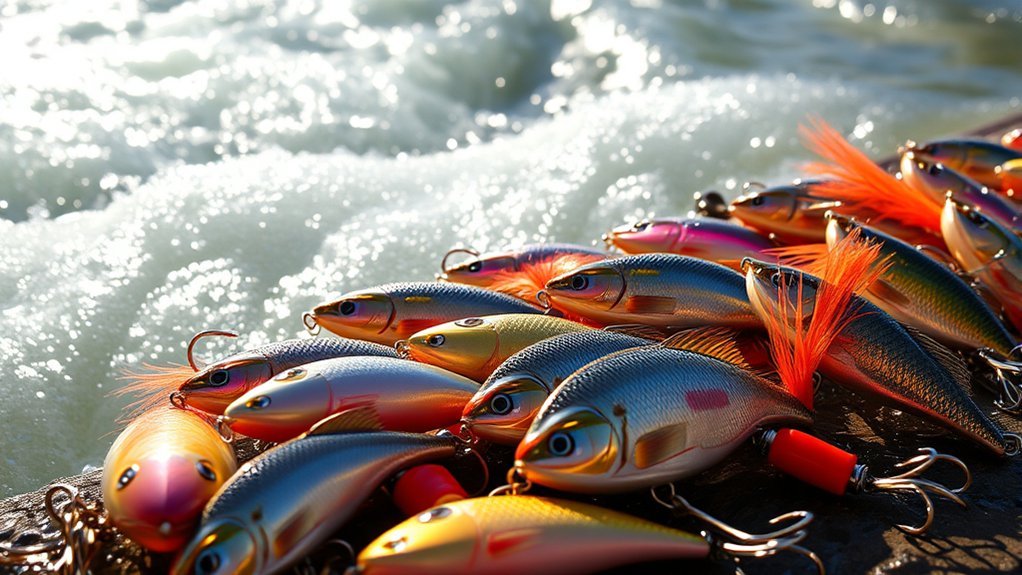
Choosing the right baits and lures for current fishing is essential for success because water flow can greatly affect fish behavior. The right lure should reach the strike zone, move naturally, and stay under control long enough for fish to react.
For the best fishing, consider crankbaits like Duel’s Hardcore Shad Crankbait when targeting shallow rock seams. Cast across or slightly upstream of the current so the lure deflects off rocks and moves through the seam. In clear water during post-spawn periods, topwater baits like the Yo-Zuri 3DR Pencil can be effective when fish are feeding near the surface.
When fishing high water, compact football-head jigs are versatile. Hop and drag them along seams to stay in the strike zone. In dingy rivers, tandem willow spinnerbaits can entice actively feeding bass. Retrieve them at a speed that keeps the blades turning without pulling the lure unnaturally out of the seam.
Always adjust jig weights according to current strength to maintain bottom contact when needed. This helps mimic the natural movement of prey like crawfish being swept along by the current.
| Bait or Lure | Best Use | Current Seam Tip |
|---|---|---|
| Crankbaits | Rock seams, shallow edges, active bass | Deflect them off cover near the seam. |
| Football-head jigs | Bottom contact in moderate to strong current | Use enough weight to feel bottom without constant snagging. |
| Spinnerbaits | Dingy water, stained rivers, active fish | Retrieve just fast enough to keep the blades working. |
| Topwater baits | Clear water, low light, surface feeding | Work them along the soft edge beside faster water. |
| Soft plastics | Slower seams, pressured fish, subtle bites | Let them drift naturally before adding action. |
[Amazon Products Picked for You]
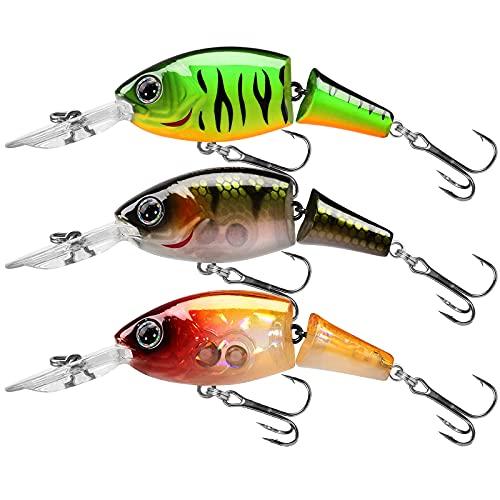
TRUSCEND Jointed Crankbait - This crank bait considered by many to be the best running glide baits, the all-purpose crankbait is equally effective whether cast or trolled. The swimbait is crafted with super durable dual stainless steel hinged joint connection, lightweight and durable plastic body construction enhance the action.

√ Well-Made - 3D Life like Fish Eyes With Fish-Attracting Printed Body Provides Excellent Appearance Of Fishing Lures. While Double Flat Strong Rings And #6 High Carbon Steel Treble Hooks Offers Special Vibration To Attract Fishes.

【Essential Fishing Tackle Kit】- PLUSINNO's high-quality bait provides beginners with a variety of options, capable of catching nearly any type of fish, from bass to trout. This versatile starter tackle box with tackle include Texas, Carolina, Florida, Split Shot, No Sinker, Jig Head, and Wacky rigs, totaling 7 types of lure rigs. It's the latest fishing gear for 2024, Whether you're targeting bass or other freshwater fish, this 137-piece baits set in a convenient box has everything you need.
Common Mistakes to Avoid When Fishing Currents
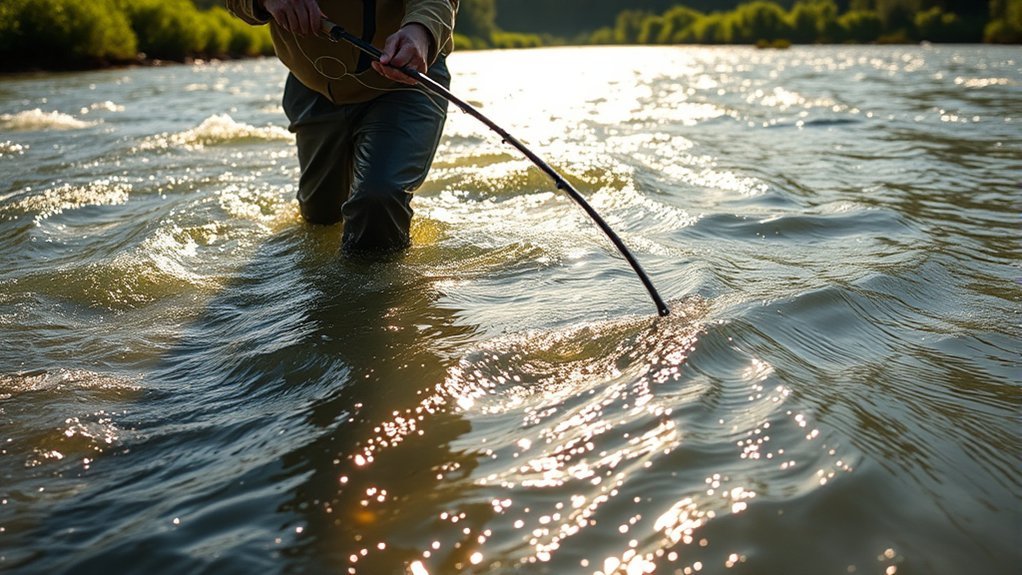
While many anglers focus their efforts on slack water areas, it’s essential to recognize that active fish often prefer current edges for feeding opportunities. Don’t assume that fishing only in slack water will produce the most bites. Current seams are where fish like bass often hunt for prey.
Another mistake is leaving too quickly. Resist the urge to move on after only a few casts. Patience is key, because fish may need several drifts before they respond to your bait. Change your angle, weight, and retrieve before deciding a seam is empty.
- Casting directly downstream: This often makes your bait drag unnaturally against the current.
- Using too little weight: Your bait may pass over fish without reaching the strike zone.
- Using too much weight: Your bait may snag or look unnatural as it tumbles through the seam.
- Ignoring shallow seams: Even shallow current edges can hold feeding fish, especially during low light.
- Fishing only visible seams: Some of the best seams form under the surface around bottom changes.
- Standing too close: Wading or walking too near the seam can spook fish before you cast.
Warning: River current can be dangerous, especially after rain or near dams. Wear a life jacket when wading or boating in strong current, avoid slippery rocks, and never step into water you cannot safely read.
Tips for Enhancing Your Current Fishing Success
Fishing in current seams can increase your success rate when you use effective strategies. Focus on areas where slow water meets fast-moving water. These spots serve as ambush points for fish conserving energy while hunting for food.
Use techniques like drift fishing and bottom bouncing to imitate the natural movement of prey. This can improve your chances of attracting fish because your bait appears to move with the current instead of fighting it.
Always cast upstream to align with the fish’s feeding behavior. This allows your bait to drift naturally into the strike zone. Look for structures like rocks and logs that create current breaks. These are prime locations for holding fish.
Adjust your bait weight according to the current’s speed to maintain a proper presentation. In light current, a smaller weight or lighter jig may look more natural. In strong current, a heavier bait may be necessary to stay near the bottom. By targeting these strategic areas and using the right techniques, you can boost your fishing success in current seams.
How Water Clarity Changes Your Approach
Water clarity should guide your lure choice and presentation. In clear water, fish can inspect your bait more closely, so natural colors, lighter line, and subtle presentations often work better. Long casts also help you avoid spooking fish in shallow seams.
In stained or muddy water, fish may rely more on vibration, flash, and profile. Spinnerbaits, crankbaits, darker soft plastics, and lures with stronger movement can help fish find your bait in the current. Slow down enough for fish to locate the lure before it sweeps past them.
How Season Affects Current Seam Fishing
Seasonal changes affect where fish hold in current seams. In cooler water, fish may choose deeper seams, slower eddies, and protected current breaks. During warmer periods, current can add oxygen and push food into predictable feeding lanes, making seams especially valuable.
After spawning periods, fish may use seams near shallow cover, rock, and baitfish movement. During high summer heat, shaded current breaks, deeper pools, and oxygen-rich riffles can become more productive. In fall, seams near baitfish schools can produce fast action when fish feed heavily before winter.
Related Guides
Frequently Asked Questions
How do you fish current seams?
To fish current seams, cast upstream or slightly across the seam and let your bait drift naturally into the strike zone. Focus on the slower side of the seam, especially near rocks, logs, eddies, ledges, and other structure where fish can ambush food.
What is the 80/20 rule in fishing?
The 80/20 rule in fishing means a large share of your success often comes from a small share of your effort. Instead of casting everywhere, focus on high-percentage areas like current seams, cover, depth changes, and feeding lanes.
What is the 90/10 rule in fishing?
The 90/10 rule in fishing means most fish are often found in a small portion of the available water. In rivers, that small portion may include current seams, eddies, points, structure edges, and areas where food naturally collects.
How do you identify current seams?
To identify current seams, watch for visible water color changes, foam lines, bubble trails, slick surface edges, and surface disturbances. Also look behind rocks, logs, bridge pilings, islands, and shoreline points where slower water forms beside faster current.
What side of a current seam should you fish?
Start on the slower side of the current seam because fish often hold there to conserve energy. Then work the edge where slow water meets fast water. That transition line is where food drifts past and fish can strike quickly.
What lure works best in strong current?
In strong current, compact jigs, weighted soft plastics, crankbaits, and spinnerbaits can work well because they stay controlled in moving water. Choose enough weight to reach the strike zone without making the bait look stiff or unnatural.
Conclusion
Current seams are some of the most reliable places to find feeding fish in rivers. When fast water meets slow water, fish gain the perfect balance of protection, oxygen, and easy food. Your job is to read that seam, choose the right angle, and let your bait move naturally through the strike zone.
Before you make your next cast, pause and study the water. Look for foam lines, eddies, rocks, logs, bottom changes, and subtle shifts in current speed. Then work the seam with patience. The more you understand how current positions fish, the more productive your river fishing becomes.