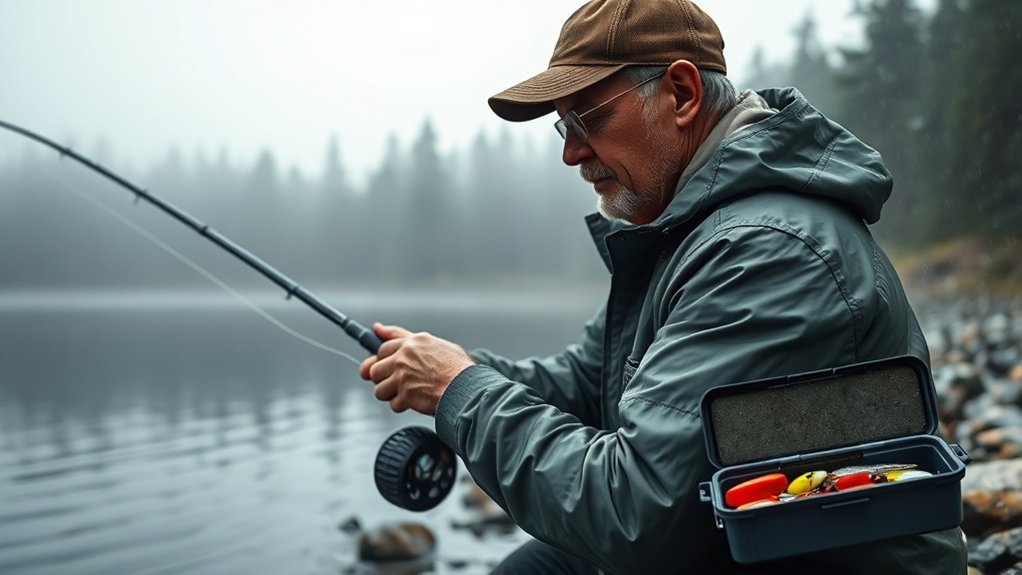
Bass fishing in the rain can be excellent when the weather is safe. Start around runoff seams, creek mouths, culverts, mudline edges, wind-blown banks, and shallow cover where current and low light can concentrate feeding activity. Use moving lures that create vibration, flash, sound, or a strong silhouette, then slow down when fish follow, miss, or hold tight to cover. If you hear thunder, see lightning, lose visibility, or face fast-rising water, stop fishing and get to safe shelter.
Last updated: September 11, 2026 — revised for current lightning safety guidance, rainy-water decision cues, and lure-selection clarity.
Quick Answer
Yes. Light to moderate rain can improve bass fishing when there is no thunder, lightning, dangerous wind, or fast-rising water. Start at runoff seams, inlets, mudline edges, points, and shallow cover. Use moving baits such as spinnerbaits, buzzbaits, chatterbaits, and crankbaits to find active fish, then switch to jerkbaits, jigs, or soft plastics when bass stop chasing.
Key Takeaways
- Light rain and overcast skies often make bass more willing to roam, chase bait, and strike moving lures.
- Runoff, mudline edges, creek mouths, culverts, inlets, points, and wind-blown banks are high-priority rainy-day targets.
- Spinnerbaits, buzzbaits, crankbaits, chatterbaits, jerkbaits, and soft plastics all work, but your retrieve speed matters as much as lure choice.
- Lightning, rising water, slick ramps, cold rain, and poor visibility can turn a good fishing day dangerous fast.
At a Glance
| Best Conditions | Light to moderate rain, overcast skies, safe wind, no thunder, no lightning, and stable water levels. |
| Difficulty | Moderate. You must manage safety, changing water clarity, slick footing, and faster fish movement. |
| Best Lures | Spinnerbaits, buzzbaits, chatterbaits, crankbaits, jerkbaits, topwater plugs, Texas rigs, wacky rigs, and dark soft plastics. |
| Safety Priority | Leave the water immediately when you hear thunder, see lightning, lose visibility, or notice dangerous current. |
Is Bass Fishing Good in the Rain?
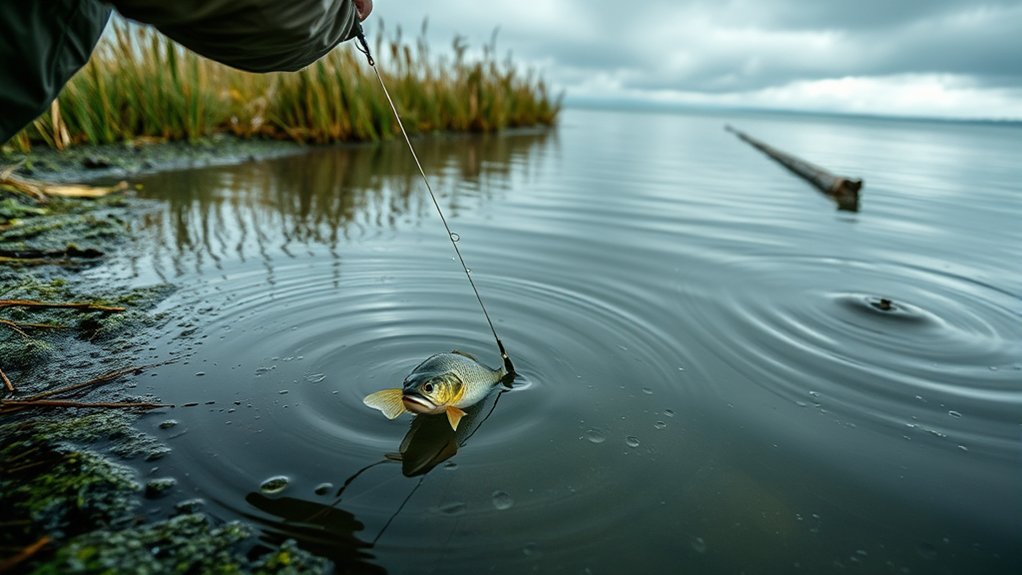
Yes, rain can improve bass fishing, but the useful signal is not rain by itself. It is what the rain changes: light, current, water clarity, water temperature, water level, and the position of forage. Current bass-fishing guidance consistently emphasizes fresh inflow, color changes, and moving baits as high-value clues during safe rain. Bassmaster’s runoff guidance also highlights small creeks, ditches, and culverts as productive inflow targets.
Runoff can wash insects, small forage, sediment, and shoreline debris into a lake. The strongest opportunity is often the transition rather than the dirtiest water. Look for a defined edge where stained water meets cleaner water, a creek or culvert with fresh flow, or shallow cover close to that current.
Topwater can work well in light rain and low light when bass are visibly feeding upward. Buzzbaits, poppers, walking baits, and prop baits create enough disturbance to be noticed on a rain-dimpled surface. If fish stop showing near the top, switch to a spinnerbait, bladed jig, crankbait, or soft plastic that works below the surface.
Do not assume every storm improves the bite. A cold rain can change shallow-water temperature, prolonged runoff can turn a creek excessively muddy, and rising current can make a productive spot unsafe. Read the change first, then choose the tactic.
Rain does not make every spot better. It makes the right spots easier to identify because current, color changes, bait movement, and surface activity become easier to see.
Use This Rainy-Day Decision Framework
Before changing lures, answer three questions: Did the water get dirtier? Did the water get warmer or colder? Did the level or current change? Those answers tell you more than the word “rainy” does.
| What Changed? | First Place to Check | First Adjustment |
|---|---|---|
| Slight stain or a sharp mudline | The clarity edge and nearby cover | Add vibration, flash, or a stronger silhouette |
| Fresh inflow or stronger current | Current seams, eddies, culverts, and creek mouths | Present the lure through the seam instead of only into the fastest flow |
| Cold runoff | The nearest stable water beside the inflow | Slow the retrieve and add pauses |
| Rising water with flooded cover | Newly flooded bushes, grass, wood, and shallow edges | Use a lure that can move through cover cleanly |
Safety Precautions for Wet Weather Angling
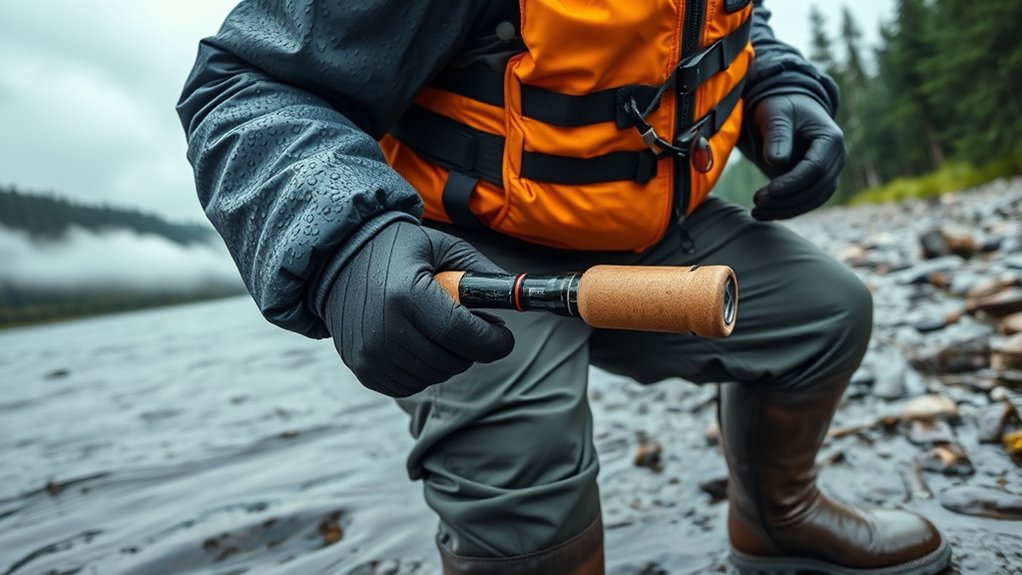
Wear waterproof outer layers over quick-drying clothing so you can stay warm, mobile, and focused. Cold rain plus wind can pull heat from wet clothing quickly, so pack a dry layer in a sealed bag.
Lightning is the hard stop. The National Weather Service says there is no safe place outdoors when thunderstorms are in the area. If you hear thunder, get off the water and move to a substantial building or hard-topped vehicle.
Wet ramps, poor visibility, rising current, and cold exposure can also turn a routine trip into an emergency. Good rainy-day fishing starts with a route back to shore and a willingness to leave before conditions become dangerous.
Warning: Do not fish through thunder or lightning. If you hear thunder, stop fishing and move to a substantial building or hard-topped vehicle. The National Weather Service advises waiting at least 30 minutes after the last thunder before resuming outdoor activity.
Wear Proper Rain Gear
If rain is in the forecast, use waterproof clothing and footwear that let you cast, kneel, and move without binding. Wet clothing can reduce comfort and dexterity, while poor traction becomes a real hazard on ramps, docks, rocks, and boat decks.
Look for sealed seams, a secure hood, adjustable cuffs, and enough breathability for your activity level. In cold rain, add insulation under the shell instead of relying on one heavy outer layer.
Protect electronics, spare clothes, keys, licenses, and emergency supplies in dry bags or waterproof cases. For footwear, prioritize a slip-resistant sole and stable fit over brand-specific features.
- Choose breathable rain gear with sealed seams and a hood that fits over your hat.
- Wear a quick-dry base layer so moisture does not stay against your skin.
- Add an insulating midlayer when the rain is cold or the wind is steady.
- Dry and clean gear after use; follow washing instructions so waterproof materials keep performing.
- Keep electronics, spare clothes, keys, and licenses inside dry bags.
- Open wet tackle boxes after the trip so hooks, split rings, and lures do not rust.
Avoid Lightning Risks
Storms can build quickly, so do not wait for a close strike. Stop fishing and head for safe shelter as soon as thunder is heard or threatening weather is approaching.
Check the forecast before you launch and keep a reliable weather source available while fishing. On a boat, plan the fastest safe route back to shore before the weather deteriorates.
The National Weather Service no longer recommends the old “lightning crouch.” Its guidance is to avoid being caught outside in the first place and to reach a substantial building or hard-topped vehicle. If safe shelter is not available, there is no outdoor position that makes a thunderstorm safe. Avoid open water, isolated tall objects, and other locations that increase exposure.
After the storm, wait at least 30 minutes after the last thunder before returning outside. That simple rule is more protective than trying to judge distance from individual flashes.
Watch for Cold Rain and Hypothermia
Cold rain deserves extra respect because wet clothing and wind can accelerate heat loss. The CDC lists shivering, exhaustion, confusion, fumbling hands, memory loss, slurred speech, and drowsiness as warning signs of hypothermia.
If those signs appear, stop fishing and get the person to a warm, dry place. Hypothermia is a medical emergency when body temperature is below 95°F (35°C); seek medical attention promptly if you suspect it.
Pack dry socks, an insulating layer, a towel, gloves, and an emergency blanket in a sealed dry bag. Keep them where you can reach them quickly rather than under wet gear.
What Are the Best Lures for Bass in the Rain?
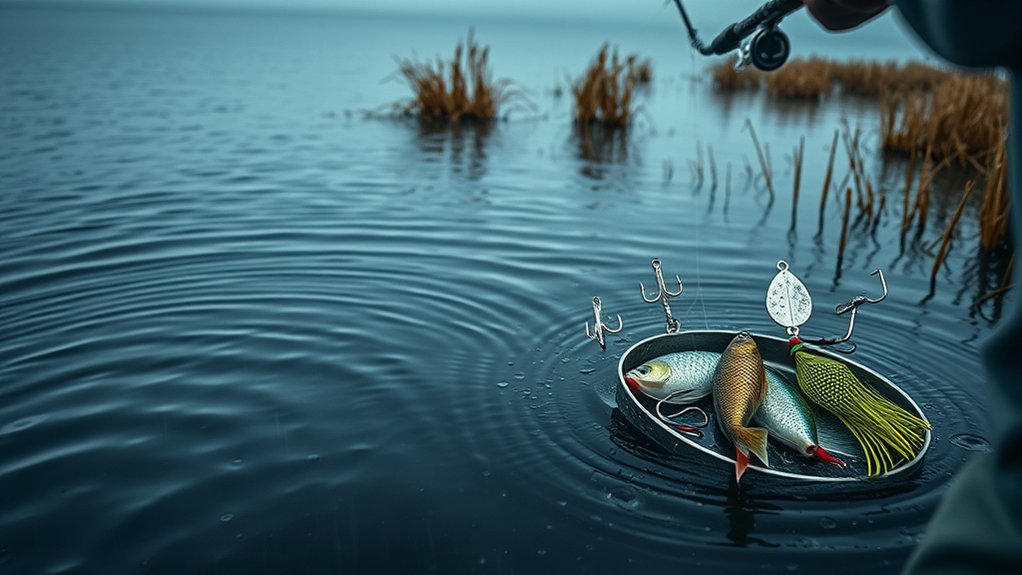
Start with a lure that matches the visibility and activity level. In stained water, spinnerbaits, bladed jigs, buzzbaits, and rattling crankbaits give bass vibration, flash, sound, or a strong profile to track. That approach is consistent with rainy- and muddy-water guidance from Bassmaster and Wired2Fish.
Jerkbaits work well in cooler, rain-chilled water when bass still want a baitfish profile but will not chase as far. Topwater baits like Baby Torpedoes, poppers, walking baits, buzzbaits, and Whopper Ploppers can spark explosive hits in light rain.
Soft plastic worms in green pumpkin or black and blue on Texas or wacky rigs are your go-to around runoff, brush, docks, grass edges, laydowns, and rock. Use darker colors when visibility drops, and use natural colors when the water stays fairly clear.
You want baits that force a reaction, so focus on presentation and tempo. Use spinnerbaits to cover water and locate active fish. Use buzzbaits when visibility drops or bass feed near the surface. Use jerkbaits when fish follow but will not fully commit. Use soft plastics when bass hug structure or sit on the edge of current.
- Spinnerbaits: vibration and flash help draw a strike from distance.
- Buzzbaits: audible surface commotion works well in low light or steady rain.
- Chatterbaits: strong vibration helps fish find your bait in stained water.
- Crankbaits: deflection off rock, wood, or shallow cover can trigger reaction bites.
- Jerkbaits: pauses help tempt bass in cooler or post-front rain.
- Soft plastics: subtle action works around cover, seams, and fish that stop chasing.
Choose the lure by water clarity, depth, cover, and fish activity, then let the first few reactions tell you whether to speed up, slow down, or change profile.
Pro Tip: In stained water, start with lures fish can feel before they see. Vibration, water displacement, rattles, blades, and a strong profile usually matter more than tiny color details.
Topwater vs. Subsurface: When to Use Each
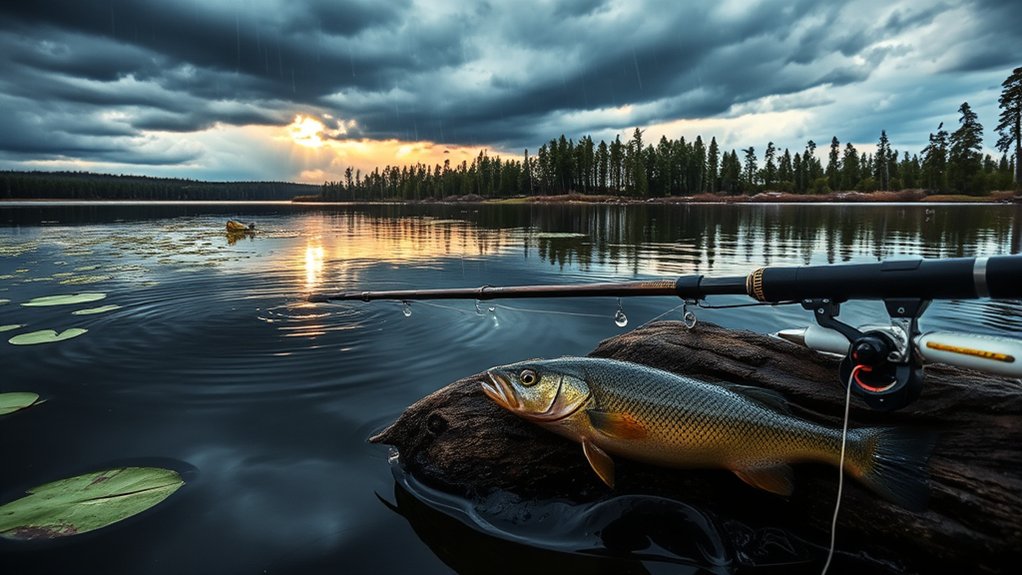
Because rain changes how fish hunt, you want to match your approach to what the water is doing. Go topwater in light, steady drizzle or low-light spells when surface activity spikes and aggressive strikes are likely. Switch to subsurface baits as rain thickens, visibility drops, or fish slide down to cover.
Match your tactic to the rain: topwater in light drizzle or low light, then switch subsurface as visibility drops.
You’ll throw topwater lures like buzzbaits, poppers, prop baits, and walking baits to find roaming bass and trigger loud strikes. This is ideal when you see bait flicking, bluegill popping, shad dimpling, or bass pushing wakes near shallow cover.
When rain muddies things, tie on subsurface lures like spinnerbaits, crankbaits, chatterbaits, jigs, and soft plastics. Vary your speed to dial in vibration, depth, and profile. A bait that tracks just above grass, bumps rock, or deflects off wood can outfish a surface lure once the water turns dirty.
Move confidently between methods as conditions change. Trust surface commotion to reveal active fish, then use subsurface presentations to catch bass holding tight to structure.
| Condition | Start With | Why It Works |
|---|---|---|
| Light drizzle and low light | Topwater | Bass may feed upward and surface disturbance hides your lure. |
| Moderate rain with stained water | Spinnerbait or chatterbait | Vibration helps fish track the bait. |
| Heavy runoff and muddy water | Dark soft plastic or bulky jig | A slower, larger profile stays in the strike zone longer. |
| Cool rain or post-front bite | Jerkbait | Pauses give less aggressive fish time to commit. |
Where Do Bass Go When It Rains?
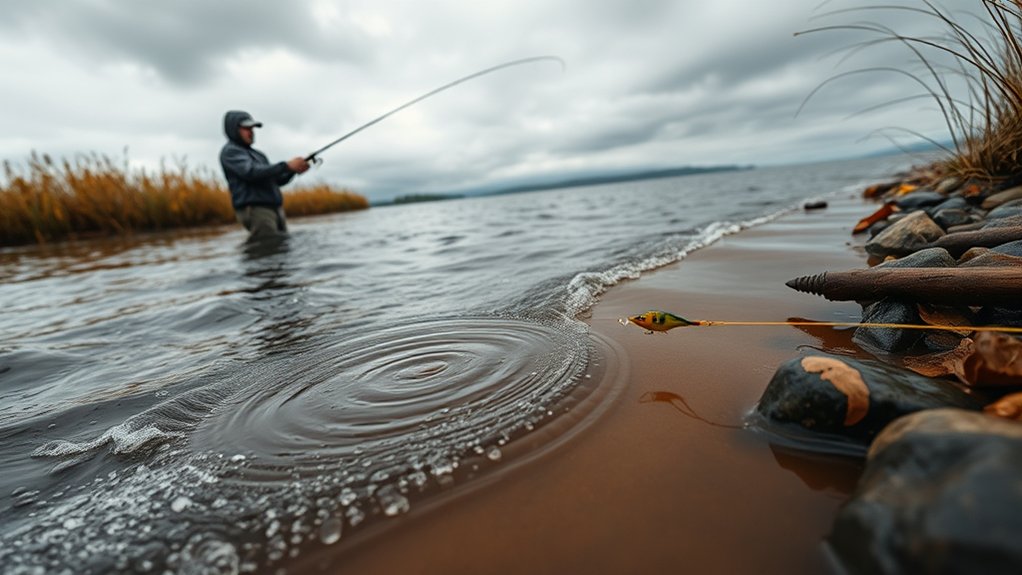
When rain creates fresh inflow, start around runoff seams, creek mouths, culverts, and defined mudlines. Do not assume bass will sit in the cleanest water or the thickest mud every time. A well-defined color edge is valuable because it gives you a visible boundary to fish, and Bassmaster’s mudline guidance notes that bass can hold on the edge or just inside the dirty water.
Focus on culvert outlets, creek mouths, ditch drains, shoreline washouts, and channel inlets. Bass often ambush incoming bait there, and you’ll find concentrated activity instead of random fish scattered across a flat.
When targeting runoff and mudlines, watch for visible seams and the narrow edges where current slows. The best cast often lands on the cleaner side, crosses the dirty edge, and exits through the ambush lane.
- Check culverts and creek inlets for baitfish funnels.
- Target cleaner runoff seams where visibility helps cruising bass feed.
- Work the edges of mudlines and boundary zones, not the thickest mud.
- Cast across current when possible so your lure moves naturally through the seam.
- Leave dead runoff quickly if you see no bait, no birds, no surface movement, and no bites.
Stay mobile and favor seams with fresh flow, workable clarity, nearby cover, and visible forage. Those combinations give you a repeatable reason to stay rather than guessing.
Note: Not all runoff is worth fishing. If visibility collapses, debris becomes hazardous, the water has an unusual chemical or fuel odor, or the level rises quickly, move to safer, more stable water or leave the area.
Adjusting Retrieve Speed and Presentation
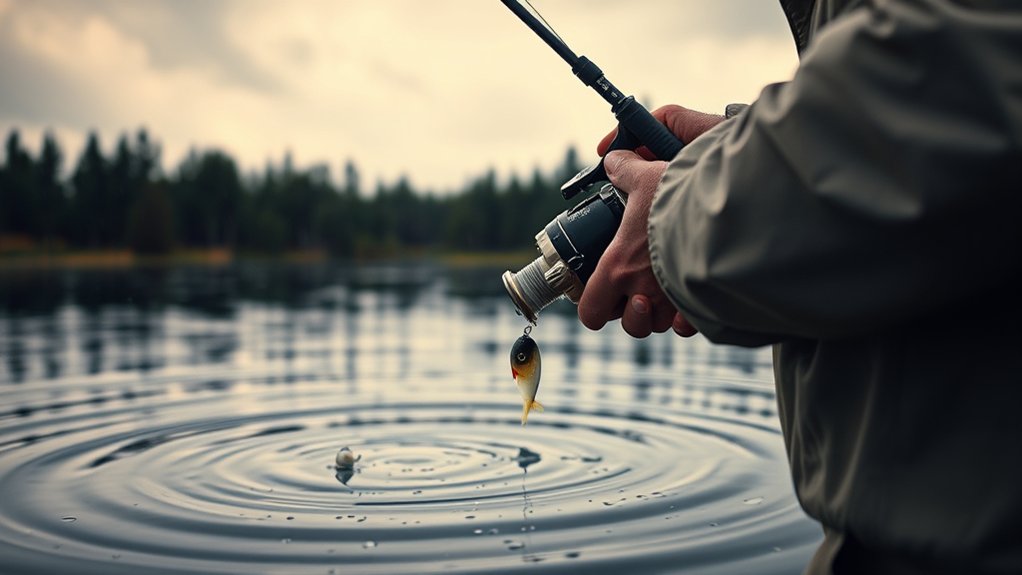
Once you find a productive seam or inlet, use retrieve speed as a test rather than a rule. Start with a moving presentation when fish are roaming, but slow down when the water turns colder, bass stop chasing, or strikes become short. A fast retrieve is a search tool, not an automatic rainy-day setting.
You want to test faster retrieve speed with spinnerbaits and crankbaits to provoke aggressive strikes. Don’t be afraid to burn lures through murky water when bass are active. With soft plastics, shorten soak time and twitch more when fish chase. Then slow the same bait around wood, docks, grass holes, or rock if the bite turns cautious.
Topwater calls for rhythm changes. Alternate fast strips with slow pauses until fish tell you what they want. Use quick bursts followed by a pause to mimic wounded prey and cut through stained water. Stay bold, move freely, and let the fish dictate tempo.
The table below gives simple cues to try and keeps you experimenting.
| Lure Type | Retrieve Tip |
|---|---|
| Spinnerbait/Crankbait | Start fast when fish are chasing; slow down when follows or short strikes appear. |
| Soft Plastics | Use quicker hops to search, then longer pauses around cover. |
| Topwater | Mix steady retrieves with pauses until the strike pattern becomes clear. |
| Jerkbait | Lengthen pauses when cold rain or a post-front slowdown reduces chasing. |
Simple Retrieve Adjustments That Catch More Bass
If you get short strikes, add a trailer hook to a spinnerbait or buzzbait where legal and practical. If fish follow a crankbait without eating it, pause after deflecting off cover. If bass swirl on topwater but miss, throw a soft plastic follow-up bait into the same spot.
Keep your first few casts experimental. Make one fast cast, one medium cast, and one slower cast through the same lane. The fish will often tell you which speed gets noticed.
Gear and Clothing Essentials for Rainy Days
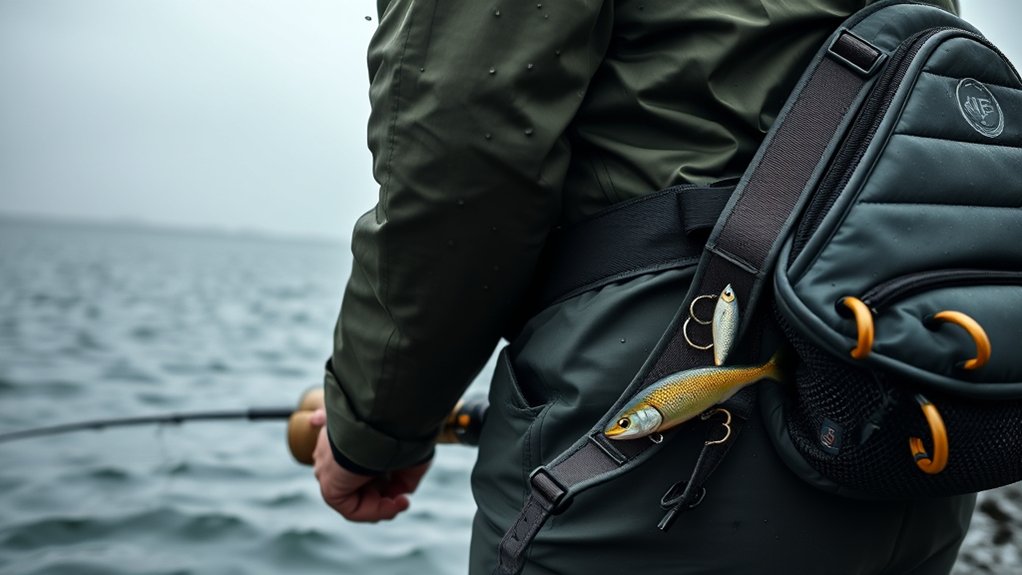
Rain gear should solve four problems: water entry, heat loss, poor traction, and wet storage. Choose pieces by function rather than by brand, and size them so you can cast and move without pulling at the shoulders or knees.
- Waterproof shell: sealed seams, secure hood, adjustable cuffs, and enough breathability for active fishing.
- Layering system: quick-dry base layer, insulating midlayer when needed, and waterproof outer layer.
- Footwear: waterproof construction with a slip-resistant sole for wet decks, docks, rocks, and ramps.
- Hands: rain gloves or fingerless gloves when cold water reduces grip and dexterity.
- Dry storage: spare socks, insulating layer, towel, phone charger, emergency blanket, keys, and licenses in a sealed bag.
- Tackle care: open wet boxes after the trip, dry hooks and tools, and follow the manufacturer’s care directions for rainwear.
Keep the system simple enough that you will actually use it. Dry clothing and stable footing do more for a rainy-day trip than carrying extra tackle while basic safety gear gets soaked.
Boat Handling and Launching in the Rain
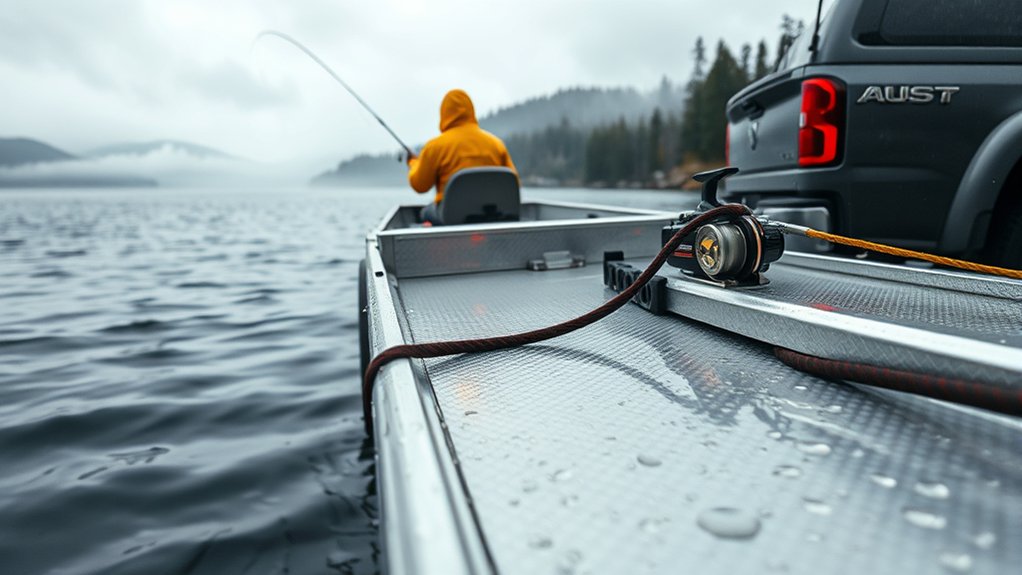
Boat handling in rain requires more margin than a dry-weather launch. Wet ramps, reduced visibility, wind, floating debris, and changing water levels can all affect a routine trip.
Check required safety equipment before launching. Under U.S. Navigation Rules, heavy rain can count as restricted visibility; prescribed navigation lights must be displayed in restricted visibility, and vessels must proceed at a safe speed for the conditions. Review the U.S. Coast Guard Navigation Rules for the rules that apply to your vessel and waterway.
At the ramp, use deliberate foot placement and stable handholds. Have dock lines ready before the boat starts moving, and avoid stepping onto wet logs, loose rocks, or algae-covered concrete.
Watch water level, current, and debris. Heavy rain can alter the ramp edge, push branches into the launch area, and reduce the time you have to react on the water. Slow down early around docks, bridges, points, timber, and other boats.
Wear a properly fitted life jacket and follow the boating-safety requirements for your location. If visibility becomes too poor to navigate confidently, return to shore rather than trying to “push through” the rain.
Warning: Heavy rain can hide floating logs, shallow hazards, and other boats. Use the navigation lights required for restricted visibility, reduce speed, wear a life jacket, and return to shore if you cannot maintain a safe lookout.
Reading the Water: Signs of Active Fish
Read the water before you commit to a spot. Surface disruptions, baitfish schools, bluegill flicks, shad dimples, birds working a bank, fresh current, and a sharp color change are stronger clues than rain alone.
- Check runoff lines and mud-colored seams; they often concentrate bait and lure bass and other predators.
- Watch where creeks, culverts, or any inflow meet the lake; those nutrient channels draw baitfish and then active fish.
- Target structural breaks like points and ledges where fish stack when food is pushed in by rain.
- Look for isolated cover near moving water, such as one stump, dock post, grass clump, or rock pile on a seam.
- Pay attention to water temperature changes because cold runoff may push bass away from the direct flow.
Prioritize spots that combine more than one positive signal. A bank with bait, current, cover, and a visible clarity change deserves more attention than a featureless bank with none of them. Cast from more than one angle before moving on.
Techniques for Covering More Water Quickly
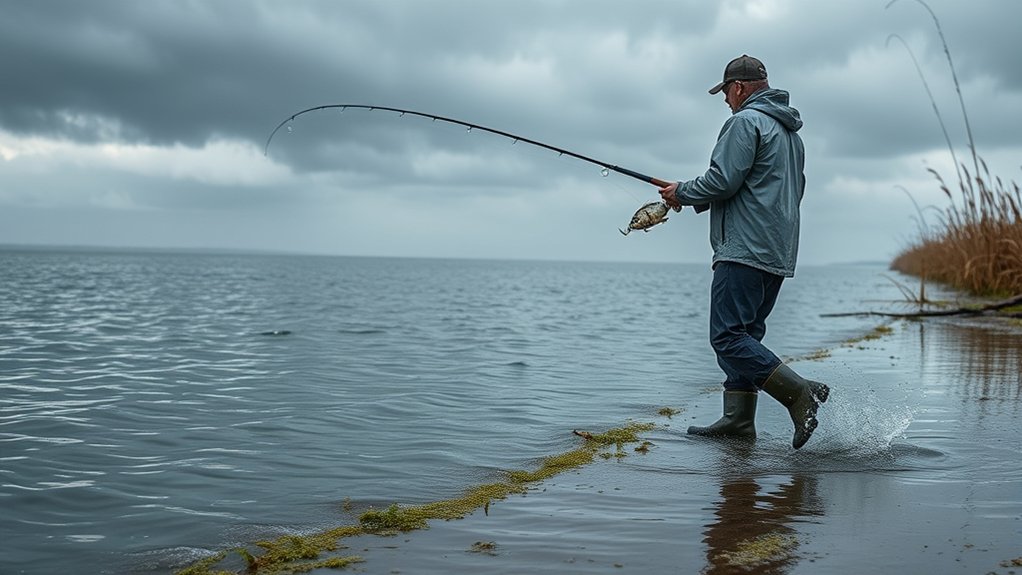
When rain has fish roaming, use moving baits to search efficiently. Cover water first, then slow down after you find bites, follows, baitfish, or a productive current-and-cover combination.
Use moving lures like spinnerbaits and crankbaits on a burning retrieve to create vibration and flash that triggers aggressive follows. Mix in chatterbaits, swim jigs, lipless crankbaits, and buzzbaits when you need a different sound or depth.
Mix in short bursts and pauses while prioritizing points, seams, drains, ditches, and wind-blown banks to quickly locate where bass are feeding.
Speed Up Presentations
Use speed when fish are active, but do not confuse “rainy” with “always fast.” Start with an efficient search retrieve, then adjust depth and cadence when you see followers, get short strikes, or encounter colder inflow.
Make efficient casts to high-percentage targets such as points, seams, drains, and isolated cover. If a spot shows no bait, no current advantage, and no response, keep moving.
- Burn spinnerbaits or crankbaits to create flash and vibration that attracts bass in low light.
- Shorten soak time on soft plastics; use quick bursts and pauses to trigger reaction hits.
- Try chatterbaits and fast-moving baits to change presentation and force fish to reveal themselves.
- Fan-cast points, pockets, and seams before leaving a spot so you cover different angles.
Cover water efficiently, then slow down when the fish or the conditions give you a reason.
Use Burning Retrieves
A burning retrieve is useful when bass are visibly chasing, when a spinnerbait or crankbait can stay in the productive depth, and when faster movement triggers reaction bites. It is less useful when cold runoff or a post-front slowdown pushes fish tight to cover.
Try a steady fast retrieve first, then add a brief pause or direction change near cover. If fish follow without committing, slow the bait or switch to a presentation that stays in the strike zone longer.
| Speed | Lure | Best Cue |
|---|---|---|
| Fast | Spinnerbait | Bass chasing near runoff edges or shallow cover |
| Burst + pause | Crankbait | Followers, deflections, or short strikes around cover |
Prioritize Moving Baits
Prioritize moving baits when you need to locate active fish across wind-blown banks, points, shallow cover, and runoff edges. Spinnerbaits, crankbaits, bladed jigs, swim jigs, and buzzbaits each let you search a different depth or cover type.
Once a moving bait reveals the productive zone, repeat that depth and angle. If the bite slows, follow with a jig, Texas rig, or wacky rig around the same cover rather than abandoning the area immediately.
- Use compact spinnerbaits to burn water without constant snagging, keeping you free to explore.
- Target wind-driven edges and points where baitfish concentrate; fast-moving lures will provoke reaction hits.
- Vary cadence: a steady burn, a quick twitch, then back to speed to tempt roaming, aggressive bass.
- Follow a missed topwater strike with a soft plastic or wacky rig in the same spot.
The goal is not speed for its own sake. It is to find the depth, cover, current, and retrieve that produce repeatable bites.
Rainy-Day Bank Fishing Tips
Bank anglers can do very well in the rain because runoff and bait often move close to shore. You do not need a boat to take advantage of rainy conditions, but you do need safer footing and a focused plan.
Start near bridges, culverts, drain pipes, creek mouths, riprap, grassy points, and any shoreline where water enters the lake or pond. Cast parallel to the bank first because bass may cruise inches from the edge during low light.
- Wear boots with strong traction and avoid steep clay banks.
- Keep your tackle light so you can move quickly between active spots.
- Cast from stable ground instead of standing on wet logs, rocks, or concrete edges.
- Use darker soft plastics, small spinnerbaits, buzzbaits, and squarebill crankbaits around shallow cover.
- Leave immediately if water rises, current strengthens, or lightning appears.
Common Rain Fishing Mistakes to Avoid
Rain helps you only when you respond to it correctly. Many anglers struggle because they fish the same spots, same speed, and same lure colors they used on a sunny day.
- Fishing the muddiest water: Bass often hold on the edge of dirty water, not in the thickest mud.
- Ignoring safety: No bite is worth staying through thunder, lightning, fast current, or unsafe wind.
- Moving too slowly at first: Active rainy-day bass may roam, so cover water before slowing down.
- Using subtle lures in heavy stain: Add vibration, sound, flash, scent, or a stronger silhouette.
- Forgetting gear care: Wet hooks, reels, line, and tackle boxes need drying after the trip.
- Leaving too soon after a shower: The period right after rain can be productive when water stays safe.
Related Guides
Frequently Asked Questions
Where do bass go when it rains?
Start around fresh inflow, creek mouths, culverts, mudline edges, wind-blown banks, shallow cover, and current breaks. The best location depends on what the rain changed, especially water clarity, temperature, level, and current.
What is the best bait for a rainy day?
Spinnerbaits, crankbaits, buzzbaits, chatterbaits, jerkbaits, and dark soft plastics are strong rainy-day choices. Use moving baits when bass chase, then switch to Texas rigs, wacky rigs, or jigs when fish hold tight to cover or the water turns muddy.
Is it a good day to go fishing when it is raining?
Yes. Light to moderate rain can be productive when visibility is safe, wind is manageable, and there is no thunder or lightning. Focus on what changed in the water: fresh current, a new color line, flooded cover, or bait movement can matter more than the rain itself.
Are fish more likely to bite when it is raining?
Fish are often more likely to bite during light or moderate rain because low light can make predators bolder, and runoff can move bait. Heavy muddy runoff, cold rain, fast-rising water, or storms can reduce the bite or make fishing unsafe.
Should you fish topwater in the rain?
Use topwater during light rain, drizzle, low light, or visible surface activity. Buzzbaits, poppers, walking baits, and prop baits can work well. Switch subsurface when rain gets heavy, visibility drops, or bass stop feeding upward.
What color lure is best for bass in rainy weather?
Use darker colors like black, black and blue, junebug, or dark green pumpkin in stained water because they create a stronger silhouette. In clearer rainy water, natural shad, bluegill, white, chartreuse-white, and translucent baitfish colors can work well.
Conclusion
Rainy-day bass fishing works best when you treat weather as a set of changes to read, not a guarantee of better fishing. Check clarity, current, temperature, and water level; start on fresh inflow and defined color edges; use moving baits to locate active fish; and slow down when the bite tells you to.
Safety is the final filter. Leave the water for thunder or lightning, reduce speed in poor visibility, wear a life jacket on the boat, and keep dry layers and emergency gear protected. When the weather stays safe, those simple decisions turn rain into useful information instead of guesswork.