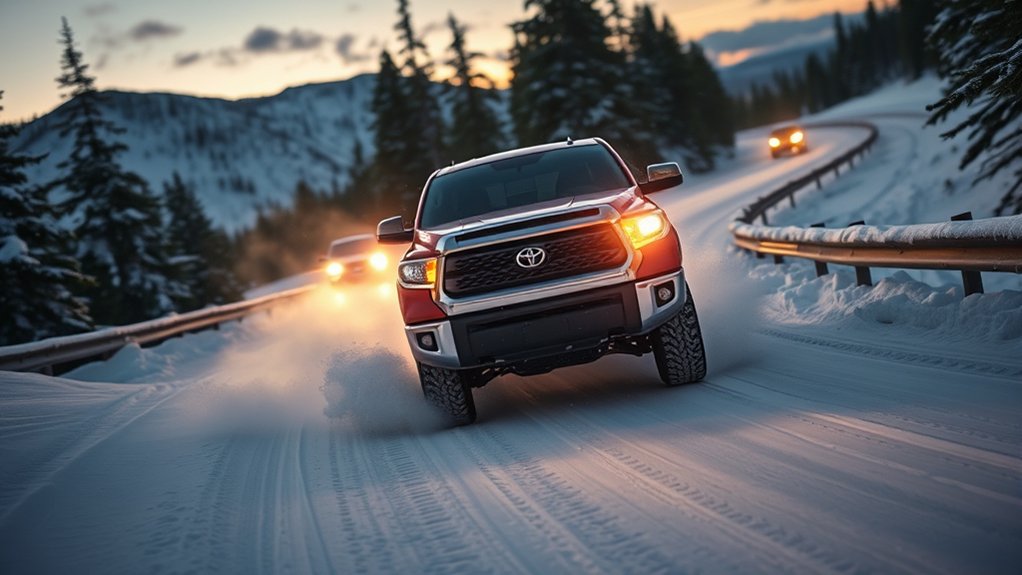
Your Toyota Tundra can handle snow well when you combine the right four-wheel-drive mode with four matching winter tires, slower speeds, and extra stopping room. Use 4H on consistently snow-covered or icy surfaces where the tires can slip, return to 2H on dry pavement, and reserve 4L for very slow travel through deep snow or difficult recovery. Four-wheel drive improves drive traction, but it does not shorten braking distance.
Last updated: September 11, 2026. This guide was substantively reviewed against Toyota owner-manual guidance, NHTSA winter-driving guidance, Transport Canada winter-tire guidance, and National Weather Service ice guidance. Because Tundra controls and shift procedures vary by model year and equipment, your exact owner’s manual remains the final authority.
Quick Answer
Use 4H or 4Hi on snow-covered or icy roads when extra traction is needed, then return to 2H on dry pavement. Fit four matching winter tires, reduce speed, leave extra stopping room, and use smooth steering, braking, and acceleration. Reserve 4L or 4Lo for very slow, difficult conditions.
Key Takeaways
- Use 4H for slippery roads, but follow your exact Tundra owner’s manual for shifting instructions and speed limits.
- Winter tires on all four wheels matter more for stopping and turning than four-wheel drive alone.
- Check cold tire pressure, tread depth, battery condition, coolant, lights, wipers, and washer fluid before severe weather.
- Slow down, increase following distance, avoid abrupt inputs, and switch off cruise control in poor winter conditions.
- Do not add a fixed amount of bed weight by default. Any ballast must be secured and kept within the truck’s payload limit.
At a Glance
| Time Required | About 30 to 60 minutes for a basic winter inspection and emergency-kit check |
| Difficulty | Easy preparation; winter driving requires patience and practice |
| Tools Needed | Tire-pressure gauge, snow brush, ice scraper, shovel, flashlight, and emergency supplies |
| Cost | No fixed cost; winter tires, maintenance, and emergency supplies vary by vehicle and location |
How to Drive a Toyota Tundra in Snow With 4WD
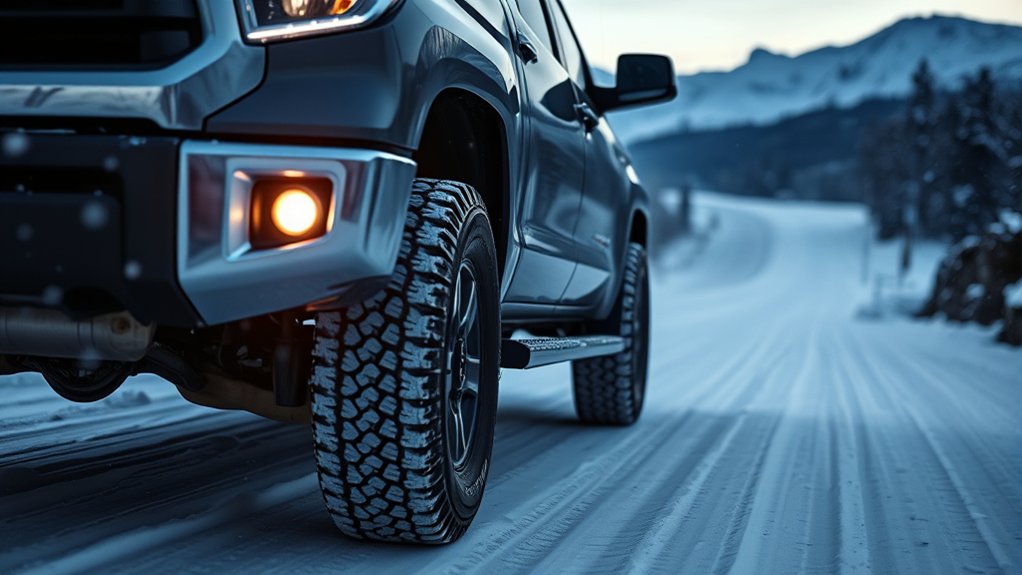
Tundra four-wheel-drive controls vary by model year and configuration. Before changing modes, review the Toyota owner’s manual for your exact truck. It explains the correct shift sequence, permitted speeds, indicator lights, and situations where a mode should not be used. For a transfer-case-only explanation, see the Toyota Tundra 4WD system guide; this page focuses on winter decisions, tires, braking, preparation, and recovery.
| Mode | Best Use | Important Limit |
|---|---|---|
| 2H | Dry or mostly clear paved roads | Rear-wheel drive provides less launch traction on snow and ice. |
| 4H or 4Hi | Snow-covered, icy, loose, or consistently slippery surfaces | Return to 2H when pavement becomes dry to avoid driveline binding or wear on part-time 4WD systems. |
| 4L or 4Lo | Very slow travel through deep snow, steep terrain, or a difficult recovery | Do not use it for normal road speeds. Engage it only by the procedure in your owner’s manual. |
Which 4WD Mode Should You Choose Right Now?
Use the road surface—not the weather icon—as the deciding factor. If the pavement is dry or mostly clear, stay in 2H. If snow, ice, or loose material consistently lets the tires slip, use 4H. If the truck must crawl through deep snow, a steep loose section, or a recovery situation, consider 4L by the exact owner-manual procedure. If conditions keep switching between dry pavement and snow cover, change modes as the surface changes rather than leaving part-time 4WD engaged on high-traction pavement.
Warning: Four-wheel drive improves acceleration traction, not braking traction. You can still slide while turning or stopping, so reduce speed and leave much more room than you would on dry pavement.
When to Use 4H
Use 4H when the road has enough snow, ice, slush, or loose material to let the tires slip slightly. The system sends power to both axles, which can improve forward traction. Watch the road surface because a plowed or treated section may become dry enough that you should return to 2H.
When to Use 4L
Use 4L only when you need low-speed control and extra torque, such as crawling through deep snow or easing out of a difficult spot. Many Tundras require the truck to be stopped or moving very slowly, with the transmission in a specific position, before 4L can engage. Follow the model-specific procedure instead of forcing the selector.
Should You Turn Off Traction Control in Snow?
Keep traction control and Vehicle Stability Control enabled for normal winter road driving. They can reduce wheelspin or help correct a developing skid by changing engine power or braking individual wheels. If the truck is stuck in loose or deep snow, your exact manual may allow temporarily reducing traction-control intervention so the tires can spin enough to move. Turn normal assistance back on after you are free. For model-year differences, see the Tundra traction control and VSC guide.
Does Deep Snow Mode Replace 4H?
No. On equipped newer Tundras, Multi-Terrain Select can include a Deep Snow setting, but it does not replace choosing the correct transfer-case range. Toyota describes Multi-Terrain Select as an off-road aid, and its available modes and stability-control behavior vary by year and equipment. Use 4H as directed for a slippery surface, then use Deep Snow only when your exact manual says the equipped system is appropriate for the terrain you are crossing.
Pro Tip: Practice selecting 2H, 4H, and 4L in a safe location before a storm. Learn what the indicator lights look like so you do not troubleshoot the system for the first time on a busy, icy road.
Preparing Your Toyota Tundra for Winter Driving
Winter preparation should cover more than tires and fluid levels. Transport Canada recommends following the manufacturer’s maintenance schedule and checking the battery, brakes, lights, exhaust, cooling system, wipers, defroster, washer fluid, and tires before severe weather. Clear snow from the roof, hood, windows, mirrors, and lights before you drive.
| Task | What to Check |
|---|---|
| Install winter tires | Use four matching tires with the three-peak mountain snowflake symbol, correct size, and suitable load rating. |
| Check fluids | Confirm coolant protection, engine-oil level, and winter-rated washer fluid. Follow Toyota specifications. |
| Inspect the battery | Check for corrosion, loose terminals, slow cranking, and a weak charging system. |
| Check brakes and exhaust | Address unusual brake noise, pulling, pedal changes, or exhaust leaks before winter travel. |
| Test visibility equipment | Verify headlights, brake lights, wipers, defrosters, cameras, and sensors work and remain clear of snow. |
| Monitor tires | Check cold pressure, tread depth, damage, and the spare tire before long trips. |
| Plan the trip | Review weather and road reports, allow extra time, keep the phone charged, and postpone non-essential travel when conditions are severe. |
Keep the fuel tank at least half full when winter conditions are expected. Tell someone your route and arrival time before a long or remote trip. Snow and ice can also block cameras or radar sensors, so do not assume lane-keeping, automatic emergency braking, or blind-spot systems will perform normally.
Do not assume tire chains fit every Tundra wheel-and-tire package. Toyota’s chain restrictions vary by model year and tire size, and local chain-control laws vary by road. Check your exact owner’s manual before buying or installing chains. When freezing conditions are severe, also review the manual’s parking guidance because some Toyota manuals warn that a parking brake can freeze after snow or moisture exposure.
Tire Maintenance Tips for Winter Driving
Good tires are the foundation of winter control. Transport Canada recommends winter tires on all four wheels in cold, snowy, or icy conditions. Look for the three-peak mountain snowflake symbol and avoid mixing different tire types, sizes, tread patterns, speed ratings, or load indexes unless Toyota specifically approves the combination.
Recommended Tire Pressure Checks
Cold weather lowers tire pressure. Check all tires, including the spare, at least monthly and before long trips. Measure pressure when the tires are cold, meaning the truck has been parked for at least three hours. Inflate to the pressure on the driver’s door placard or in the owner’s manual, not the maximum number molded into the tire sidewall. If you are unsure which label value applies, use the Tundra Tire and Loading Information label guide.
- Use a reliable gauge instead of waiting for the tire-pressure warning light.
- Recheck pressure after a sharp temperature drop.
- Inspect for cuts, cracks, bulges, punctures, and uneven wear.
- Use the tire size and load rating approved for your Tundra.
- Have persistent pressure loss inspected by a tire professional.
Tread Depth Inspection Importance
Winter traction decreases as tread wears. Transport Canada advises against using winter tires close to or below 4 mm, about 5/32 inch, on snow-covered roads. Local legal minimums may be lower, but a tire that is legal can still provide weak winter performance. Measure several grooves across each tire and inspect monthly.
| Winter Tread Depth | Condition | Recommended Action |
|---|---|---|
| Above 4 mm (5/32 in) | Better snow-clearing capacity, assuming the tire is undamaged | Continue monthly checks and rotate as Toyota recommends. |
| Near 4 mm (5/32 in) | Winter performance is becoming limited | Plan replacement before severe snow or ice travel. |
| Below 4 mm (5/32 in) | Not recommended by Transport Canada for snow-covered roads | Replace the tires for dependable winter use. |
Winter Tire Benefits Explained
Winter tires use rubber compounds and tread designs intended to remain effective in cold conditions. Transport Canada notes that all-season and summer tires begin losing elasticity below 7°C, while winter tires retain better grip. Install winter tires as a matched set of four so braking, steering, and stability remain balanced.
- More suitable rubber compounds for low temperatures
- Tread patterns designed to clear snow and slush
- Better braking and cornering control than all-season tires in winter conditions
- More balanced handling when the same type is fitted to all four wheels
- Severe-snow performance identified by the three-peak mountain snowflake symbol
Note: Winter-tire, studded-tire, and chain rules vary by province, state, road, and season. Check local requirements before traveling, especially on mountain routes.
Top Safe Driving Techniques for Navigating Snowy Roads
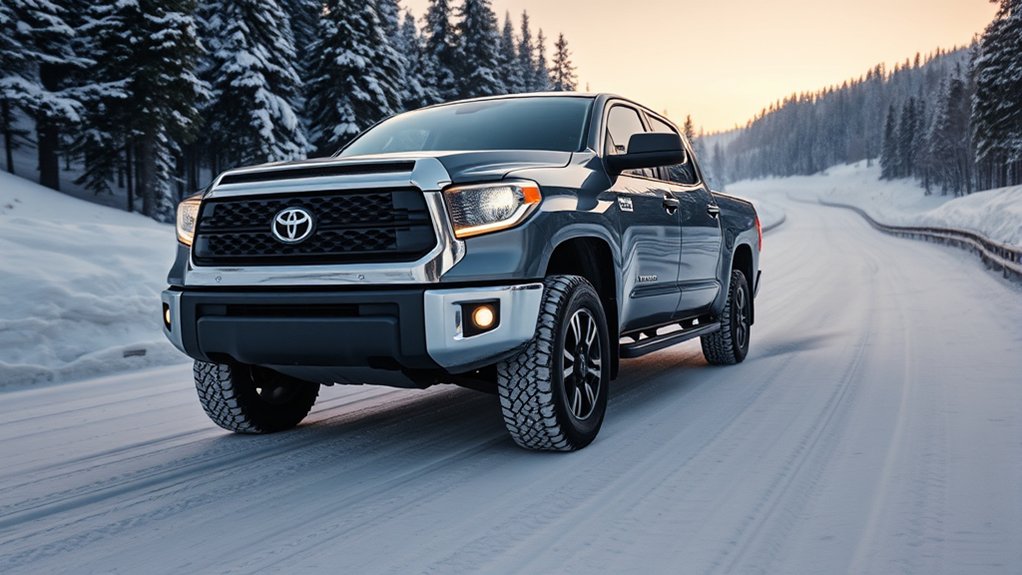
Reduce speed before traction becomes a problem. A Tundra is heavy, and slippery roads increase stopping distance for every vehicle. NHTSA reports that in 2023 there were an estimated 101,390 police-reported crashes in snow or sleet conditions, which is why speed and following distance matter more than simply having 4WD. Leave much more space than normal, look far ahead, and begin slowing early. Use gentle steering, acceleration, and braking so the tires are not asked to accelerate, turn, and stop aggressively at the same time.
- Accelerate gradually and avoid spinning the tires.
- Brake early and smoothly while keeping the wheels pointed where you want to go.
- Make one controlled steering input instead of several sharp corrections.
- Avoid unnecessary lane changes in deep snow or slush.
- Do not use cruise control in severe winter weather.
- Stay well behind snowplows and never drive beside them for long.
- Turn on headlights when visibility is poor and clear snow from all exterior lights.
How to Brake With ABS
If your Tundra has an anti-lock braking system, press the brake pedal firmly and continuously during an emergency stop. You may feel pulsing through the pedal. Keep steering toward a safe path and do not pump the brakes unless your exact owner’s manual tells you to use a different method.
What to Do if the Tundra Starts to Skid
Stay calm, look where you want the truck to go, ease off the accelerator, and avoid a sudden brake or steering input. Let the tires regain grip, then make a smooth correction. If electronic stability control activates, slow down further because the truck has already detected a loss of traction.
Watch for Black Ice
Black ice can look like ordinary wet pavement. It often forms after melted snow or rain refreezes, especially overnight and early in the morning. Bridges and overpasses can freeze before nearby roads. If the surface looks glossy or the steering suddenly feels light, ease off the accelerator and keep the wheel steady until grip returns.
What to Pack for Winter Driving Emergencies?
A winter emergency kit should help you stay visible, warm, hydrated, and able to handle common roadside problems. Store the kit where you can reach it even if the bed or tailgate is blocked by snow.
- Warm blankets, extra gloves, socks, hat, and boots
- Flashlight with spare batteries or a charged rechargeable light
- Jumper cables or an appropriate jump pack
- First-aid kit and necessary medication
- Small shovel, snow brush, and ice scraper
- Sand, kitty litter, or traction mats for a stuck tire
- Reflective triangles, warning light, or road flares where legal
- Non-perishable food and water
- Phone charging cable and portable battery pack
- Extra winter washer fluid and a basic tool kit
If You Become Stranded
Stay with the truck when it provides safe shelter and is not at risk of being struck. Call emergency services when needed, make the vehicle visible, and avoid overexertion. Clear snow from the tailpipe before running the engine because a blocked exhaust can allow carbon monoxide to enter the cab. Run the engine only as needed for warmth and keep a small amount of fresh air entering the cabin.
Adding Weight for Improved Traction and Stability
Extra bed weight can increase rear-tire loading on a rear-wheel-drive pickup, but a fixed minimum such as 100 pounds is not right for every Tundra. Tire choice, cab and bed configuration, existing cargo, payload rating, and road conditions all affect the result. Start with winter tires and correct pressure before considering ballast.
If you use sandbags or another traction material, keep the load low, centered from side to side, and positioned over or just ahead of the rear axle. Secure every bag with suitable straps or containment so it cannot slide, strike the bed, or become a projectile. Count the ballast against the payload shown on the Tire and Loading Information label; the Tundra payload calculation guide explains what else must be counted. Remove ballast when winter conditions end.
Warning: Never place loose concrete blocks, unsecured bags, or other rigid objects in the bed. Shifting cargo can change handling and create a serious hazard during a sudden stop or crash.
How to Get a Tundra Unstuck From Snow
- Stop spinning the tires because high wheel speed can dig the truck deeper.
- Check that the tailpipe is clear before running the engine for an extended period.
- Shovel snow away from the tires, under the axles, and along the intended path.
- Straighten the front wheels and select the appropriate 4WD mode by the owner’s manual.
- Place traction mats, sand, or kitty litter in the direction you need to move.
- Apply light, steady throttle. If the tires spin, stop and reset the traction material.
- Use a recovery strap only with rated recovery points and a knowledgeable helper. Never attach a strap to a tow ball.
If the truck is high-centered, near traffic, on a steep slope, or at risk of sliding, call professional recovery service instead of continuing to dig or rock the vehicle.
Related Guides
Frequently Asked Questions
Can a Toyota Tundra drive in snow?
Yes. A Tundra can perform well in snow when it has suitable winter tires, correct tire pressure, and the proper 4WD mode. Its weight and ground clearance do not remove the need to slow down, leave extra stopping distance, and avoid abrupt steering or braking.
Should I drive in 2H or 4H in snow?
Use 4H on consistently snowy, icy, or slippery surfaces when extra traction is needed. Use 2H on dry or mostly clear pavement. Because shift procedures and operating limits vary, follow the owner’s manual for your model year.
When should I use 4L in snow?
Use 4L only for very slow movement through deep snow, steep terrain, or a difficult recovery. It is not intended for normal snowy-road speeds. Engage and disengage it exactly as Toyota directs for your truck.
Do I need winter tires if my Tundra has 4WD?
Yes, winter tires are still valuable. Four-wheel drive mainly helps the truck accelerate. Winter tires improve the grip used for acceleration, steering, and braking. Install a matching set on all four wheels.
What are the 3 P’s of winter driving?
Preparation, patience, and practice are a useful memory aid, not a Toyota operating standard. Prepare the truck and route, stay patient enough to slow down, and practice smooth control in a safe, legal area before severe weather arrives.
What is the 7°C rule for winter tires?
The rule means winter tires become useful when temperatures regularly fall below 7°C because all-season and summer tire compounds begin losing elasticity and grip. Install them before sustained cold weather rather than waiting for the first major snowfall.
Should I add 100 pounds to the Tundra’s bed for winter?
Not automatically. There is no universal 100-pound setting for every Tundra. Use winter tires first. If you add ballast, keep it within the payload limit, position it near the rear axle, and secure it so it cannot move.
Can I drive a Toyota Tundra in 4H at highway speed?
Use 4H only when the surface is slippery enough to permit tire slip and only within the operating limits in your model-year owner’s manual. A permitted 4H or shift speed is not a recommended speed for snow or ice. Road conditions should determine how slowly you drive.
Should I turn off traction control in snow?
Usually no. Keep traction control and stability control enabled for normal winter road driving. If the truck is stuck in loose snow, your exact owner’s manual may allow temporary reduced intervention to help the tires spin enough to move. Re-enable normal assistance after recovery.
Does the Tundra’s Deep Snow mode replace 4H?
No. On equipped newer Tundras, Deep Snow is a Multi-Terrain Select setting used with the appropriate 4WD range; it does not replace selecting 4H or 4L. Availability and system behavior vary, so follow the exact owner’s manual for your truck.
Can every Toyota Tundra use tire chains?
No universal chain fitment applies to every Tundra. Restrictions vary by model year, tire size, wheel package, and local law. Check the exact owner’s manual before buying or installing chains.
Conclusion
Your Toyota Tundra can be a capable winter truck, but the safest sequence is simple: start with four matching winter tires, use 4H only on consistently slippery surfaces, slow down before traction disappears, and leave extra stopping room. Keep 4L for low-speed deep-snow or recovery situations, keep normal stability assistance on for road driving, and treat ballast as optional cargo rather than a substitute for tires. Before a storm, verify tire pressure, battery condition, visibility equipment, weather, route, and emergency supplies.
Sources
- Toyota Manuals and Warranties — model-specific 4WD controls, warnings, indicators, and operating procedures
- Toyota 2023 Tundra Interactive Owner’s Manual — four-wheel-drive, Multi-Terrain Select, warning indicators, and winter-driving sections for an equipped current-generation example
- Transport Canada: Preparing Your Vehicle for Winter — battery, brakes, exhaust, coolant, wipers, lights, and winter inspection guidance
- Transport Canada: Using Winter Tires — 7°C guidance, four-tire installation, cold pressure, and 4 mm tread guidance
- Transport Canada: Planning Your Trip — route planning, emergency kits, fuel level, communications, and stranded-vehicle safety
- NHTSA: Winter Weather Driving Tips — speed, following distance, ABS, tires, vehicle preparation, and emergency supplies
- National Weather Service: Ice Storms and Black Ice — black-ice formation and elevated-road hazards