Last updated: September 22, 2026
What changed: Verified the current 2026 Camry hybrid lineup, added model-year-specific Camry Hybrid storage guidance, clarified fuel and tire advice, expanded the storage FAQs, improved internal links, and removed non-whitelisted schema.
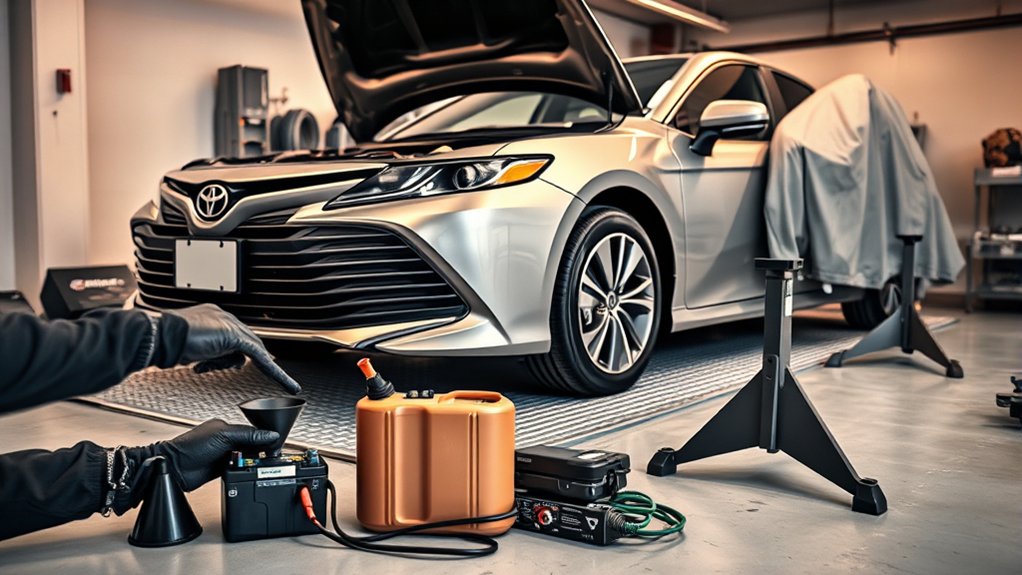
To winterize a Toyota Camry for winter storage, clean and dry the vehicle, check for leaks, use the fluids and tire pressure specified for its exact model year, protect the 12-volt battery, prepare the fuel for the storage period, and inspect the car carefully before driving again. The main storage risks are battery discharge, aging fuel during multi-month storage, tire-pressure loss or flat spotting, moisture and pests, and missing model-specific hybrid instructions.
Quick Answer
To winterize a Toyota Camry for storage, wash and dry it, check for leaks, use the oil, coolant, and tire pressure specified for its exact model year, keep the 12-volt battery maintained, prepare the fuel for the storage period, protect the tires and interior, and inspect everything before driving again. Camry Hybrid owners should also follow the traction-battery storage guidance for their exact model year.
Key Takeaways
- Do not assume every Camry uses 5W-30 oil or 32 PSI; check the exact owner’s manual and driver-door tire label.
- A compatible smart 12-volt battery maintainer is usually more useful for storage than periodically starting the car only to let it idle.
- Clean, dry storage reduces corrosion, odor, moisture, and pest problems.
- Winter tires and an emergency kit matter when the car will be driven in winter, not merely because it is parked for the season.
- Before the first drive after storage, check for leaks, nests, low tire pressure, warning lights, and brake problems.
At a Glance
| Time Required | Usually a few hours, plus service time if fluids, tires, or the battery need attention |
| Difficulty | Beginner to intermediate; fluid replacement and battery work may require a technician |
| Tools Needed | Tire gauge, cleaning supplies, wheel chocks, flashlight, gloves, a compatible battery maintainer if appropriate, and a fitted breathable car cover when suitable for the storage location |
| Cost | Low to moderate; it depends on supplies, overdue maintenance, battery condition, and whether winter tires are needed for later driving |
How Much Winterization Does Your Camry Need?
The longer the Camry will sit, the more important battery, fuel, tire, moisture, and pest precautions become. Treat the table below as a planning guide rather than a Toyota service interval; the exact owner’s manual remains the authority for your model year and powertrain.
| Storage Period | Priority Checks |
|---|---|
| A few weeks | Clean and dry the car, check leaks and cold tire pressure, remove food, and make sure the 12-volt battery is healthy. |
| Several months | Add fuel-storage planning, a compatible battery maintainer, periodic tire and pest checks, moisture control, and a more thorough return-to-service inspection. |
| Extended hybrid storage | Follow the exact Camry Hybrid manual for traction-battery guidance; do not assume that an interval published for one model year applies to another. |
Note: Camry specifications vary by model year and engine. The current 2026 U.S. Camry uses an all-hybrid powertrain, while many older Camrys are gasoline-only or hybrid. Use the Toyota manual for your exact vehicle before choosing oil, coolant, battery procedures, or service intervals.
Step 1: Confirm Your Camry and Storage Plan
Start with the vehicle identification number, model year, powertrain, and expected storage period. A car parked for three weeks needs less preparation than one stored for three or four months. Indoor storage also differs from outdoor storage.
- Find the correct manual: Use Toyota’s official manual portal and select the exact year and model.
- Check open recalls: Enter the VIN in the NHTSA recall lookup before storage or before returning the car to service.
- Choose the location: A dry, secure, ventilated garage is best. For outdoor storage, use a level, well-drained area away from falling branches and standing water.
- Record the baseline: Note mileage, fuel level, tire pressure, battery condition, and any warning lights or leaks.
If the Camry already has a warning light, fluid leak, weak battery, damaged tire, or overdue service, address it before storage rather than hoping the problem will remain unchanged.
Step 2: Wash, Dry, and Protect the Exterior
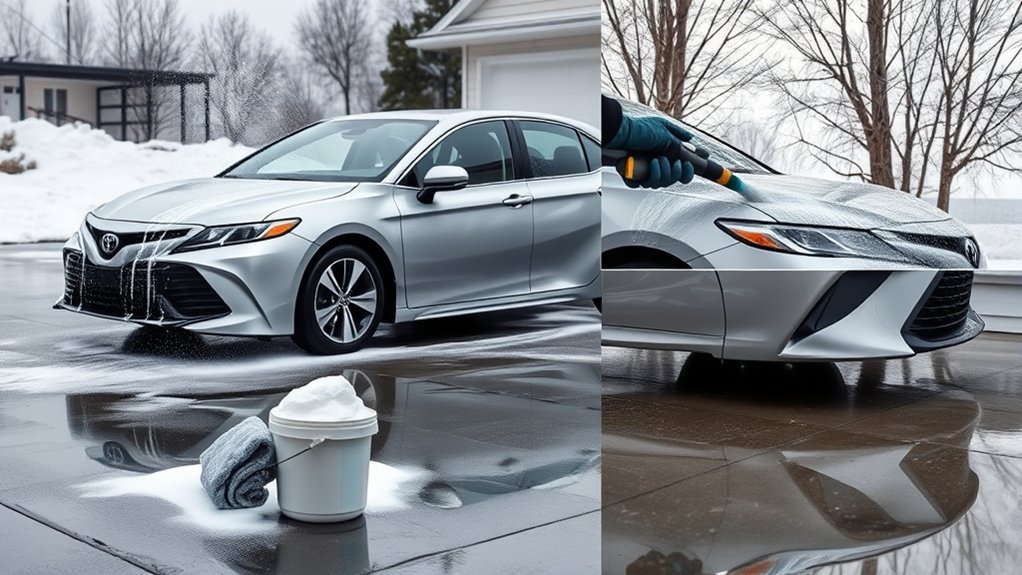
Thoroughly wash the Camry to remove dirt, bird droppings, tree sap, road film, and salt. Pay close attention to wheel wells, rocker panels, wheels, and the underbody. Salt and trapped moisture can accelerate corrosion during storage.
Dry the car completely, including door jambs, mirror housings, the fuel-door area, and weather seals. Apply a quality wax, paint sealant, or ceramic protectant according to the product directions. Clean the wheels with a finish-safe product and remove brake dust before it sits for months.
Pro Tip: Never place a cover over a dirty or damp car. Grit can scratch the paint, and trapped moisture can promote staining or corrosion. Use a clean, fitted, breathable cover rather than a plastic tarp.
For outdoor storage, check the cover after high wind, heavy rain, ice, or snow. Do not allow a heavy snow load to remain on the roof, hood, or trunk.
Step 3: Clean the Cabin and Discourage Pests
Remove food, trash, paper cups, and anything that can leak, freeze, or attract rodents. Vacuum under the seats and in the trunk, then clean and dry the floor mats. Leave the cabin dry before closing the windows.
- Remove perishable snacks and bottled liquids that may freeze.
- Use a moisture absorber only as directed and place it where it cannot spill.
- Store the car with windows and sunroof fully closed.
- Check the engine bay, cowl area, cabin-air intake, and trunk for nesting material before the first restart.
- Do not block a hybrid battery cooling intake with bags, covers, or cleaning materials.
If pests are common in the storage area, use traps or deterrents around the space rather than placing poison inside the car. Do not stuff the exhaust outlet with material that could be forgotten before startup.
Step 4: Check Coolant, Oil, and Other Fluids
Check fluids on a level surface and follow the manual’s inspection procedure. Look under the vehicle for wet spots and inspect accessible hoses and reservoirs for cracks, seepage, or low levels.
Coolant and Freeze Protection
When the engine is completely cool, verify that the coolant level is within the marked range. Use only the coolant type and concentration specified for the exact Camry. Toyota models commonly use a manufacturer-specified long-life coolant, so do not top up with an unknown “universal” product or plain water unless the manual permits it.
If the coolant is old, contaminated, mixed with an unknown product, or its freeze protection is uncertain, have it tested and serviced before freezing weather. NHTSA’s winter guidance recommends checking the cooling system for proper coolant, leaks, and worn hoses.
Warning: Never remove a radiator or pressurized coolant cap while the engine is hot. Hot coolant and steam can cause severe burns.
| Coolant Check | Action |
|---|---|
| Level | Check the reservoir only when the engine is cool and correct a low level with the specified coolant. |
| Condition | Service coolant that is contaminated, rusty, oily, or of unknown type. |
| Freeze protection | Test it if the mixture or service history is uncertain. |
| Leaks | Inspect the reservoir, hoses, radiator area, and ground beneath the car. |
| Specification | Follow the exact Toyota owner’s manual and maintenance guide. |
Engine Oil and Filter
Do not switch automatically to 5W-30 for winter. Toyota has specified different oil viscosities and standards for different Camry years and engines. Use the grade, certification, capacity, and interval listed in the correct manual.
An oil change before storage makes sense when the service is due by time or mileage, the oil is contaminated, or the engine has seen severe service. A blanket 3,000-to-5,000-mile interval is not appropriate for every Camry. If the oil is current and the storage period is short, an extra change may be unnecessary.
Brake, Washer, and Other Fluids
- Brake fluid: Check the level and investigate any drop; do not simply top up a system that may have a leak or worn components.
- Windshield washer fluid: Use a winter-rated product suitable for the lowest expected temperature.
- Transmission fluid: Follow the manual; do not perform an unnecessary flush solely because winter is approaching.
- Used fluids: Collect oil and other automotive fluids in sealed containers and take them to an approved recycling or household hazardous-waste facility.
Step 5: Prepare the Fuel System
For winter driving, NHTSA advises keeping the fuel tank close to full. For winter storage, AAA’s storage guidance also recommends filling the tank and adding fuel stabilizer before a vehicle sits for the season. Do not overfill beyond the pump’s automatic shutoff.
If the Camry will sit for several months, consider an automotive fuel stabilizer that is compatible with the fuel and engine. Follow the stabilizer label exactly, add it before the final drive, and allow enough driving time for treated fuel to circulate through the system. A stabilizer is not automatically necessary for every short storage period.
Note: Store gasoline only in the vehicle’s fuel tank or an approved fuel container. Keep fuel and vapors away from flames, sparks, heaters, and battery-charging equipment that is not designed for the environment.
Step 6: Set Tire Pressure and Protect the Tires
Check all tires when cold, meaning the car has been parked long enough for the tires to return to ambient temperature. Inflate them to the pressure on the driver-door Tire and Loading Information label, not the maximum pressure molded into the tire sidewall. NHTSA gives the same guidance. The correct number may differ by model year, wheel package, axle, and load.
Cold weather lowers tire pressure, but a temperature rule of thumb is not a substitute for a gauge. Recheck the tires after major temperature changes and periodically during storage.
| Situation | What to Do |
|---|---|
| Before storage | Set cold pressure to the door-label specification and inspect for damage or uneven wear. |
| Temperature drops sharply | Measure again with a gauge; add air only as needed to return to the specified cold pressure. |
| Storage lasts several months | Use purpose-made tire cradles or move the car slightly when safe and practical to reduce prolonged loading on one tread area. |
| Snow or ice driving is planned | Consider a matched set of winter tires appropriate for the climate and vehicle. |
Inspect tread, sidewalls, valve stems, and the spare tire if equipped. NHTSA advises that tread should be at least 2/32 inch, but substantially more tread may be needed for dependable snow traction.
Do not place the Camry on improvised jack stands merely to prevent flat spots. Incorrect lift points or unstable support can damage the vehicle or cause serious injury. Use purpose-made tire cradles, follow Toyota lifting instructions, or ask a qualified technician for a long-term support plan.
Park on a level surface, shift to Park, and use correctly placed wheel chocks. Parking-brake instructions can differ with model year and winter conditions, so follow the exact owner’s manual. Some Toyota winter guidance warns that a wet parking brake can freeze in sufficiently cold conditions, which is another reason not to apply one generic rule to every Camry.
The correct oil grade and tire pressure come from your exact Camry manual and door-jamb label—not from a generic number copied from another model year.
Step 7: Maintain the 12-Volt Battery and Hybrid System
Cold temperatures reduce available battery power, and storage allows normal electrical draws to discharge the 12-volt battery. Inspect the terminals for looseness or corrosion and have the battery and charging system tested if starting has been slow or the battery is old or weak.
- Use a quality smart maintainer that is compatible with the battery type and connected at the points specified by Toyota.
- Keep the charger and extension cord dry, undamaged, and rated for the location.
- Do not add distilled water unless the battery is a serviceable design and its instructions specifically call for it.
- Disconnect the battery only if the owner’s manual permits it; doing so can reset settings and may affect electronic systems.
Newer U.S. Camrys use a hybrid powertrain, and older Camry Hybrid models also have both a 12-volt battery and a high-voltage traction battery. Never touch orange high-voltage cables or attempt traction-battery service.
Toyota has published model-specific long-storage guidance for some Camry Hybrid years. For example, the 2017 Camry Hybrid owner’s manual says the traction battery slowly discharges while the vehicle is parked and advises driving the vehicle at least once every few months for at least 30 minutes or 10 miles (16 km). That is a verified example, not a universal interval for every Camry Hybrid. Check the manual for your exact model year and follow its storage instructions.
Warning: Never run a gasoline engine in an attached garage, even with the garage door open. Carbon monoxide is colorless and odorless and can build up to dangerous levels.
Step 8 (If You Will Drive in Winter): Build an Emergency Kit
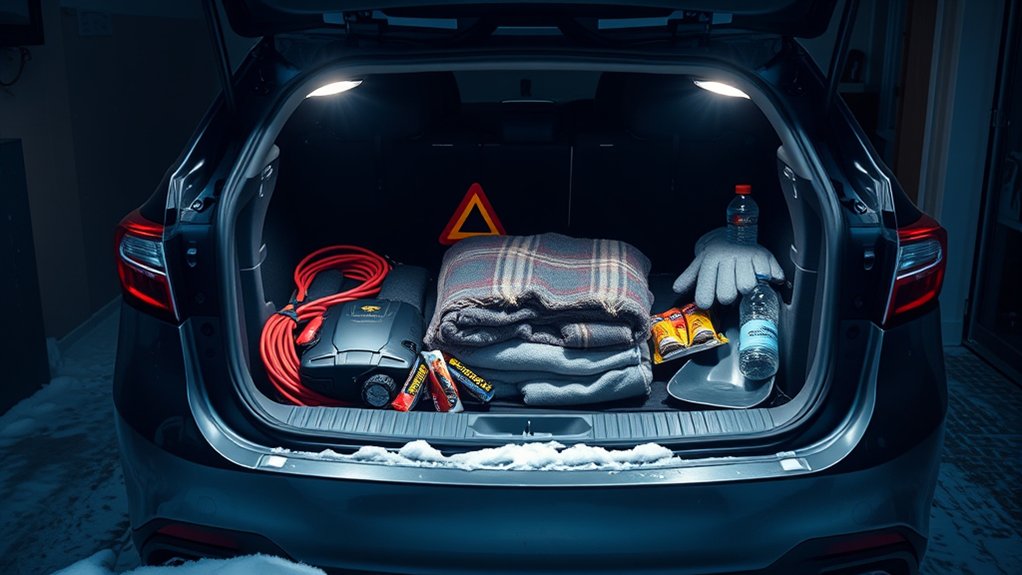
An emergency kit matters if the Camry will be driven during winter or may be needed on short notice. NHTSA recommends carrying supplies for snow removal, traction, visibility, warmth, communication, food, water, and basic first aid.
- Snow shovel, snow brush, and ice scraper
- Sand or kitty litter for traction
- Jumper cables or a charged jump pack
- Flashlight with spare batteries
- Reflective warning triangles, LED beacon, or road flares stored as directed
- First-aid kit and necessary medicines
- Blankets, warm clothing, gloves, and hats
- Phone charger, water, and non-perishable food
Inspect the kit before winter and replace expired batteries, food, medicines, or damaged equipment. If the car will remain parked for months, remove items that can freeze, leak, or attract pests. Do not rely on carrying spare coolant as permission to keep driving after a cooling-system leak; stop safely and arrange service.
Step 9: Store and Monitor the Car Correctly
Once the Camry is prepared, take a short final drive only if road and weather conditions are safe. This can circulate treated fuel, dry the brakes, and bring the powertrain to normal operating temperature. Then park in the planned location and complete the battery-maintainer and wheel-chock setup.
Do not start the car every few weeks merely to idle for 15 minutes. Short idling may not fully recharge the battery or evaporate moisture from the engine and exhaust. Either leave the vehicle off with the 12-volt battery properly maintained, or follow the driving/storage procedure in the exact Toyota manual when safe road conditions allow it. Camry Hybrid owners should pay particular attention to any model-year-specific traction-battery instructions.
During storage, periodically inspect for:
- Fluid leaks or unusual odors
- Low tire pressure
- A loose or waterlogged cover
- Rodent activity or nesting material
- Battery-maintainer faults or damaged cords
- Heavy snow, standing water, or storm damage around the vehicle
Step 10: Return the Camry to Service Safely
Before the first drive, remove the cover, wheel chocks, charger, and moisture-control products. Open the hood and inspect for nests, chewed wiring, loose connections, and leaks. Check the oil and coolant as directed by the manual, then measure all tire pressures cold.
- Confirm that the exhaust outlet and air intakes are clear.
- Check the battery connection and state of charge.
- Inspect the ground under the car for fresh leaks.
- Verify tire pressure, tread, and visible condition.
- Check lights, wipers, washer fluid, horn, and emergency supplies.
- Start the vehicle in a well-ventilated area and watch for warning lights, smoke, unusual noise, or strong odors.
- Test the brakes at very low speed before entering traffic; light surface rust may cause temporary noise, but severe vibration, pulling, or poor braking needs professional inspection.
- Drive gently at first and recheck for leaks or warning lights after the test drive.
Related Guides
Frequently Asked Questions
Should I fill the gas tank before storing my Toyota Camry for winter?
Keeping the tank close to full is reasonable for winter storage and is consistent with AAA winter-storage guidance. Do not top off after the pump clicks off. For storage lasting several months, use a compatible fuel stabilizer according to its label and circulate the treated fuel before parking.
How long can a Camry sit without being started in winter?
There is no universal two- or three-month limit. Battery condition, temperature, electrical draw, fuel age, model year, and whether the car is hybrid all matter. Maintain the 12-volt battery appropriately and follow the exact Toyota manual rather than relying on periodic short idling.
Should I start my Camry every few weeks during storage?
Do not start it only to let it idle briefly. A compatible battery maintainer is generally more useful for the 12-volt battery, while Camry Hybrid models may have model-year-specific instructions for periodically driving the vehicle to maintain the traction battery. Follow the exact Toyota manual and only drive when road and weather conditions are safe.
What is different when storing a Toyota Camry Hybrid?
A Camry Hybrid has both a 12-volt battery and a high-voltage traction battery. Toyota has published periodic-driving guidance for some Camry Hybrid model years; for example, the 2017 manual specifies at least 30 minutes or 10 miles once every few months during long parking. Do not assume that interval applies to another year—check the exact manual.
How do I winterize a Toyota Camry for outdoor storage?
Wash and dry the car, apply paint protection, use a fitted breathable outdoor cover, park on a level and well-drained surface, maintain the battery, set tire pressure to the door label, use wheel chocks, remove food, and inspect the cover and surrounding area after storms.
What should I put under the tires during winter storage?
Use clean, purpose-made tire cradles or a firm, level surface. Check pressure periodically and move the car slightly when safe and practical. Avoid improvised supports or lifting the vehicle on jack stands unless Toyota’s lifting instructions and a qualified storage plan support it.
Should I disconnect the battery or use a battery tender?
A compatible smart maintainer is often the more convenient option because disconnecting the battery can reset vehicle settings or affect electronic systems. Follow the battery, charger, and Toyota instructions, and use the designated connection points.
Do I need winter tires if the Camry is only being stored?
No. Winter tires improve traction when driving in cold, snowy, or icy conditions; they do not provide a storage benefit by themselves. If the car will be driven during winter, choose a matched set suited to the climate and vehicle.
Conclusion
A properly winterized Toyota Camry should be clean, dry, correctly serviced for its exact model year, protected from battery discharge and tire damage, and ready for a careful inspection before returning to the road. For multi-month storage, give extra attention to fuel, the 12-volt battery, pests, moisture, and tire condition. Camry Hybrid owners should also follow the traction-battery storage instructions for their exact model year rather than borrowing an interval from another generation.
Sources
- Toyota Manuals and Warranties — model-year-specific owner’s manuals, maintenance guidance, fluids, and specifications
- 2026 Toyota Camry — current U.S. Camry powertrain information
- 2017 Toyota Camry Hybrid Owner’s Manual — example of model-year-specific long-term traction-battery storage guidance
- NHTSA Winter Weather Driving Tips — tires, battery, coolant, wipers, fuel, and emergency-kit guidance
- NHTSA Recall Lookup — VIN-based safety recall checks
- AAA Winter Car Storage Guidance — fuel, fluids, tires, battery, moisture, and pest preparation
- CDC Carbon Monoxide Poisoning Basics — garage-idling and vehicle exhaust safety
- U.S. EPA Used Oil Recycling Guidance — safe handling and recycling of used motor oil
