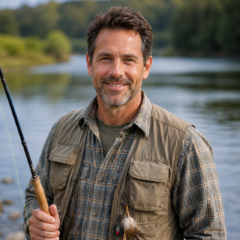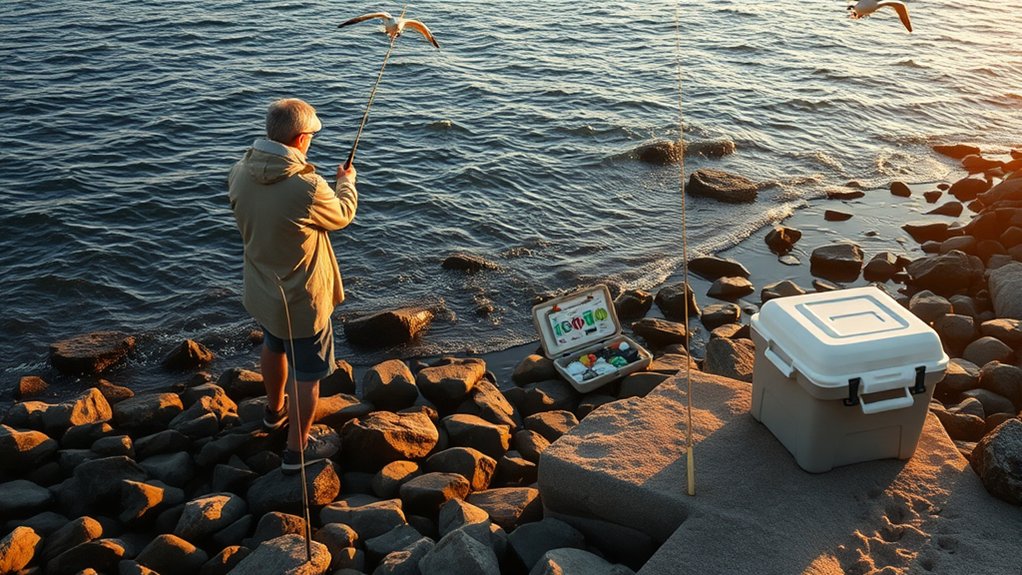
Shore fishing for beginners is simplest when you fish visible cover and depth changes, use one basic spinning setup, and stay mobile. For typical freshwater ponds and lakes, a 6–7-foot medium-light or medium spinning rod with about 6–10 lb line is a practical starting point; heavier cover or larger fish may require stronger tackle. Surf and exposed coastal fishing need a different, usually longer and heavier, setup matched to the species, casting weight, wind, waves, and current. Start close to shore, cast along structure before casting far, and check access, regulations, weather, and water conditions before every trip.
Last updated: September 21, 2026
Quick Answer
Shore fishing works best when you target cover, structure, current changes, and accessible depth instead of casting randomly. For common freshwater bank fishing, start with a 6–7-foot spinning rod, roughly 6–10 lb line, a few simple rigs or lures, and compact safety gear. Fish low-light periods when practical, test the water close to shore before casting far, and move when a careful pass produces no signs of fish. Surf and exposed coastal fishing require a separate setup matched to local species and conditions.
Key Takeaways
- Fish near cover, current breaks, weeds, rocks, bridges, rip rap, deeper edges, spillways where access is safe, and stream mouths because these areas can concentrate bait and feeding fish.
- Dawn, dusk, cloud cover, water temperature, wind, current, and tides can all affect fish location; no single time or season is best everywhere.
- For ordinary freshwater bank fishing, a simple 6–7-foot spinning setup with light line and organized tackle is easier for most beginners to learn than a heavy all-purpose outfit.
- Use small plastics, jigs, spinnerbaits, topwaters, live bait where legal, or other presentations that match your target species and water conditions.
- Check legal access, fishing-license requirements, size and possession limits, seasonal rules, weather, and shoreline hazards before every trip.
At a Glance
| Best Time | Low-light periods are often productive; in tidal water, moving water can matter as much as the clock. Target species and local conditions decide the best window. |
| Difficulty | Beginner-friendly when access and water conditions are safe |
| Basic Gear | Freshwater: 6–7-foot spinning rod, roughly 6–10 lb line, hooks, weights, floats, a few lures or legal bait, pliers, water, first aid, sun protection, and a light when needed. Surf/coastal setups vary and are usually heavier. |
| Best Spots | Ponds, creek banks, bridges, rip rap, weedlines, marinas where fishing is permitted, boat-ramp areas that do not interfere with launches, safe spillway access, and stream mouths |
Choose the Right Shore-Fishing Setup
“Shore fishing” covers several different environments, so do not force one rod-and-line recommendation onto every trip. Match the setup to the water first, then to the species and cover.
- Freshwater ponds and lakes: A 6–7-foot medium-light or medium spinning rod with roughly 6–10 lb line is a practical beginner setup for panfish, trout, and many bass situations. The U.S. Fish & Wildlife Service also recommends light monofilament as part of a basic freshwater beginner kit in its first-time fishing guide.
- Rivers and creeks: Use the same simple freshwater approach when conditions allow, but pay more attention to current, line control, snag resistance, and safe footing. Strong current or larger fish may require heavier tackle.
- Surf and exposed coastal water: Use saltwater-capable gear with rod length, reel size, line, leader, and casting weight matched to the target species, beach, wind, waves, and current. Do not treat a light freshwater setup as a universal surf outfit.
Where to Fish From Shore
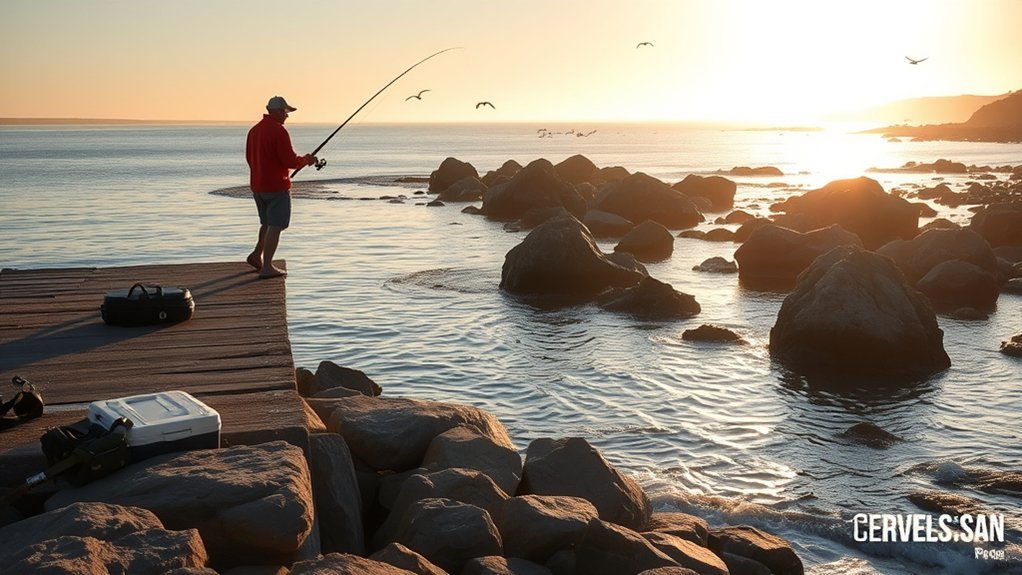
Start with nearby, accessible spots you can reach legally on foot or by a short drive. Local ponds can hold quality fish and let beginners test locations, lures, depths, and casting angles without spending most of the day traveling.
Begin close to home. A small pond, park lake, creek bank, or public pier can teach you more when you can fish it often and notice changing patterns.
Check spillways and stream mouths where access is permitted and conditions are safe. Moving water can carry food and concentrate bait, but dam outflows and floodwater can also create dangerous current, so obey closures and barriers.
Walk creek banks for current breaks and deeper pools. Inspect bridges, rip rap, points, shade, weed edges, fallen trees, and other places where depth, current, or cover changes. These transitions often give fish a feeding lane or place to hold.
Boat ramps and marinas can be productive too, but confirm fishing is allowed and never block launches, private docks, walkways, or working areas. Approach quietly, fish the closest water first, then test different depths and angles.
Keep your tackle light enough to move. Shore anglers gain an advantage when they can leave an unproductive stretch and quickly test the next piece of cover.
Pro Tip: Before you make your first cast, stand back and watch the water for two minutes. Look for baitfish, insects, bubbles, birds, shade lines, current seams, windblown banks, or small surface ripples that suggest feeding activity.
How to Read Shoreline Cover and Structure
Shore fishing gets easier when you stop casting randomly and start reading the bank like a map. Fish need food, suitable water, and places that offer protection or an efficient feeding position. Areas that combine several of those features deserve more attention.
Focus first on visible cover. Fallen trees, dock posts, weed edges, rocks, brush piles, grass points, and shaded banks can hold fish close enough to catch. Cast beside cover before throwing directly into the thickest part so you can learn the snag risk and avoid spooking shallow fish.
Next, look for structure. Structure means the shape of the bottom, such as points, drop-offs, holes, humps, creek channels, and ledges. You may not see all of it from shore, but clues help. A steep bank may continue underwater, a rocky point may extend farther than it looks, and a creek mouth often creates a channel or depth transition.
Pay attention to water changes. Muddy water meeting clearer water, fast water meeting slow water, and shallow water dropping into deeper water can create feeding lanes. Cast along those edges and work them from several angles before moving.
When Should You Fish From Shore?
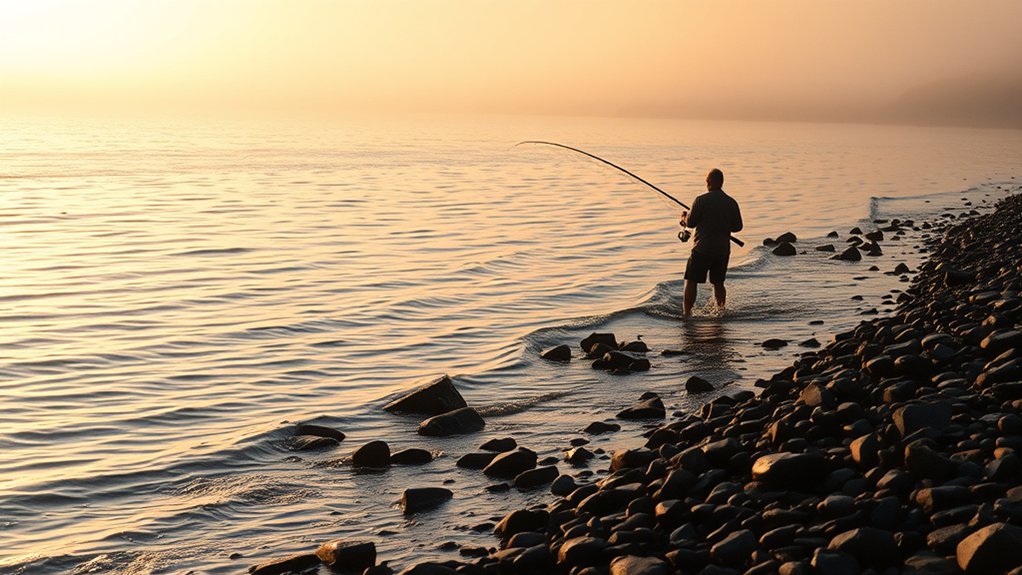
There is no single best shore-fishing time for every species or location. Low light around dawn and dusk is a useful starting point in many waters, but temperature, wind, current, tide, season, and target species can matter just as much.
Instead of planning only by the clock, ask whether fish can comfortably reach feeding water from shore. In freshwater, that may mean mild temperatures, shade, windblown banks, current, or seasonal movement. In tidal water, the stage and strength of current may determine whether bait is moving past your spot.
Best Seasons to Fish
In many temperate freshwater systems, spring and fall can provide good shore opportunities because changing water temperatures often bring fish and bait into accessible areas. That pattern is not universal, however. Species, latitude, spawning behavior, water level, and local climate all affect seasonal movement.
Summer fishing can still be productive early, late, at night where safe and legal, around current, or near deeper water and shade. In cold conditions, slower presentations and deeper water close to shore may work better than shallow, fast-moving approaches.
Treat the calendar as a starting point rather than a rule. Local fishing reports, recent weather, water temperature, and your own catch notes will tell you more about a specific waterbody.
Prime Daily Times
Dawn and dusk are useful windows because reduced light can bring some fish into shallow feeding areas. They are not mandatory, though. Shade, cloud cover, wind, current, bait movement, and fishing pressure can create good opportunities throughout the day.
In saltwater, brackish water, tidal rivers, and coastal inlets, check a local tide and current source before leaving. U.S. anglers can use NOAA Tide Predictions to review official tide predictions for available stations.
- Use moving water as a starting point, then note which tide stage produces at your particular spot and for your target species.
- New and full moons generally produce larger tidal ranges called spring tides. That changes water movement but does not guarantee better fishing.
- Plan safe access and an exit route as the water rises or falls, especially around rocks, marsh edges, tidal flats, jetties, and isolated shoreline points.
Keep a simple log of time, tide or current stage, wind, water clarity, lure or bait, and where the bite occurred. Patterns become more useful than generic rules after several trips.
Weather and Water
Weather changes fish location and also changes shore safety. Cloud cover and mild temperatures can make shallow water comfortable for some species, while wind can push plankton and bait toward one bank. A light chop can also reduce visibility in clear water.
During hot weather, try early morning, shaded banks, inflows, current, or deeper edges that remain within casting range. During cold weather, slow the presentation and spend more time around deeper holes, steep banks, or other areas where fish can reach stable water without moving far.
Night fishing can be productive for some species, but visibility changes the risk. Bring a headlamp, tell someone where you are, keep your path clear, and avoid unfamiliar steep, tidal, or slippery banks after dark.
If thunderstorms, floodwater, strong winds, dangerous surf, or rapidly changing current are possible, change plans rather than forcing the trip.
What Gear Do You Need for Shore Fishing?
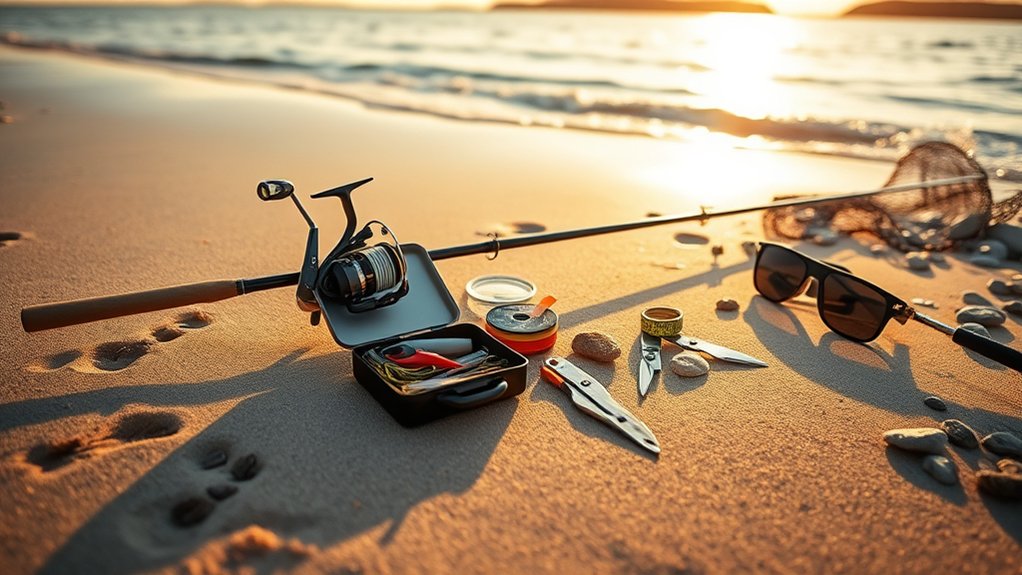
Gear matters, but beginners do not need to overbuy. For ordinary freshwater pond and lake fishing, a 6–7-foot medium-light or medium spinning rod with roughly 6–10 lb line handles many common shore situations. Around heavier vegetation, rocks, stronger current, or larger fish, use tackle appropriate for the added load and abrasion.
Surf, rock, and exposed coastal fishing require their own gear decisions. Rod length, reel capacity, leader strength, lure or sinker weight, saltwater resistance, and landing method should match the location and target species.
Pack practical fishing tackle and keep it organized so you can change presentations without carrying a large box.
- Tackle: hooks, weights, floats, swivels, bobber stops, jig heads, and a small lure selection suited to local species.
- Tools: long-nosed pliers or a dehooker, line cutters, spare line, and any measuring tool required for regulated fish.
- Safety: small first aid kit, sunscreen, insect repellent, drinking water, polarized sunglasses, suitable footwear, and a light for low-light sessions.
- Mobility: a small shoulder bag or backpack is often easier to carry than a large tackle box when you plan to cover shoreline.
Choose only the gear that solves a problem you actually expect to face. A compact kit makes it easier to walk farther, change spots, and spend more time fishing instead of organizing equipment.
What Rod and Reel Setup Works Best From Shore?
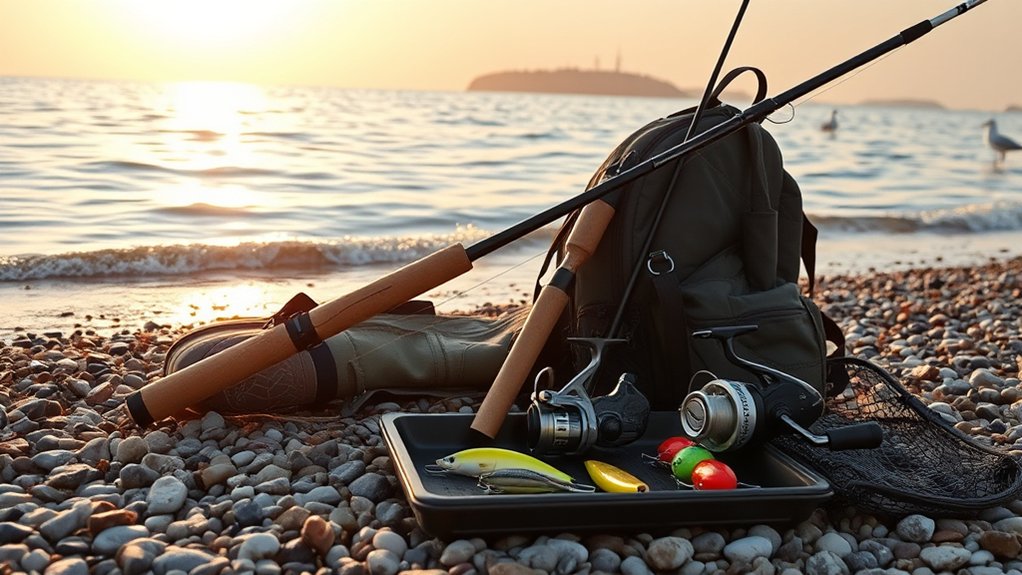
For many freshwater beginners, a 6–7-foot spinning rod with a matching spinning reel is the simplest all-around choice. A shorter rod can be easier around brush and small ponds, while a somewhat longer rod can help with casting distance on open banks. Surf fishing is a separate use case and commonly calls for a longer, more powerful rod matched to the casting load.
Choose medium-light or medium power according to the lure, bait, cover, and fish you expect. The rod should feel comfortable in your hand and have a lure-weight rating that covers what you plan to cast.
Match the reel to the rod and line. A smooth drag is more important than simply choosing a very large reel. Proper drag lets a fish pull line under controlled pressure instead of forcing the line or hook to absorb every surge.
When spooling line, follow the reel manufacturer’s capacity guidance and leave enough room below the spool lip to reduce line-management problems. Practice casting in an open area before fishing around trees, rocks, docks, or other anglers.
What Line, Hooks, and Basic Rigs Should Beginners Use?
Your line, hook, and rig control how naturally your bait moves and how easily you can manage the setup. For many freshwater beginners, roughly 6–10 lb monofilament is affordable, forgiving, and easy to tie. Around heavier cover, abrasion, current, or larger fish, step up based on the specific situation. In clear water, a lighter presentation or an appropriate leader may help.
Start with a few simple rigs. A bobber rig suspends bait for panfish, trout, and other species feeding off bottom. A split-shot rig lets worms or small baits sink with little hardware. A Texas rig helps soft plastics move through weeds and brush with fewer snags.
Choose hooks that match the bait and fish. Small hooks fit small natural baits and panfish presentations; larger worm or wide-gap hooks fit many bass soft plastics. Keep hooks sharp, replace damaged or rusty hooks, and confirm that local rules allow the bait, hook style, and number of hooks you plan to use.
Best Lures for Bass From the Bank
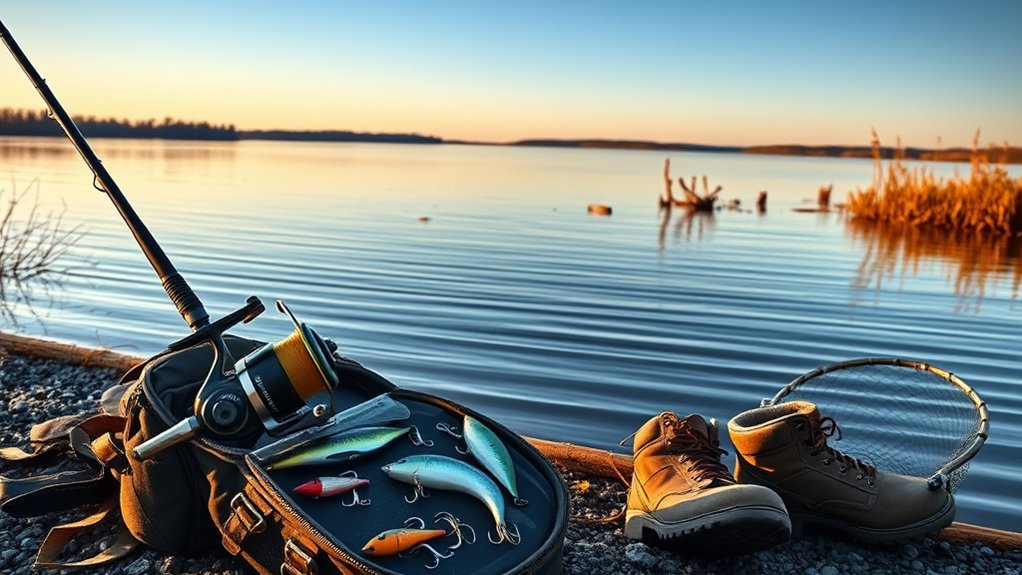
For bass from shore, focus on a compact lure selection that covers shallow edges, weeds, rocks, wood, and open water without forcing you to carry several boxes.
Use downsized options when fish are pressured or inactive, and choose weedless or snag-resistant presentations when shoreline cover is thick.
- Texas-rigged soft plastics: useful for probing brush, grass, docks, and bank seams with fewer snags.
- Spinnerbaits: useful for covering water and fishing around wind, stained water, or scattered cover.
- Small topwaters and weedless swimbaits: useful around shallow feeding areas and vegetation, especially when fish are active near the surface.
- Squarebill crankbaits: useful around shallow rock, rip rap, and wood where deflection can trigger bites.
- Finesse jigs: useful around rock, deeper edges, and situations where bass are feeding near bottom.
You do not need all five on every trip. Choose two or three presentations that cover different depths, learn how they feel around cover, and add tackle only when you know what problem it solves.
Lures and Baits for Panfish and Other Species
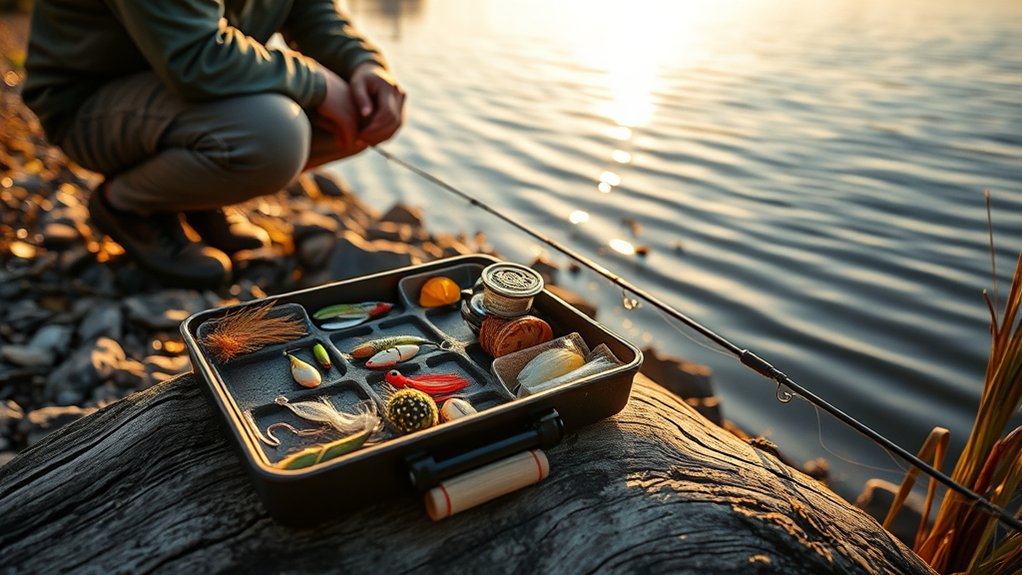
For panfish and other small shoreline species, keep your offerings small and simple. Small jigs, tiny spinners, compact soft plastics, and minnow-style hard baits can imitate insects, small fish, and other natural forage.
Carry a limited mix rather than many similar baits. Small jigs can cover different depths, compact spinners add flash and vibration, and minnow-style lures help search for fish feeding on small baitfish.
Use live bait such as worms, crickets, minnows, or other local options only where regulations allow them. Match the bait to your target species and never move live bait or water between waterbodies when local rules prohibit it.
For catfish from shore, anglers commonly use worms, cut bait, prepared bait, or other legal natural baits. For trout, common choices include small spinners, spoons, worms, or prepared trout bait where permitted. Saltwater bait and lure choices vary widely by coast and species, so use local regulations and reports rather than assuming one bait works everywhere.
If one presentation does not work, change one variable at a time—depth, speed, size, color, or location—so you can tell what changed the response.
How Do You Catch More Fish From Shore?
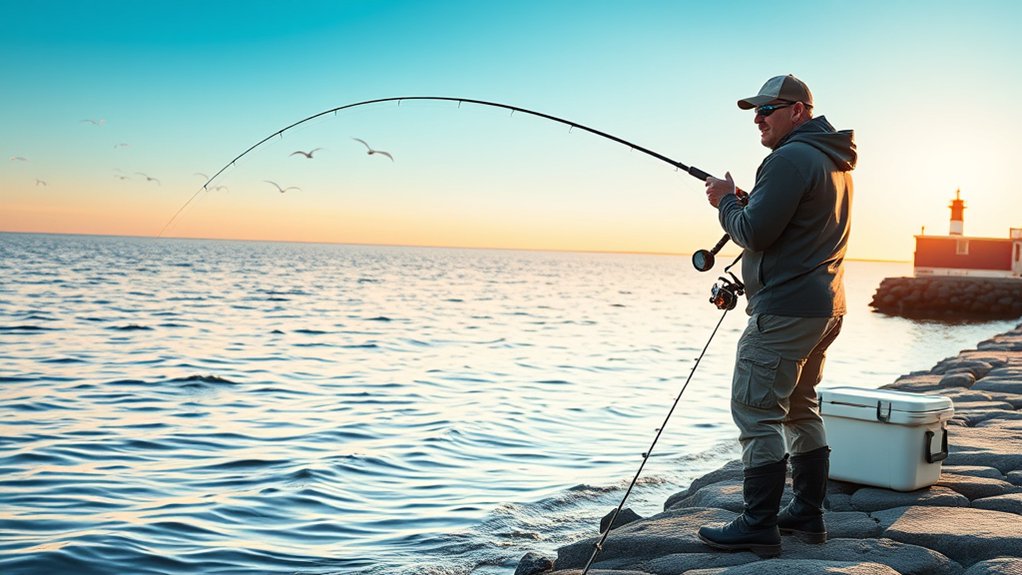
Start by fishing the water closest to you. Fish often use shoreline cover, shade, vegetation, rocks, and depth changes, so automatically throwing as far as possible can cast beyond productive water.
Cast parallel or diagonally along the bank when that angle keeps your lure beside cover longer. Around points, openings, current seams, or open water, fan-cast several angles so each cast tests a different lane.
- Cast along structure, then vary speed or depth if the first presentation does not work.
- Target rocks, logs, weed edges, shade, and current changes instead of featureless water.
- Use lighter or smaller presentations when fish are pressured or the water is clear.
- Fan-cast open water by covering several angles before moving.
- Change one detail at a time so you can identify what produced a bite.
A Simple 10-Cast Search Plan
This is not a rule about how many casts fish require. It is a simple way to stop random casting and make the first few minutes at a new spot more informative.
- Casts 1–2: Fish parallel to the bank in both directions to cover the shallow edge before walking close to the water.
- Casts 3–5: Target the best visible cover, shade line, current seam, weed edge, or depth change.
- Casts 6–8: Fan-cast open water at different angles instead of repeatedly hitting the same lane.
- Casts 9–10: Change depth or retrieve speed before deciding whether the spot deserves more time.
If you see bait, get a follow, feel a bite, or find a useful depth change, keep working the area. If the water shows no life and a careful pass produces nothing, move to the next high-percentage spot.
Simple Retrieves That Catch More Fish
Your retrieve can matter as much as your lure. Start with a steady retrieve, then make small changes if fish do not respond. Speed up, slow down, pause, twitch, or let the lure fall near cover.
For soft plastics, try a lift-and-drop retrieve. Cast near cover, let the bait sink, lift the rod tip, reel in slack, and let it fall again. Watch your line during the fall because a strike may appear as a jump, twitch, or sideways movement rather than a hard pull.
For spinnerbaits, crankbaits, and swimbaits, use a steady retrieve near grass, rocks, or laydowns. If the lure contacts cover, a brief speed change or pause can change its direction and sometimes trigger a following fish.
For topwater lures, let the initial splash settle, then use short twitches, steady movement, or pauses according to the lure style. When a fish strikes, avoid reacting so early that you pull the bait away before the fish has it.
How to Avoid Snags From the Bank
Snags are part of shore fishing, but you can reduce them. Cast beside unfamiliar cover before throwing deep into it. Use weedless hooks, Texas-rigged plastics, lighter jig heads, or floating presentations around brush and grass when appropriate.
Keep your rod tip higher when you need to keep a lure over vegetation, and lower it when you need a lure to run deeper. When you feel a lure touch wood or rock, slow down and guide it over the obstruction instead of immediately jerking hard.
If you get snagged, first change the pulling angle. Walk left or right where the bank is safe and legal, keep controlled pressure, and try to work the lure free. If it remains stuck, protect your eyes and hands and never pull stretched line toward your face.
How to Stay Safe and Fish Legally From Shore
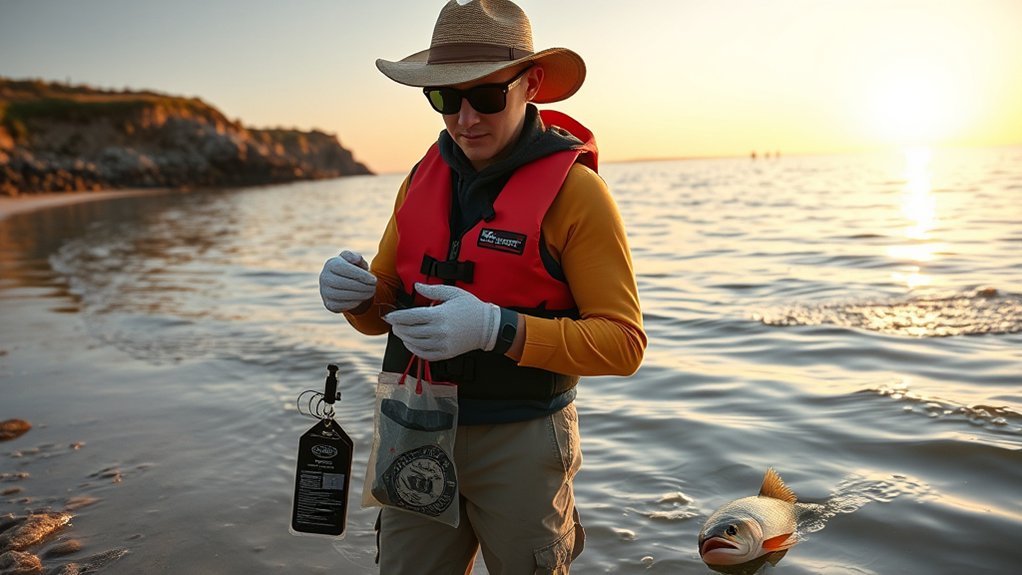
Before you cast, check local fishing regulations, legal access, and license requirements. Rules can change by jurisdiction, species, season, waterbody, bait, hook type, and whether you plan to keep fish.
Watch water conditions. Current, tides, waves, slippery rocks, unstable banks, and changing water levels can become hazardous quickly. Wear footwear suited to the surface and use appropriate flotation when conditions create a meaningful fall-in or wading risk.
Keep interactions respectful and safe by giving other anglers room, keeping hooks under control, avoiding launch lanes, and leaving access points cleaner than you found them.
Warning: Do not wade or fish close to fast current, floodwater, dam outflows, unstable banks, breaking surf, or slick rocks unless the location, conditions, and your safety equipment make the activity appropriate. Obey barriers, closures, and posted warnings.
Check Local Fishing Regulations
Before every trip, verify the rules for the exact water you plan to fish. In the United States, the U.S. Fish & Wildlife Service fishing-license page links anglers to state-specific licensing information and notes that requirements differ by state.
- Know harvest, possession, and size limits, plus protected species and closed areas.
- Confirm permitted bait, lure, hook, and tackle rules.
- Check seasons and temporary closures before traveling.
- Look for water-specific rules covering trout, bass, saltwater species, artificial-lure-only water, barbless hooks, or catch-and-release areas.
- Confirm that the shoreline itself is legally accessible; public water does not automatically mean every bank is public property.
If you are outside the United States, use your regional or national fisheries authority. Do not rely on an old social post or a generic fishing guide for current legal limits.
Practice Safe Water Habits
Check weather, wind, current, tide, and shoreline access before leaving home. Tell someone where you are going when fishing alone, keep a phone or other communication method protected from water, and avoid unfamiliar banks after dark when you cannot judge footing.
When releasing a fish, minimize handling and air exposure. Keep the fish in the water when practical, use wet hands or a wet rubberized landing net, avoid dry towels or cloth, and remove the hook quickly. If a hook is deeply swallowed and cannot be removed safely, follow species-specific and local release guidance rather than causing additional injury.
Current NOAA Fisheries catch-and-release guidance recommends minimizing handling, keeping fish wet, and using appropriate release tools when needed.
Respect shared spaces and communicate before casting near others. Pack out fishing line, hooks, bait containers, and trash because discarded tackle can injure wildlife and people.
Common Shore Fishing Mistakes to Avoid
Many beginners struggle because they stay in one place too long. If you do not see bait, get bites, find useful cover, or discover a productive depth after working a spot carefully, move. Even a short walk can put you beside a better edge, current break, or piece of structure.
Another mistake is casting straight out—and as far as possible—every time. Fish often use the bank itself. Make your first casts from a few steps back, cover the near edge and shoreline angles, then work progressively farther out.
Do not carry so much tackle that moving becomes a chore. A few confidence baits covering different depths are more useful to a beginner than a large box of options you have not learned to fish.
Do not ignore access, weather, current, tide, regulations, or fish-handling practices. Catching fish is never worth trespassing, unsafe water exposure, a citation, or avoidable harm to the fishery.
Related Guides
Frequently Asked Questions
How do you shore fish for beginners?
Start with one simple spinning setup, confirm legal access and local rules, then fish visible cover, shoreline edges, depth changes, or current instead of casting randomly. Cover the water close to shore first, vary angle and depth, and move after a careful pass if you see no bait, bites, or useful structure.
What is the best setup for shore fishing?
For typical freshwater bank fishing, a 6–7-foot medium-light or medium spinning rod with roughly 6–10 lb line is a practical beginner setup. Add hooks, split shot or other weights, floats, a few simple lures or legal bait, pliers, and basic safety gear. Surf and exposed coastal fishing need a different setup matched to the species, casting weight, waves, and current.
Do you need to cast far when shore fishing?
No. Fish often use cover, vegetation, rocks, shade, current seams, and depth changes close to the bank. Make your first casts along or near the shoreline before working progressively farther out. Long casts help only when the productive water is actually farther away.
What time of day is best for shore fishing?
Dawn and dusk are useful starting points because some fish move shallow in lower light, but there is no universal best time. Water temperature, wind, cloud cover, current, tide, season, fishing pressure, and target species can matter just as much.
Is live bait or artificial bait better from shore?
Both can work. Legal live or natural bait can be effective when fish are feeding slowly or using scent, while artificial lures let you cover water and change depth, speed, and presentation quickly. Choose based on the target species, regulations, and current conditions.
How long should you stay in one shore fishing spot?
Stay long enough to test the most likely cover, several casting angles, and more than one depth or retrieve. If you see no bait, get no bites, and find no useful structure after a careful pass, move to the next promising section of bank. If you get a bite, follow, or other sign of fish, slow down and work the area more thoroughly.
Conclusion
For your first shore-fishing trip, keep the plan simple: confirm legal access and current regulations, inspect the water before casting, fish nearby cover and depth changes first, change one variable when the bite is slow, and move when a careful pass shows no signs of fish.
Use light, manageable freshwater gear for ordinary ponds and lakes, but switch to location-appropriate equipment for surf, strong current, heavy cover, or larger species. Match bait and lures to the fish and water instead of carrying every option you own.
Respect the water. Pack out line and trash, handle release fish with wet hands and minimal air exposure, give other anglers room, and leave every shoreline in good condition.